Joe Benning Photography

  • J
  • O
  • E

Author: Joe Benning

Joe Benning
A Visit to Dakar, Senegal

Dakar, Senegal

May 20, 2023

On May 19 we docked in Senegal, officially known as the Republic of Senegal. The ship’s captain reported today that we are currently in the process of exiting an area known for the highest risk of attack by pirates, which in its own way is sort of comforting.  

Now to Senegal

With an estimated population of about 17 million people, Senegal is classified as a heavily indebted poor country. Per Capita GDP is estimated at slightly over $4,000. Its government is secular even though 95% of the population is Muslim. 

Islam as practiced in Senegal seems to be a rather low key affair, especially when compared to the strict application of Sharia law in Islamic states. (Senegal has a secular Government).  The country is said to peaceable; according to our guide, the promotion of peace and harmony is the order of the day. He also claimed that Senegal stood for equality for women.  That has to be taken with a grain of salt inasmuch as polygamy is legal in Senegal, and not that unusual. The National Institutes for Health estimates that 48% of women and 32% of men are in polygamous unions in Senegal. 

Although classified as a poor and highly indebted country, Senegal appears to be in a lot better shape than some, actually a lot, of the other countries we visited in Africa. For example, Senegal’s per capita GDP is about double that of Sao Tome and Principe; more than double Madagascar’s, triple Mozambiques’s and 1.5 times Togo’s. All comparisons are adjusted for purchasing power.

Mary Anne and I visited Senegal and did a half day tour of Dakar, the capital. It certainly didn’t seem so poor as some of the other countries we visited; not by a long shot. It had its relatively affluent sections as well as poorer areas. We did see some dilapidated shacks, but they were not routine the way they appeared to be in other places.

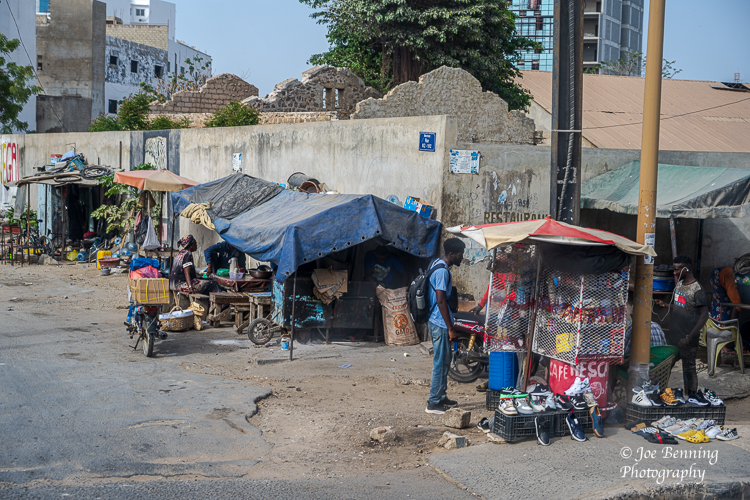
Side Street Stands in Dakar

There also appeared to be a thriving urban scene in the capital. As usual, the people in the country were very friendly.

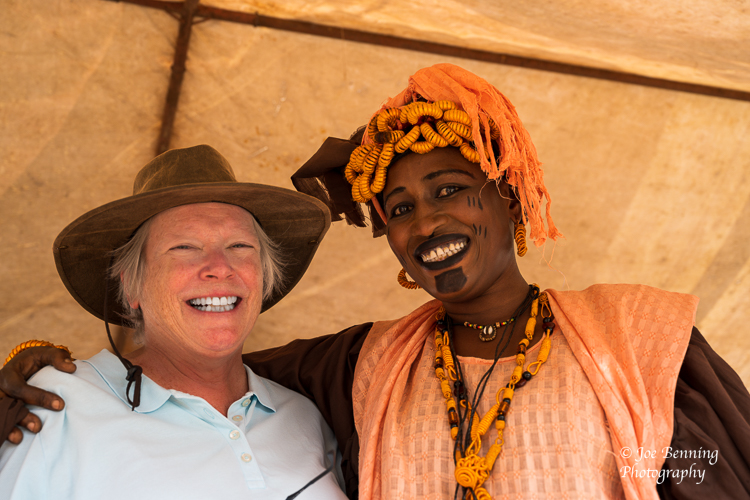
Among other things, we visited a village with a tour group. There the women performed native dances for us. We guessed that only the women danced because they don’t mix the sexes for dancing because it’s largely a Muslim country. Or maybe that is just the tradition. Then they invited women in the audience to join in—and Mary Anne turned out to be one of the volunteers!

Mary Anne with Native Senegalese Dancer
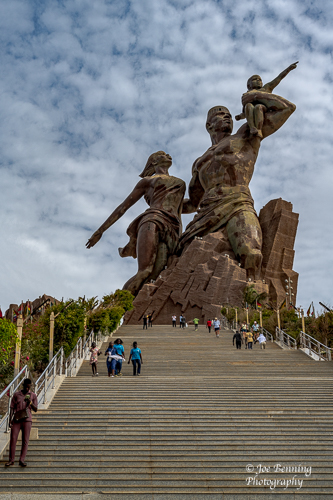
African Renaissance Monument in Dakar

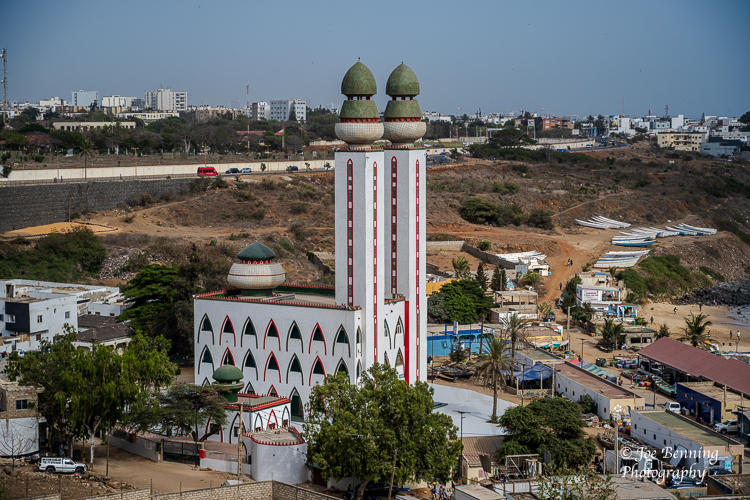
We also visited a gallery where they showed us how to create sand art. (Note we are getting close to where the sand from the Sahara will blow all over us if the wind changes direction.)  We saw the presidential palace, which they call the Senegal White House. And we visited the African Renaissance Monument and a couple of local markets, including ones with large catches of fish. There were also plenty of goats and cows wandering around (Friday would be the day to slaughter a goat for the Islam holy day). We also did a very quick stop at the Divinity Mosque.

Mosque of Divinity in Dakar, Senegal
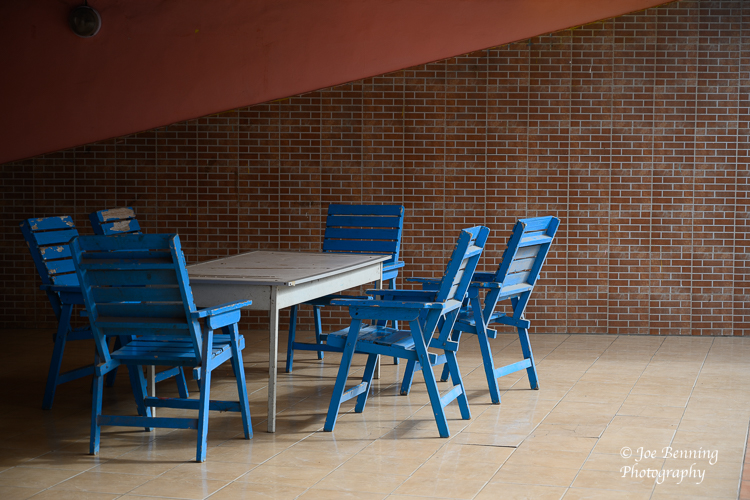
Tables and Chairs in a Senegalese Outdoor Restaurant

Before too long we expect to dock in Cape Verde. Then we sail to islands claimed by Spain (for instance Tenerife and the Canary Islands). The African Union has announced that these islands are African territory. That is starting to sound a bit like the Falklands in the 1980s. Anyway, overall it was a very interesting visit.

JFB
Read More
Joe Benning
A Quick Trip into Abidjan

The Ivory Coast

May 17, 2023

We had a short visit to the Ivory Coast, or Cote d’Ivoire. The visit was short because we docked 4 hours late for some unknown reason and the scheduled tours had to be shortened so we could sail on time later that evening. Instead of going on a scheduled tour, we decided instead to take a shuttle bus into an area known as the Plateau in Abidjan to do a little exploring.

Our first stop was St Paul’s Cathedral, one of the largest in the world. It was designed by the Italian architect Aldo Spirito in 1980, was consecrated by Pope John Paul II and serves as the main church for the Archdiocese of Abdijan.

The Cathedral in Abidjan

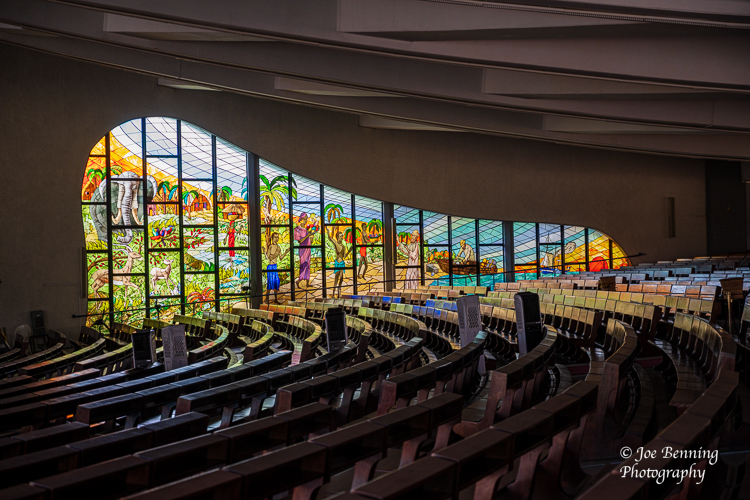
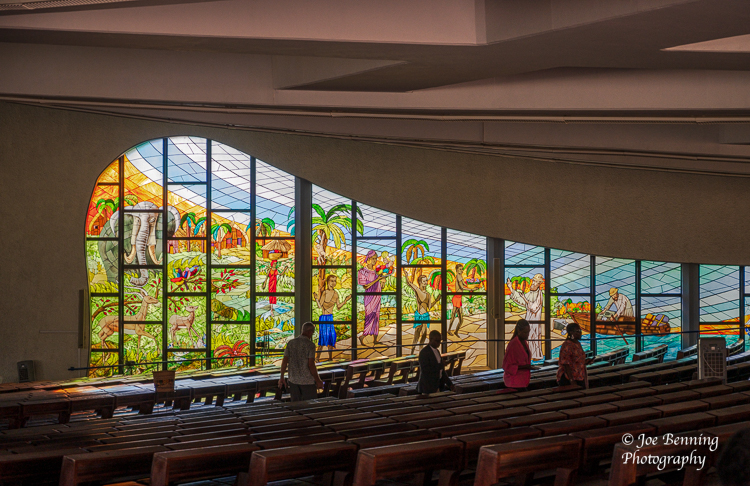
One of the more notable things about the cathedral is the immense stained-glass windows. Because the windows are so large, they let a lot of light into the church. Another thing to note: the windows’ religious imagery is placed in African settings. There are, for instances, scenes with elephants in them. 

Stained Glass Windows with African Motif
Wide-angle Shot of Cathedral Interior with African Motif

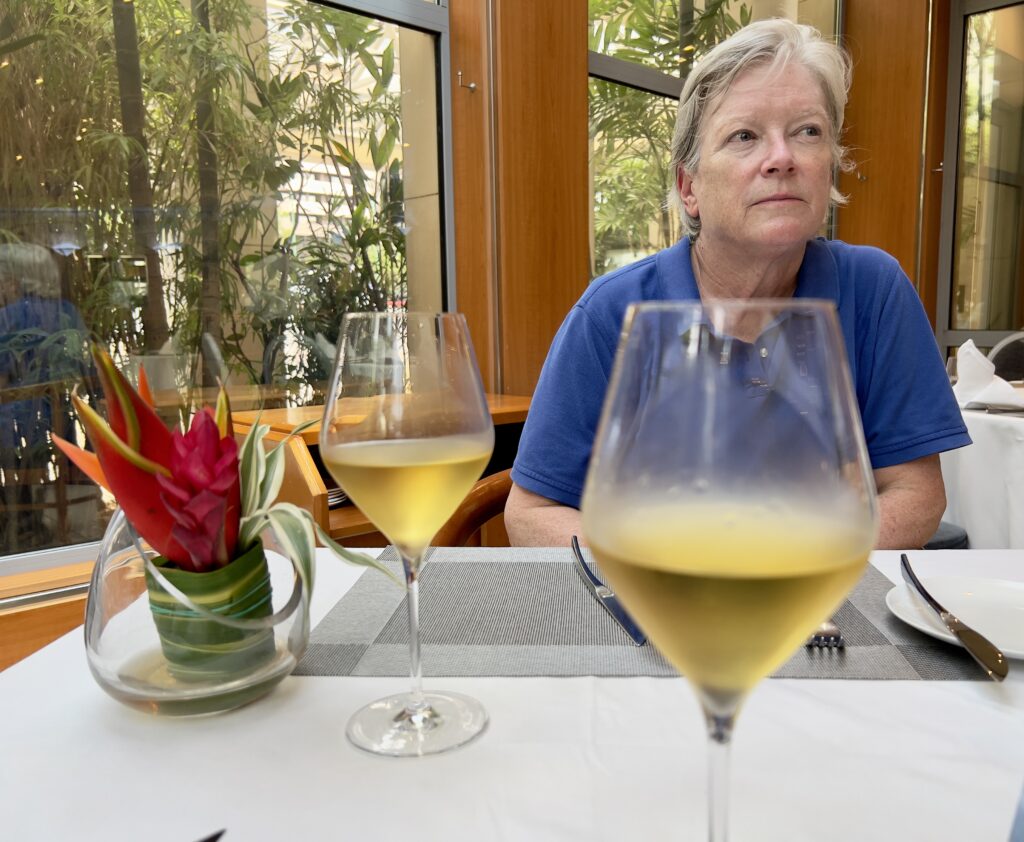
After exploring the Cathedral we stopped off for lunch.  The restaurant, L’Ambassadeur, at the Hotel Tiama was French.

Ambassadeur Restaurant

There are quite a few French restaurants in town largely due to the fact that the Ivory Coast was once a French colony. Anyway we had a delightful lunch complete with wine. 

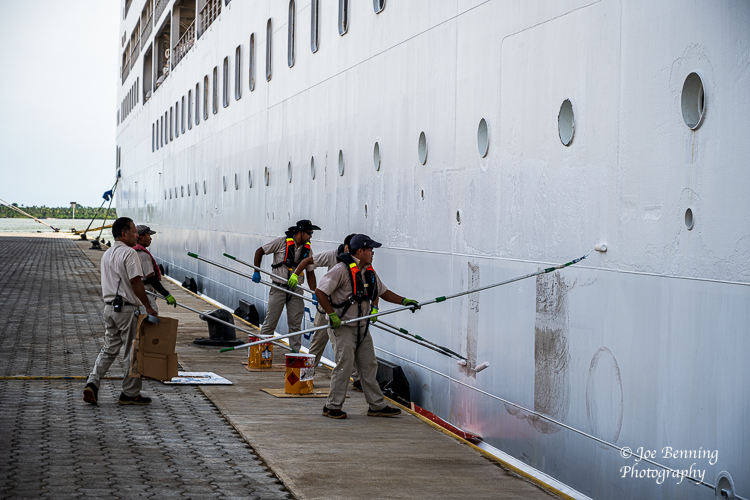
Then we caught the shuttle back to the ship which was being given a touch-up painting by the crew and by 5:00 PM we sailed away toward Dakar, Senegal, our next port of call. 

Crew Painting the Exterior of Seven Seas Mariner

JFB
Read More
Joe Benning
A Quick Tour in Ghana

Takoradi, Ghana

May 16, 2023

We arrived in Ghana, officially known as the Republic of Ghana, on May 15. Located on the West Coast of Africa, Ghana was the first sub-Saharan country to gain independence from colonial rule on March 6, 1957. Ghana is the second largest cocoa producer in the world, and claims that it produces the best quality cocoa. It has a growing oil industry, is a major exporter of gold and has large deposits of bauxite, manganese and diamonds. 

Ghana is classified as a lower middle income country. It also has a medium Gini  coefficient of 43.5 signifying a  relatively benign distribution of income. Per Capita income expressed in terms of Purchasing Power Parity is just under $7,000, about 2.5 times that of  neighboring Togo.  

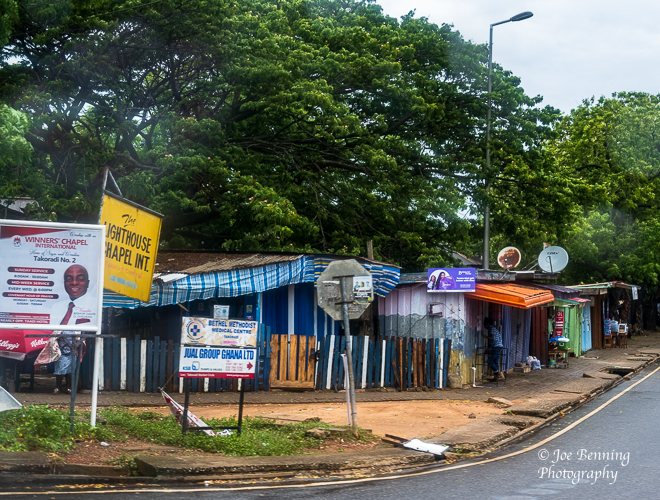
Roadside Wooden Shacks in Ghana
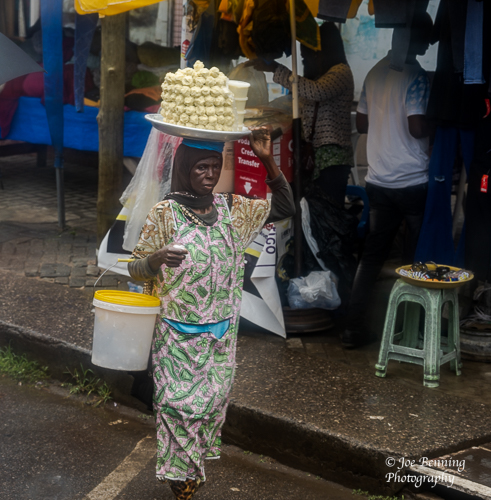
Ghanian Woman Carries Candy on a Plate on her Head

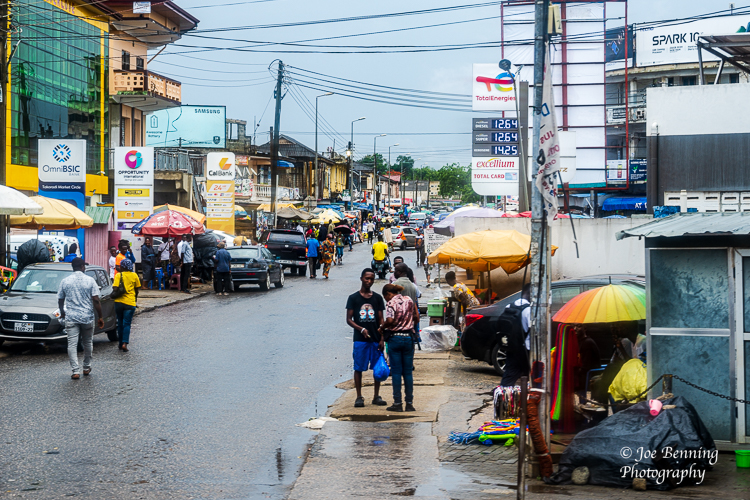
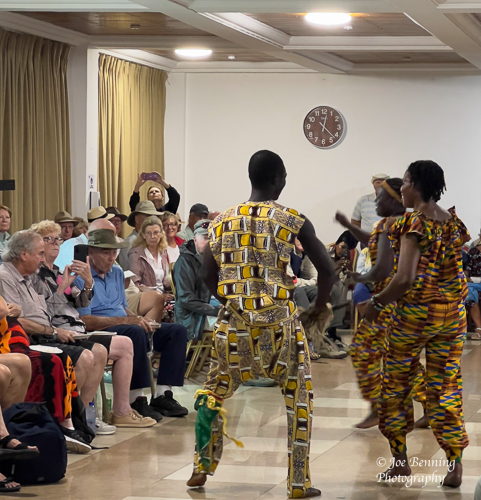
When Mary Anne and I got there it poured rain, so our tour was kind of attenuated. But from our vantage point, Ghana looked like a fairly poor, but developing, country. There was the usual assortment of shacks, and a limited number of top hotels. One hotel we visited was billed as a 5 star hotel and we saw African dancers perform in native costume. Another aspect of the continuing story of West Africa is that the people with whom we came into contact were very friendly.  

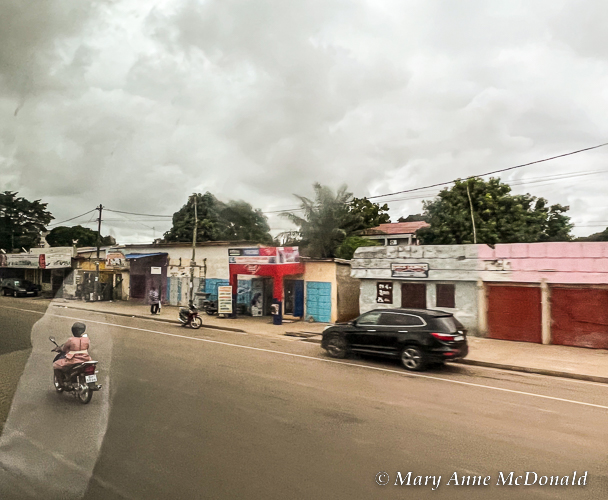
Side Street in Takoradi, Ghana
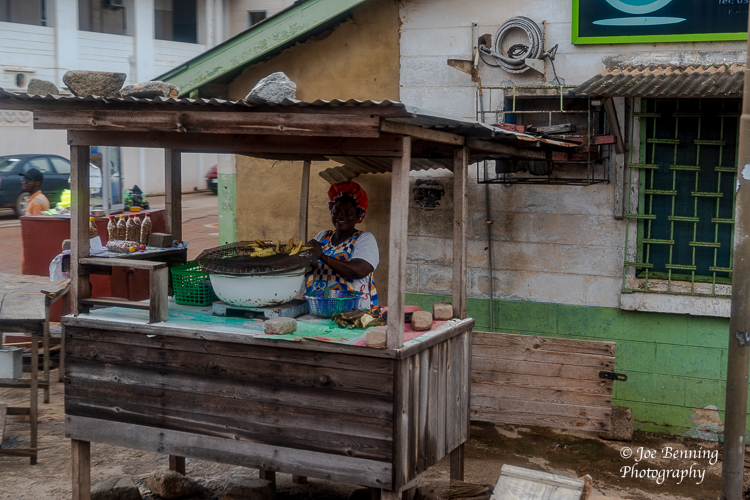
Roadside BBQ Stand in Takoradi, Ghana
Ghanian Dancers in Native Dress

Ghana is generally regarded as a stable democracy. But it wasn’t easy getting there. Its first President as an independent state was was Kwame Nkrumah who ruled as president and prime minister from 1957 to 1966. Nkrumah was an authoritarian leader however and aligned himself with Mao Tse Tung’s China. He was deposed in a military coup in 1966.

Nkrumah eventually became known as Dr. Kwame Nkrumah and formed the Kwame Nkrumah Technological Institute, dedicated to teaching his theories of communism and socialism. 

Ghana seems to be on the right track, but it has a lot of challenges, not the least of which is the influence China seems to have in Africa with its belt and road initiative. We can only wish Ghanians well.

JFB
Read More
Joe Benning
Adventures in Voodoo

A Voodoo Ceremony in Togo 

May 15, 2023

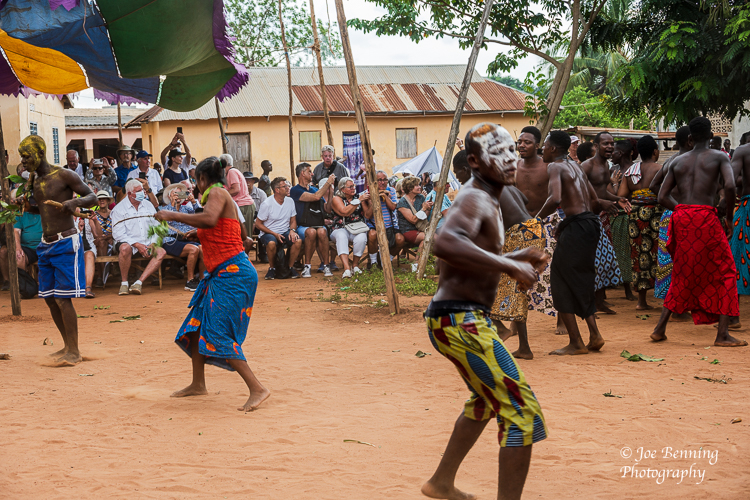
We sailed into Togo, officially the Togolese Republic, on Sunday May 14 to witness a Voodoo ceremony in a village named Sanguera. In a way it was a study in the contrasts that are endemic to so many African countries. 

On the one hand we witnessed a Voodoo ceremony that included energetic, almost frenzied dancing in which the participants supposedly went into trances. One goal of the ceremony was to serve as protection against witchcraft.

Voodoo Ceremony

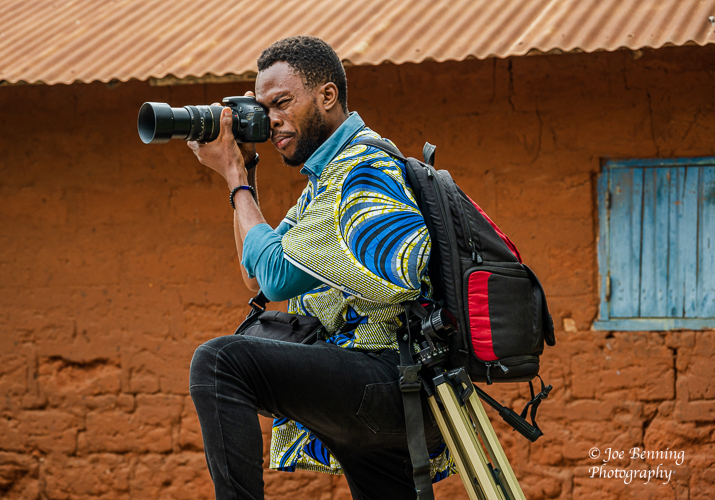
At the same time, a native professional photographer was there, complete with pro equipment, to photograph the proceedings. And it looked like plenty of villagers had smart phones, regardless of what any witches thought.  

Pro Photographer at the Ceremony
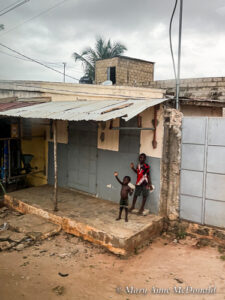
Children Waving in Togo as we drive by

Throughout the villagers were extraordinarily friendly and welcoming. They, as well as virtually any other Togolese people with whom we came into contact, or even just passed by as we drove along on a tour bus, smiled and waved. The people to all outward appearances, are just plain friendly. 

What is really surprising is that Togo ranks dead last in the UN Happiness Index. Perhaps it is because Togo is a desperately poor country with a Per Capita GDP of only about $2,600 expressed in Purchasing Power Parity (PPP). Anti-poverty protests in 2017 resulted in a crackdown by security forces. 

Another factor could be the nature of the government. Essentially it’s a one-party state. The current president, Faure Gnasssingbe, took over after his father’s death in 2005. His father became president in 1967 and by 1969 banned opposition political parties. Regardless, what we was a group of very warm and friendly people.

Highway in Lome, Togo
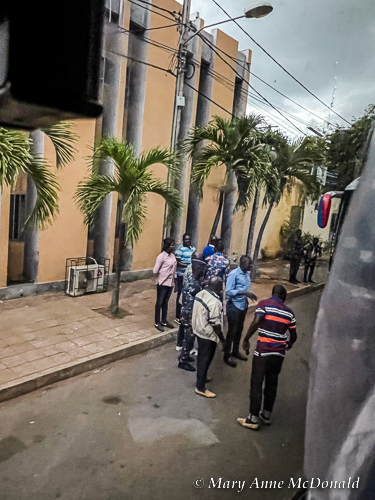
Togo Gendarmes Confront Our Tour Bus

We did have a bit of an altercation with the local gendarmes on the way back to the ship from the Voodoo ceremony. It seems that the bus driver was accused of going through a red light.

The police held up our party of maybe 30 people; a crowd gathered while we sat and waited and there was plenty of shouting back and forth between our security guard and the police. Eventually they got it sorted out, which probably means a bribe, and we made it back to the ship. 

Now we head off for the Ivory Coast.

JFB  
Read More
Joe Benning
Adventures in Africa

Sao Tome & Principe

May 13, 2023

We arrived in Sao Tome, the capital city of Sao Tome and Principe, on May 12, 2023. Sao Tome and Principe is a tiny island country with a population of about 225,000. The country achieved its independence in 1975 and promptly declared itself to be ”a revolutionary front of democratic, anti-neo-colonialists, and anti-imperialist forces.’’ (See the NY Times at this link).

Shortly afterward then President Manuel Pinta Da Costa, a Marxist, nationalized the country’s cocoa plantations and put them under state management. It should be noted that President Da Costa had studied economics in Cuba and East Germany. 

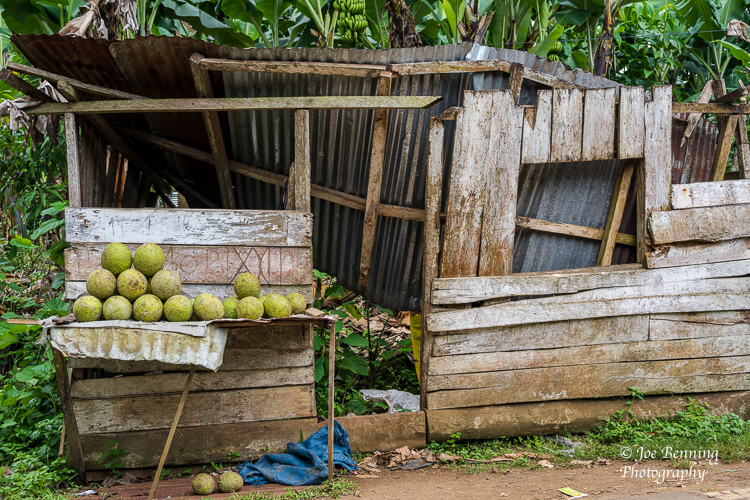
Roadside Fruit Stand in São Tomé

To the surprise of roughly nobody this side of rationality,  cocoa production collapsed. Since cocoa was the principal source of Sao Tome and Principe’s foreign exchange earnings, this was a problem. Combine that with the collapse of the Soviet Union and by 1990 democratic reforms began.

But even after reforms, Sao Tome and Principe remains a lower middle income country.  Real GDP Per Capita is estimated to be about $4,400. Recent growth rates have been between 2% and 3%. The unemployment rate is about 15% and  inflation, according to the latest available statistics (2017 & 2018), has been running between 5.6% to 7.8%. 

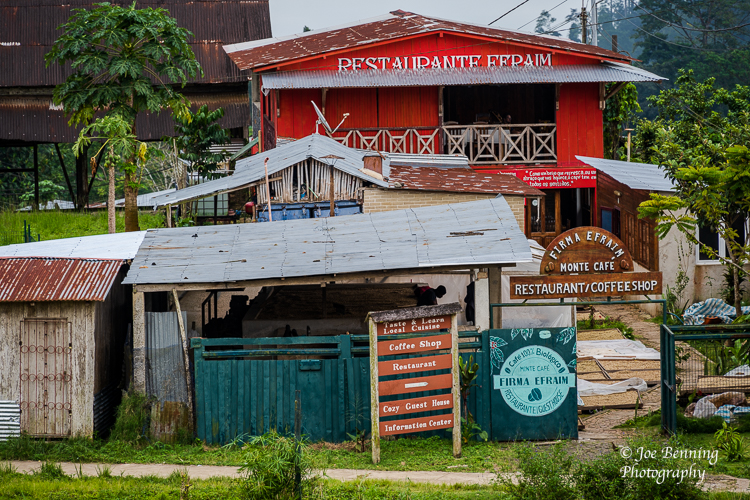
Restaurant and Cafe by the Coffee Museum

The literacy rate is high at just under 94%. The median age of the population is 19 years old. The government owns 90% of the land. There is still a corruption problem that impedes economic advancement. 

Mary Anne and I went on a tour that included the capital city of Sao Tome, a coffee museum situated on the island’s largest coffee plantation, a fort turned into a museum, and a cathedral. We also stopped at the island’s only 5 star hotel for lunch and saw local dancers and performers in native costume. 

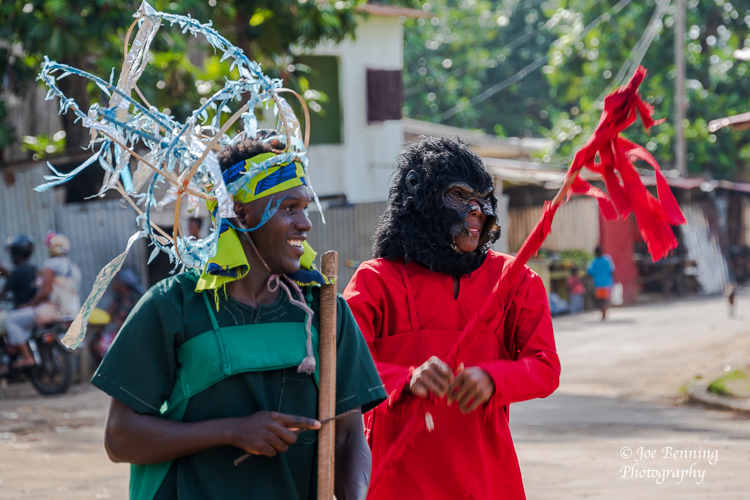
Performers in Costume
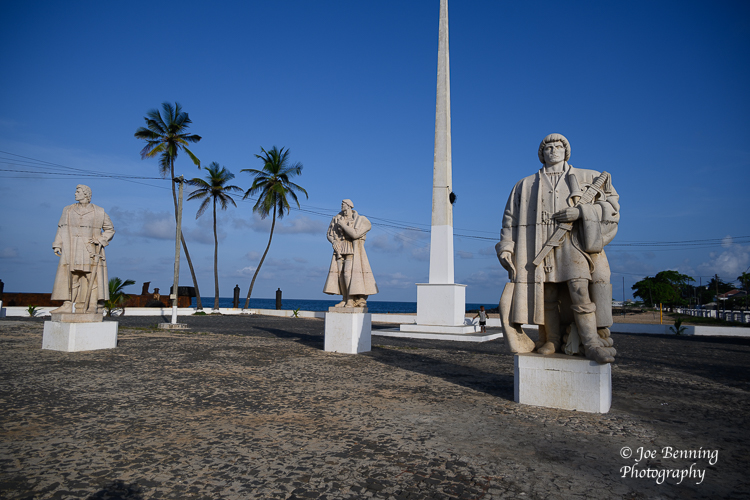
Outside Sao Sebastiao Museum
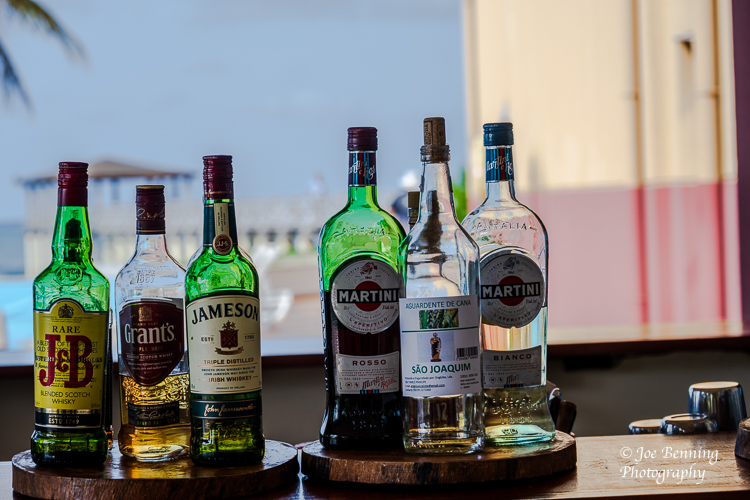
Hotel Bar
Our Lady of Grace Cathedral

The people were very friendly. But quite a few young people, according to our guide, are moving out, primarily to Portugal. Portugal and Sao Tome and Principe maintain good relations. In fact Portugal, has a gun boat standing guard in Sao Tome’s harbor.

So it was good to see the country, and its going to interesting to see how things turn out.

JFB
Read More
Joe Benning
The West African Coast: Namibia

Walvis Bay, Namibia

May 11, 2023

We arrived at Walvis Bay in Namibia which is bordered on the west by the Atlantic Ocean.To the north it shares land borders with Zambia and Angola, Botswana to the east and South Africa to the south and east. Its capital and largest city is Windhoek. But the capital has a population of only about 450,000 people. 

Namibia, officially the Republic of Namibia, is one of the least densely populated countries on the planet. Although the country is physically large, it is mostly desert, and so with a population of only about 2.5 million people, the it is one of the world’s least densely populated countries. 

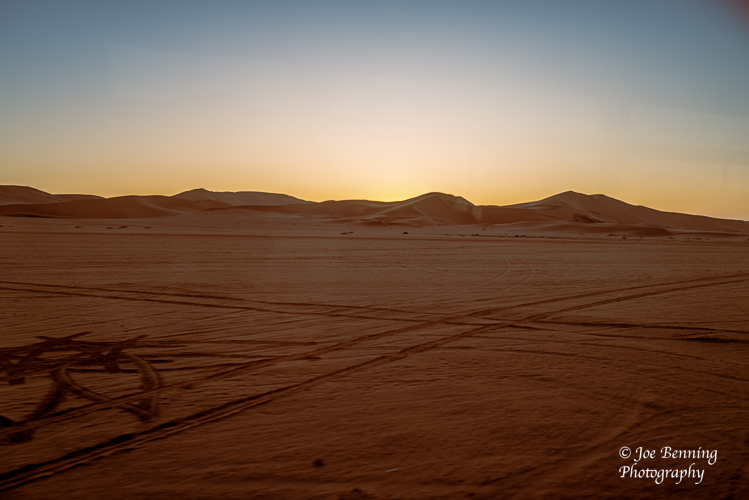
Wide angle photo of Namib Desert at sundown

Namibia was originally colonized by Germany as German South West Africa around 1884. However as a result of WW1 Germany lost its colonies and Namibia was put under the rule of South Africa (then a member of the British Empire) after German forces were defeated by South Africa. South Africa applied its apartheid rules to Namibia in 1948.  Namibian activists launched a drive for independence, including a guerrilla war,  and they succeeded in gaining full independence in 1994. 

Today Namibia has a well developed banking sector, a very high literacy rate (92% of people over the age of 15 can read and write) and is one of the freest countries on the African continent. Bloomberg classifies it as the top emerging market economy in Africa and the 13th in the world. 

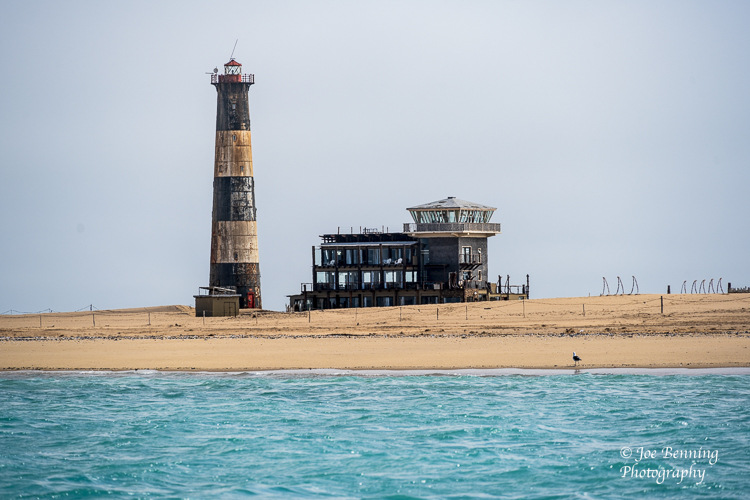
Pelican Point Lighthouse in Namibia

The World Bank considers Namibia to be an upper middle income country. Mining, manufacturing, agriculture and tourism are the main engines of the economy. Per Capita GDP expressed in Purchasing Power Parity (PPP) is about $11,500. That said, Namibia still has a lot of work to do. The unemployment rate is very high, ranging from 25% to 30%. And they are struggling with their sanitation systems. 

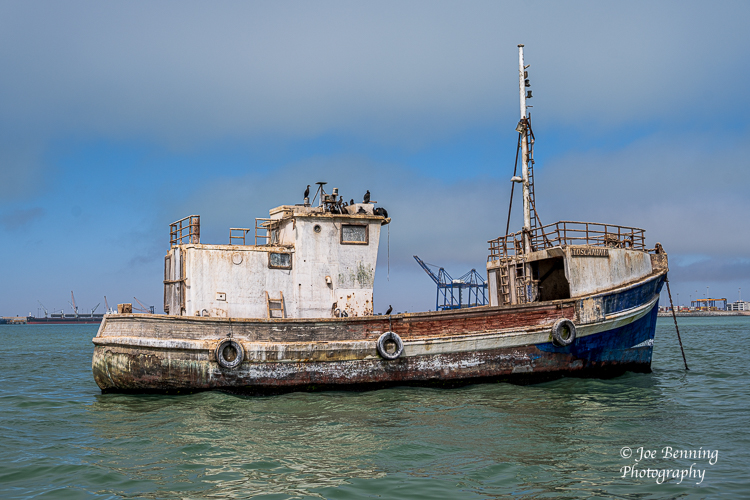
A Derilict Boat Anchored in the Bay

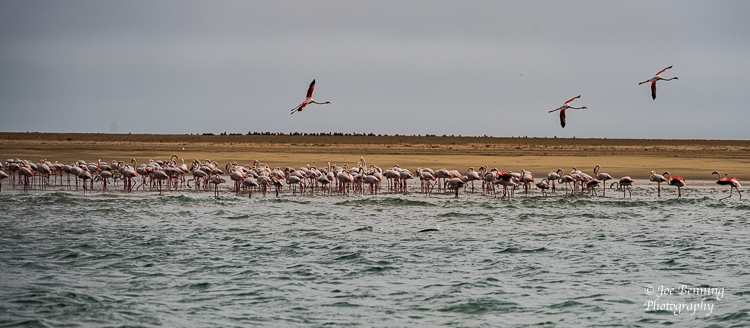
Mary Anne and I went for a cruise on a small boat on the lagoon where we saw an amazing array of pelicans, seals, and flamingos. After the boat ride we attended a dinner in the desert that was sponsored by Regent Cruises, just as the sun was setting. All in all in was a pretty amazing day. 

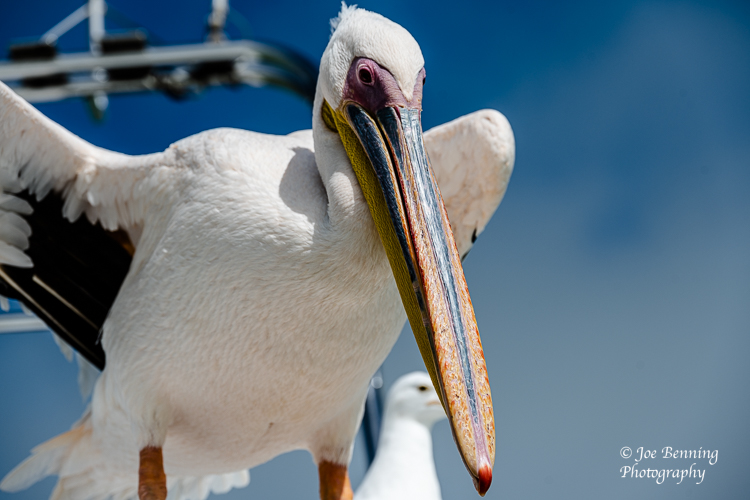
Close-up of a Pelican
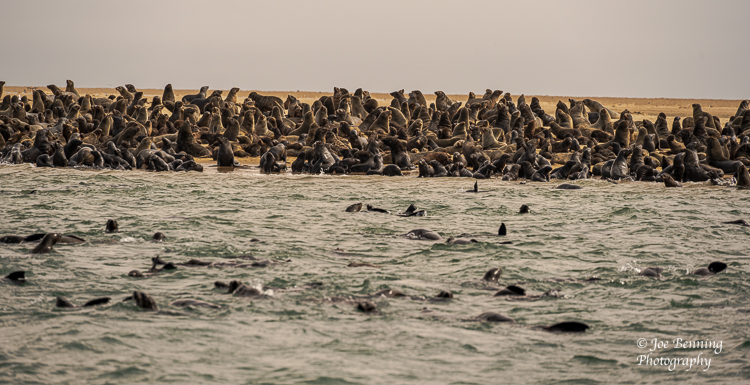
Thousands of Seals Gather on the Beach
Pelicans Fly Over a Colony of Flamingos on the Beach

And best of all we didn’t get captured by pirates…but we are not out of the woods yet. 

JFB 

Read More
Joe Benning
A Quick Tour of Cape Town, South Africa

Cape Town, South Africa

May 9, 2023

We flew into Cape Town from Durbin on May 5 at the conclusion of our Safari. Then we headed off the next day on a half-day tour of the city. Last time we were in Cape Town (back in 2018) we didn’t think much of the place. In fact we were amazed at the number of people who told us that Cape Town was their favorite city. 

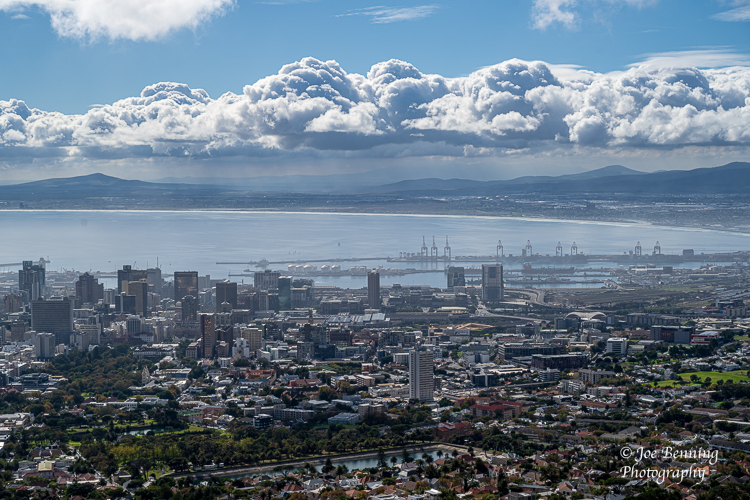
Cape Town as Seen From Table Mountain

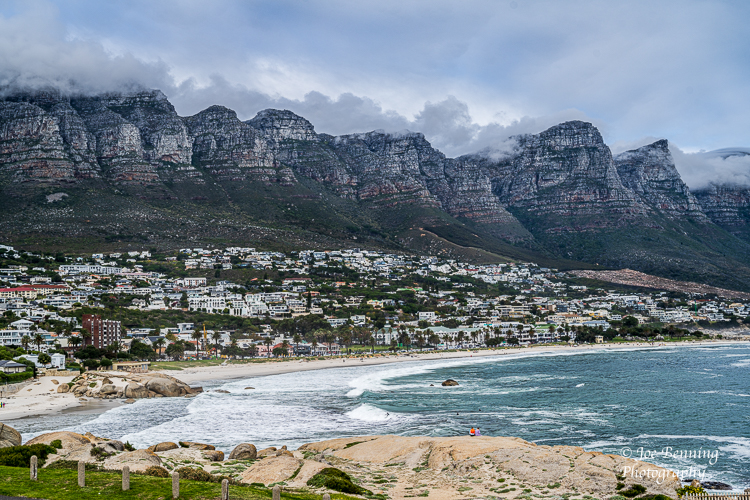
When we went on tour this time we were very pleasantly surprised. The city had its gleaming office towers and apartment buildings, elegant modern homes in the coastal areas, and bars and restaurants galore. We concluded that we just visited the wrong parts of the city the last go around. 

Section of Capetown Coast at the Foot of Table Mountain Range

A bit surprising because we had stayed in a first rate hotel. In fact, one of the best. We must have just made a wrong turn. Some sections we visited this time were just a few blocks away.

Not that the country South Africa, and the city Cape Town, don’t have their problems. They do. The South African rate of unemployment is estimated at anywhere from 30% to 40%. (Nobody really knows for sure what the real number is).

The population of South Africa is about 60 million people. It has the 39th largest economy in the world and is classified as a newly industrialized economy. It has the most technologically advanced economy on the African continent. But crime, poverty and inequality are widespread. 

Some of the problems most likely stem from apartheid, which came to an end in 1994. There are also governance problems. Even though it is now a democratic state, South African politics is essentially a one party state, dominated by the African National Congress.  One party states are typically fonts of corruption and poor governance. (Note: see Chicago, Illinois). But transitioning to a full fledged democracy from an authoritarian state to one that respects the rule of law, property rights and due process was never going to be easy. 

The hope for South Africa is that it can emulate the courage and vision of its modern founder, Nelson Mandela, and complete its transition to an advanced liberal democracy.  

Table Mountain, Capetown South Africa

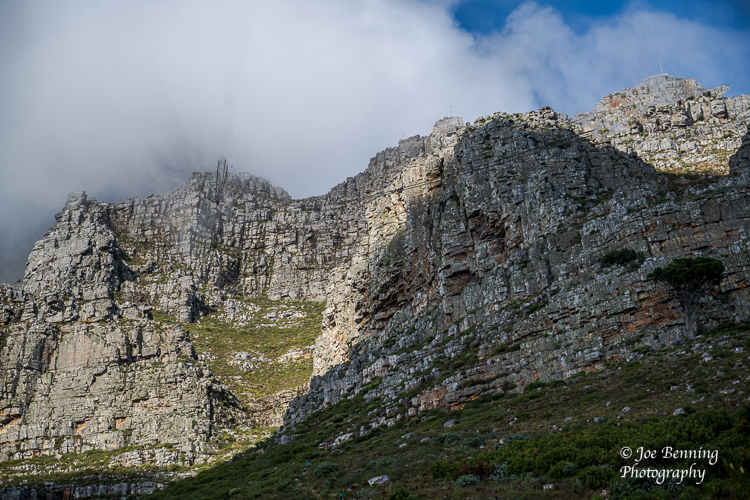
When Mary Anne and I toured the city we spent most of the time on Table Mountain, so named because it looks like a table because the top of it is flat.

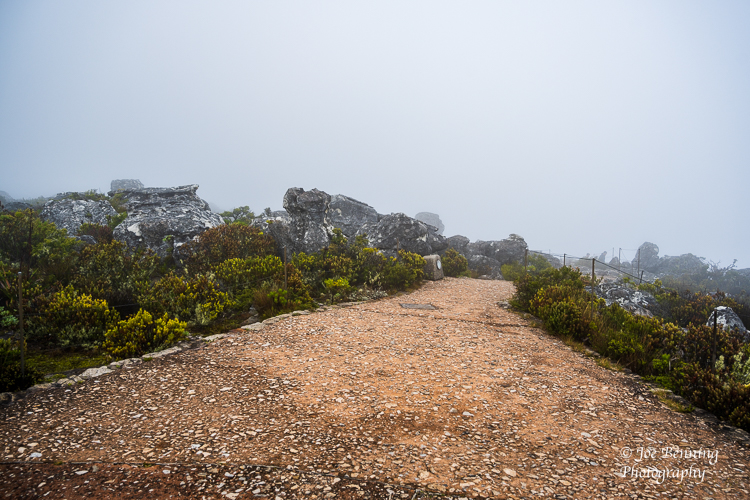
A wide angle photo of a hiking trail at the top of Table Mountain.
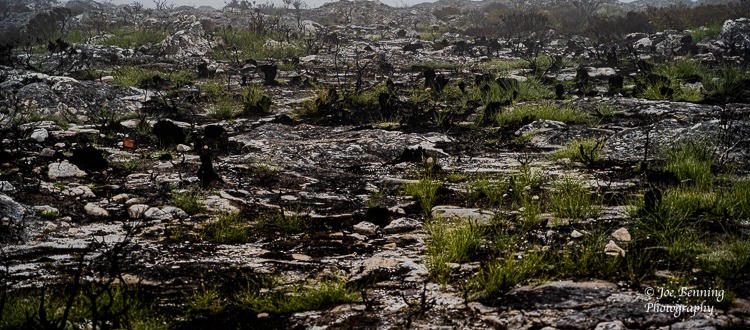
Photo of a section of Table Mountain recently damaged by a fire.

One thing we did was to take a cable car to the mountain top and hike around a bit. The view from the top was truly spectacular. We also visited some coastal areas as well as the center of the city. It is now no longer a mystery to us why so many people are so enamored of Cape Town. 

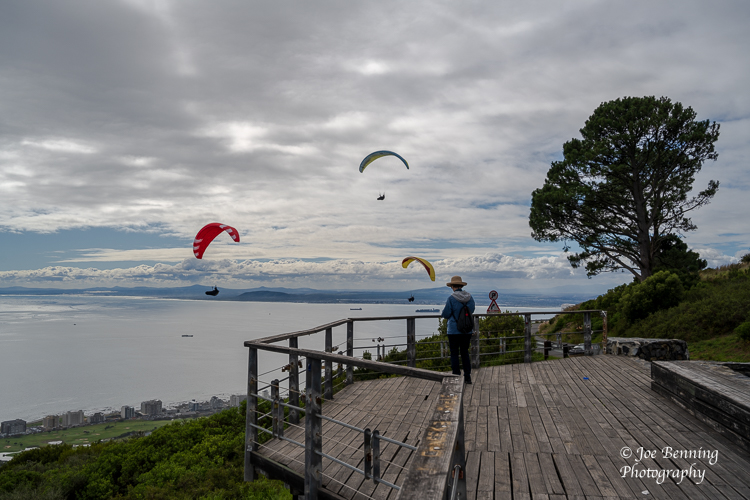
Para Gliding From Table Mountain

JFB

Read More
Joe Benning
Visiting Mozambique

Maputo, Mozambique

May 7, 2023

We just finished—wait for it—a pirate drill. Apparently we are about to enter a high-risk area (HRA) for piracy. Not something you see every day. 

Anyway, we arrived in Maputo, Mozambique on Monday, May 1st. Now officially known as the Republic of Mozambique, it has a population of 30 million people. The country is well endowed with natural resources, particularly natural gas. But corruption is endemic and the country remains one of the poorest in the world. Its main industries are fishing and tourism and the spread between rich and poor is one of the widest in the world. 

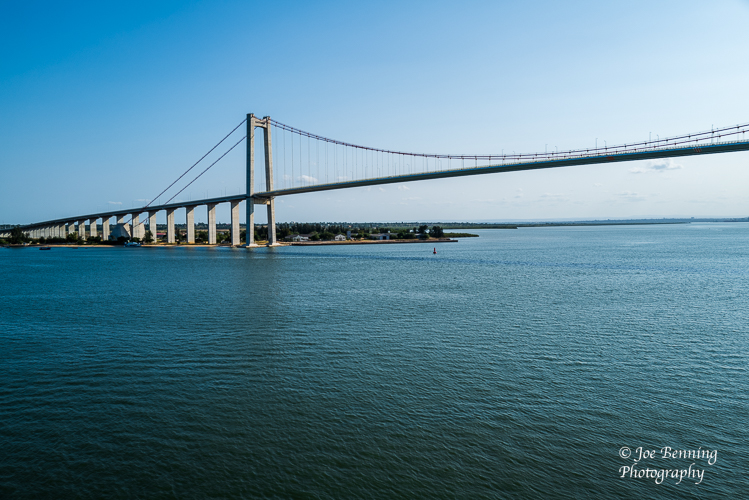
Bridge over Maputo Channel

The country gained its independence from Portugal in 1975 and immediately changed its name to the People’s Republic of Mozambique, then named streets after Mao Tse Tung, Ho Chi Minh and Karl Marx, which goes a long way toward explaining its economic condition. 

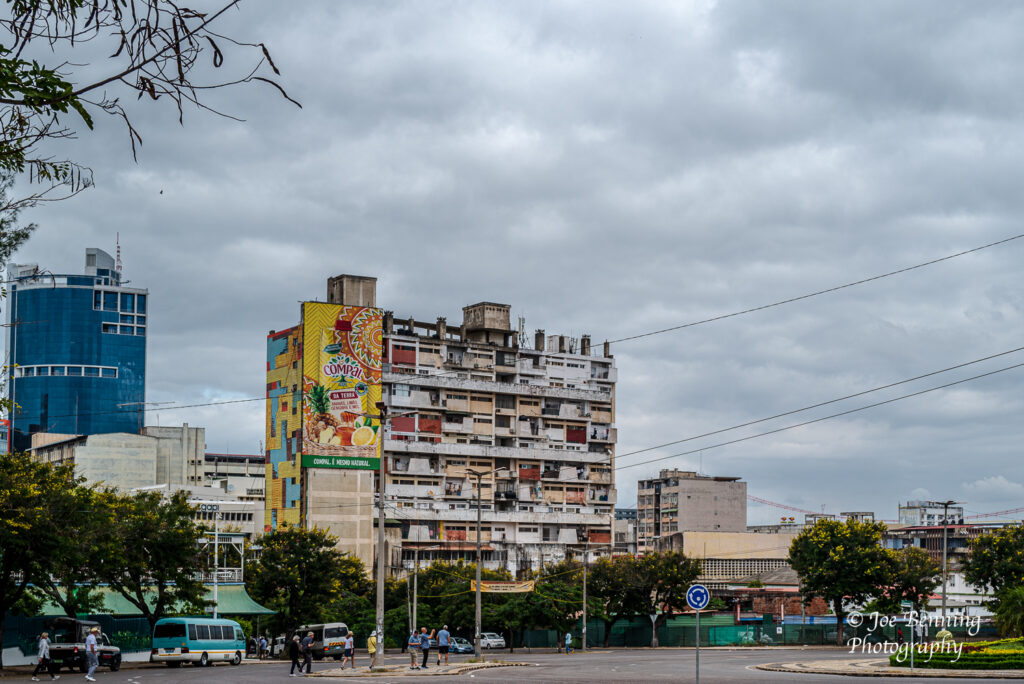
Maputo Building Complex

Within 2 years after gaining independence in 1975 a civil war broke out and lasted until 1992, at which time the ‘People’s” bit was dropped and the country’s name was changed to the Republic of Mozambique. Since then there has been some liberalization, economic growth has been a blistering 8% or so and thousands of state enterprises have been sold off. But the damage from experiments in Marxism-Leninism and years of civiil war have taken their toll and it will take a while for the country to become truly prosperous. 

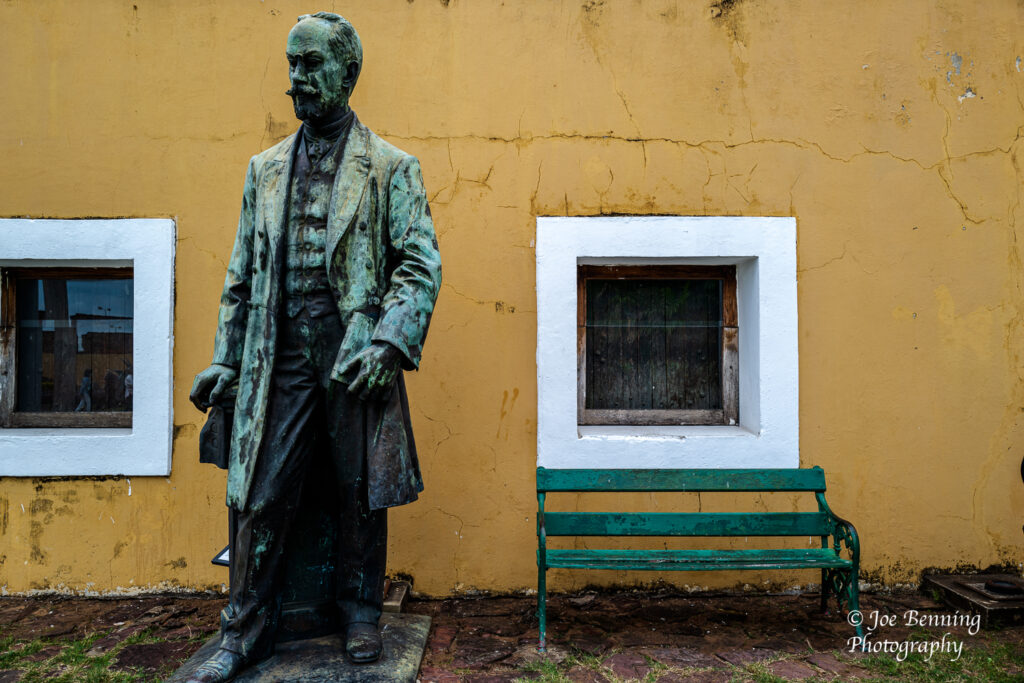
Wall in a Fort

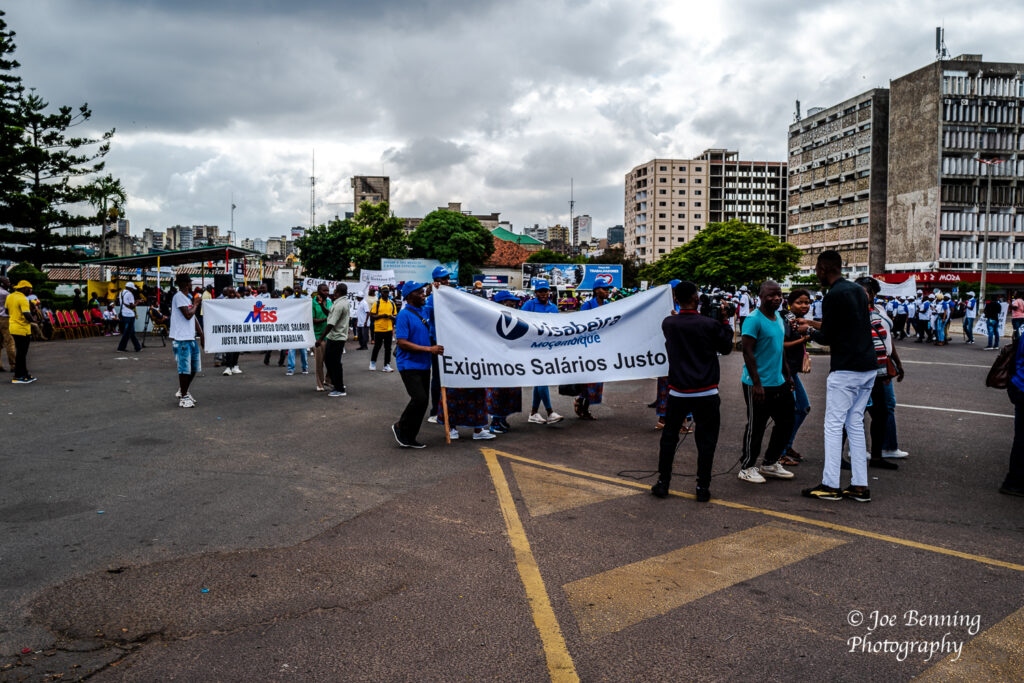
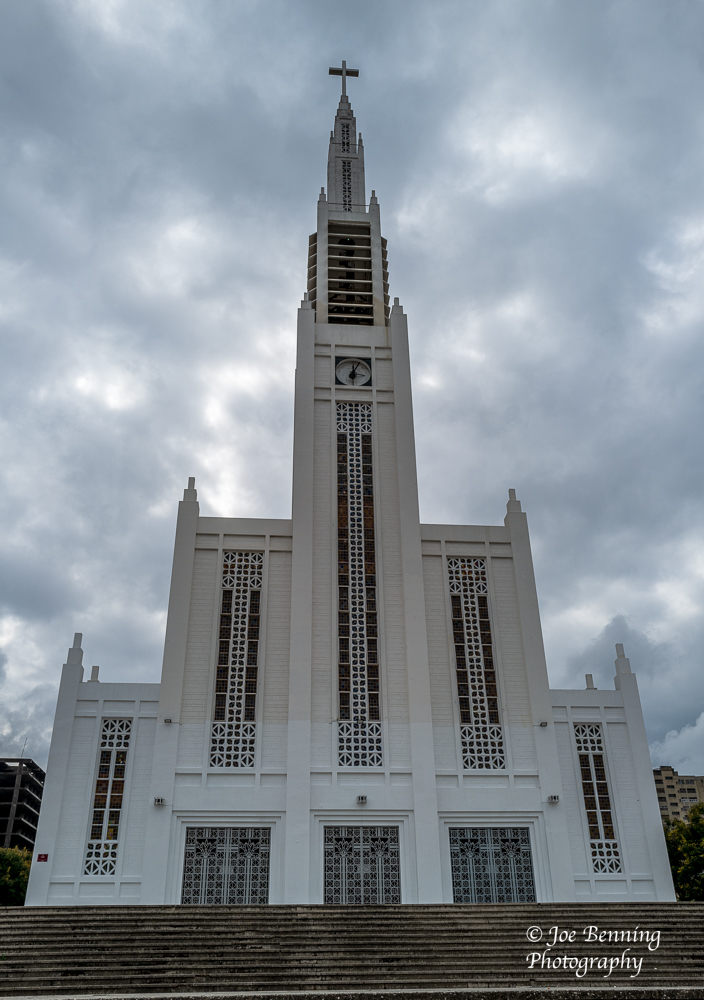
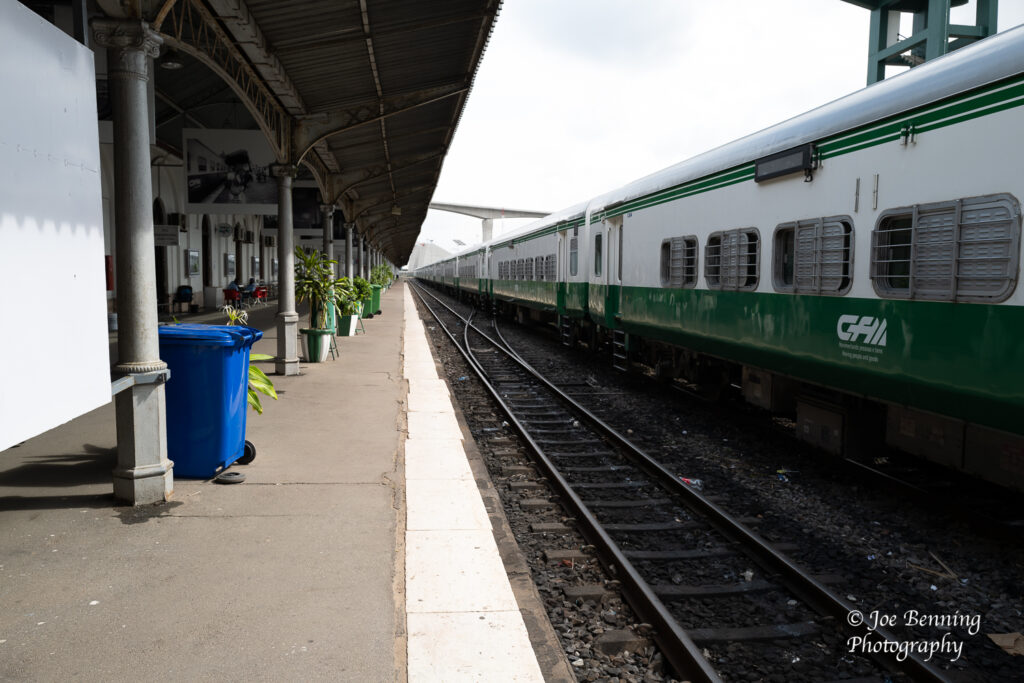
Mary Anne and I took a half-day tour around the capital, Maputo. As it turns out, it was a national holiday called Worker’s Day, I suppose in sympathy with May Day in Europe. We saw demonstrations of solidarity in the center of town where we visited the train station. We also saw the outside of the Cathedral of Our Lady of the Immaculate Conception. 

Workers Day
Cathedral Our Lady of the Immaculate Conception
Train Station

The city though, was dilapidated and the signs of its poverty were everywhere. One big problem is that the school system is an admitted disaster and the adult literacy rate is only around 60%—with 74% male literacy and only 45% female literacy. Mozambique has a lot of work to do if it is going to substantially improve its condition. 

Joe

Read More
Joe Benning
A Revealing Day in Nosy Be, Madagascar

A Stop in Nosy Be, Madagascar

April 28, 2023

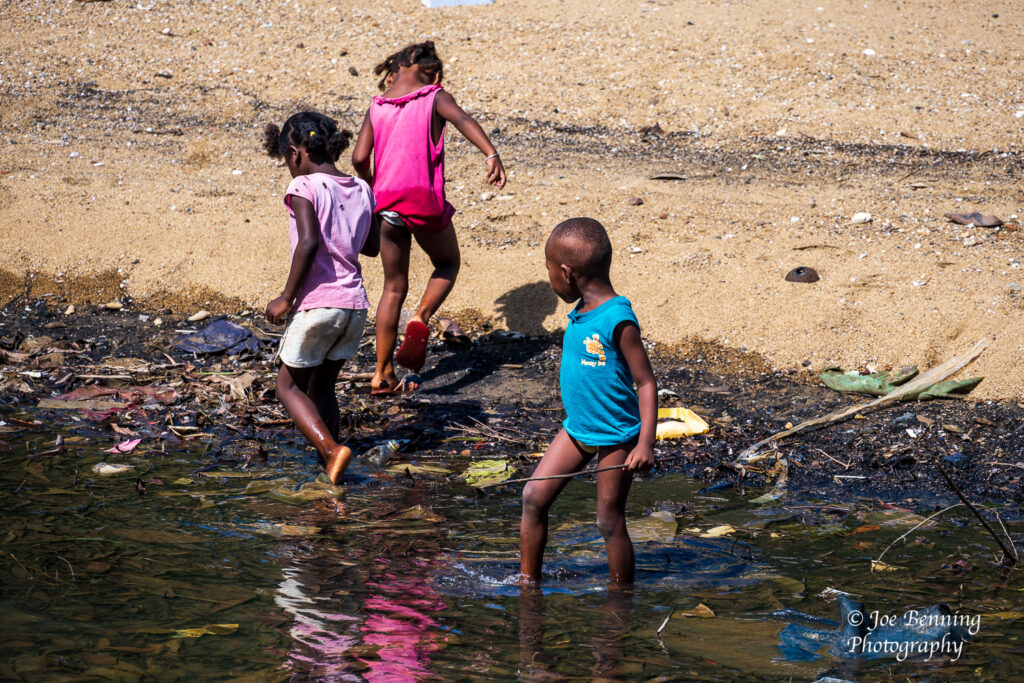
We arrived at Nosy Be, Madagascar on the 27th of April. (The island country is officially known as the Republic of Madagascar.) To put this visit in perspective, it is necessary to consider one overriding  fact, namely that Madagascar is  one of the poorest countries in the world. The appalling living conditions there testify to it. 

Children Playing in a Stream Full of Trash
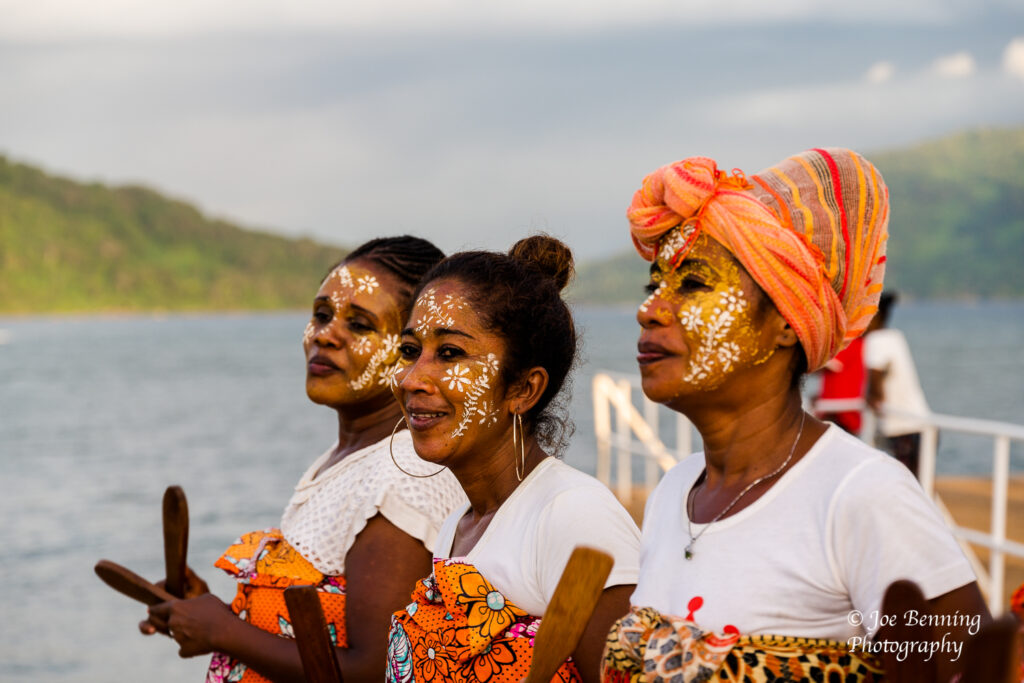
Dancers at the Port in Madagascar

Madagascar was governed as a Kingdom for a couple of hundred years before it was annexed by France in 1897. It was granted its independence in 1960. Since then it has gone through a number of political crises. It is now on its 4th republic which is structured as  a constitutional democracy, following a military coup in 2009. After a protracted transition it is now functioning, more or less, as a democracy with constitutional governance restored in 2014. The uncertainty accompanying its various political crises has undoubtedly played a part in the country’s poverty and lack of foreign investment.

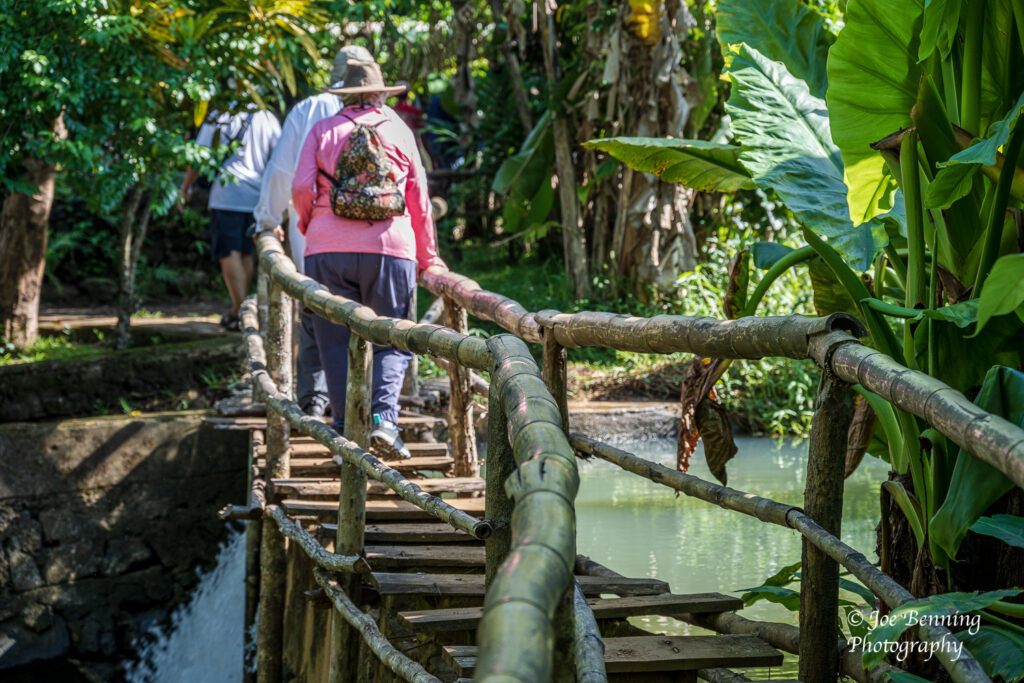
Mary Anne Crossing Wooden Bridge

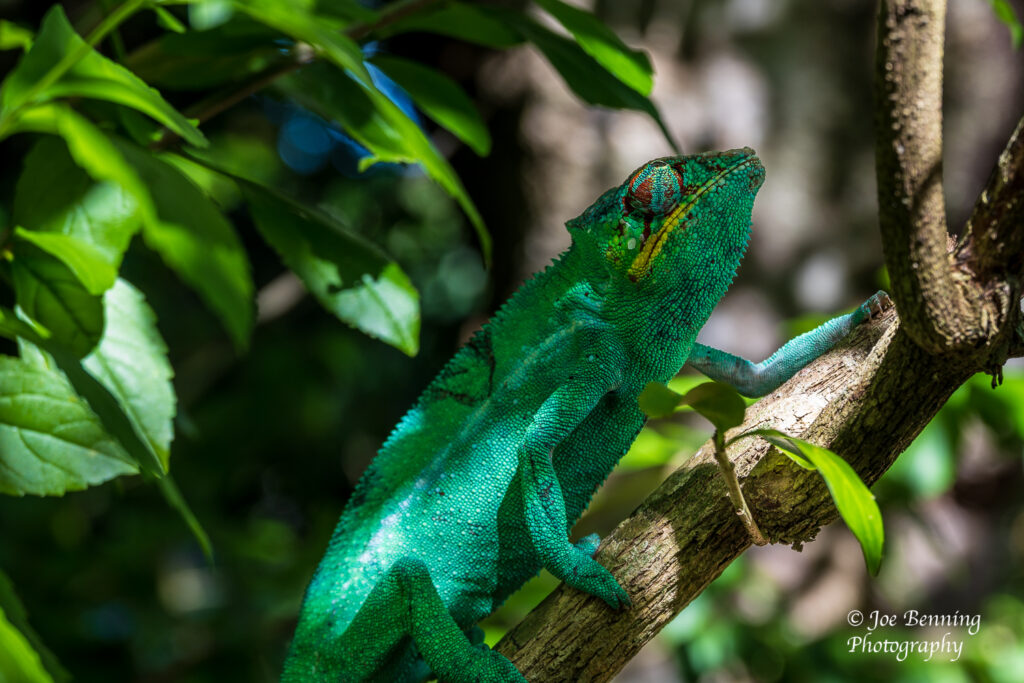
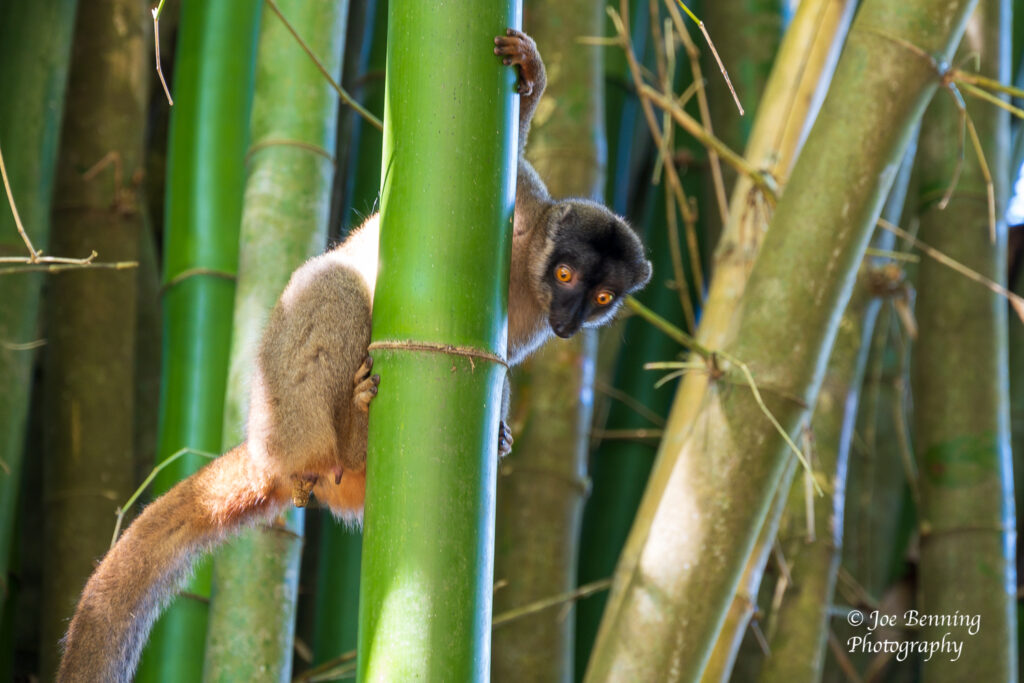
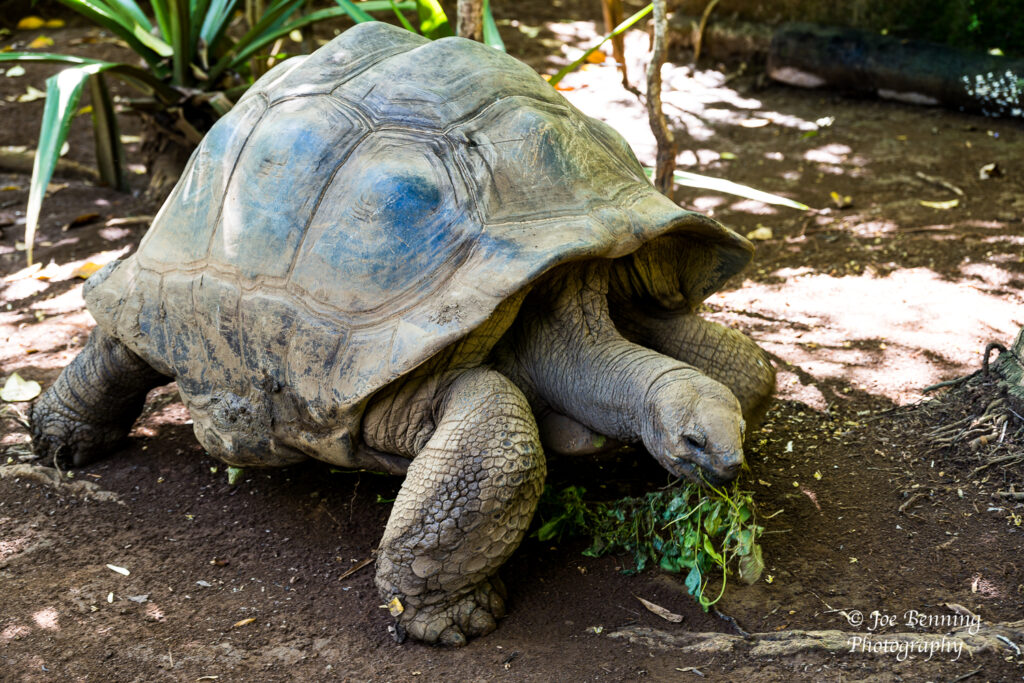
Because of its long isolation from neighboring continents there are lots of plants that are endemic to Madagascar. In fact more than 80% of Madagascar’s plant species are found nowhere else. Moreover, the island has been classified as a biodiversity hotspot by Conservation International.

Chameleon
Lemur in a Forest
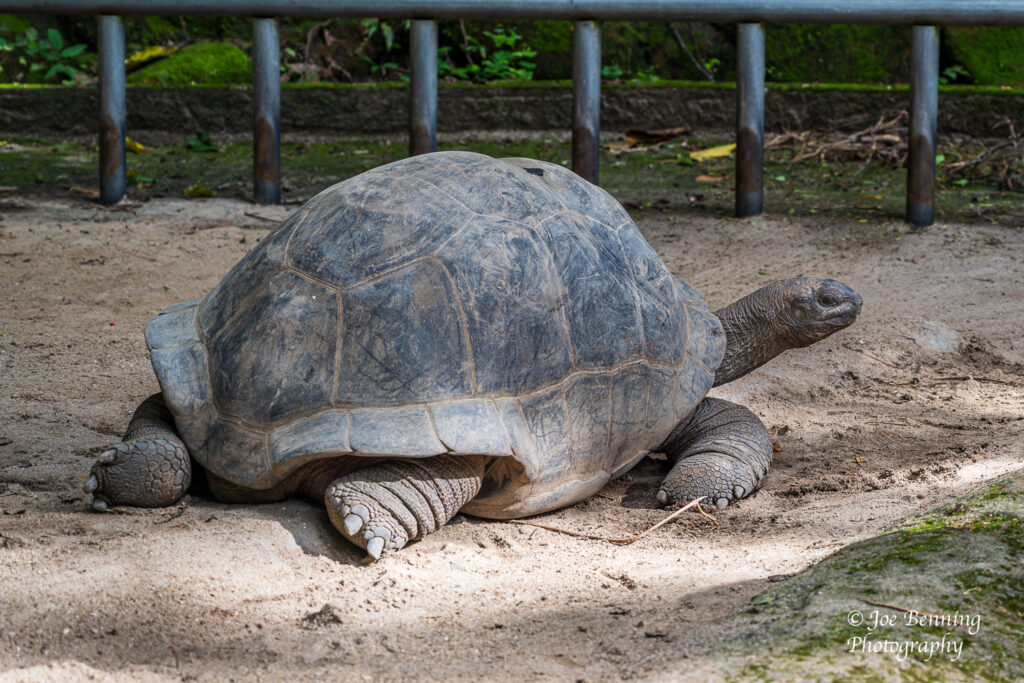
Giant Turtle–about 100 years old

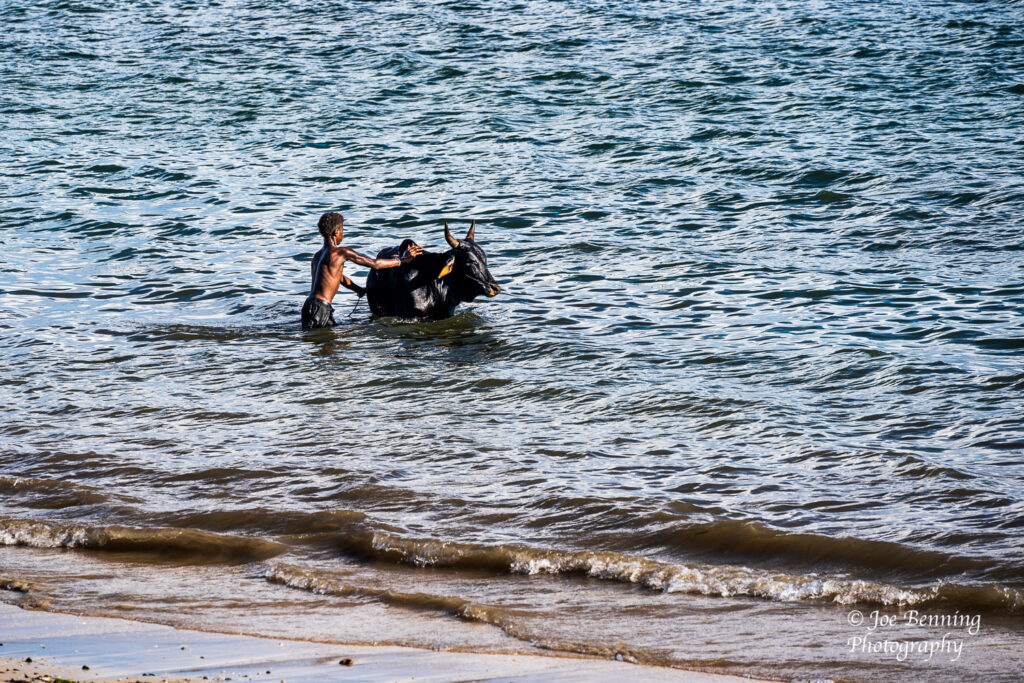
Mary Anne and I went on a tour in Madagascar and got a look at the biodiversity as well as the poverty that the people live under. Even at a “high end” hotel we stopped in, the conditions were less than ideal, to put it mildly. For example, the hotel was virtually surrounded by people desperately trying to sell souvenirs. Believe it or not, one young man brought his cow into the ocean at the resort beach. So, marketing messages aside, Madagascar with its biodiversity, surrounded by abject poverty, was both fascinating and a tragedy to see.  

Young Boy with Cow in the Ocean

Joe

Read More
Joe Benning
The Seychelles

On to the Seychelles

April 26, 2023

The Republic of the Seychelles, as it is officially known, is an archipelago in the Indian Ocean consisting of 115 islands. Its capital and largest city is Victoria which also happens to be the smallest capital city in the world measured by population. In fact at just under 100,000 people Seychelles is the least populated sovereign African country. Its island neighbors include Comoros, Mauritius, Reunion and Madagascar (where we are headed next).

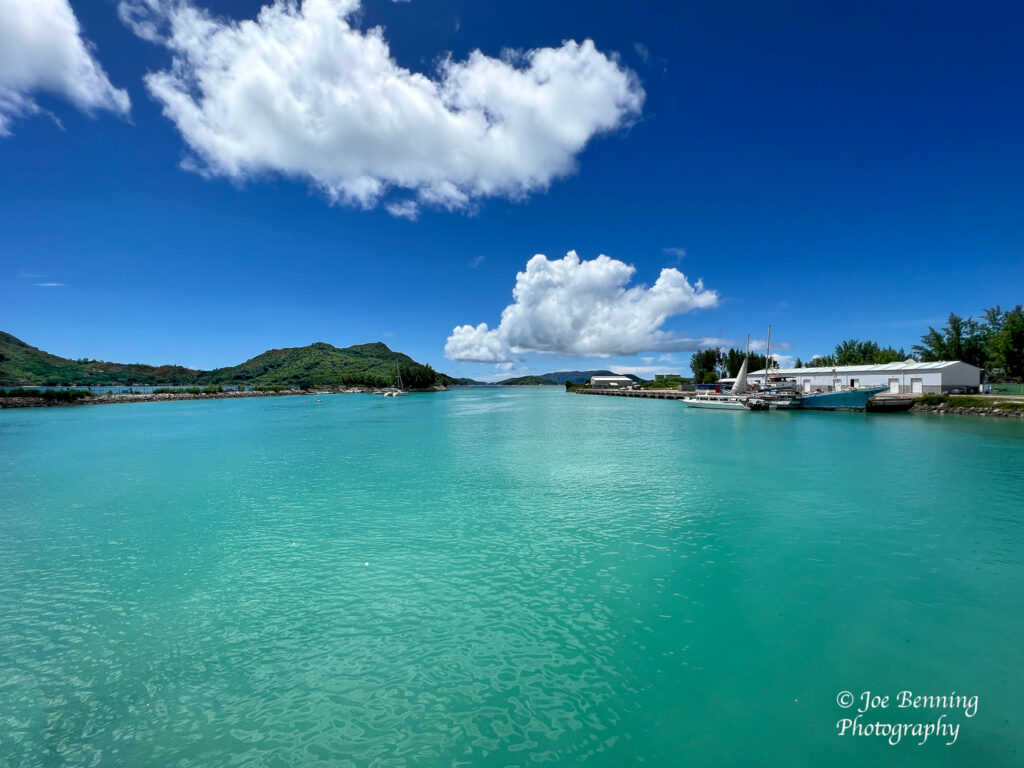
Aqua Waters Outside the Port

The most important industry for the Seychelles is tourism. But tourism, as important as it is, is not the whole story. The Seychelles has a market-based diversified economy. The government encourages foreign investment. Since the 1970s the country has experienced rapid growth—up to 1,600% expressed in Purchasing Power Parity. Seychelles has the highest nominal per capita GDP of any African country. In Africa it has the second highest Human Development Index ranking (after Mauritius). And it is the only African country ranked as high-income by the World Bank.

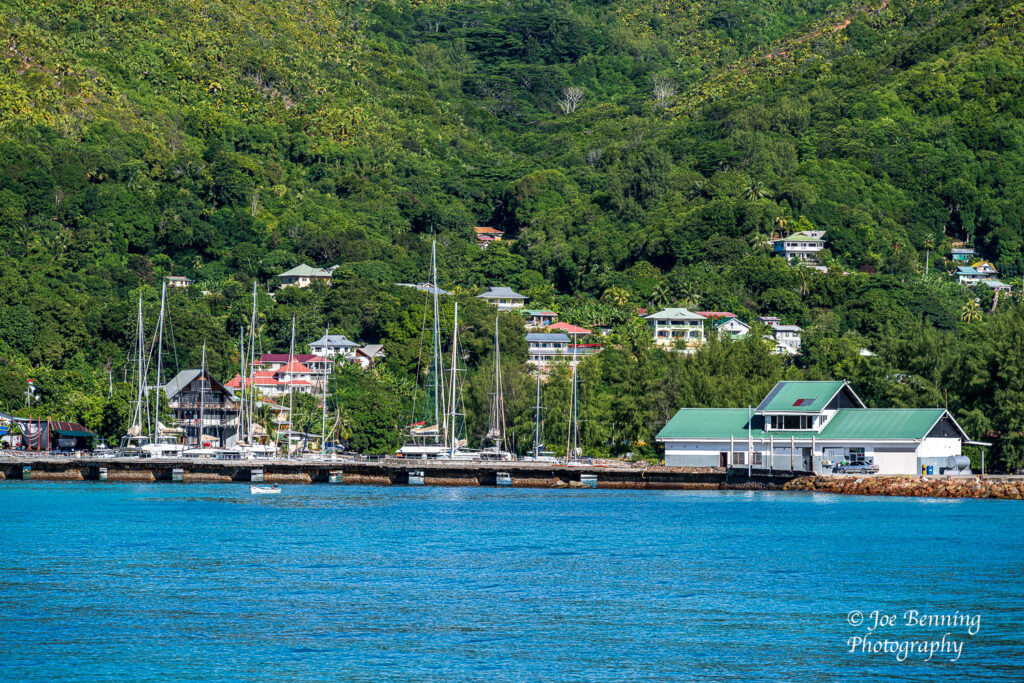
Tender Docking Station

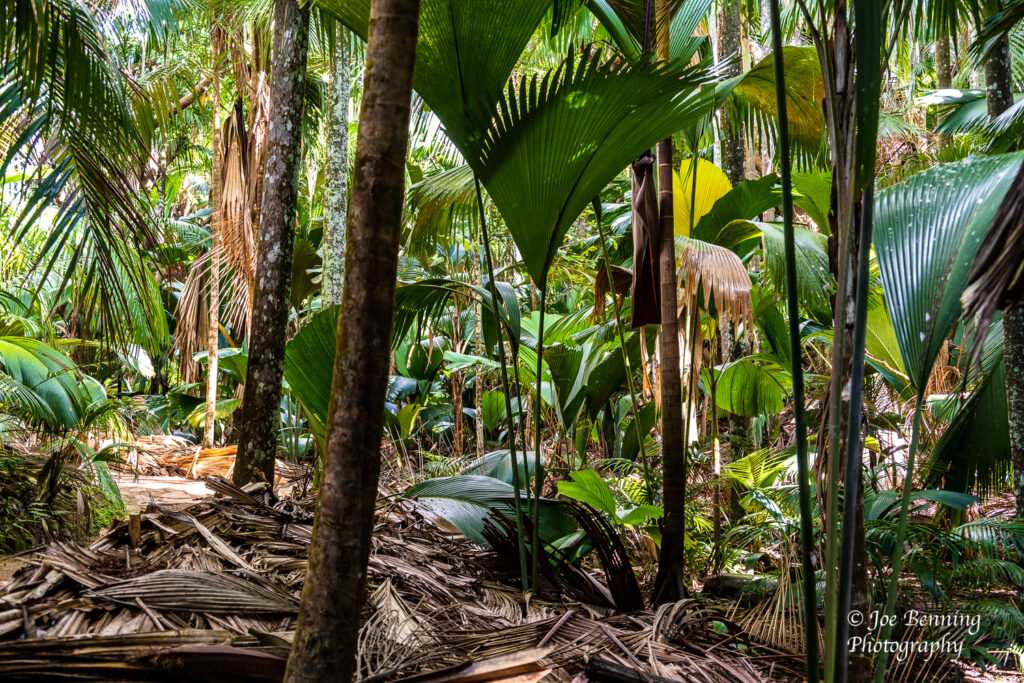
Mary Anne and I spent 2 days in the Seychelles. Among other things we hiked around the a palm tree forest in the  Vallee De Mai, a  botanical garden near Victoria, and viewed Coco de Mer trees. We saw large rock formations, giant tortoises and stunningly beautiful beaches. 

Coco de Mer plants in the Vallee De Mai
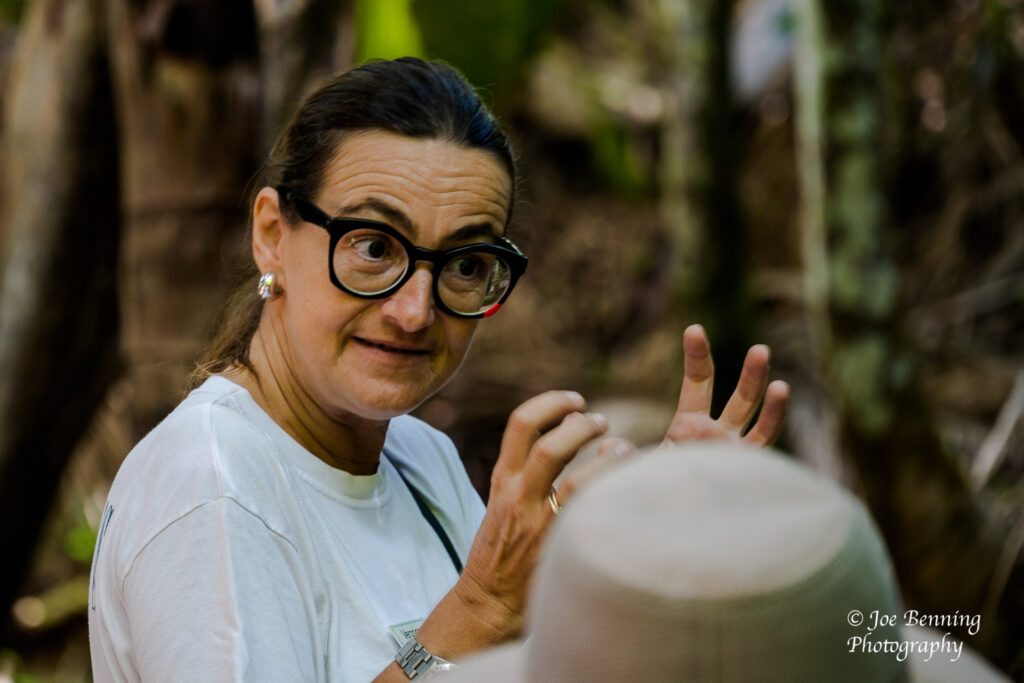
Tour Guide in Vallee de Mai
Giant Tortoise

All in all the Seychelles is a beautiful playground, in many ways not unlike St Bart’s. Definitely worth a visit—if you are in the neighborhood. Next stop Madagascar.

Photos from our visit are posted below.

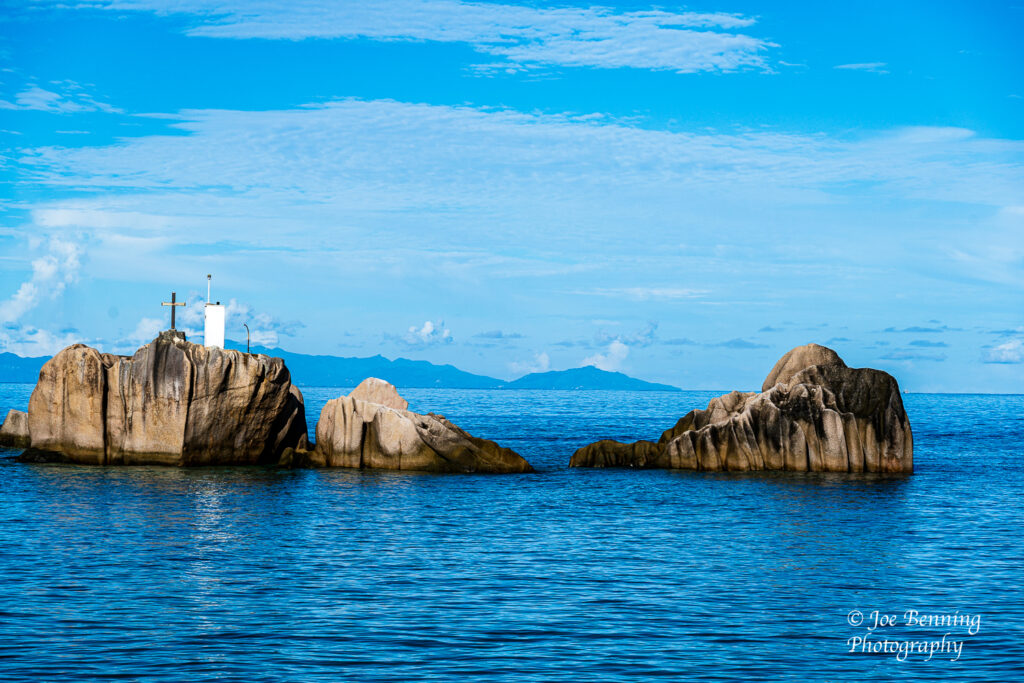
Rock Formation in the Seychelles
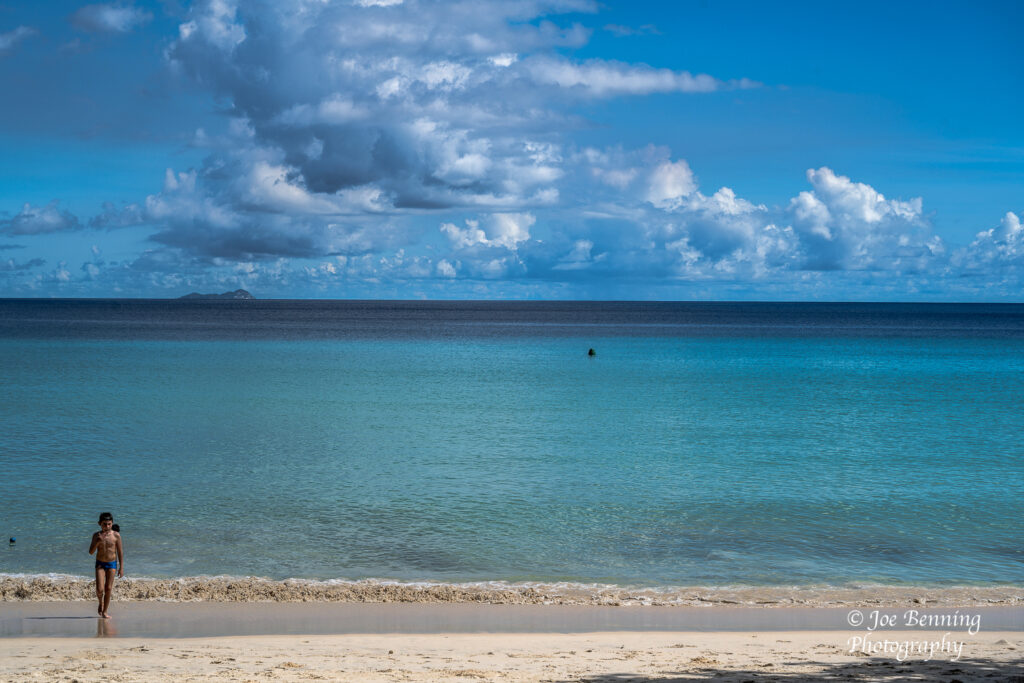
Seychelles Beach Resort

Joe

Read More
Joe Benning
Last Stop in the Middle East: Oman

Salalah,  Oman

April 25, 2023

Our last stop in the Middle East was Salalah, Oman. Salalah is the 3rd largest city in Oman, which is officially known as the Sultanate of Oman. It is one of the only two Sultanates in the world, the other being Brunei.  Salalah (pop about 200,000) is the capital city of the province of Dhofar. 

Oman is located on the southeast coast of the Arabian Penninsula and spans the mouth of the Persian Gulf. It shares land borders with Saudi Arabia, the UAE and Yemen. It shares maritime borders with Iran and Pakistan. It has the Strait of Hormuz as a coastal border. So Oman, is in a pretty rough neighborhood.

But it, and Salalah, its 3rd largest city, are peaceful. Unlike the rest of Oman which is always hot and dry, Salalah has a monsoon season that lasts from June through September. Consequently, by regional standards there is a good deal of vegetation. There is also a good deal of tourism, especially during the monsoon season. 

A photo of an Oasis in Oman

Governance in Oman is by absolute monarchy; the current sultan is Haitham bin Tariq Al Said who is said to be a benevolent monarch. The country runs on revenue generated by its mineral resources (Oil and Gas) and all menial work is performed by Asian migrants. The population is about 99% muslim.

When Mary Anne and I visited there we went to see an archeological dig. 

Salalah, Oman — April 21, 2023. A wide angle photo at an archeological dig in Oman being visited by tourists.

We also saw some spectacular landscapes and believe it or not, lots and lots of camels who pretty much roam about freely. 

Oman Landscape
Camels walk across a field

Salalah was an interesting place, very modern and well maintained. The sultan to all outward appearances is benevolent as monarchs go. But benevolent monarchs are benevolent until they aren’t and then things can get pretty ugly pretty quickly. We’ll see how things develop.

Joe

Read More
Joe Benning
Visiting Abu Dhabi

More on the Middle East — Abu Dhabi

April 24, 2023

After visiting Dubai we sailed over to Abu Dhabi — the capital city of the United Arab Emirates (UAE). It is the second largest city of the UAE, after Dubai. As of 2018 the population of Abu Dhabi was about 1.8 million people. However, most of the population consists of ex-pats; less than 500,000 are UAE citizens. Citizenship is largely restricted to children of men who are UAE citizens.

Downtown Abu Dhabi

The majority of ex-pats are migrant workers from lots of different countries, including Pakistan, Nepal, India, Eritrea, Ethiopia, Somalia, Bangladesh, Sri Lanka and the Philippines. Not to mention China, France, the UK, Italy and Serbia. Largely owing to its vast oil and gas reserves, Abu Dhabi has one of the highest per capita GDPs in the world. The reserves are mostly owned (about 95%) by the government. The official state religion is Islam. 

Abu Dhabi emphasizes educating the population and welcomes foreign universities. For instance, INSEAD, NYU and the Sorbonne have campuses in Abu Dhabi.

One of they key features of the city’s architectural history is the Sheikh Zayed Grand Mosque. It is an architectural masterpiece, recently built, and one of the largest mosques in the world. Mary Anne and I spent a good deal of time there. 

Grand Mosque in Abu Dhabi
Mary Anne in the Mosque
Outside the Mosque

We also went to a heritage site where we could see the city skyline. And a camel. 

Camel in Heritage Village

It should also be noted that we were there during Ramadan. All told the city was vibrant, bustling, modern and clean. That said you really wouldn’t really depend on the powers that be to defend individual rights. Essentially, there aren’t any. What rights you have in practice pretty much depends on the attitude of the Emirs. The Western notion of rights bearing individuals who are protected by the separation of powers is alien. Unfortunately it seems as if that idea is alien to a lot of Western university students too. I like to think this too shall pass.

Anyway, the general travel rule—don’t lecture the locals and annoy them—seems to hold here.

Joe

Read More
This website uses cookies to improve your experience. Cookie Policy