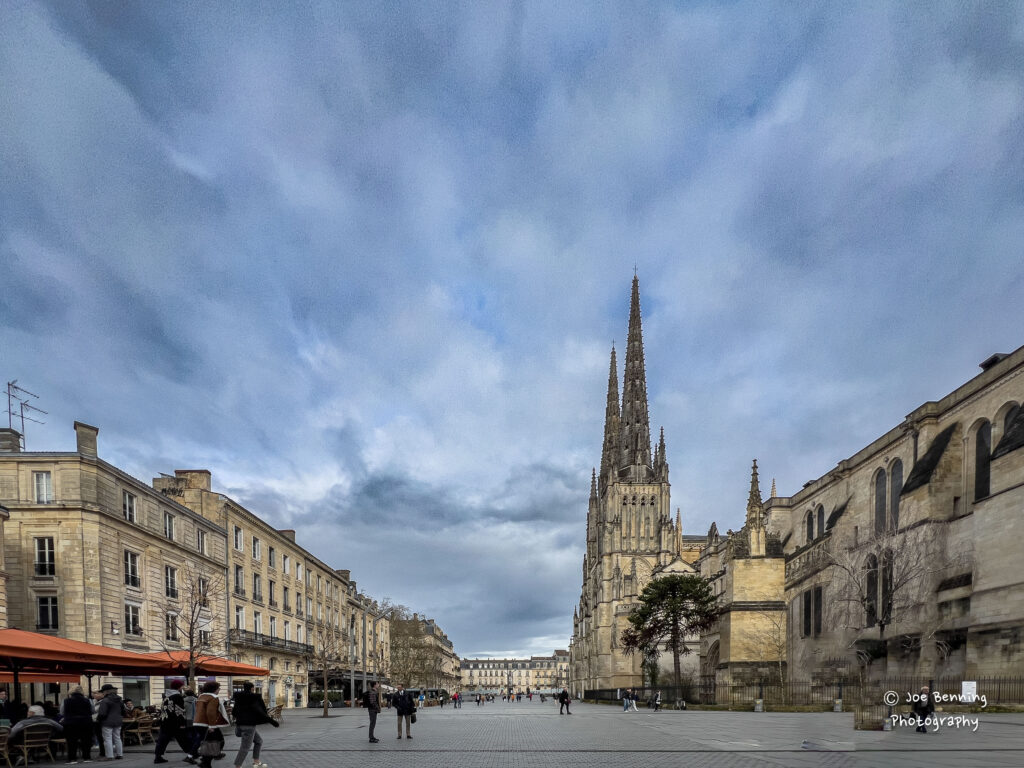
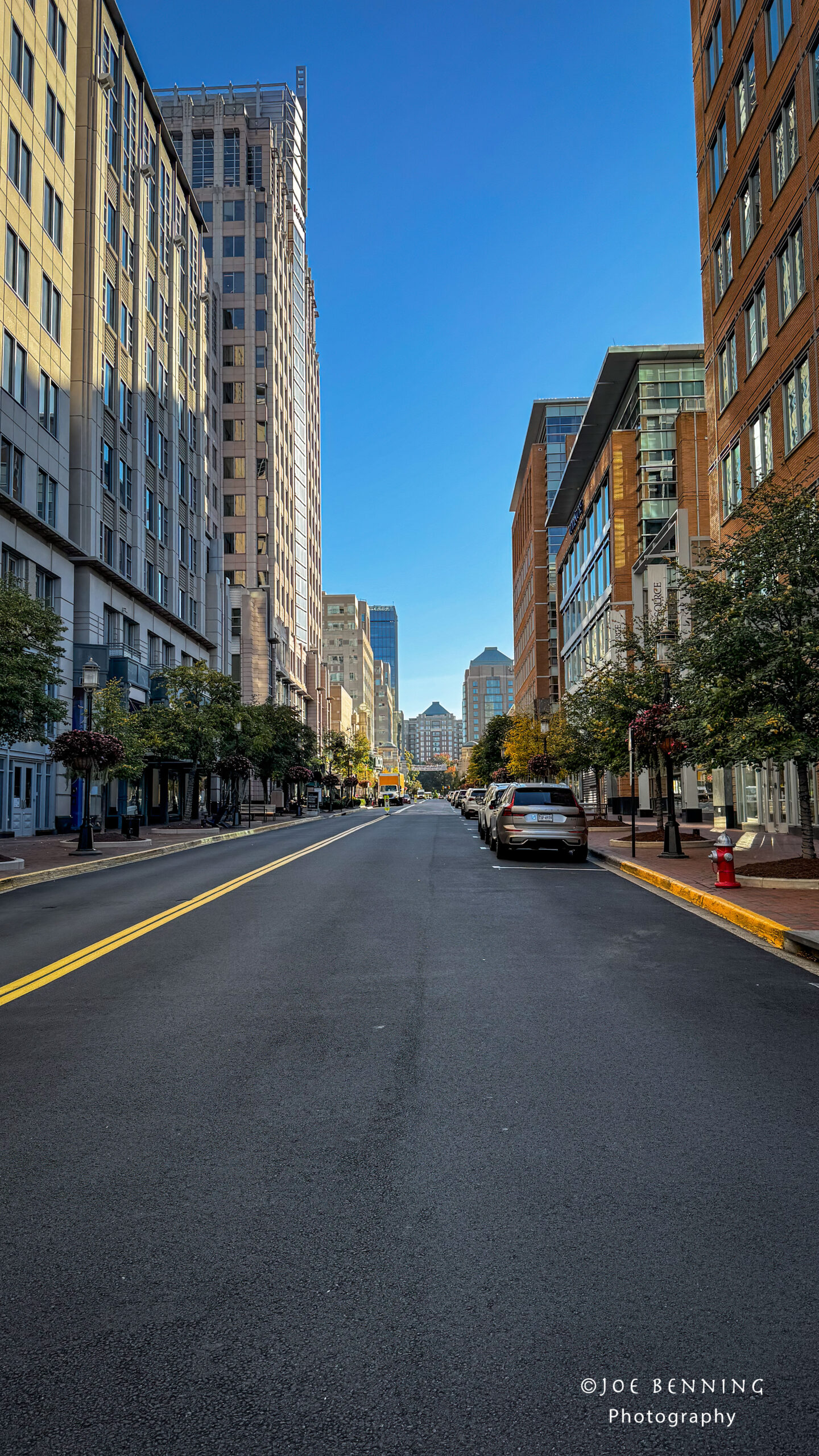
It would be an understatement to say that the year 2024 was eventful. Anyway, it was busy for us. We started out slowly, but before the year was over—in a flash it seems—we wound up visiting Bordeaux for about 7 weeks; seeing friends from England; going to Bermuda for a while; visiting the Grand Canyon as well as Bryce and Zion National Parks, and finally going to Australia for about a month where we also visited friends.
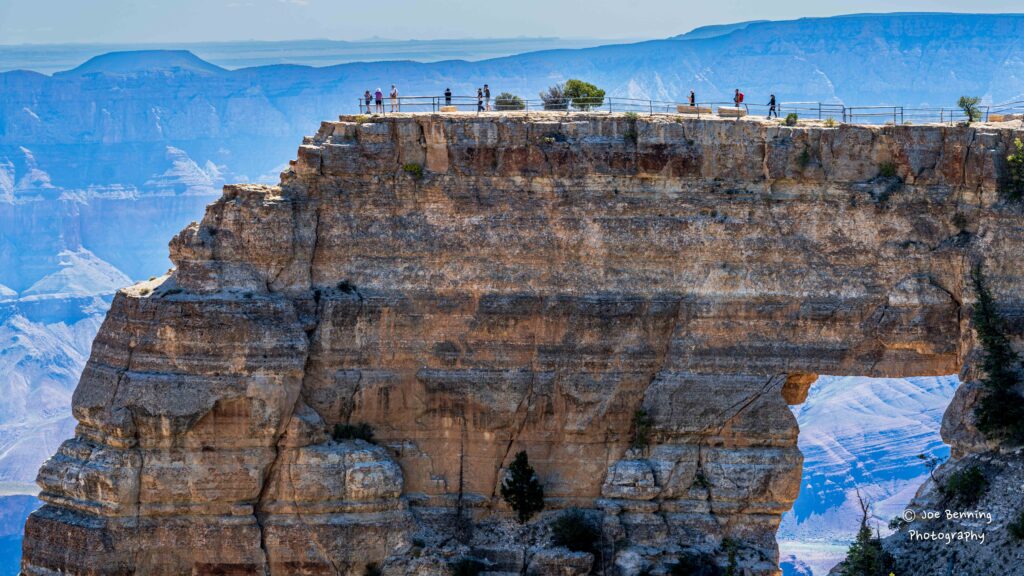
A wide angle iPhoto taken in the center of Boredeaux France, with the Cathedral of Saint-Andre towering over the square.North Rim, Grand Canyon, AZ, USA — Sept 23, 2024. A photo of tourists looking out from Angels Window at the end of the Cape Royal trail on the North Rim of the Grand Canyon.
And that doesn’t count trips to the Blue Ridge mountains and Appomattox here in Virginia, or trips to DC or to New Jersey where we visited family and friends.
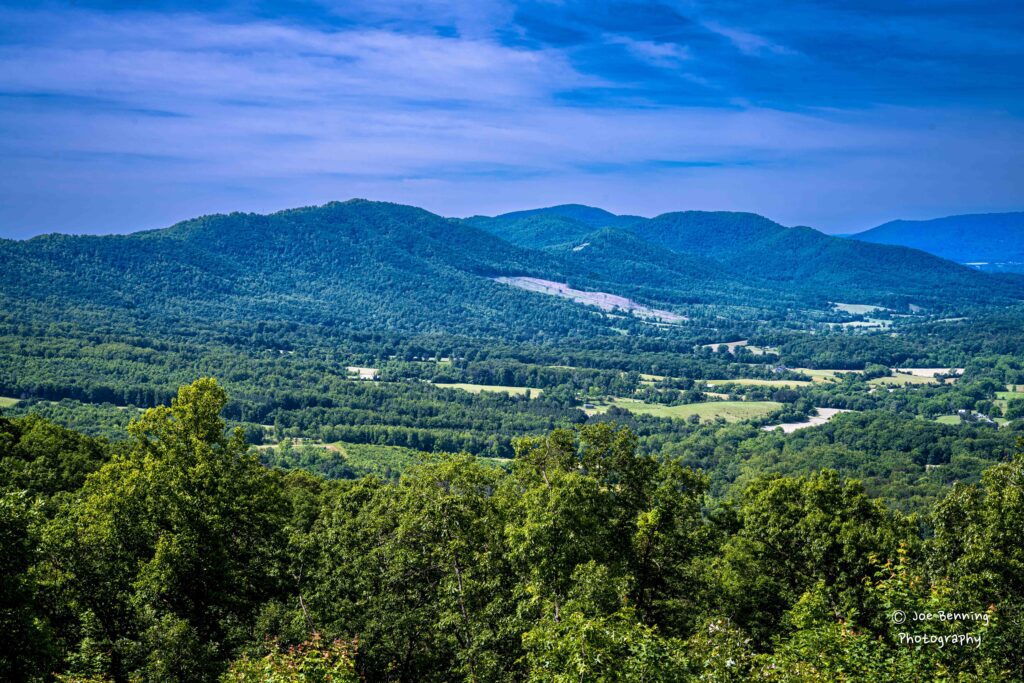
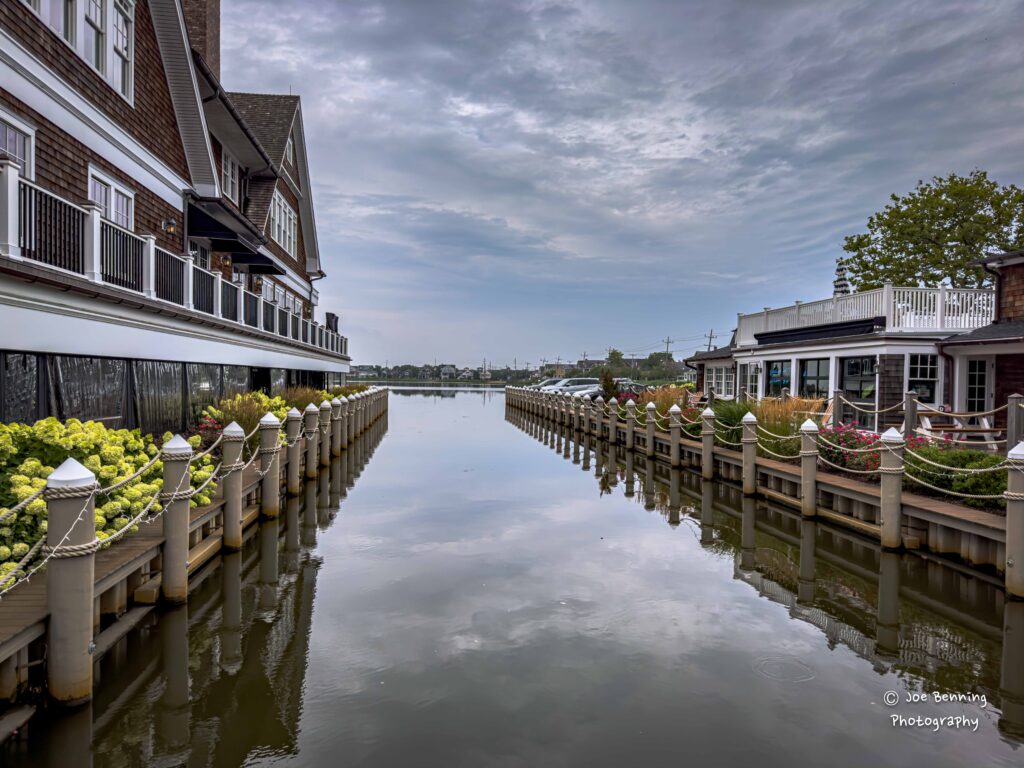
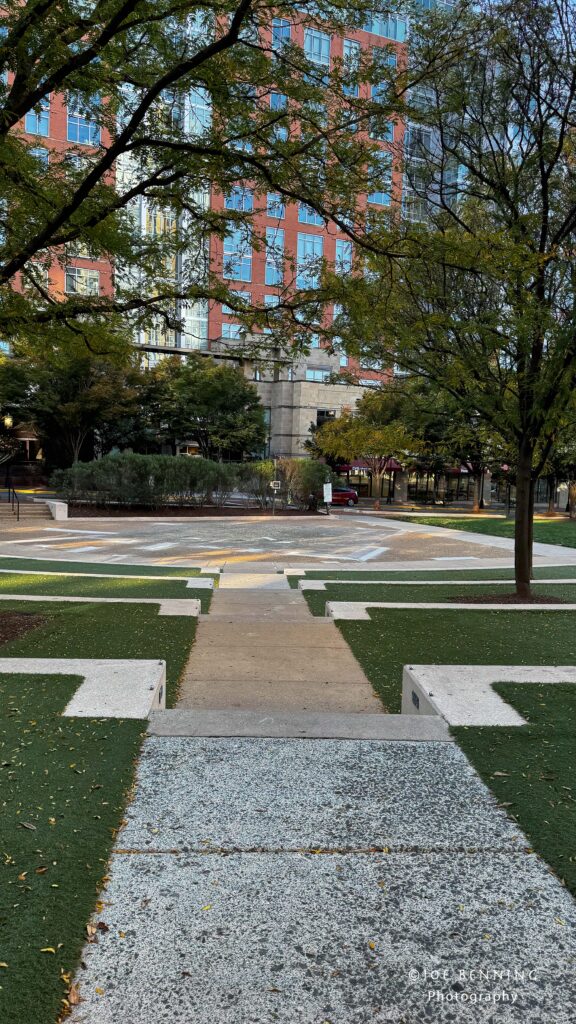
Bedford, Virginia, USA — June 1, 2024. A photo overlooking the Shenandoah Valley near the Peaks of Otter close to Roanoke Virginia.Bay Head, NJ == a horizontal iPhone image of two restaurants on the water in Bayhead, NJA wide angle iPhone shot of Reston Town Center Park taken as Fall approaches.
For 2025 we have booked a full travel schedule as well. Expect photos from Brazil, Argentina and other places in South America. We will also spend a little time in Morocco, the Greek Islands, Istanbul, Croatia, Italy, Spain, England and Wales. So 2025 looks like it’s going to be pretty busy.
Thanks everyone for logging on. Feel free to post comments and send a website link to friends…(www.joebwnningphotography.com)
We finally headed back to the U.S. from Australia in early December—to get ready for Christmas and our next trip that starts in January of 2025. But before checking out, a couple of observations about our trip and our guides on the trip.
Our group leader, Mary Gordon, was just fabulous. She hailed from Adelaide. Among other things, her sister, Elspeth Kyle-Little, serve as a guide and site coordinator for part of the trip. Both sisters are quite accomplished. Elspeth has run small businesses and worked as an artist in addition to working at Road Scholar. Mary is trained in science and her work has included caring for reptiles at the museum of South Australia, running an ecology project at the University of Melbourne and setting up her own vineyard. All in addition to her work at Road Scholar.
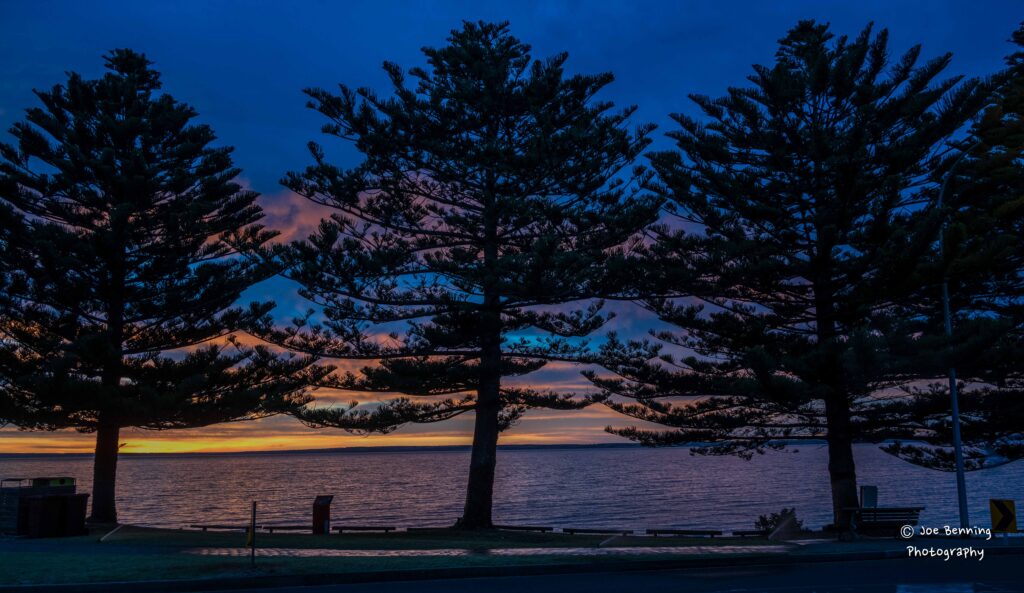
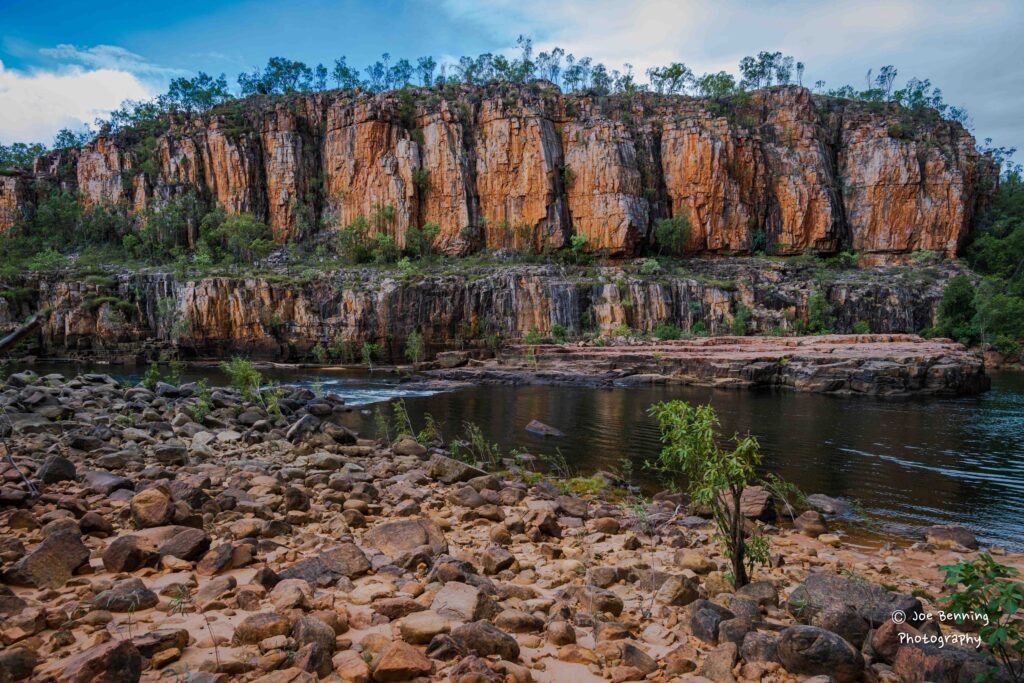
While we were exploring various parts of Australia–at a breakneck pace–we saw a beautiful sunrise on Kangaroo Island and we got to visit Katherine Gorge.
A wide angle shot of the sun rising over Kangaroo IslandA wide angle shot of Katherine Gorge in Nitmiluk National Park in Australia
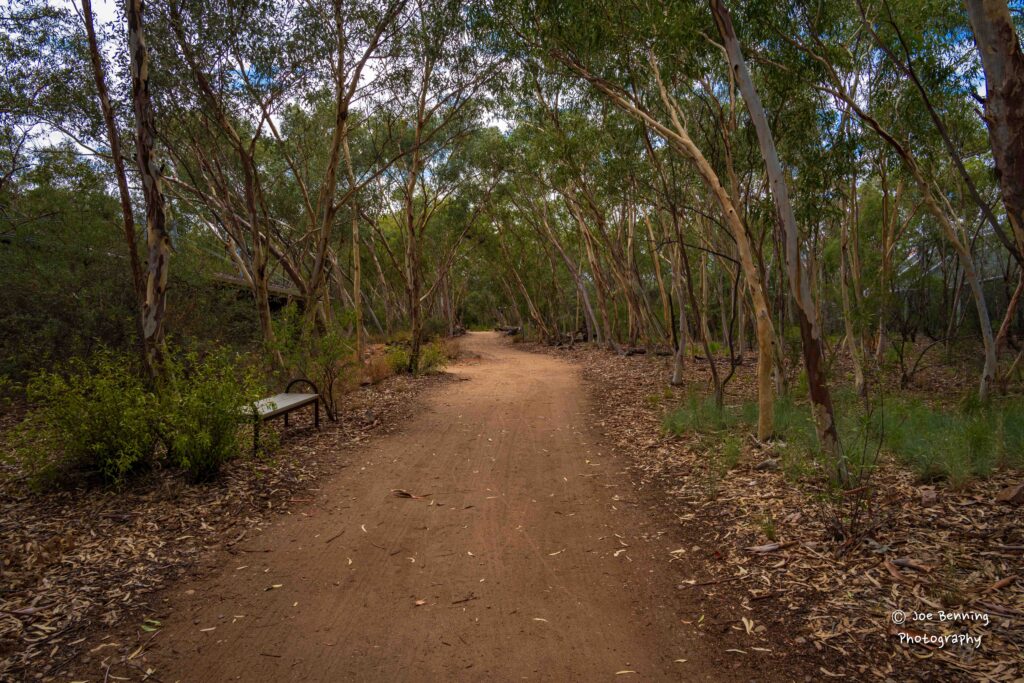
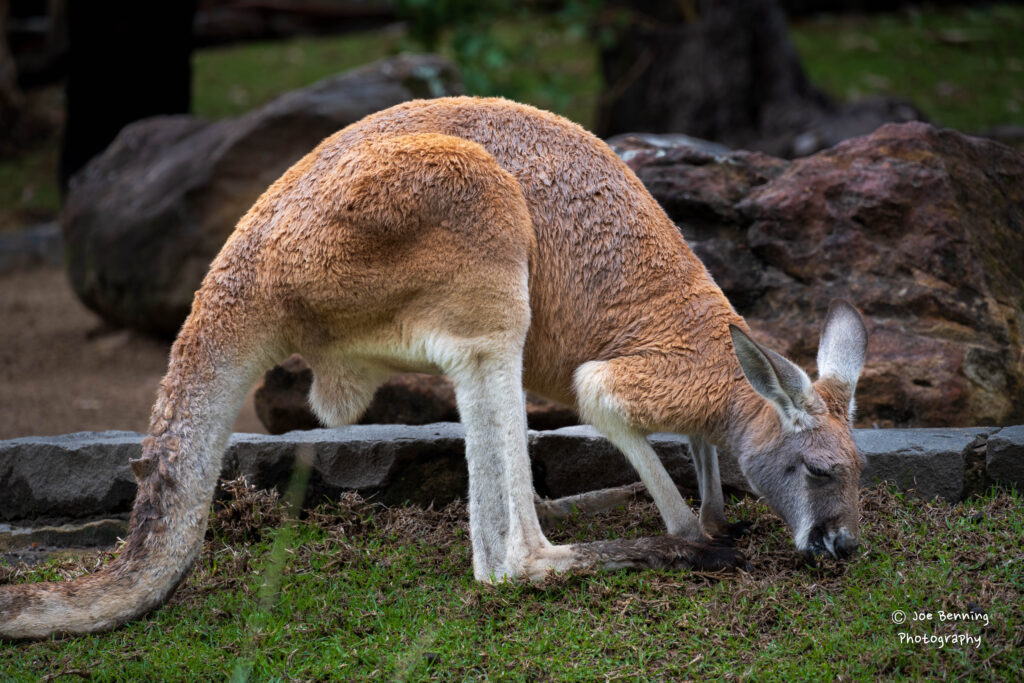
We hiked in the hot and dry outback, then hiked in the rain forest, and saw a lot of wildlife.
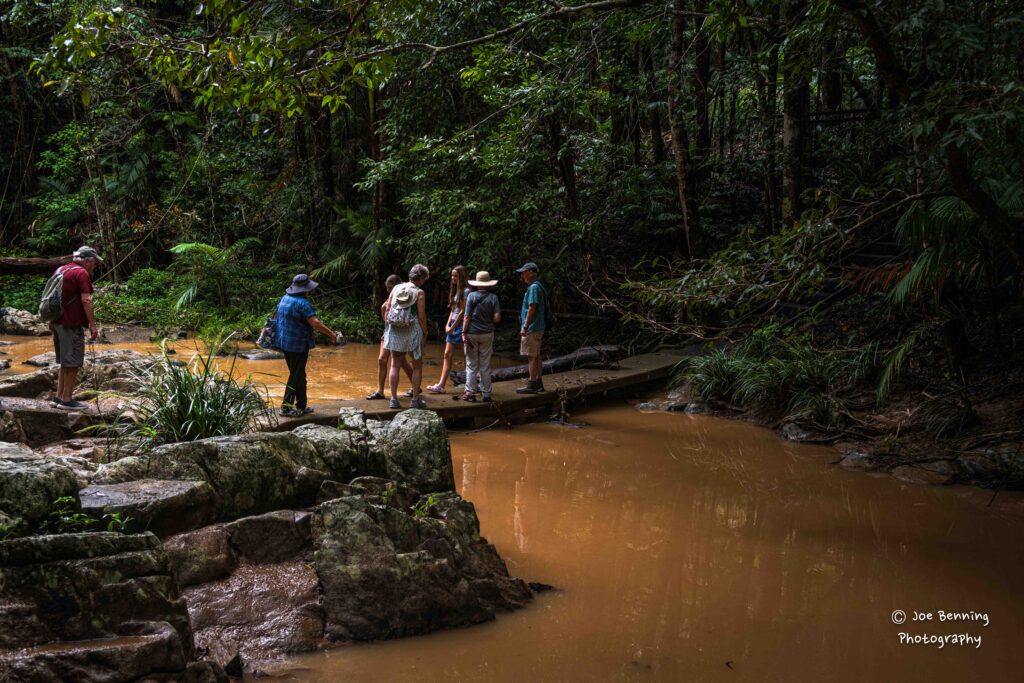
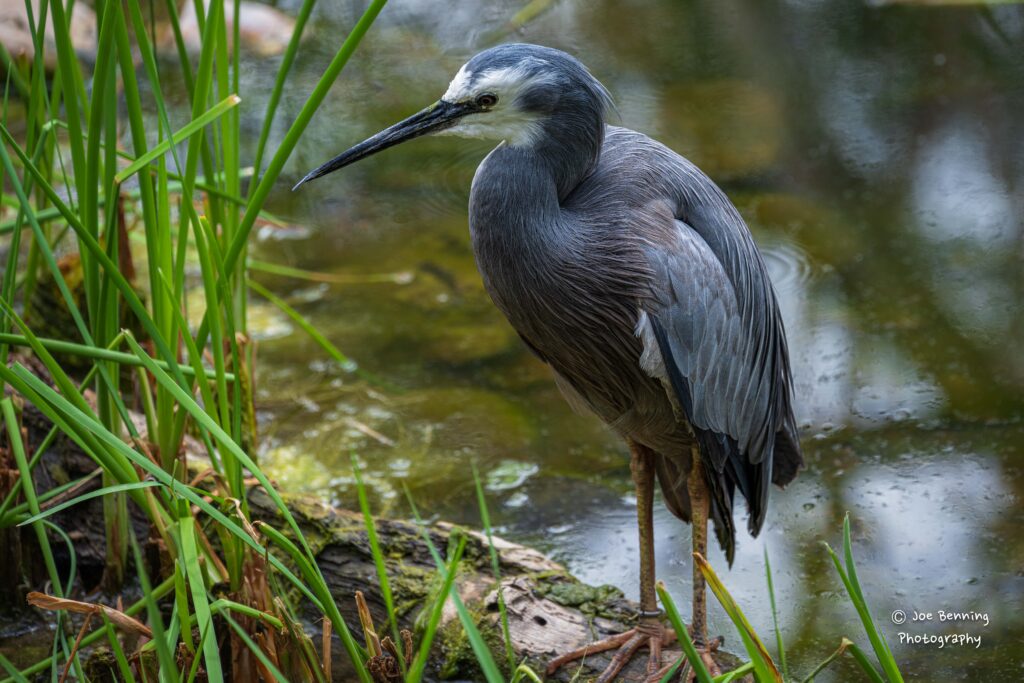
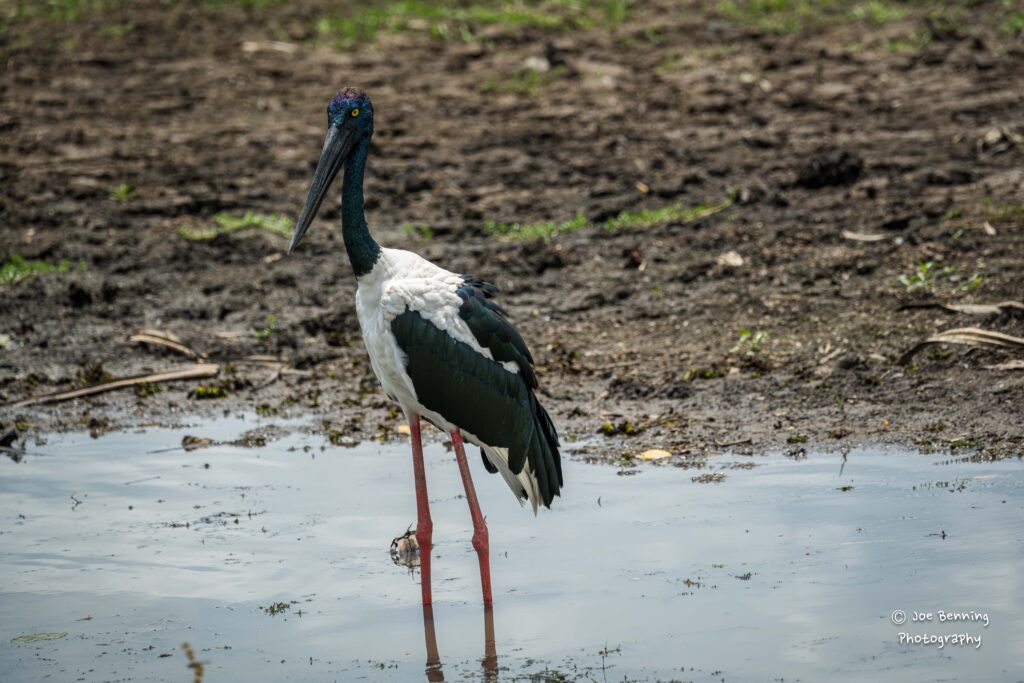
A hiking trail in the woods near Alice Springs, AustraliaA photo of tourists on a make-shift bridge crossing the river in a rain forest in the Northern TerritoryPhoto of an Australian White Faced Heron (Egretta novaehollandiae)A telephoto shot of a black necked stork in a river in Kakadu National Park
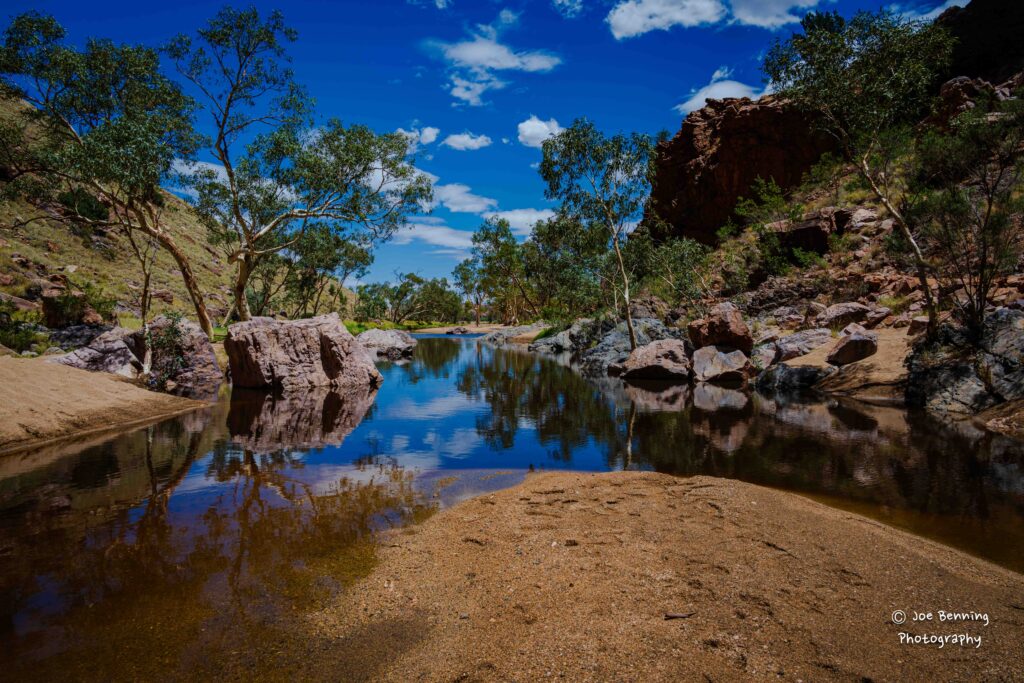
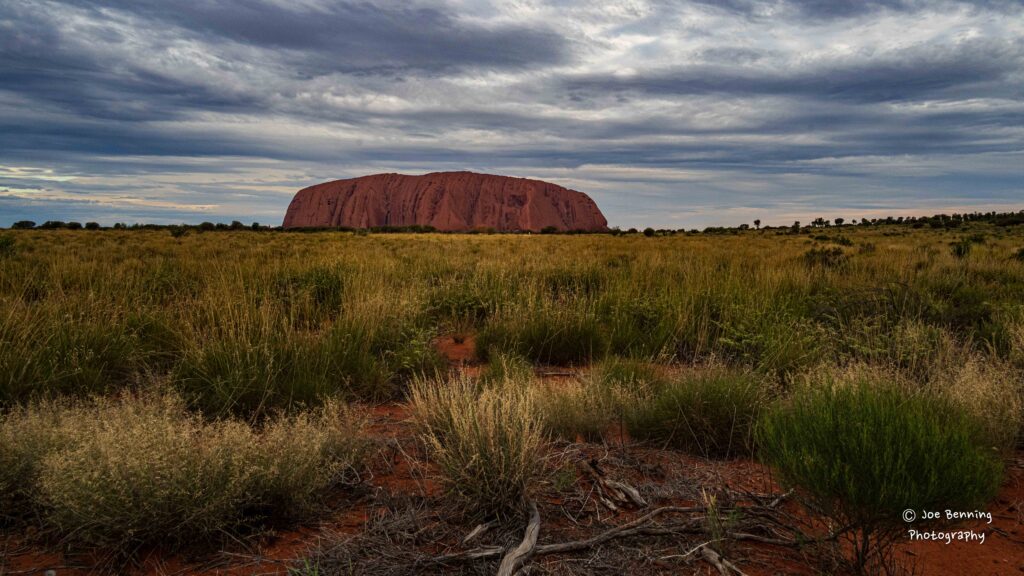
We also visited Simpson’s the stunningly beautiful Simpson’s Gap, not too far from Alice Springs. And of course we went to Ayers Rock, a kind of must see when trekking around Australia. Actually we did more than just visit. We had a bit of a cocktail party, organized of course by Mary, while we watched the sun go down. Kind of like a sundowner when you go on a Safari.
A permanent waterhole in Simpson’s GapA dark landscape photo of Ayers Rock while storm weather threatens
A brief note—the photos on this blog (and more) can be viewed in full resolution at www.evocativephotos.com. Look under Australia 2024.
We have just returned from a delightful, informative trip to Australia. We started with a visit to see our dear friends in Brisbane, Bronwen and Sep, in their fabulous new home, which they designed and built with every conceivable amenity, combining sustainability and elegance. We had the great pleasure of meeting some of their family, and saw many of Brisbane’s highlights. The perfect start to a terrific trip!
The pool at Bron and Sep’s house in Brisbane
We met our Road Scholar group in Sydney in early November and started a 4-week journey to see as much of Australia as possible. Since Australia is almost as large as the continental US, we did not see everything, but we saw A LOT.
Sydney Harbor
In Sydney we walked across the Harbor Bridge, seen by many television viewers as the start of New Year celebrations world-wide. We visited the Taronga Zoo (where we focused on animals native to Oz), and saw a performance at the Sydney Opera House Drama Theatre (where we also had a wonderful tour of the entire facility). We went to Bondi Beach to see the surfers, and learned about the RSL (Returned Services League), which is a bit like the VFW clubs in the US.
Bondi Beach on a Rainy Day
Next, we flew to Perth on the west coast, and started our visit in the beautiful Kings Park, which looks down over the city and the Swan River. We visited the Swan Bell Tower and had a chance to try ringing the bells (the way it’s done on Midsomer Murder episodes!). We saw nearby Fremantle, learned about mining and agriculture in Western Australia, and moved on to Rottnest Island, where many Aussies vacation and visit the quokkas (small marsupials, very cute) who live there. Last, a quick trip to the Perth Mint, where we saw a gold pour to create a gold bar.
Beach at Rottnest Island
From Perth we boarded the India Pacific train and began our 40+ hour trek across the Nullarbor (“no trees”) Plain into Adelaide, South Australia. Interesting to go for 2 full days and see virtually no towns or signs of civilization. Adelaide is a charming city, bounded by mountains. It is the only freely-settled colony of Australia (not a spot to drop off convicts, as other settlements were).
Welcome to the Bar CarRiding the India Pacific Railroad
In Adelaide we started learning about the Aboriginal people in Australia – their history, culture and connections to the land. In some ways their story is similar to that of Native Americans, and there is a lot of discussion about the past and what is done to honor and respect the original dwellers on the land.
We took a ferry from Adelaide to Kangaroo Island, and yes, we saw more marsupials (kangaroos, wallabies, koalas and wombats) as well as sea lions, raptors, dingoes and echidnas. We also visited a eucalyptus distillery and learned a lot about this tree, which can be found all over Australia in various forms.
Coming back to Adelaide, we spent a few days learning more about South Australia – sheep farms and shearing, other types of farming (including vineyards), mining and other industries, art, and how the State of South Australia is governed.
Sheep Shearing on Kangaroo Island
Then, on to the Northern Territory, which is relatively close to Asia. NT was a pioneer outpost, and is relatively undeveloped. As we arrived, tropical rains were falling and people were readying for monsoon season. We visited Kakadu National Park, with its incredible biodiversity (birds and plants of all types, with wetlands/crocodiles and a rain forest) and Aboriginal rock art. We spent some time in Darwin, learning about its WWII history and the bombs that fell on it during the largest single attack on Australia.
A Sunset in the Northern Territories
To see more of the NT, we left Darwin on the Ghan train (named after the Afghans who built the train line). We headed south into the center of Australia, looking for wild camels (when the train line was built, the camels that had hauled construction materials and workers were set free, and many now roam central Oz) – we only saw one, racing along next to the train. We had a stop and left the train to see Katherine Gorge, which was stunning (and has great significance for the Aboriginal people of that area).
Katherine Gorge
After a day and night on the Ghan, we reached Alice Springs, which is just about the center of Australia, and developed due to the need for an overland telegraph line to connect Oz to the world. Due to its location and the remote, sparsely populated areas around it, Alice Springs developed 2 innovative programs that served (and still serve) the people of the Outback: The School of the Air and the Royal Flying Doctor Service.
Since 1951, the School of the Air has been providing education to children in the Outback, first through two-way radio and now through computers. The School covers 521,000 square miles (that’s twice the size of Texas), and averages 120 students at any one time.
The Royal Flying Doctor Service provides emergency and primary care health services throughout Australia, with 900 patient contacts daily. Since its founding in 1928, the RFDS has expanded, and now has 23 air bases, 87 aircraft, and numerous other resources to provide health care to Australians.
After a night in Alice Springs, we headed into the Outback again, to see Uluru,Kata Tjata and other rocks and geological formations with sacred significance to the Aboriginal people of the area.
A wide angle iPhone photograph of Ayers Rock in the Australian OutbackAt a Bird Show
Then on to Cairns and its Tropical Rainforest and the Great Barrier Reef. Some educational lectures about each of those features and then we were off to snorkel (for the first time!) at the Reef – it was amazing. The next day was a visit to Kuranda – a mountain retreat surrounded by the rainforest. We took a skyrail over the canopy of the rainforest and leaned more about all the flora and fauna living within it.
A wide angle iPhone photograph of the Great Barrier ReefRiding the Sky Rail
Finally, a flight back to Sydney and then a long flight home.
It was incredible to see so much in less than one month – and to learn so much.
Australia has an interesting history, and amazing diversity of geography that includes grasslands, mountains, deserts and rainforests. The life forms in these environments reflect the isolation, and the external influences, over thousands of years. We found that protection of the environment is a priority throughout the country. Australia is relatively dry overall, so conservation of water and other resources is also a priority.
Australia has a fun vibe and the people there enjoy a laugh, even as they poke fun at themselves. We heard many times during our trip that fairness and mateship are highly valued by Aussies, and that seems to be true.
Australia was built in large measure by the hard work of convicts and self-made men, which might explain why the Aussies we know look skeptically upon authority, and like to make their own decisions.
Australia – what a great place. We’d go back in a minute!
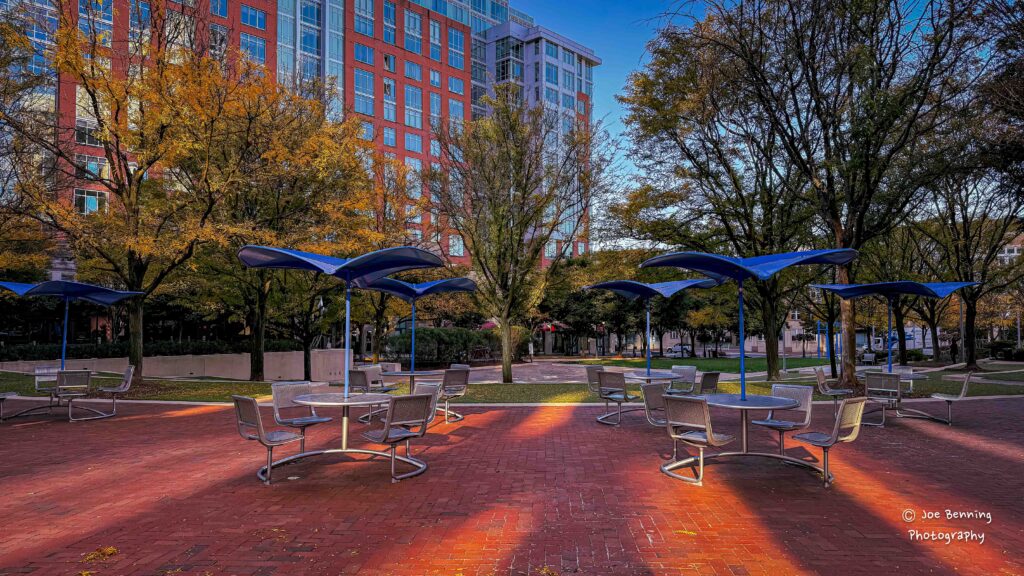
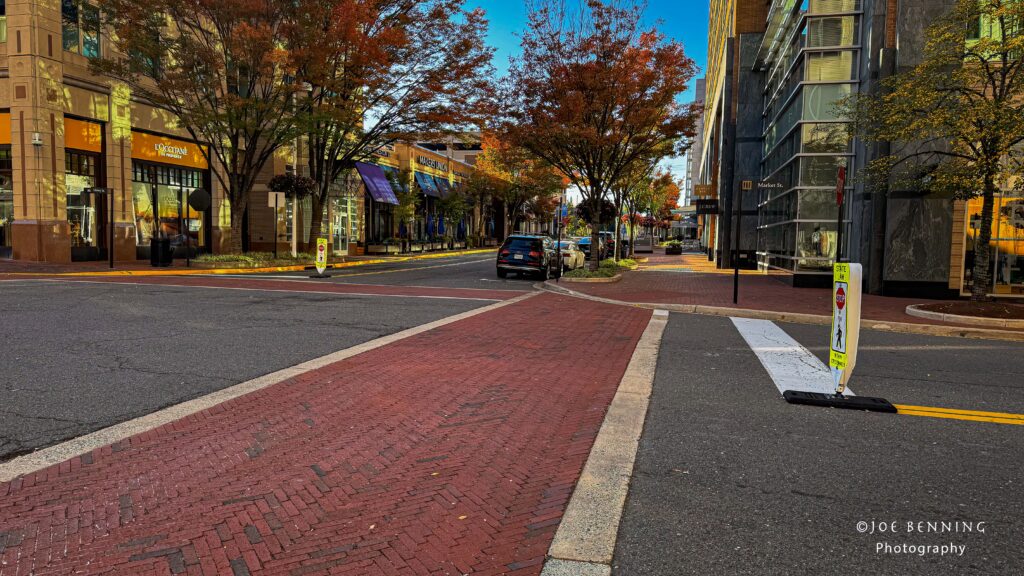
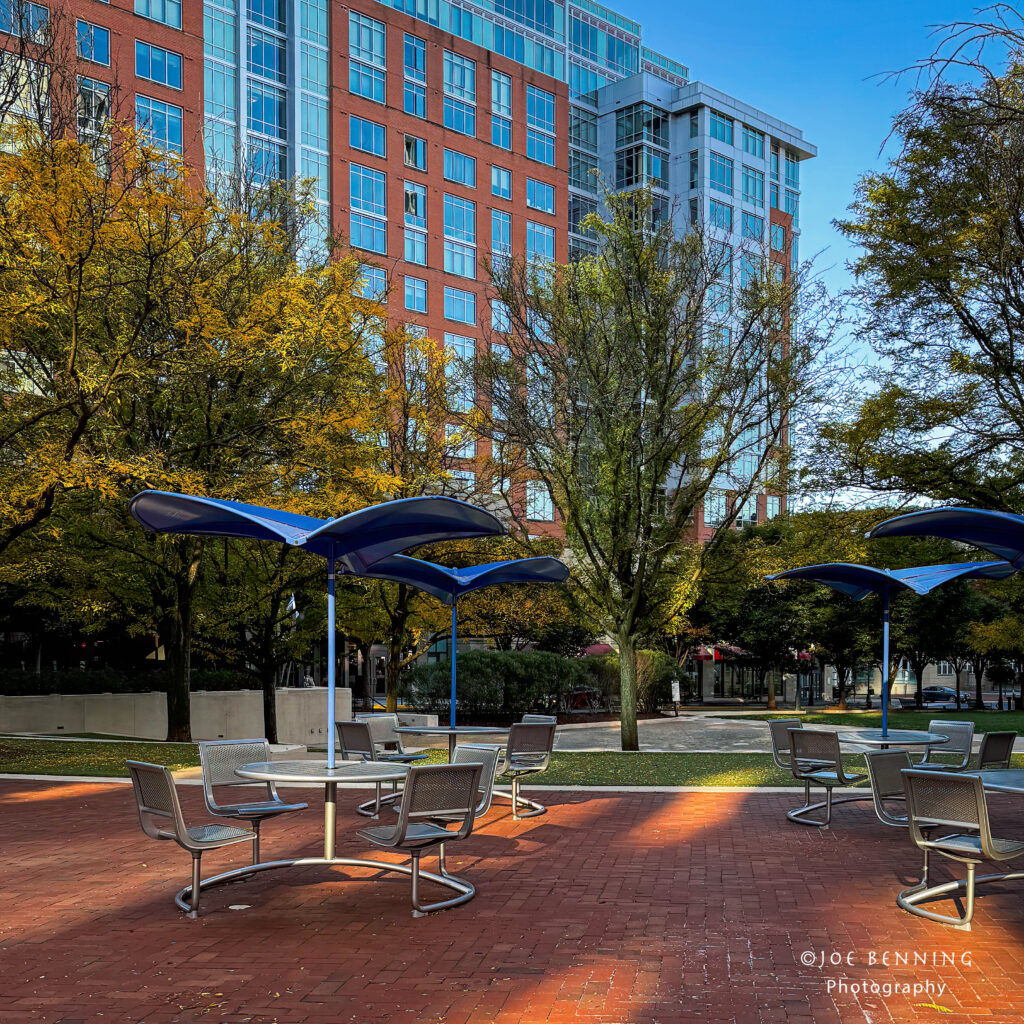
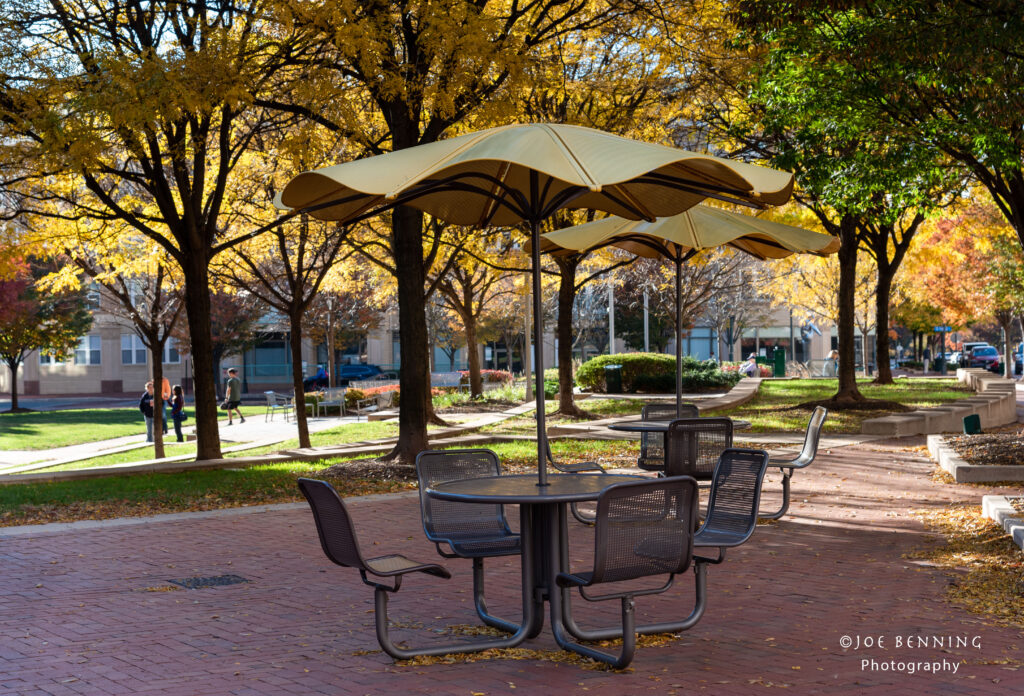
Well, Autumn has finally come to Reston, as it does every year. The trees are turning colors; Halloween is around the corner, and we are signed up to hand out candy to the trick-or-treaters in our building. Plus, we now have 49 degree mornings, although it begins to heat up pretty quickly when the sun makes an appearance. That won’t last very long though.
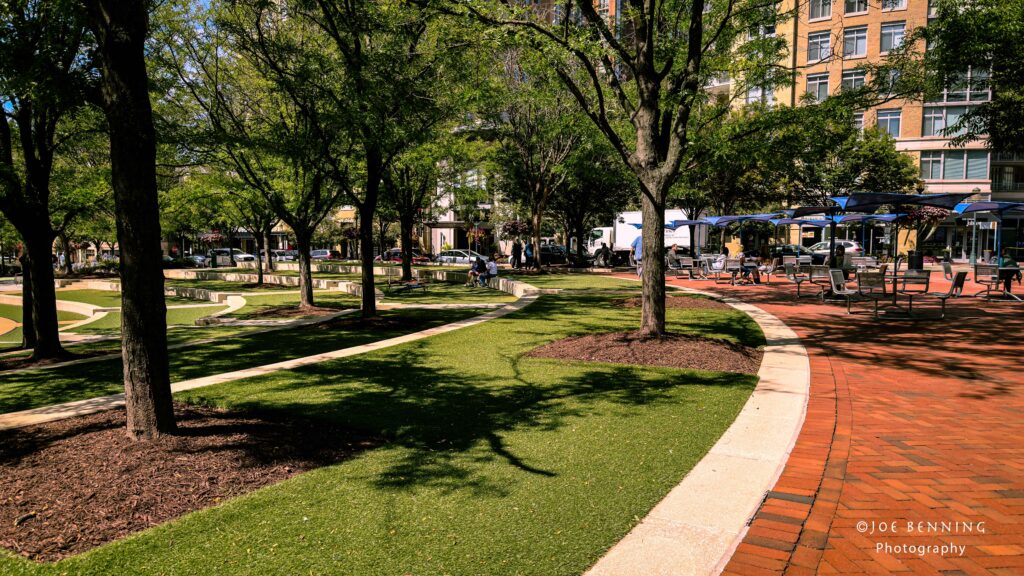
Reston, VA, USA — Oct 24, 2024. An iPhone 15 picture showing the coming of Fall in Reston Va.
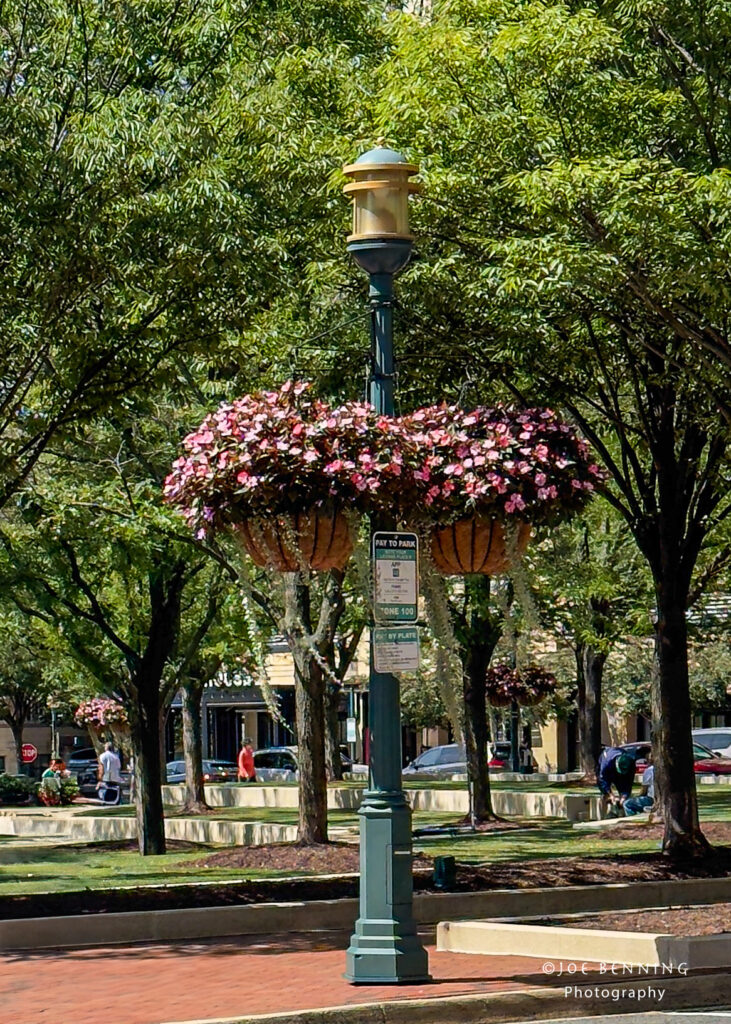
Reston town center (where we live) has a nice fall glow, so I snapped a few photos with my iPhone the other day. The cameras in mobile phones really are pretty amazing. The one I used was an iPhone 15 pro. Some of the pix are included in this blog post.
A square format image of Reston Tiwn Park in Autimn.
Reston, VA, USA — Oct 24, 2024. An iPhone 15 picture taken in Autumn looking up Market Street in Reston Va.A vertical image of Reston Town Center Park in Autumns.
Finally we are back from a NatGeo trip that took us to the Grand Canyon in Arizona as well as Zion and Bryce National Parks in Utah. The sightseeing in all three locations was, in a word, spectacular. And not just spectacular, but also varied and informative.
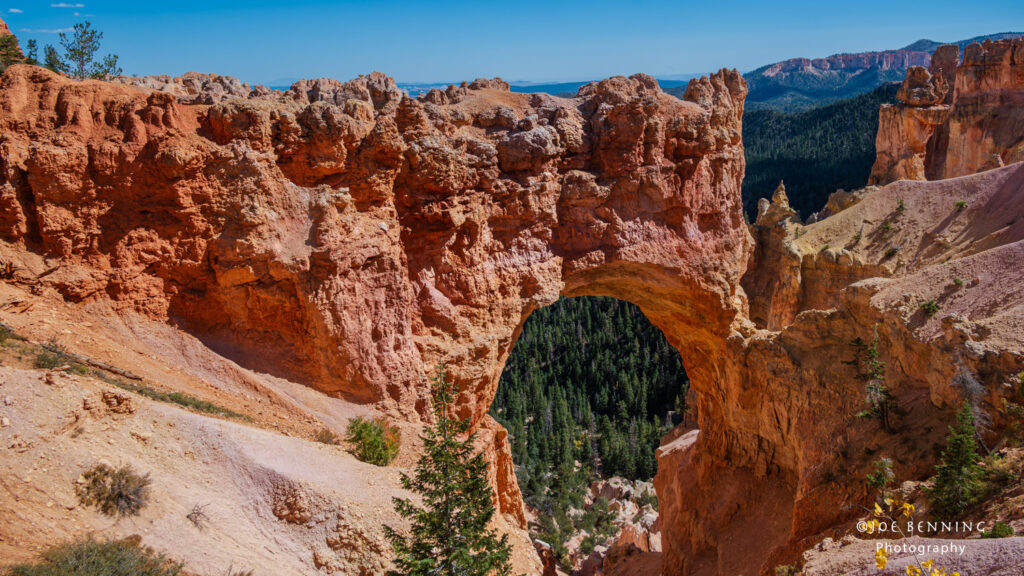
A photograph taken of a hoodoo surrounded by a green forest in Bryce Canyon
The first stop was in the Grand Canyon in Arizona. You have to see the Grand Canton in person to appreciate just how big it is. One mistake people make (apparently routinely) is to look down into the canyon and figure that it’s no big deal going down there. Which, in a sense could be true. But then you have to get back up. That’s when the trouble begins.
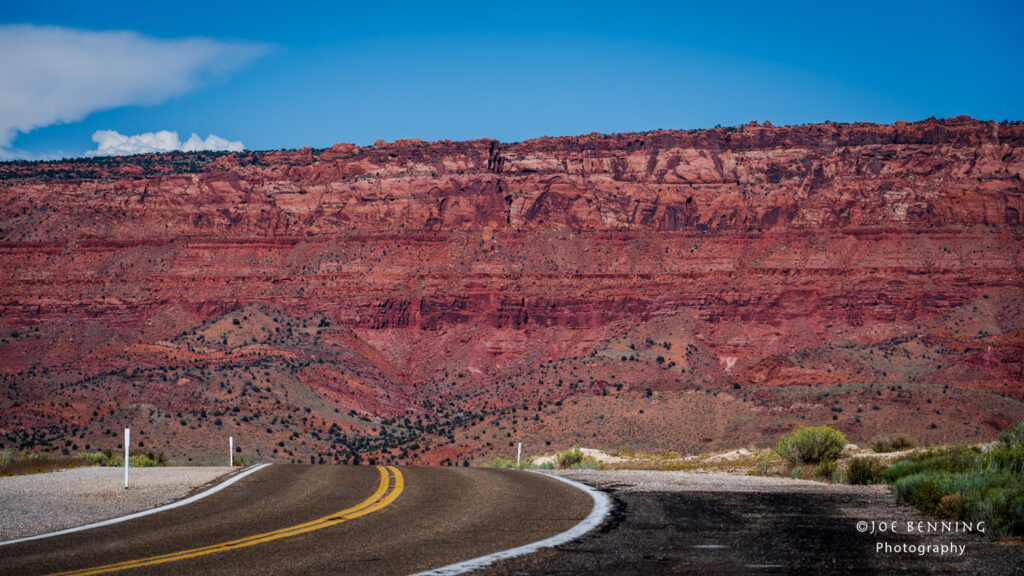
Photo of the Vermillion Cliffs of the Grand Canyon in Arizona along a two lane highway.
One way people people travel into the canyon and out is by riding mules. If you decide to go that route they impress upon you that if and when you see a mule on the trail, the way you deal with it is by flattening yourself against the wall so as to let the mule pass by. Otherwise you may very well be knocked off the path and down the side of the mountain. Needless to say, neither we, nor anybody in our entourage chose that route.
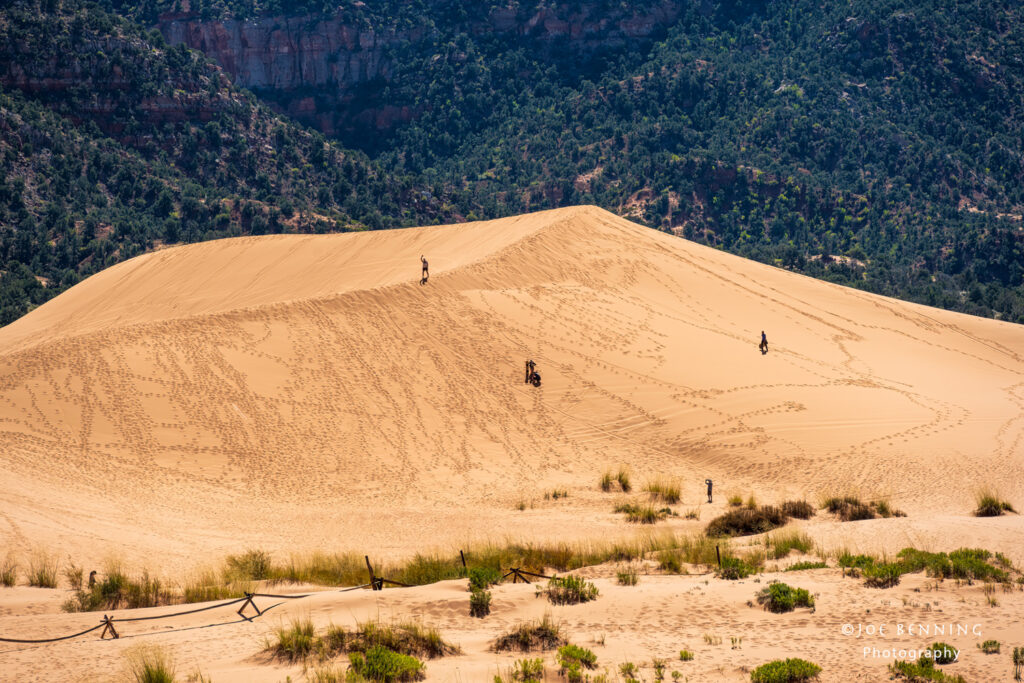
A long distance photo of people trying their hand at “sandboarding” in the Coral Pink Sand Dunes in Utah.
We stayed for two days in the lodge at the North Rim of the Canyon. The cabins, which were described as “rustic” in the literature, were built in 1921. They were indeed rustic, but they were serviceable, at least for a short stay. A saving grace: the lodge had a Saloon (that’s what they named it) and they knew how to make martinis.
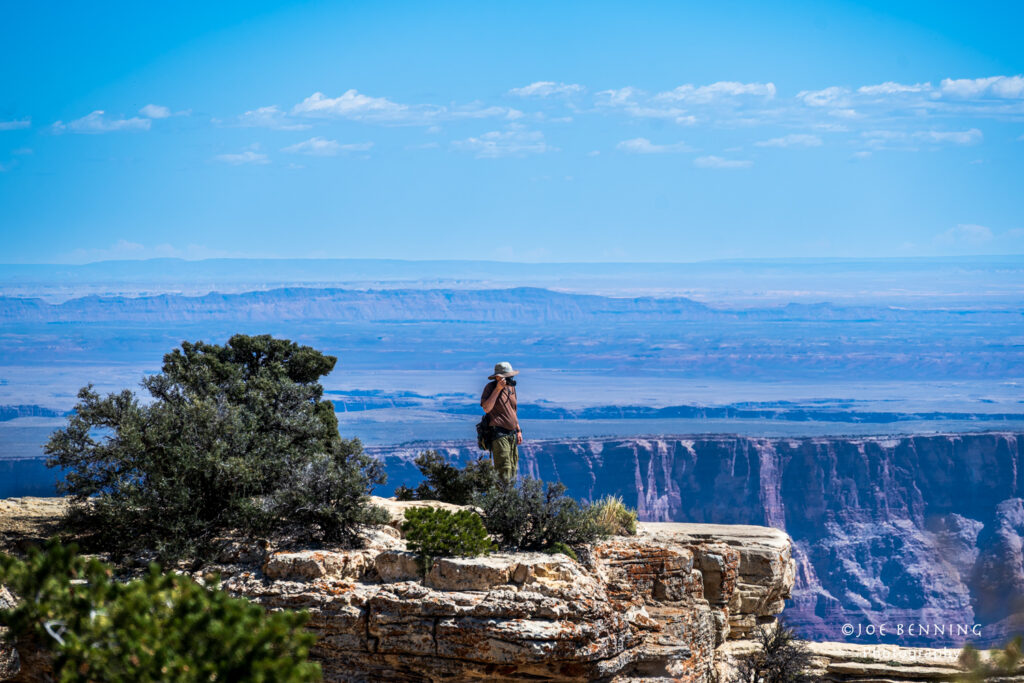
North Rim, Grand Canyon, AZ, USA — Sept 23, 2024. A photo of a male tourist with camera overlooking the North Rim of the Grand Canyon.
So we stayed for 2 days and did lots of exploring which included getting up (before 6:00 AM!) to see a beautiful sunrise and hiking the trails around the North Rim. All in all, a lot of fun, but quite a workout.
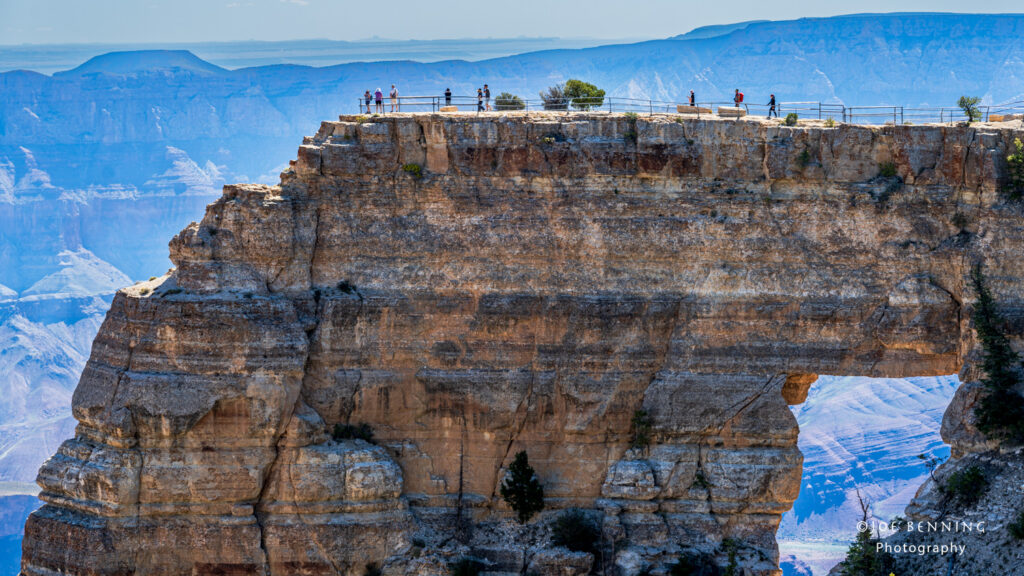
North Rim, Grand Canyon, AZ, USA — Sept 23, 2024. A photo of tourists looking out from Angels Window at the end of the Cape Royal trail on the North Rim of the Grand Canyon.
We then went on to Zion National Park where we stayed outside the park in a modern up-to-date date hotel in town. Zion was a delight to see, with its many trails, scenic drives, and its restaurant at the Visitors Center, which is equipped with Wi-Fi. Where would we be without Wi-Fi?
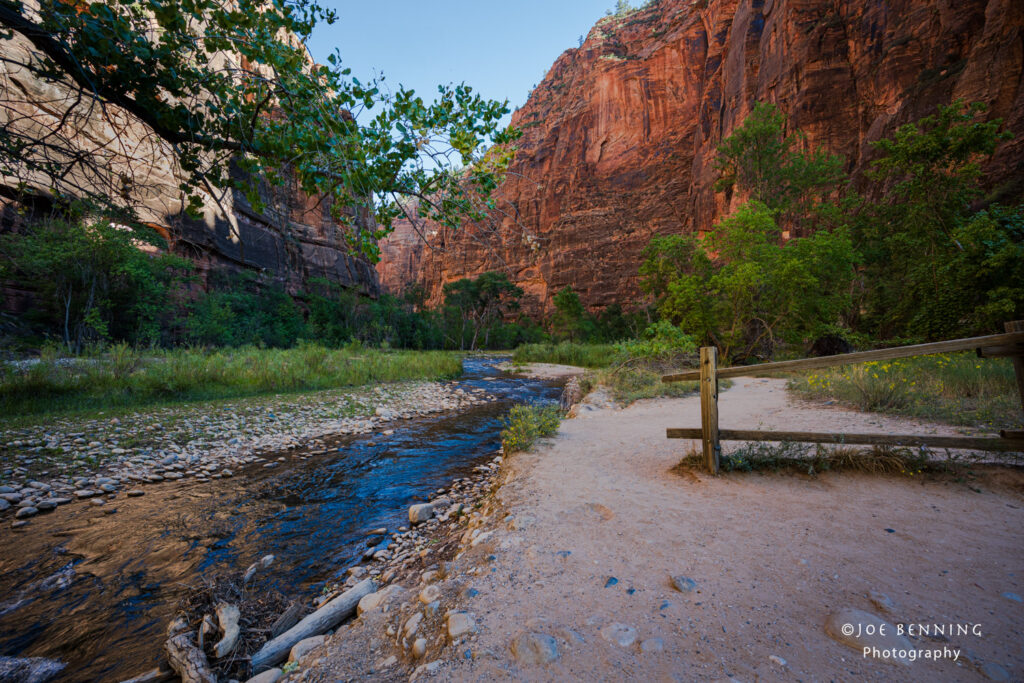
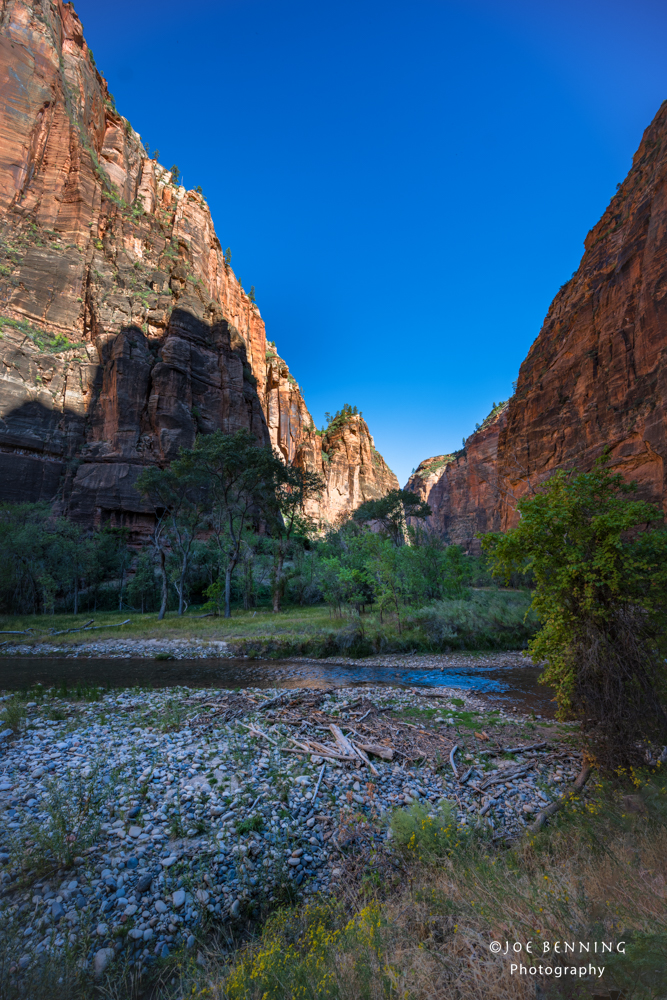
A wide angle photo taken in Zion National Park; includes the Virgin River, a tributary of the Colorado River.
Zion gets in the vicinity of 4.5 to 5 million visitors per year, attesting to its popularity. Lots of tourists are from outside the US. While there we heard lots of different languages. We took the scenic shuttle ride up to the Temple of Sinawava; from there we went on a short hike by the side of the Virgin River before heading back to the visitor’s center for lunch. We took a different hike the next day.
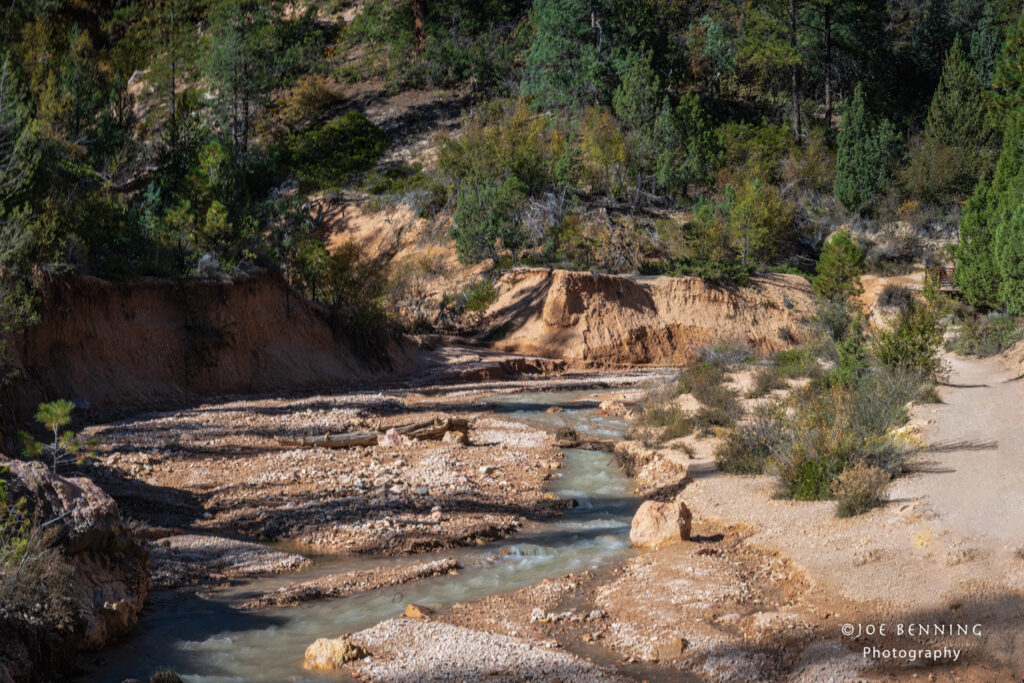
A wide angle vertical photo of a Canyon in Zion National Park where the Virgin River flows.Photo of the Mossy Cave trail near the water in Bryce Canyon National Park
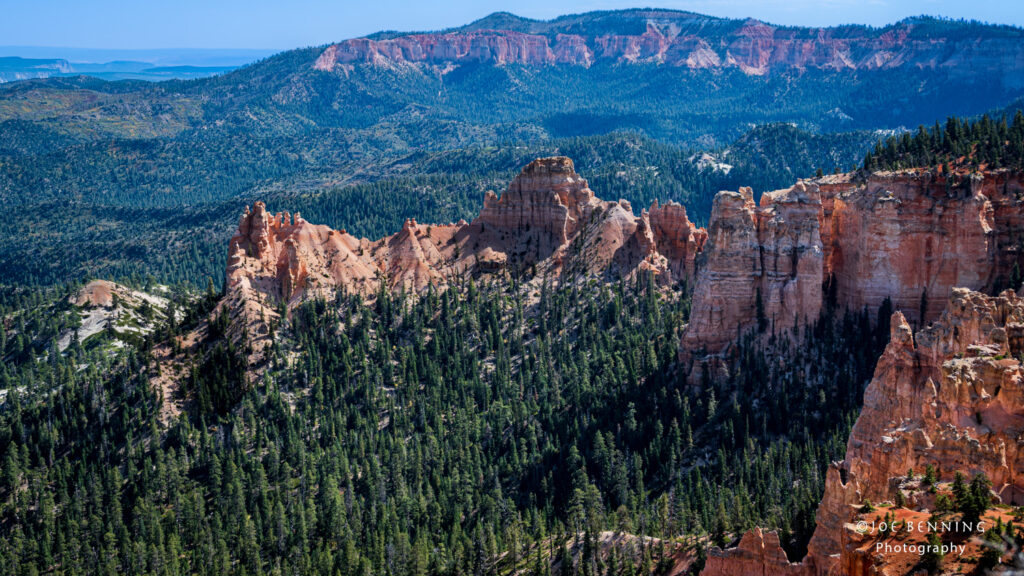
After 2 days in Zion we were off to Bryce National Park. Bryce is known for its hoodoos; the word “hoodoo” means to bewitch. And the hoodoos of Bryce surely do that. They can be thought of as relatively small, relatively shafts of rock that protrude from the bottom of arid basins of land. They are most commonly found in the High Plateau regions of Bryce and the Badlands of the Northern Great Plains. They really are quite a dazzling sight to see.
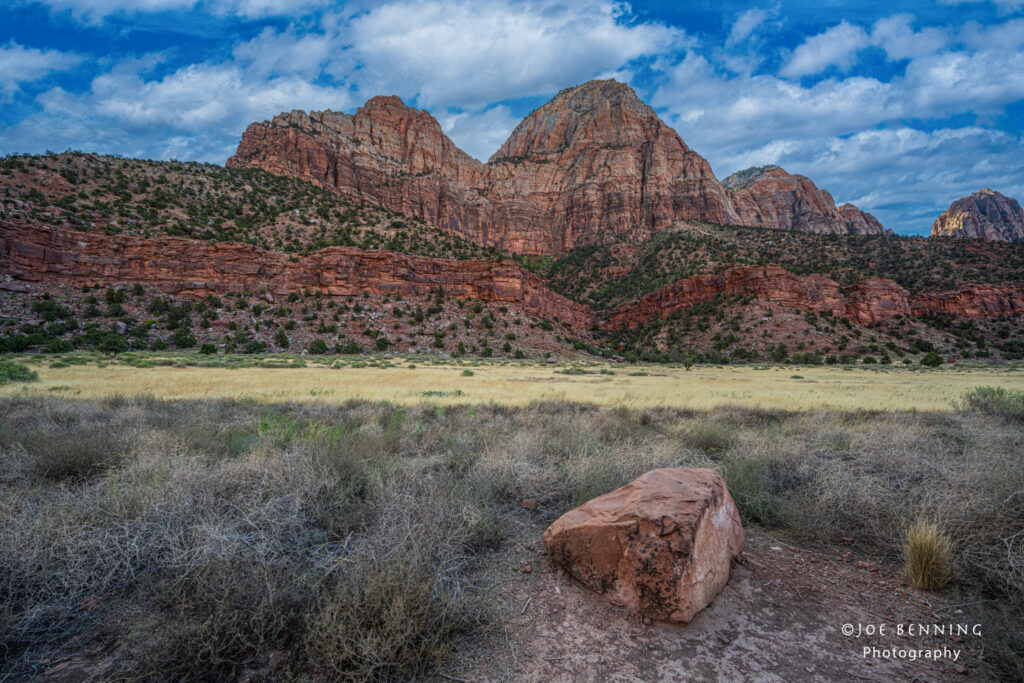
An ultra wide-angle shot taken in Bryce Canyon with a boulder in the foreground.
While in Bryce we stayed in the lodge in the park. The good news: It was more modern than the lodge at the Grand Canyon. The bad news: it didn’t have a saloon. However, they did serve wine with dinner, so all was not lost.
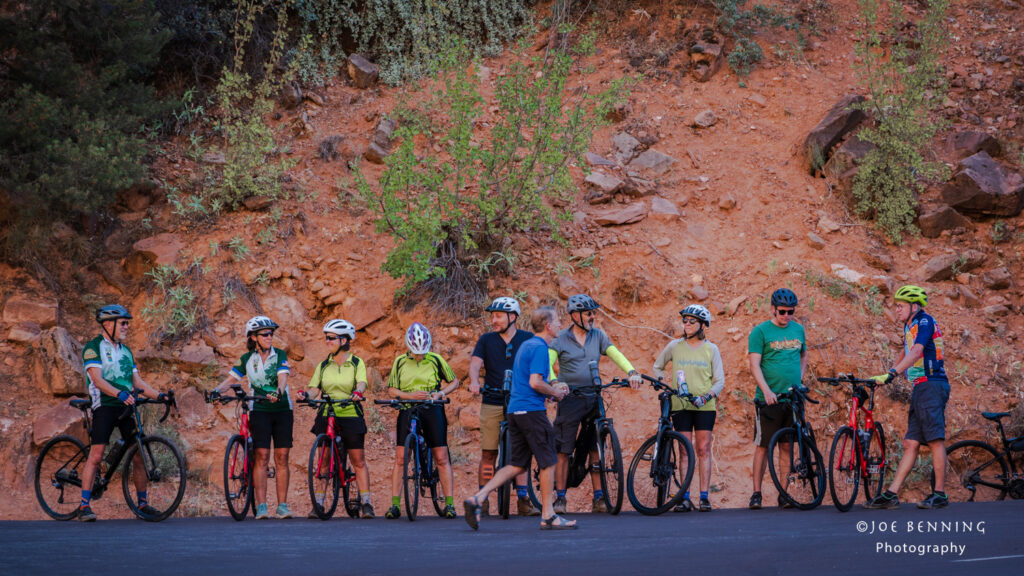
A landscape photograph looking over Bryce Canyon National Park with its hoodoos, mountains and green forest.Zion National Park, Utah—Sept 24, 2024. A long distance telephoto shot of cyclists waiting to begin a ride down a mountain in Zion National Park in Utah.
And I have to say: Kudos for our guides (Matt Turner and Matt Hergert) who were tireless in smoothing out any wrinkles that occurred along the way. Nor can I forget the depths of the expertise of Jeremy Schmidt, the NatGeo expert who led the trip and pointed out invaluable information about roughly everything, ranging from the history of the canyon, geological theories that sought to explain some of the as yet unexplained phenomena of the terrain, and the best way to photographically capture some of the colors of the landscape.
All in all it was quite a trip, and NatGeo gets 5 stars for their work.
Two of our very good friends from Brisbane, Australia stopped by to visit us in Reston Virginia over the Labor Day weekend. The phrase “just stopped by” sounds a little casual when the starting point is so far away. Actually it’s just under 10,000 miles away. So it is quite a journey.
They started out in the Western US, eventually came to Reston and are headed off to England for a wedding. Then, among other things, they will head out for a cruise before heading back to Australia. So it will be a busy time.
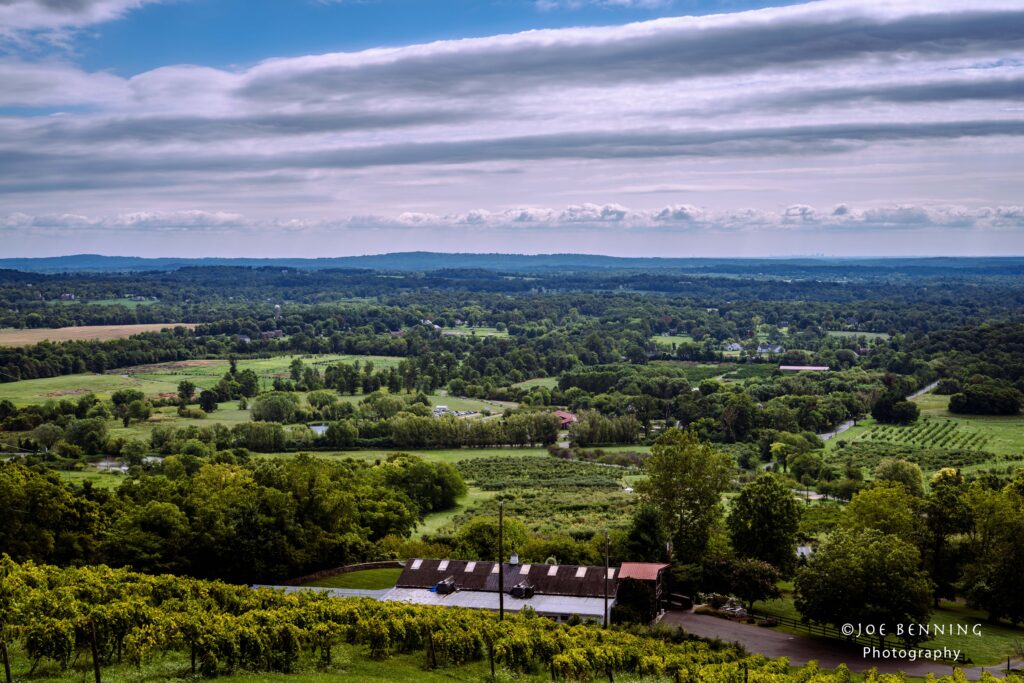
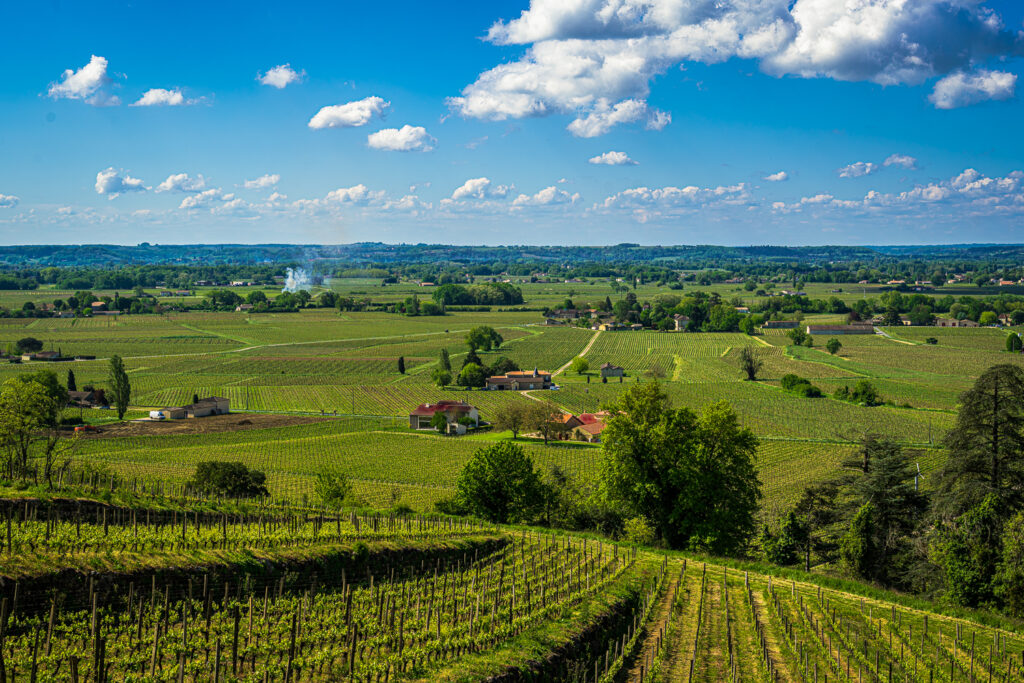
A dramatic landscape photograph that looks down over farms and vineyards of the Blue Ridge Mountains.
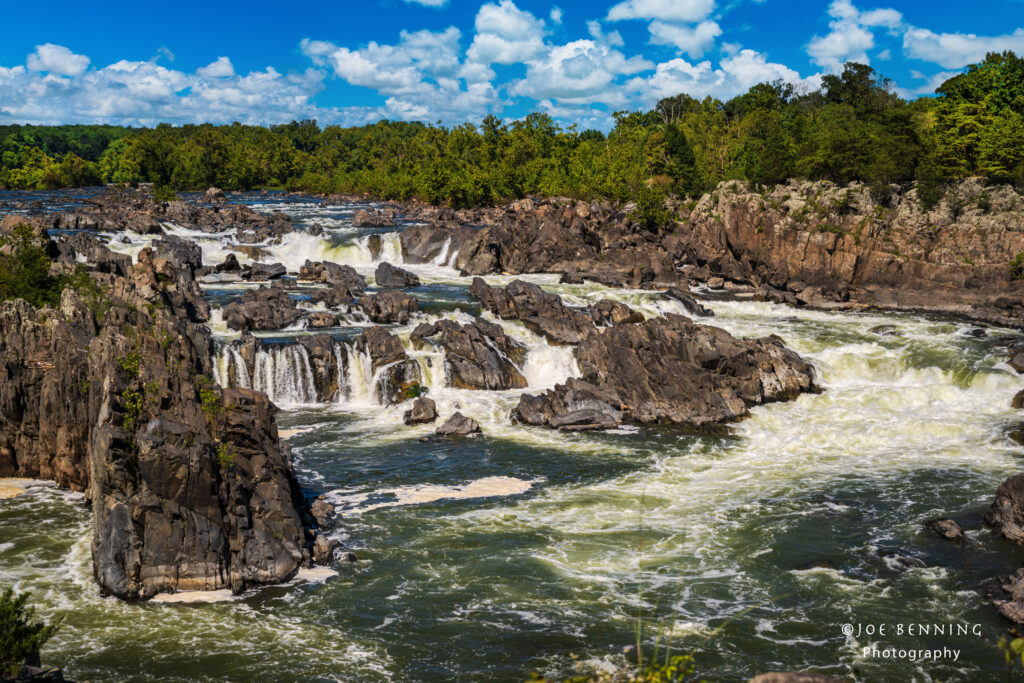
While in Reston, we basically chilled out as the summer comes to an end. All too soon I might add. During the visit we went to a vineyard in the Blue Ridge Mountains, said hello to John Denver (that bit is a lie), visited Potomac Falls Park, rested by the pool in our condo and saw some of the sights in Reston.
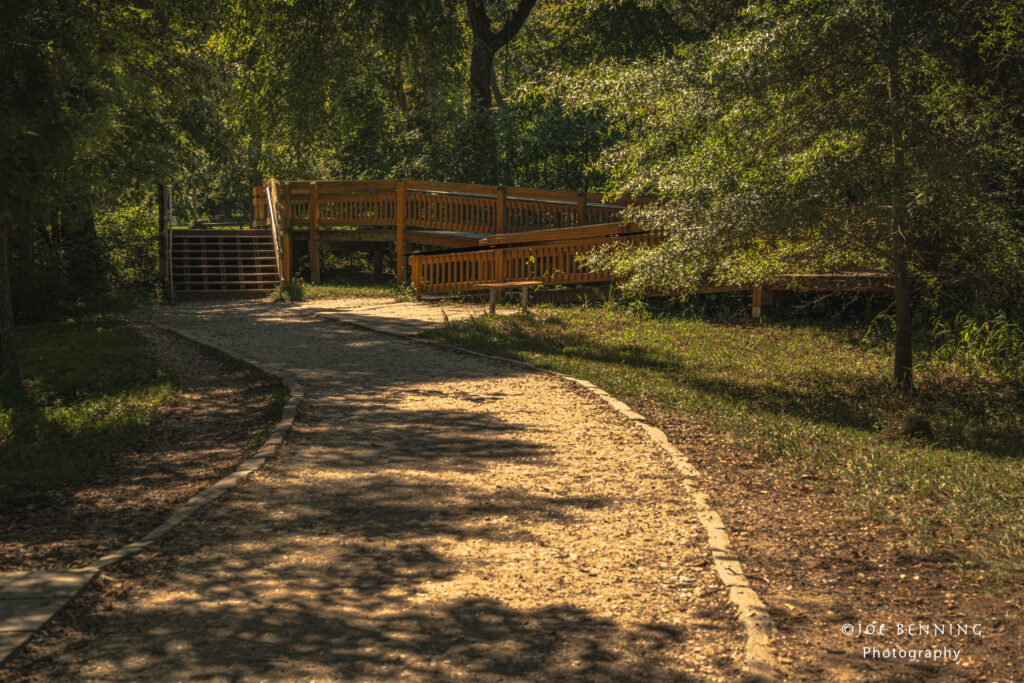
A 50mm photo of Potomac Falls taken on a September afternoon.A photo of a hiking trail in Potomac Falls Park with interesting interplay between light and shadows.
Some other photos from the visit are posted below.
Reston, VA — SEpt 4, 2024. A wide angle iPhone photo of Reston Town Square Park in the afternoon.Reston, VA — Set 4, 2024. An iPhone photograph of Reston Town Square Park in the afternoon.
Every Spring and Summer there are farmer’s markets all over Fairfax County, Virginia. The towns in the county have them on different days, presumably to avoid duplication. And competition, for that matter.
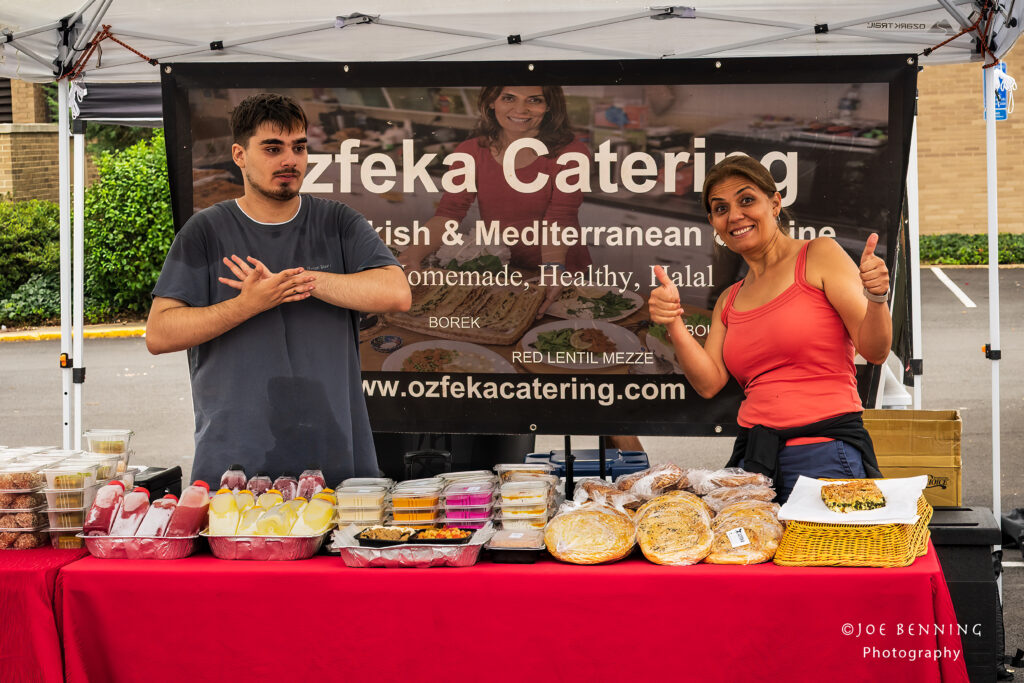
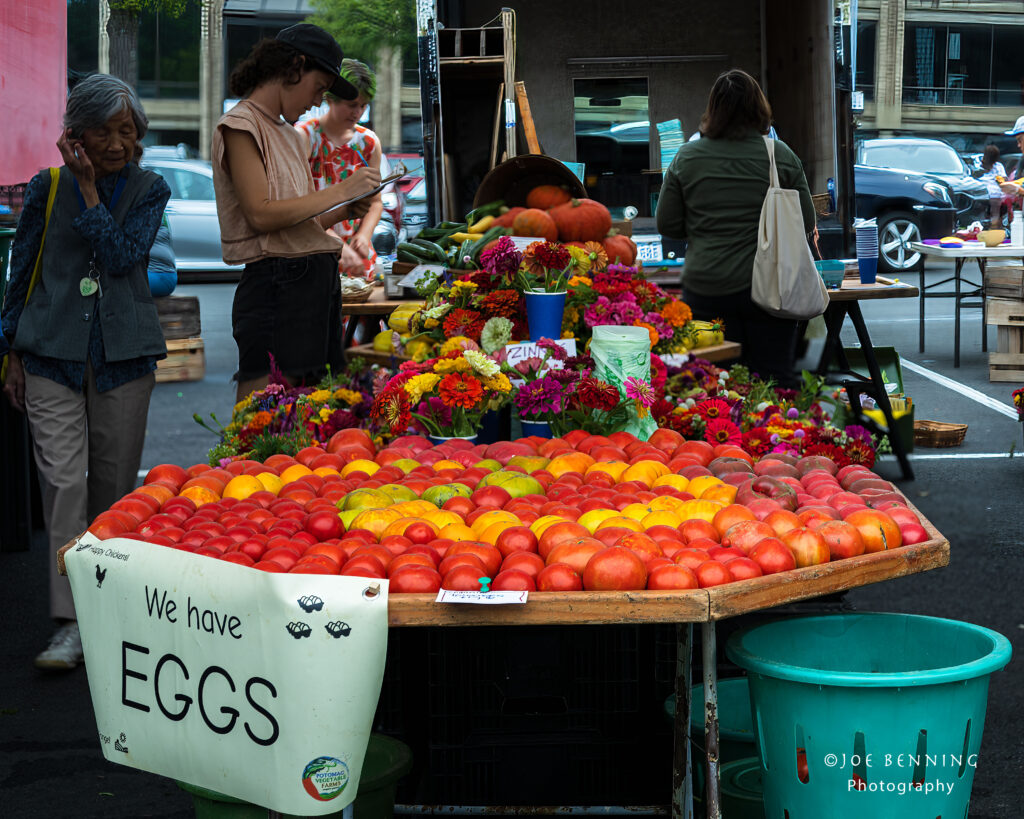
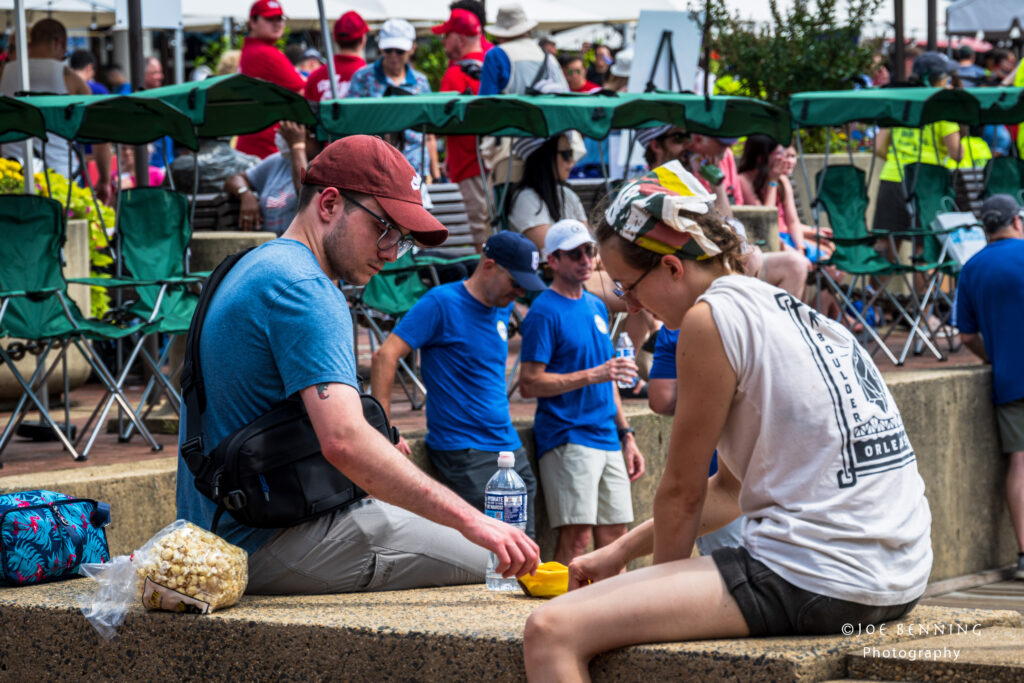
Anyway, Reston has a farmer’s market from early May through mid-November on Saturdays. So I went over to Lake Anne to take a look and snap a couple of photos. See below.
Reston, VA, USA — August 17, 2024. A photo of workers at a catering stand that offers Halal, Mediterranean and Healthy foods at a Reston Farmer’s Market.Reston, VA, USA — August 17, 2024. A photo of shoppers and produce at a stand that offers eggs, tomatoes and flowers at the Reston Farmer’s Market.
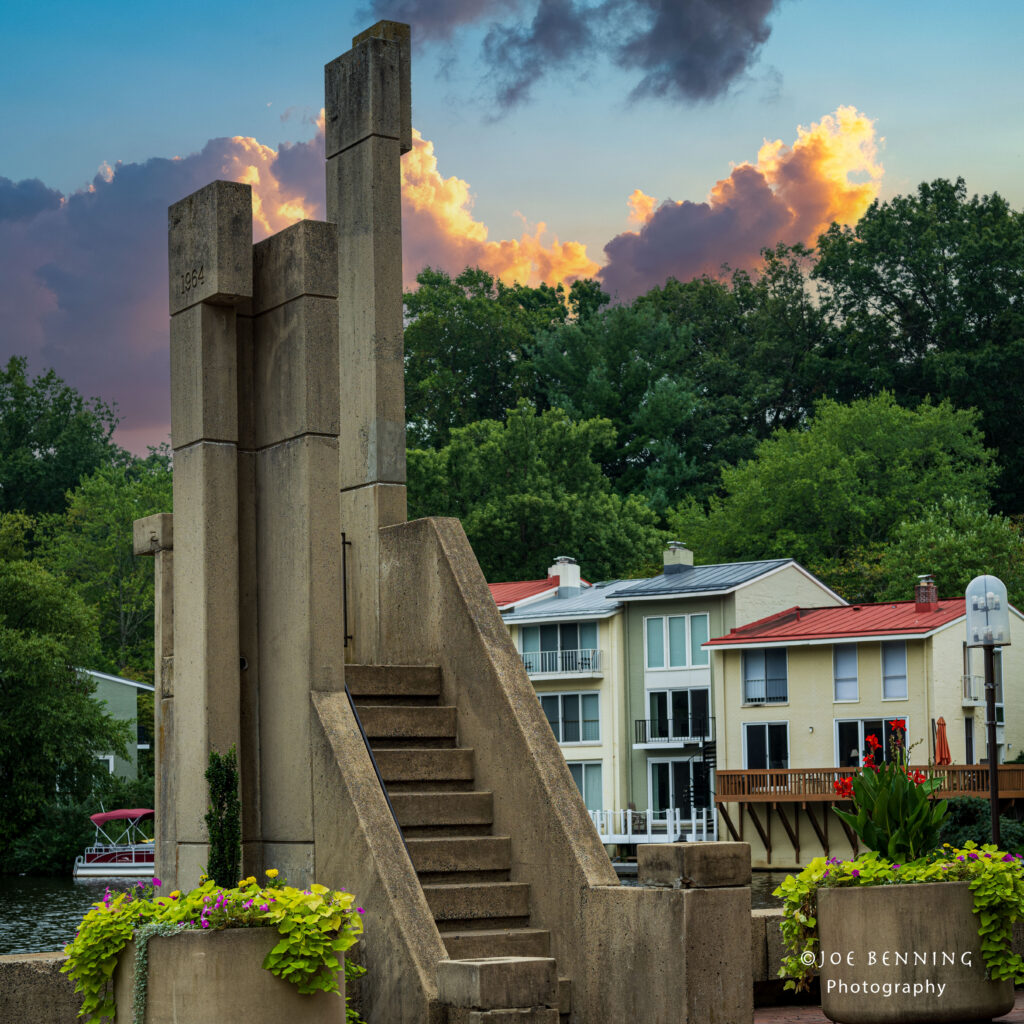
Lake Anne is the original location envisaged by Reston’s founder, Robert E Simon in 1964. It was supposed to be a kind of urban Utopia. Actually, the 1960s were chock full of utopian schemes. Over the years, though, there just wasn’t enough room for development around Lake Anne. And as it turned out, the brutalist architecture featured around Lake Anne, didn’t afford enough choice to accommodate a change in scenery.
A square format photo of a mysterious stairway that leads to nowhere, located by Lake Anne in Reston, VA
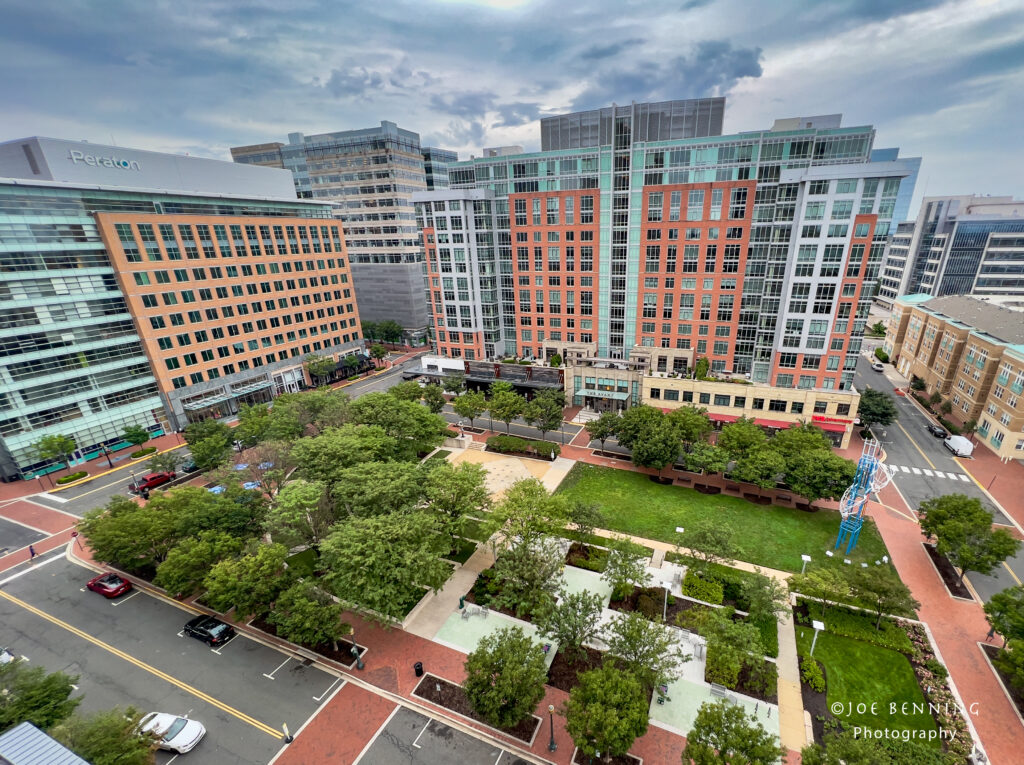
Eventually what is now Reston Town Center, where we live, became the hub. It’s about a 10 square block area that bears more than a faint resemblance to the upper East Side of Manhattan. It’s a mixed use area, meaning office buildings, apartment, condos, and high-end restaurants and retail stores are located there.
Reston, VA — July 26, 2022. A wide angle photo overlooking Reston Town Square Park bounded by apartment and office buildings.Reston, VA USA — November 4, 2018. A photo overlooking Reston Town Center Park on a Fall afternoon.
As Jean-Baptiste Alphonse Karr wrote back in 1849, “plus ça change, plus c’est la même chose”
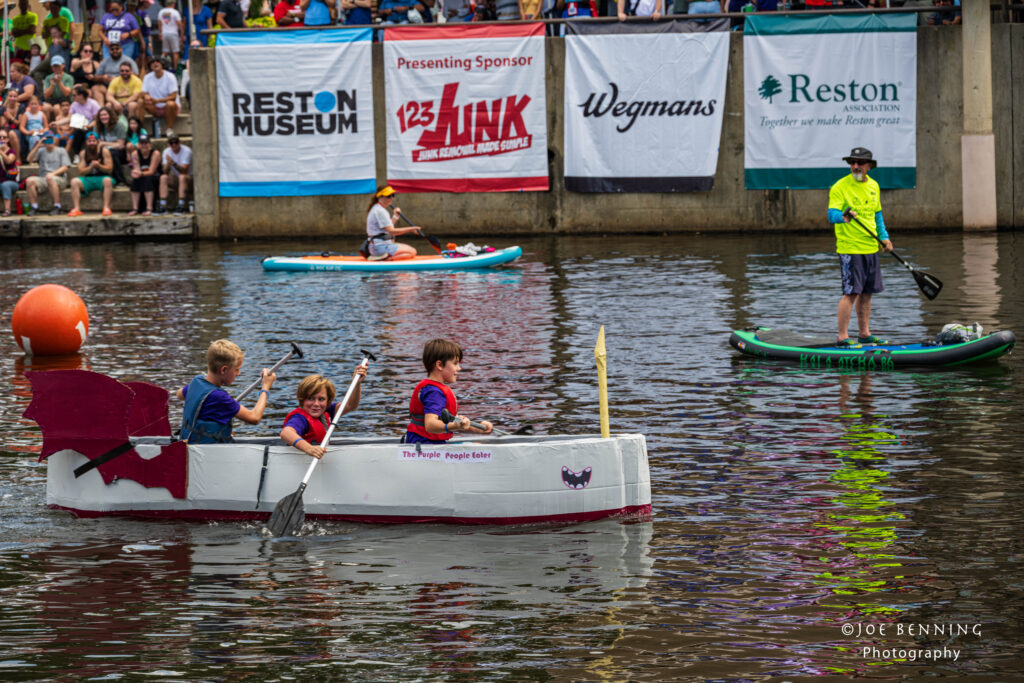
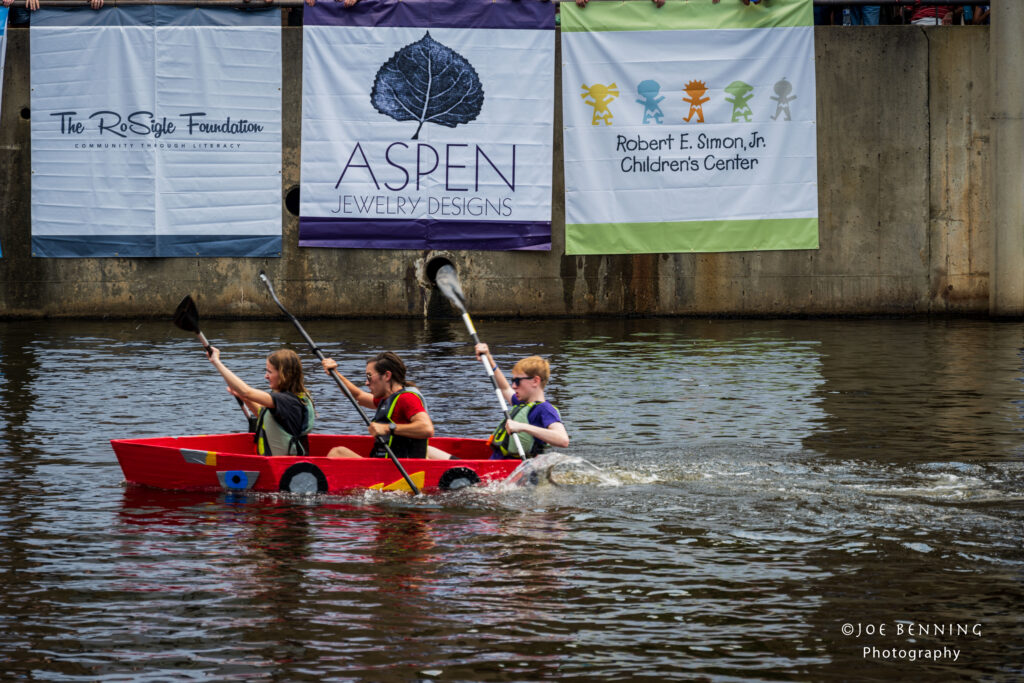
Every year around this time Reston, along with local businesses, sponsors an annual “Cardboard Regatta”. Basically, school kids, often with the aid of their parents and teachers build cardboard boats for a sailing competition in Lake Anne. Teams get in the boats they designed and constructed, and then they are launched. The teams compete to make the best time paddling up to one buoy and back—without sinking.
Reston, VA — August 10, 2024. Waiting for the Cardboard Regatta to start.
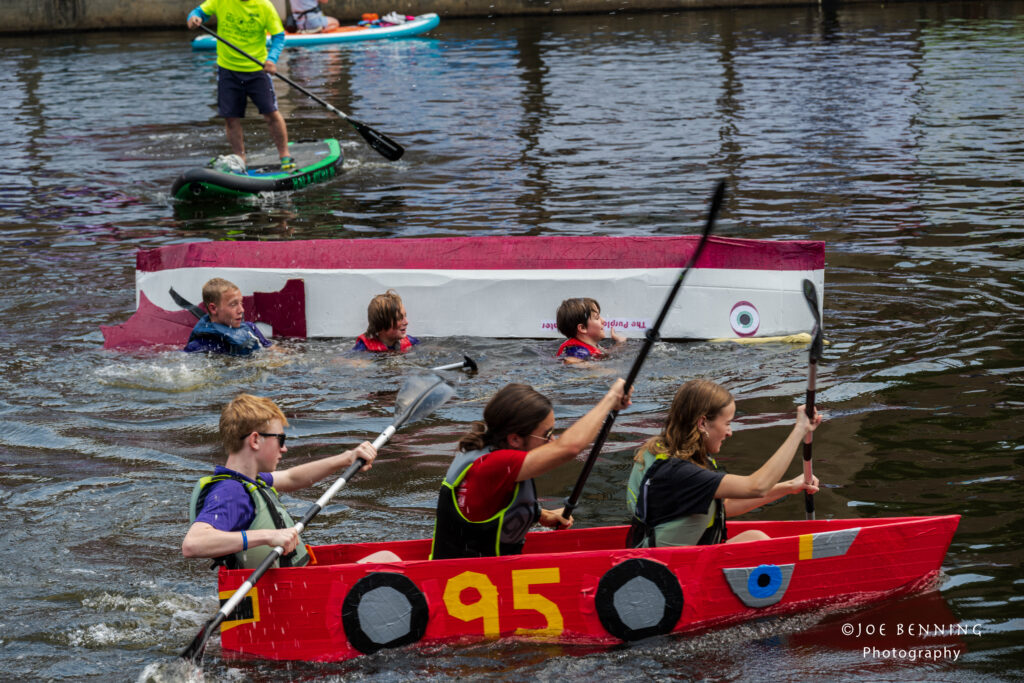
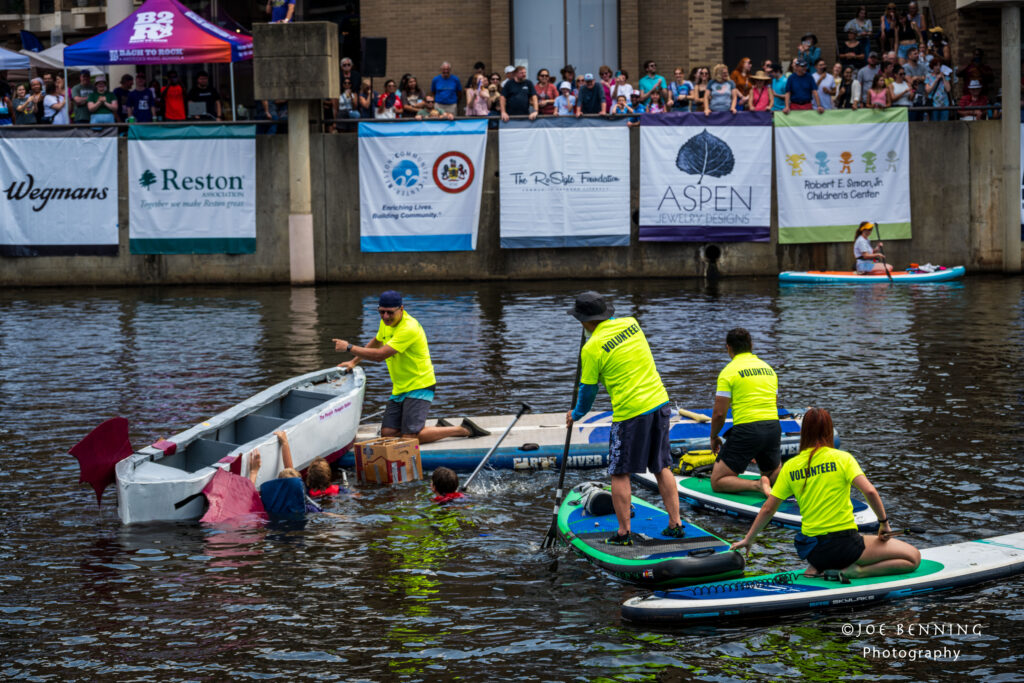
Today, August 10 was the Saturday for this year’s annual Cardboard Regatta. So…Mary Anne and I went over to Lake Anne to watch the proceedings, along with a throng of people who were also there to watch and to shop at the Farmer’s Market. The place was just packed. It was also hot and humid. But the crowd was in good spirits and rooted all the players on. And yes—at least one boat named the Purple People Eater, sank. The sailors were duly rescued by the volunteer rescue squad assembled for that purpose. All in all, a good time was had by all.
Reston, VA — Aug 10, 2024. Contestants in a cardboard boat begin the race.Reston, VA — Augsut 10, 2024. The Purple People capsizes, and another boat boat streaks ahead.Reston, VA — Augsut 10, 2024. Sailors from the Purple People are fished out of the water by volunteer lifeguards.Reston, VA — August 10, 2024. One of the more successful boats heads for the finish.
We were able to take a quick trip up to the Jersey Shore to see friends, including a couple from California who rented a house in Ship Bottom on Long Beach Island. It’s been quite a while since we stayed on LBI. It has really been built up; especially since the times we went there when we were (ahem) quite a bit younger. Still nice as ever though.
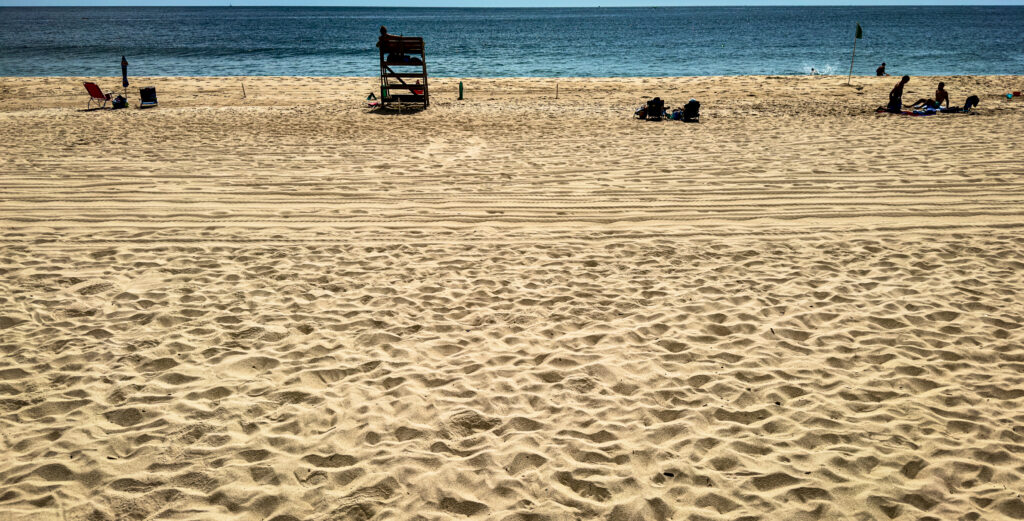
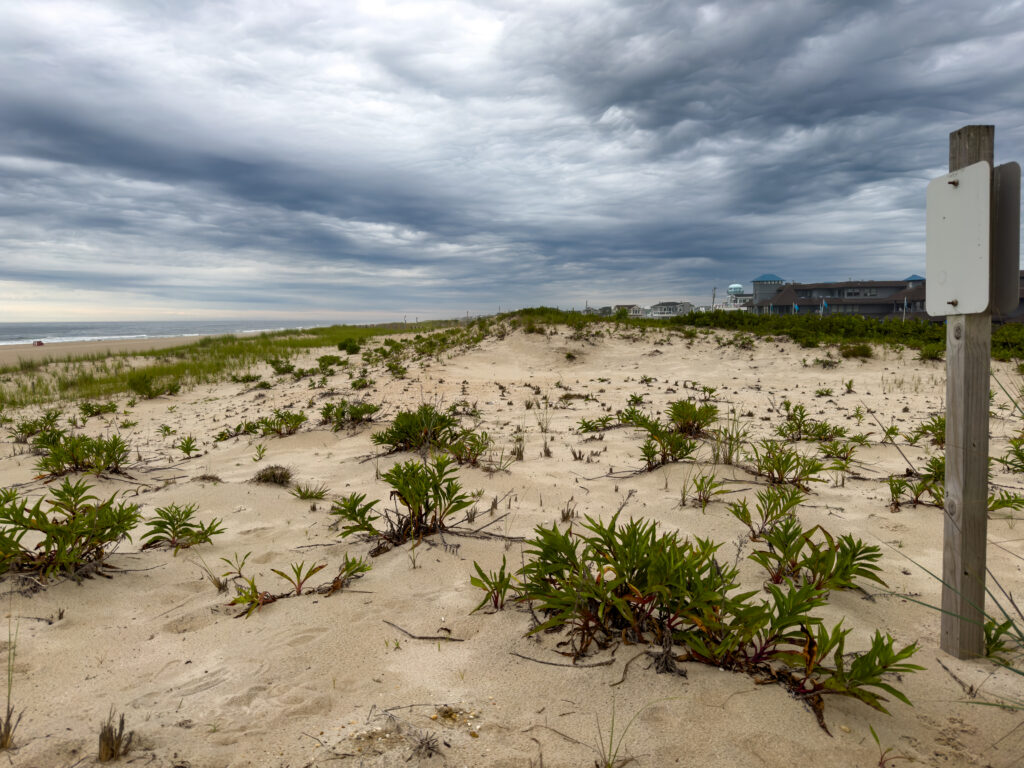
Spring Lake, NJ, USA — July 28, 2024. A photo of a not-too-crowded Spring Lake Beach and life guard station on a hot summer day.Ship Bottom, LBI, NJ — An iphoto of sand dunes on Long Beach Island NJ.
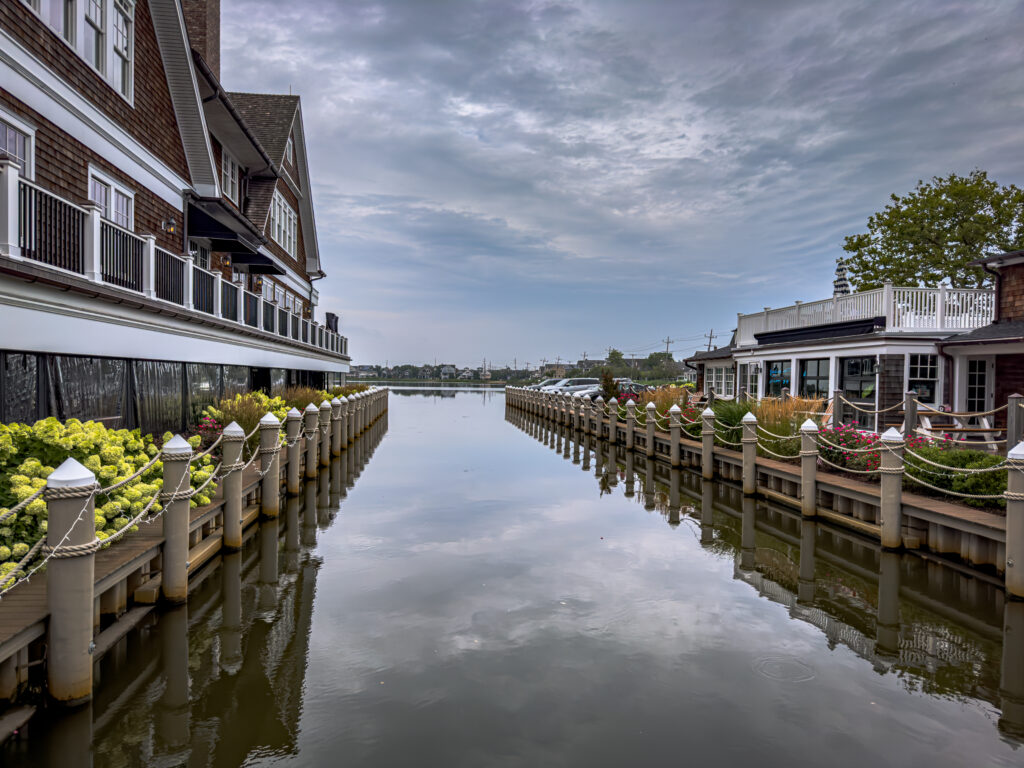
We also got a chance to see friends from the Spring Lake area and bumped into Mary Anne’s brother Joe while we were out to dinner in Sea Girt. That was a surprise, so we made plans with Joe McDonald to go out to Charlie’s in Bay Head for lunch the next day.
Bay Head, NJ == a horizontal iPhone image of two restaurants on the water in Bayhead, NJ
Actually the whole visit turned into a bit of a restaurant tour. We wound up going to Scarborough Fare, Inn in Main, Charlies, Brandls. We also had a fine dinner of BBQ chicken at Dennis and Maryanne Mulvihill’s house in Spring Lake. All in all a good time was had by all, and we will be back before too long.
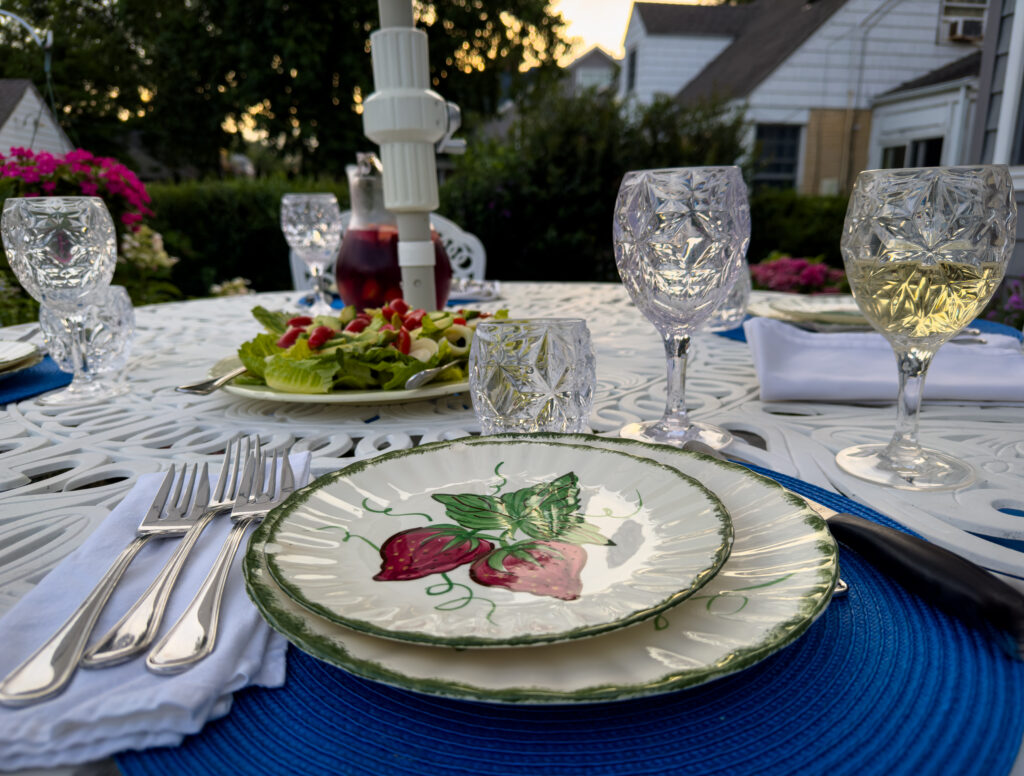
Spring Lake, NJ, USA — July 26, 2024. Photo of crystal and cutlery set for an outdoor summer dinner in Spring Lake, NJ.
We also got a chance to make our way to Ocean Grove where the Tent Houses were set up.
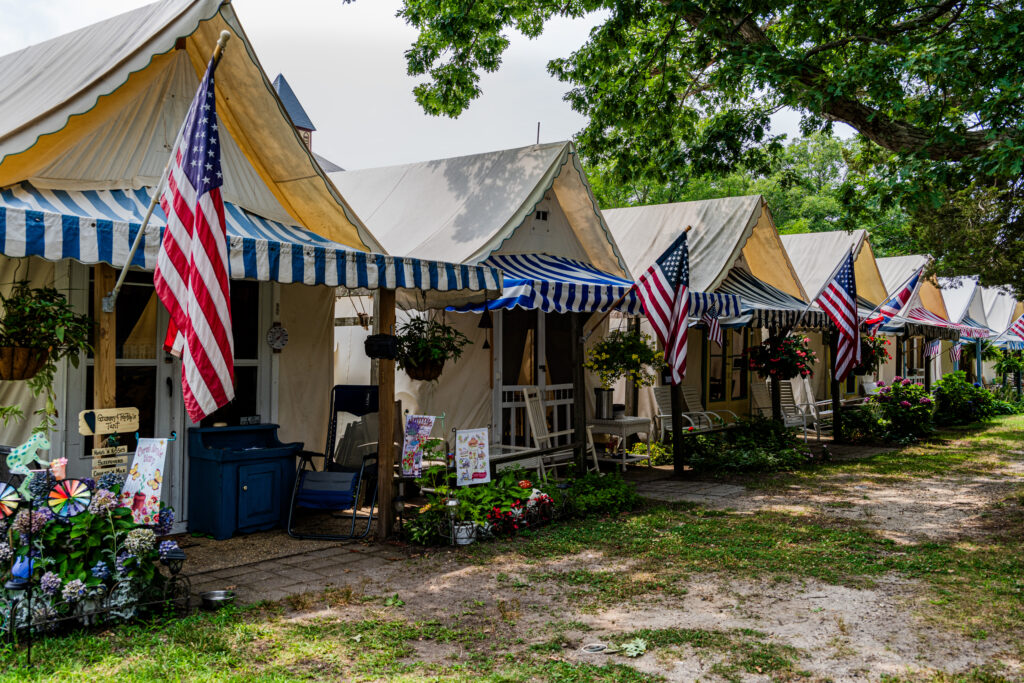
Ocean Grove, NJ, USA — July 25, 2024. A wide-angle photo of tent houses flying American flags in Ocean Grove, NJ.
And that’s all for now. We will be back at the Shore before too long.
A Photo Book entitled La Belle France, A Photographic Journey is now available from Blurb. It is a 58 page hardcover book, printed on top quality paper and therefore a bit pricey. The book is an exploration of France and French culture as seen through a camera lens. The photos explore the cities of Paris and Lyon, as well as the regions of Provence and Bordeaux. The photos cover a 7 year period from 2017 through 2024.
What can you say about one of the most beautiful islands in the world that hasn’t already been said?
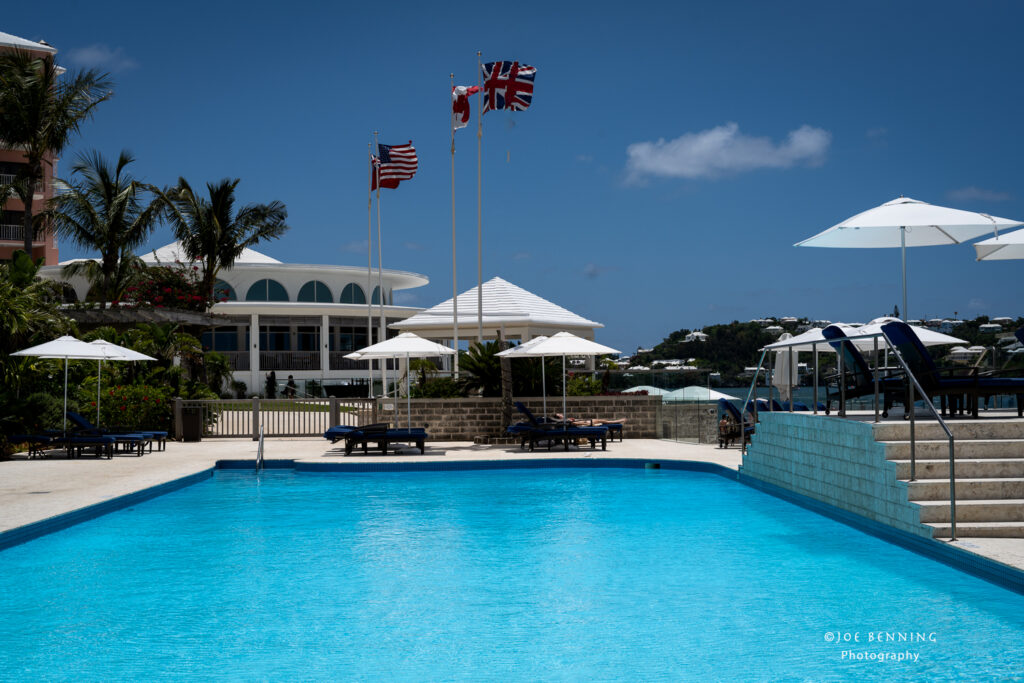
Hamilton, Bermuda — June 18, 2024. A shot taken by one of the pools at the Hamilton Princess resort. Flags, palm trees and a dining area can be seen in the background.
We just came back after spending a week in the Hamilton Princess in Bermuda. It’s been a long time since we were there—maybe 25 years or so. But it is as stunningly beautiful as ever.
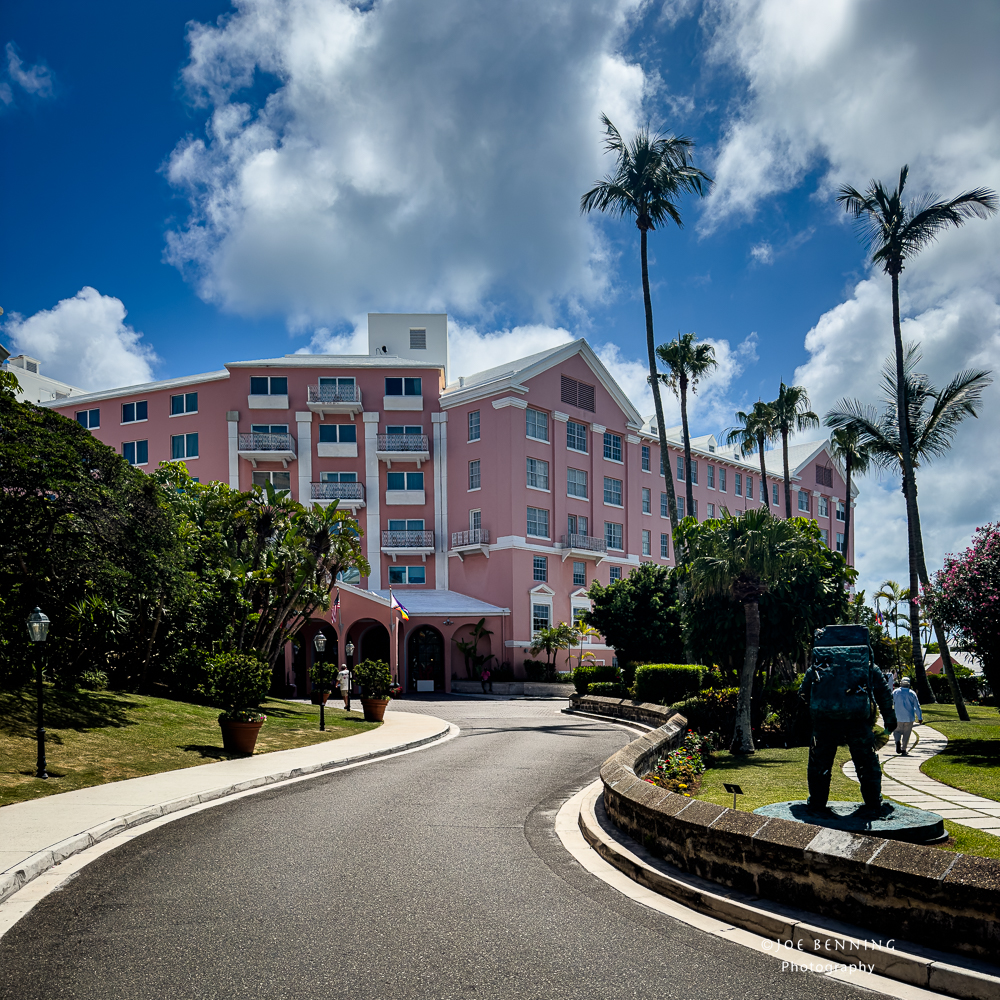
Hamilton, Bermuda—June 20, 2024. A photo of the Hamilton Princess in Hamilton, Bermuda.
There were some changes, but overall Bermuda remains beautiful, British and, of course, civilized. The Hamilton Princess is now a Fairmont Hotel and it has been modernized a bit. The changes however are largely cosmetic. The service is still first rate and the restaurants are as well.
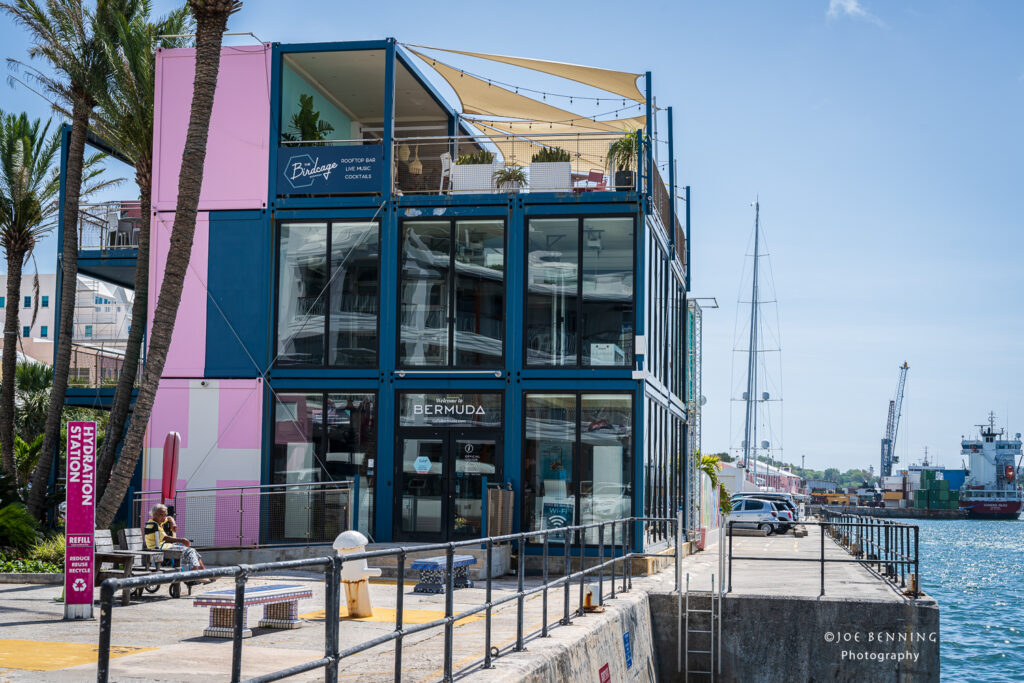
Hamilton, Bermuda—June 20, 2024. A photo of the Bermuda tourist center in downtown Hamilton, Bermuda.
The Bermudian dollar is now pegged to the US dollar at a ratio of 1:1, so that leaves out a lot of calculating. Which is a good thing because the prices are really, really high and you probably don’t want to spend a lot of time thinking about it. And the cabs predominantly deal in cash, not credit cards. The ATM machines dispense Bermudian dollars so the trick is to use them while on the island, and use them up before reverting back to USD when you are ready to leave.
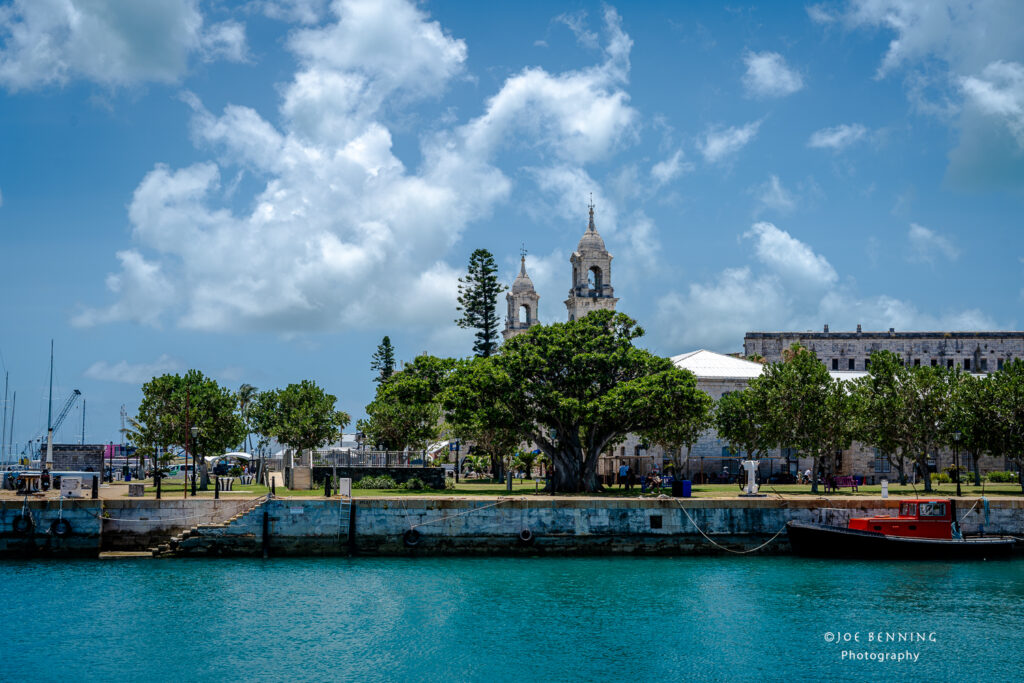
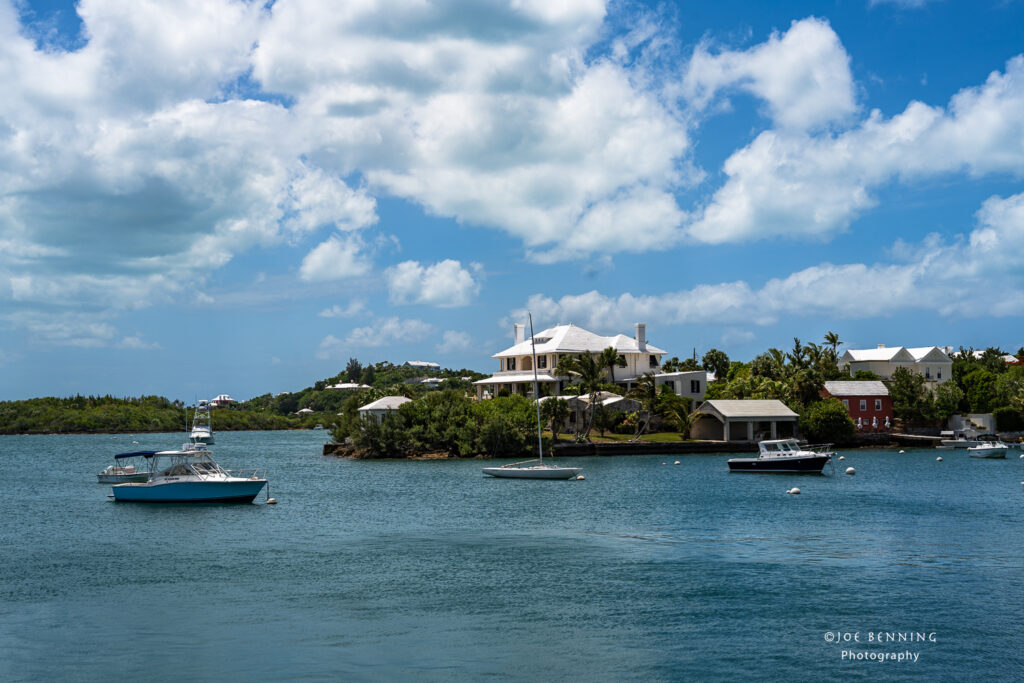
Kings Wharf, Bermuda—June 20, 2024. A photo of the Royal Naval Dockyard in Bermuda.Boats drift lazily in the waters of Bermuda
The houses still come in a variety of pastel colors; the beaches are spectacular and the locals are as nice as they come. All in all it’s a fine place to visit. Just be prepared to gulp when you see the prices.
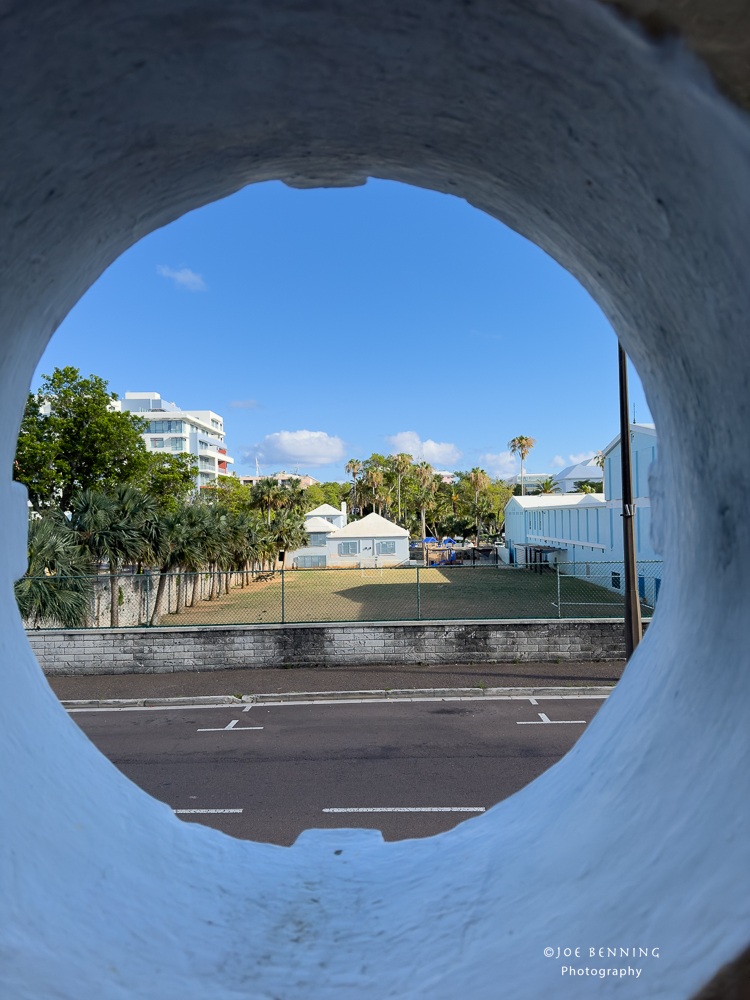
Hamilton, Bermuda—June 20, 2024. A circular image overlooking an empty school playground from St Theresa’s Catholic Church in Hamilton, Bermuda
After leaving Roanoke we headed out to Appomattox Court House National Historical Park. The park is relatively small, very impressive and (of course) commemorates the surrender of the South and the end of the 4 years of U.S. Civil War.
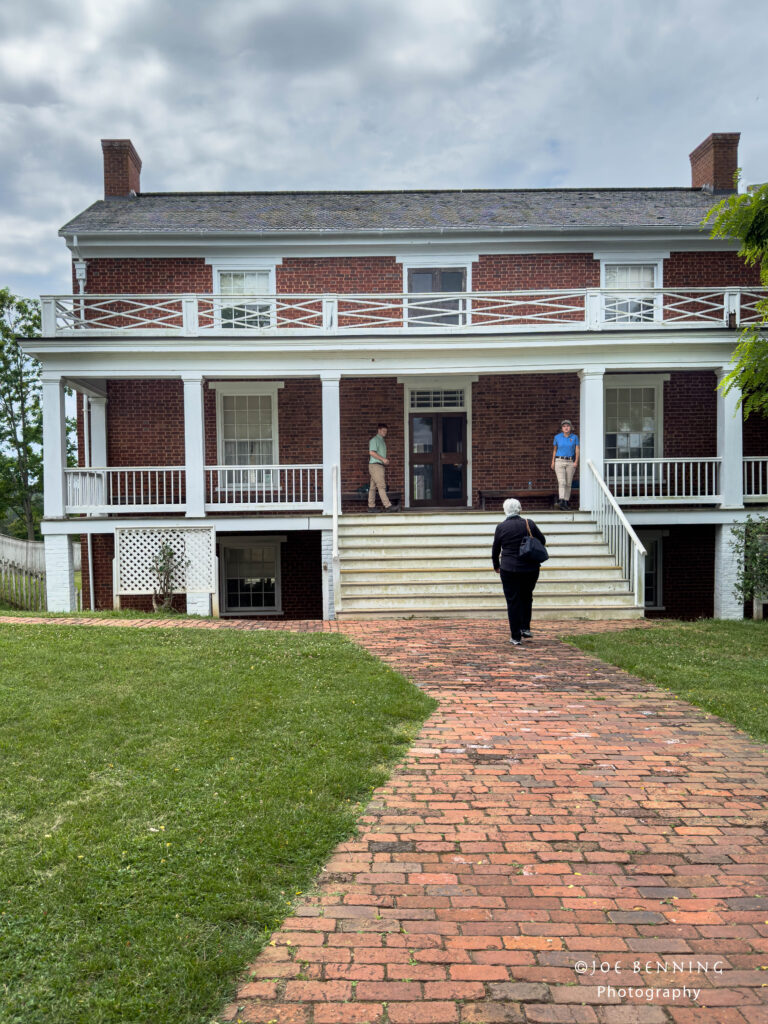
Appomattox, VA, USA — June 2, 2024. A vertical shot of the McLean House where the South surrendered to the North, ending the Civil War.
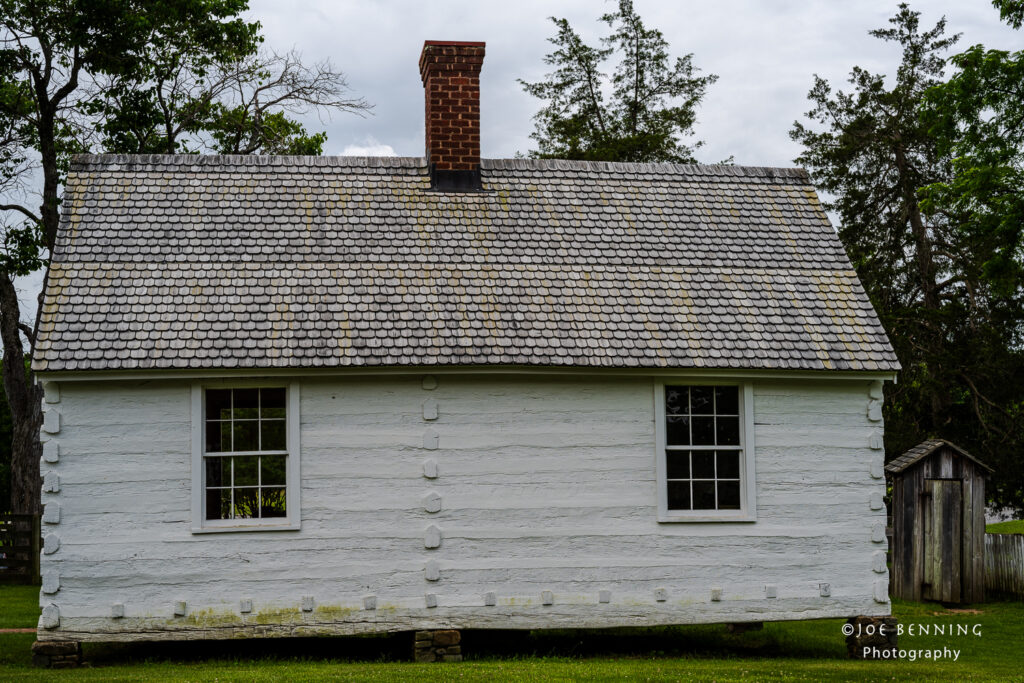
The U.S. Civil War was arguably the world’s first modern war. People often forget just how bloody it actually was. The total number of soldiers killed (counting both North and South) is estimated at about 700,000. To put this in perspective, the population of the U.S. at the time was about 31.5 million people. Of those about 27 million were white and somewhere between 3.5 and 4 million were enslaved blacks. (Note the difference between the McLean House [above] and the Slave Quarters [pictured below]). There is not a reliable estimate of civilian deaths as a result of the war.
A photo of slave quarters in Appomattox.
In 1865, when the North was certain that the end of the war was near and that it would be the victor, President Lincoln met with Generals Grant and Sherman and Rear Admiral Dixon Porter to establish strategy for the war’s end. Lincoln wanted no more bloodshed and so the strategy they decided on was to allow the Confederate soldiers to return home provided they lay down their arms and pledge not to take up arms against the United States ever again.
General Grant allowed enlisted Confederate soldiers to take the horses they owned back home, and the officers were allowed to keep their side arms. Jefferson Davis, the Confederacy’s President, wanted to continue with a guerrilla war, but General Robert E. Lee ignored him and surrendered. In so doing he touched off a wave of confederate army surrenders thereby ending the war.
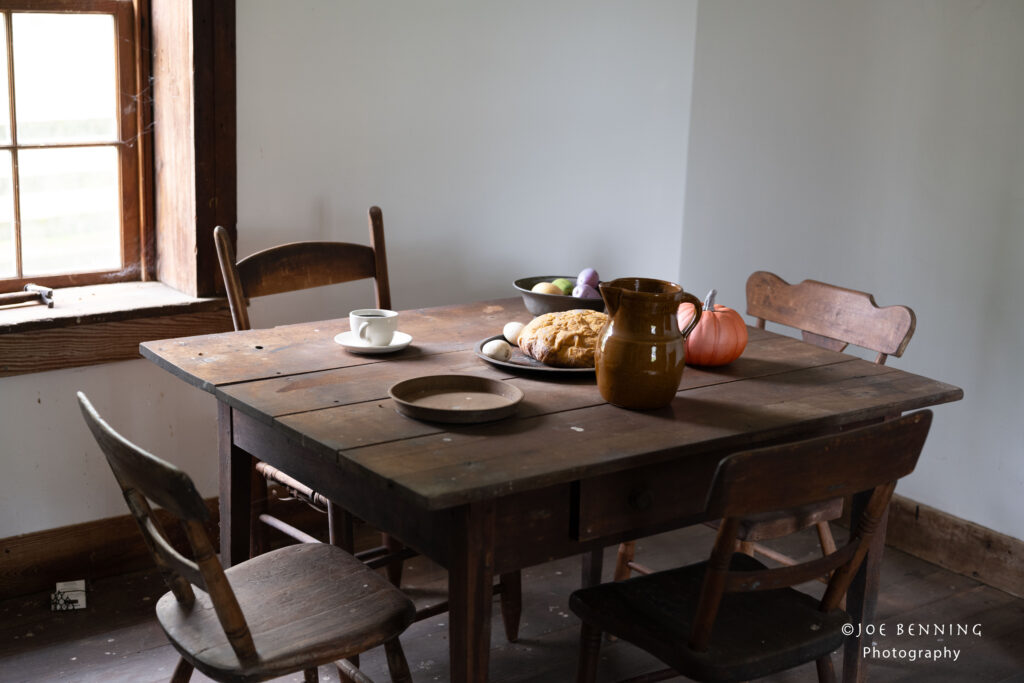
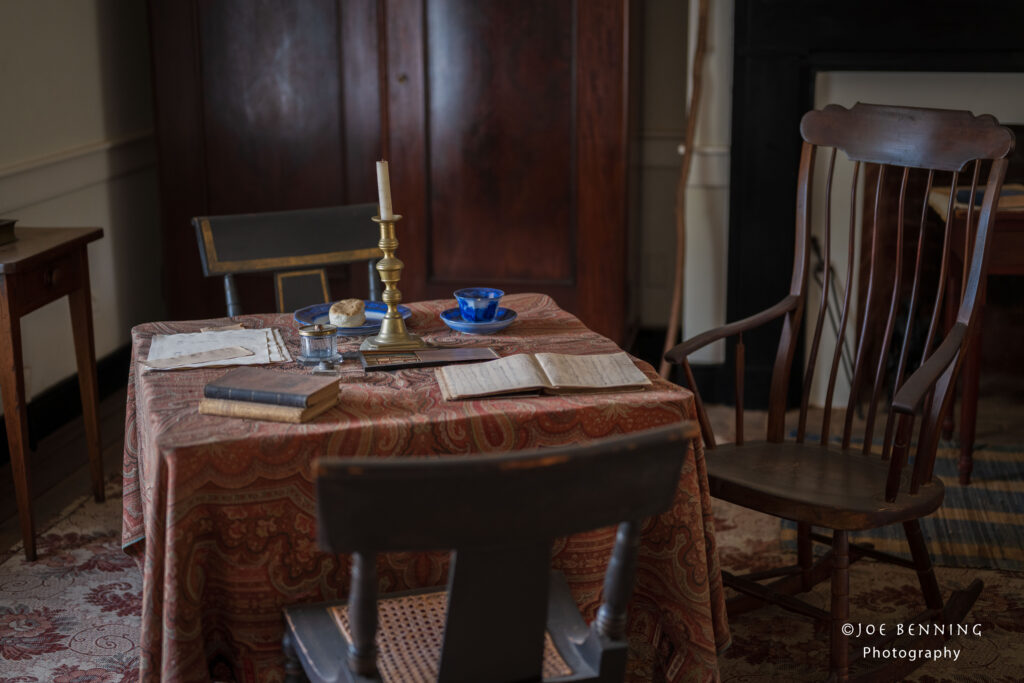
Photo of a dining room table with bread, fruits and a water jug on it.Appomattox, VA, USA — June 2, 2024. A low light photo of an office in the McLean House where the South surrendered to the North, ending the Civil War.
On April 9, 1865 the documents were signed at the Appomattox Court House and the war was officially over. The surrender was executed in keeping with Lincoln’s second inaugural address. In that address, which he had made about 1 month earlier, Lincoln closed with his famous exhortation “With malice toward none with charity for all with firmness in the right as God gives us to see the right let us strive on to finish the work we are in to bind up the nation’s wounds, to care for him who shall have borne the battle and for his widow and his orphan ~ to do all which may achieve and cherish a just and lasting peace among ourselves and with all nations.”
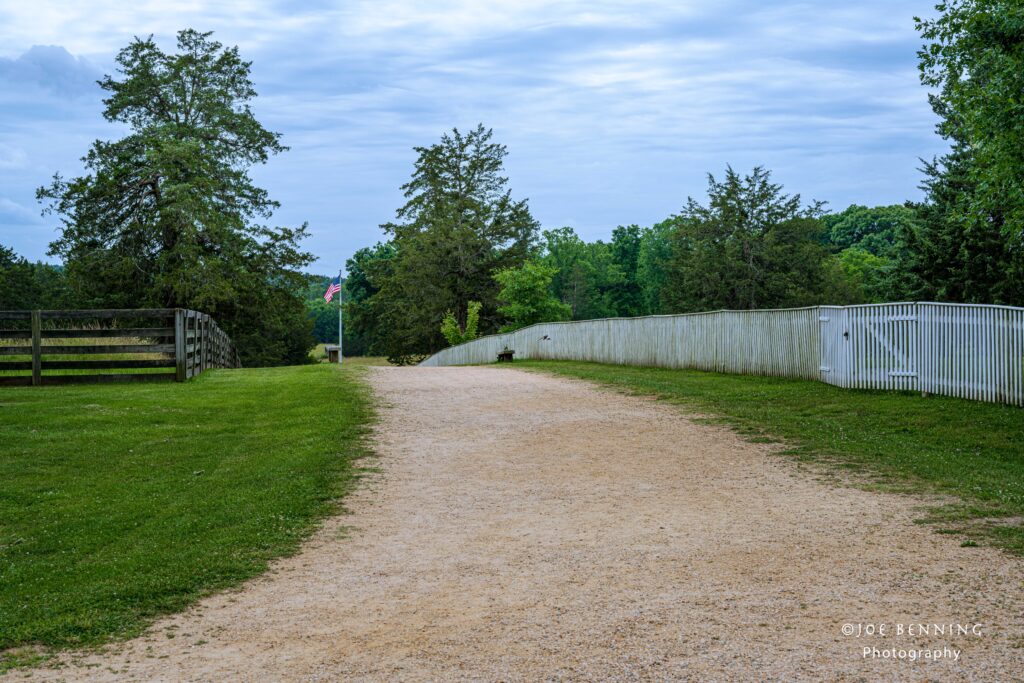
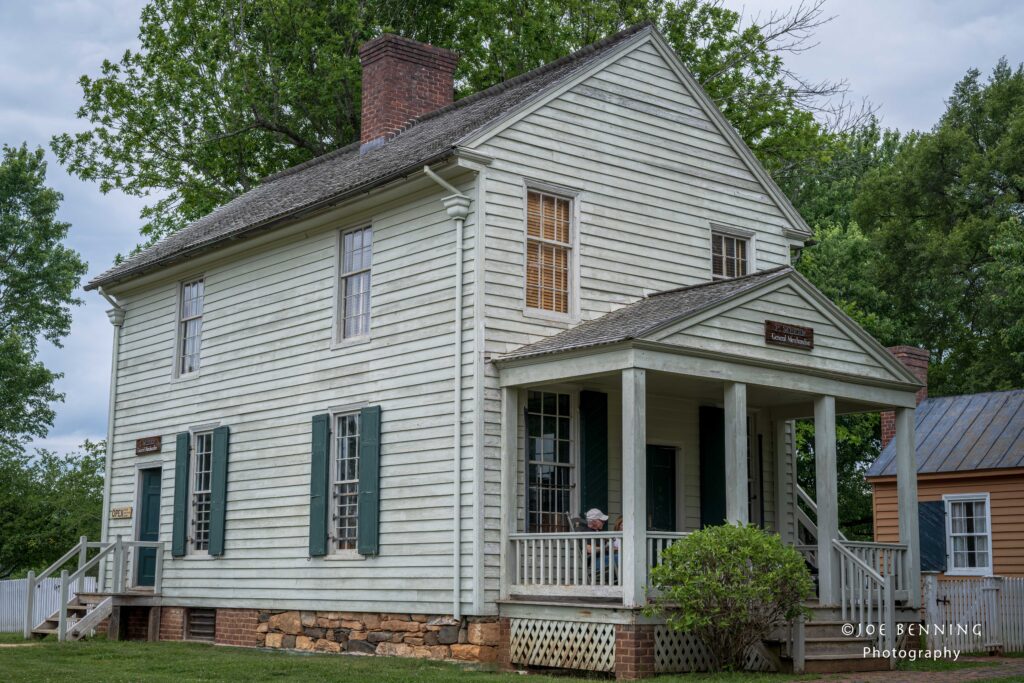
Photo looks down a gravel path to an American Flag in Appomattox, VA.Photo of a Civil War era general merchandise store
Barely a week after the surrender at Appomattox Lincoln was assassinated by John Wilkes Booth.
General Lee, at General Grant’s request chose the Appomattox Courthouse for the surrender. Actually it was not a courthouse in the modern sense. Lots of buildings were called courthouses at the time. The place where the documents were actually signed was the McLean Mansion House. Lee chose it because it was the grandest house in the town (Appomattox) where the closing battle of the war was fought.
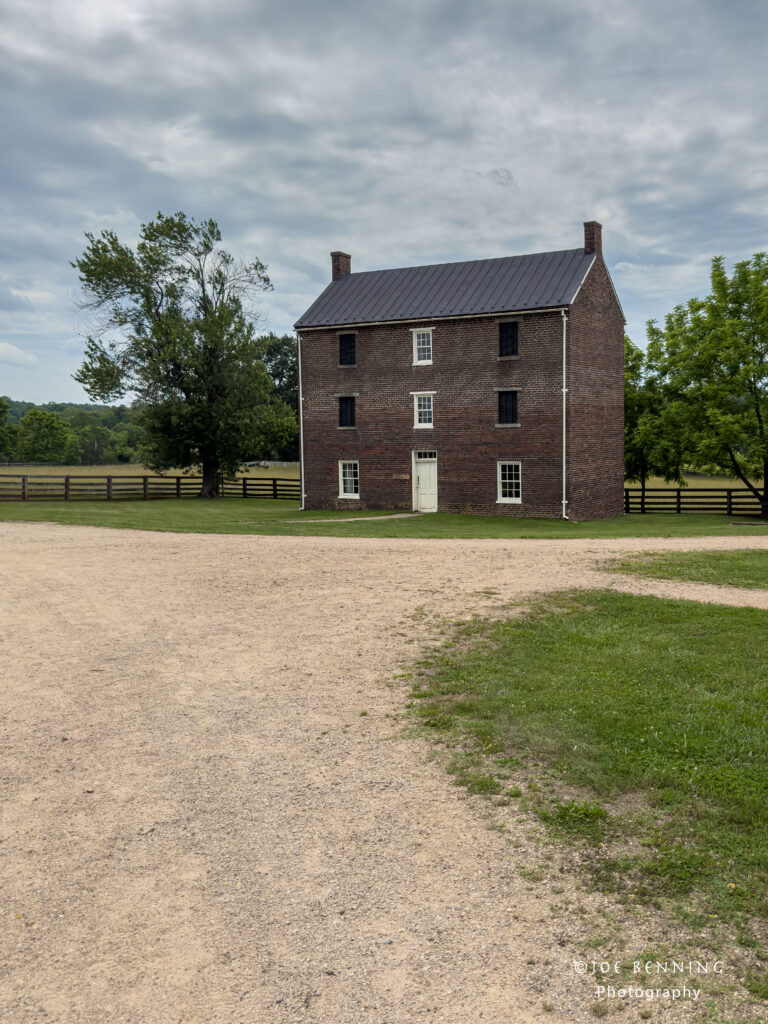
Appomattox, VA, USA — June 2, 2024. A photo of the outside of the red brick Appomattox County Jail.
One irony is that Wilmer McLean, the house owner, had his savings in cash denominated in Confederate currency which was worthless after the surrender. He couldn’t keep up the mortgage payments and so was forced to sell the house. At that point he moved back to his home in Manassas and then later to Alexandria. Another irony: he worked for the Internal Revenue Service from 1873 — 1876.
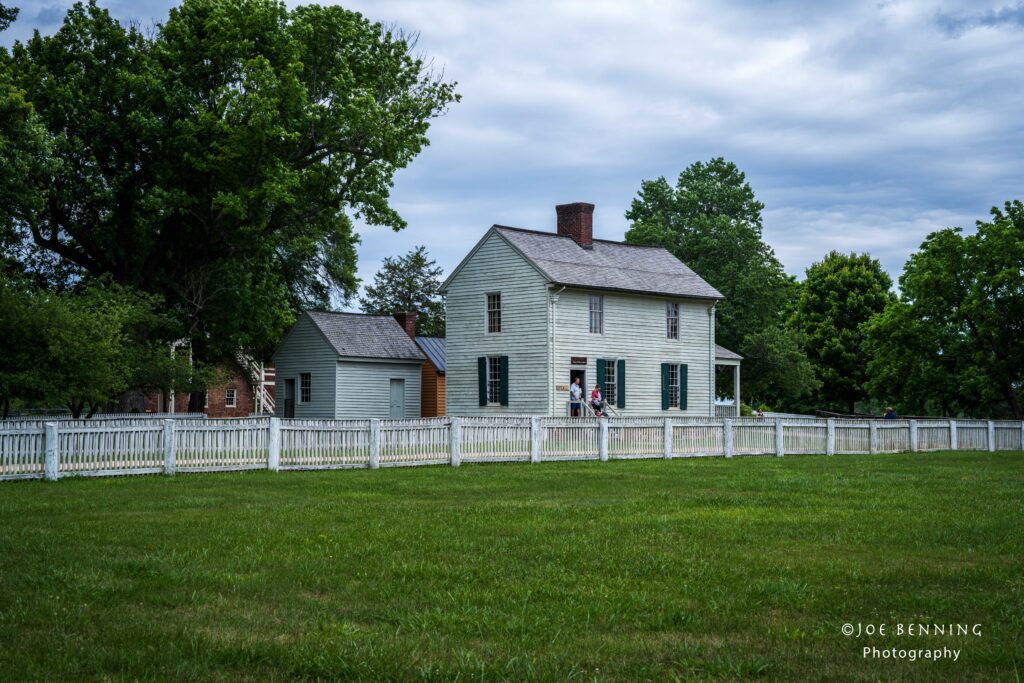
Appomattox, VA, USA — June 2, 2024. A photo of the outside of the Appomattox General Merchandise store; a family of tourists is exiting the building.
I couldn’t help but think, while watching the film, that it wouldn’t be a bad idea for our current politicians to read Lincoln’s second inaugural and devote a little thought to it.