Shanghai, China Thursday, March 31, 2016
Greetings from Shanghai! We have spent the better part of two days exploring this City, which has a relatively short but exciting past, and a very exciting future ahead of it. This is our third stop in China – the first was Hong Kong, which is a special administrative region, and the second was Xiamen (pronounced SHAH-men), an active port city on China’s southeast coast.
Now we have arrived at Shanghai, a port just inside the mouth of the Yangtze River (the 3400 mile river that is Asia’s longest and most important river).
Shanghai is China’s largest city, with a population of 25 million (that’s about as many people as live in Australia), and is the 8th largest city in the world. China’s total population is about 1.4 billion, which is over 4 times the population of the USA, and the landmass of the 2 countries is approximately the same.
As you know, China’s history spans thousands of years and includes a lot of invention and advances well before the western world (for example, thousands of years ago, the Chinese had standardized system of measures and a standardized writing system to facilitate trade and communication across the country). As Marco Polo reported on what he found in China, he was considered a lunatic – the western listeners in the late 1200s could not conceive of the Chinese advances he reported (coal, paper, paper money, a dictionary, etc.).
Shanghai was a small fishing village in the early 1800s. At that time, traders from Britain, France, Portugal and elsewhere were carrying on great trade with China, and those in Britain wound up paying their trade debts by selling opium to the Chinese.
In no time at all (so to speak), the Chinese leaders saw the trouble this opium was causing, and banned the foreign traders from China. The Brits convinced their government to go to war with China to re-open the trade (the first of the “Opium Wars”). The first Opium War was ended by a treaty which created 5 ports in China that were open to international trade, and Shanghai was one of them. It was to these ports that many religious organizations sent their missionaries to preach to the Chinese.
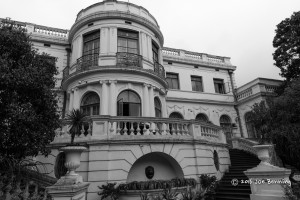
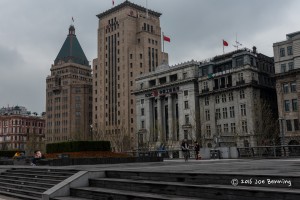
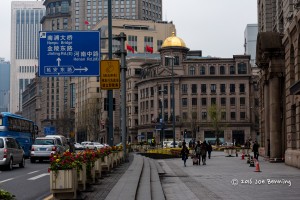
Britain, France, the US and others developed colonial settlements within Shanghai and along the Yangtze River once the first Opium War ended, and the French Concession area is still a highly regarded residential neighborhood in Shanghai (we spent some time there at the Arts and Crafts Research Institute, and it’s a very pretty area). These developments give Shanghai an interesting look – the traditional Chinese areas of the city are crowded and some “lane areas” still are in use as crowded low-grade housing; there are also wide tree-lined boulevards and neoclassical, art deco and other buildings in many areas. Cherry blossoms and magnolia trees line many streets.
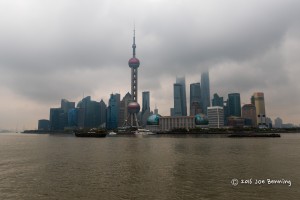
The Bund is the spacious promenade on the Huangpu River, which divides old and new Saigon, and flows to the Yangtze. The Bund is the place to be – it is filled with tourists from all over China, and is very scenic.
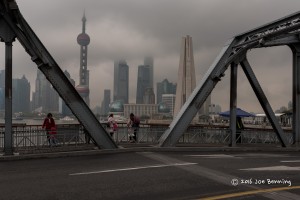
Today, Shanghai is China’s economic center, and there are large financial service headquarters as well as other commercial towers clustered in the city. The heart of the city is surrounded by large residential apartment buildings – lots of them.
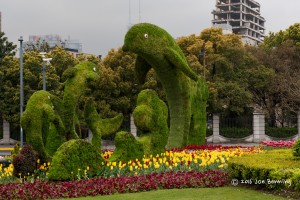
The city is served well by public transportation (cars are not too expensive, but the permits to own them are), and there are more and more parks and green areas appearing in the city with each year.
During our time here we saw some beautiful places, saw lots of people everywhere, and learned some interesting things about Shanghai’s history and culture.
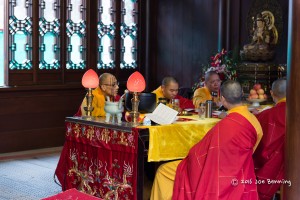
- Yesterday we visited a Buddhist temple and school; student monks and nuns had a service in which they chanted some mesmerizing tunes, while construction crews made a big racket next door to the school. An enormous Buddha made from one single piece of jade sits on the second floor of the school, and gardens are kept meticulously in the little areas between the school buildings.
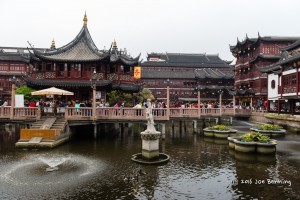
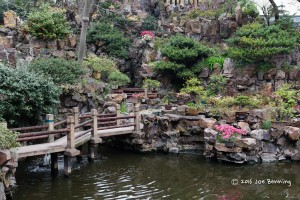
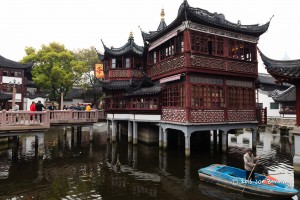
- We also visited a traditional house from old Shanghai days (the Yu Yuan Gardens). It is one of the cultural treasures that wasn’t destroyed as part of the revolution (to Communism); it is a fabulous compound built for a family. There are various structures including 2 areas for performances, gardens and water features, pathways that divide so that the women could take an interior path away from the sun and external world, and other peaceful and beautiful attributes. Immediately outside its perimeter is a giant, crowded, noisy market that looks like Times Square on steroids. Quite a contrast (Joe got some pix).
- Today we took a tour with an architect, and learned that the tower that sits on the bank of the Yangtze River (the Bund) was formerly used to provide weather indications. Jesuit missionaries in the west had a telegraph, and they would telegraph weather information to Shanghai; flags indicating the upcoming weather were flown so that captains could plan their trips accordingly.
- And speaking of Jesuits, they are credited with giving China its reputation as a place for great needlepoint. Apparently the Jesuits provided the fabric for western religious institutions in China, and the Jesuit students did the needlepoint for these items.
- And all those brides we have seen in Australia and Asia so far? No, they are not actual brides, at least not yet. We learned that it is customary in this part of the world for couples to buy or rent several wedding outfits (up to ten), and have their pictures taken in different locations. The pix are then enlarged and displayed at the actual wedding, which is more of a feast than a marriage ceremony.
- And because Shanghai did not require a visa for entry in its early days of growth, it became a refuge over the years for substantial numbers of Jews persecuted at various times in Russia, Germany and elsewhere.
- One tour guide told us about the current dating scene, and related that the one-child policy has created large numbers of parents who are desperate for grandchildren. On weekends there is a corner in the large square where grandparents and parents of eligible-aged young adults gather (in crowds that number up to 800, in her opinion). These grandparents and parents have information available about the candidate, and they exchange information (pictures, height, education, career, assets, earnings, household skills, etc.). If they find a good possible match, they encourage their son/daughter to meet the prospect. Our guide says it’s one of those things where you agree so that your parents won’t nag you, but you just meet for 2 minutes, say hello, and that’s usually about the end of it. (I know, this is a weird story, but when you are stuck in traffic on a tour at the end of the day, the guides might tell you anything just to distract you!)
Sorry for such a long post – I wanted to get in as much as I could remember! I’ll sign off now.
Best,
Mary Anne