Tag Archives: travel photography

Pisa

Our ship stopped in Livorno, Italy and many passengers opted to head into Florence or other areas of Tuscany—we decided to take a walking tour of Pisa.   
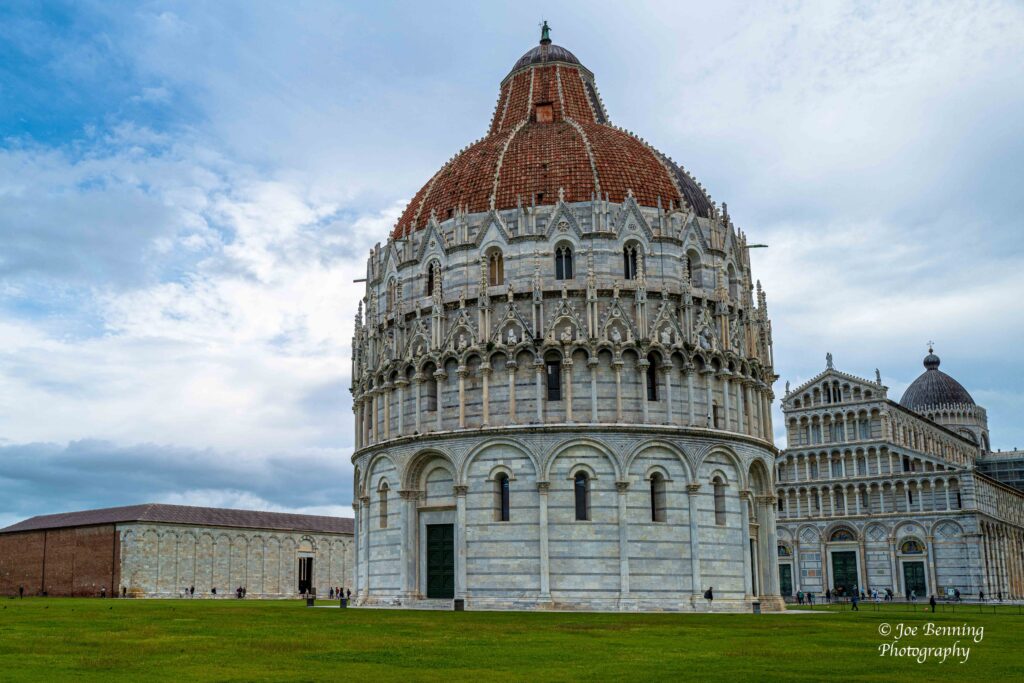
Baptistery Santa Maria Assunta

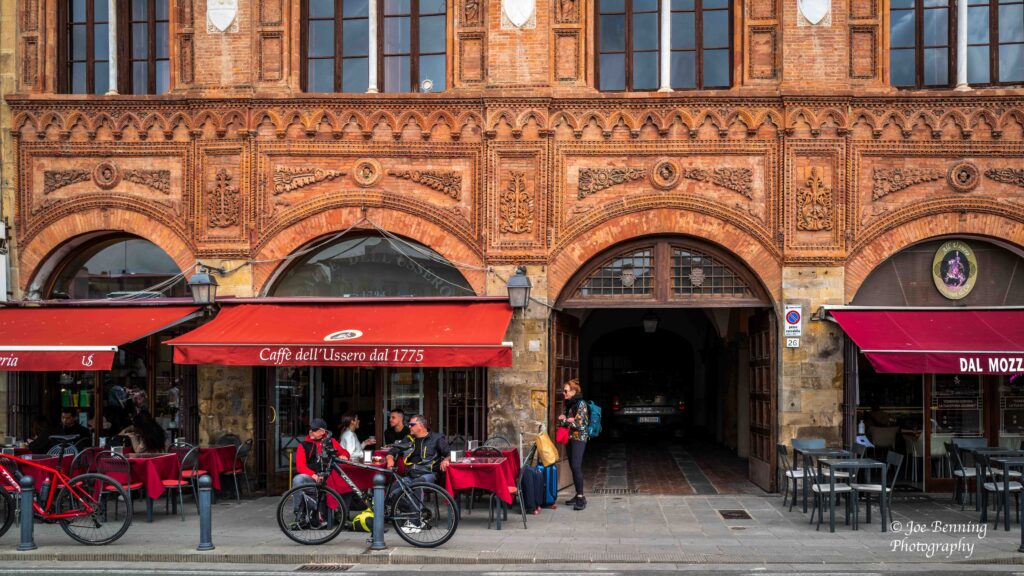
Pisa is another medieval walled town, which today houses approximately 90,000 residents, and an additional 50,000 students at the three universities in Pisa.  The town has huge numbers of tourists (taking selfies at strange angles to show how they are propping up the leaning tower), and a youthful vibe, with bicyclists everywhere, and many cafes, bars and restaurants.  
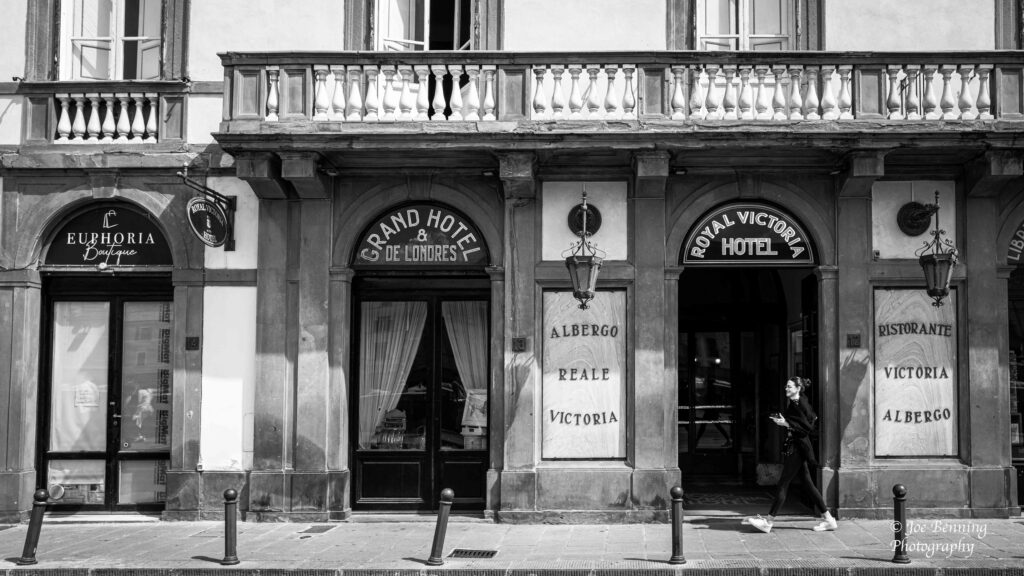
Royal Victoria Hotel in Pisa

The influence of the Medici family and other wealthy Florentines is evident in Pisa – beautiful palazzi line the Arno River, and the Medici crest appears on buildings throughout the town.  
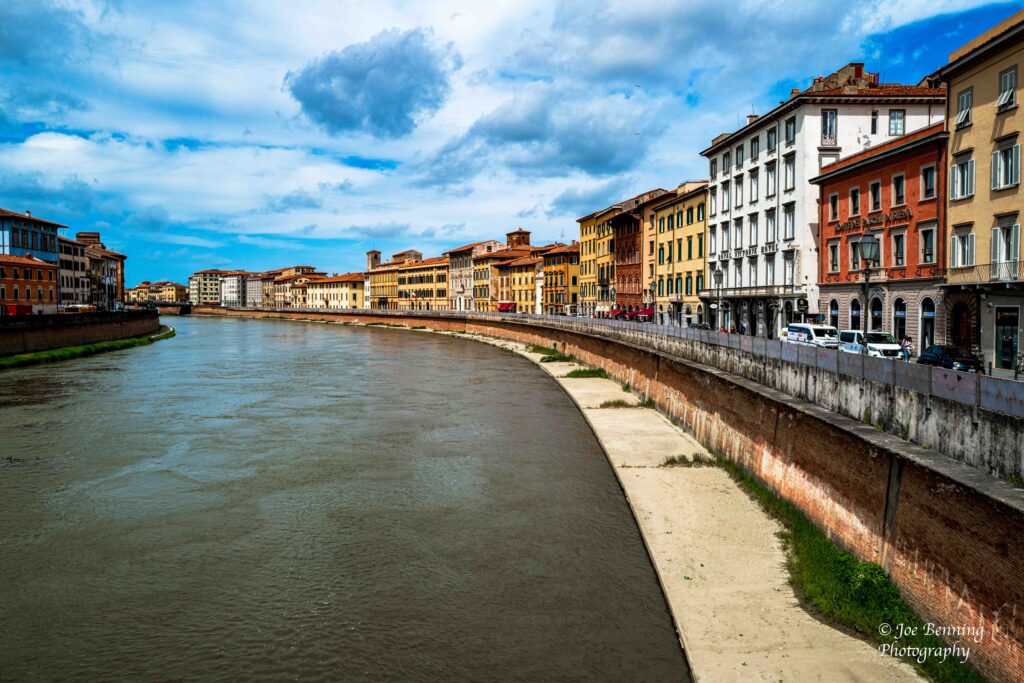
Along the Arno River

The Arno River flows through Pisa (and on to Florence, about 40 miles east) and water can be found not too far under the land in this part of Tuscany.  Building large marble towers and other edifices carries risk that the land will not support the buildings over time (hence the leaning tower, and other buildings in the city that lean slightly).  

Our visit in Pisa included the leaning tower, of course, as well as the neighboring Cathedral and Baptistry, which are beautiful.  The Cathedral and Baptistry are slowly sinking, since they were built on the same plain as the tower, but their weight is distributed over a larger base than the tower, so they do not appear to be leaning.  
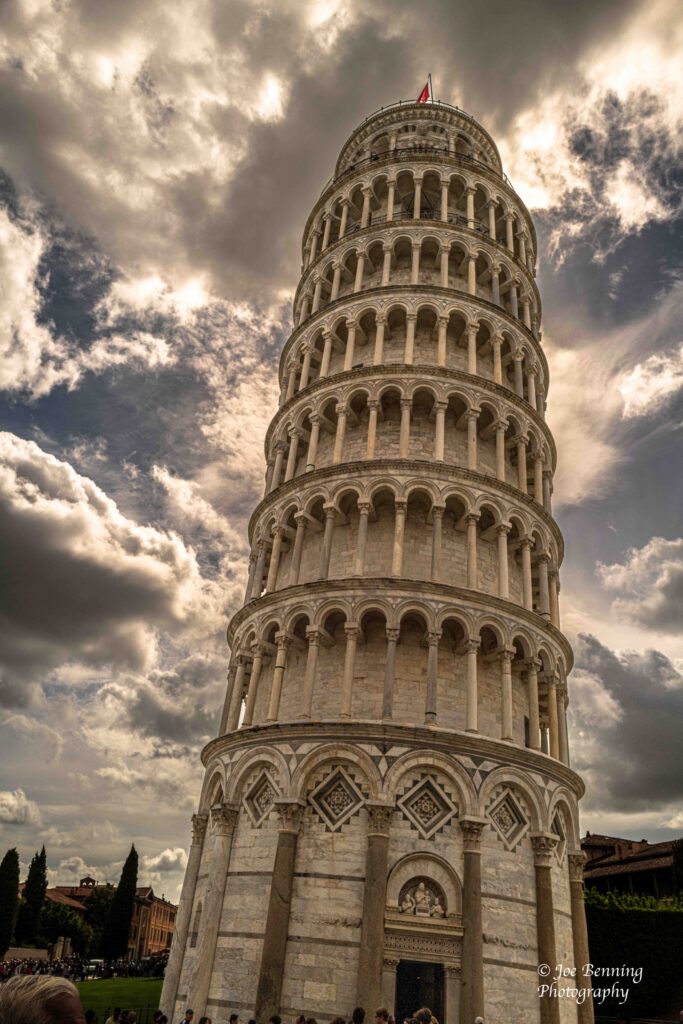
Leaning Tower of Pisa

In recent years, concrete has been injected into the ground to support the tower, and other safeguards have been adopted -the practice of allowing people to climb to the top of the tower has even resumed, after many years when it was not permitted for reasons of safety. 

We spent some time in the neighborhood that makes up the campus of the Scuola Normale Superior, a prestigious school that has graduted Nobelists and other award winners such as Enrico Fermi.  The curriculum is rigorous, but students who are accepted and earn high grades enjoy a completely free education.  

Library of the Scuola Normale Superiore in Pisa
Street Scene by the Arno River

And once again we enjoyed a gelato in the course of our trek.  Another excellent day in Italy!   

JFB and MAM
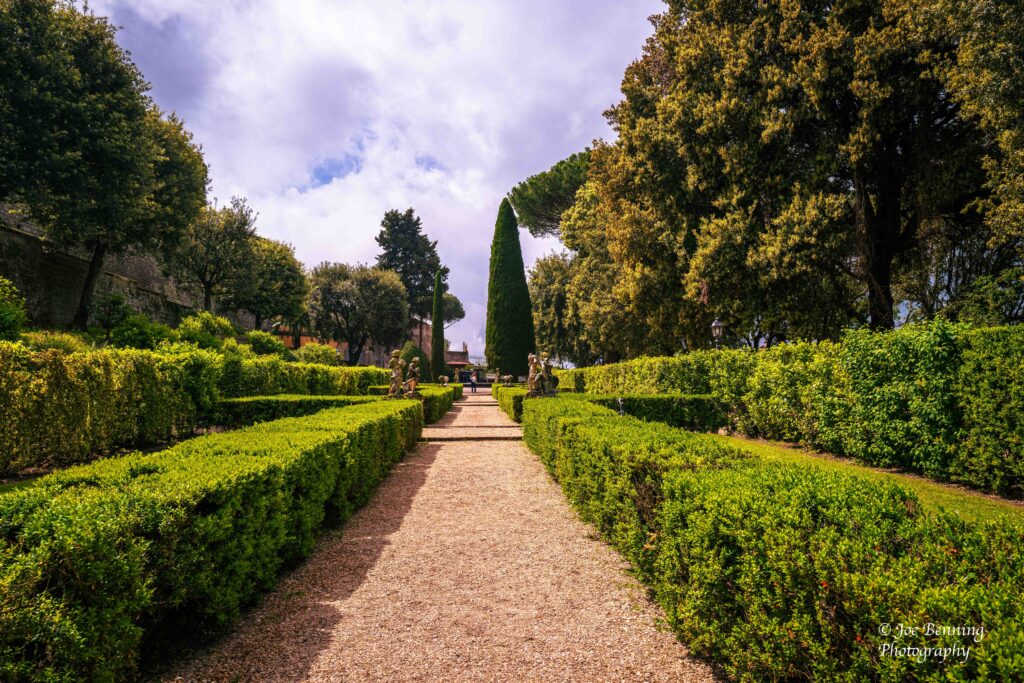
A Visit to Castel Gandolfo  – the Apostolic Palace 

Today was very special—we went to see the summer palace for Popes—Castelo Gandolfo.  Opened to visitors in 2016, it has served as the summer palace for Popes since the Seventeenth Century.  Castelo Gandolfo is about 28 kilometers outside of Rome.  Pope Francis never spent a single night there, which is probably why it was opened to the public.  We’ll have to wait and see what happens with a new Pope. 

Papal Gardens

On the grounds there is a lovely, peaceful green park, overlooking Lake Albano. The palace has many rooms for formal receptions and visits, as well as many private rooms (such as the room where Pope Benedict used to watch soccer games on television). 

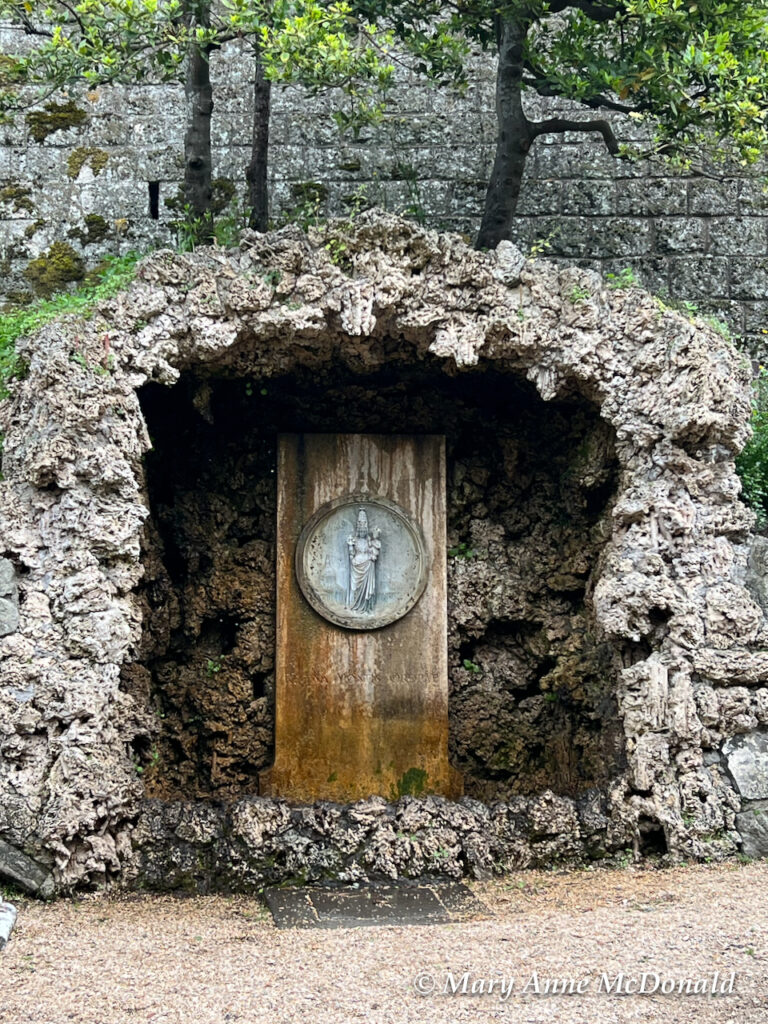
The palace itself has beautiful gardens, mostly green without many floral areas. We had the opportunity to visit the “secret garden” of the Pope. It contained pathways of crushed white stone where the pope could walk and contemplate. The garden housed many statues and a fountain designed to reflect a grotto honoring Mary. The garden is a very peaceful place. 

Grotto Dedicated to BVM

While touring the palace we saw the pope’s bedroom, private chapel, office, and many other rooms. 

The decoration of the castle is not very ornate by castle standards. The colors chosen to decorate the rooms reflect the seaside and nature. 

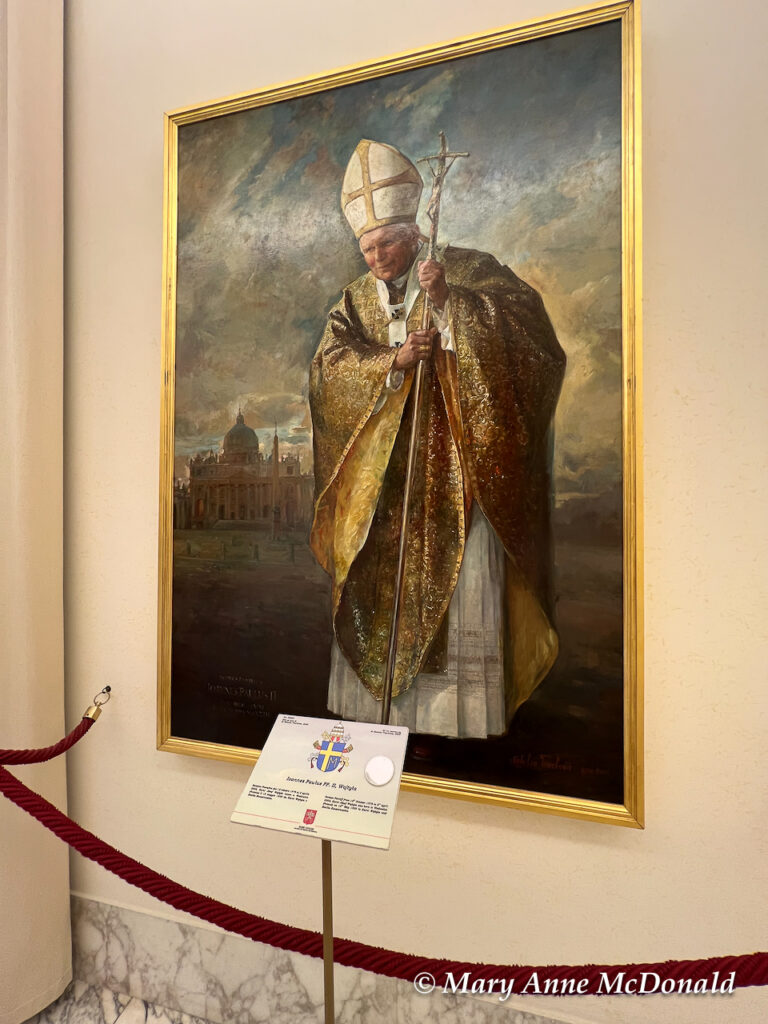
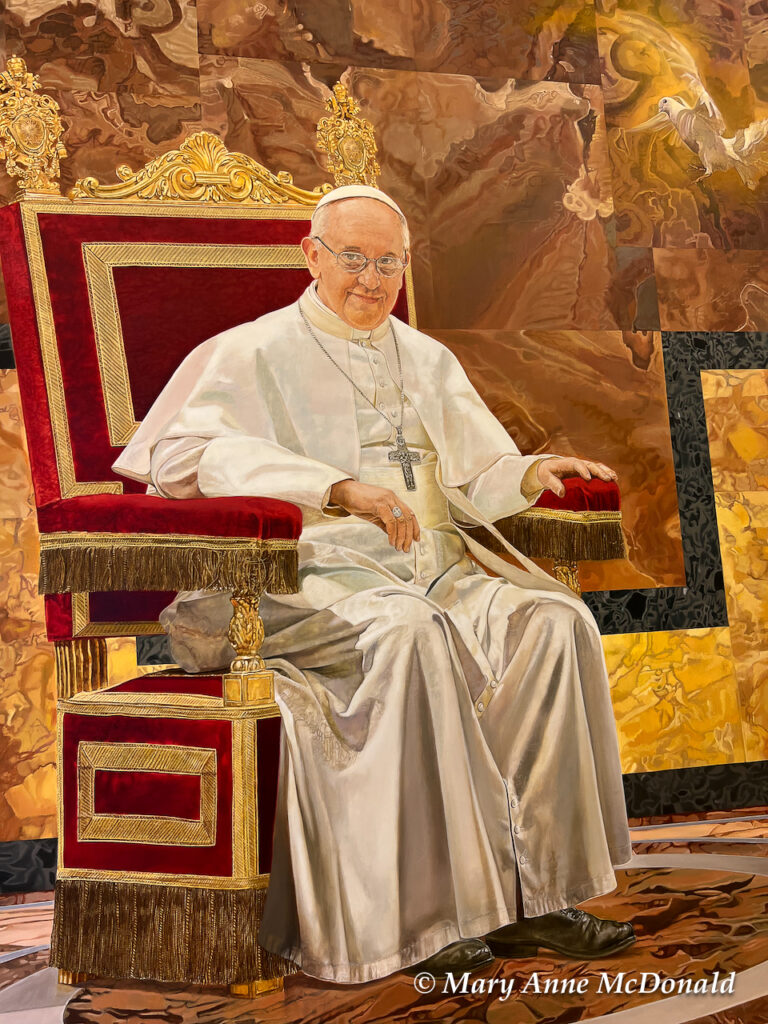
Notably the castle has many, many portraits of the popes.  Several portraits of the most recent pontiffs are below.

John Paul II official portrait
Portrait of Pope Francis

Among other items of note: Pope Benedict retired to Castle Gandolfo, and Pope John Paul II spent a lot of time in contemplation at Castel Gandolfo. Pope Francis visited the castle three times but never stayed overnight.

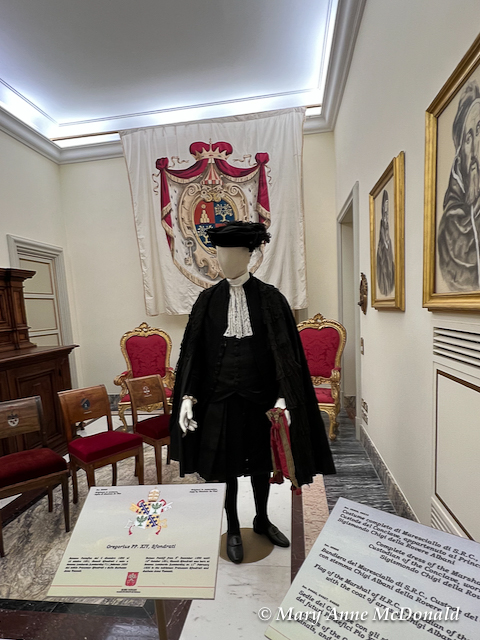
One of the exhibits at the castle involves the uniforms worn by the Swiss guard and various other uniformed personnel, including the Carmerlengo. (The Carmerlengo administers the temporal affairs of the Holy See during a papal vacancy.)  There is a picture below of the uniform the Carmerlengo  wore in prior centuries. 

Uniform Worn by Carmerlengo in past centuries

Castel Gandolfo is a beautiful place, and it was very meaningful to spend some time in the very rooms where various pontiffs lived when they had a chance to get away from the summer heat in Vatican City. 

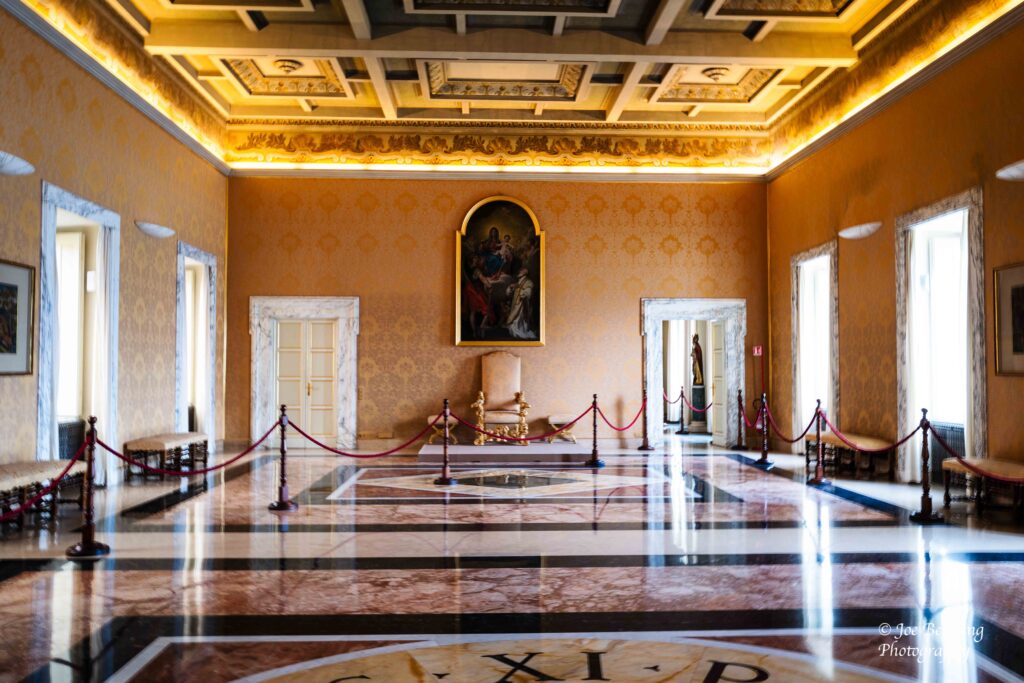
Room of Papal Museum at Gandolfo

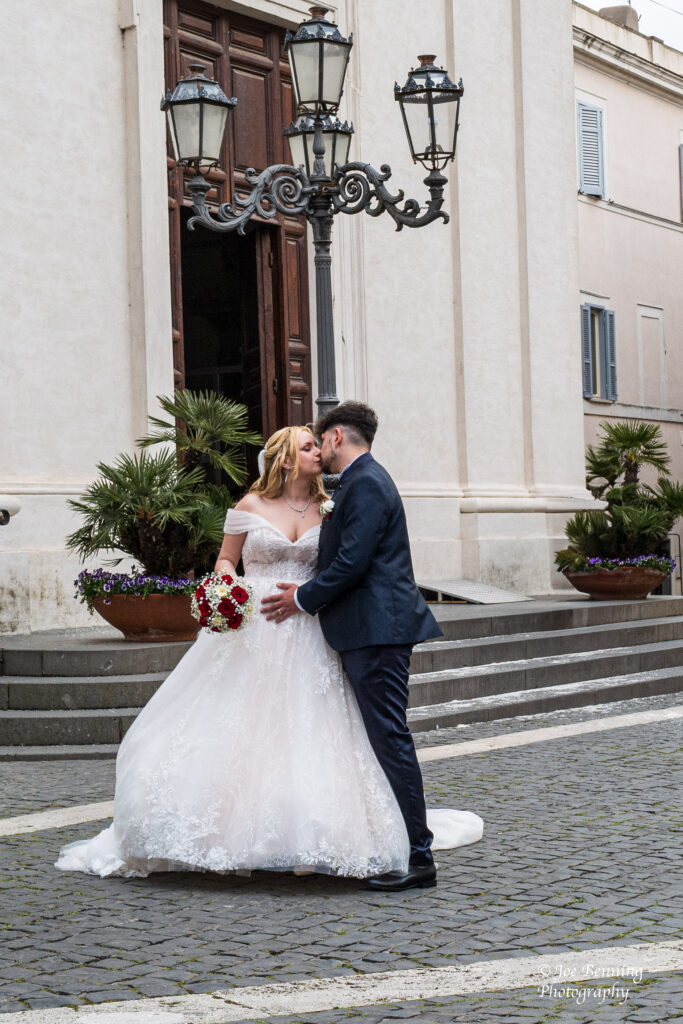
After we finished touring Castel Gandolfo we walked up through cobblestone streets in a very pretty town, and saw a church where a Monday morning wedding was taking place. There were lots of people in attendance with flowers and rice thrown to celebrate, and beautiful attire on all of the participants. 

Kiss the Bride

JFB and MAM
Tarquinia and Rome 

Rome is a bit busy these days, so when our ship docked at the port, we decided to go to a nearby medieval town, Tarquinia. The town dates back to the ninth century BC, and sits on top of a very steep hill overlooking the Tyrrhenian sea. 

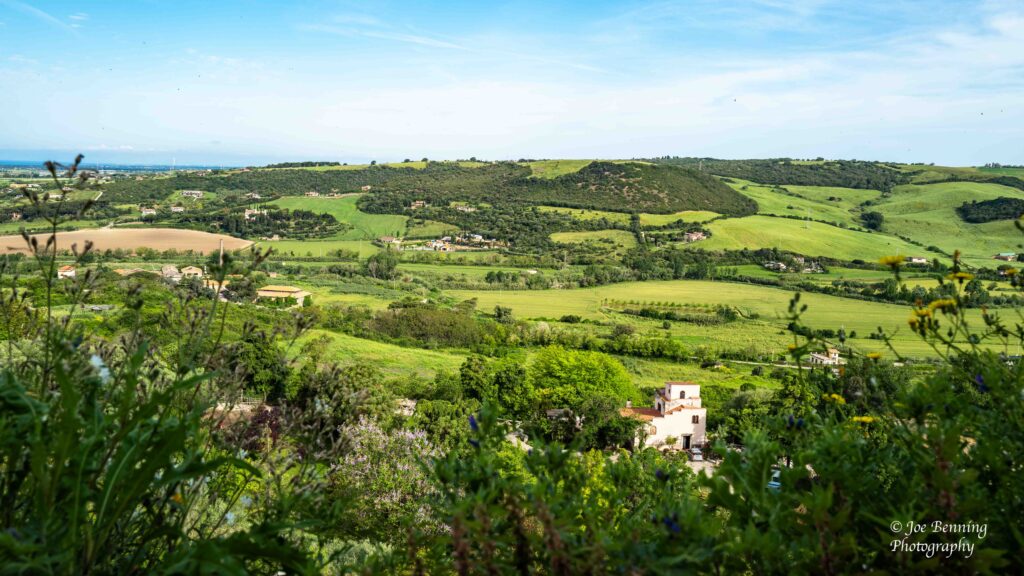
Overlooking Tarquinia

The town is enclosed by medieval walls and watch towers. There are numerous churches and bell towers within the town, giving it a lovely profile. 

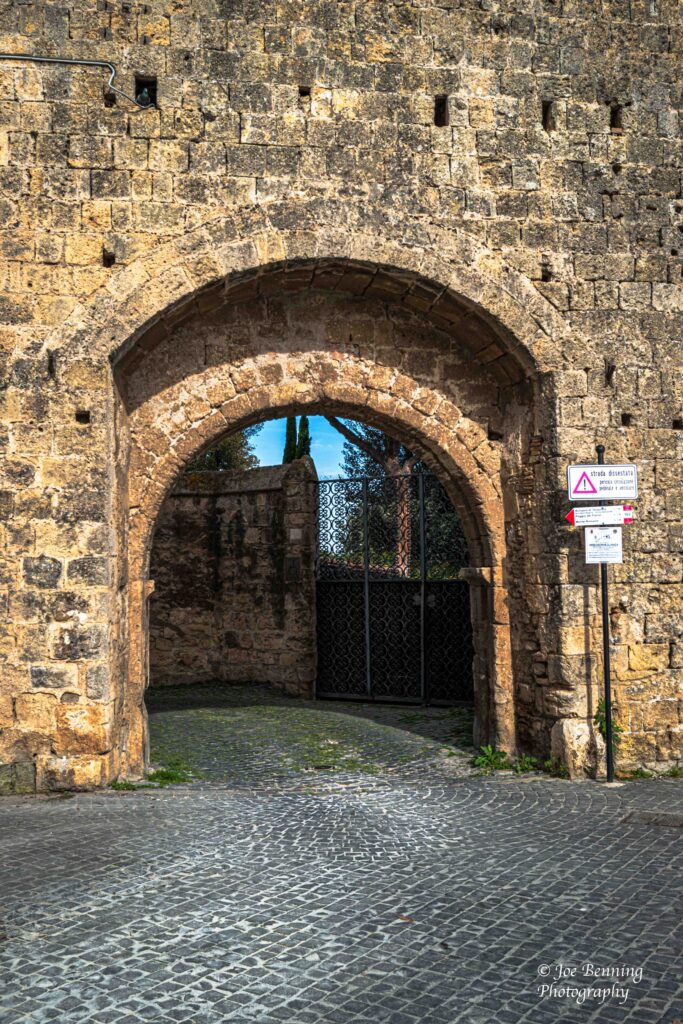
Gateway to the City

The old cobblestone streets of Tarquinia are  incredibly steep, so we were fortunate to take a trolley train (with a guide to narrate the history) through most of the old town.  

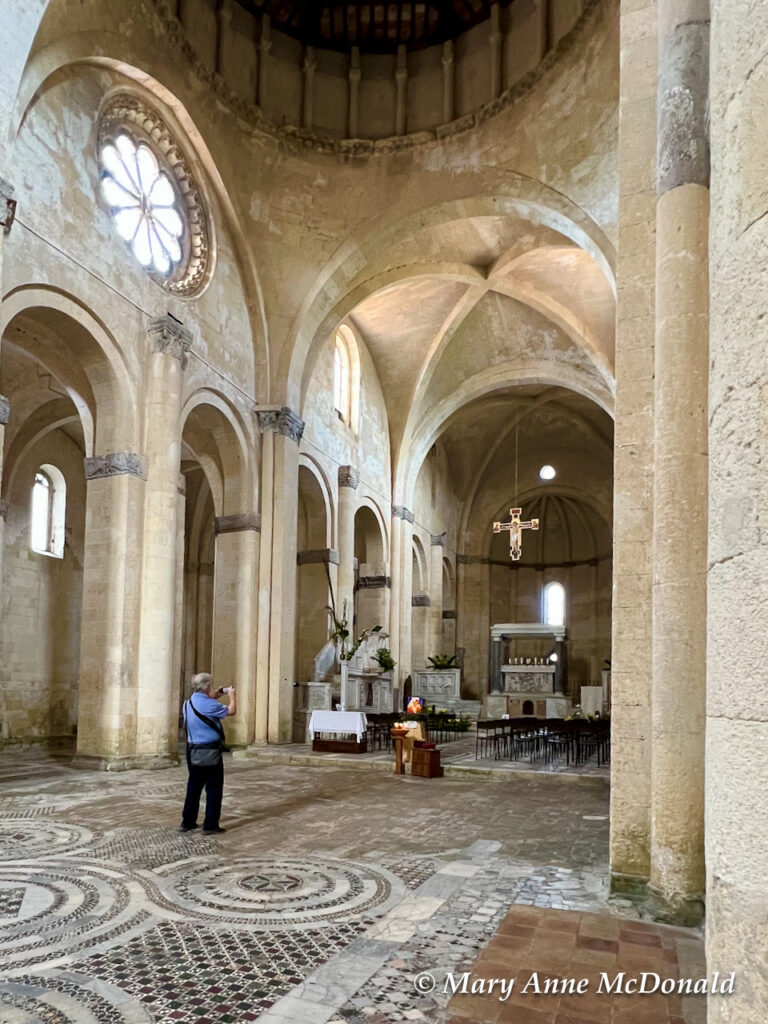
Fortunately it was Sunday when we visited Tarquinia, so one of the oldest churches (Santa Maria in Castello) was open for Mass. We were able to visit the interior of the church before Mass started.  It was striking in its simplicity and age. 

Santa Maria in Castello


Our tour finished with a delicious gelato, and we were back at the port in no time.   

That evening we went into the city of Rome for an event sponsored by Crystal for its passengers on the world cruise. 

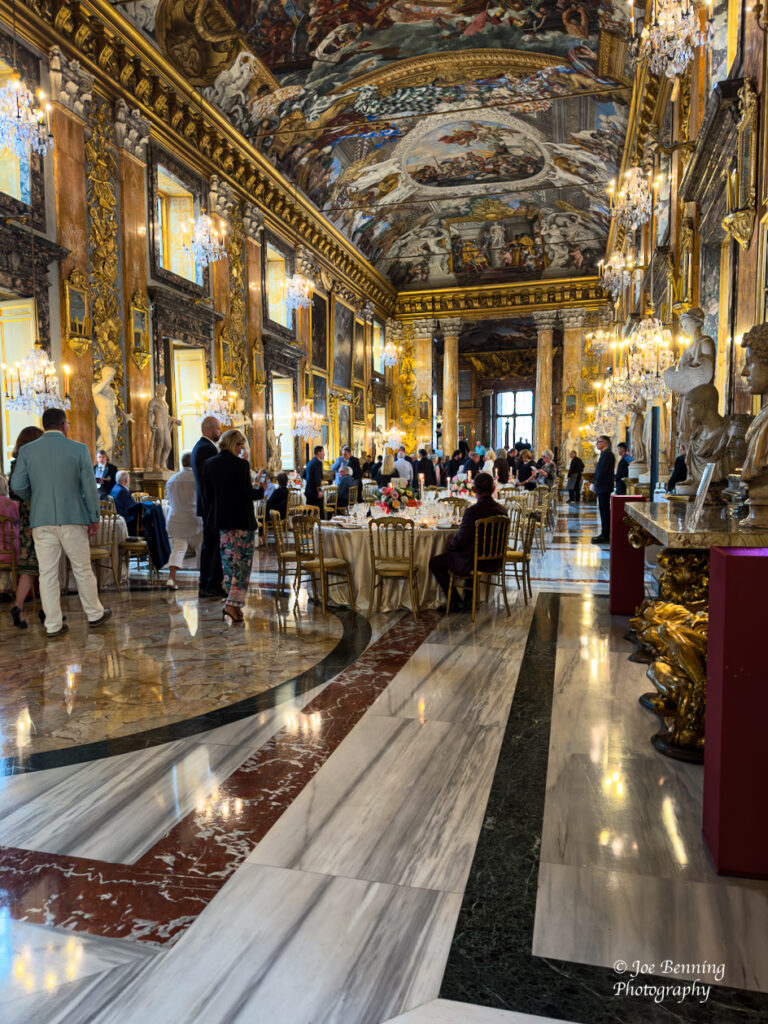
The Main Dining Area
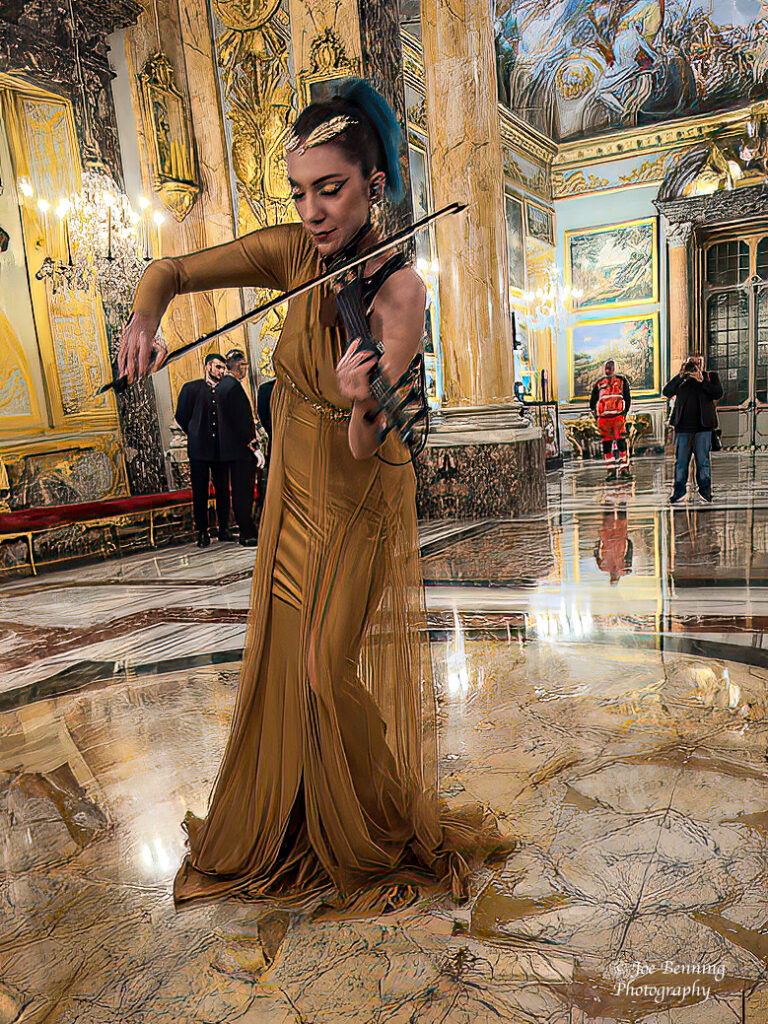
Violinist

We were treated to a delightful evening of music and dinner at the Palazzo Colonna in Rome, a private museum. The chef who prepared the dinner will be responsible for the menu at one of Crystal’s specialty restaurants. One of his restaurants has 3 Michelin stars. The event was pretty amazing – and a great way to end the day.

JFB and MAM
Last Days of Pompeii

When our ship docked in Naples, we had the opportunity to visit the ruins of Pompeii and Herculaneum. 

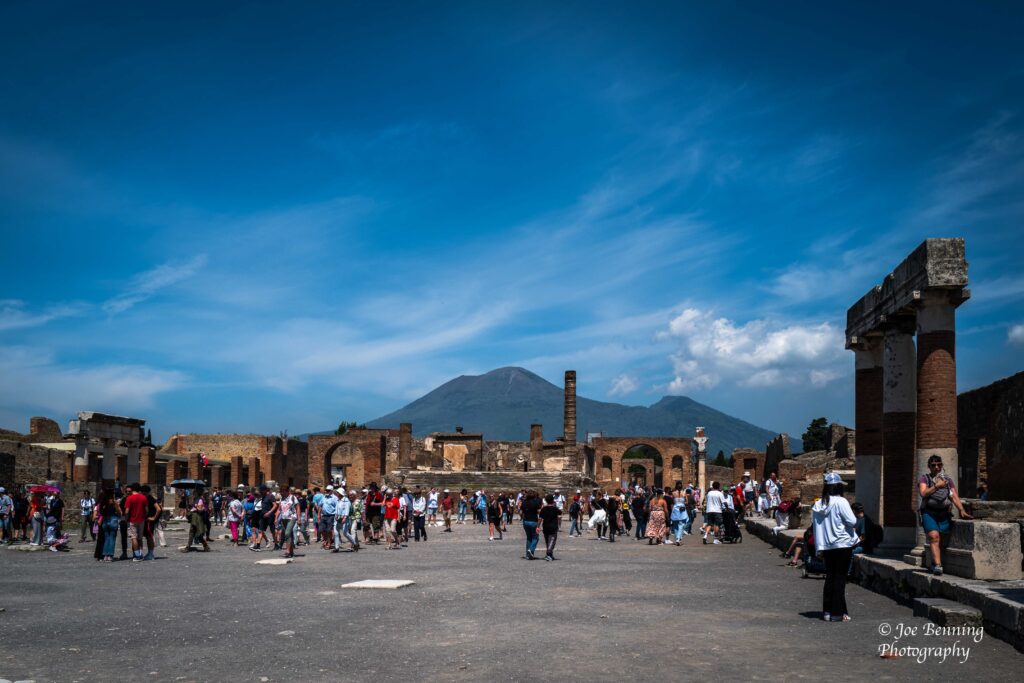
Pompeii was instantly buried beneath 30 feet of volcanic ash and cinder when Mount Vesuvius erupted in 79 A.D.  People living in the city perished instantly when the volcanic ash poured down on the city.

Mount Vesuvius in the background of Pompeii

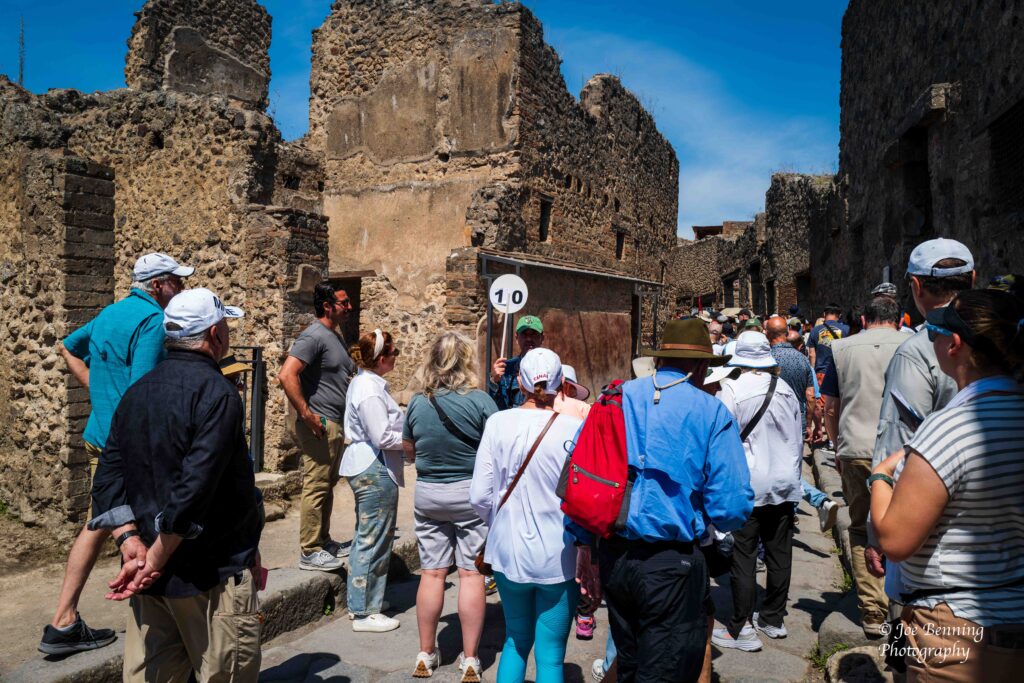
We had an interesting tour of the portion of the city that has been excavated. We saw streets, homes, and shops that were preserved intact as a result of the instantaneous cascade of volcanic ash that rained down on the city. Consequently it provided a glimpse of Roman life as it was 2000 years ago.

Crowds at Pompeii

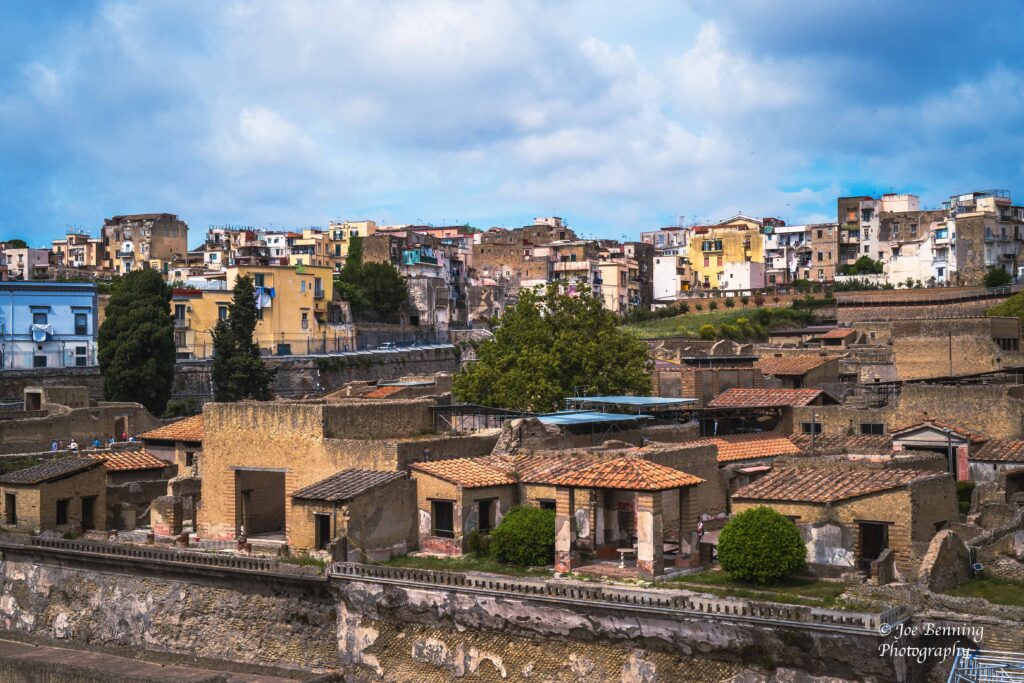
We then visited the nearby city of Herculaneum, which was a both wealthier and  smaller than Pompeii.

Herculaneum in the Shadow of Mt Vesuvius

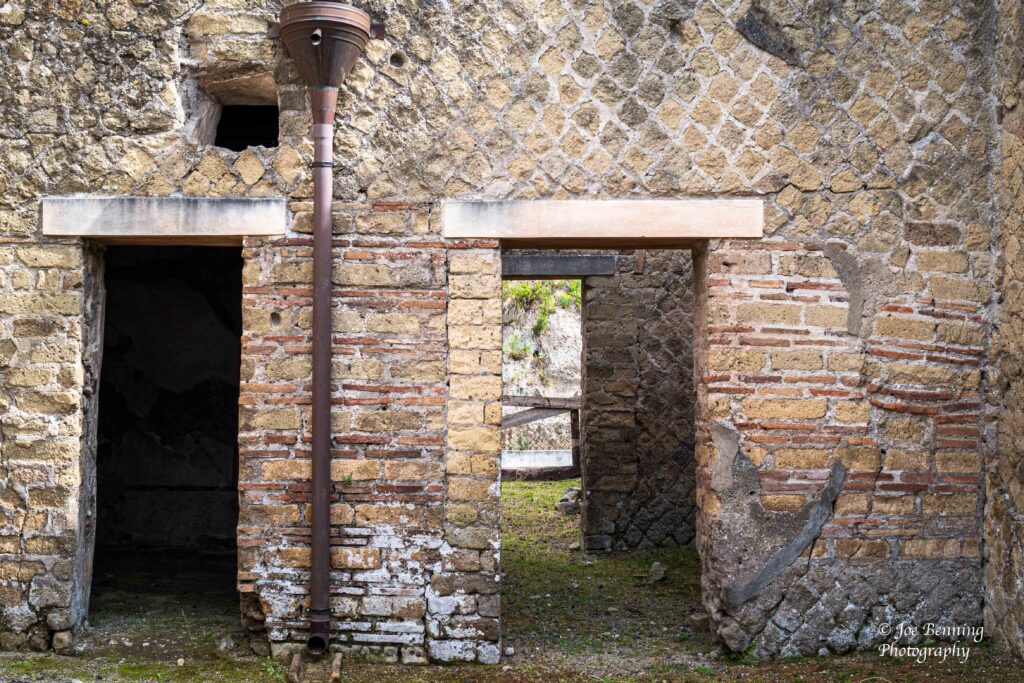
Nearby Herculaneum was destroyed by massive lava flows from the eruption of Mount Vesuvius.  Before the volcano erupted, some of the wealthy inhabitants of the town were able to leave by ship. Others didn’t make it out. The homes that they left behind were buried in mud and are therefore well preserved.  In fact, residents of the city knew how to construct walls in a way that would withstand some earthquakes, which made it even easier to see some of the structures in their original state.  

Gladiators’ Quarters

It was interesting to imagine how life was in these towns 2000 years ago, and to see the contrast between the two cities in terms of the wealth of the inhabitants.   Also very interesting to see the manners in which the cities were destroyed (or left intact) by natural disasters.

JFB and MAM
Kotor, Montenegro

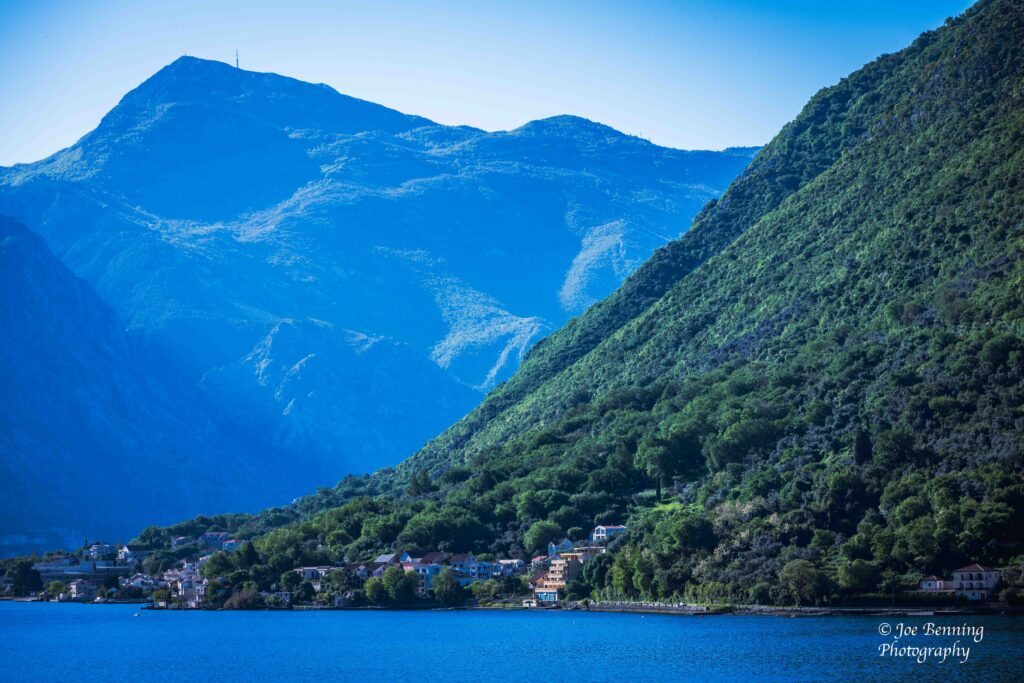
Kotor is a small city in a small country. The population of the entire country is only about 625,000; the population of Kotor only amounts to about 13,000 people. Nonetheless Kotor has one of the best preserved medieval old towns in the Adriatic. It is also a UNICEF World Heritage Sight, probably for that reason. The approach to Kotor involves navigating some spectacular fjords with views of majestic landscapes that have to be seen to be believed. 

Approaching Kotor, Montenegro

After taking a tender ship in, we took a walking tour of the old city. We started the tour by entering through a city gate—all the medieval cities had high thick walls and gates to keep attackers like pirates away. The attackers this time were tourists. 

A Gate to the City of Kotor

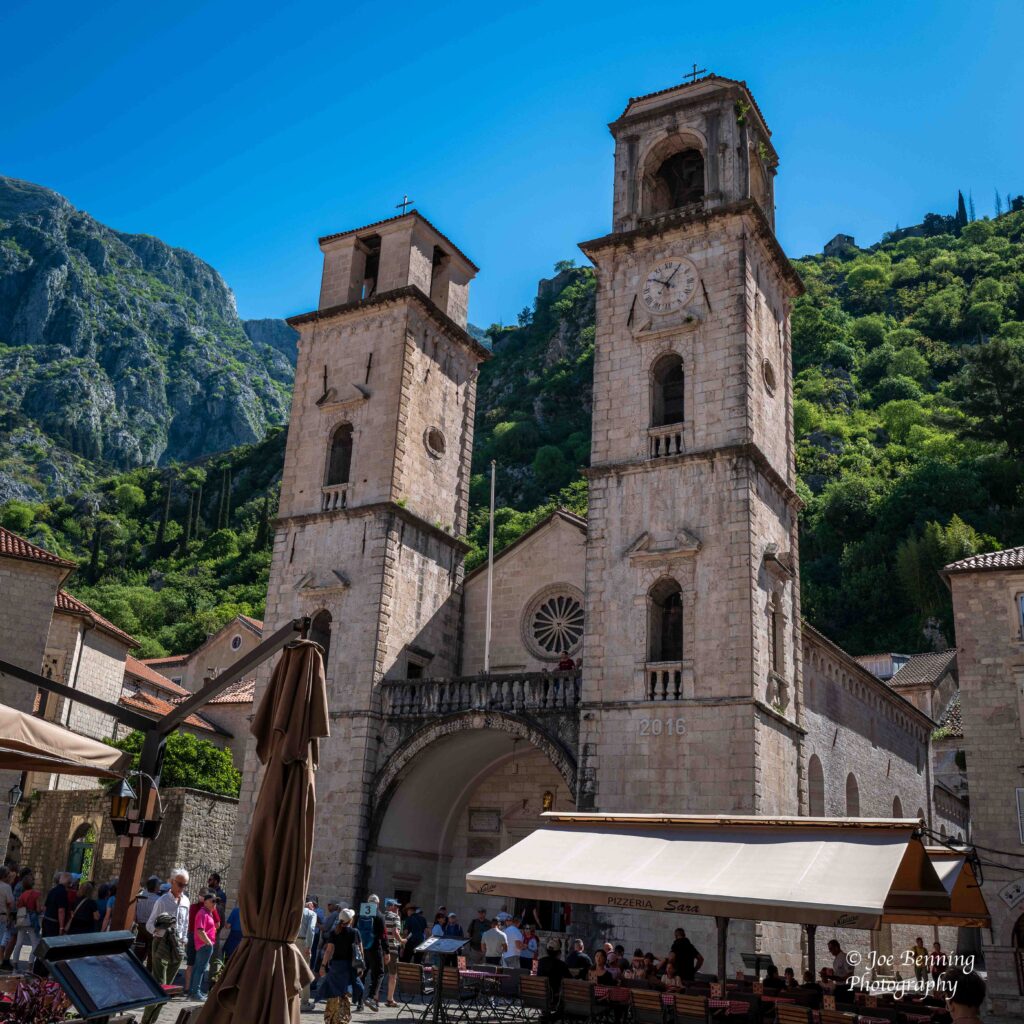
When we passed through the gate into the heart of the city we quickly came across the Cathedral of St Tryphon which was originally built in 1166.  That’s worth thinking about when we Americans have developed the habit calling anything that’s been around for 100 years “old”. 

The Cathedral of Saint Tryphon in Kotor, Montenegro

Anyway we went into the church with our tour guide and gave it a look. I would say the best description of the inside would be “elegant”. 

Inside St Tryphon Church

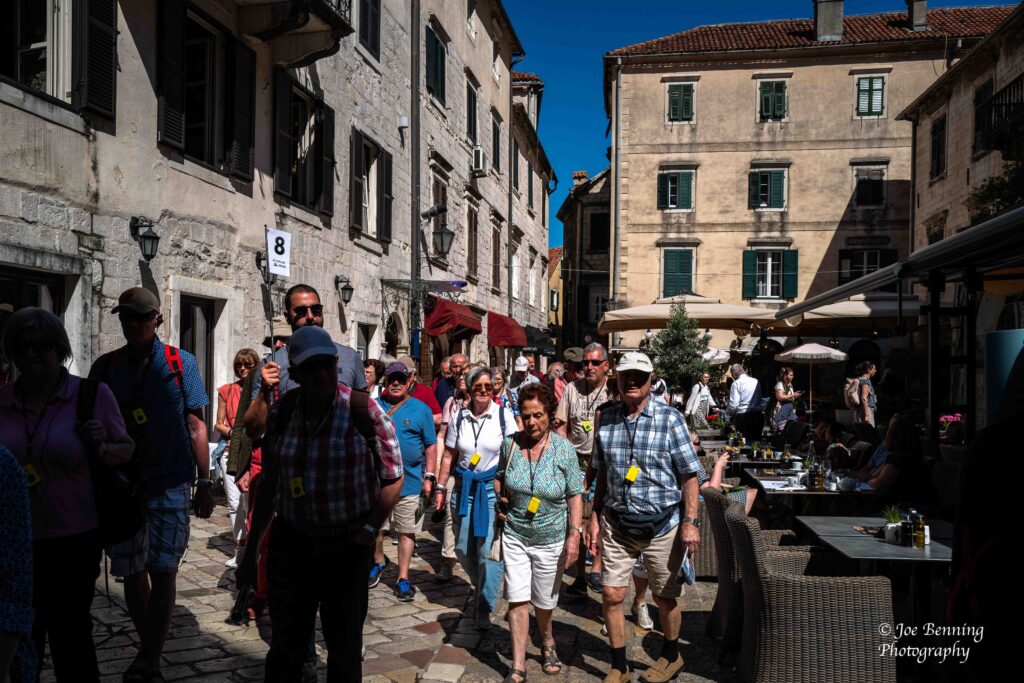
Which is more than I can say about the hordes of tourists that invaded the city. We started our tour around 9:30 or so and by 10:30 a full scale invasion seemed to be underway. 

Tourists are Invading Montenegro

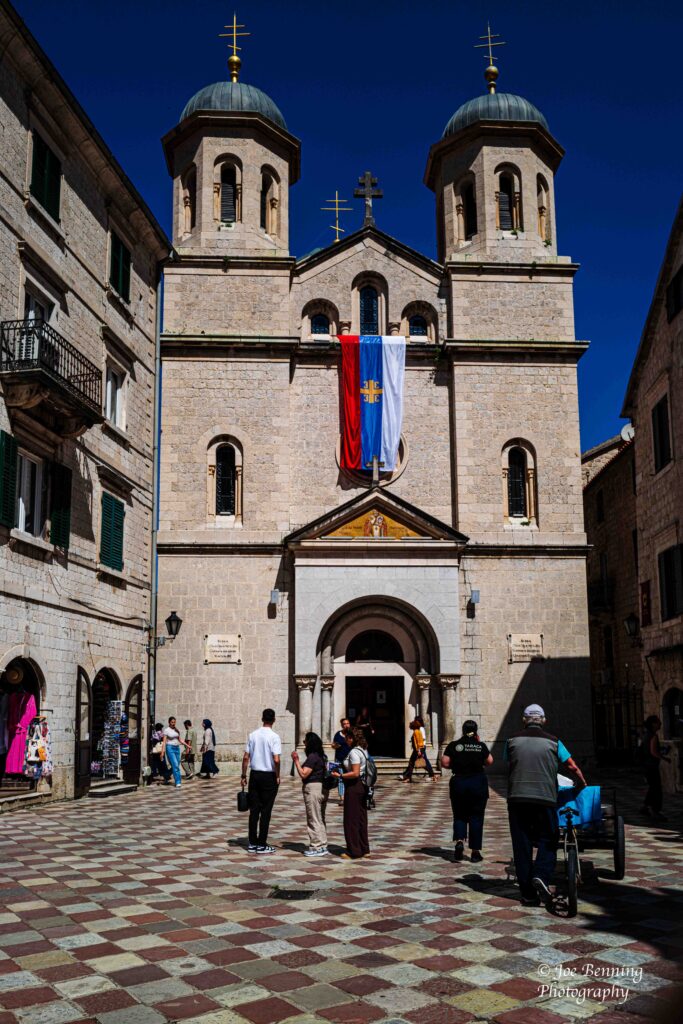
We knocked around the city for a bit more and saw the Serbian Orthodox Church of St Nicholas. The we went out for quite a nice lunch in a local place in town. 

St Nicholas Church in Kotor

All in all, Kotor was a really nice place to visit. But it is easy to see why the townspeople have a love-hate relationship with the cruise ships that bring in so many visitors—and the headaches that come with them.

JFB

From Trieste Italy to Slovenia

On Monday we docked in Trieste. As it turns out we were in for a pleasant surprise. Although we docked in Trieste, Italy as advertised, the tour we signed up for was right next door in Slovenia. It never occurred to us that the tour we booked would be in Slovenia. But it was. And that turned out to be a very pleasant surprise. 

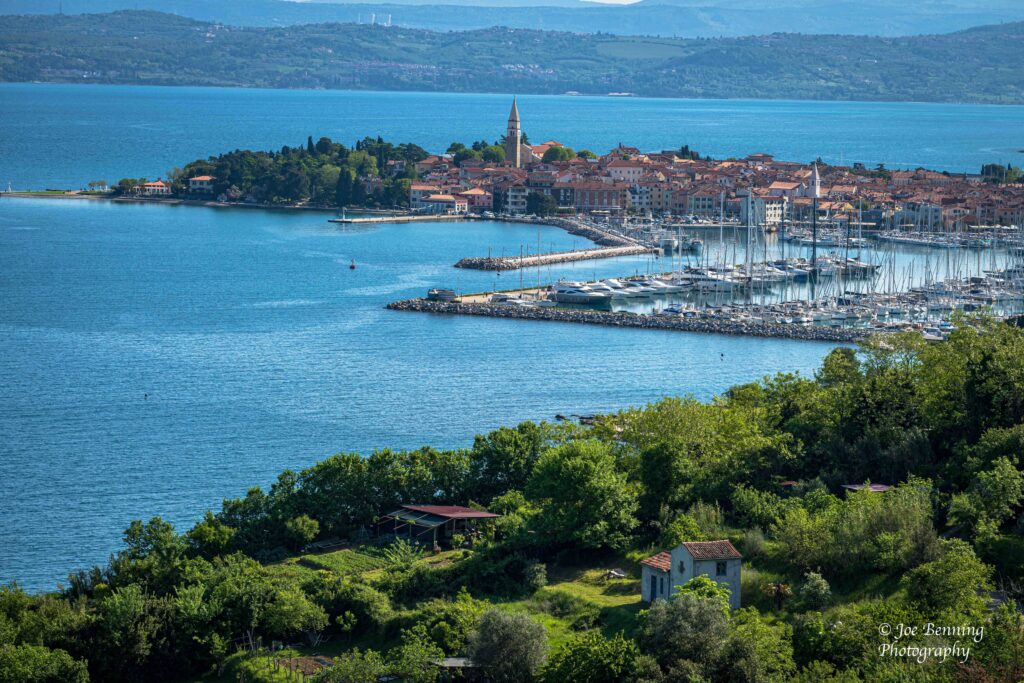
Overlooking Piran, Slovenia

Slovenia is a very small country in Central Europe with a population of about 2 million people. It borders Italy to the west; Austria to the north; Hungary to the northeast and Croatia to the south and southeast. It also has a short coastline on the Adriatic Sea.

The country has been part of many different states and Empires, including the Byzantine Empire, the Carolingian Empire, the Holy Roman Empire, the Kingdom of Hungary, the Republic of Venice, Napoleon’s First French Empire and the Hapsburg Empire to name a few. 

It once again became a part of Yugoslavia and then fell into the Soviet Empire after WW2. But Marshall Tito, who had his differences with Stalin, nevertheless declared Yugoslavia to be a Socialist state. 

Surprisingly enough, under socialist rule Slovenia was a poor state. Virtually all of Slovenia’s progress was made after the Berlin Wall came down, the Soviet Union imploded, and Slovenia adopted democratic capitalism, a fact emphasized by our tour guide.

Today, according to 2024 statistics, Slovenia’s GDP is about $72 Billion. Per capita GDP comes in at around $34,000. Consequently Slovenia is now categorized as a high-income country, albeit at the lower end of the high-income designation. 

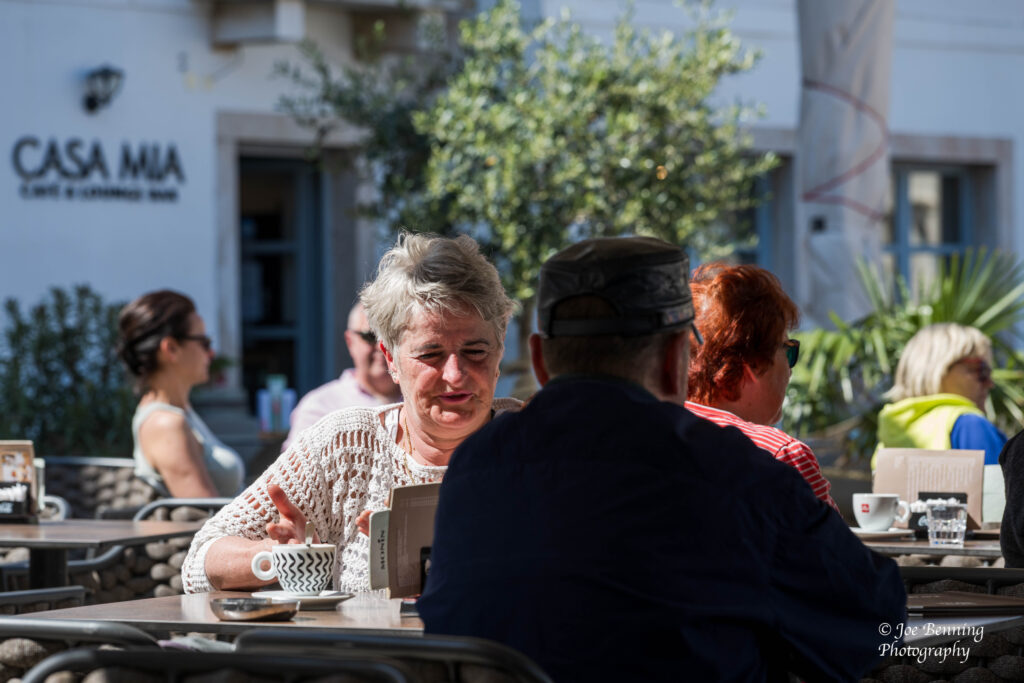
Piran, Slovenia–April 28, 2025. Photo of a woman enjoying coffee at an outdoor cafe on a spring day in Piran, Slovenia

Anyway we piled into the tour coach and headed first for the city of Piran, one of the 3 major towns of Slovenian Istria. The town is known for its medieval architecture with the attendant narrow streets. It has become a bit of a tourist attraction, no doubt aided by the fact that Slovenia is the home country of First Lady Melania Trump. 

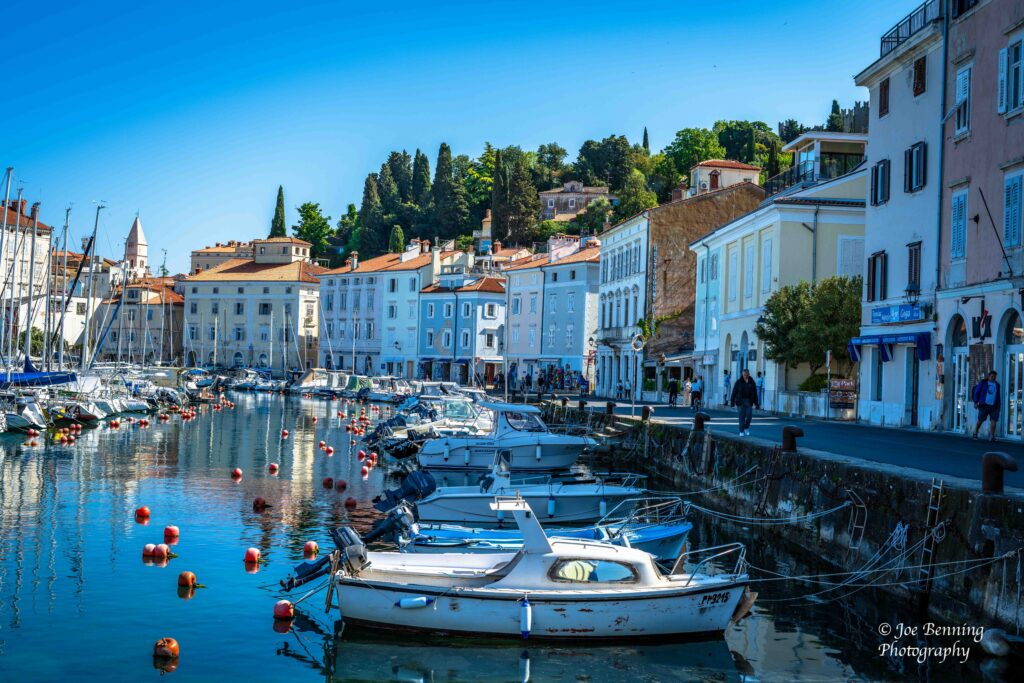
Boats Tied Up in Piran Marina

In any event, the town was beautiful and very clean. Spotless in fact. We ambled around the town, did some sightseeing and had a cup of coffee before heading back to the coach.

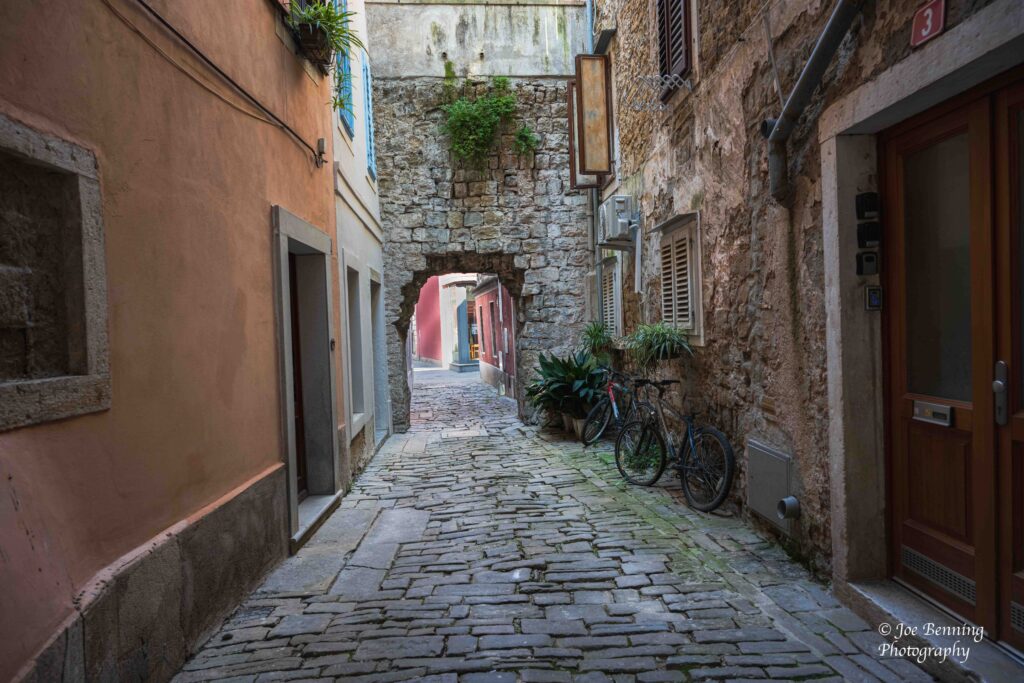
Narrow Side Street in Piran, Slovenia

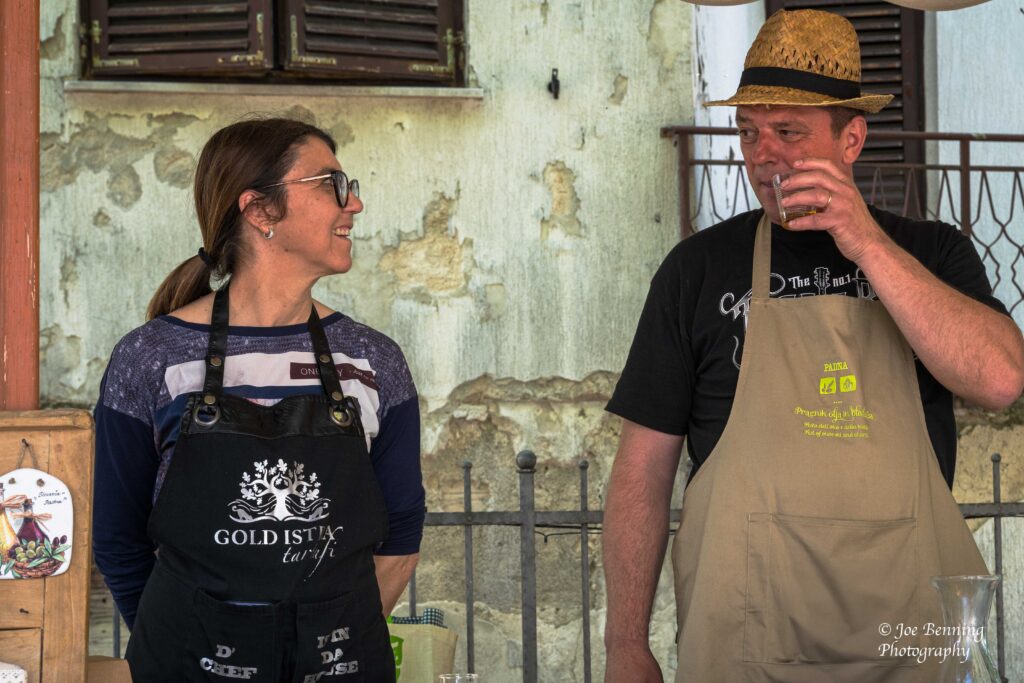
Next we headed for Padna, a small village of about 30 families located toward the top of a mountain. The townspeople, who are mostly farmers, turned out and displayed their wares, which largely consisted of food that they had harvested and prepared. 

Townspeople at the Farmers Market

As part of the tour we were given 5 coupons apiece which we could spend on samples of asparagus lasagne, garlic flavored pasta, apple strudel, cheeses, meats, and glasses of white and red wine. We dove right in and the food was delicious. 

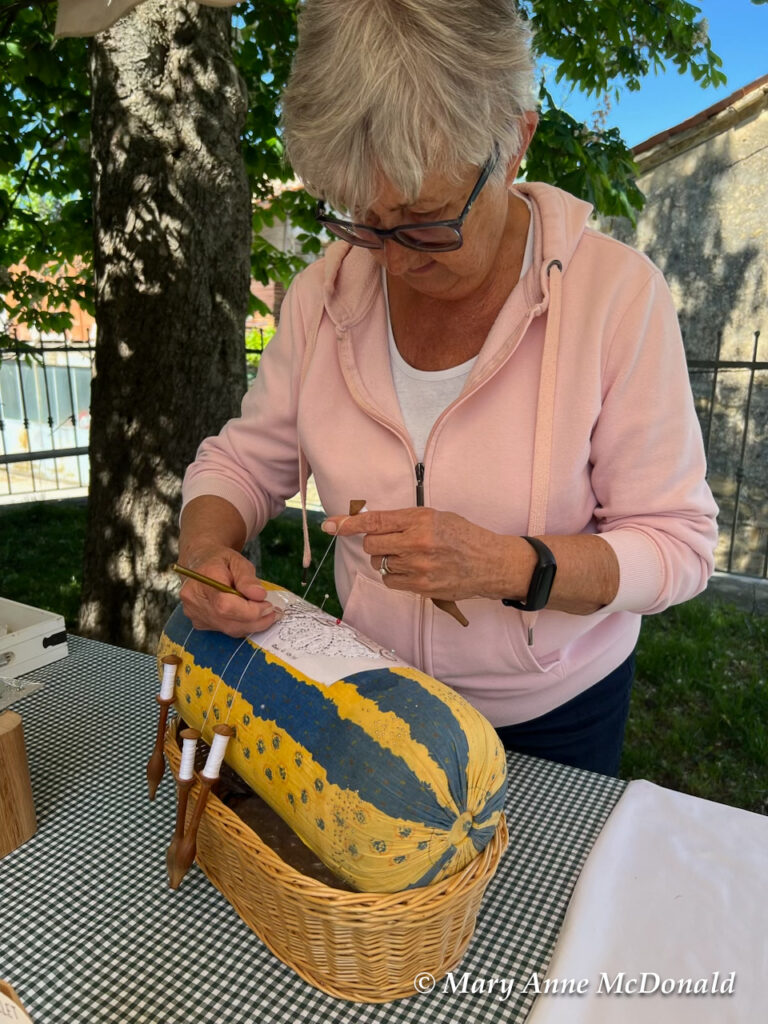
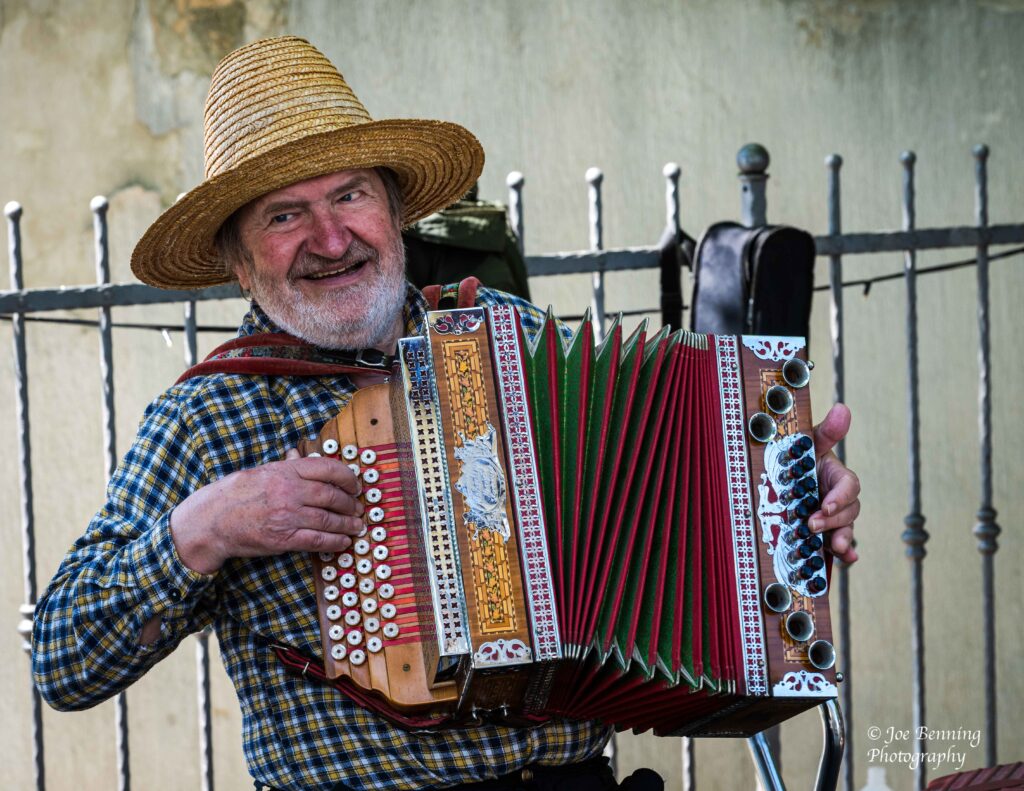
There were other things for sale in addition to food. For example, there was Bobbin Lace, some of which  we purchased. And there was a man from the town who could (and did) play several musical instruments. 

Making Bobbin Lace in Padna
Padna, Slovenia–April 28, 2025. Photo of a farmer playing a squeezebox at a farmer’s market in Padna, Slovenia.

In the end, it turned out to be a delightful tour. And we got to see a slice of Slovenia which we never even would have imagined. 

Next stop: Back to Croatia. 

MAM & JFB
Croatia

We spent Friday (the 25th) and Saturday (the 26th) in Croatia. On Friday it was Dubrovnik; on  Thursday, Trogir. 

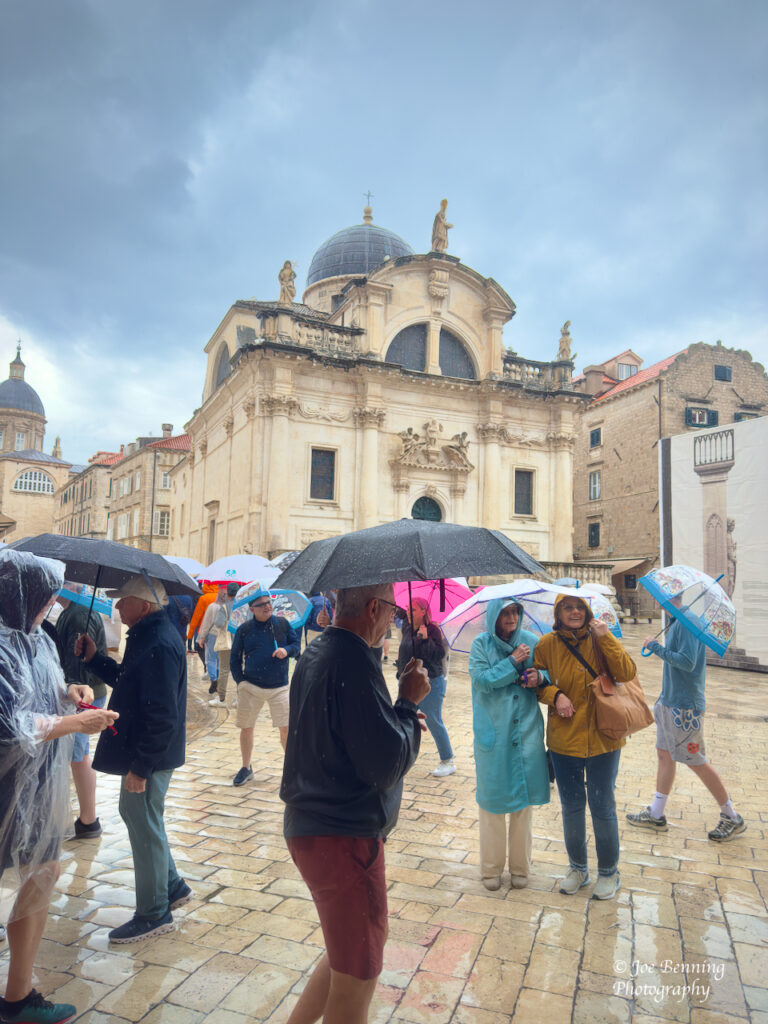
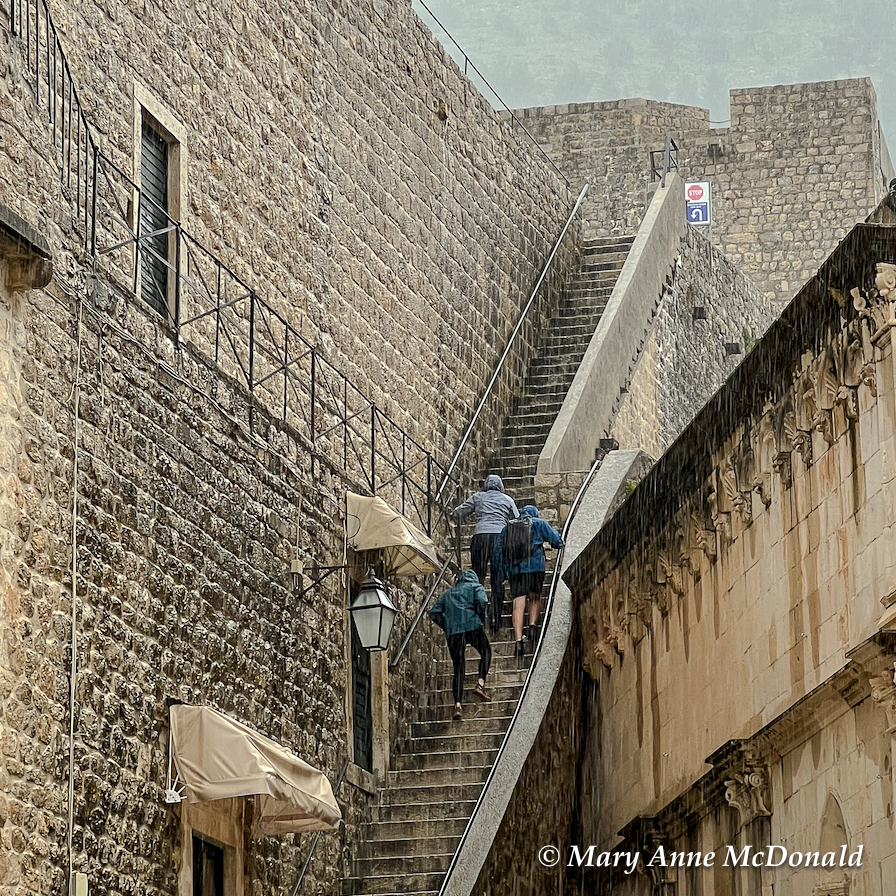
We went on a walking tour of Dubrovnik. It is just a stunningly beautiful city. And a walking tour is just the right way to see the city. Except that when we went, it rained. Actually it didn’t just rain, it poured. By the time the tour was over we were drenched.

In the end the weather didn’t matter all that much. The city was simply gorgeous. 

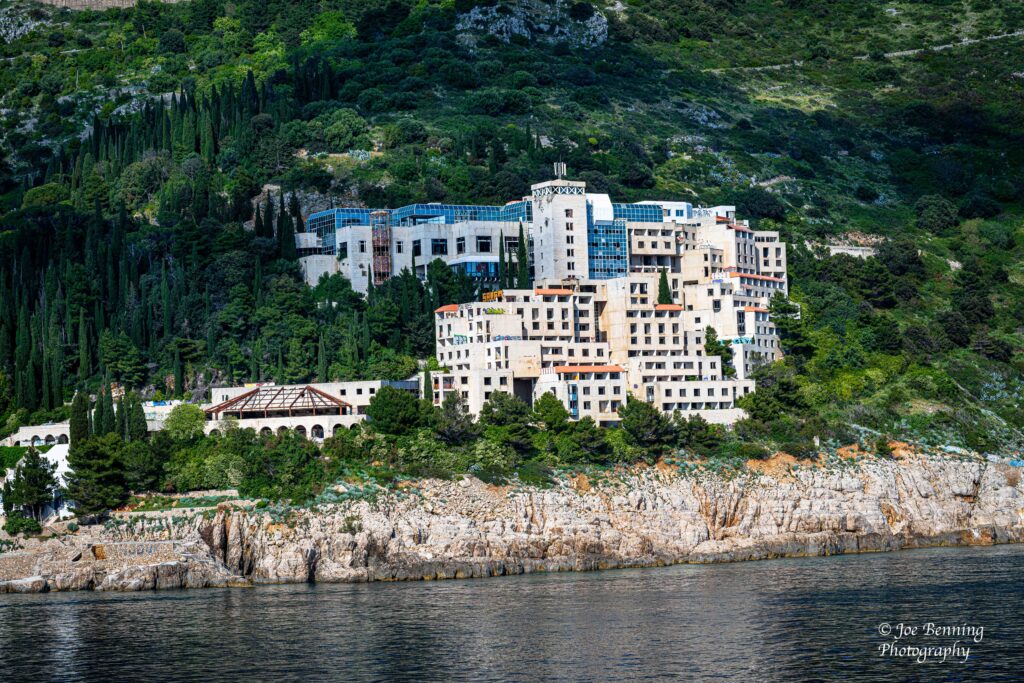
As you arrive, you are greeted with the sight of the newer, more modern Dubrovnik from the deck of the ship. Newer is a relative term; the city has been around for about 1,000 years.

Entranceway to Dubrovnik, Croatia

We, however chose a walking tour in the Old City, which was truly spectacular. Among other things, we got a look at St. Ignatius Church. It is sometimes called Rhagusinum, which was then the Jesuit college in the Republic of Ragusa—a precursor to Croatia. 

Tourists walk past St Ignatious Church in the pouring rain

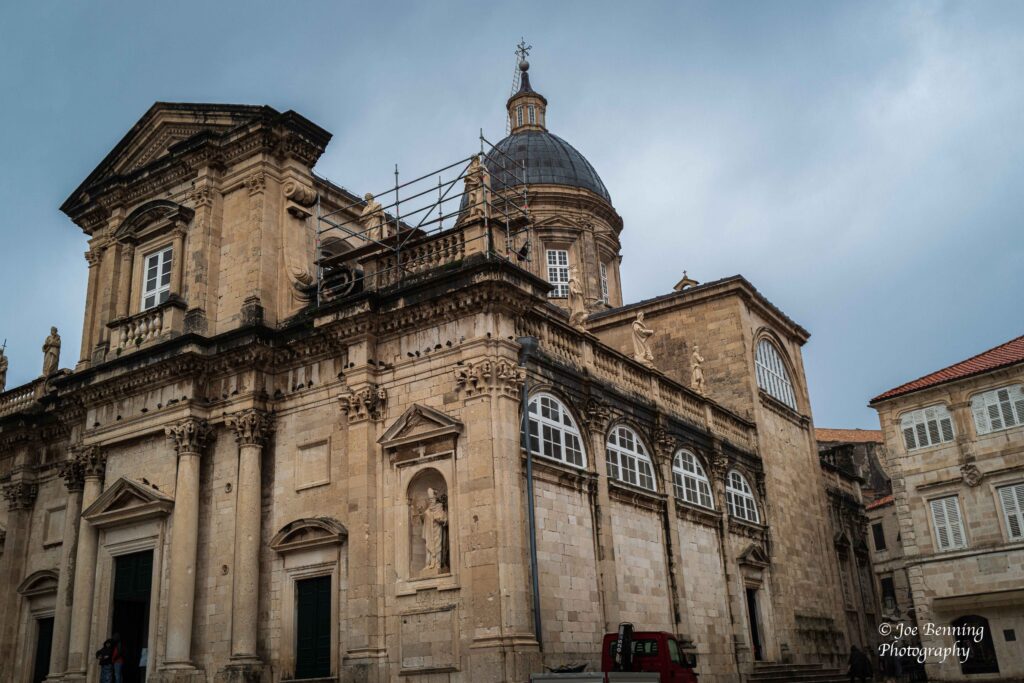
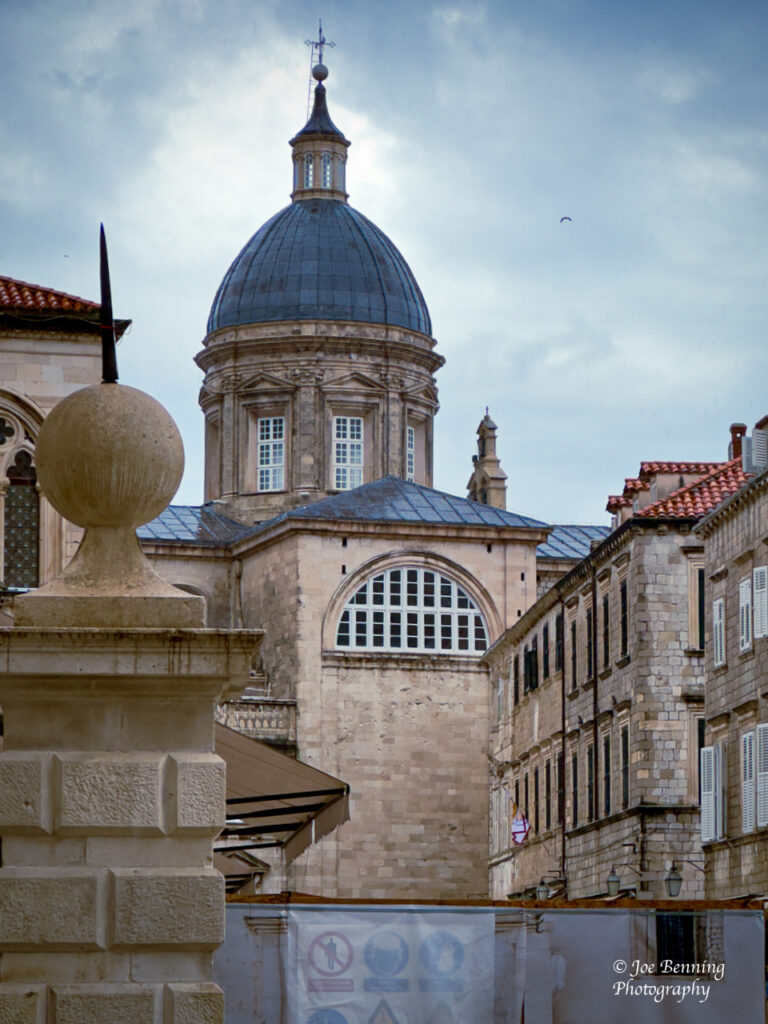
One of the first places we came across was the Cathedral of the Blessed Virgin Mary. Some work was being done on it so there was some scaffolding up. But the scaffolding was relatively minor. 

Cathedral of the Assumption of the Blessed Virgin Mary

Another place we saw was the 16th century Sponza Palace, also known as Divona. The building has served many functions, including: a customs office, mint, treasury, armory, bank and school. It survived a 17th century earthquake that destroyed much of the Old City. Today it is the Dubrovnik State Archive.  

Sponza Palace, Dubrovnik

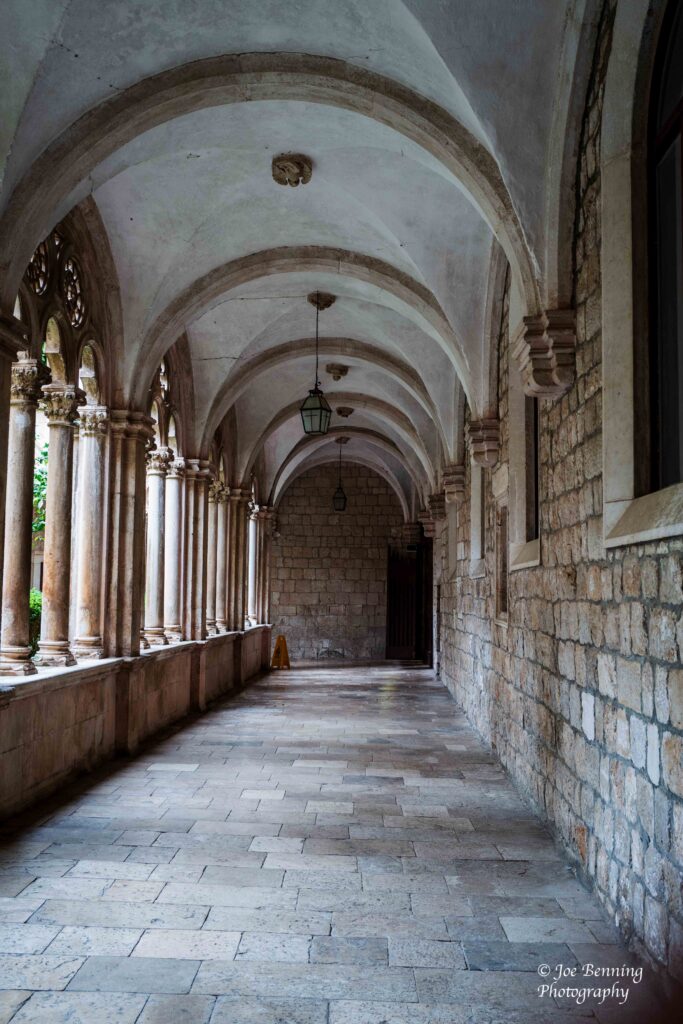
We paid a visit to Rectors Palace where, mercifully, we mostly stayed inside and viewed the art on display. Finally, we saw some other tourists climbing the stairs (in the rain) to walk on the walls of the city. We avoided that. 

Hallway in Rectors Palace

All in all, despite the fierce rain, we’d like to think that our walking tour of Dubrovnik, including the beautiful architecture and the accompanying history lesson, was well worth the effort. 

Tourists Climb Stairs to the City Wall, Dubrovnik, Croatia

MAM & JFB
Port Katakolon, Greece

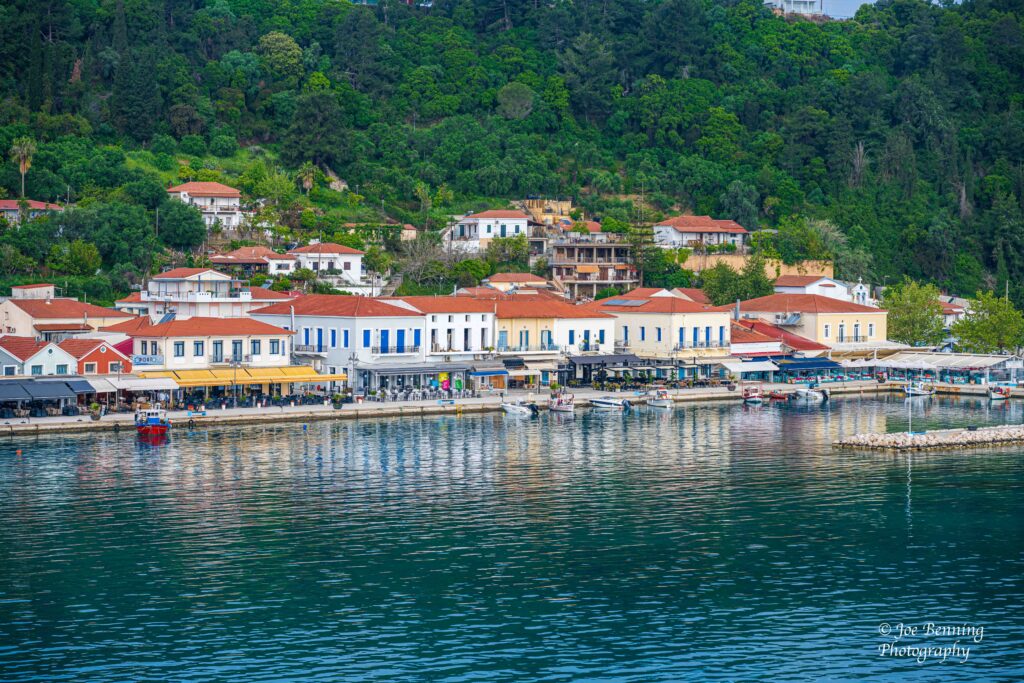
Today we stopped at Katakolon in Greece. 

Port of Katakolon, Greece

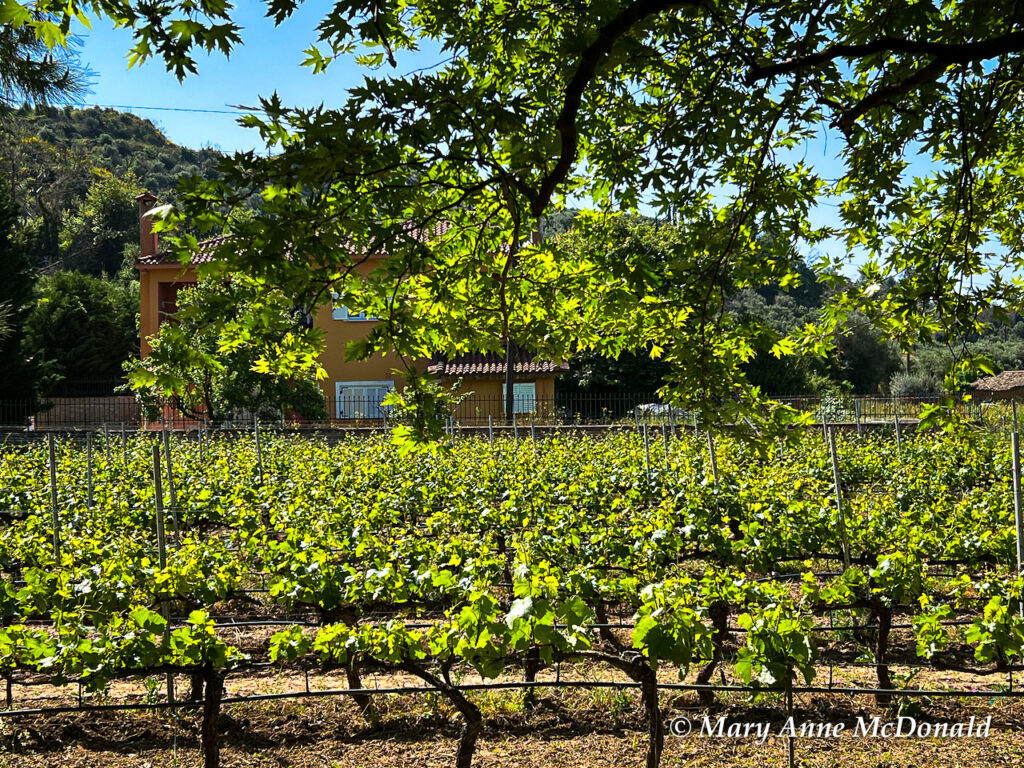
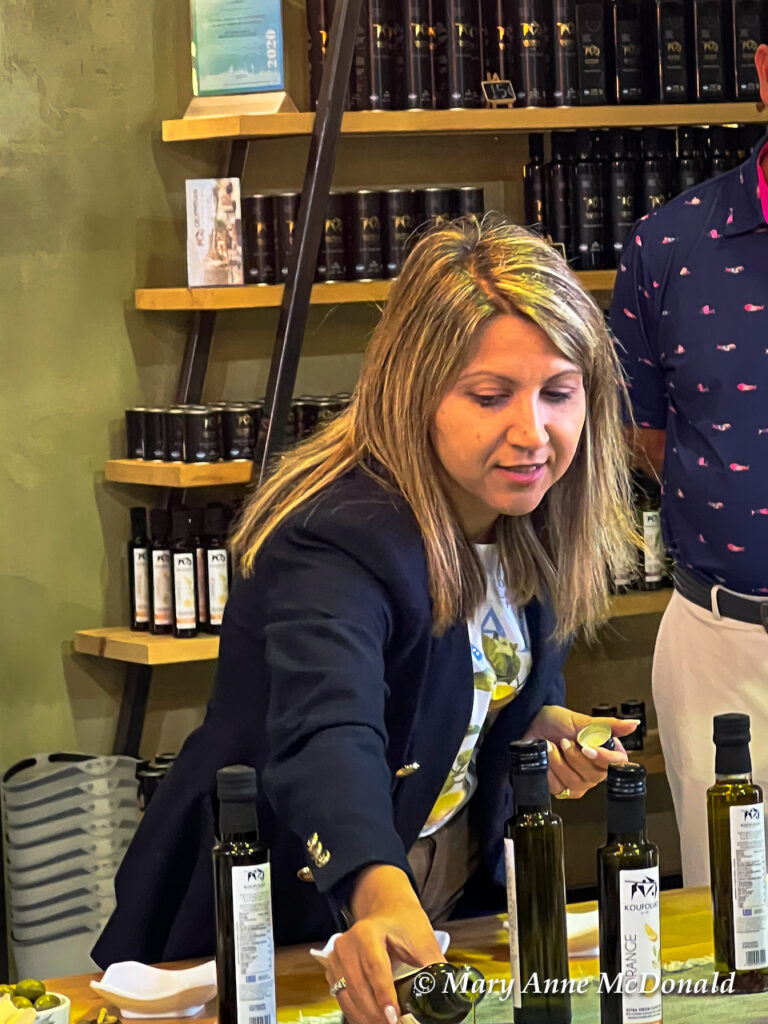
We had the opportunity to visit a vineyard and an olive grove (and the processing plants for their products) near Olympia, Greece.   It was a beautiful day to be outdoors and meet the owners of these family businesses – and to taste some very good olive oils and wines.   

An Olive Oil Demo in Makrisia

And then there is the history. Of course, history is involved when you visit Olympia, where the first Olympiad was held in 776 BC.  Only ruins remain at the site, but you can imagine the massive Temple of Zeus and the stadium that could hold 45,000 spectators.  

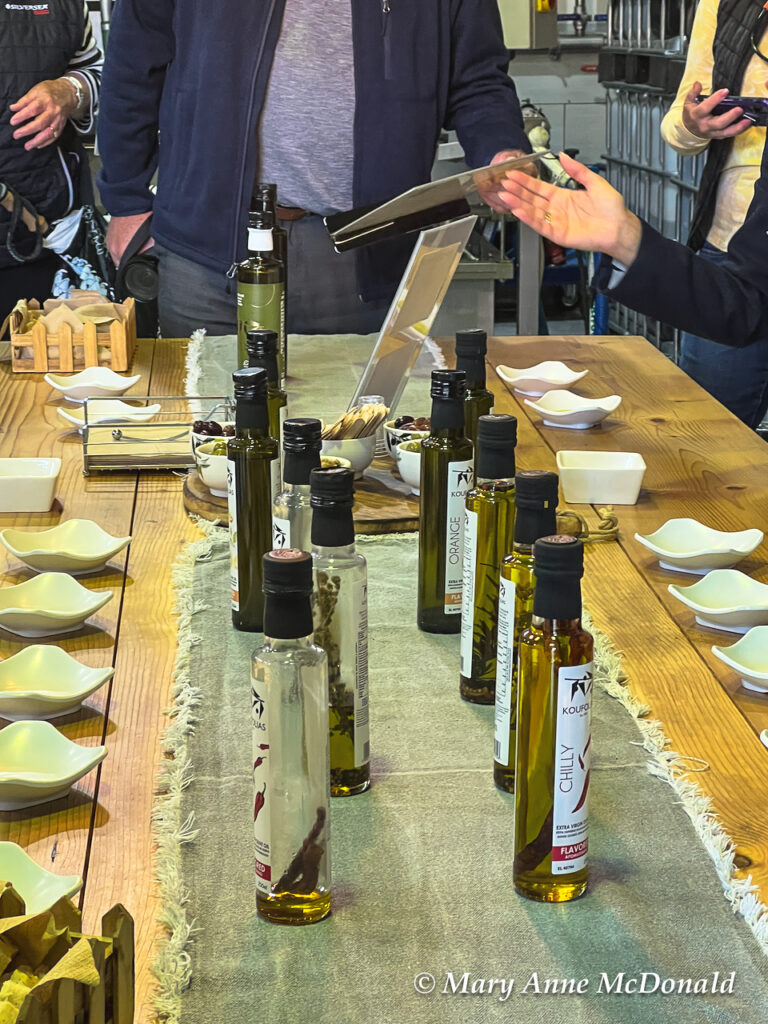
The olive oil grove we visited (Oilympian Olive Oil Mill) is one of many small ones in the area, but it holds the machinery used by many of the local producers to press the olives and bottle the oil.  The grapes are pressed on the day they are harvested in order to keep their acidity level low— a requirement to qualify as extra virgin olive oil.  The tasting involved various flavored oils (herbs, cheese and citrus flavors) – delicious!

Olive Oil Tasing in Makrisia

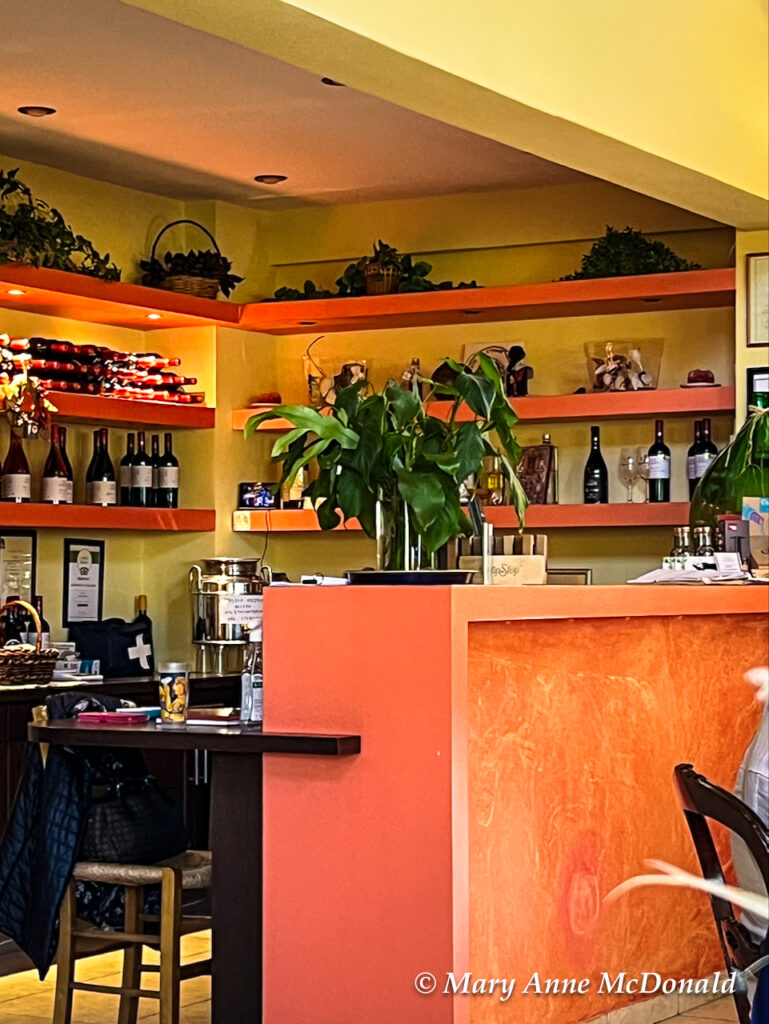
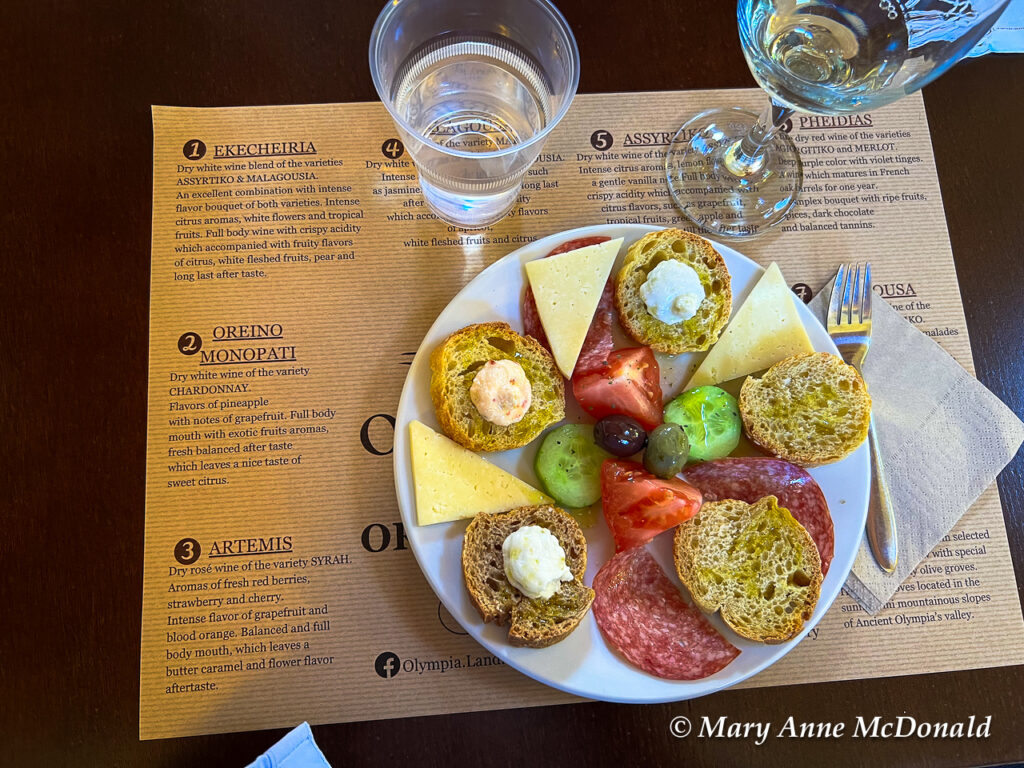
Then on to a lovely vineyard (Olympia Land Estate) to taste some crisp white wines and a dry red, while enjoying local cheese and snacks. 

Tssting Room in Kosinka, Greece

One of the white wines was Assyrtiko, which is getting a lot of buzz in the US these days. It was originally grown by the ancient Greeks on the island of Santorini. Now the vines are grown in Australia, South Africa and the USA, and it is becoming increasingly popular throughout the world.   

A Vineyard in Kosinka
Snacks in Kosinka

As it turns out, we were supposed to visit Santorini but due to increased volcanic activity on the island that trip was canceled.

Next stop, Corfu! 

MAM and & JFB
Visiting Nafplion, Greece

We did a short (2 ½ hour) walking tour in the small but relentlessly cute town of Nafplion. Greece. It is a coastal city located in the Peloponnese in Greece. Additionally, it is the capital of the regional unit of Argolis and an important tourist destination. 

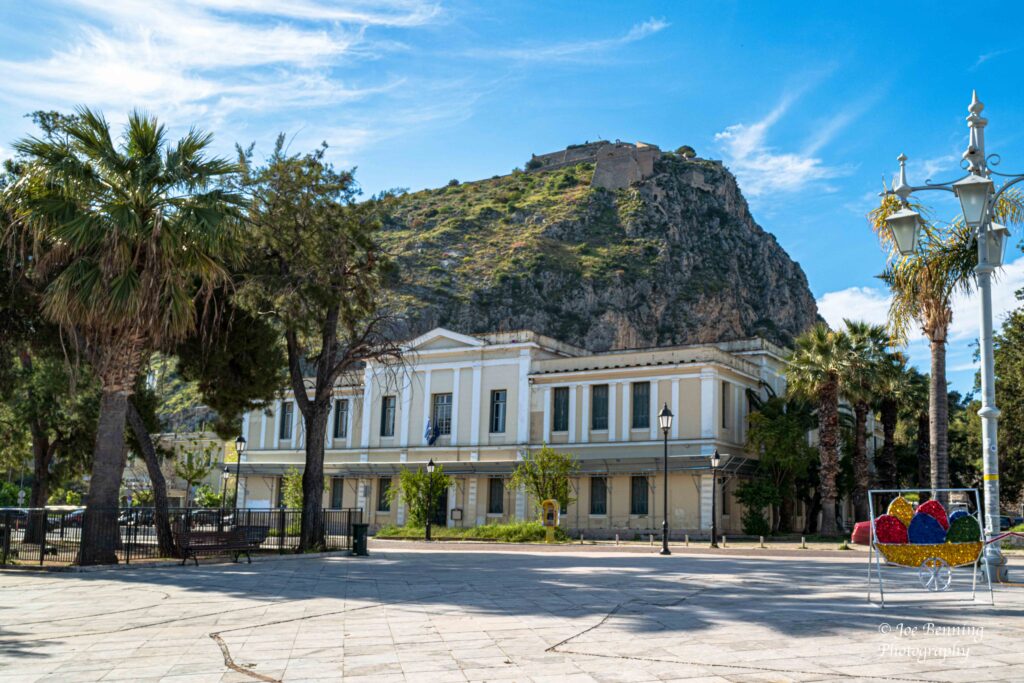
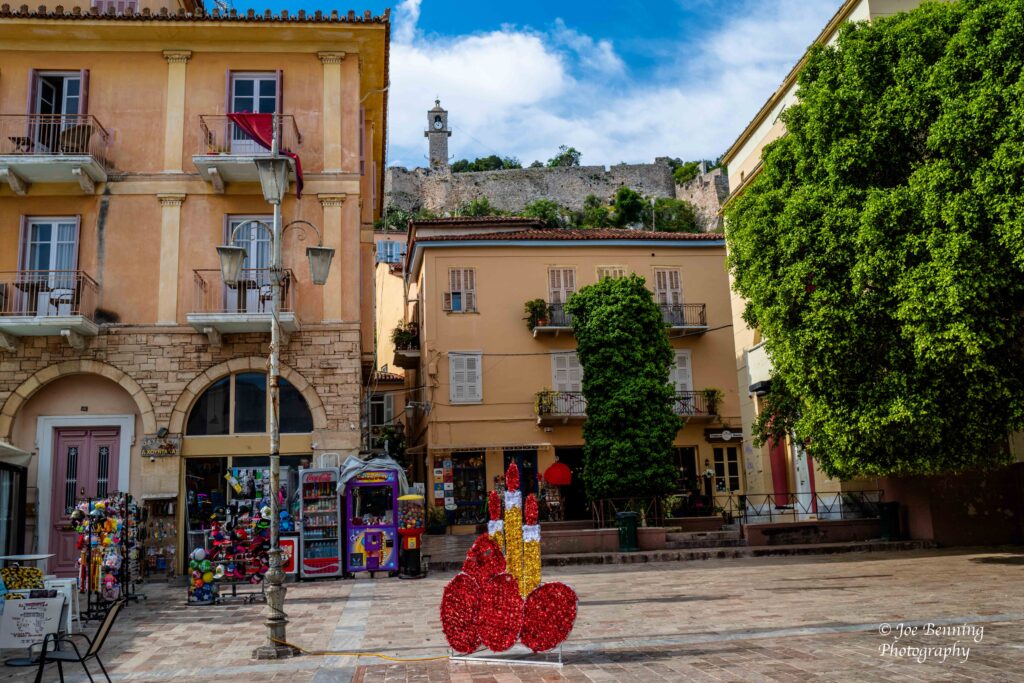
First stop: we visited Kapodistrias Square. 

Kapodistrias Square, Nafplion Greece

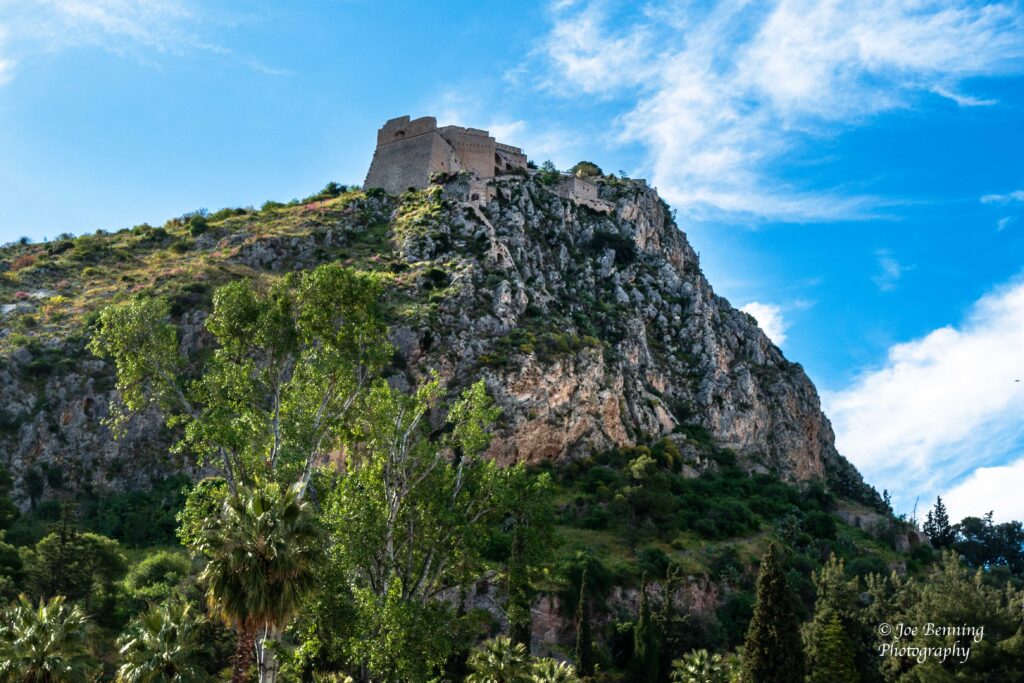
On the top of the mountain there is a fort that dates from medieval times that served to overlook and guard the town from raiders and pirates etc.  From our vantage point we could clearly see the fort. One thing to keep in mind though is that the water used to cover where we stood. Only relatively recently (in 1974) did the town modernize the seaport, and largely for the tourist trade. 

Fort on a Mountaintop In Nafplion, Greece

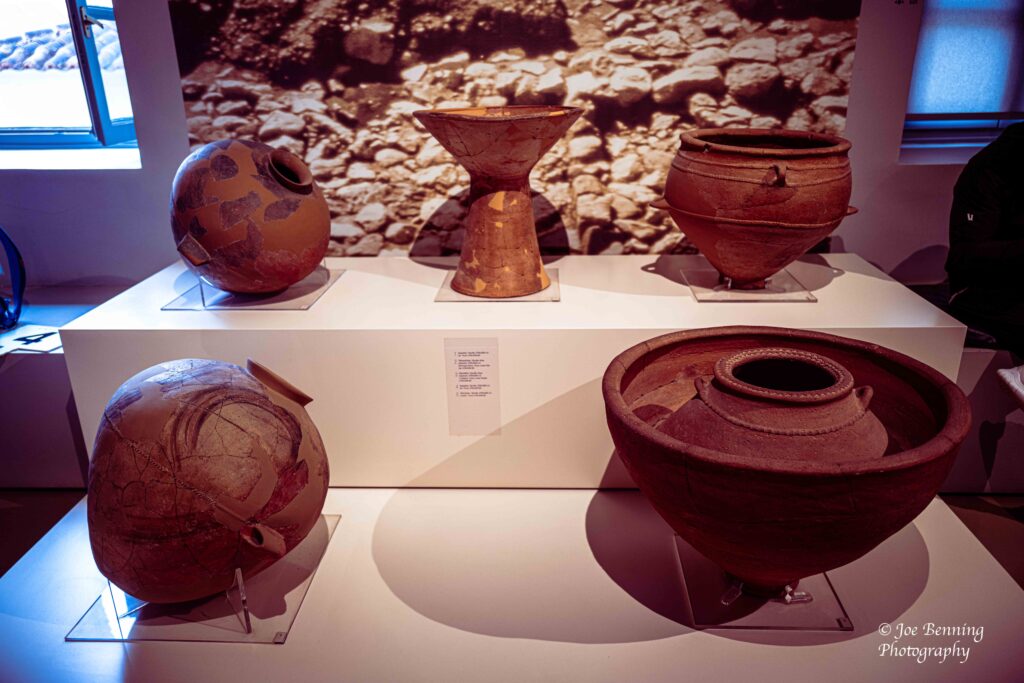
Next we visited an archeological museum, loaded with artifacts. Using symbols, they tell much of the story of how the town progressed through the ages. Because it was a busy seaport, it had many different rulers. 

Artifacts on Display in Museum

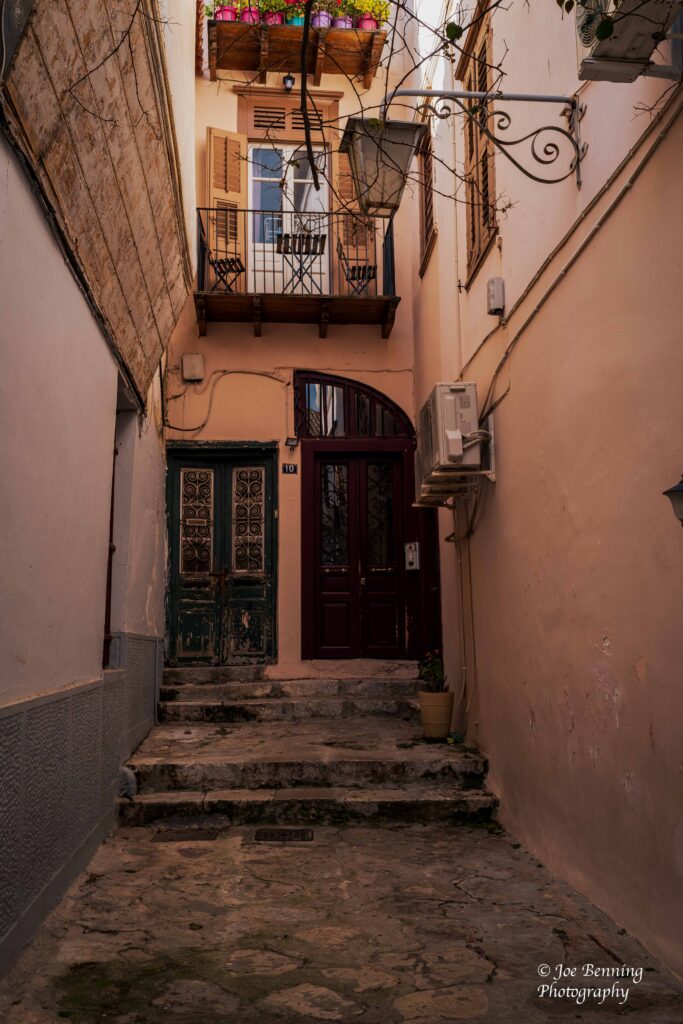
As we walked along on the tour we observed the very narrow side streets that led out to the wide spaces that make up the various town squares.

Nafplion Home Address in a Side Alleyway

The walls of the city that made up the fortifications are clearly visible from the main town square. 

Town Square in Nafplion

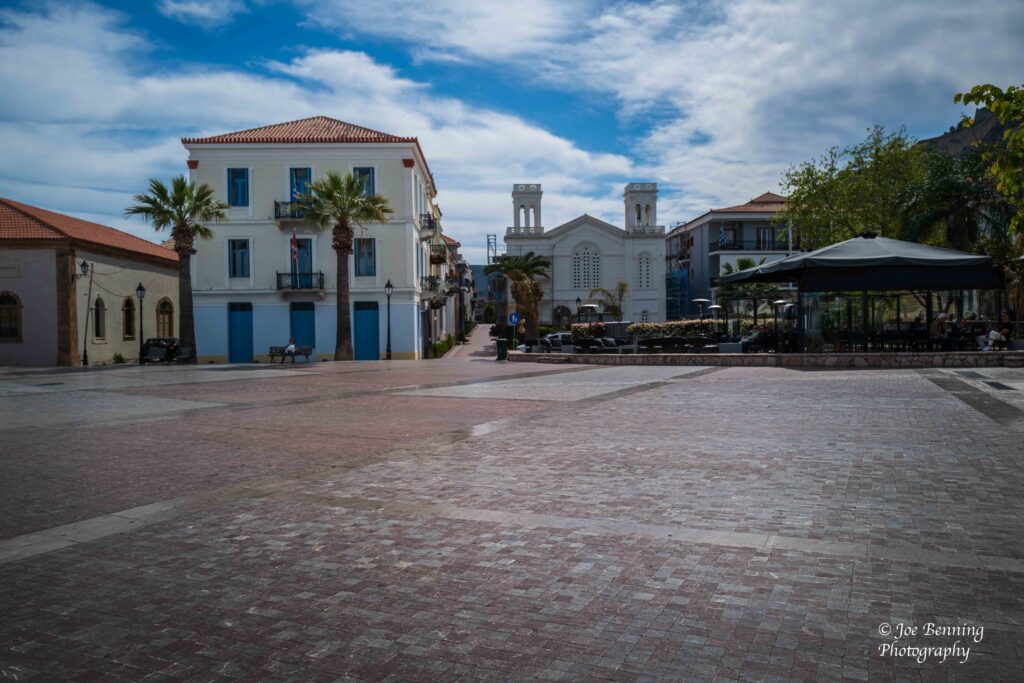
Another thing—back towards the port, there is a large town square where Harvard University has its only presence in Europe! In the photo below it’s the building with the blue shutters.

A Town Square in Nafplion where Harvard maintains a presence.

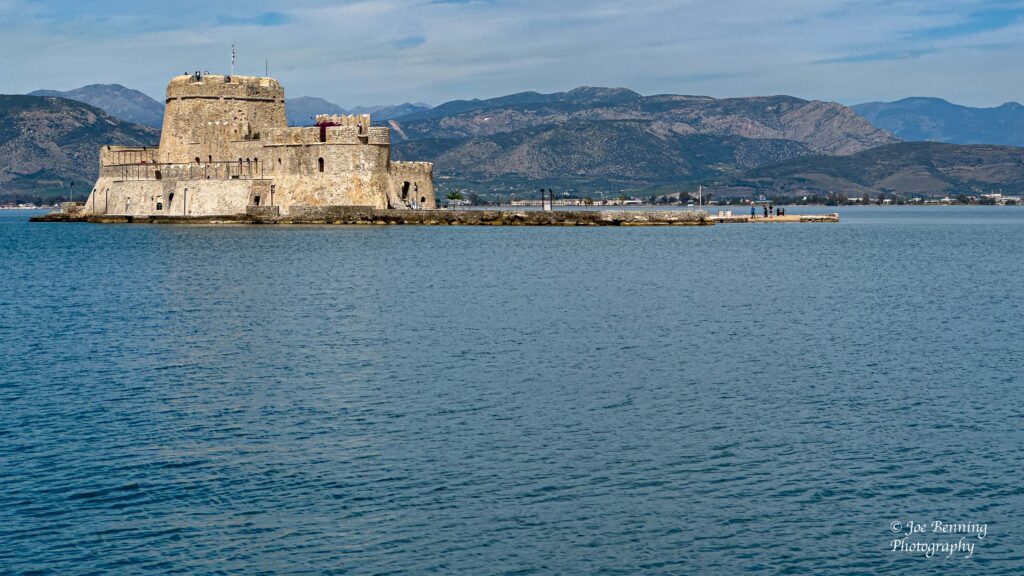
Finally, we got a good look at the fort on a small island in the harbor that was used to protect the city.

Bourtzi Castle in Nafplion Greece

And now it’s back to the ship for dinner and to get ready for the next day’s tour. 

JFB