
A Few Side Trips in Portugal
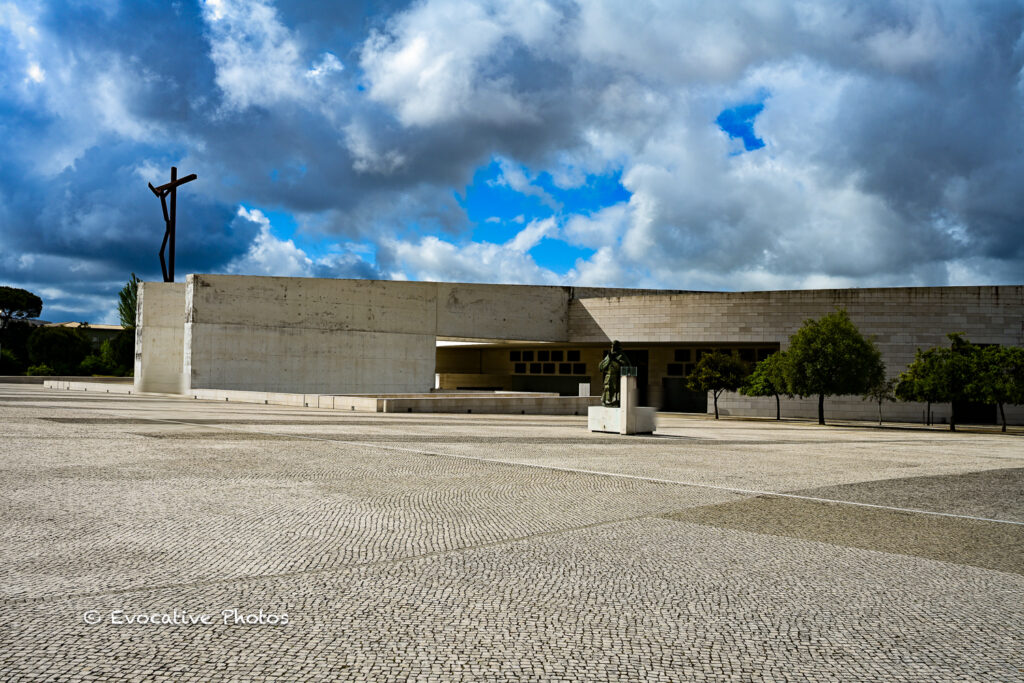
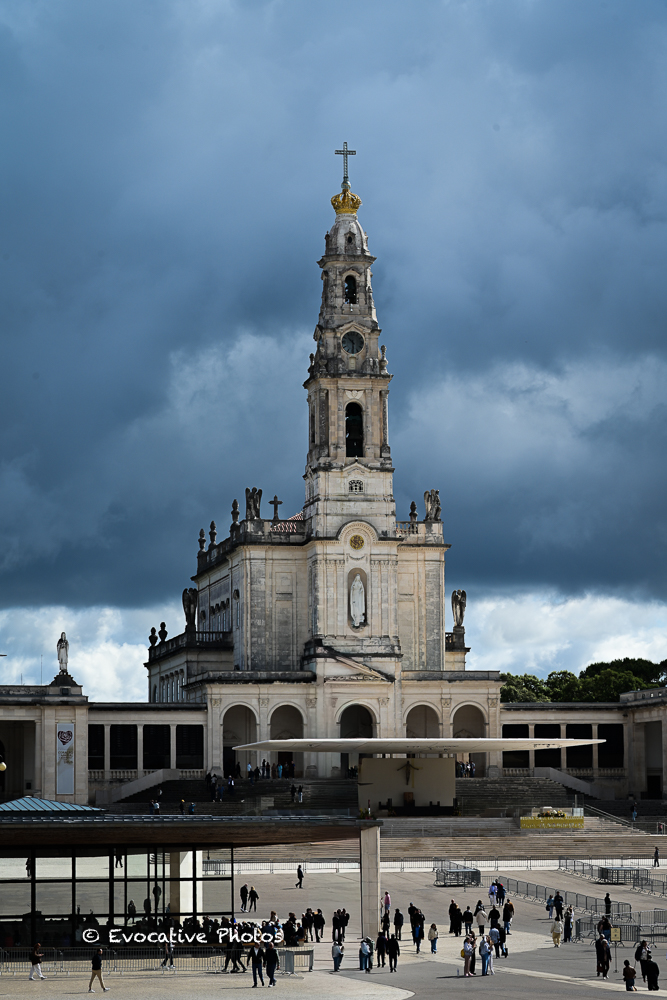
While we were in Portugal, we took a few side trips, including Fatima, Coimbra and Tomar. Fatima is, of course, where Mary appeared to the three school children (Lucia dos Santos, Francisco Marto and Jacinta Marto) on May 13, 1917 while WW1 was raging.
Fatima is one of the most important pilgrimage sites in the world, comparable to that of Our Lady of Guadalupe. The Catholic Church has officially approved devotion to Our Lady of Fatima, meaning that Catholics may, but are not required to believe in Mary’s apparition. Millions of pilgrims visit the site annually, especially between May 13 and October 13, the dates associated with the first and last apparitions.
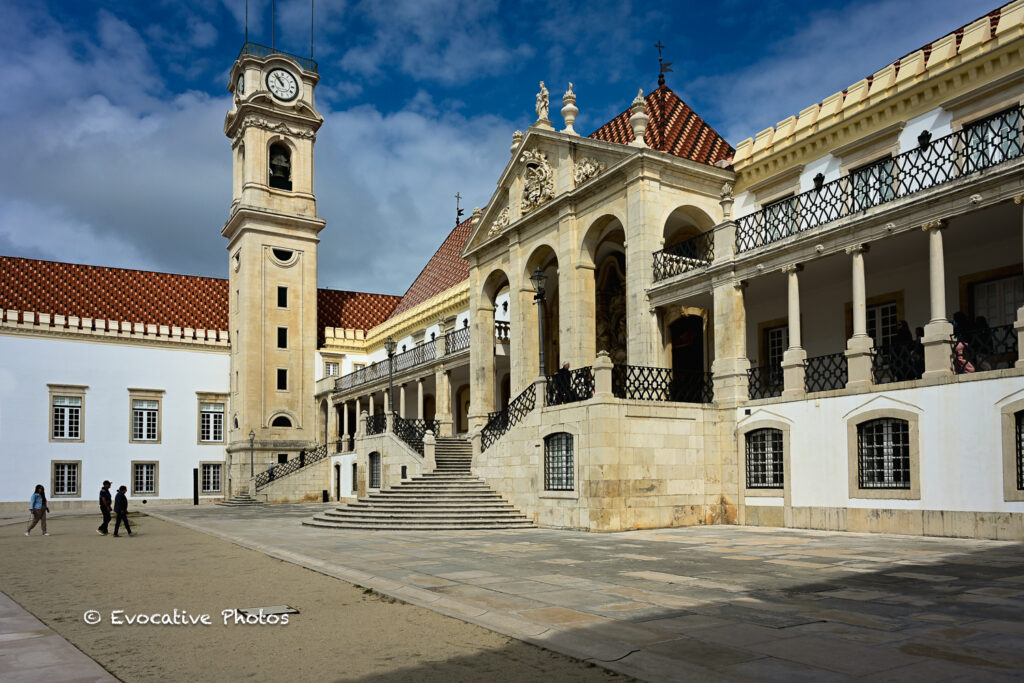
The University of Coimbra was founded in Lisbon in 1290 by King Denis. After moving between Lisbon and Coimbra several times in the early years, it finally settled in Coimbra in 1537. It is now the permanent home of the University of Coimbra, one of the oldest universities in continuous operation in the world, and Portugal’s most prestigious university. Its campus was designated a UNESCO World Heritage site in 2013.
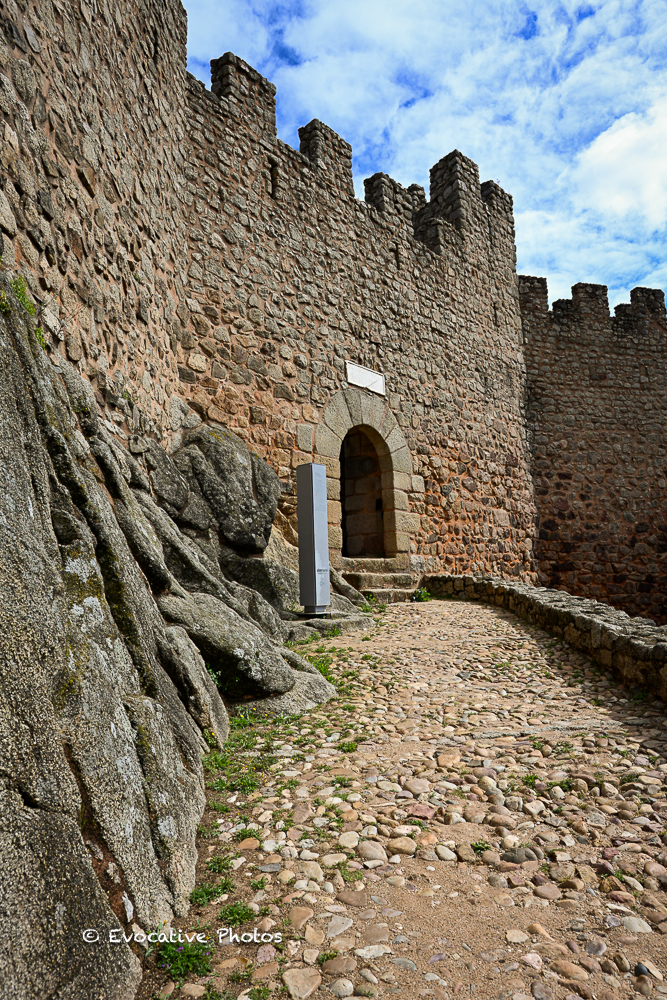
Tomar is generally though to be one of the most important historical centers associated with the Knights Templar. This is probably because Portugal did not suppress the Knights Templar in the 1300s as they were suppressed throughout most of Europe. King Denis helped the Knights re-organize into the Order of Christ and so the Knights maintained their identity.
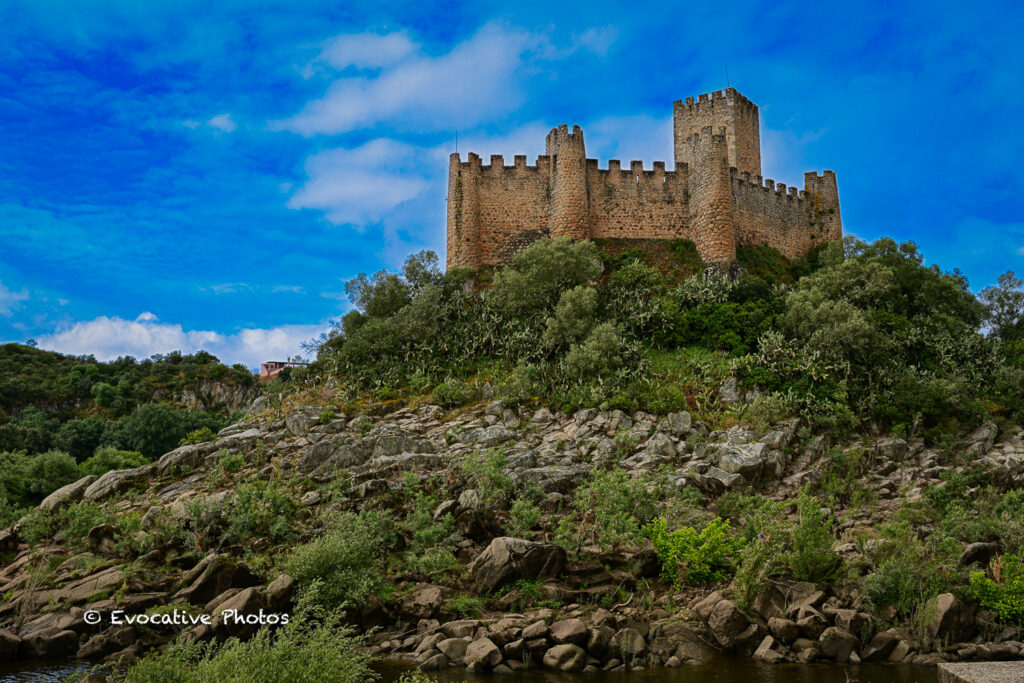
The order helped support many of Portugals early voyages of discovery. Henry the Navigator, one of the most important figures in Portuguese history, served as Grand Master of the Order of Christ.
Today a number of historians see Tomar as one of the best-preserved places for studying the transition of the Knights of Templar to the Order of Christ.
And that was our trip to Portugal. Or at least as much as I can recount. Our travels have not ended though; soon we will be taking off for Yellowstone with National Geographic. We plan on seeing Old Faithful (obligatory) and we already have tickets to a Rodeo.
So soon we will be saying Howdy from Wyoming.
JFB
Three Weeks in Lisbon
Or Lisboa, as they call it in Portugal.
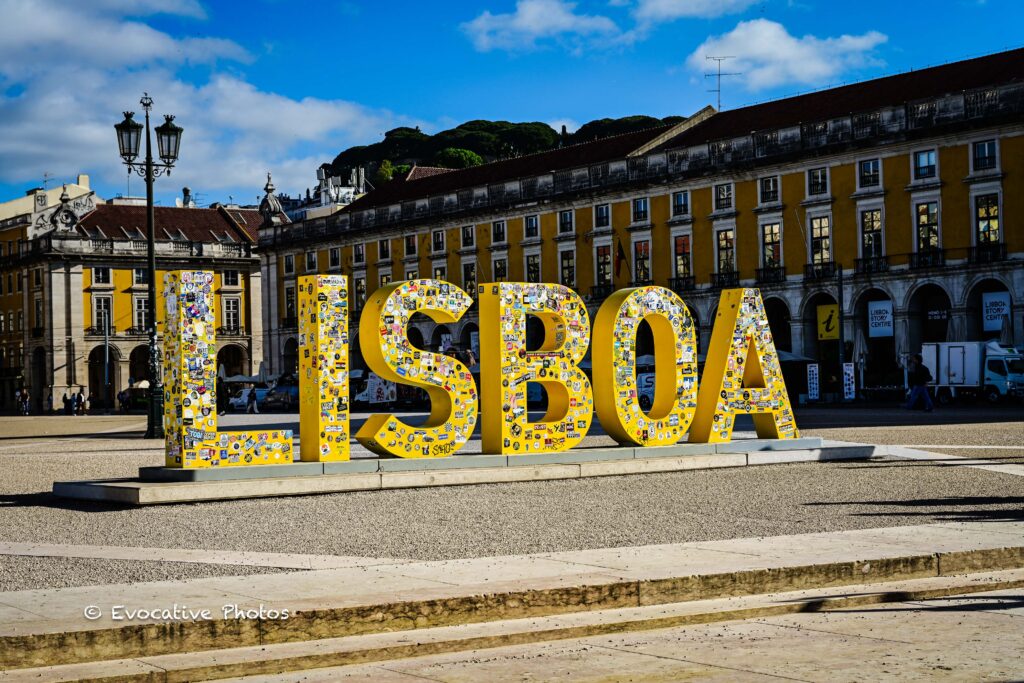
After we finished sailing along the Douro River in northern Portugal, we headed down to Lisbon. A little perspective would be useful here. Portugal is a small country. The population is estimated at somewhere between 10.5 and 11 million people. And last year the tourist industry estimated that 32 to 34 million people visited the country–about 3 times the population. Tourism now accounts for about 20% of GDP.
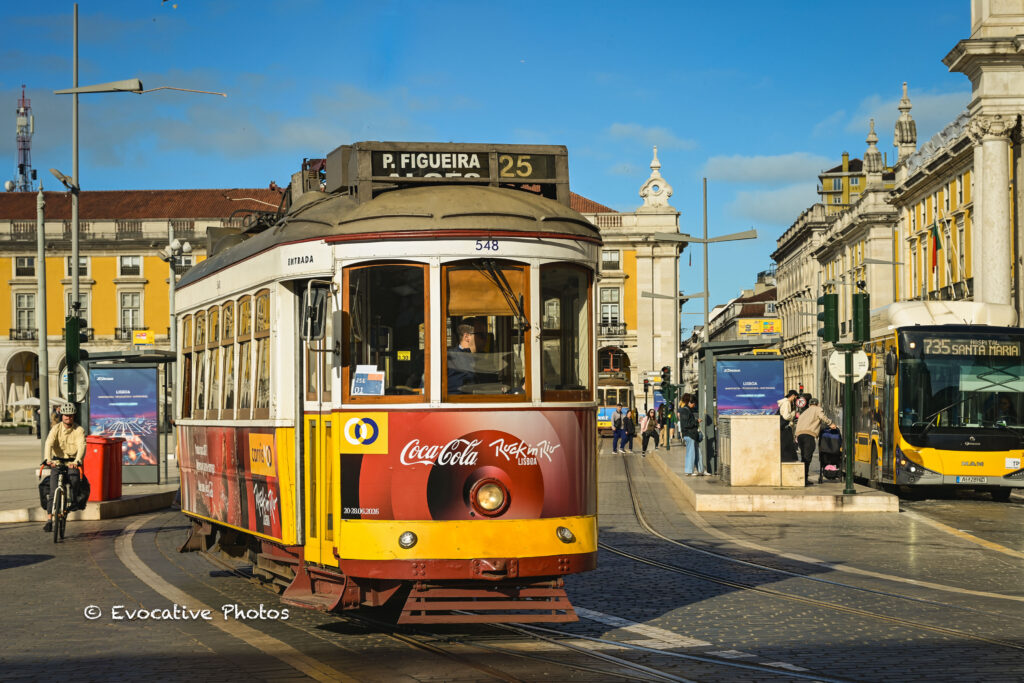
There is a big difference between Lisbon and Porto. But that’s not too unusual for a country. There are, for instance, big differences among the cities of New York, LA, Des Moines, Iowa and Birmingham, Alabama. Lisbon however attracts a younger crowd. The median age of Lisbon is maybe 41 or 42, while the median age of people in Porto is closer to 46 or 47. That said, Portugal has one of the older populations in Europe. London, that clocks in at 35 is one of the youngest.
Our stay in Lisbon was marked by very good accommodations, and well, Cod. You just can’t get away from the stuff.
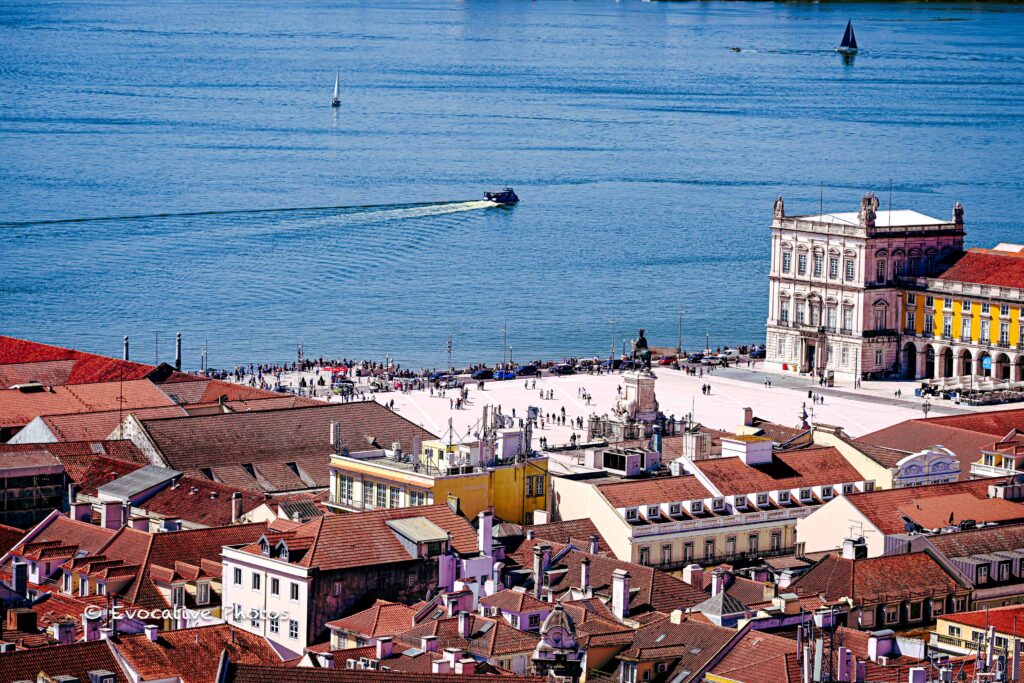
Anyway, the first place we stayed in was the very charming Pousada De Lisboa Hotel. The Pousada was located in the center of the city, and discovered by Mary Anne. Basically, Pousadas are converted monasteries, landmark buildings, manor houses or castles that now serve as boutique hotels that emphasize Portuguese history.
After that we stayed 10 minutes away in an Altis Prime Hotel. The apartment /hotel was roomy and clean, with daily maid service, and located in another very nice section of town. Tough to beat.
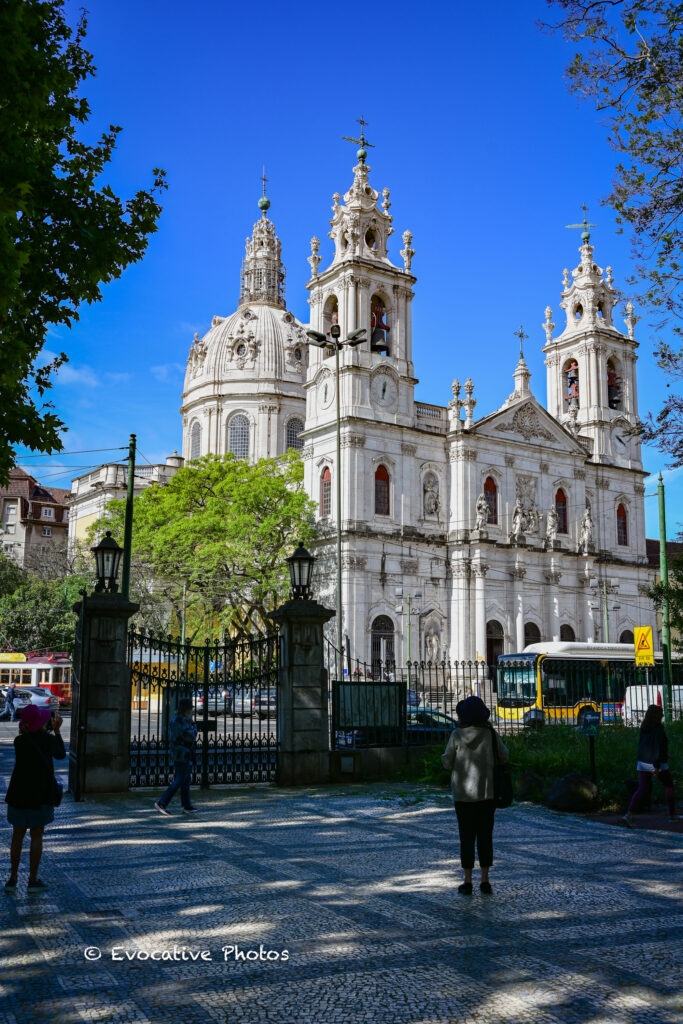
We did a lot of sightseeing in Lisbon proper as well as a number of side trips including Coimbra, Fatima and Tomar. More about those trips another time. We did get to visit a number of museums; a marketplace, a restaurant featuring Fado music and walks around the city led by an expert guide. And the wine was poured rather freely.

Lisbon is kind of laid back–not as laid back as the Douro Valley–but life there does have a slower pace. The people we met were very gracious and polite. There wasn’t even a hint of crime to be found anywhere, unusual for a big city. And everyone, and I mean everyone, spoke English. The net of it was that we had a very nice time.
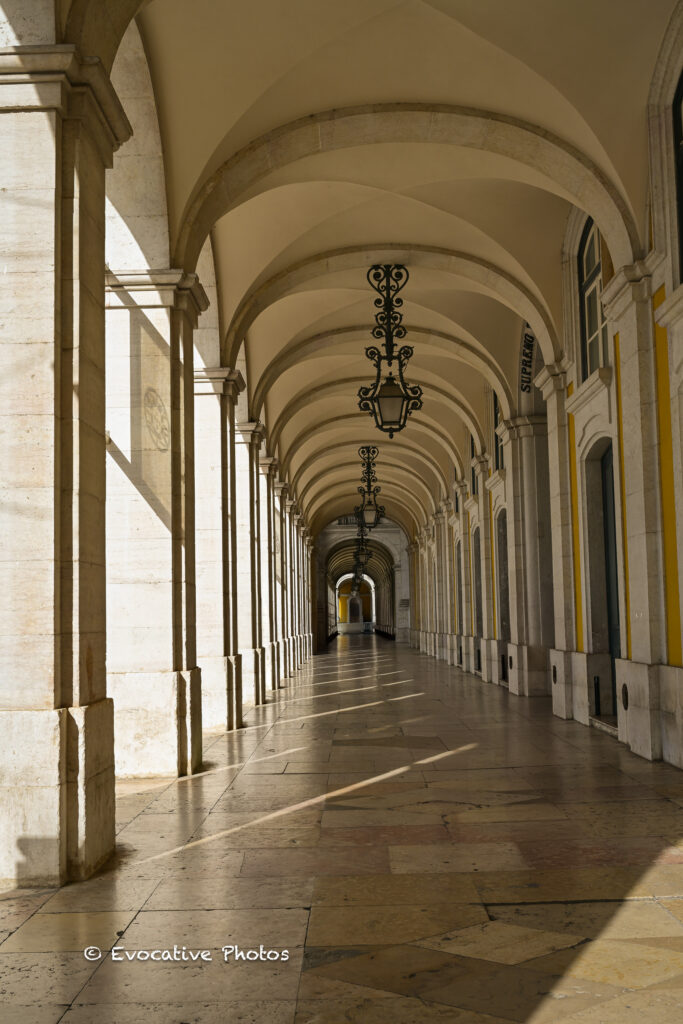
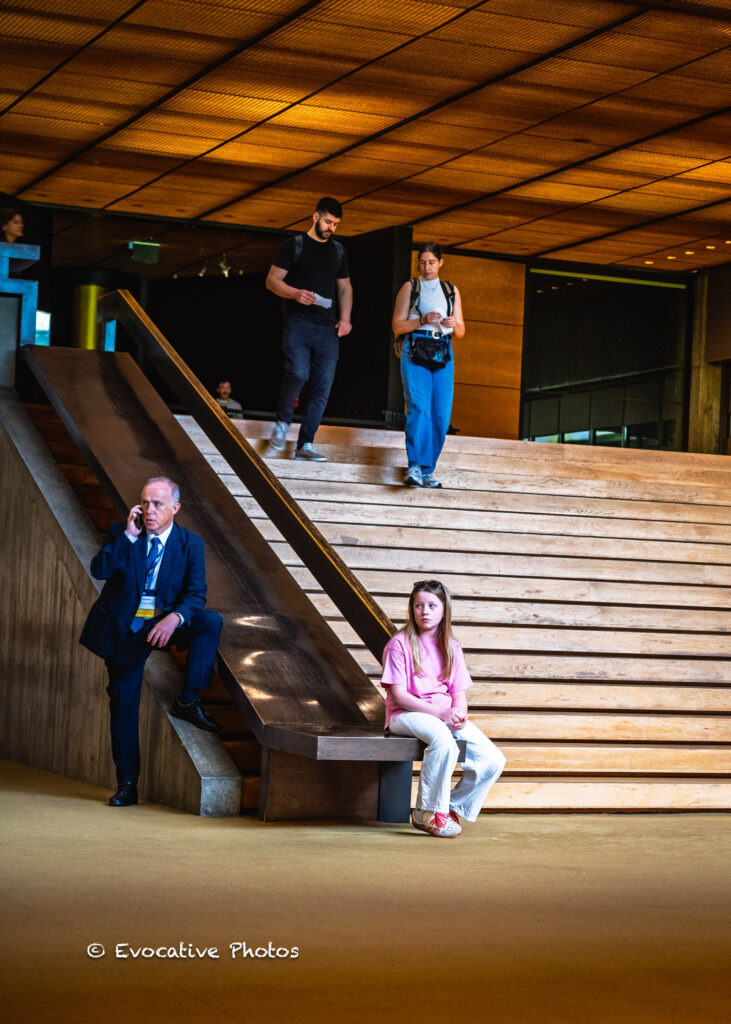
It is well worth putting on your list.
JFB
Sailing Along the Douro River
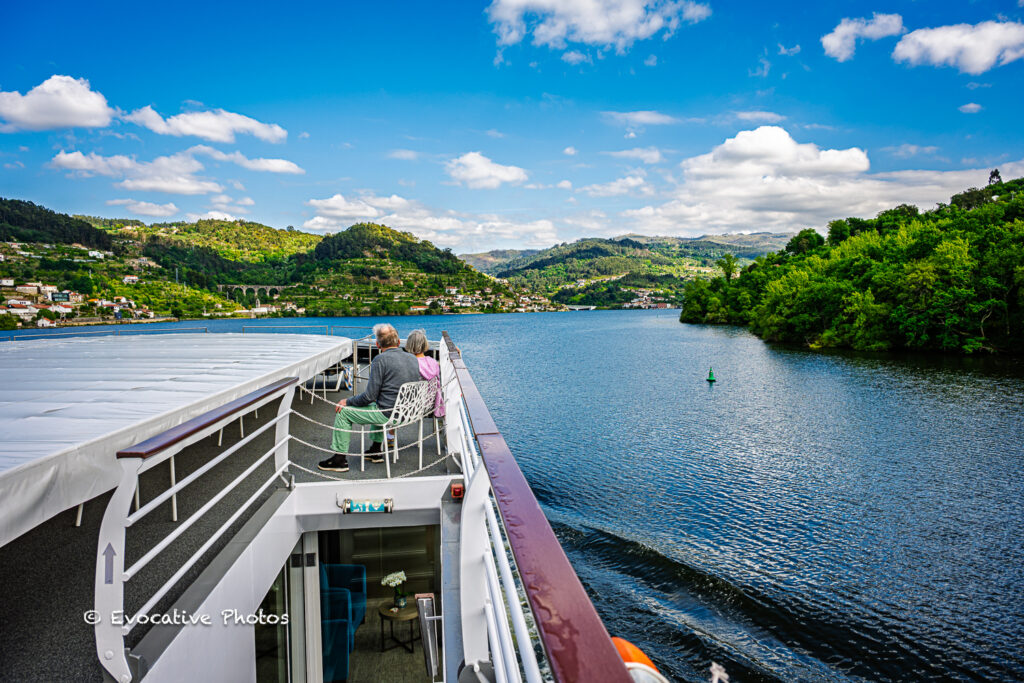
When we finally arrived, we began our trip to Portugal with a Road Scholar led cruise on the Douro River. The cruise was truly magnificent, as was the Road Scholar guide, Lucia Gomez. We got lucky with the weather which was extravagantly good, and the scenery which was stunningly beautiful along the riverbank.
In our travels, we also got a chance to visit Fatima and Tomar , which are in the vicinity of the Douro Valley. Fatima is where the Blessed Virgin appeared to three shepherd children in 1917. It is visited by millions of pilgrims every year and is one of the most important pilgrimage destinations of Catholicism.
Tomar (below) famous as the site of the Convent of Christ with its strong connection to the Knights Templar. In Portuguese Convent refers to a dwelling that can accommodate either men or women–but not both.
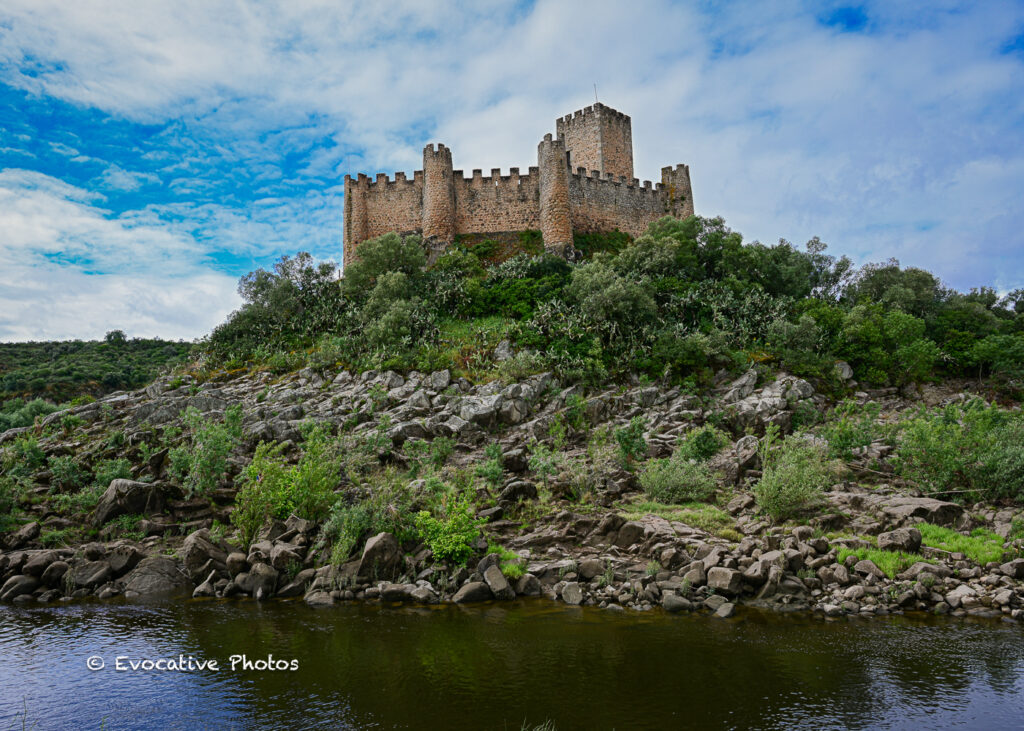
Along the way we passed more towns than I can mention, all of which seemed to have a medieval touch, modern bridges and architecture and tourists.
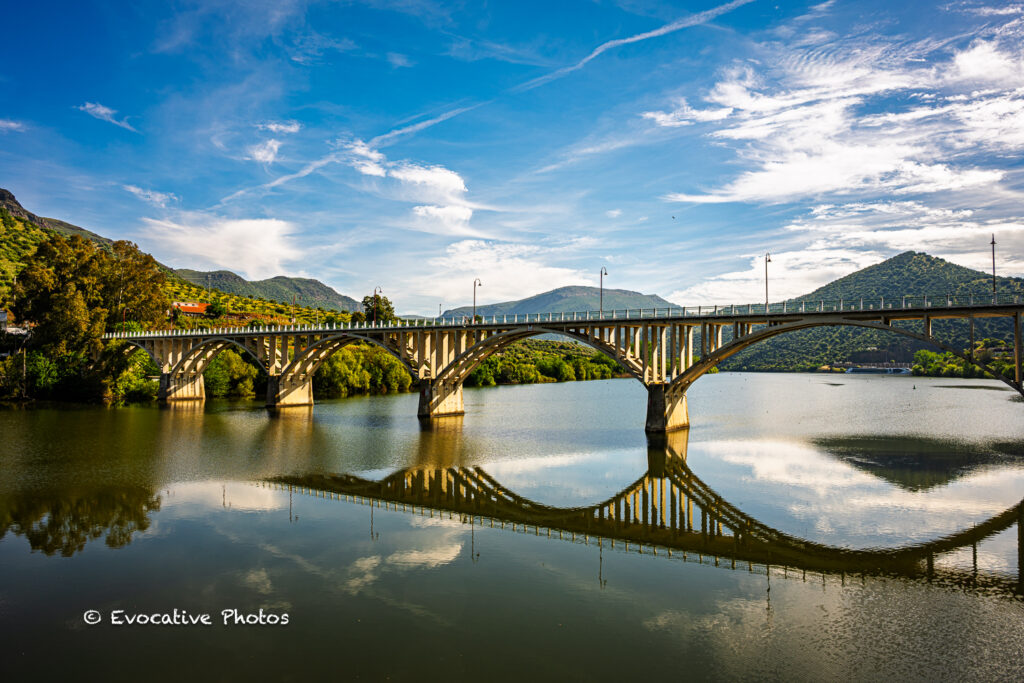
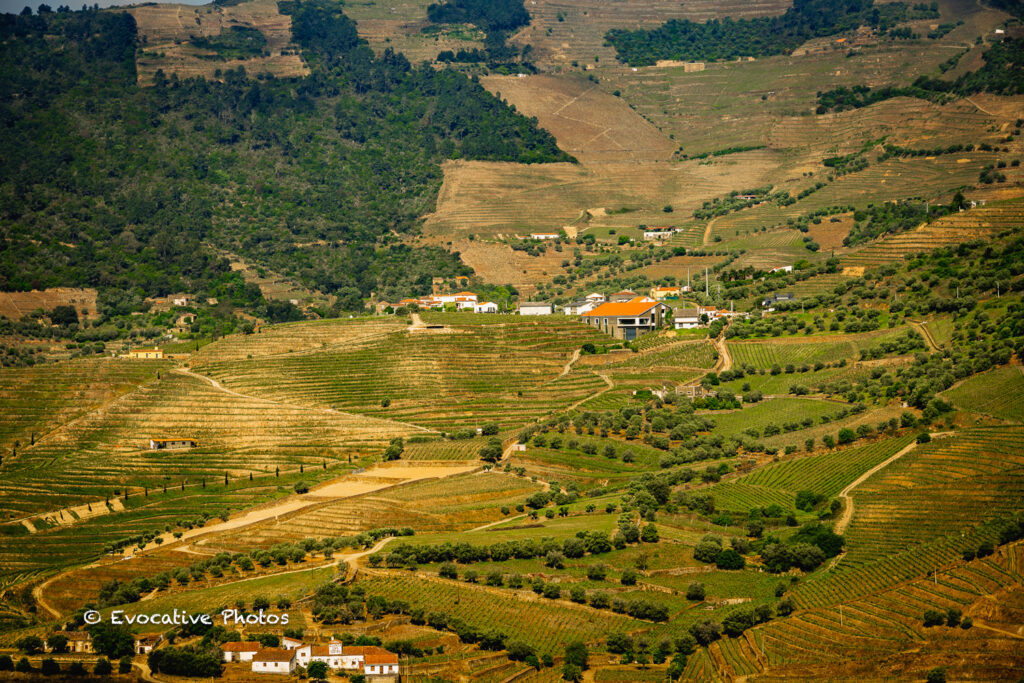
And there was construction going on everywhere. I should mention that although we began the first part of our journey in Porto, we actually got on the ship in Vila Nova de Gaia, a town with spectacular views of Porto.
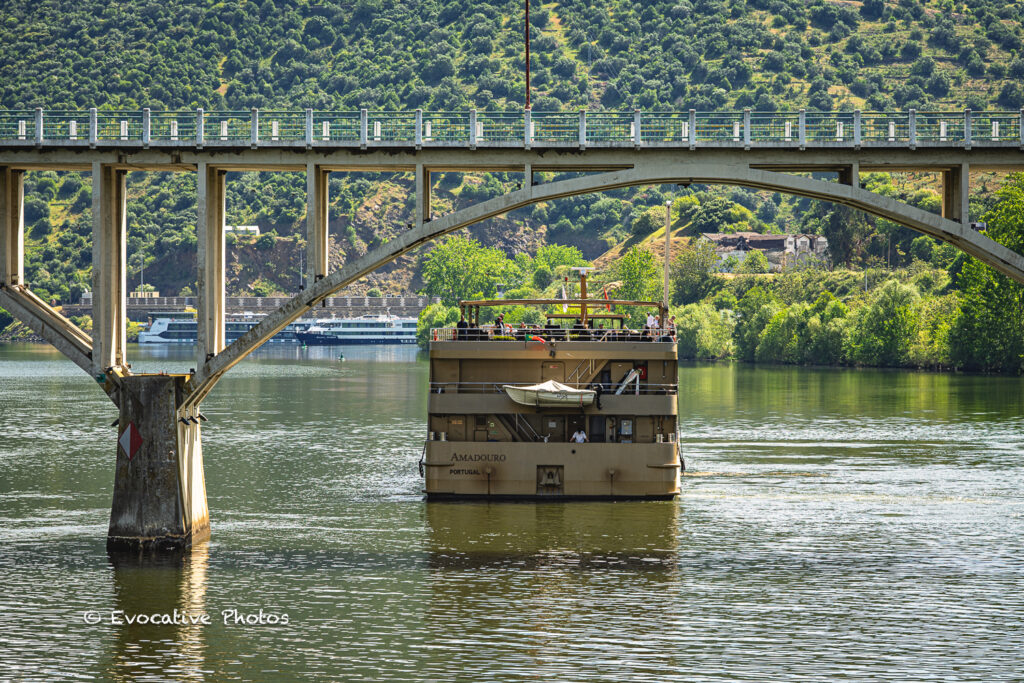
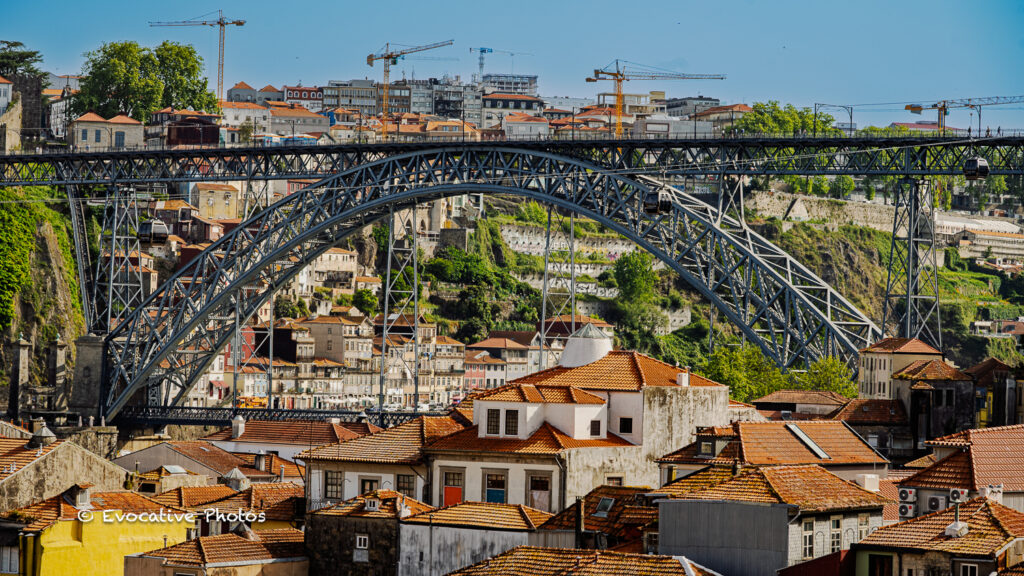
All in all a fine start to the trip to Portugal.
JFB
A Second Day in Lisbon
For the second day we decided to tour Lisbon proper. What is truly amazing is that Lisbon is spotlessly clean. Which is what we saw pretty much everywhere in Europe—so maybe it shouldn’t be amazing at all.
One place we visited was a former monastery of the Order of Saint Jerome that was secularized in 1833. Jerónimos Monastery, begun in the 1500s, is a magnificent building. It is an example of Portuguese Gothic Manueline architecture. Eventually It was turned over to a charitable institution that presents fine art and maritime exhibitions there.
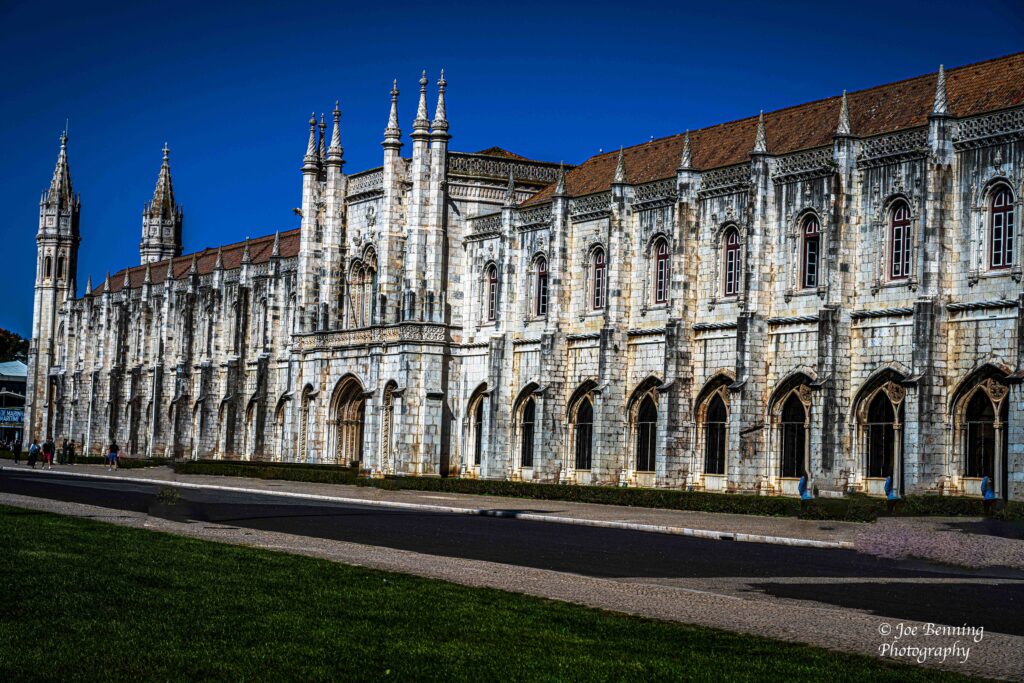
It turns out that Lisbon has a statue (which we visited) modeled after the Christ the Redeemer statue in Brazil. The one in Lisbon is named Christ the King.
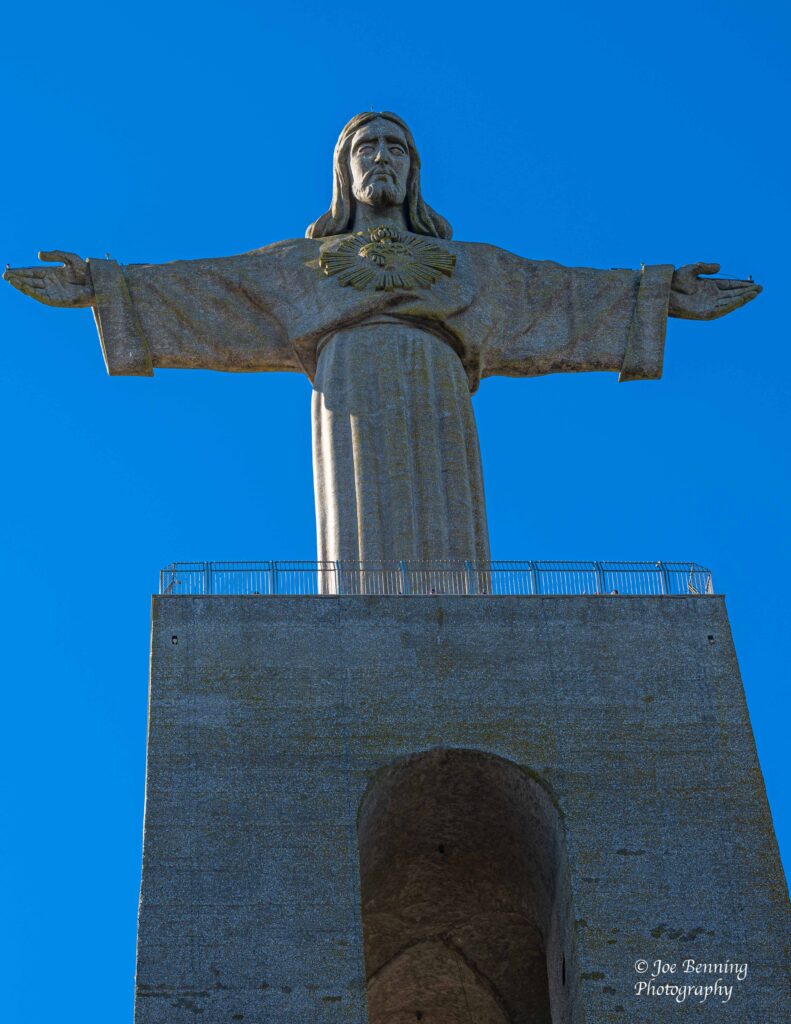
Nearby there is a bridge that looks very much like the Golden Gate Bridge in San Francisco. Not surprising since it was built by the same company (U.S. Steel International) that built the San Francisco Bay Bridge. It is a suspension bridge, about 1.4 miles long and connects Lisbon to the municipality of Almada.
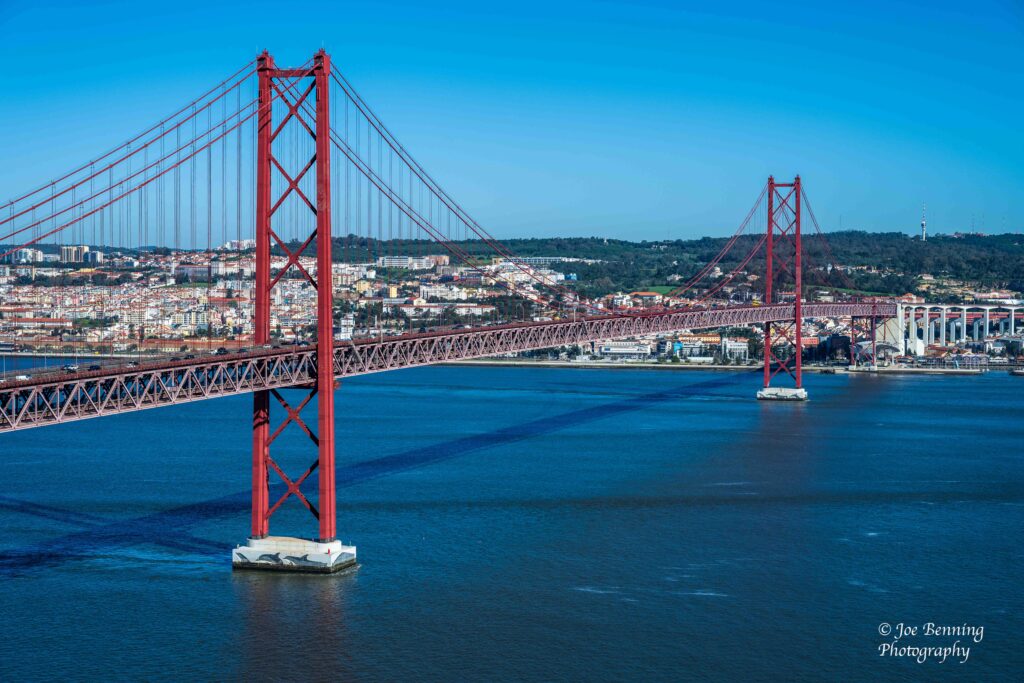
The bridge was originally named the Salazar bridge after the Prime Minister (essentially a dictator) who ordered the construction in 1966. But he was eventually deposed. In 1974 it was renamed the April 25 bridge to commemorate the day he (Salazar) was deposed in a revolution that brought democracy to Portugal.
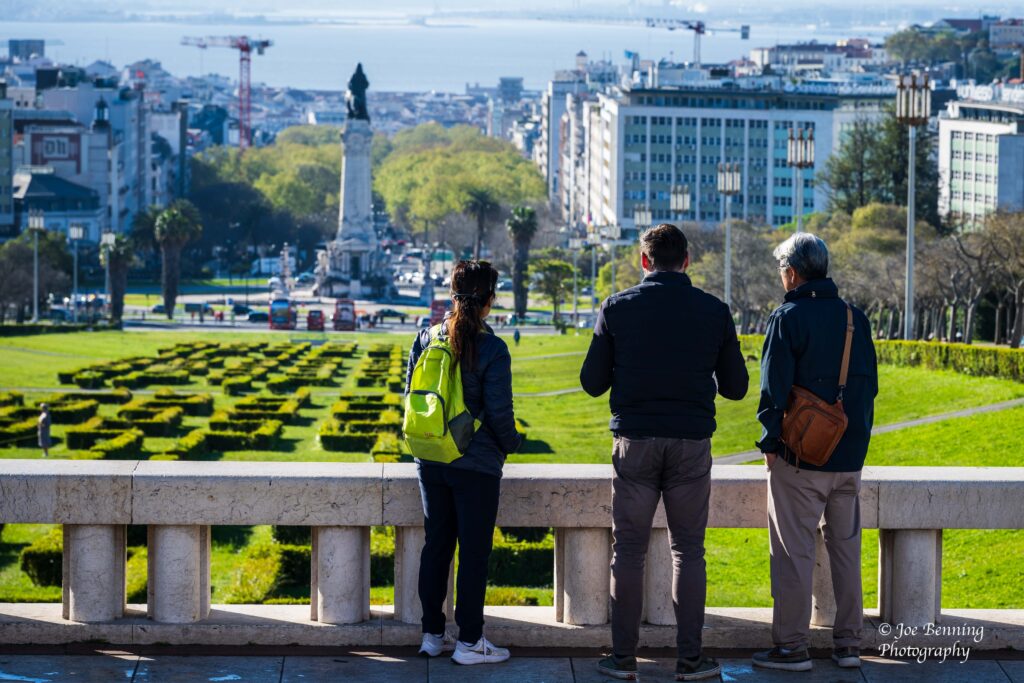
Finally we paid a short visit to Eduardo VII Park, before heading out to lunch in a fairly swanky restaurant.

Next stop: Spain.
JFB