Joe Benning Photography

  • J
  • O
  • E

Category: Photo Notes

Joe Benning
On the Road to Jaipur, India

On the Road to Jaipur

April 22, 2023

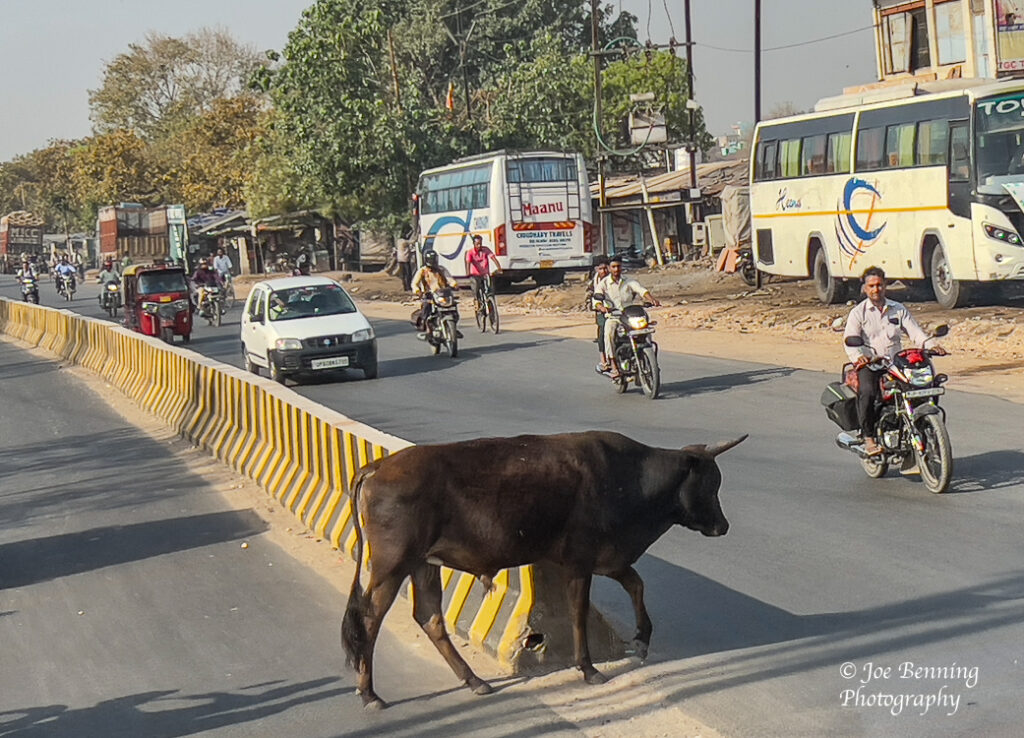
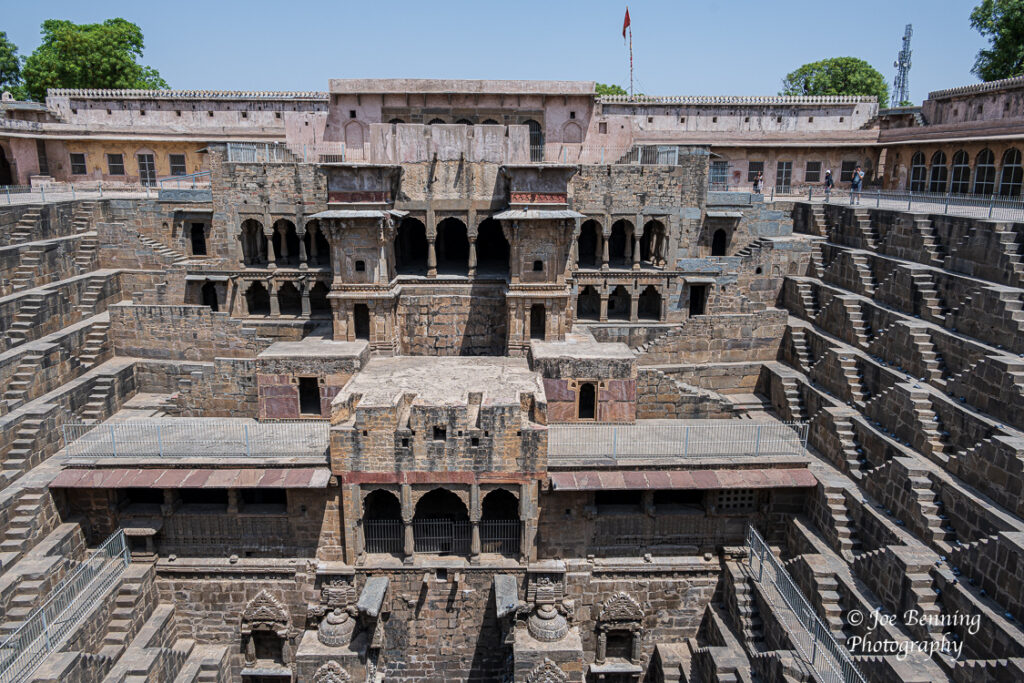
We got up and boarded the coach to Jaipur fairly early. There was no lack of cows on the main road, for which the other vehicles made way.  Along the way we stopped at a rural village named Abhaneri to see its historic step well. 

Cow in the Road

Stepwells were not just a source of water; they also served as sites for bathing, pryer and meditation. Chand Baori, the stepwell we visited, was constructed in the 10th century and is dedicated to Harshat Mata, the goddess of joy and happiness. It is also a designated UNESCO site.

An ancient engineering feat, stepwells are designed to catch water and allow people to ascend and descend the stairs to get to it.

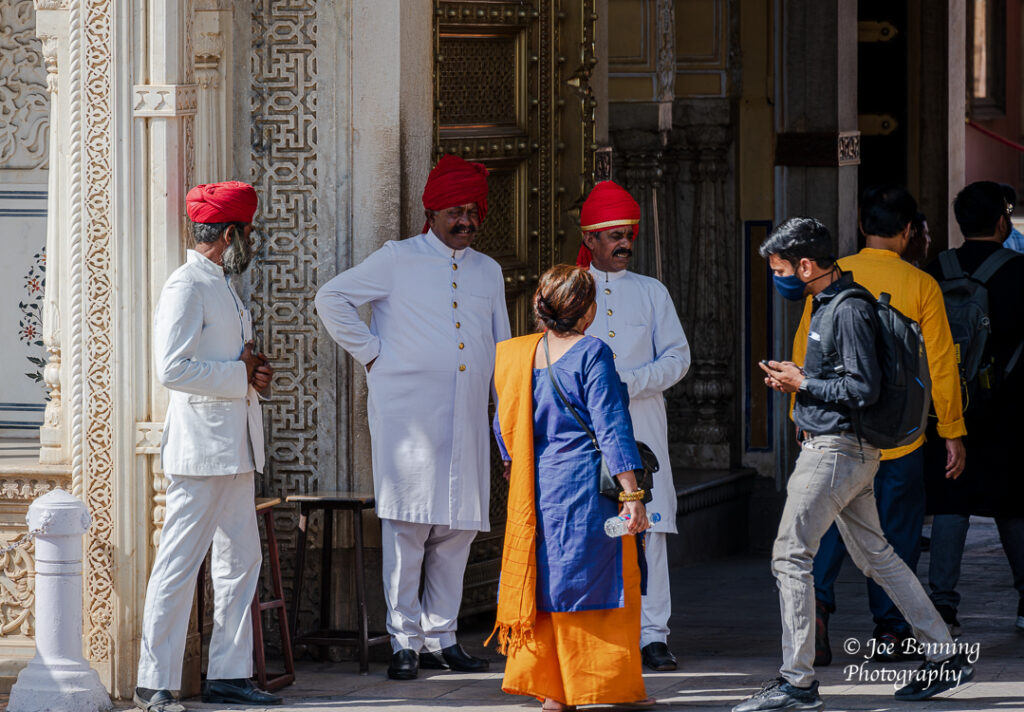
After the stop at Abhaneri we continued on to the city of Jaipur where we went to the City Palace which is at the center of Jaipur, covers one-seventh of the area and is surrounded by high walls. It also has an outdoor museum with elaborately constructed ancient instruments designed to follow the planets. There is for instance an amazingly accurate sundial on display. 

Tourists Enter the Pink City
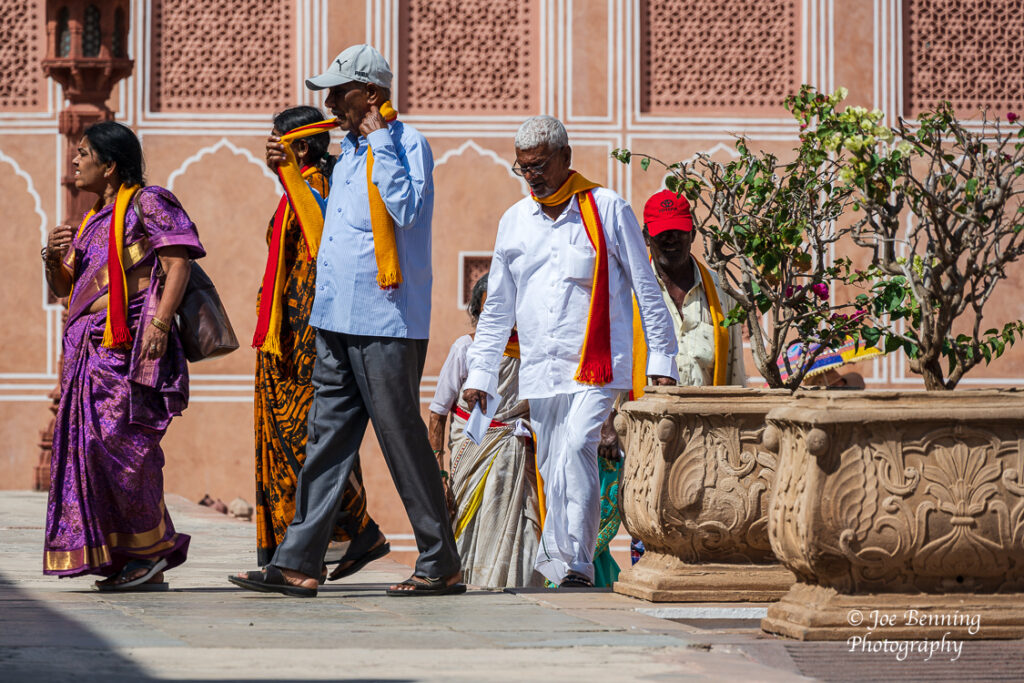
Tourists Visiting Jaipur

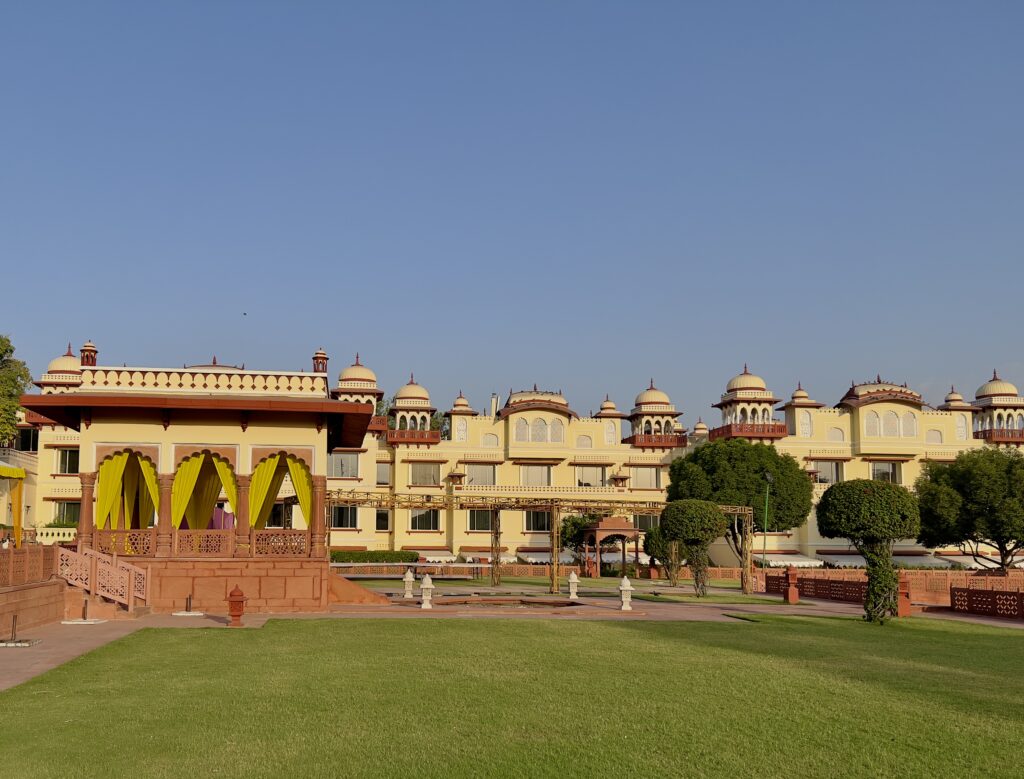
After visiting the City Palace we went back to our hotel—one of the most luxurious we have ever seen. The hotel is the Jai Mahal Palace, owned by the royal family and a former residence of the prime minister. It is still owned by the royal family but now serves as a luxury hotel. And as a special bonus attraction it has an Italian restaurant. Needless to say, after a stop at the bar, we had dinner there. 

Jai Mahal Palace

All in all, Jaipur and the road into the city was fascinating. Not to be missed. 

JFB  

Read More
Joe Benning
Fort Agra -- India

April 12, 2023

The Agra Fort

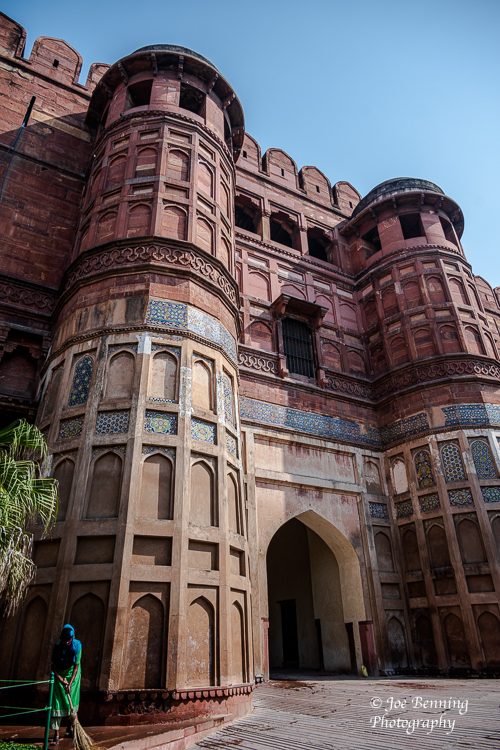
After visiting the Taj Mahal in the morning we made our way over to the Agra Fort, about 2.5 kilometers away. Also known as Agra’s Red Fort, it was built by Mughai Emperor Akbar. Construction commenced in 1565 and was completed in 1573. (They didn’t have the EPA to put up with.) 

Agra, India — April 12, 2023. A midday photo of the entrance to Agra Fort, a World Heritage Site.

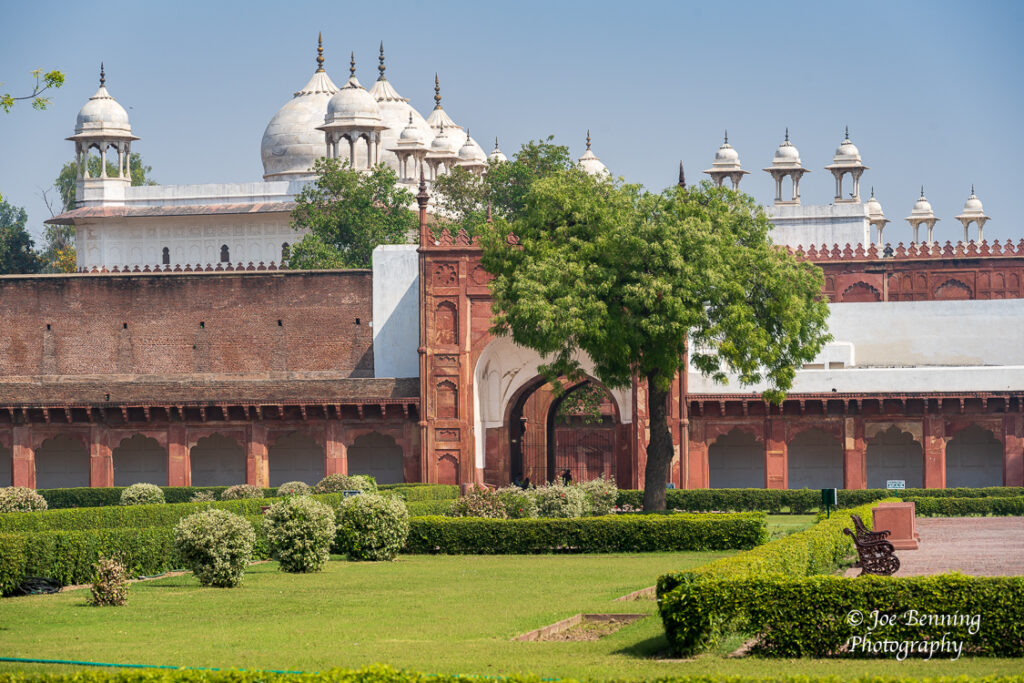
The fort, more accurately described as a walled city, was designated as a World Heritage Site in 1983. It served as the main residence of the rulers of the Mughai Dynasty until 1638 when the capital was moved to Delhi from Agra. It was eventually captured by the British before India won its independence.

Photo taken inside the grounds of Agra Fort; Onion Domes of a mosque are visible
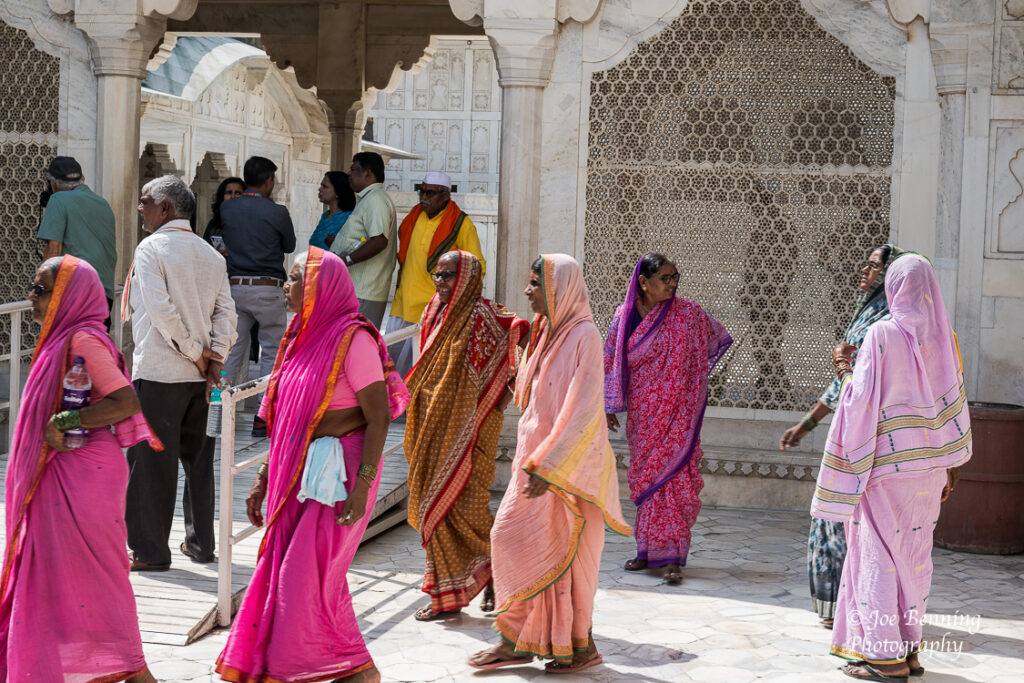
Tourists in Agra Fort

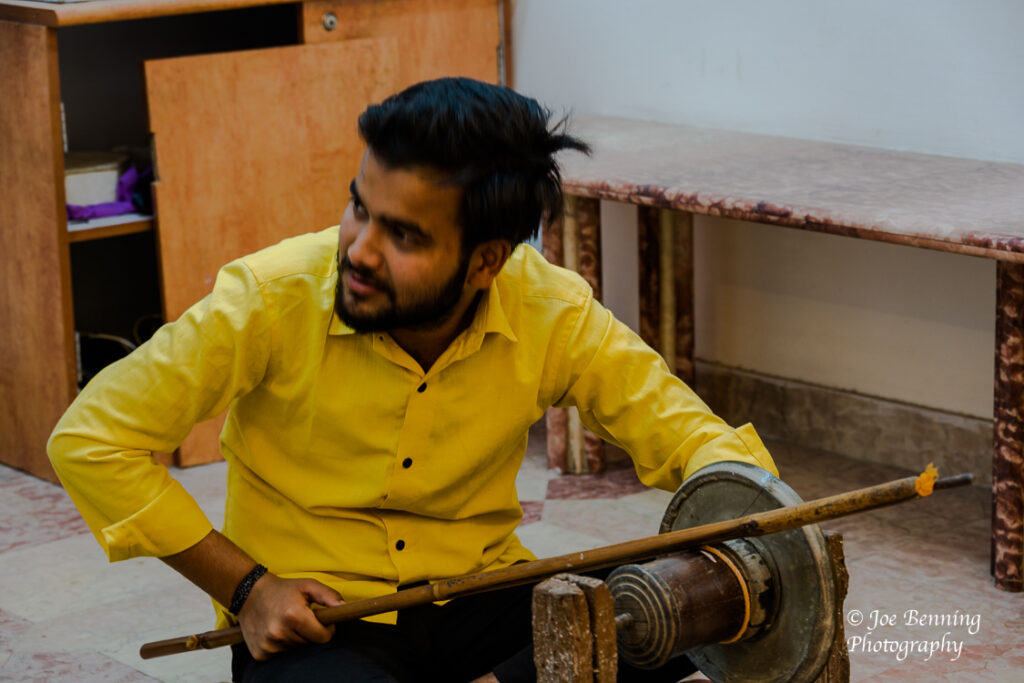
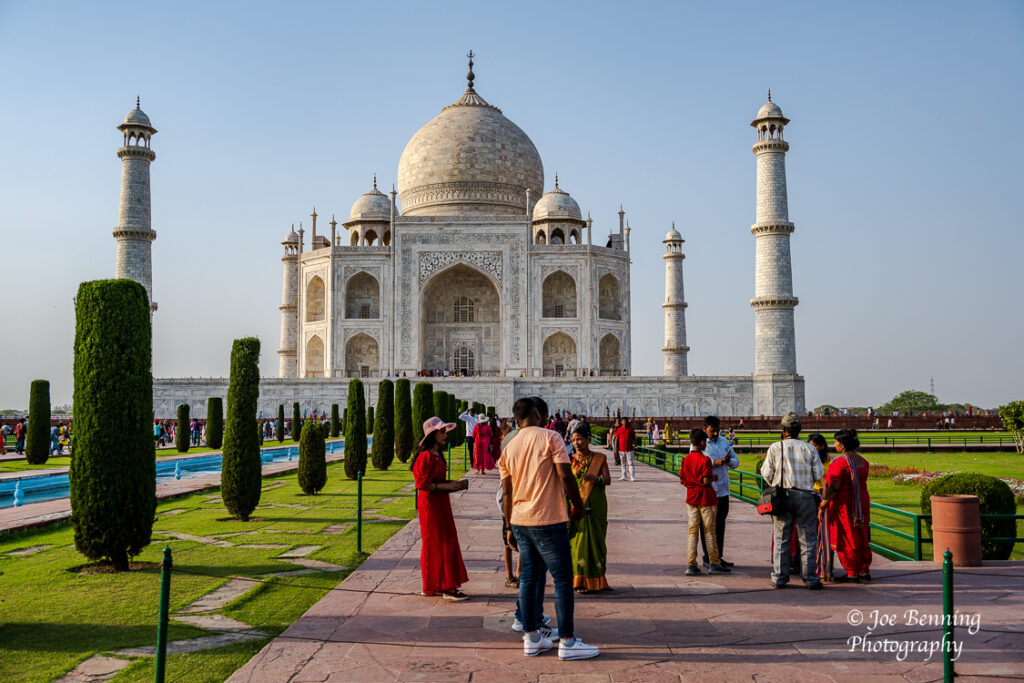
In addition to spending time in Fort Agra, we visited a Marble Inlay Factory where workers shape and polish stones for various sculptures and pieces of art using traditional techniques. Then we headed off for an afternoon visit to the Taj Mahal. By the way–it was 102 degrees Fahrenheit.

Worker at Marble Inlay Factory
Taj Mahal in the Afternoon

Some photos  from these visits are included. 

Joe

Read More
Joe Benning
The Taj Mahal

The Taj Mahal in Agra India, is widely thought to be one of the most beautiful buildings ever created. Made of marble, it was built by King Shah Jahan, who took control of the Mughal Empire in 1628. The mausoleum is dedicated to the King’s enduring love for his wife Mumtaz Mahal, who died in childbirth in 1631.

According to the legend, Mumtaz Mahal, while on her deathbed, persuaded the king to build for her the most beautiful mausoleum the world had ever seen. The king promised to do so and hired over 20,000 artisans to construct the Taj Mahal. To day it is a UNESCO World Heritage Site.

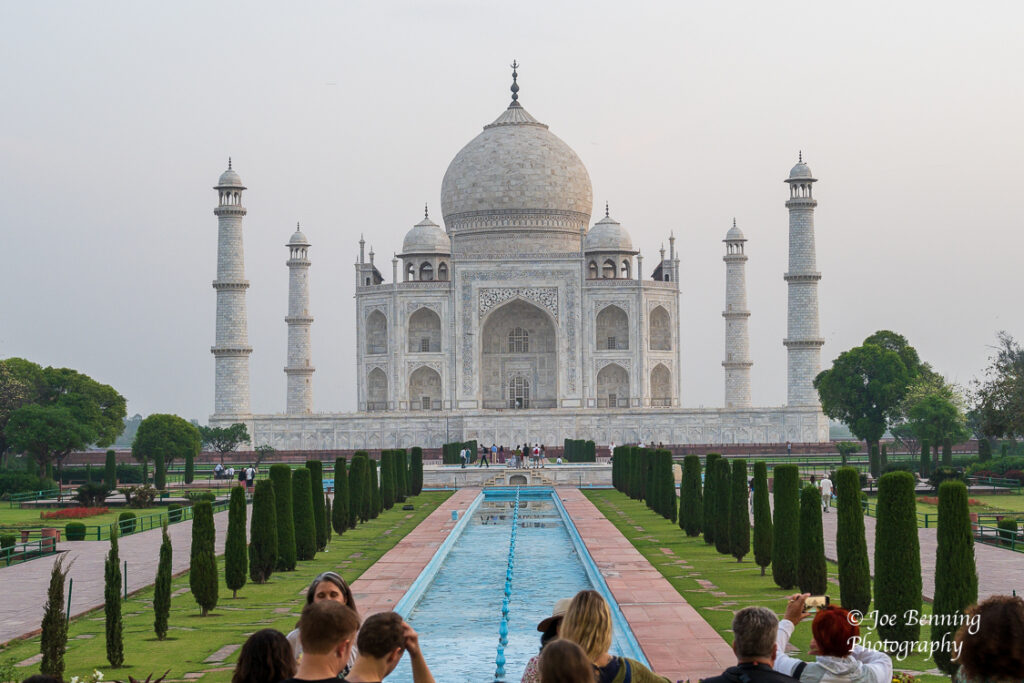
Taj Mahal in Early Morning

The Taj Mahal is truly a wonder to behold. The sheer scope of the site has to be seen to be believed. Photos simply do not do it justice. Any photos. 

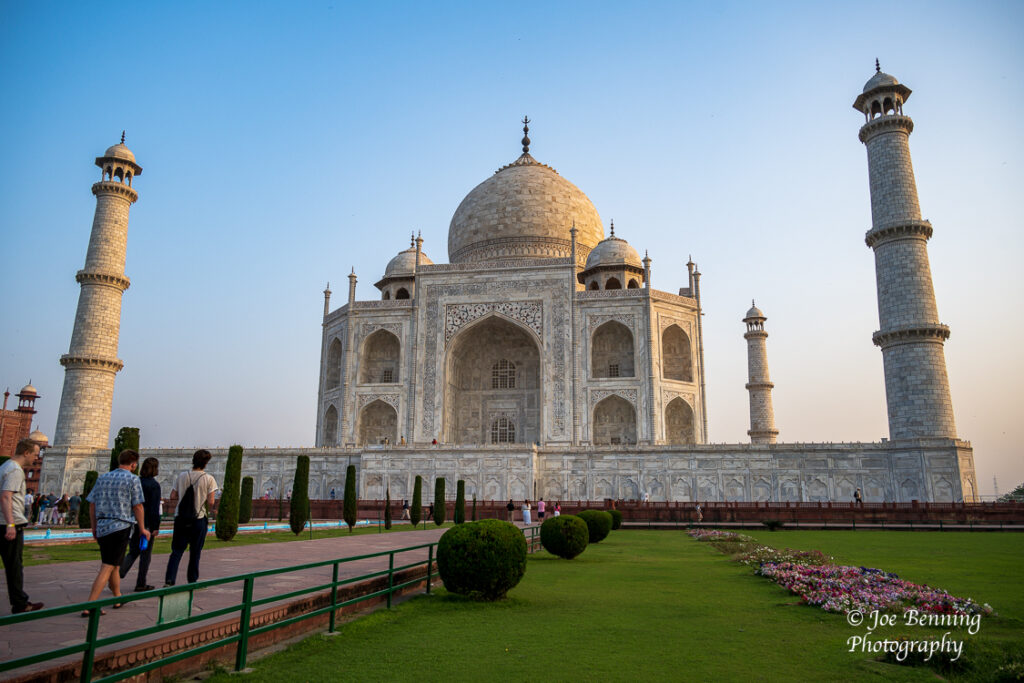
We visited the site, which is a complex that contains two mosques as well as the mausoleum, both early in the morning and in late afternoon. We were lucky with the weather and the relative lack of crowds—probably due at least partially to the times we visited. 

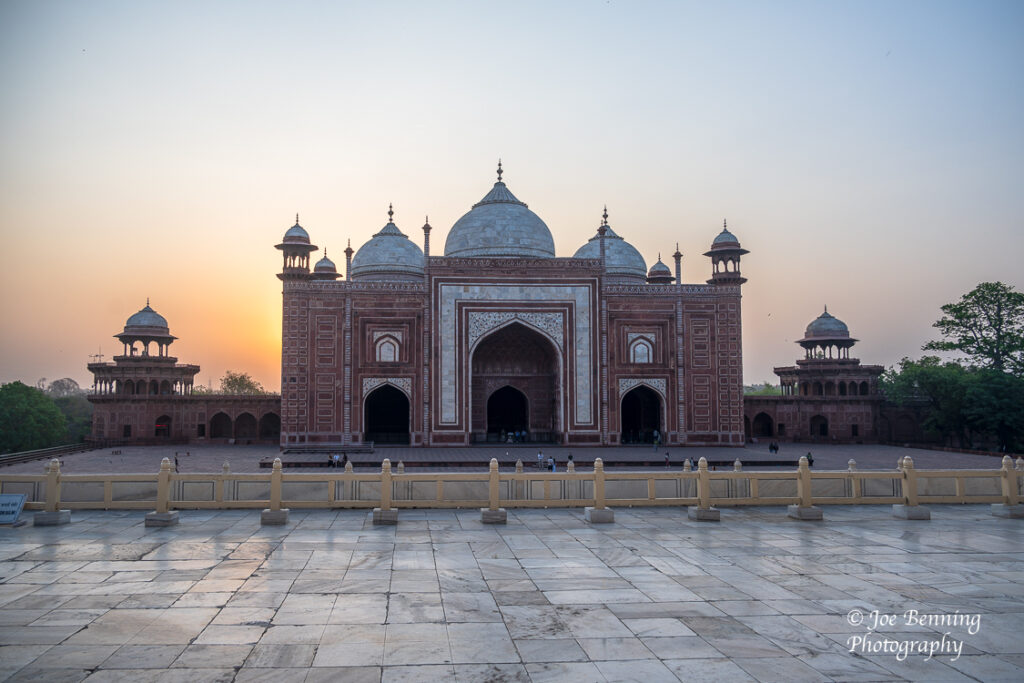
Agra, India — April 16, 2023. A morning photo overlooking some of the grounds of the Taj Mahal complex
Morning at the Taj Mahal

A few photos from the visit are included, but to repeat, photos don’t do the site justice. It has to be seen in person. Luckily, we were able to do that.

A Mosque in the Taj Mahal Complex

JFB

Read More
India -- Overall Impressions

India – there aren’t enough words to describe it.  Some impressions.  

In the course of 6 days in India, we saw only a small part of this country, and yet enough to fascinate us and make us want to see more.  Since there are not enough words to adequately describe our experience, and we cannot possibly share all the pictures we have, here are some general reflections.   

Before heading inland, we spent a few hours touring the Latin Quarter of Goa, India’s smallest state.  It is a charming old area where the buildings have the colonial charm you might find in a Caribbean island vacation spot, with colorful small coffee and tea shops, bakeries, restaurants, art galleries, guesthouses and residences.   

We headed from the Mumbai sea port to the airport, expecting crowds.   Along the way we passed massive slums, in which there are markets, banks, school systems and residents who work, sorting recycling or working at other jobs.  A guide told us that these slums do not carry the stigma that is generally associated with them elsewhere, they are just small places to live in an area where housing is not affordable for many people.

Mumbai has one of the cleanest airports we have ever seen, with lovely art displays throughout.  Because the airport is so large, nothing seemed crowded, and we boarded our flight to Delhi.  Similarly, the Delhi airport was large and spotless, and crowded.  

Leaving the Delhi area and heading to Agra, we passed through greater Delhi, where traffic has to be seen to be believed.    

Imagine you are in your car on a fairly busy 4 lane road.   Add in very large trucks, bundled high and wide with produce or other goods, add in public buses, add in private tour buses, add in tractors that go slowly and trucks carrying live animals like chickens, add in motorcycles and scooters.  Add in pedestrians (yes, on the roadway).  Notice all the horn honking to signal when a vehicle is near, and the signs on almost every truck saying “please horn.”  Now observe, every now and then, how the traffic opens up and flows around a herd of cattle, walking down the center of the road, in either direction (with traffic or against it).  Sometimes it is just one cow, sometimes a herd with a person guiding them, sometimes goats or horses as well.  Amazing.  

As we left greater Delhi we passed miles and miles of fields, where mustard and other crops are grown, often by farmers and their families.  There were many images of an individual person tending a large field without machines to assist.  And as dusk fell, we saw more and more children helping out before night came.  The scenery was beautiful.   

Agra is a busy city, home to the Taj Mahal, a great fort, and other sights to see.  Close to the tourist areas the streets are lines with shops and the atmosphere is congested and chaotic.   Just a mile or so away, we stayed at a lovely hotel, very luxurious, which seemed to be from another world.  

We moved on to Jaipur after Agra.   Again we saw incredible luxury next to widespread poverty.  

Jaipur is known for its block textiles, and there is no end to the shops selling materials. They line several streets, interspersed with markets for fruit and produce, as well as products of all kinds.  

The city Palace in Jaipur sits amidst this mass of markets, elegant and serene.  Similarly, the Royal Observatory provides a fairly quiet place to see the 19 astronomical instruments built by the founder of Jaipur in the early 1700s, an incredible way to see the placement of planets etc with the naked eye.  

We attended a Hindu Aarti ceremony, which is a morning ritual.  Again, a pleasure to participate in a crowded experience where people did not seem to be bothered by the throng, just took it in stride.  As in other places, every smile from us was met with a return smile.  For us, it felt very comfortable to be here.  

Overall, we experienced an assault on the senses, but a great one.  Smells (spices, flowers and everything else), sounds ( horns, languages, birds), tastes and sights of every type, all at once, it seemed.  We saw clothing of every type imaginable, which varies among the regions, and changes over time.  For example, saris are now being supplemented in some places in the North by head and face coverings, influenced by Muslim dress.  

So how do 1.4 billion people live together in this dynamic yet traditional country of haves and have-nots?

Is it the belief of the Hindu population that reincarnation will reward their kindness to all living things?   We don’t know why things are the way they are, but we would like to return and learn more.  

Some websites that might be of interest to you:

https://www.britannica.com/place/India

https://www.britannica.com/topic/Taj-Mahal

https://www.cntraveller.in/story/37-best-places-to-shop-in-jaipur-blue-pottery-bangles-block-print-hawa-mahal-johari-bazaar/

https://www.gadventures.com/blog/behind-hindu-aarti-ceremony/

Mary Anne McDonald

Read More
Joe Benning
Visiting Goa India

A Short Visit to a Tiny Indian State

April 18, 2023

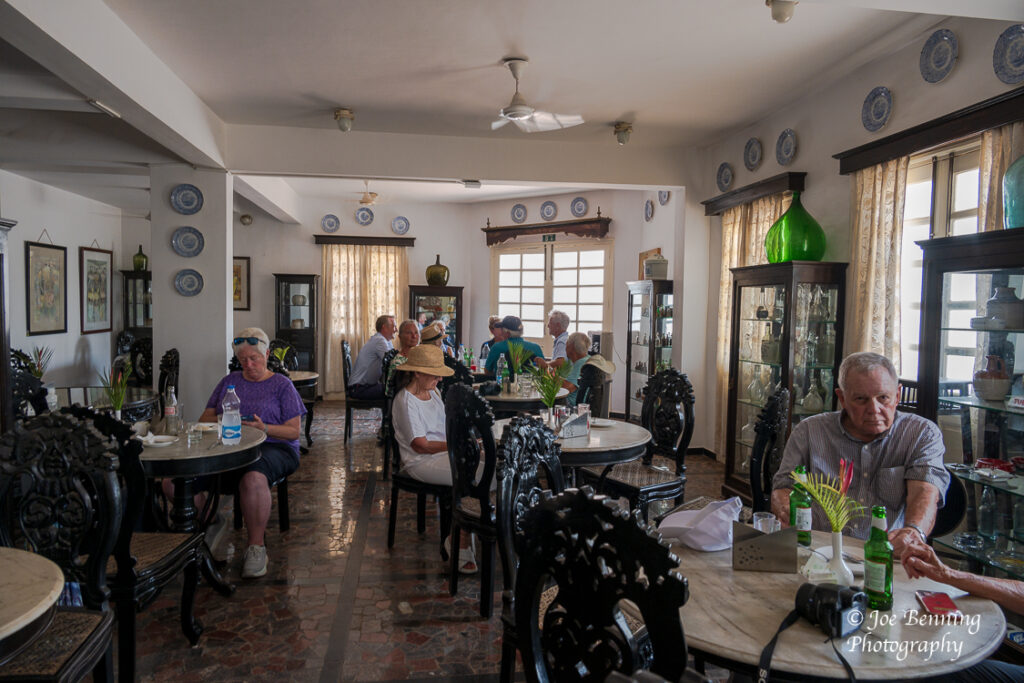
We began 6 days in India on April 10, 2023 with a short trip to the state of Goa. It is India’s wealthiest state with a GDP per capita ($7,300) about 2.5 times that of the rest of the country. Among other places, we trekked around the Latin Quarter  to see the architecture and stop in at a local cafe / restaurant to sample the food. As it turns out, this is the area of India that rock starts flocked to in the late 1960s  and early 1970s. It’s where the Beatles stayed when they were communing with Ravi Shankar back in the day.

Goa, India — April 10, 2023. Tourists stop for a breather and snacks in a cafe in Goa, India

Goa is visibly different from much of the rest of India, largely due to the fact that it was colonized by Portugal and remained a Portuguese colony for 450 years. There is a large Catholic population (about 33%) and the vestiges of its Portuguese domination can be seen in its architecture. Goa is a tiny Indian state; it is the smallest state by area and fourth smallest by population (about 1.4 million). Its largest city is named after the Portuguese explorer Vasco de  Gamma. Its capital city is Panaji. The official language is Konkani. (India has something like 22 official languages; each of India’s 28 states designates official languages within its jurisdiction). Goa only become part of India in 1961, 14 years after India won its independence from Great Britain. 

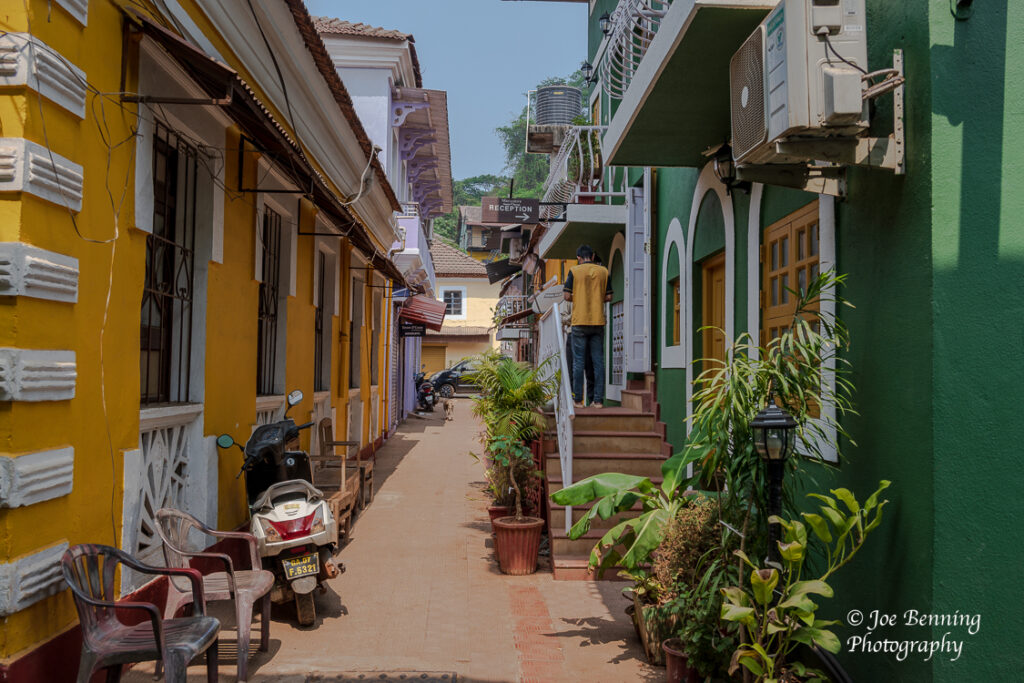
Goa, India — April 10, 2023. Colorful Homes on a side street in Goa, India
Goa, India — April 10, 2023. A side street in Goa, India

All in all Goa was an interesting introduction to India—the eclectic mix of cultures, religions and foods. But it is very different from the rest of the country, as we soon found out as we headed for a 5 day overland trip.

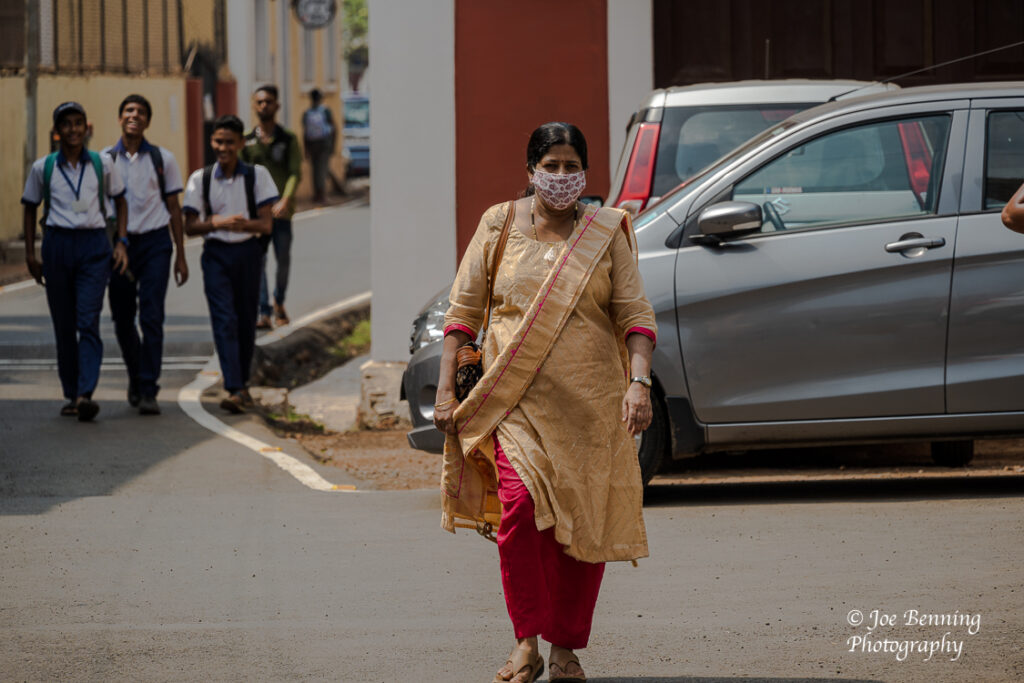
Goa, India — April 10, 2023. A woman pedestrian walking in Goa; school boys are in the background.

JFB

Read More
Joe Benning
A Resort in the Maldives

A Day in the Maldives

April 9, 2023

Happy Easter Everyone!

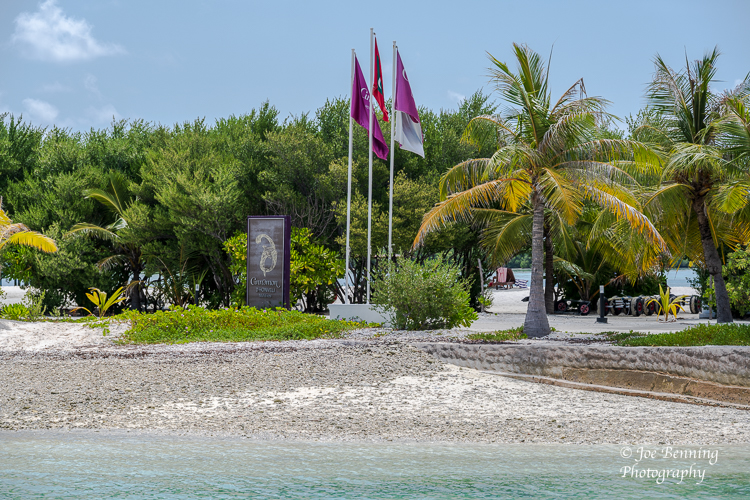
We spent Saturday—Holy Saturday actually—in the Maldives at the Cinnamon Dhonveli Resort in Kanuharaa. Tourism is a very important part of the Maldives economy. The  Cinnamon Dhonveli Resort where we went is a rather tony upscale affair. The physical location is gorgeous; the establishment is very family oriented, and it attracts plenty of European tourists. 

Entrance to the Cinnamon Dhonveli Resort

There is a certain irony in the number of European tourists. Islam is the official religion of the country, and where the Constitution is silent, judges are supposed to consider Sharia Law. No law that is “contrary to Islam” may be applied. In addition, non-muslims are not allowed to become citizens. 

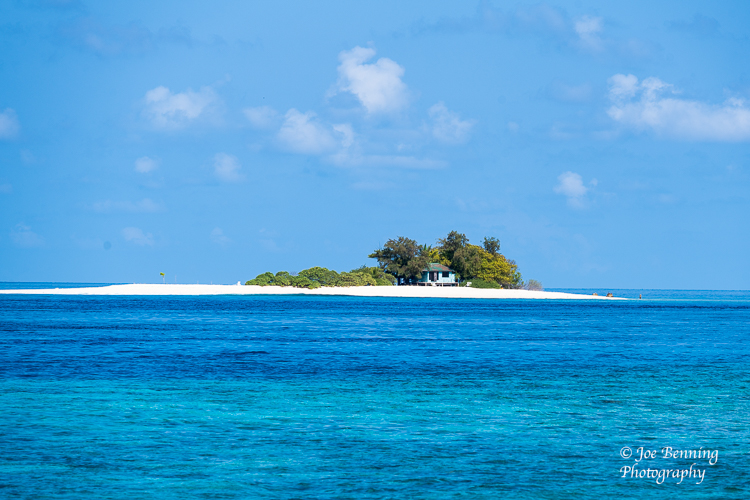
Small Island in the Maldives

Female staff can be seen sweeping the premises dressed in such a way that they are covered from head-to-toe in the muslim tradition, even though it is brutally hot.

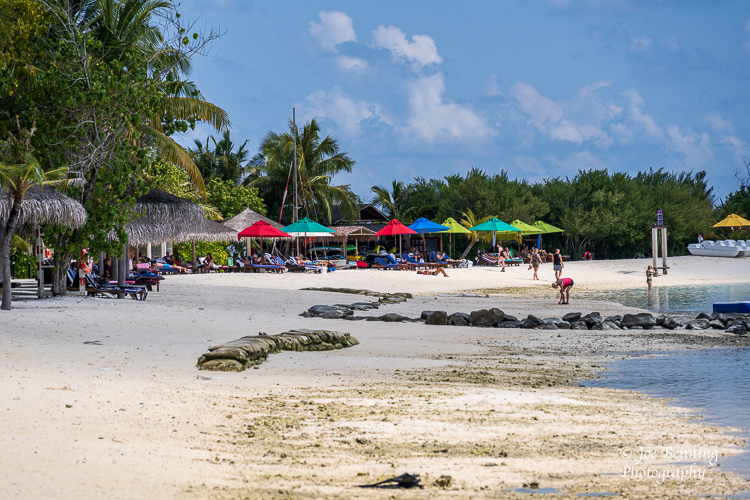
But it doesn’t seem to phase European tourists in the slightest, judging by the skimpy bathing suits the younger European women tourists wear. Or for that matter, the orders for vodka and beer that roll in to the beach bars at 10:00 AM. Apparently, the official policy is that at the resort hotels frequented by Westerners, the rules are not enforced. 

Tourists on the Beach

So the net of it is that the place is physically gorgeous; tourism is a huge part of the economy, and the tourist trade is accommodated by dispensing with the enforcement of rules that would otherwise apply to the native population. At least at resorts that cater to Westerners. 

Water Bungalows–houses built on stilts over the water– in the Maldives

We will arrive at Goa, India tomorrow to begin 6 days in India. 5 days of the trip will be inland, including visits to the Taj Mahal, so we will be out of commission for a little while. But we are proceeding with camera and note book in hand, and will report in as soon as we can.

In the meantime, we wish everyone a Happy Easter!

JFB

Read More
Joe Benning
Short Day in Sri Lanka

Sri Lanka

April 6, 2023

We spent a short day in Colombo, Sri Lanka on the way to the Maldives. Colombo is the capital. Among other things we visited the National Museum, the Samudra Hotel and the Gangaramaya Temple. We saw native dancers at the port and believe it or not, several snake charmers. 

Colombo, Sri Lanka — April 6, 2023. Dancers at the Port in Native Dress
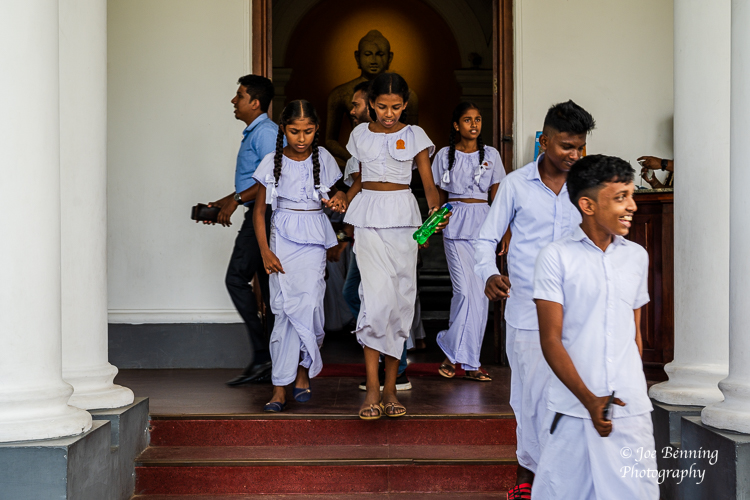
Colombo, Sri Lanka — April 6, 2023. School children exit the National Museum

Formerly known as Ceylon, the island country is now officially known as the Democratic Socialist Republic of Sri Lanka. At about $14,500, it has the second highest per capita income of South Asia—but it also suffers from a huge series of problems, many of them self-inflicted, as the official name of the country suggests.

The country is made up of many ethnicities, but a large majority, about 75%, is Sinhalese. The next largest group, about 11% is composed of Sri Lankan Tamils. And as it turns out, the Sinhalese are largely Buddhists and the Tamils are mostly Hindus. As a result of religious and ethnic differences, Sri Lanka endured a 30 year civil war in which militant Tamils, apparently egged on by India, demanded an independent Tamil State in the north.

The Sri Lankan army decisively defeated the Tamil Tigers in 2009 and the civil war has largely gone into submission.  But all is not well. A terrorist bombing in 2019 resulted in the deaths of 261 people. 

2019 also saw the beginning of an economic crisis (not the first). It came from a combination of massive foreign borrowing, large government deficits and a government order to ban the use of fertilizers and require organic farming. To the surprise of absolutely no one who passed freshman economics, the farm economy collapsed. The government declared a food emergency in August 2021.

By June of 2022 Sri Lanka declared an economic emergency and defaulted on $51 Billion in sovereign debt. The currency collapsed; double digit inflation followed and power outages became common. Not surprisingly, massive street protests broke out. Mobs attacked the President’s house. The President hightailed it over to Singapore where he e-mailed in his resignation. On the same day the mob burned down the Prime Minister’s house. 

So: they have a lot of problems to work on.  Another consideration is that Human Rights Watch as well as other NGO’s have pointed out that under the guise of anti-terrorism Sri Lanka has abused human rights. For its part, China has aggressively used its Belt and Road initiative to throw loans at Sri Lanka, although it looks increasingly unlikely that Sri Lanka will be able to pay them off in full. So China appears to be getting more than a toe hold in the country. China’s increasing influence can be seen in one of the photos below where outside a temple, the flag of the PRC is flying next to the Sri Lankan flag.

Colombo, Sri Lanka — April 6, 2023. Photo taken at the outside gate of the Outside Gangaramaya Temple

N.B. Apologies for not including a photo of a snake charmer, but the internet here is terrible and for some reason or other I can’t upload one.

JFB 

Read More
Joe Benning
Visiting Thailand

April 4, 2023

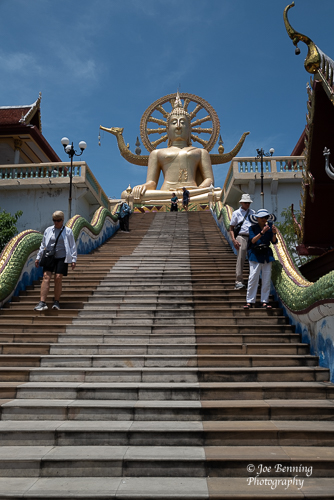
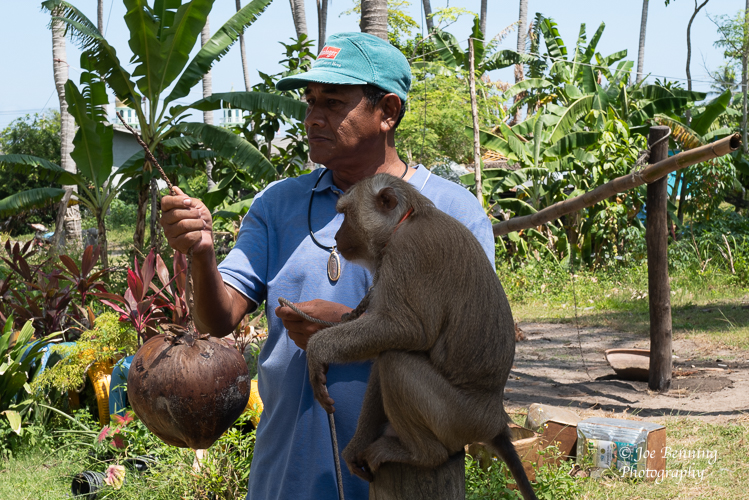
We visited diverse areas of Thailand over the course of several days. The visits included time spent in an outdoor museum that replicates part of Bangkok called the Ancient City; a training camp for monkeys where they learn to collect coconuts for processing, a giant Buddha and the island of Phuket. What follows are some photos from those visits; then some notes and photos from our visit to the island of Phuket. 

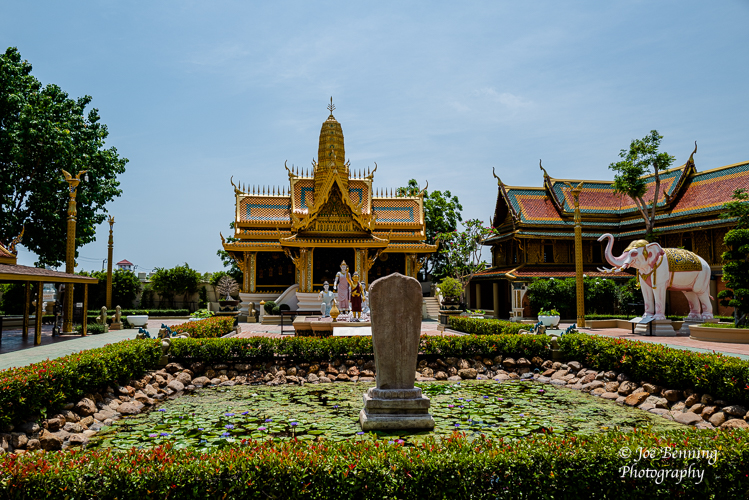
Bangkok, Thaliand — March 25, 2023. A wide angle photo of a temple compound in the Ancient City in Thailand.
Photo of a giant Buddha at the top of a long outdoor stairway
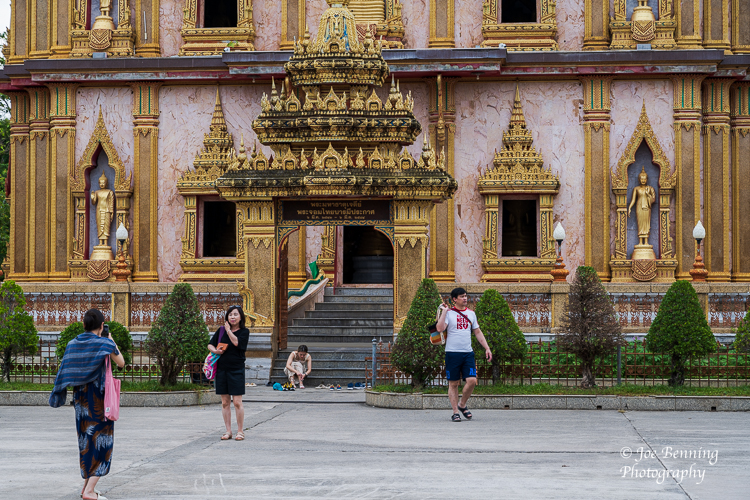
Phuket, Thailand–April 3, 2023. Photo of tourists on the grounds of Chalong Temple.
Bangkok, Thaliand — March 27, 2023. Photo of a monkey trained to collect coconuts with his trainer at a monkey training camp.

The Island of Phuket

Located in the Andaman Sea, Phuket is a mountainous Thai island that is home pristine beaches and lots of high end restaurants and resort hotels. It was devastated by a tsunami the day after Christmas in 2004, but seems to have fully recovered since then.  

A bit smaller than Singapore, Phuket is the second smallest island in Thailand. Over the centuries Phuket has been a trading destination for various powers including India and China. The Dutch, Portuguese, French  and English also visited the island. But Thailand has never conquered or colonized.

We took a short tour around the island. Among other things we visited Chalong Temple, an Elephant Camp and a Cashew factory.  Of course there are temples everywhere. Elephants are a symbol of Thailand. Monkeys are big in Thailand as well. And for some reason or other, Thailand is a major producer of cashews. So there you have it: a quick tourist view of Thailand. 

JFB

Phuket, Thailand–April 3, 2023. Photo of tourists on the grounds of Chalong Temple.
Phuket, Thailand–April 3, 2023. Photo of a worker minding an Elephant in a waterimng hole .
Phuket, Thailand–April 3, 2023. Photo of a Thai woman at work in a cashew factory in Phuket.
Read More
Mary Anne McDonald
Visiting Penang, Malaysia

Penang, Malaysia

April 1, 2023

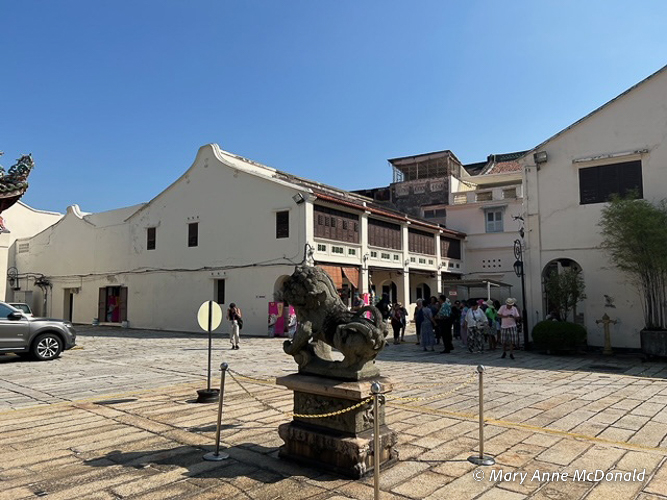
During a visit to Penang, Malaysia we spent some time in the city of Georgetown, the capital. Georgetown is a city established about 150 years ago by British colonizers. It is home to many different ethnicities including Chinese, Indian, Arabian, Burmese and Malay people as well as expats from Eurasia, Thailand and elsewhere. 

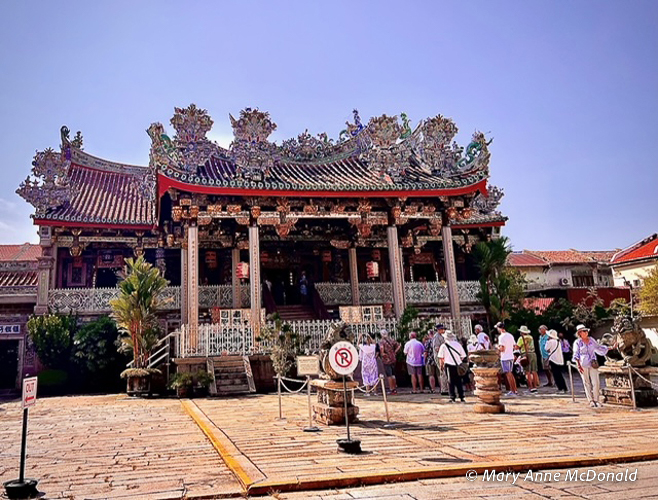
Beautiful gracious buildings built during British rule are located next to ornate temples and other colorful architectural masterpieces. Some of the temples reflect a mix of Buddhism and Confucianism. In addition to stops at several of these temples, we visited a water village located on one of several long jetties in the Straits of Malacca, located between mainland Malaysia and the island of Penang. We also visited a Clan house. 

Courtyard at Khoo Clanhouse with Apartments in Background.jpg

The water villages were established because buildings on land were taxed, while buildings over the water were not. We visited Chew Jetty, named after the captain of the ship that brought Chinese immigrants to Penang. It was common practice for immigrants with no connection to their new home to adopt as a group the surname of their boat captain. One of the boats that carried immigrants to Penang was captained by Captain Chew, a surname that many of the Chinese immigrants adopted. Hence the name Chew Jetty to describe the area.  

Temple at Khoo Clanhouse

As Penang developed, a group Clan houses, or (“kongsi”) were established in Penang by wealthy Chinese immigrants. The goal was to provide temples, housing and assistance to newcomers. The Khoo Clanhouse, which we visited, is one of the largest. You enter the compound through a large walkway, which brings you away from the busy street and into a compound with an ornate temple, a registration office for the newcomers, and apartments for them. Newcomers received help obtaining work, housing, food, etc. until they could stand on their own two feet. 
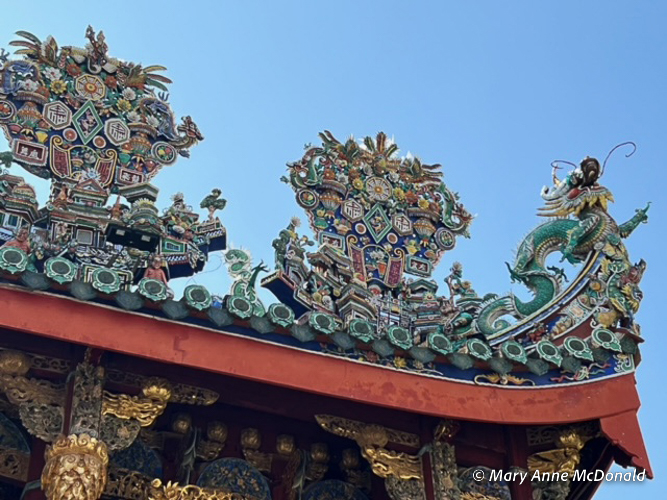
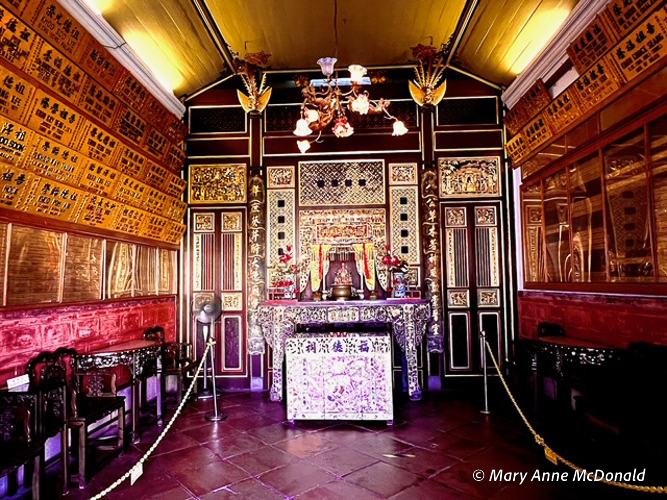
The Khoo Clanhouse was founded in 1835. Three areas make up the inside of the temple. There is a center area to worship of the god of prosperity. A small area to its right is for the worship of ancestors. It contains many replicas of gravestones from China where the ancestors were buried. Since the immigrants could not easily return to China, this area fulfilled a need for a local place  to worship ancestors.

Small Room for Ancestor Worship.jpg

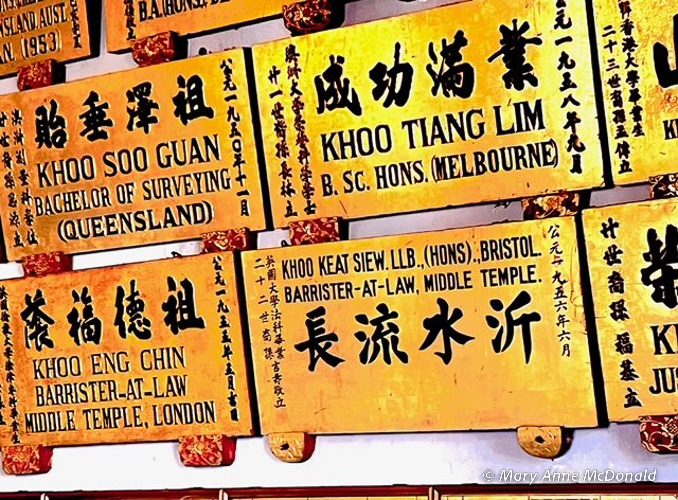
A small area to the left is a “hall of fame” with plaques to show the accomplishments of the Khoo family, and to inspire others. The plaques shown in the image below denote one surveyor, a recipient of the Bachelor of Science degree, and two barristers. There are hundreds of plaques in this area. Once a “hall of famer” dies, his plaque is moved to the ancestral worship temple.

Plaques in Khoo Temple.jpg
Detail from Temple Roof, Khoo House

All in all a very interesting city. 

MAM

Read More
Joe Benning
Two Days in Singapore

Singapore, March 2023

We have just spent two days in Singapore, one of our favorite cities.  What a mix of ethnicities, religions, cultures and history can be found here.   Folks from China, India and Western countries are everywhere, alongside folks originally from the Malay peninsula.   

Singapore is a vibrant and young city, clean and safe, with spectacular architecture, lots of public green spaces, and a social code that endorses the collective good, even if individual liberties are curbed as a result.  

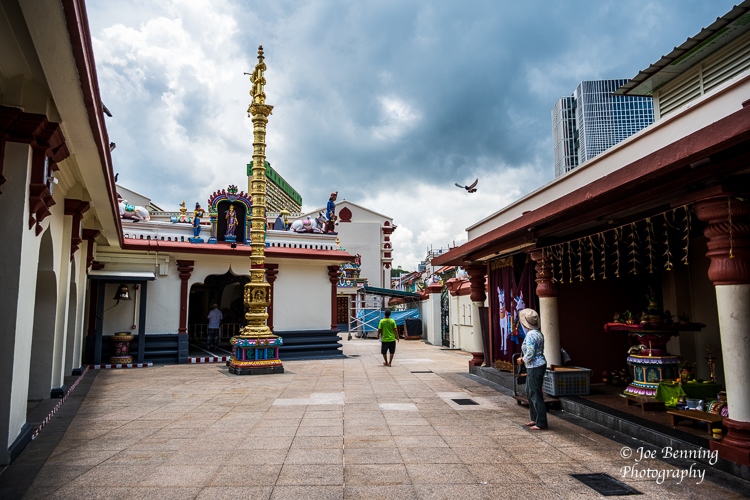
We took a walking tour on our first morning here, and took in some of Chinatown as well as a Hindu temple.  A favorite part of the temple is one of the shrines to Ganesha, the god who looks like an elephant, and is the remover of obstacles so that followers can move forward in life.  Ganesha’s large head symbolizes wisdom, understanding, and the discriminating intellect that one must possess to attain perfection in life.   In this shrine, a small mouse looks up from the corner at Ganesha; the message is that even when one has achieved much in life, he must also take care of others, including the smallest among us.   

Singapore, March 29, 2023. A wide ange photo taken inside a Hindu Temple in Singapore

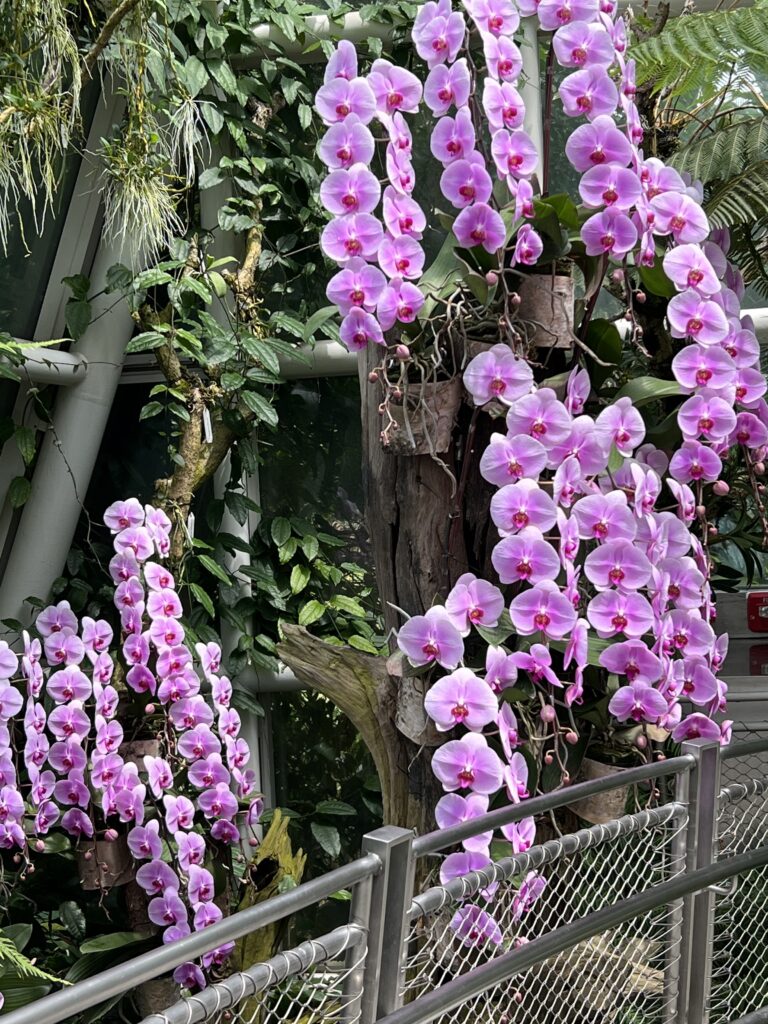
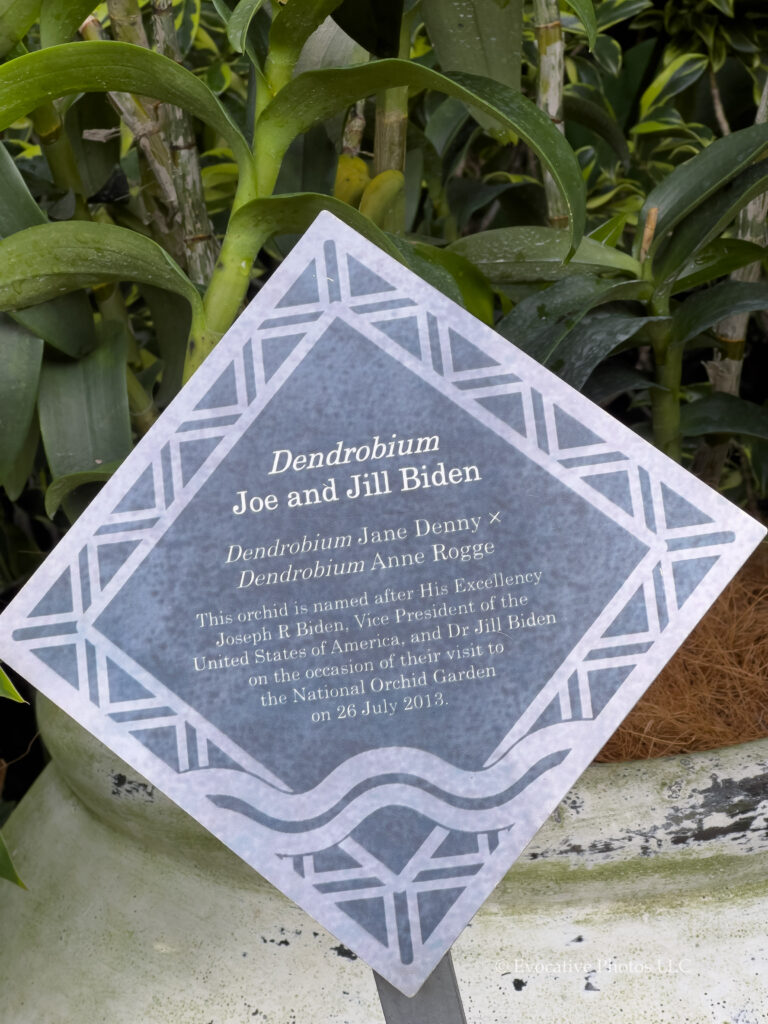
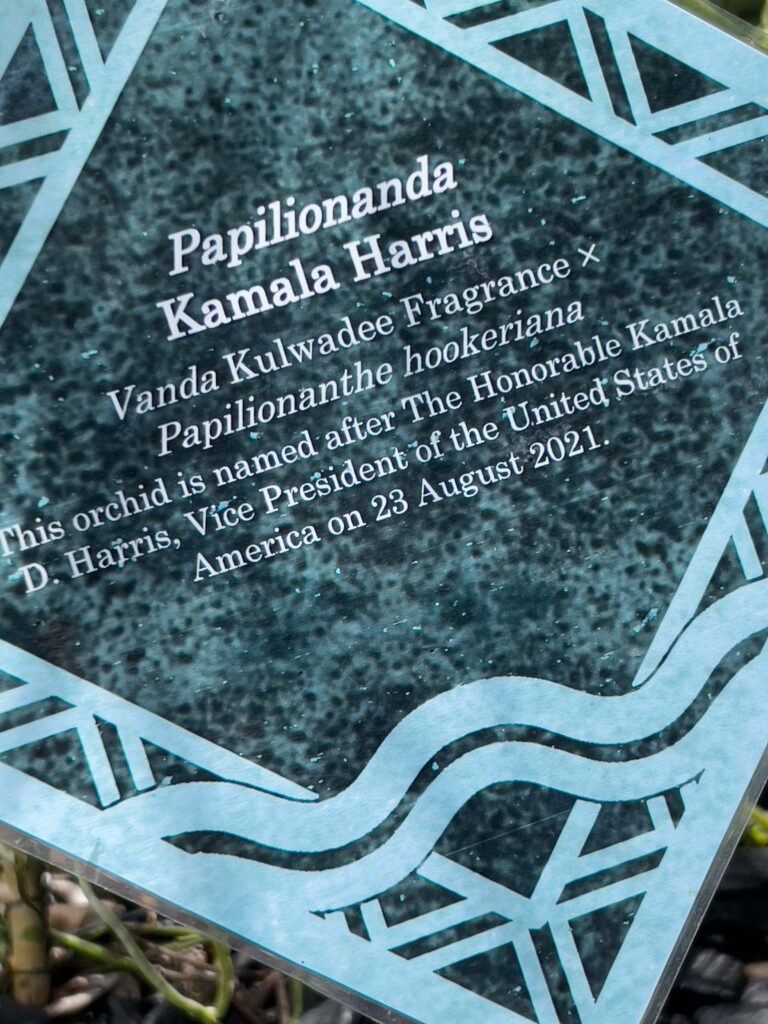
During our walking tour we saw some of the great places in Singapore’s colonial past, as well as its newer centers for housing, recreation, and some of its civil institutions.  We went to the gorgeous Botanic Garden, and focused on the orchid garden as time was too limited to see everything.   The Botanic Garden is extraordinary, and the incredible homes in that area of town are those of the very wealthy (or, as the folks in the tour group often said “this looks like the  ‘Crazy Rich Asians’ movie!”). 

Orchids in the Botanic Garden

MA had an interesting chat with the guide at the Botanic Garden, who wanted to discuss the US democracy, immigration in the US, the cancel culture, municipal policing and other matters.   He is preparing for a trip to the US later this year to explore these issues as he sees the sights of Washington, DC and New York City.  He is eager to compare US democracy with Singaporean democracy (which he finds rather repressive).   It is always interesting to see and hear what people in other parts of our world know or hear or think about the US.  

Joe and Dr Jill
And Kamala…
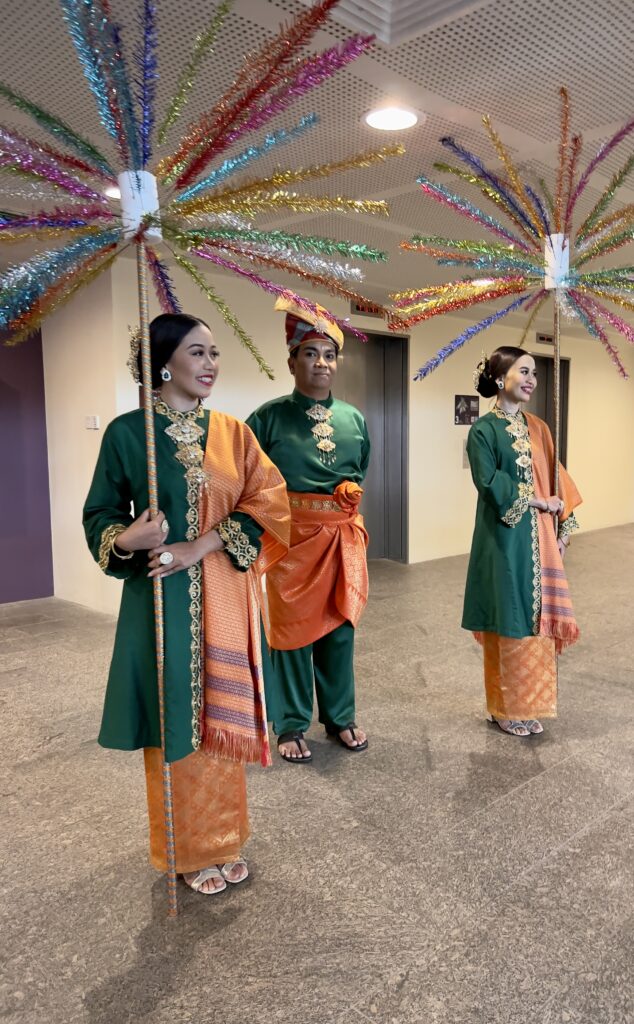
Dancers from the Gala Event

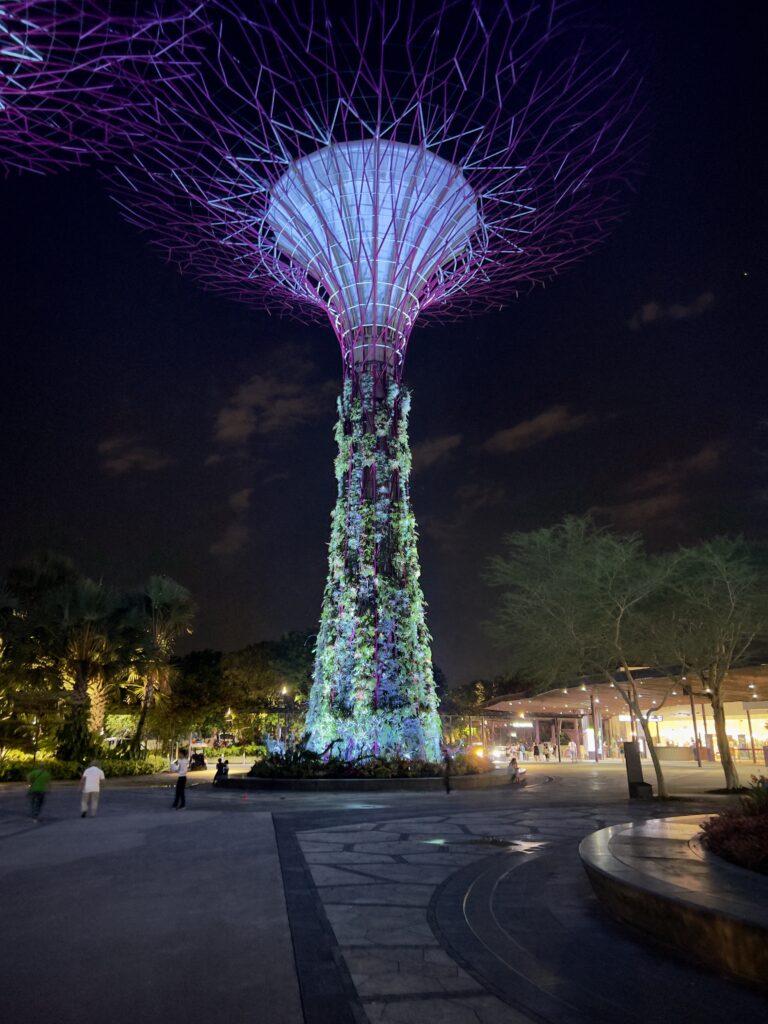
Our first day was topped off with a night visit to the Flowers by the Bay, a spectacular indoor garden that is magical at night.  The cruise sponsor held a dinner there for about 500 people, and there were terrific dance displays by various cultural dance groups.  

Gardens by the Bay at Night

Day 2 started with the search for a specific camera store that could supply a lens filter, so we hopped on the subway to find it – first time we have ever been on a train where you only need your bank card (not a special metro or transit card) to use the service – very easy!  We found the store with a little guidance that was volunteered by a nice local man, who walked us through various hotel lobbies and shopping mall shortcuts in order to get out of the heat.   Very kind fellow who was hesitant to take our small gesture of thanks, because it is Ramadan so he is fasting.  He agreed however, that he could just save it and use when the day’s fast was over.  Phew, no offensive behavior by us Americans! 

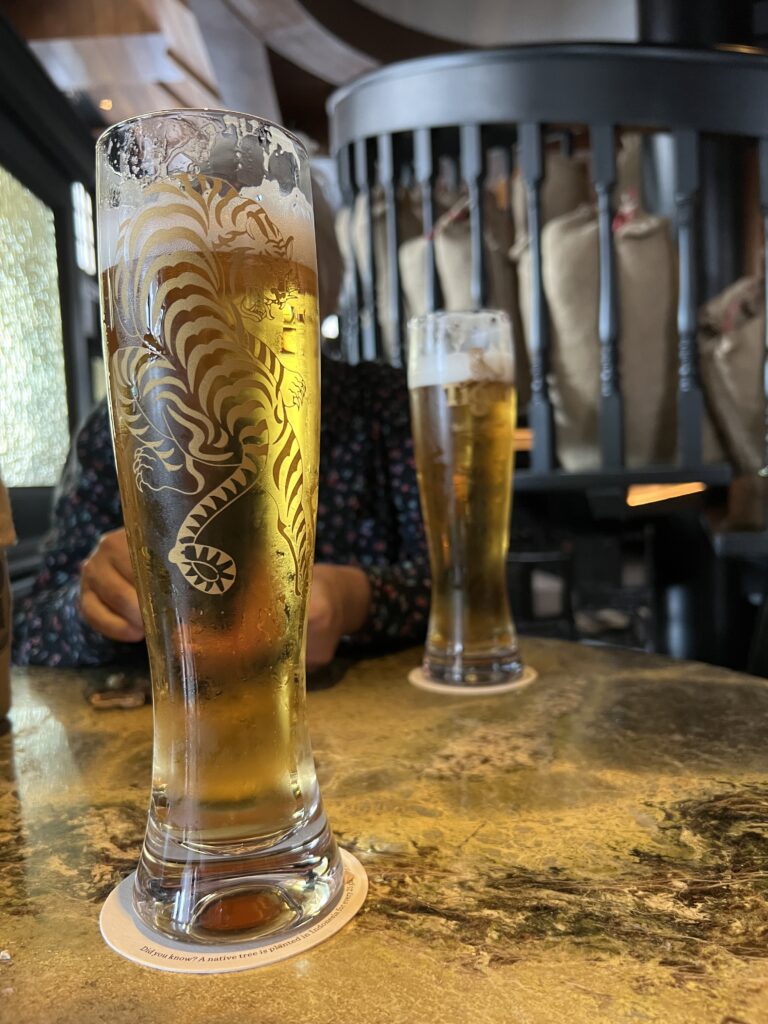
After securing the camera lens filter, we celebrated with a quick beer at the Long Bar at Raffles, one of Joe’s old haunts when he was in Singapore on business.   Then a quick tapas lunch, back on the subway, and back on board the ship before we left for another couple of Malaysian stops. 

Tiger Beer in the Long Bar


Singapore never fails – one of the most enjoyable places we know!  Very hot and very humid, but delightful nonetheless.   

Best to everyone, Joe and MA

Read More
Joe Benning
Exploring Vietnam

Five Days in Vietnam

March 24, 2023

“Brits drive on the left side of the street; Americans on the right. Vietnamese drive on all sides—and the sidewalks.”  

Tour Guide

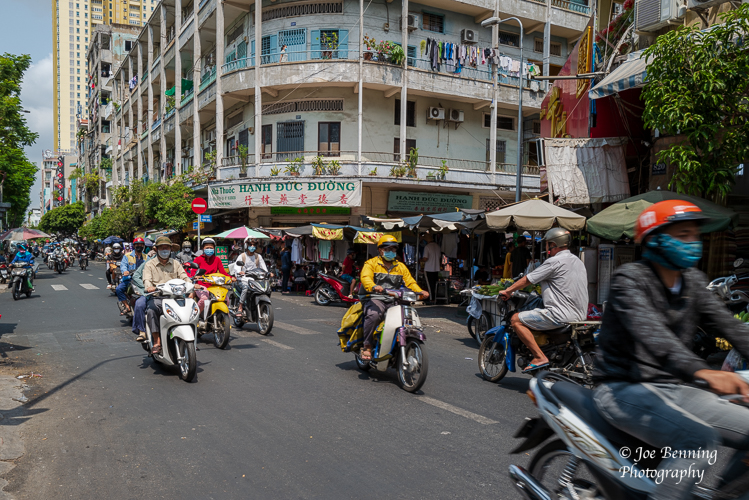
Vietnam is a study in barely controlled chaos. The comment from our tour guide about driving is essentially accurate. There are motorcycles everywhere and they drive where they find room. Traffic lights and cross walks are merely suggestions. So how do you cross the street? Basically you close your eyes, walk into the street, keep a steady pace and pray.  The motorcycle drivers are very adept; if you keep a steady pace they will steer around you. But it is a heart stopping experience. 

We spent 5 days on land in Vietnam; 2 days in Ha Long City, one day in Hue (Chan May) and 2 days in Saigon. Technically the proper name for Saigon is Ho Chi Minh City, but nobody except party apparatchiks uses that name. They just call it Saigon. 

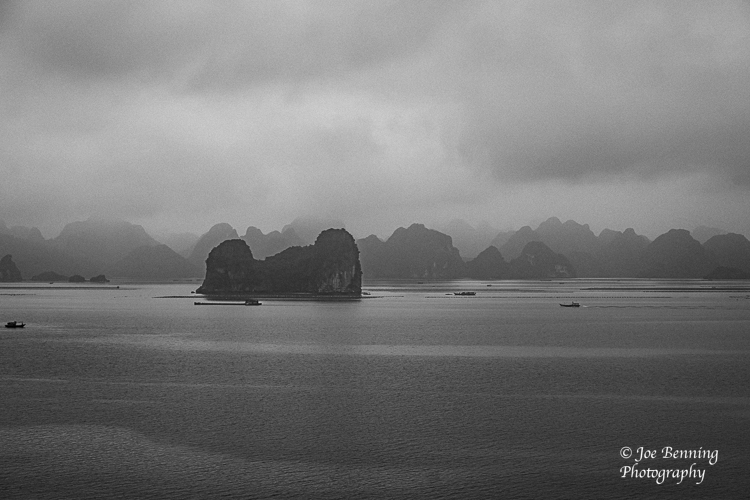
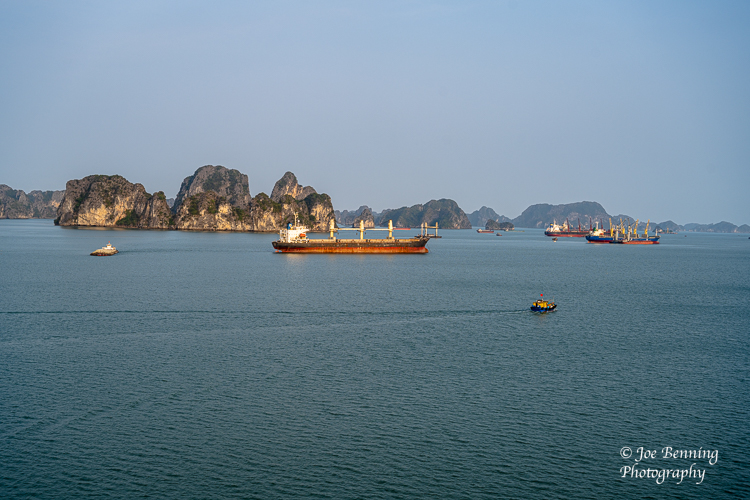
Anyway we started in the North, docking in Ha Long Bay. The name refers to a descending dragon, which according to the local lore, refers to the dragons the gods sent as protectors of the people. Ha Long Bay, a UNESCO site, is huge encompassing about 600 square miles, and is spectacular to see. Located in the Gulf of Tonkin in the Van Don District, the Bay contains thousands of limestone karsts and islets.  

A black & white photo of Ha Long Bay on a cloudy day
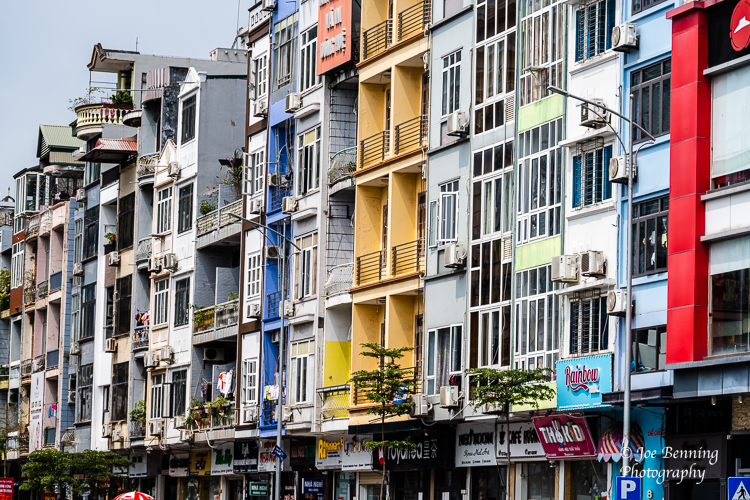
Ha Long City Side Street
Photo of limestone rock formations jutting out of Ha Long Bay while various boats sail on the bay

Scientific research indicates that prehistoric humans lived there thousands of years ago. Three successive ancient cultures  were the Soi Nhu (18,000 – 7,000 BC), Cai Beo (7,000 – 5,000 BC) and Ha Long (5,000 – 3,500 BC). Today Ha Long Bay is a major tourist attraction.

The next place we stopped at was Chan May in central Vietnam. Chan May is located in the south-east corner of the Thua-Hue Province, with the Truong Mountains serving as a back drop. 

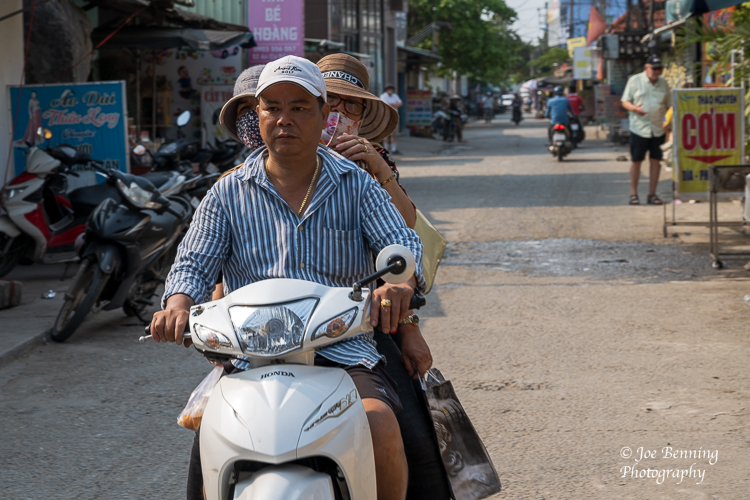
Chan May, Vietnam — March 20, 2023. Three people squeeze onto a motorcycle for a ride in a Chan May village.
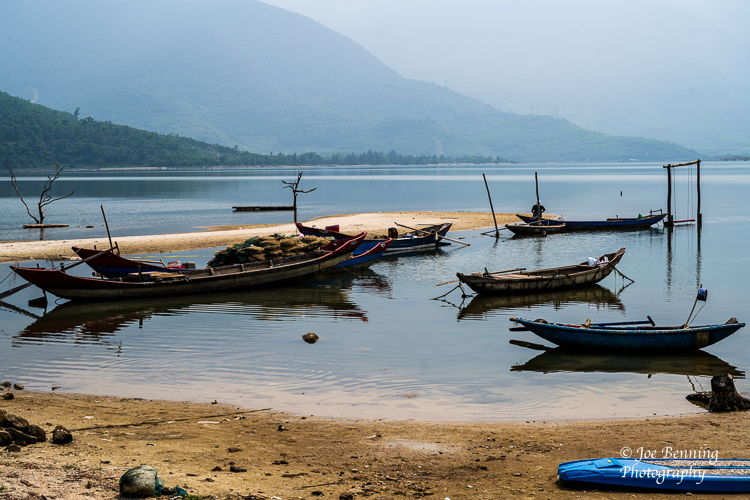
Small boats tied up in a laggon in Chan May
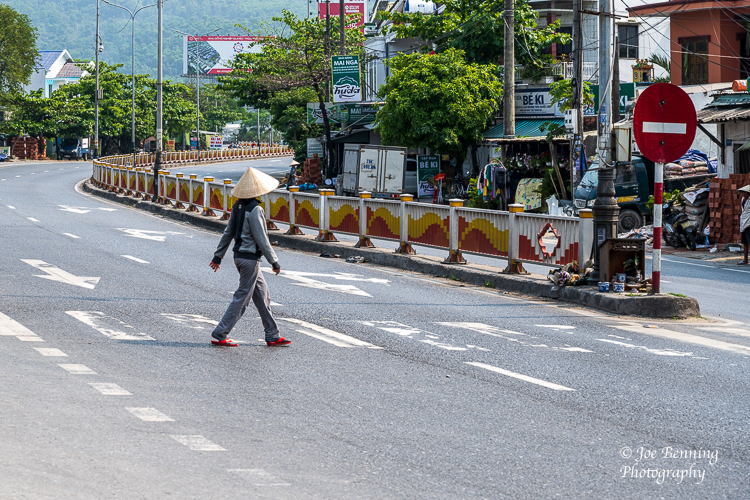
Vietnamese Woman Walks Across Street in Chan May

While we were in Chan May we took a tour called “Through the Eyes of a Local” and visited a small village, a village market, a Buddhist Temple, a Pagoda and a fishing village that had a restaurant and bar on the beach. Needless to say we took full advantage of the bar. 

After Chan May we sailed to Saigon where we stayed for 2 days. While there we visited the Presidential Palace  (now a museum) the Viet Nam Post Office (truly an example of exceptional French architecture) the Minh Phuong lacquer factory, the Ben Than Market, Chinatown, a Chinese temple and a rather elaborate Saigon coffee shop.

One thing we noted was that as we went further South, things seemed to be less rigid. For instance, for the duration of the trip we were required to have stamped Vietnamese papers in our possession while on land. And as we got off the ship in Ha Long Bay and Hue, there were Vietnamese soldiers checking our papers.  In Saigon however, the soldiers and customs officers were nowhere to be seen. 

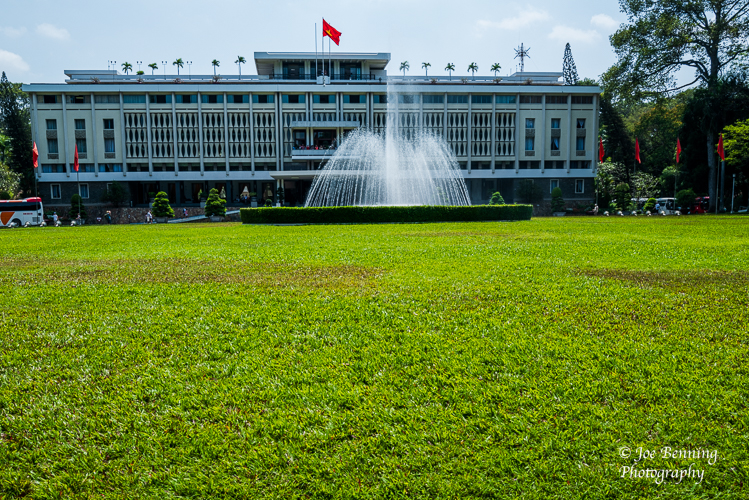
Photo of the iconic Presidential Palace in Saigon; it is now a Museum
Saigon, Vietnam — March 23, 2023. Photo of motorcyclists on a city street in Saigon, Vietnam.
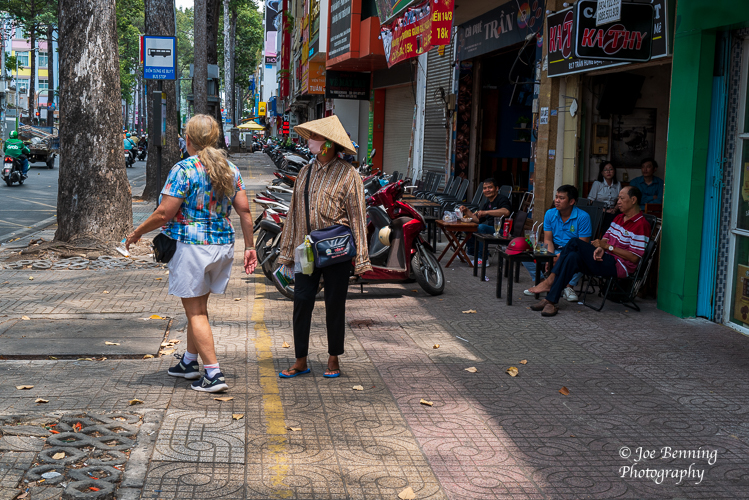
March 23, 2023. A tourist walks past a Vietnamese woman wearing an iconic leaf hat on a Saigon side street.

Saigon was a lot more freewheeling than up North. The city os growing rapidly and lots of high rise apartment buildings are going up. For instance in 1975 the population was 2.5 million; now it’s about 9 million. So far Saigon, which also features lots of high end stores, seems to be thriving. But one thing stood out. Almost no matter where you looked, lots of trash was strewn about. The authorities claim that they are working on it. It’s worth keeping in mind that Singapore, now one of the world’s cleanest cities, used to have a similar problem. 

JFB

Read More
Joe Benning
The Republic of Taiwan

March 17, 2023 (AKA Patrick’s Day)

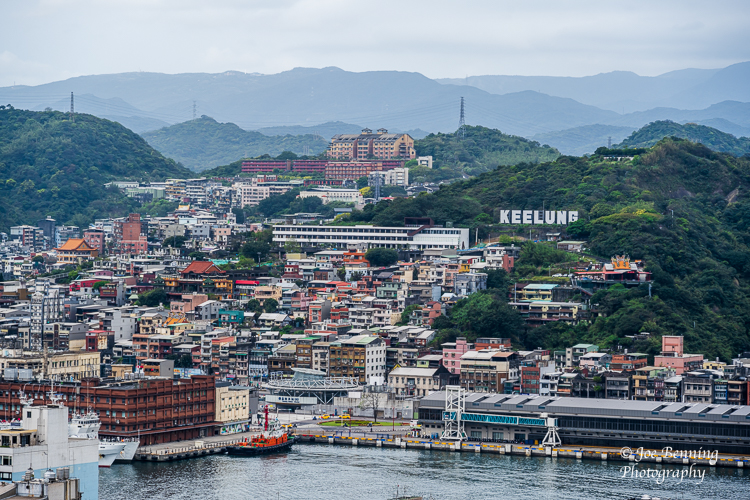
We sailed into the port city of Keelung Taiwan on March 14 bypassing a scheduled port-of-call a day earlier because of bad weather. After Keelung we sailed into the port city of Kaohsiung.  Keelung, the second largest port in Taiwan, has a population of about 360,000; Kaohsiung with a population of 2.77 million is much larger and more modern.

The captain of the ship has told us that we are sailing in Chinese waters by permission. That might explain why our internet connection has once again become an on-again, off-again proposition. The Chinese government of the Peoples Republic of China (PRC),  an authoritarian surveillance state, is not exactly cooperative when it comes to providing access to information sources outside of its control. 

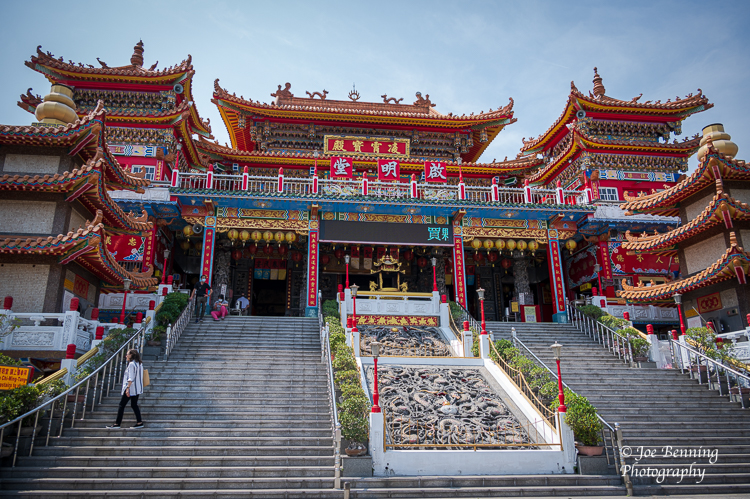
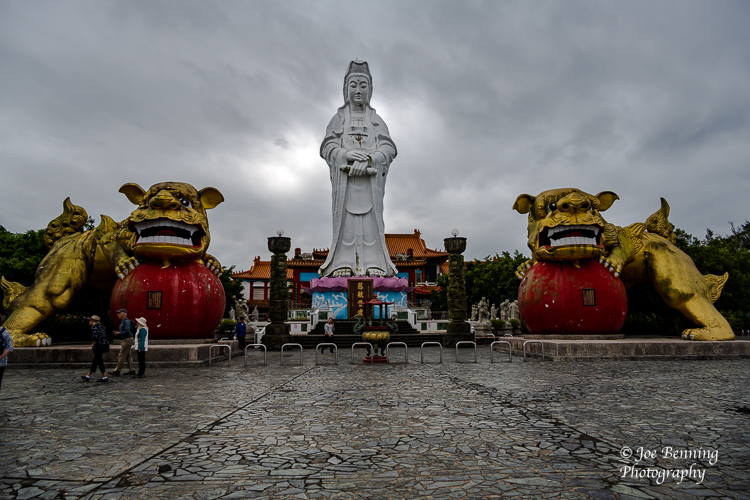
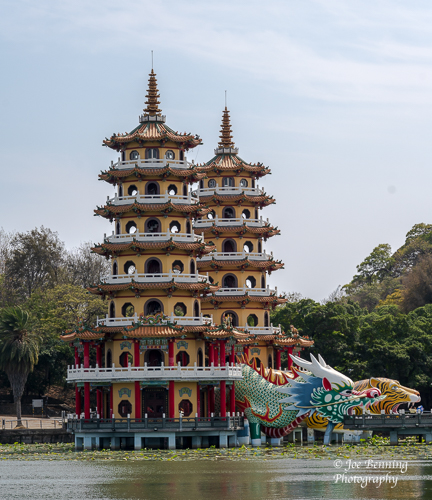
Be that as it may, Taiwan is a land of Temples. Lots of them. In Keelung we visited a giant Buddha and temple; in Kaohsiung we stopped in at the iconic Chi Ming Tang Temple; a Confucian temple and numerous Pavilions at Lotus Pond. 

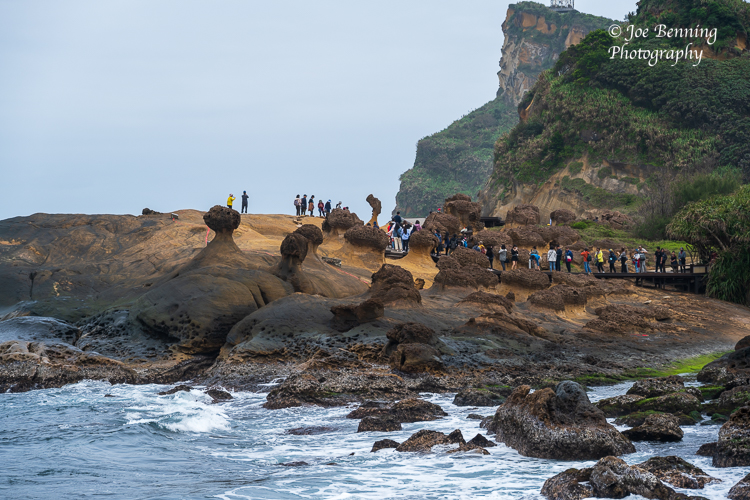
It wasn’t all temples all the time though. For instance, we visited Yehliu Geopark near New Taipei City and saw some amazing rock formations created over the centuries by the ocean washing over the hoodoo stones there. Pagodas and Pavilions surrounded Lotus Pond—a man-made pond that we visited across the street from The Chi Ming Temple. 

All in all it was pretty interesting. That said, the architecture was pretty uneven. Some places were new and modern especially in Kaohsiung. In others, like the port city of Keelung, the architecture was unappealing, to say the least.

And now it’s off to Vietnam. First stop is scheduled for March 18 at Halong Bay.

Some photos are below.

JFB

Keelung Port
Chi Ming Tang Temple
Giant Buddha
Pavillion by Lotus Pond
Tourists on the Rocks
Read More
This website uses cookies to improve your experience. Cookie Policy