
Back to Croatia
On Tuesday we headed to Zadar, Croatia to a vineyard named Kraljevski Vinogradi, which translates to Royal Vineyards. Needless to say we went there for a lunch and wine tasting. We thus fulfilled a cardinal rule of travel: Never miss a wine tasting.
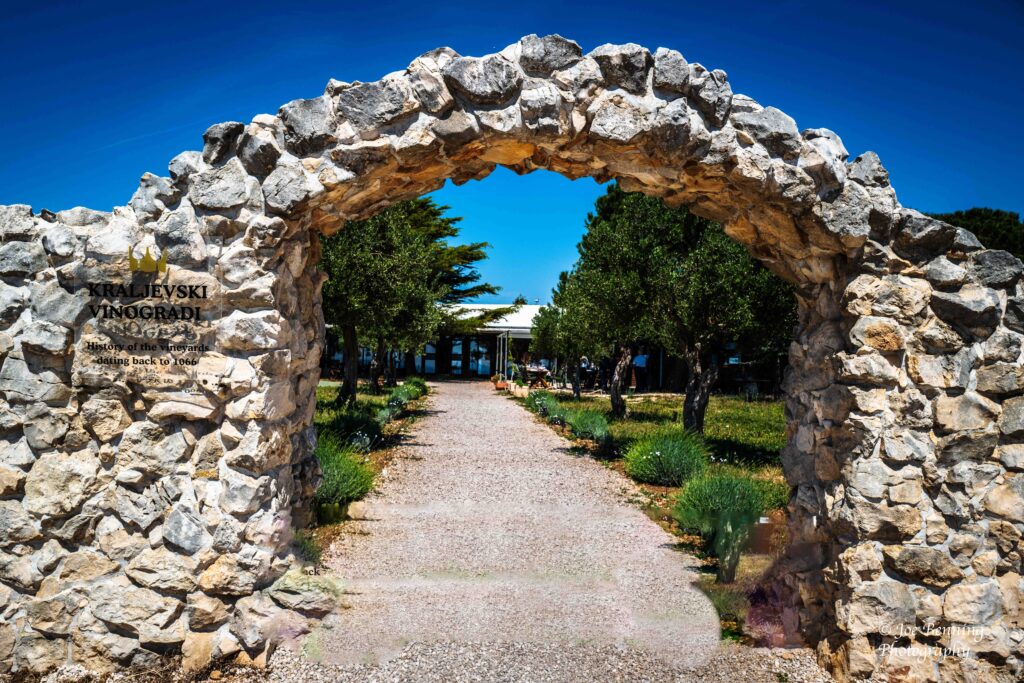
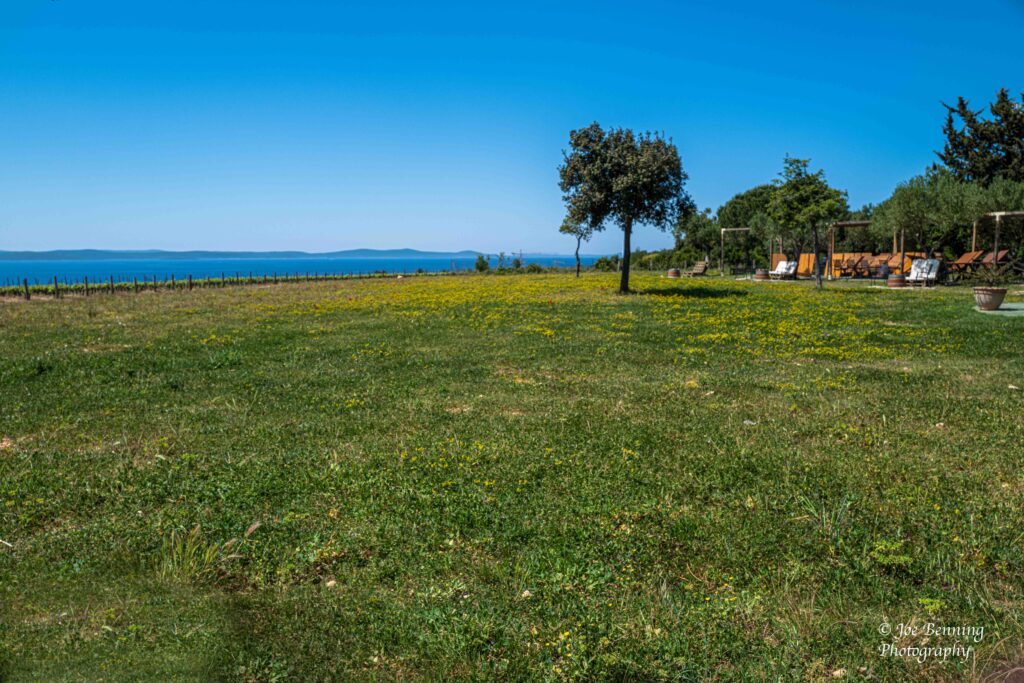
The vineyard is located way up in the hills with a breathtaking view of the acres of grapevines leading down to the Adriatic Sea, which is clearly visible as well. As it happens, a chunk of the equity in the vineyard is owned by the Zadar Benedictine nuns.

Lunch was very nice and so was the wine. We tried several glasses. First came the Rosé Scuro. Next was a white wine made with the Pošip grape that is primarily grown in the Dalmatian coast of Croatia. Finally there was a red wine made with a combination of ancestral Zinfandel and Dobričić grapes. Those grapes are primarily grown in the Dalmatian coast of Croatia as well.
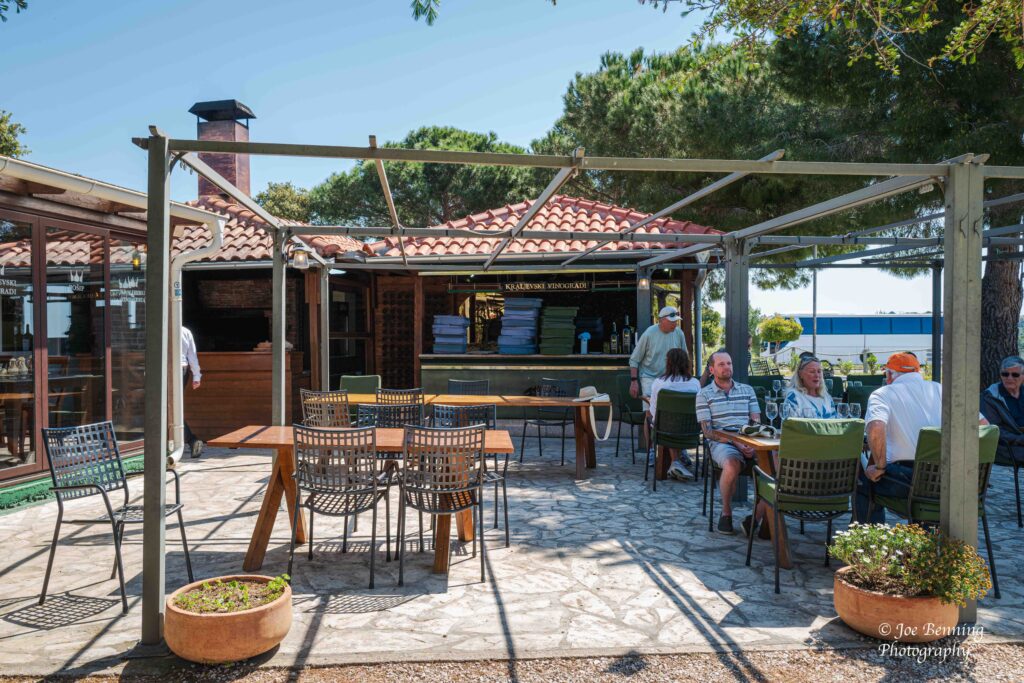
After lunch, which consisted of a tuna pâté, cheeses and figs, we wound up buying a bottle of the Punta Skala white. All in all it was very relaxing and a highly recommended way to spend an afternoon.
JFB
Trogir, Croatia
Trogir, like Dubrovnik, is a beautiful city. Unlike Dubrovnik, it is very small with a population of just over 10,000 people. And unlike Dubrovnik, when we were there, the weather was superb.
In 1997 the center of Trogir was included in the UNESCO list of World Heritage Sites for its Venetian architecture.
Trogir spent a couple of hundred years fighting with the Venetians. Venice emerged victorious and ruled the city from 1420 until 1797, at which time Trogir became part of the Austro-Hungarian Empire with a brief interlude (from 1806 to 1814) when Napoleon ruled. Trogir (and Croatia) did not become truly independent until 1991 when the Berlin Wall came down with the implosion of the Soviet Union, and with it Yugoslavia.
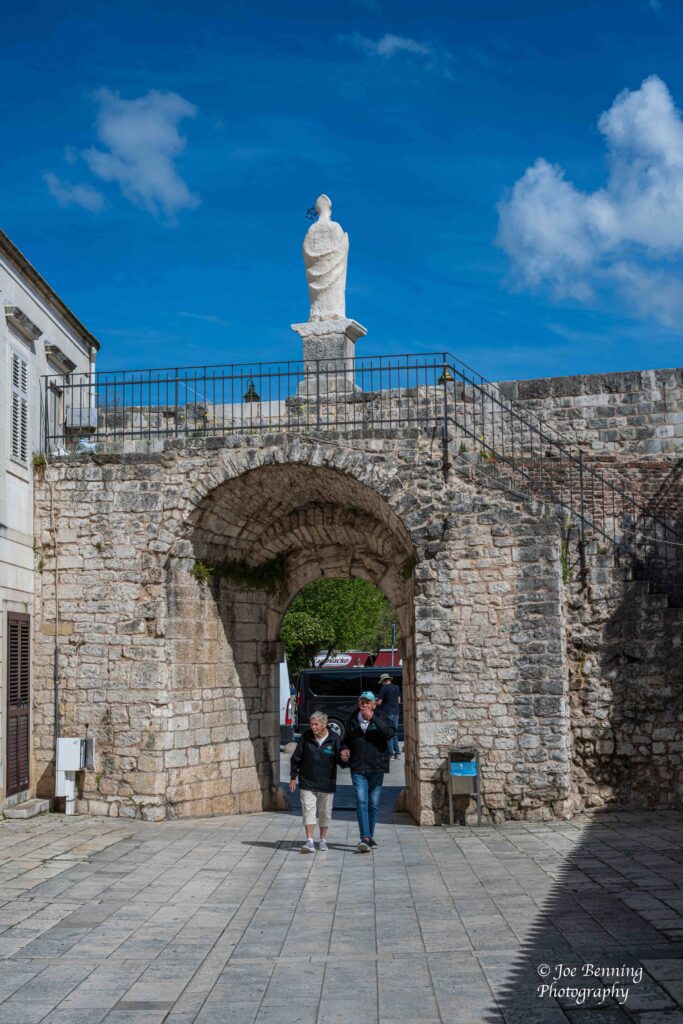
Trogir has a strong urban tradition that goes back 2,300 years. That tradition was mainly influenced by the Greeks, Romans and Venetians. One of the first sights you see in when entering Trogir is the Cathedral of St Lawrence, also known as Trogir Cathedral.
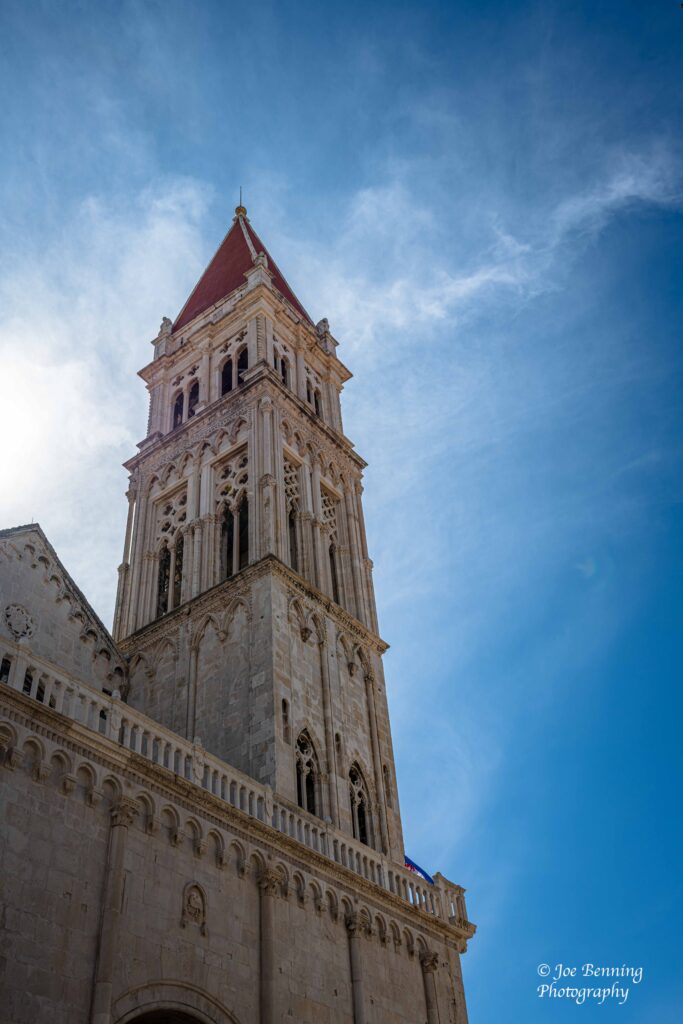
Its architectural style can be described as Romanesque-Gothic. Since it has been around so long it is an amalgam of existing styles as additions were put on through the years in various styles as they became fashionable.
Another sight nearby is the city clock tower. Originally it was the Church of St Sebastion, dedicated to him because (it was said) he was instrumental in averting the plague which was then sweeping Europe.

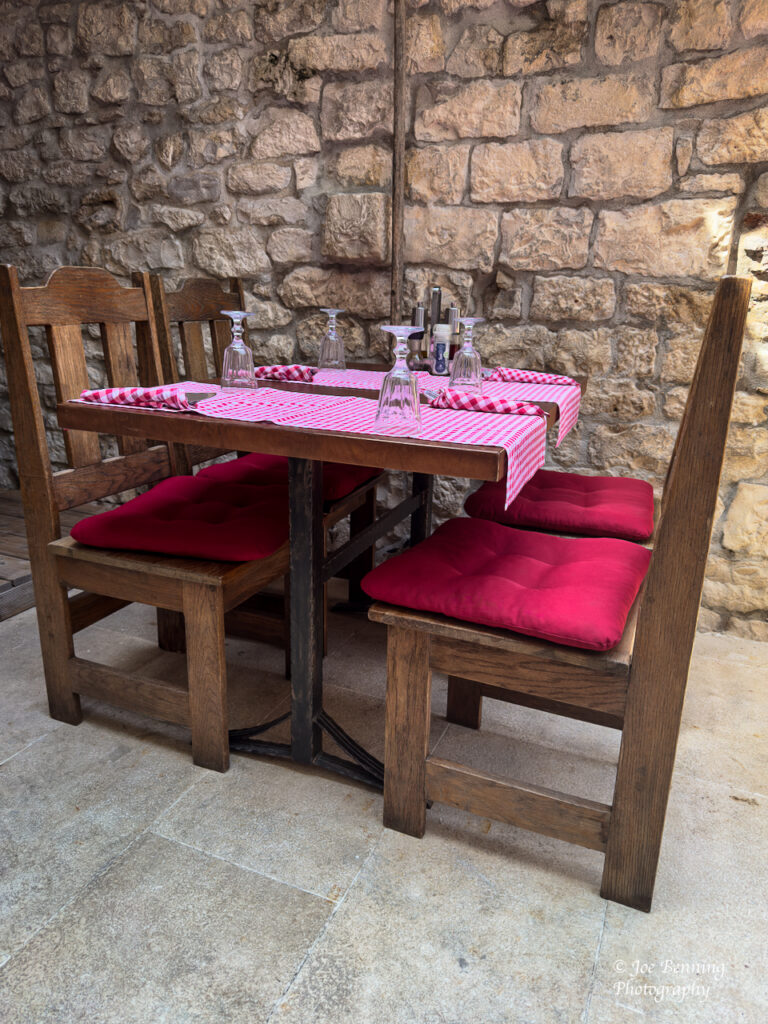
We ambled around the city some more, saw some interesting side streets and finally decided to have lunch in Trogir.

In the end, Trogir is a beautiful city with lots of history attached to it. Interestingly enough, the citizens of Trogir have historically been very jealous of their personal freedom. Something to think about.
JFB