A Second Day in Lisbon

For the second day we decided to tour Lisbon proper. What is truly amazing is that Lisbon is spotlessly clean. Which is what we saw pretty much everywhere in Europe—so maybe it shouldn’t be amazing at all. 

One place we visited was a former monastery of the Order of Saint Jerome that was secularized in 1833. Jerónimos Monastery, begun in the 1500s, is a magnificent building. It is an example of Portuguese Gothic Manueline architecture. Eventually It was turned over to a charitable institution that presents fine art and maritime exhibitions there. 

Jerónimos Monastery in Lisbon Portugal

It turns out that Lisbon has a statue (which we visited) modeled after the Christ the Redeemer statue in Brazil. The one in Lisbon is named Christ the King.

Christ the King

Nearby there is a bridge that looks very much like the Golden Gate Bridge in San Francisco.  Not surprising since it was built  by the same company (U.S. Steel International) that built the San Francisco Bay Bridge. It is a suspension bridge, about 1.4 miles long and connects Lisbon to the municipality of Almada.

The Ponte 25 de Abril in Lisbon

The bridge was originally named the Salazar bridge after the Prime Minister (essentially a dictator) who ordered the construction in 1966. But he was eventually deposed. In 1974 it was renamed the April 25 bridge to commemorate the day he (Salazar) was deposed in a revolution that brought democracy to Portugal.

Finally we paid a short visit to Eduardo VII Park, before heading out to lunch in a fairly swanky restaurant. 

Tourists Overlooking Eduardo VII Park
Restaurant in Lisbon

Next stop: Spain.

JFB

Docking in Lisbon, Portugal

After leaving Portimão, we sailed to Lisbon (AKA Lisbao) and we docked there for 2 days.  Upon arriving we headed out for Sintra, reputed to be a charming medieval town.  I can report it was everything it was cracked up to be. 

Sintra

Sintra is a small town with population about 385,000 people. It is densely populated and it is a major tourist attraction, but it certainly isn’t a tourist trap. It is picturesque, with several palaces, castles, parks and gardens. It is famous for its Romanticist architecture and is designated as a UNESCO World Heritage site. As it should be. 

The Town of Sintra Portugal

Sintra is not just a beautiful city. It is also very wealthy; in fact it is one of the wealthiest cities in Portugal in addition to being one of the wealthiest cities on  th entire Iberian peninsula. Not surprisingly,  it continues to rate as one of the most desirable places to live in Portugal. It also has the largest ex pat community on what the locals consider to be the Portuguese Riviera. 

The Sintra National Palace; now a Museum

All in all, Sintra has an excellent reputation. It is well deserved. 

Sillhouettes in Sintra
Shopping in Sintra
Old Fashioned Telephone Booth

JFB

Portimão Portugal

We said our farewells to North Africa and headed out to Portimão Portugal. That is about 336 kilometers (208 miles) away as the crow flies. The first significant place we visited was Fort São Vicente in Sagres, or Fortaleza do Cabo de São Vicente.

Fortaleza do Cabo de São Vicente

Fort São Vicente was built in the 16th century to protect a small coastal strip and an existing monastery. The fort was destroyed in 1587 by none other than Sir Francis Drake (described as either a privateer or a pirate depending on your point of view.) 

An Old Church in a Fortress

Anyway the site was rebuilt in 1608. A lighthouse was added in the mid 19th century and restoration work was ongoing in the mid 2000s. 

The surrounding area is a big fishing area, but the cliffs are treacherous. Nevertheless fishermen come (and are clearly visible) fishing on the rocks. 

Cliffs and Sea in the Algarve Region

After exploring the grounds of the fort we headed out to Lagos. When we got there we visited the town square that housed the Church of St Maria Graca (Our Lady of Grace). The church, which dominated the area, which was completed in the early 15th century and gothic in style, was begun in 1380. 

Church in Town Square Lagos, Portugal

After looking around the town square we explored the neighborhood which was highly commercialized. Then we headed out to the port where we started the day, but without buying anything. All things considered, it was a good introduction to Portugal.

Hats for Sale

JFB 

Visiting Tangier, Morocco

Tangier is located in the northwest of Morocco, on the coasts of both the Mediterranean Sea and the Atlantic ocean. Tangier has a population of about 1.25 million people. The city is located on a bay in the strait of Gibraltar, about 17 miles from Spain. 

A Port in Tangier; Spain is visible in the distance

It has always been a strong supporter of the United States. It was the first nation to recognize the independence of the US. They did so implicitly in 1777 and by treaty in 1786. 

When we visited Tangier we went on a walking tour of the city. Unlike Casablanca though, Tangier is extremely hilly. So we walked up and down the hills. Got a good night’s sleep afterwards. 

Side Street in Tangier

The tour included a visit to a souk, where the local people do their shopping. Not surprisingly, there is a wide variety of things for sale ranging from pocketbooks to shoes to carpets and fruits and vegetables. 

Pocketbooks for Sale in Souk
Shoes for Sale by a Street Vendor in Tangier

After visiting the souk we had lunch in the (first rate) Grand Hotel Villa de France and passed by Tangier’s contemporary Art Museum. All in all we walked all over around the city and found it to be charming, open and tolerant. A good place to visit. 

Grand Hotel in Tangier
Museum of Contemporary Art–Tangier

JFB

Casablanca

We finished sailing through the Canaries and, after a sea day, we docked in Morocco. While in Morocco we visited Casablanca, and then a day later we made our way to Tangiers. And yes, this was the same Casablanca from the the movie starring Humphrey Bogart and Ingrid Bergman. The one where “Play it again, Sam” referencing As Time Goes Bye  was made famous. 

Of course we had lunch in Rick’s Cafe.

Inside Ricks Cafe in Casablanca

Except there was a little fly in the ointment: the movie was filmed entirely in Hollywood; the story actually took place in Tangiers and Rick’s Cafe was not the real one. But pretending is fun too. That’s what movies are all about anyway.

We didn’t spend the whole time in Casablanca retracing the steps of Humphrey Bogart—we actually did some sightseeing. One of the chief attractions was the Hassan II Mosque. 

Photo of the Hassan II Mosque

It’s a huge place and an architectural masterpiece. In addition to the mosque itself, there were several buildings on the grounds. So we took a look around before going into the mosque itself. 

Corridors in Hassan II Mosque
Grounds of the Hassan II Mosque

We were allowed inside the mosque without any problem. Services were not in progress where the men and women are separated, so we just had to remove our shoes to walk around inside the mosque proper. Once inside the mosque, the grandeur and scale of it are truly impressive. It’s the kind of thing that has to be seen.

Inside the Hassan II Mosque

So next time you are in Casablanca, it’s worth a look.

Next stop: Tangiers. 

JFB

Arrecife in the Canaries

Not so fast on Morocco—I forgot that we stopped off at Arrecife first before heading over to Casablanca. The first destination on Arrecife was Lanzarote at the Timanfaya National Park. And was it ever crowded. Both locals and foreign tourists converged on the place.

National Park of Timanfaya in Arrecife

It’s easy to see why the park gets so crowded—there is a lot to see.  And the crowd didn’t tail off as the day progressed. It got bigger.

Crowds at Timanfaya Park

The landscape in the park is moon like. It was formed by volcanic eruptions, some of them as recent as the late 18th and mid 19th centuries.  So, as a result the landscape looks a little like the surface of the moon. After looking at the landscape, we had coffee and snacks at a café in the park.

Lava Field in Arrecife
Cars Line Up in National Park of Timanfaya

Then we headed off to El Golfo where we went up to a lookout point toward the top of a large hill. El Golfo is a small fishing village on the Western coast of Lazarote. It is best known for its dramatic volcanic landscape near Charco de los Clicos, which is an equally dramatic  green lagoon. Not surprisingly it is also a popular spot with tourists and photographers. 

Boats at the bottom of a Hill in El Golfo

After El Golfo we went to a wine tasting as well as a … salt tasting. The reason for the salt tasting? There are historic slat flats near El Golfo that used to supply a large amount of salt to the market.  And so we tasted salt. Or had the opportunity to.  In the end, we declined the offer although many of fellow tourists tried it out. 

Salt Flats of Lanzarote

Anyway, it was a pretty interesting tour to go on. After leaving Arrecife we headed out to Morocco where we went to Casablanca and Tangiers. 

So, when we hit Casablanca: “Here’s looking at you, kid”.

JFB

Another Day in Tenerife

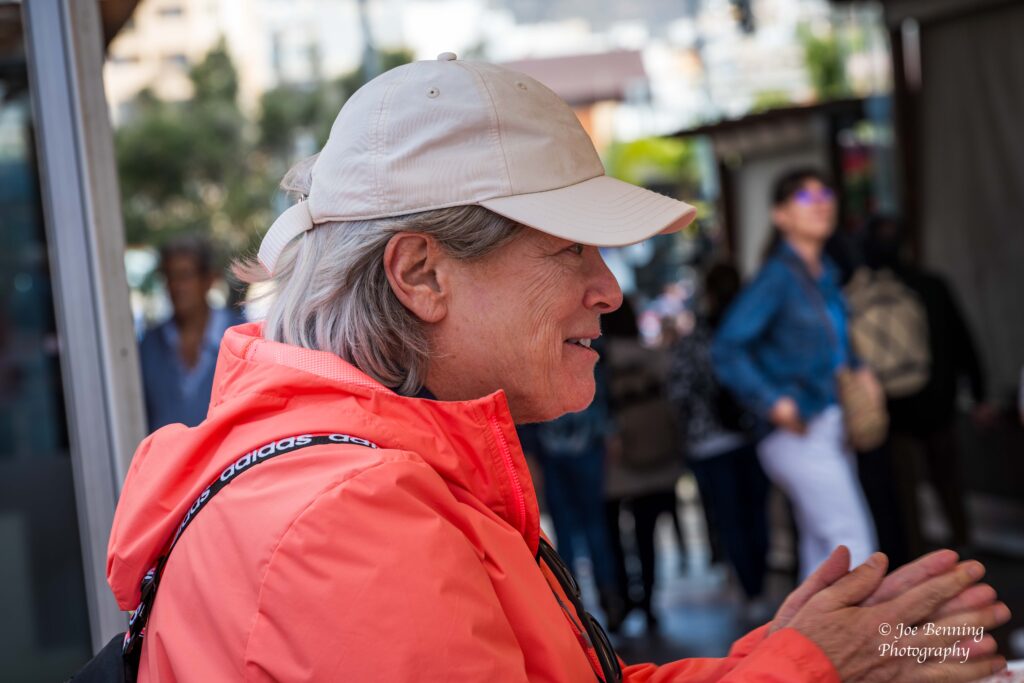
We spent a second say touring around Tenerife with a terrific guide. Not only was she an excellent English speaker, she was a great problem solver and had a wonderful sense of humor. 
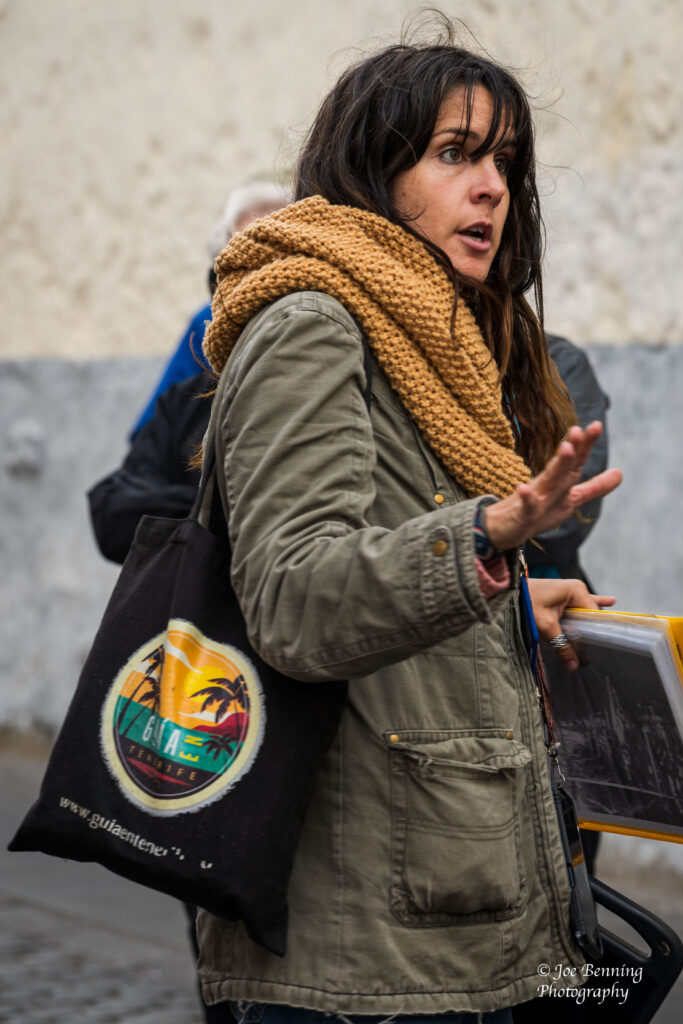
Santa Cruz / Tenerife Guide

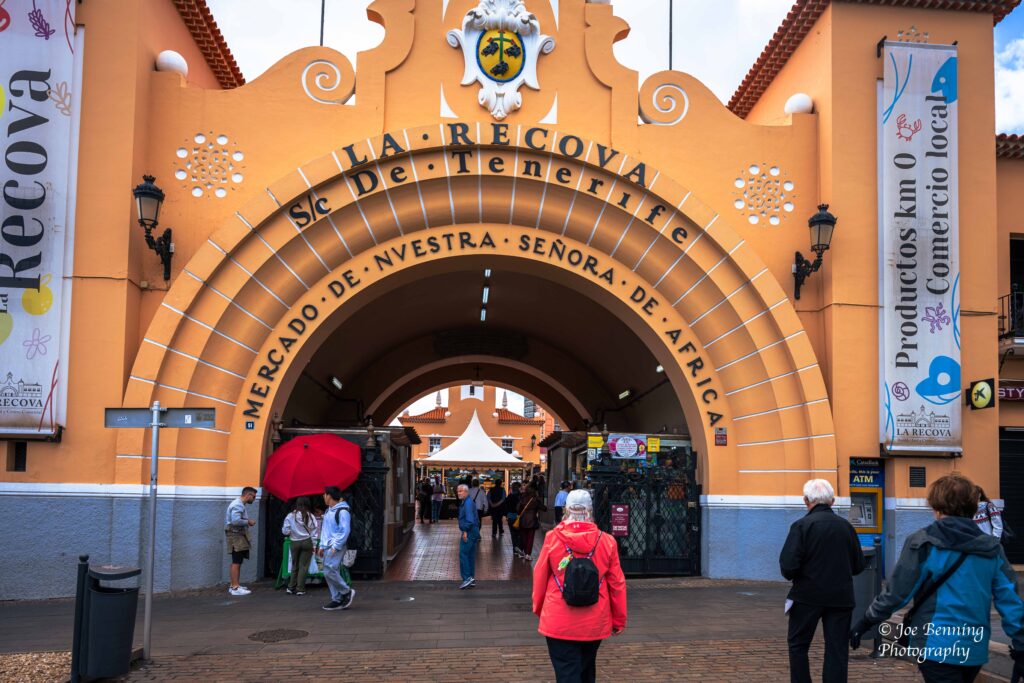
We visited a pretty crowded farmer’s market where there were plenty of fruits and vegetables for sale. This was a market where the locals shopped and was mostly located indoors. 
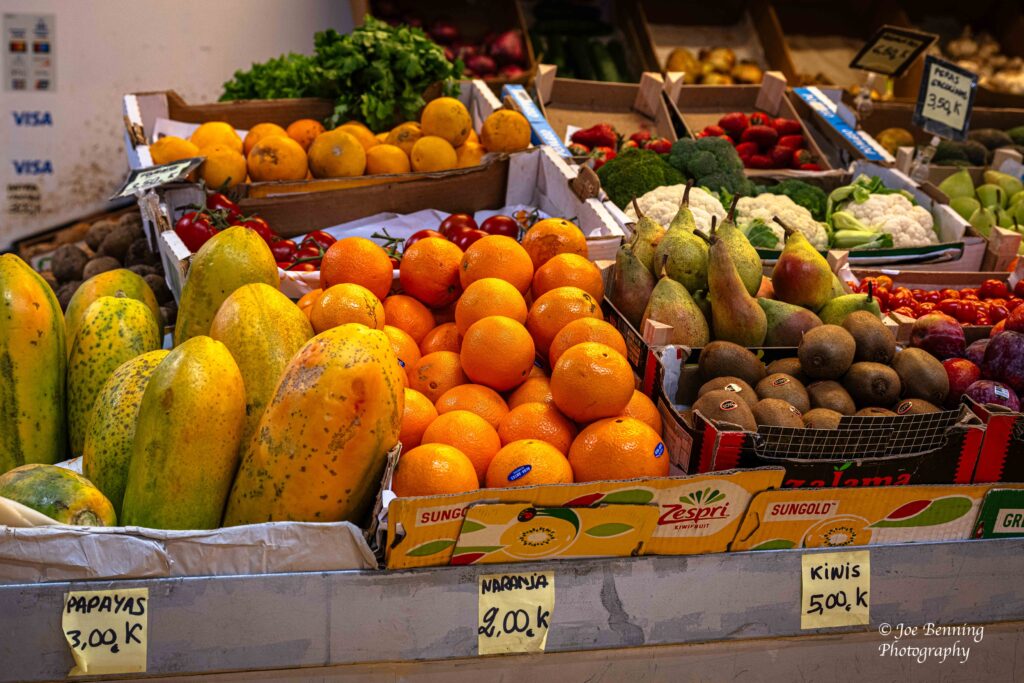
A Farmers Market in Tenerife

We also got a good look at some of Tenerife’s architecture, including some engineering feats like the bridge pictured below. 
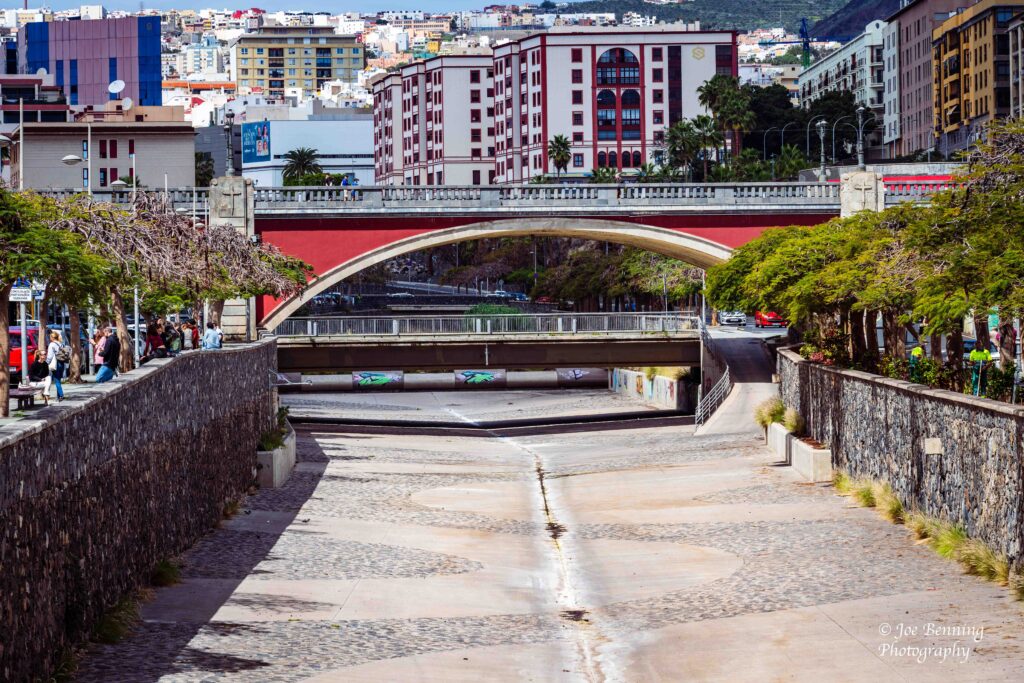
Bridges in Tenerife

Finally we went to an outdoor market where all kinds of merchandise was on sale and on display. We bought some products made by local artisans and then headed back to the ship. 
Outdoor Market in Tenerife
Mary Anne Shopping in Tenerife

Next stop, Morocco, on the North coast of the Mediterranean in Africa.  

JFB