April 27, 2025 | Joe Benning

Trogir, Croatia

Trogir, like Dubrovnik, is a beautiful city. Unlike Dubrovnik, it is very small with a population of just over 10,000 people. And unlike Dubrovnik, when we were there, the weather was superb. 

In 1997 the center of Trogir was included in the UNESCO list of World Heritage Sites for its Venetian architecture. 

Trogir spent a couple of hundred years fighting with the Venetians. Venice emerged victorious and ruled the city from 1420 until 1797, at which time Trogir became part of the Austro-Hungarian Empire with a brief interlude (from 1806 to 1814) when Napoleon ruled. Trogir (and Croatia) did not become truly independent until 1991 when the Berlin Wall came down with the implosion of the Soviet Union, and with it Yugoslavia. 
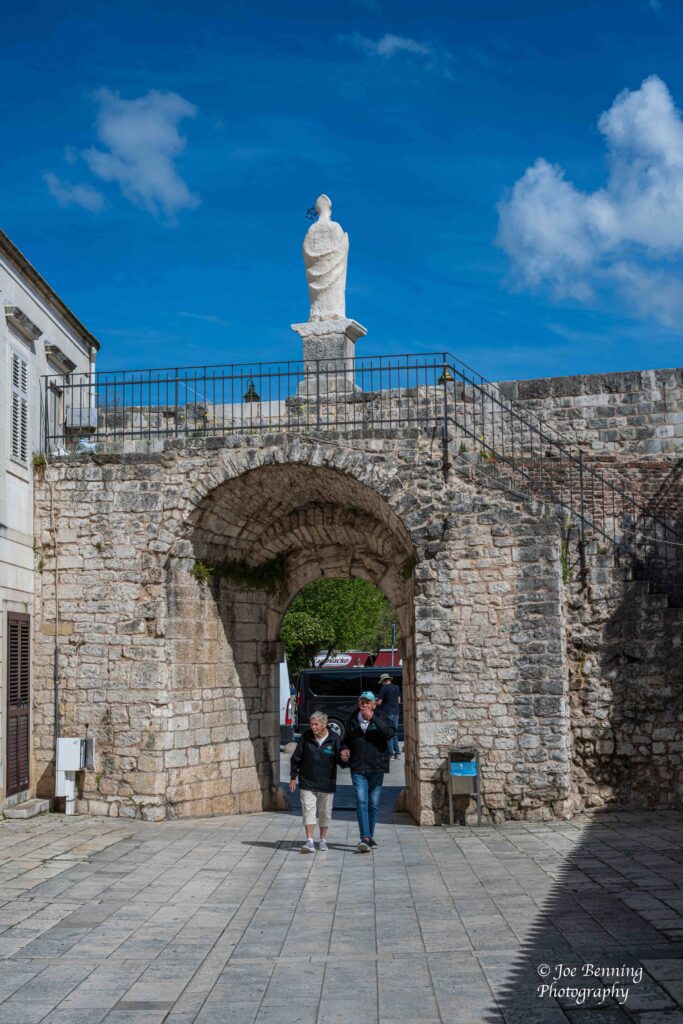
Tourists Walk through a Gate to Trogir

Trogir has a strong urban tradition that goes back 2,300 years. That tradition was mainly influenced by the Greeks, Romans and Venetians.   One of the first sights you see in when entering Trogir is the Cathedral of St Lawrence, also known as Trogir Cathedral. 
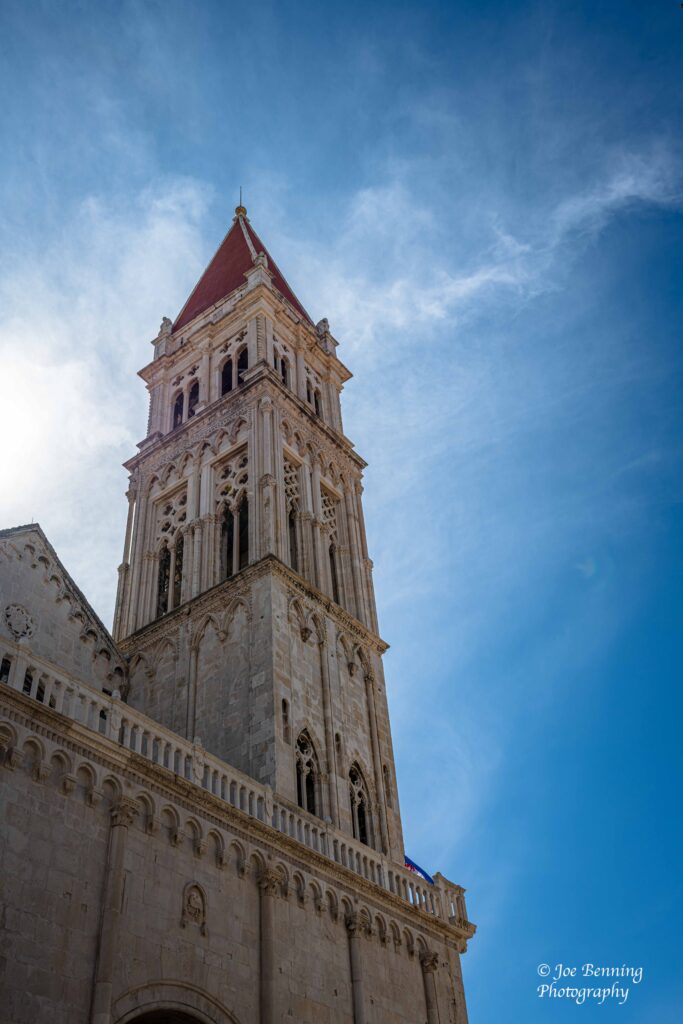
Cathedral of St Lawrence

Its architectural style can be described as Romanesque-Gothic. Since it has been around so long it is an amalgam of existing styles as additions were put on through the years in various styles as they became fashionable. 

Another sight nearby is the city clock tower. Originally it was the Church of St Sebastion, dedicated to him because (it was said) he was instrumental in averting the plague which was then sweeping Europe. 

Clock Tower in Trogir, Croatia

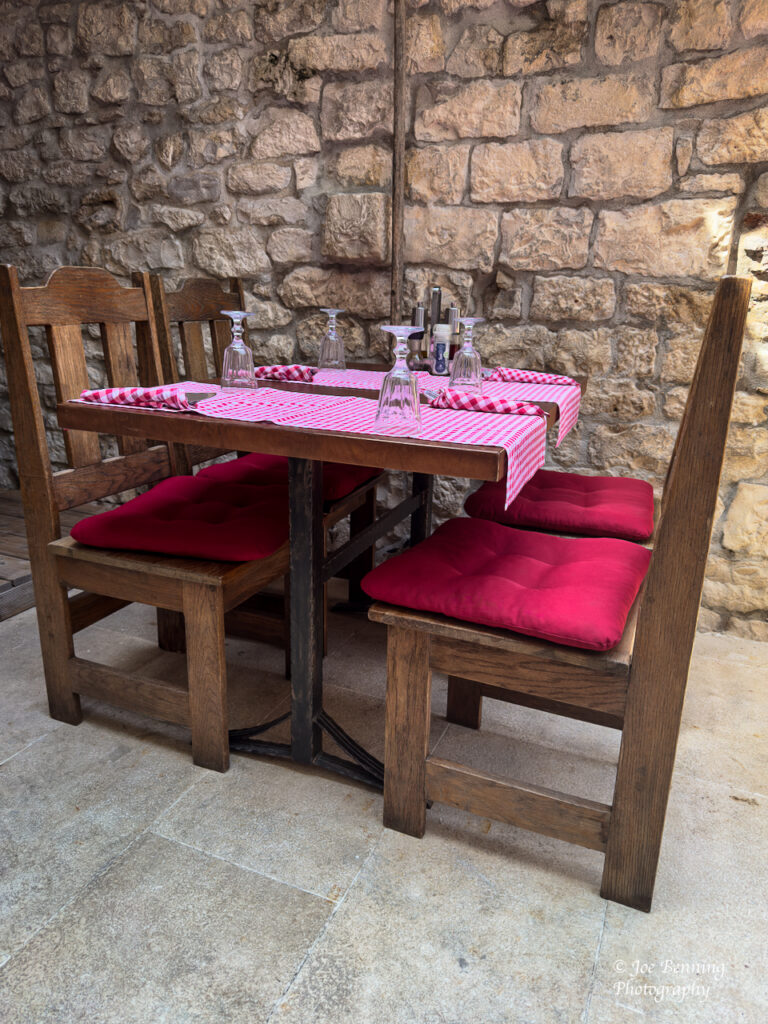
We ambled around the city some more, saw some interesting side streets and finally decided to have lunch in Trogir.

Side Street in Trogir
Table in Trogir Restaurant

In the end, Trogir is a beautiful city with lots of history attached to it. Interestingly enough, the citizens of Trogir have historically been very jealous of their personal freedom. Something to think about. 

JFB
Share: Facebook Twitter Linkedin
April 27, 2025 | Joe Benning

Croatia

We spent Friday (the 25th) and Saturday (the 26th) in Croatia. On Friday it was Dubrovnik; on  Thursday, Trogir. 

We went on a walking tour of Dubrovnik. It is just a stunningly beautiful city. And a walking tour is just the right way to see the city. Except that when we went, it rained. Actually it didn’t just rain, it poured. By the time the tour was over we were drenched.

In the end the weather didn’t matter all that much. The city was simply gorgeous. 

As you arrive, you are greeted with the sight of the newer, more modern Dubrovnik from the deck of the ship. Newer is a relative term; the city has been around for about 1,000 years.

Entranceway to Dubrovnik, Croatia

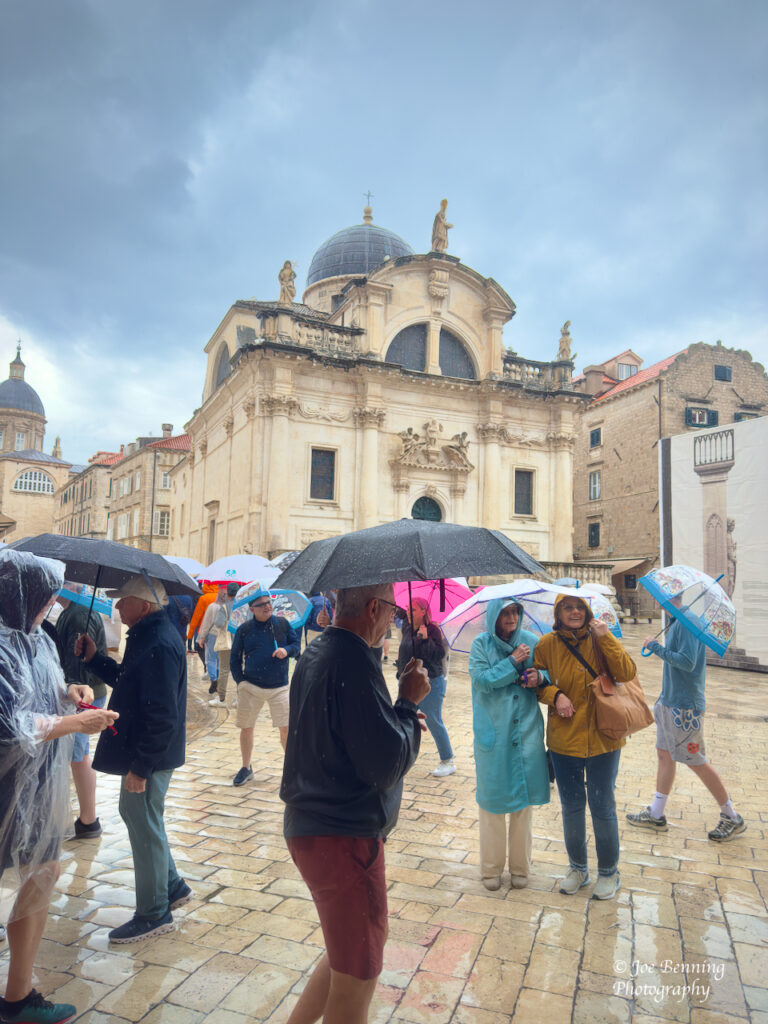
We, however chose a walking tour in the Old City, which was truly spectacular. Among other things, we got a look at St. Ignatius Church. It is sometimes called Rhagusinum, which was then the Jesuit college in the Republic of Ragusa—a precursor to Croatia. 

Tourists walk past St Ignatious Church in the pouring rain

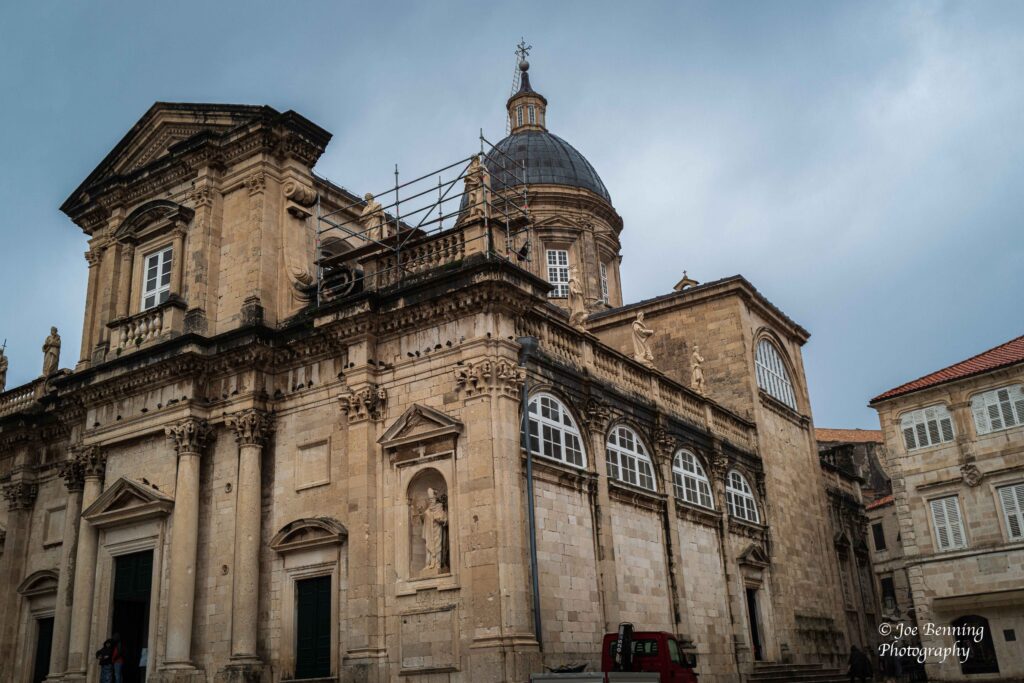
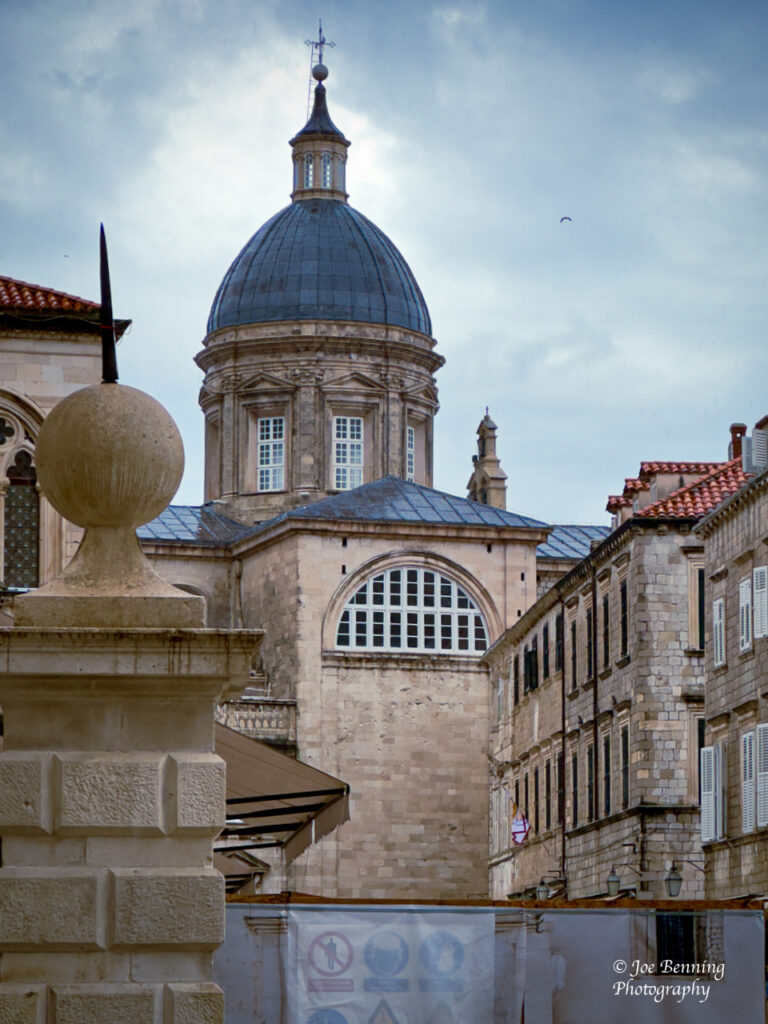
One of the first places we came across was the Cathedral of the Blessed Virgin Mary. Some work was being done on it so there was some scaffolding up. But the scaffolding was relatively minor. 

Cathedral of the Assumption of the Blessed Virgin Mary

Another place we saw was the 16th century Sponza Palace, also known as Divona. The building has served many functions, including: a customs office, mint, treasury, armory, bank and school. It survived a 17th century earthquake that destroyed much of the Old City. Today it is the Dubrovnik State Archive.  

Sponza Palace, Dubrovnik

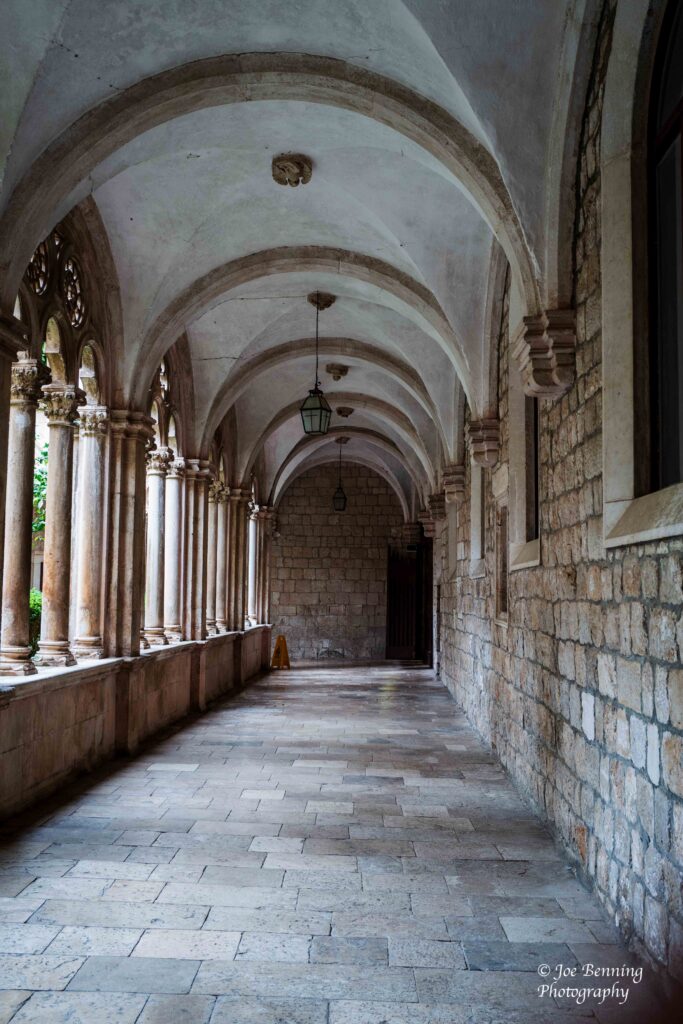
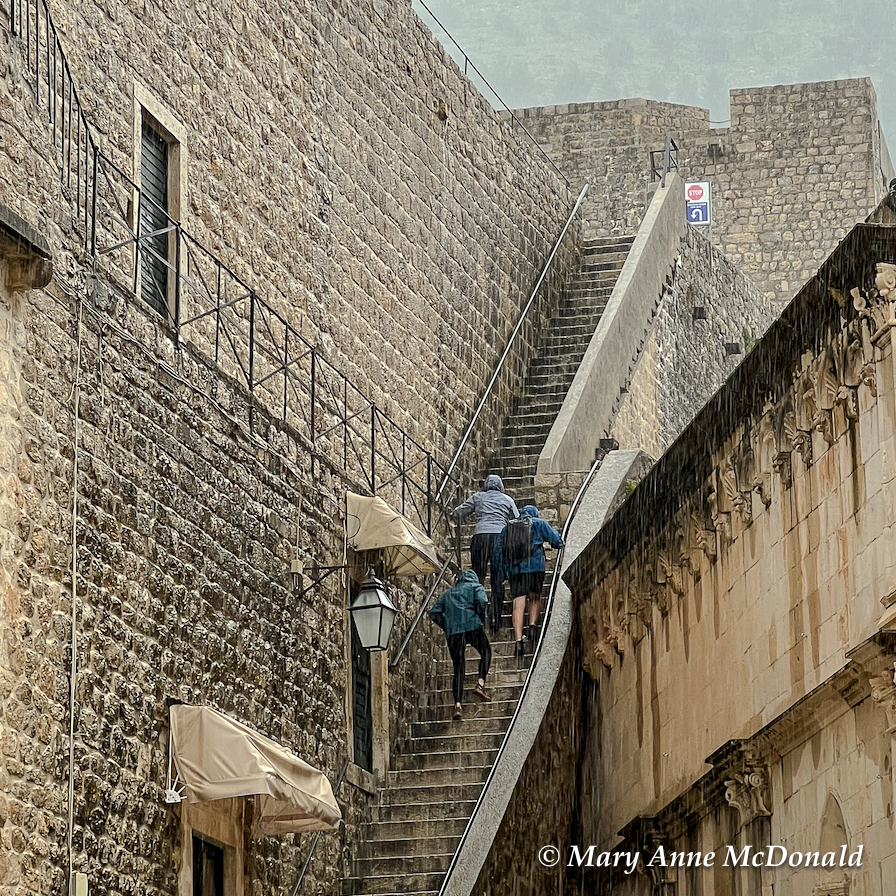
We paid a visit to Rectors Palace where, mercifully, we mostly stayed inside and viewed the art on display. Finally, we saw some other tourists climbing the stairs (in the rain) to walk on the walls of the city. We avoided that. 

Hallway in Rectors Palace

All in all, despite the fierce rain, we’d like to think that our walking tour of Dubrovnik, including the beautiful architecture and the accompanying history lesson, was well worth the effort. 

Tourists Climb Stairs to the City Wall, Dubrovnik, Croatia

MAM & JFB

Share: Facebook Twitter Linkedin