Mykonos is a small windy island that is part of the Cyclades Islands, in the Aegean Sea. It is difficult to grow things on the rocky, steep hills of Mykonos. However, in the past the wind made it a great place for farmers from other islands to come and use the Mykonos windmills (for grinding grain, for example). Now the windmills serve mostly as posh micro-hotels.
Famous Mykonos Windmills
The sandy beaches and great weather make Mykonos a haven for tourists.
Instagram Favorite: The Church of Panagia Paraportiani
The capital city (named Mykonos) has hotels, restaurants, churches and lots of high-end shops. Many of the streets are narrow and made from cobblestone, with low white-washed buildings on both sides, and are decorated with colorful doors and shutters. The whitewashing that results in the iconic look of the island is required by zoning regs.
Agia Kyriaki Church in Mykonos
We visited Mykonos on the Saturday before Easter, and the weather was ideal. The streets and restaurants were crowded with visitors, including many Greeks who come from the cities to the islands for the holiday.
Tourists Descend on Mykonos
We saw more ornate church interiors, as both the Roman Catholics and the Greek Orthodox/Eastern Catholics prepared for Easter, which occurs on the same day this year. Most of the churches in Mykonos are small, and locals call them chapels.
Agios Nikolakis Church in Mykonos
There is, of course, a lot of history and mythology related to Mykonos but we didn’t have time to visit the archeology museum and learn more. So now we have a reason to return!
Mykonos is a must see place that holds (or should hold) a prime spot on everyone’s bucket list.
We are back in Greece now, where we had a nice walking tour of Thessaloniki, Greece’s second largest city (after Athens).
Fishermen in Thessaloniki
Again, tons of history in this city, some reflected in its archeology museum, and much in the monuments all over the city (including Alexander the Great ).
Wall of the Old City in Thessaloniki
We spent a good deal of time in the Church of St. Dimitrios, learning about the Greek Orthodox church, and some of the ways it differs from the Roman Catholic church.
St Dimitrios Greek Orthodox Church
Workers in churches all over Greece were busy on Holy Thursday preparing for Easter rituals and proceedings. Lucky for us, Holy Thursday was the day for our visit to Thessaloniki. We saw many Epitaphios (the embroidered or iconographic cloth depicting Christ after his removal from the cross). A wooden canopy, decorated with flowers, carries the epitaphios in a solemn procession on Good Friday evening.
Volos
After Thessaloniki we headed to Volos, a much smaller town with lots of history (of course). Another visit to the archeological museum in Volos, and then a trip to the nearby village of Milies.
Archeological Museum in VolosGate through the Wall in Milies
Milies means “apple trees” in Greek, and the region produces beautiful, tasty apples, along with flowers and many other crops.
Milies is one of 24 small towns on the Pelion Peninsula in the Thessaly region of central Greece. These small old towns are hidden high in the hills, because it did not make sense to live on the coast in the days when pirates were attacking coastal cities.
Bell Tower in Milies, Volos
The Church of the Holy Archangels, a Greek Orthodox church, is located in Milies. It is very small but the interior is ornately decorated with many frescoes.
Church of the Archangeles
There is a beautiful entry to the church where candles may be lit for special offerings. When we visited the church on Good Friday, the church had another Epitaphios on display. Holy Week is a special time to be in Greece and learn about the Greek Orthodox church. This year is the first time in 1700 years that the Roman Catholic and Greek Orthodox churches will celebrate Easter on the same day.
We plan to go to a Mass on Easter in Athens to be concelebrated by the ship’s chaplain.
Approximately 30% of Istanbul (formerly Constantinople) is in Europe (measured by land mass) and 70% is in Asia. The two sides are separated by the Bosphorus Strait. About 16 million people live in the city, and many commute between the two continents for work. The city is a vibrant place where East meets West and old mixes with new.
Greek settlers founded Istanbul in about 660 BC, and it became a vital trade hub due to its location. It is still vital today as the Bosphorus Strait is the only natural sea passage from the Black Sea to international waters.
In 330 AD Emperor Constantine decided to move the capital of the Roman Empire from Rome to Istanbul. By about 1453 the Ottoman empire gained control of Istanbul and it became a major Islamic imperial city. Which it remained until the 1920s.
In 1923 Mustafa Kemel Atuturk served as first president of the Republic of Turkey. He promptly began the process of secularizing and modernizing the Turkish state. Among other things, a 1928 Constitutional amendment removed the provision that stated that the “Religion of the State is Islam”. Currently the state neither officially recognizes nor promotes any religion.
That brings us to the modern era in which the current president, Recep Tayyip Erdoğan, appears to be backsliding away from Western Liberalism and promoting Islam.
Man Praying in MosquePulpit for Imam in Little Hagia Sophia
All that said, Istanbul’s Old City is filled with some of the world’s most visited places, and they are located close enough to each other that you can see a lot if you are ready to walk.
We saw the remains of the Roman Hippodrome (think chariot races), including an Egyptian obelisk moved in a complete piece from Egypt without damage. And we visited the Basilica Cistern (from the 6th century), one of many underground cisterns built by those clever Romans to ensure water was available after the aqueducts delivered it to the city. (Movie fans may recall the Basilica cistern from a James Bond movie or the Inferno movie based on the book by Dan Brown.)
Obelisks in Istanbul (Egyptian one is in rear)Cistern in Istanbul
We saw a LOT of mosques, including the very large and ornate ones – Hagia Sophia, the “Blue” Mosque and “Little Hagia Sophia.”
Ceiling of the Blue MosqueTourists in the Hagia Sophia
Hearing the call to prayer several times a day in a place as populated as Istanbul is a pleasure (for some) – voices from minarets all over the city, calling the faithful to prayer.
Muslim Call to Prayer
We also visited Topkapi Palace, home to various Ottoman sultans for hundreds of years – it is a stunning complex of buildings overlooking the Bosphorus Straits and the Sea of Marmara.
Guard in the Palace Museum
Since there were large entourages with each sultan, and many visitors to the Palace, the buildings and grounds are enormous – a series of connected kitchens prepared thousands of meals each day, and the kitchen complex looks like a small village of its own.
After two days in Greece, we moved on to Türkiye (Turkey), a country with a unique geographic position and an incredible history. It is partly in Europe and partly in Asia. A ferry shuttles between the two; it’s about a half hour ride. Most of the land mass is in Asia but most of the population is in Europe.
Before arriving in Turkey we studied some of its history, but it is a LOT to absorb; parts of Turkey have been inhabited by humans for about 12,000 years. We did our best to see Ephesus and Istanbul, but 3 days is hardly enough.
Ephesus and Mary’s House
Ephesus (as in Paul’s Epistle to the Ephesians) was a major port city for the Romans in the first century AD. When silt in the river made the port less accessible, Ephesus was moved inland.
Before exploring well-preserved ruins from the Roman era, we had an early morning visit to the house near Ephesus where the Blessed Virgin Mary was believed to live after the death of Christ. The stone house, located in a large national park, is a simple 2-room structure which now houses a chapel. The morning was serene and the atmosphere very spiritual. It was a beautiful way to start our exploration of Turkey.
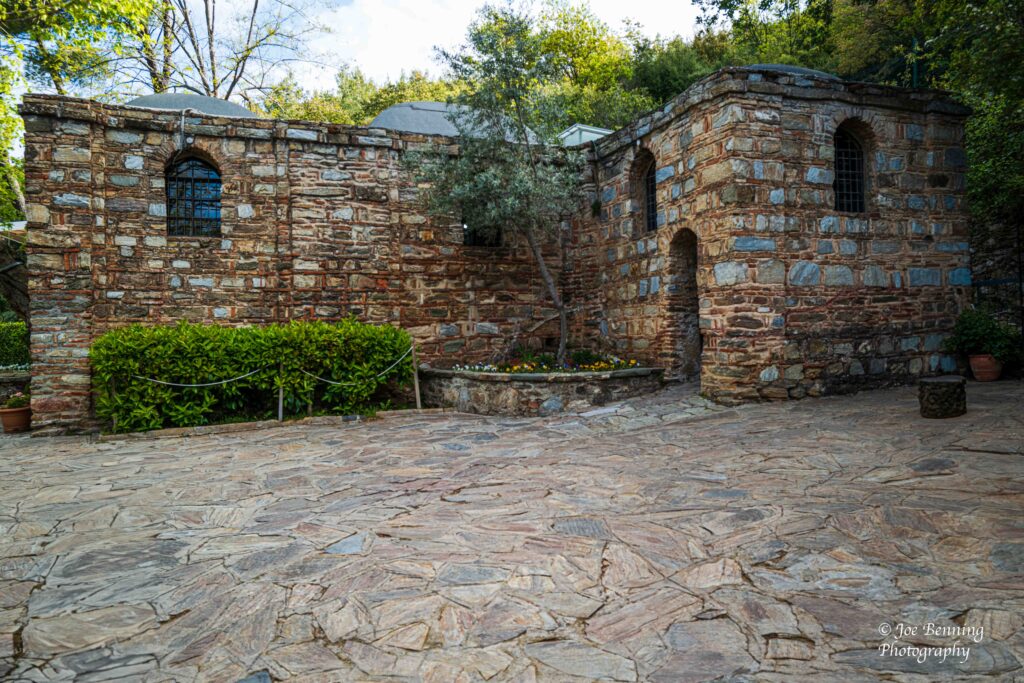
House where Mary lived in Ephesus with St John after the death of Christ
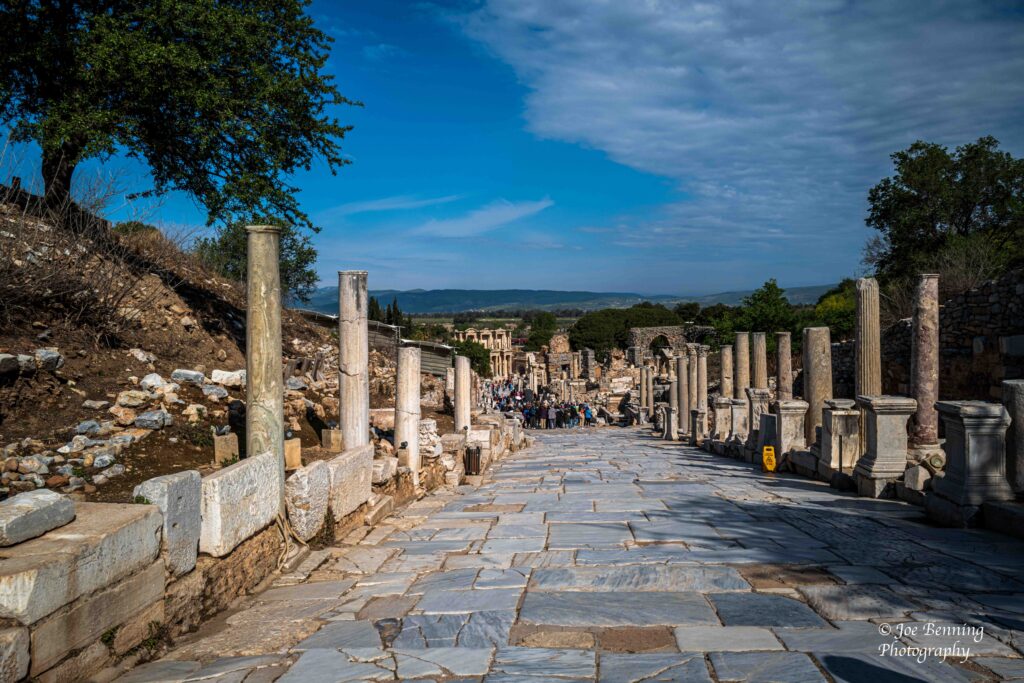
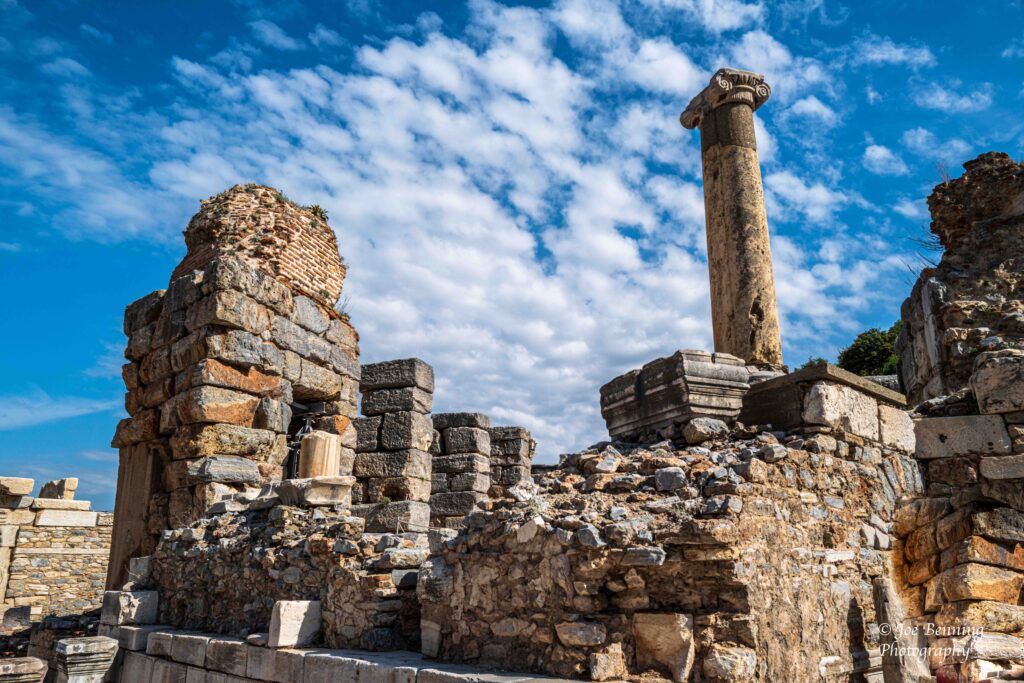
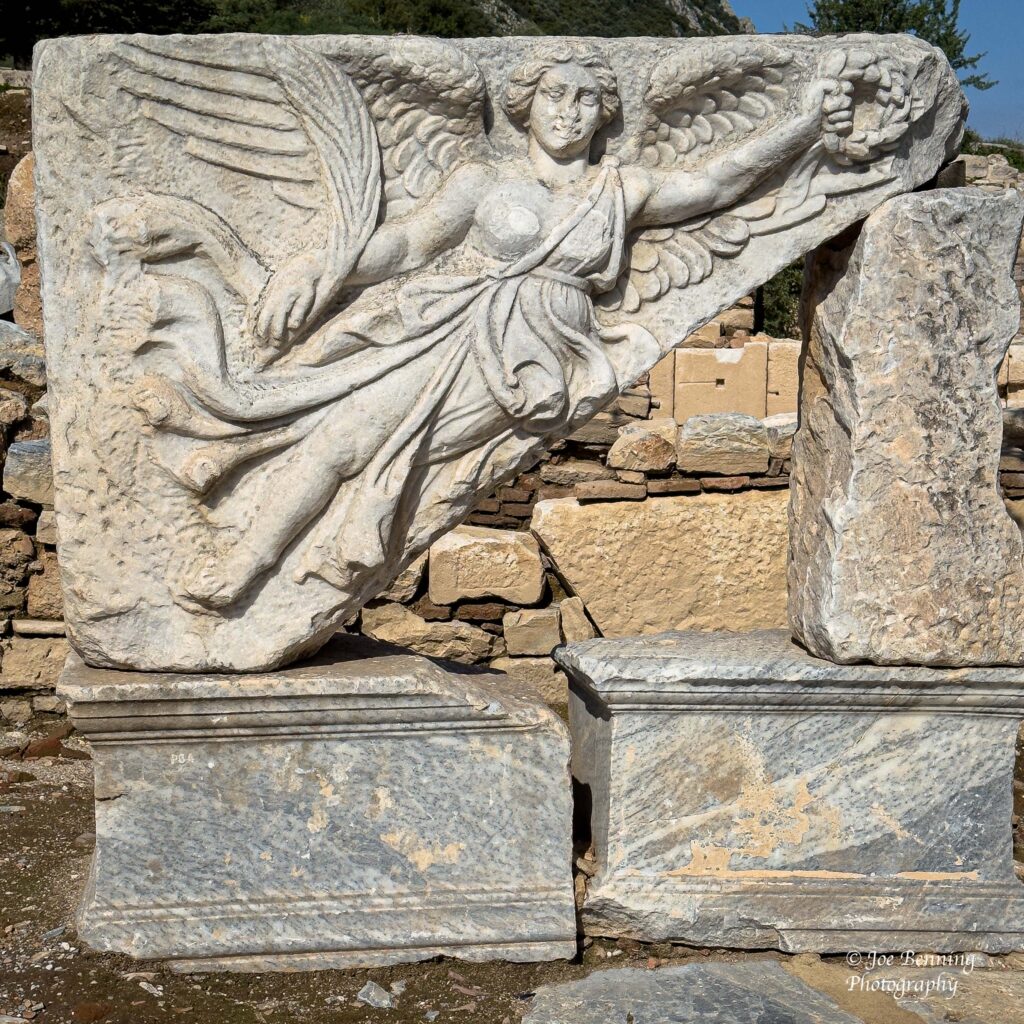
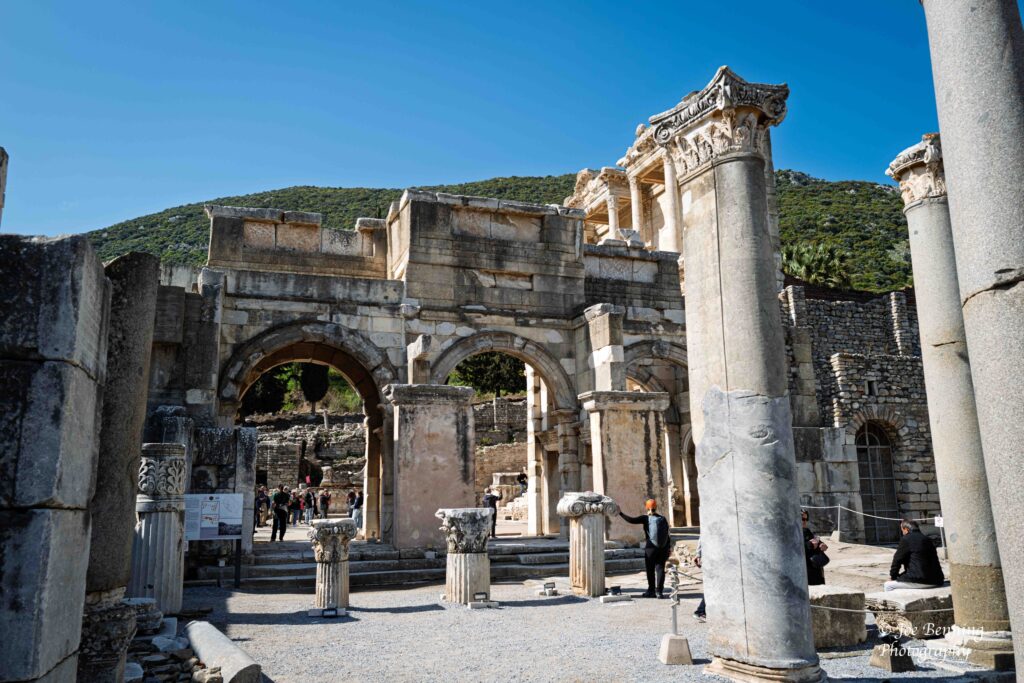
We moved on to the remains of the Roman city of Ephesus, walking around well-preserved structures (or parts of them) – the Library, the Odeon, the Temple of Hadrian, the Theater and the Agora.
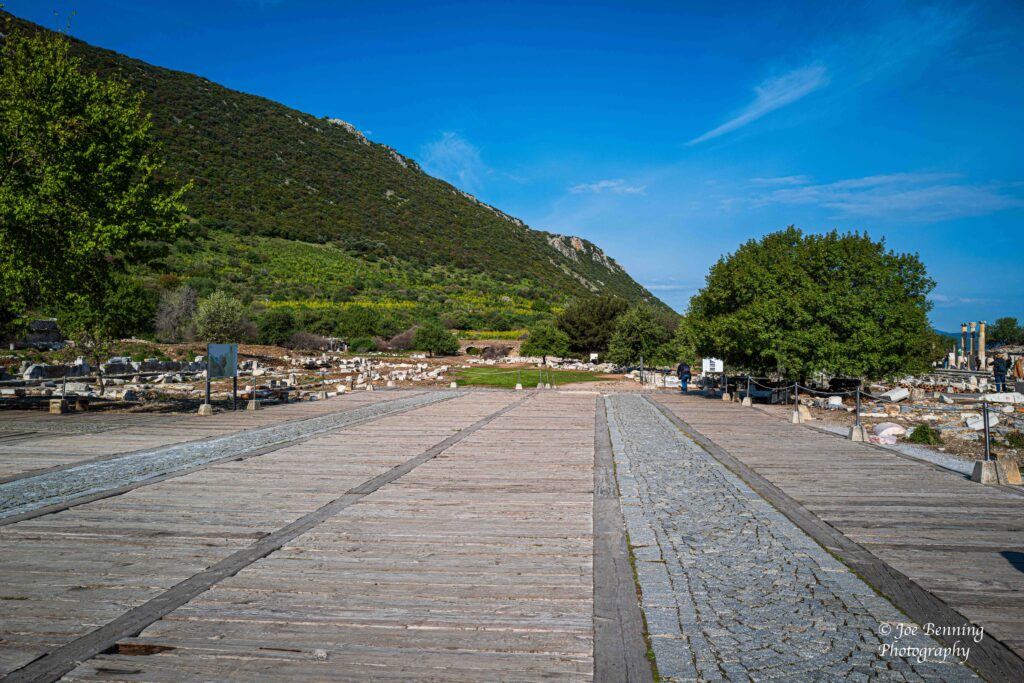
Approaching the Roman Ruins of Ephesus
Excavation in this area is quite recent, and approximately 20% of the old City center is now open to the public. There were virtually no limits on accessing the works – you can climb around and stand on pedestals or walk up the steps and enter what is left of the library.
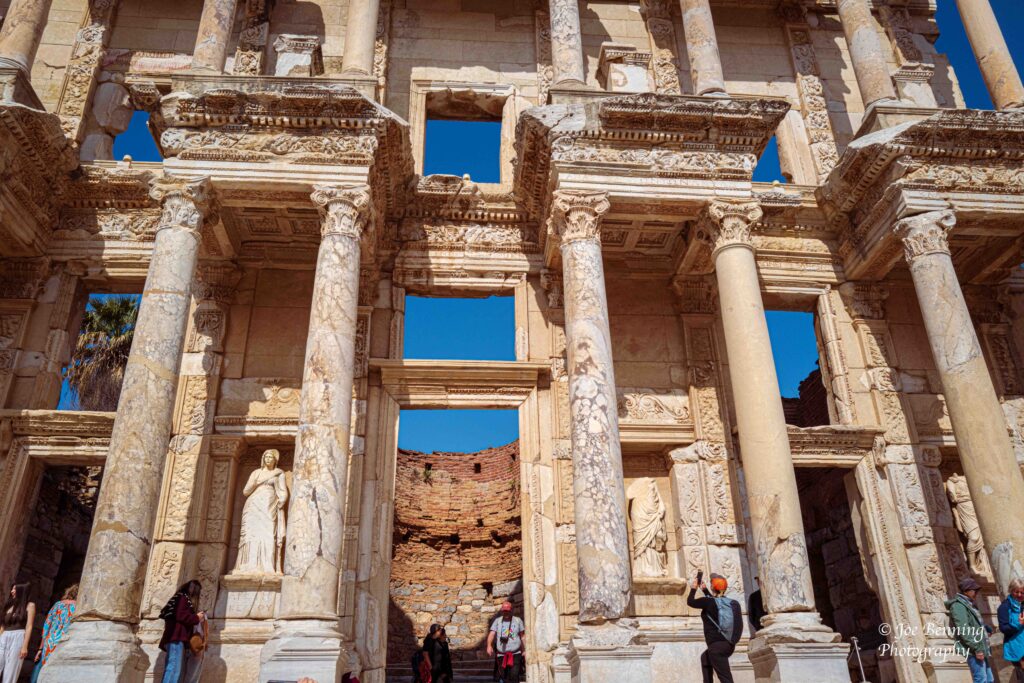
Entrance to the Library at EphesusThe road to Roman ruinsRoman Ruins at Ephesus
The Ephesians were masters when it came to water and sewers – clay pipes of various sizes allowed for different water pressure, and marble or stone enclosures ensured that when the pipes met at a right angle, the pressure did not cause any cracks. The public health was enhanced by a public latrine system that used running water to remove waste. Very ingenious, those Romans.
Our next stop was the island of Rhodes. With a population of 56,000 in the city proper and 90,000 counting the outskirts, Rhodes is the principal city of the island of Rhodes. Built by the Hospitalliers, it is one of the best-preserved medieval cities of Europe, and is designated as a UNESCO World Heritage Site.
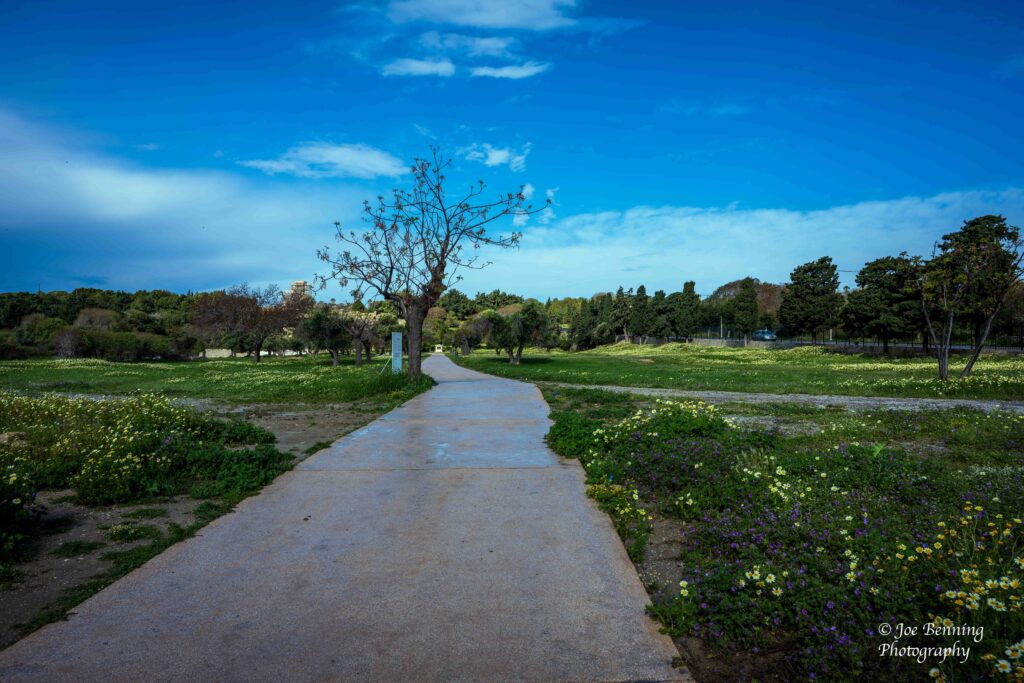
One of our first stops in Rhodes was a park that contained remnants of the acropolis where the games were held. Back then the contests concentrated on boxing, javelin throwing, races and discuss throwing. Synchronized swimming had to wait for its day in the sun.
Site of the Ancient Games in Rhodes
After we walked through the park, we went to view some city ruins.
Overlooking Ruins in Rhodes
The archeology project that is currently underway to unearth the ruins will be going on for a long time—because there is so much to unearth. Our excellent guide told us that maybe only 20% of the ruins had been discovered.
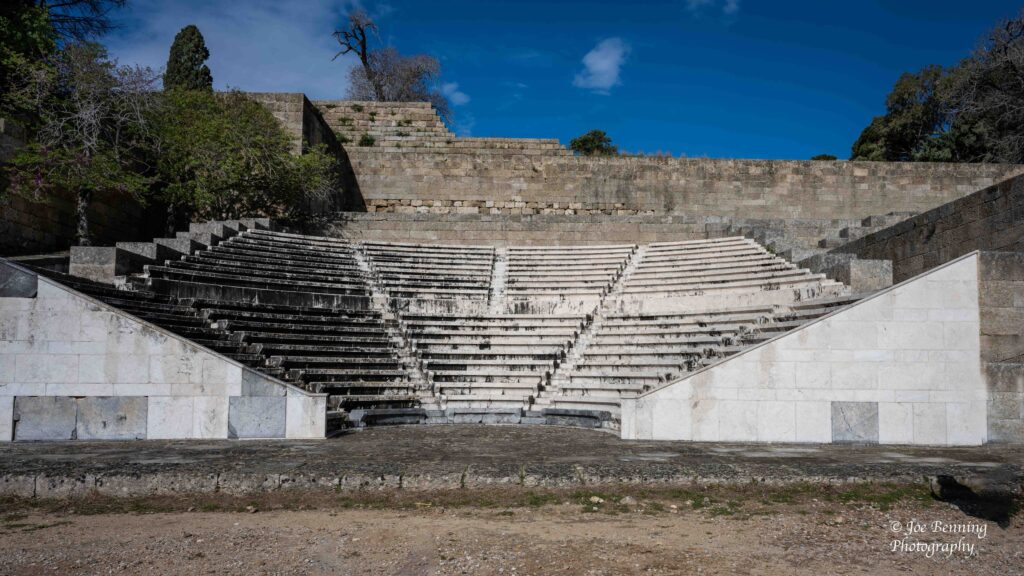
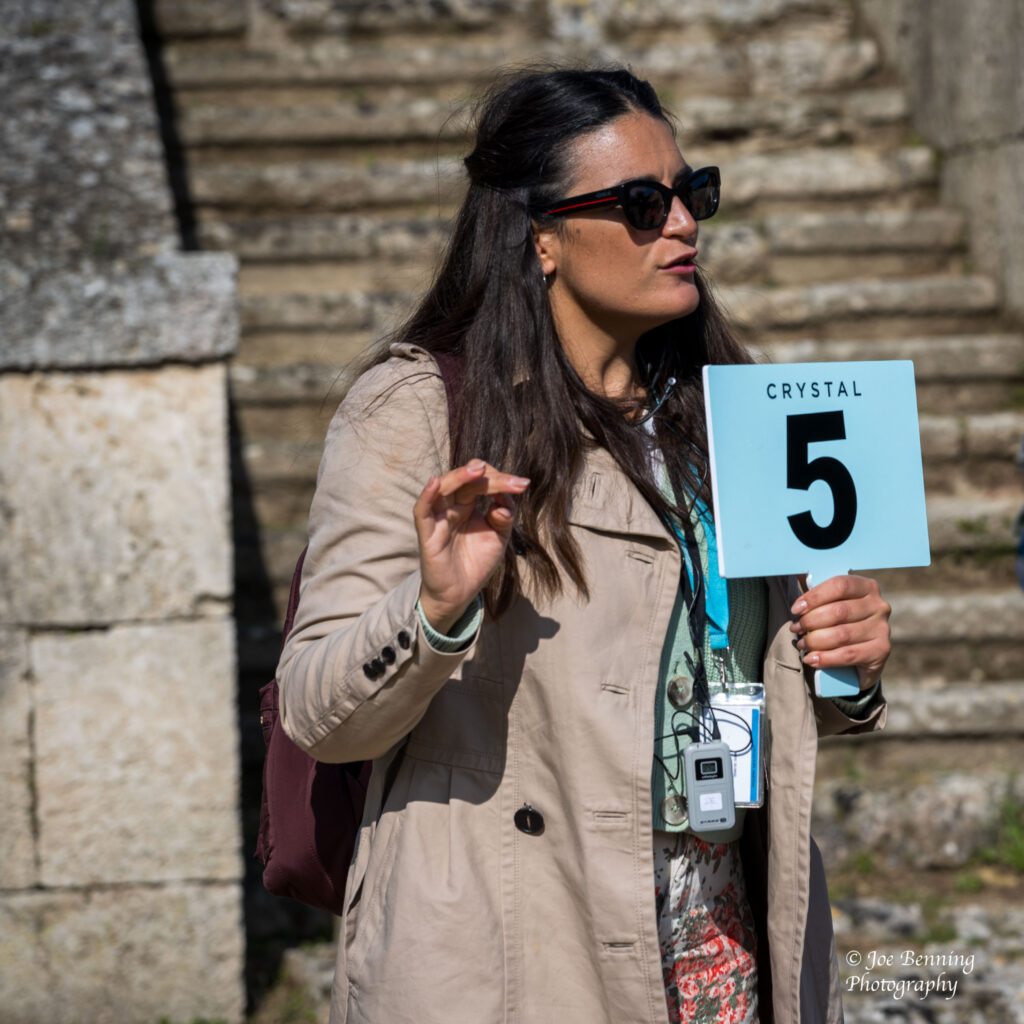
Theatre in RhodesOur Excellent Tour Guide for Rhodes
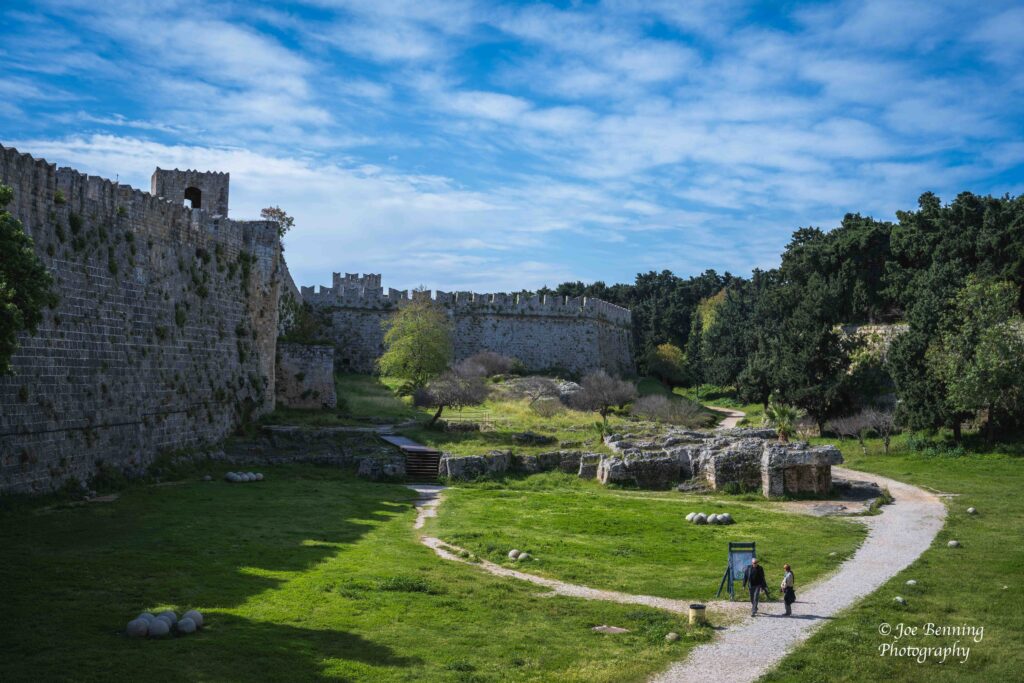
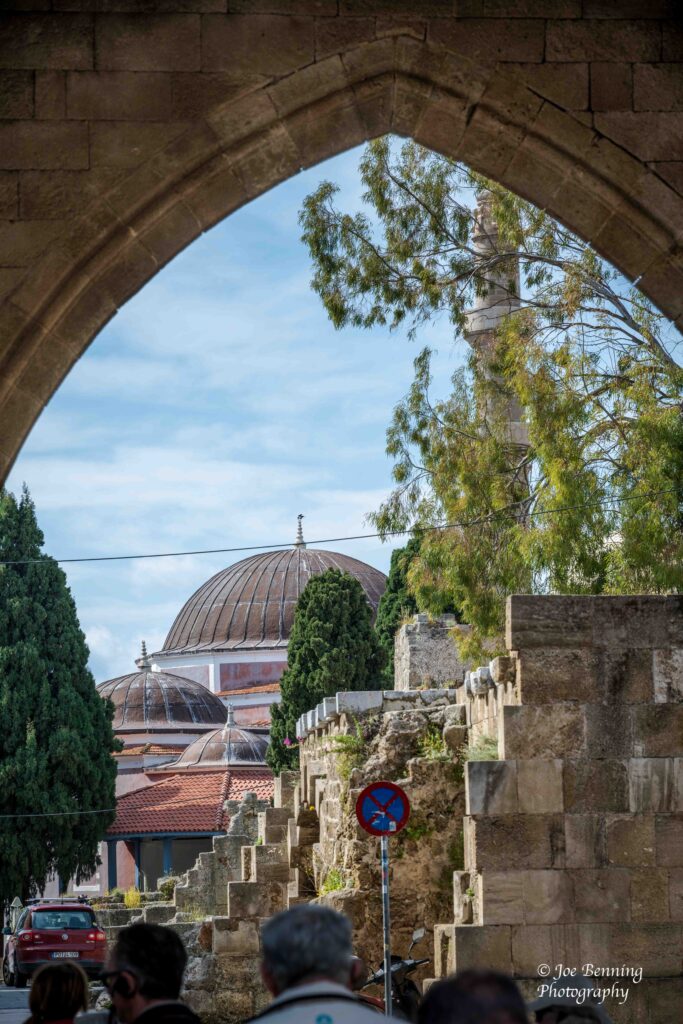
We took a long walk through the Old City and got a reasonably good idea of what it was like behind the city walls, which were designed to protect the city from raiders.
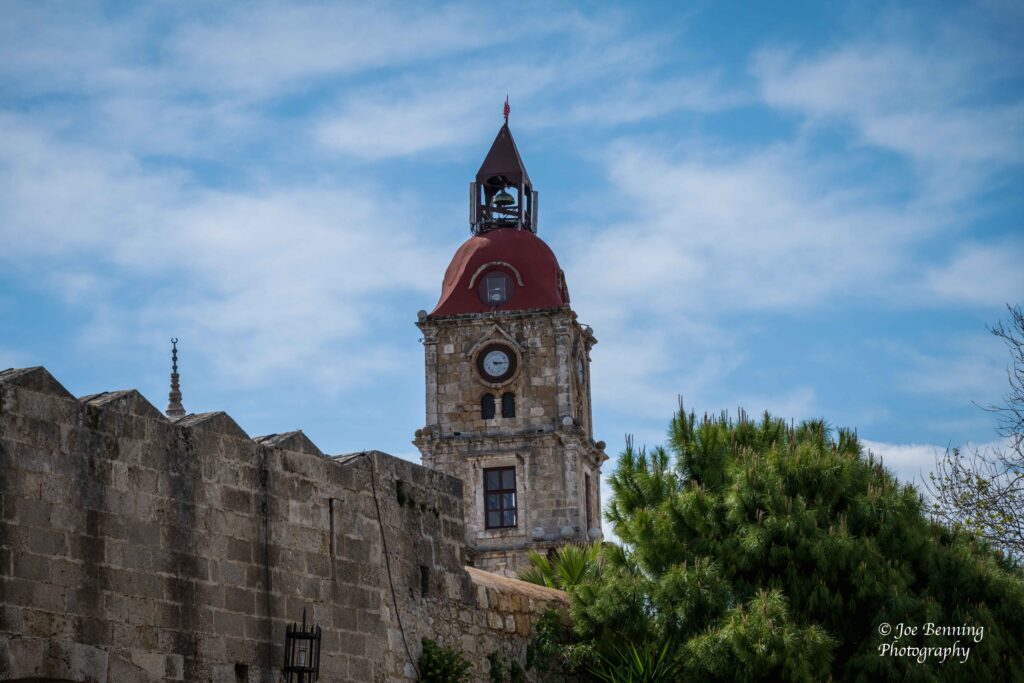
Clock Tower in Old Town RhodesA look into Old Town Rhodes
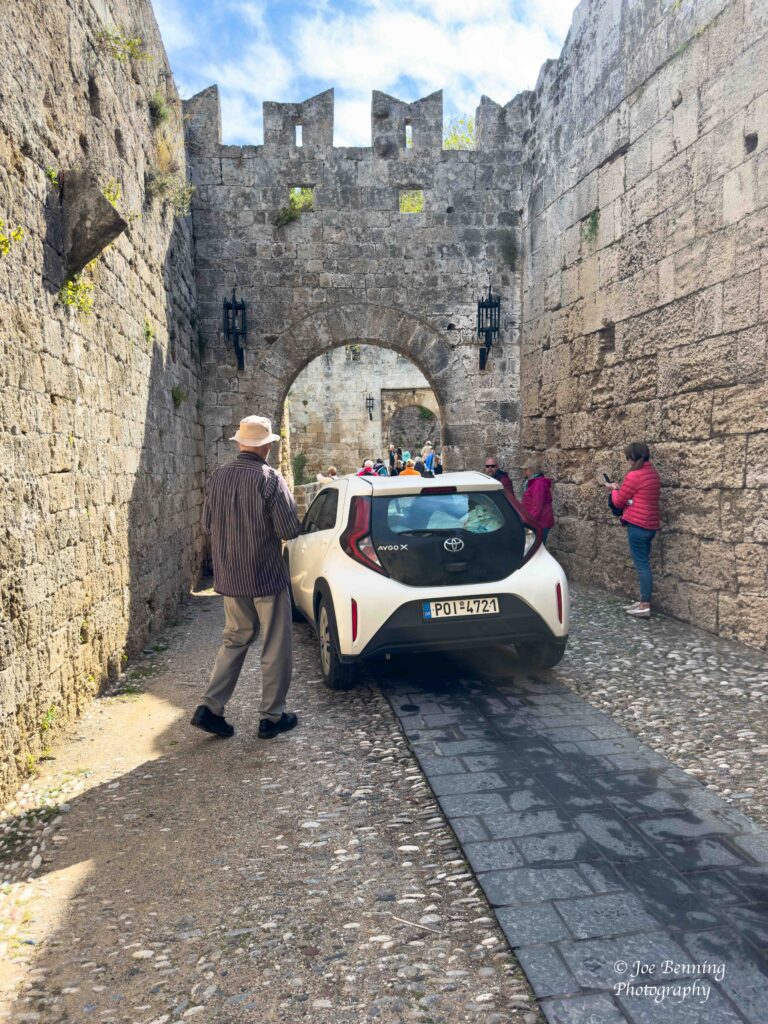
One of the ironies is that people who live in Old Town (and only the people who are permanent residents) are permitted the luxury of owning cars and driving them in the Old City. My guess is that that is largely responsible for the spectacle pictured below, which is repeated many times over on a daily basis.
Auto in the Old City
All things considered, Rhodes is pretty spectacular and well worth a visit, especially for art and history aficionados. Next stop: Turkey or Türkiye as the locals put it.
After leaving Malta we headed to the Greek islands. The first place we docked was the port city of Chania on the island of Crete. There we visited an ancient monastery and then went on a walking tour of Chania.
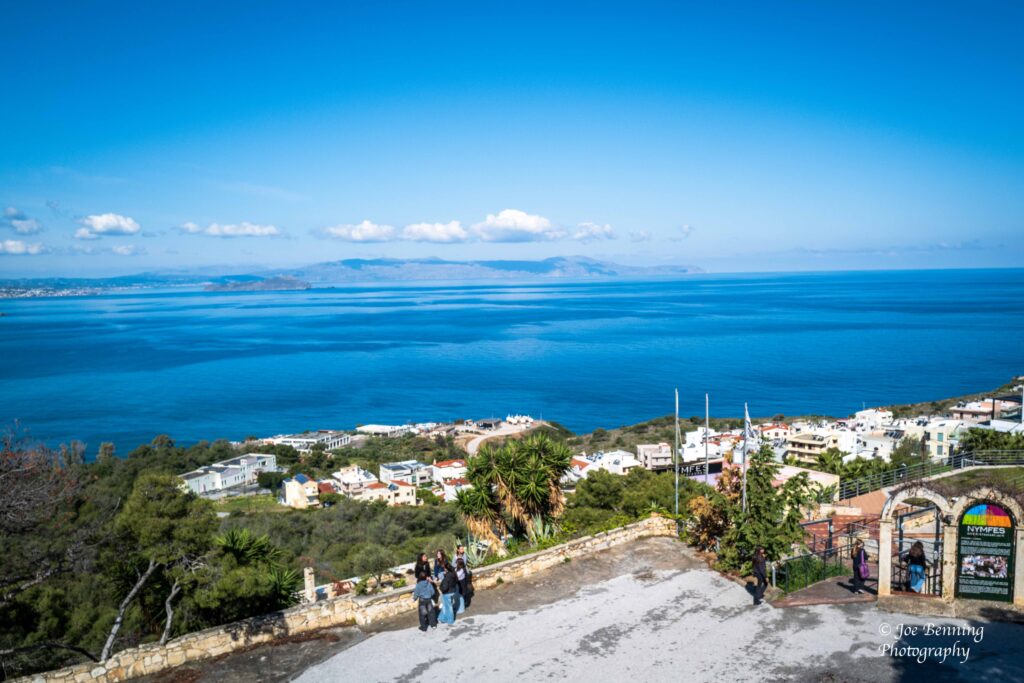
Overlooking Crete
One key factor has to be kept in mind when the Greek islands are being discussed: Greek civilization developed in a variety city-states, so while the various islands certainly have marked similarities, they all have their own stories and histories. The stories of Athens and Spartacus are a good example of this.
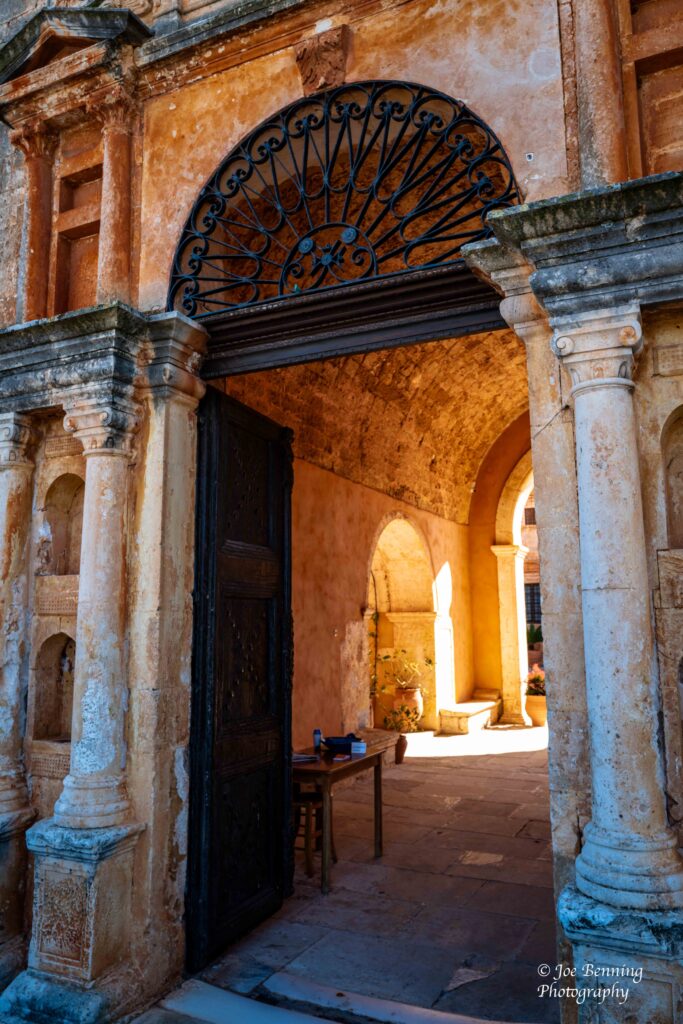
Anyway here we were in Crete, so we immediately made a beeline for the Agia Triada Monastery (Holy Trinity) monastery. It is a masterpiece of Venetian Renaissance architecture.
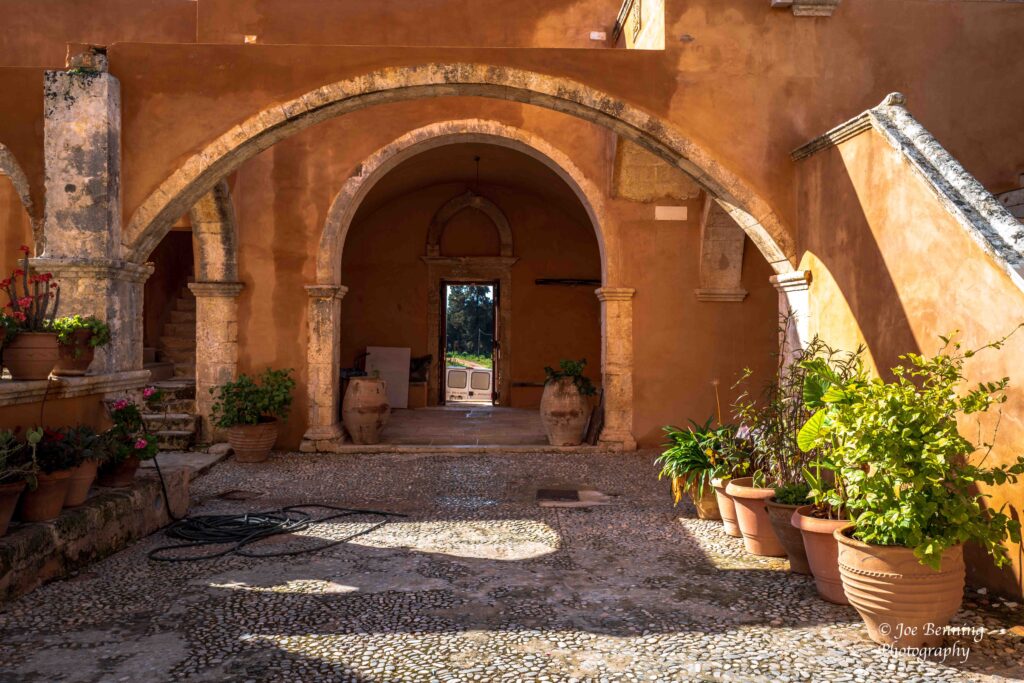
The Aghia Triada Monastery in Chania
The monastery is a well-preserved complex that features churches, courtyards, gardens and the inevitable gift shop. The scene at the monastery, best described tranquil, includes snowcapped mountains in the distance.
Aghia Triada Monastery
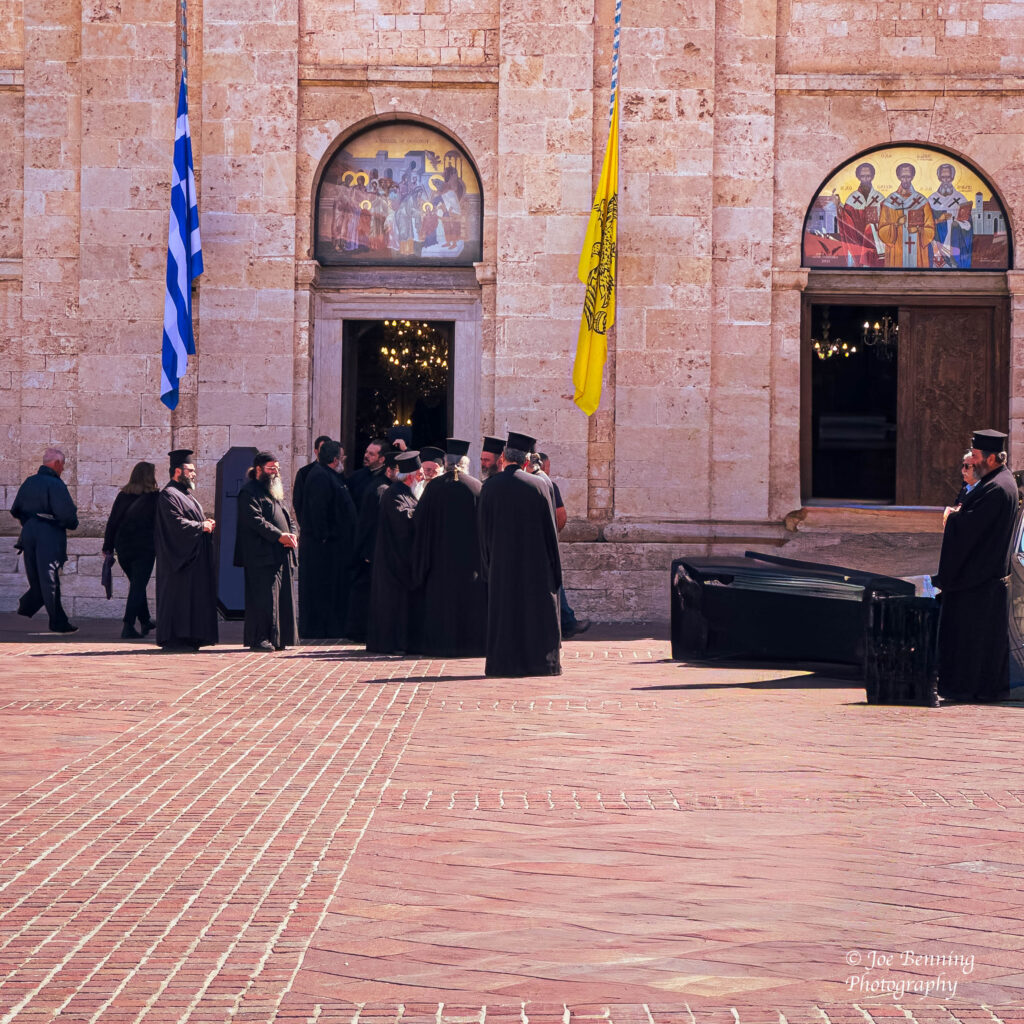
After we spent quite a bit of time on the monastery grounds—not to mention the gift shop—we headed out to the city of Chania. The bishop of the diocese had just recently died so there was a large gathering of Greek Orthodox bishops and other clergy, along with other VIPs who wanted to pay their respects.
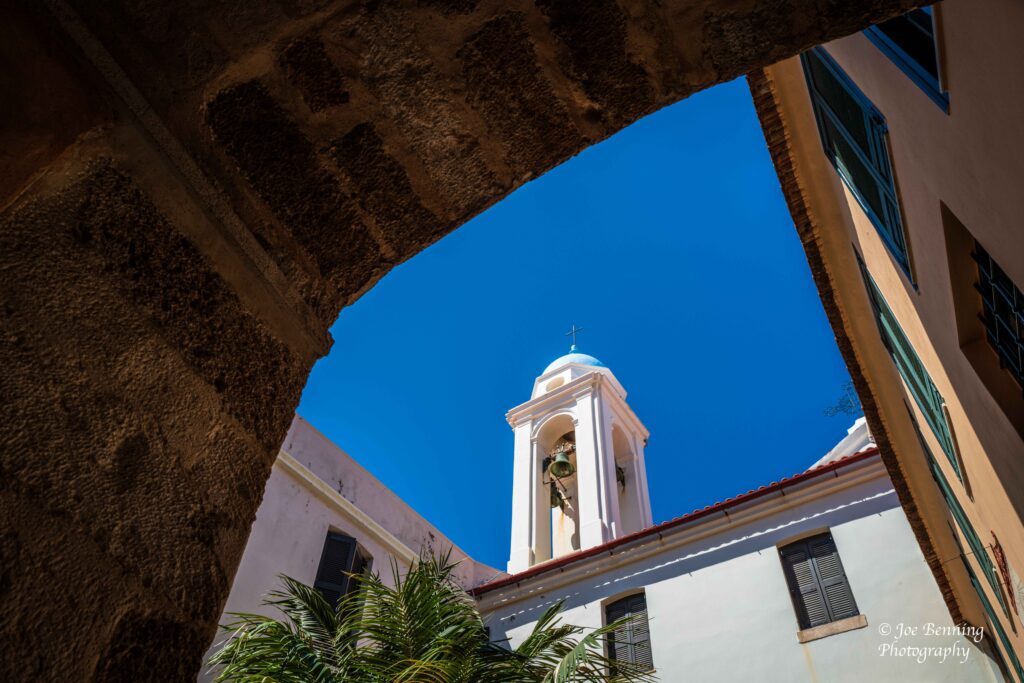
A Shot of the Capuchin Monastery Lookin UpwardGreek Bishops Gather at the Virgin Mary Metropolitan Church
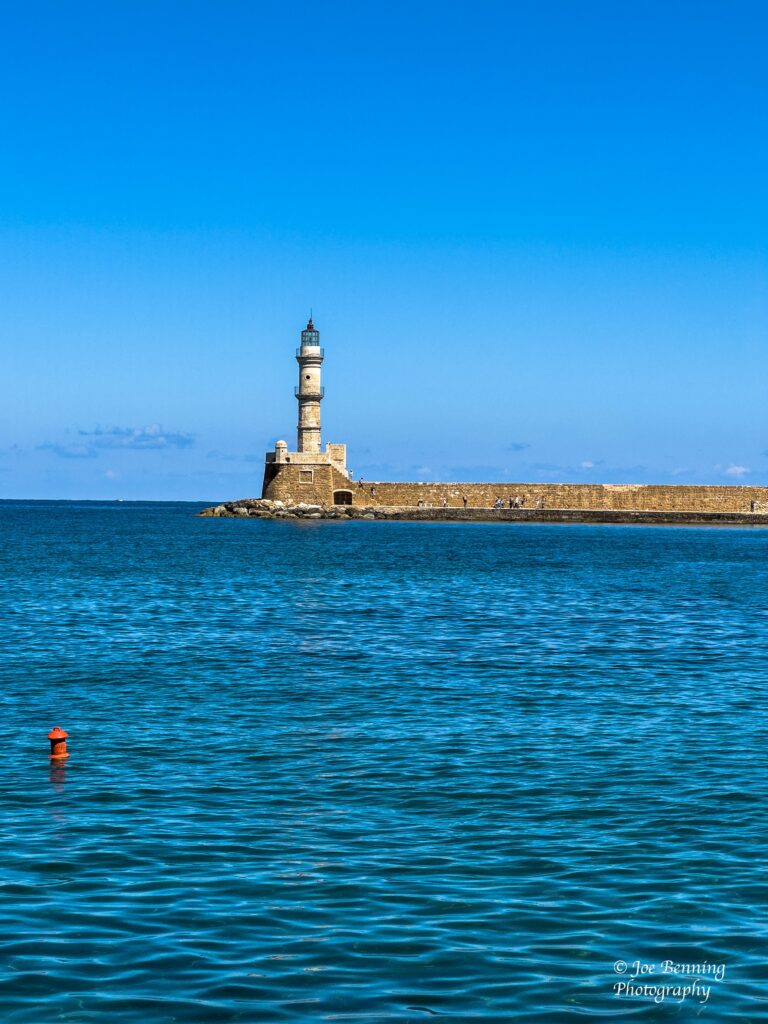
Before heading back to the ship we did a little sightseeing at the water’s edge where we saw the Chania lighthouse.
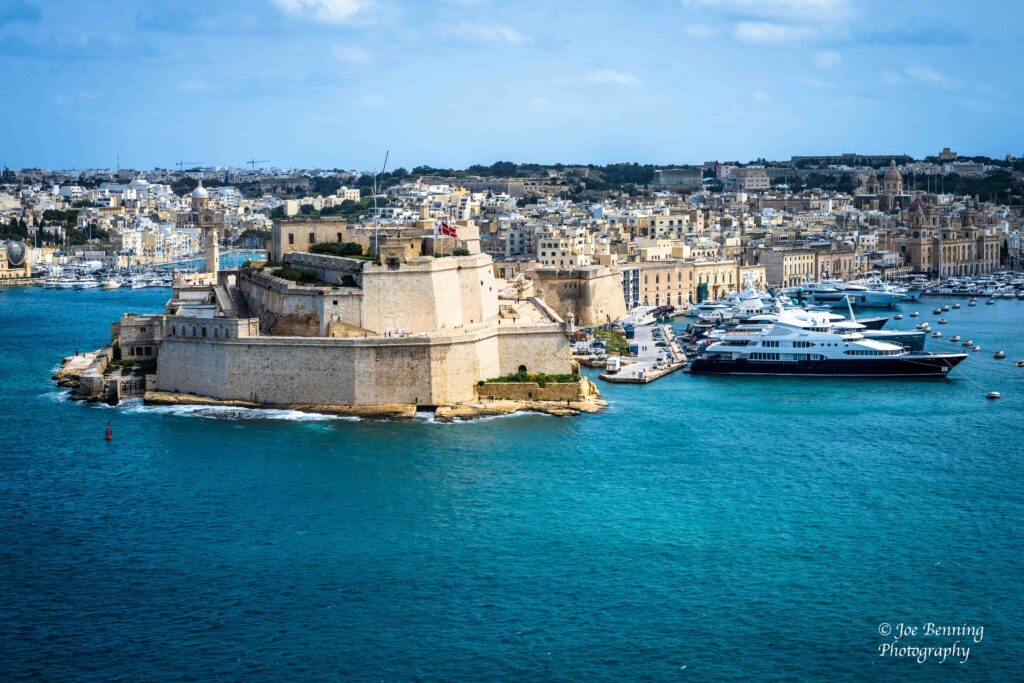
We spent two days in Malta. Officially known as the Republic of Malta, it is a small island country located in the Mediterranean between North Africa and Sicily. It is a member country of NATO.
Overlooking the Fortress City State of Malta
While it may be small (population 525,000) it is a very wealthy state and densely populated. It is overwhelmingly Catholic. And it seems like there are churches and palaces everywhere.
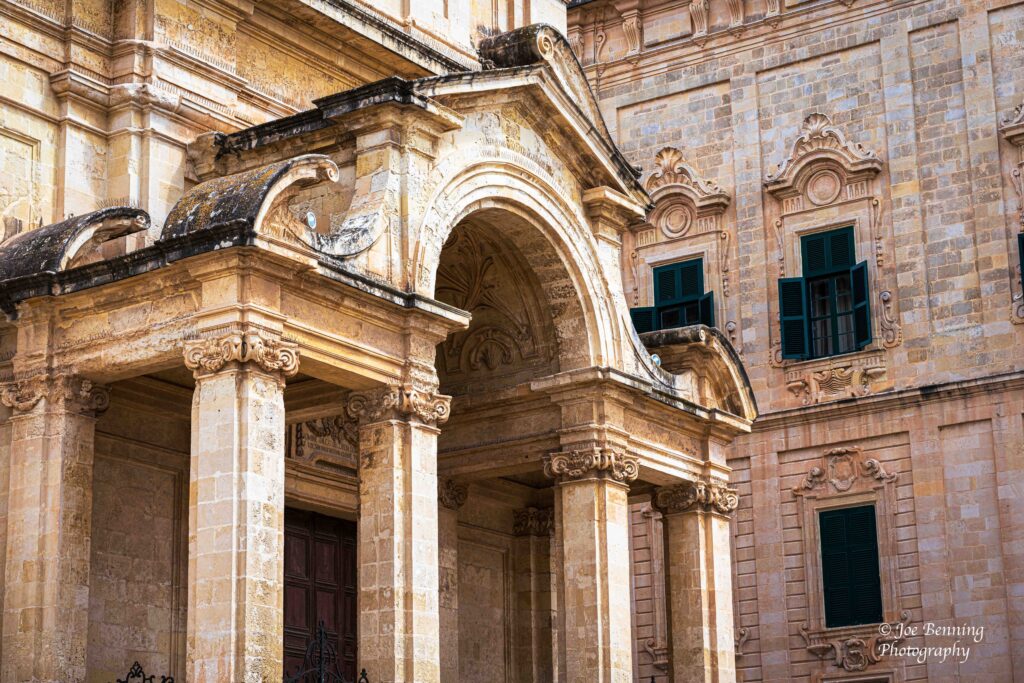
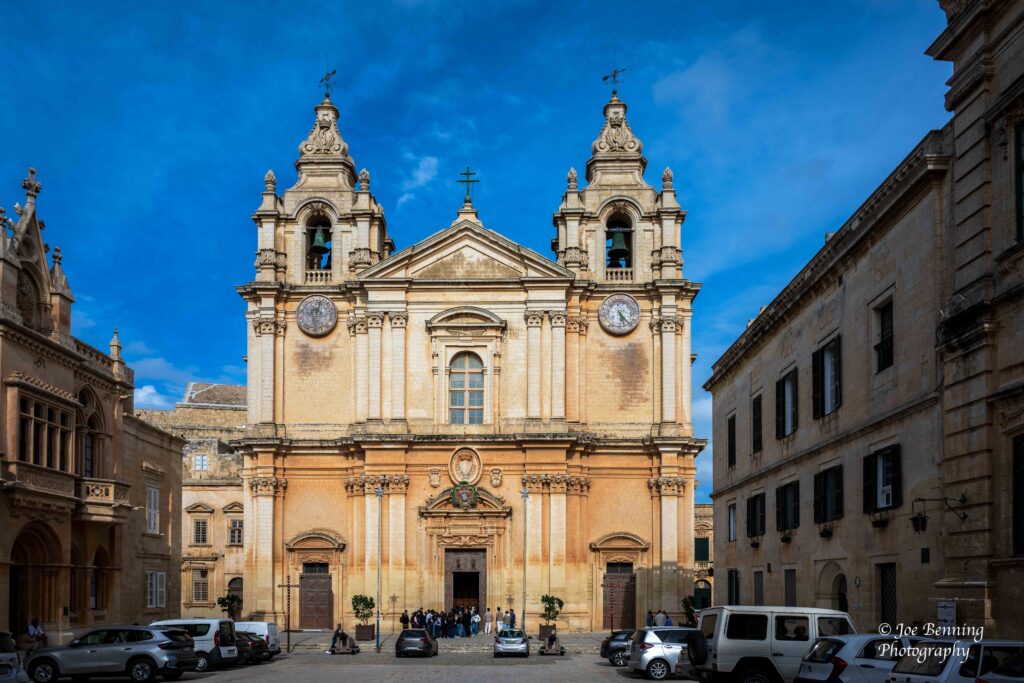
Valettea, Malta–April 7, 2025. Detail shot of the Church of St Mary taken on a walking tour.
Per capita GDP expressed in purchasing power parity (PPP) is about $68,000; its GDP is about $37 billion. By way of comparison, Malta’s PPP GDP is 2.5 times the world average (about $27,000). The US clocks in at about $82,000. Which is to say that Malta is one of the world’s richest countries.
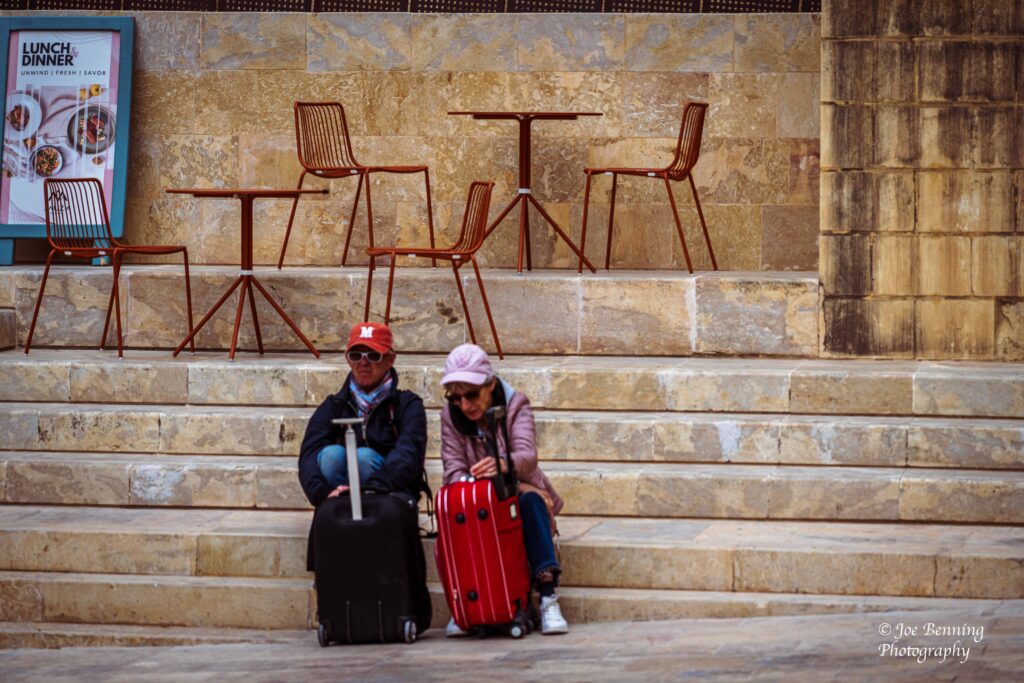
Tourists Sitting on Outdoor Stairway in Malta
Malta, which is often described as a city-state, only received its independence (from Britain) in 1964. Its official languages—there are two—are English and Maltese.
Largely due to its geo-strategic importance, Malta has been continuously inhabited since around 5,900 BC. For the same reason, Malta has been ruled by many different countries as they competed for power and influence. These societies included the Phoenicians, Carthaginians, Greeks and Romans during antiquity. The Arabs and and Normans tried their luck in the Middle Ages.
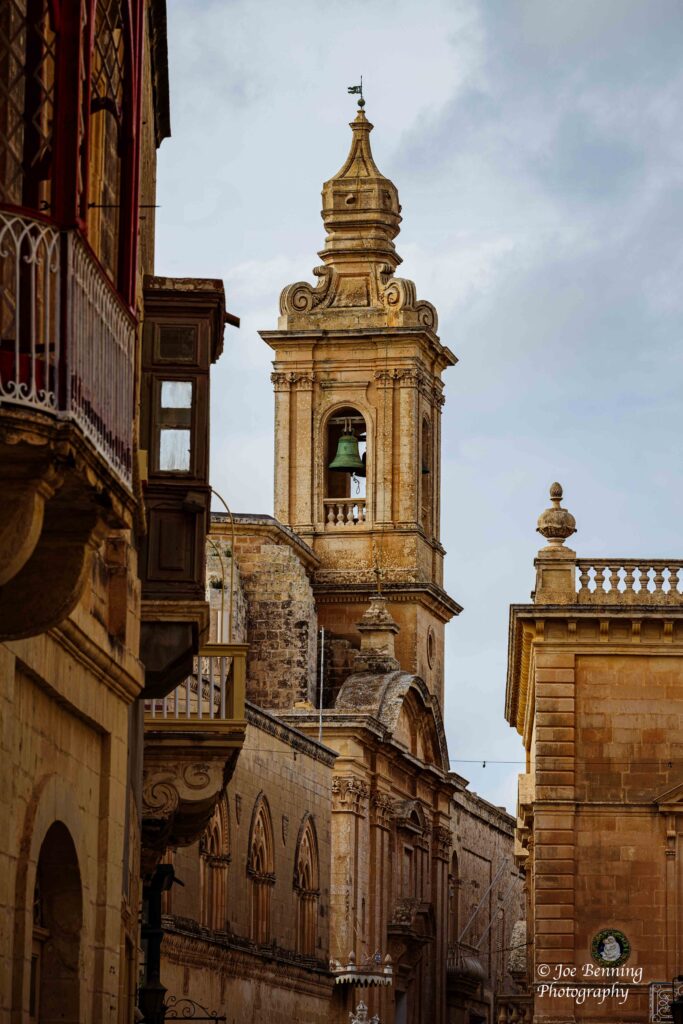
Malta is Home to Lots of Churches
In the modern era (from about the early 20th century) the Knights Hospitaller, a Catholic military order, and past participant in the crusades ran the show for a while. A forerunner to the Order of the Knights of St John, it held sway. Both Britain and France took their respective turns at governing as well, with Britain granting self rule to Malta in 1964.
St Johns Cathedral
We took several walking tours over the 2 days we were there. And we walked everywhere, from churches to museums to public parks.
Tourists Relax in Upper Barraka Gardens
The second say we were there we stopped at a restaurant not too far from the ship where we had a nice lunch. I should add that it would be difficult not to be impressed by the majesty of Malta. It is relentlessly clean, orderly and full of history. Definitely worth a stop.
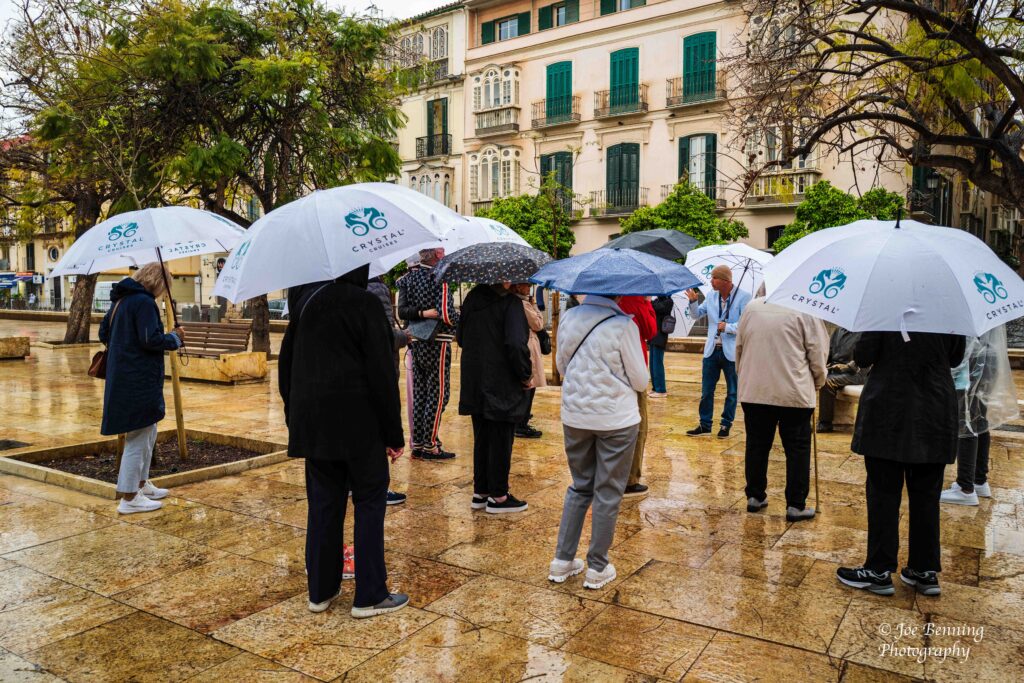
We had the first truly rainy day in port since the start of our trip in January, but that did not make Málaga any less special.
Guide Adresses Crystal Tourists in Malaga
We walked through the town for hours, enjoying a guide’s explanation of its history.
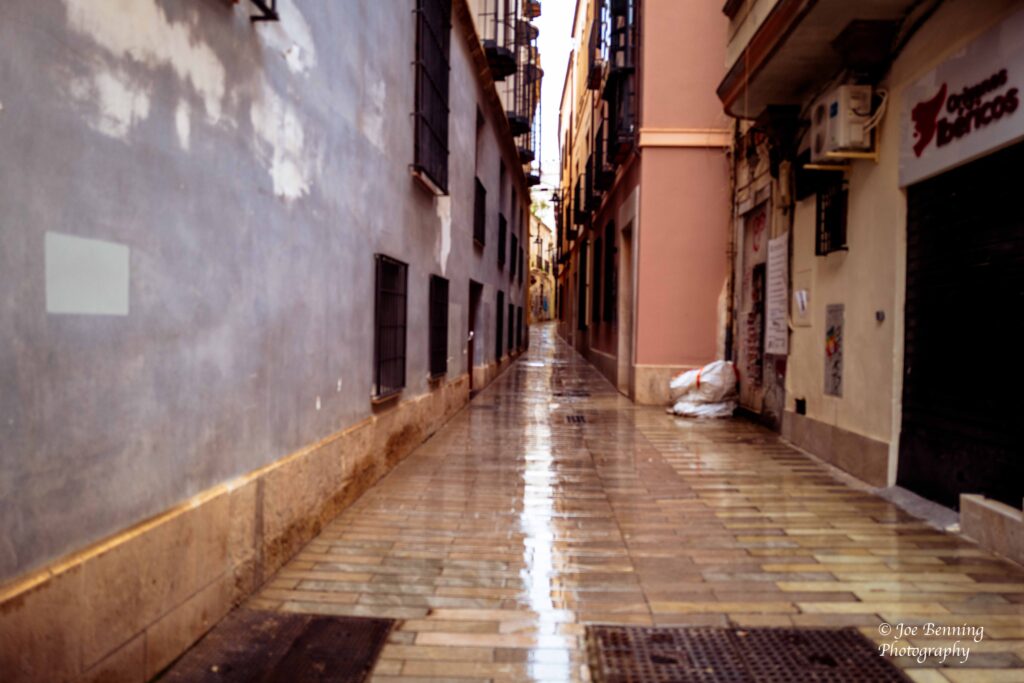
Malaga Side Street
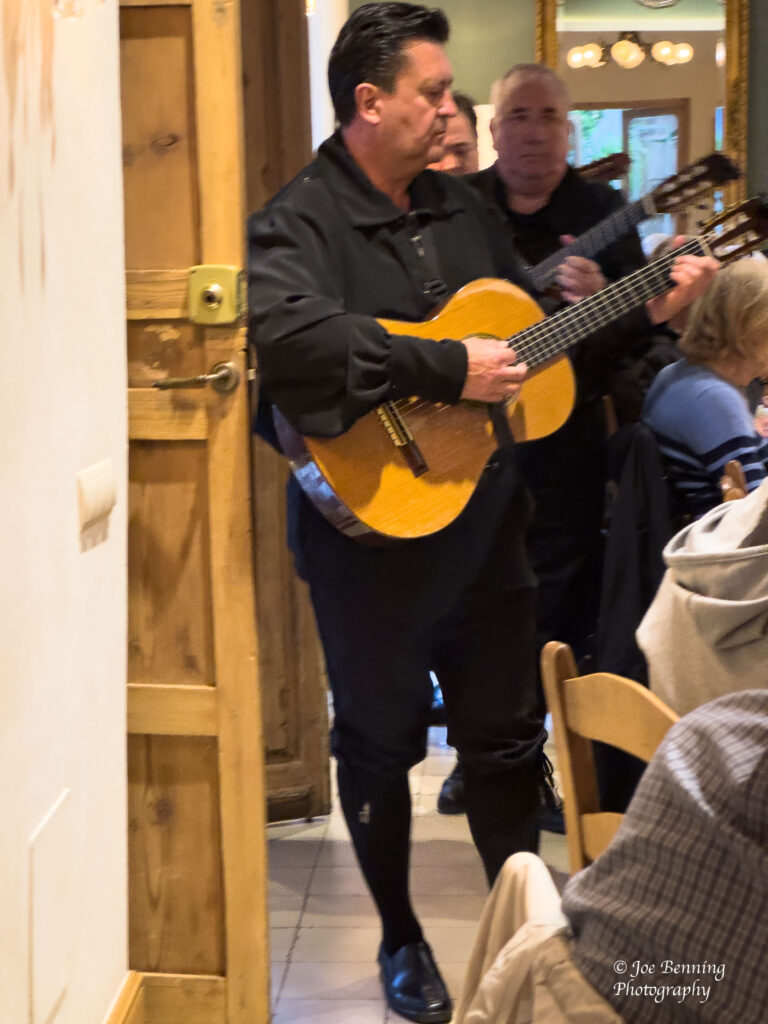
Then we stopped at a local tapas bar for some traditional tapas, and 3 guitarists serenaded our group with beautiful songs. This form of entertainment is a centuries-old tradition in southern Spain, where college students perform to earn money. However, some of these college students were well into their 50s, so the tradition was stretched a bit.
Guitarists Paeform in Malaga Restaurant
Cartagena
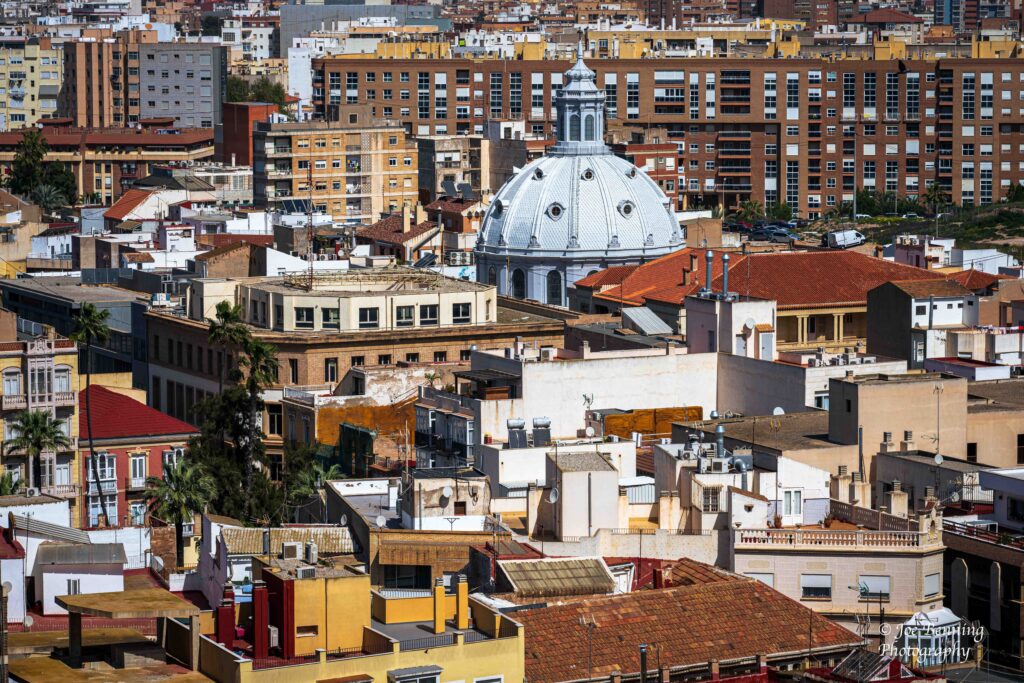
After Málaga we headed to Cartagena, where we took another walking tour, this time in sunny, breezy weather. We saw ancient ruins, both at ground level and from the vantage point of a hilltop fortress. These ruins are from the first century AD, including a Roman theater in remarkable condition. The ruins had been covered over as the city developed, and were only found in 1951.
Overlooking Cartagena
Now you can walk along a street with homes and shops, and before you know it you are walking down the steps of a theater shaped like an arena, built during the reign of Caesar Augustus.
Torres Park Auditorium in Cartagena
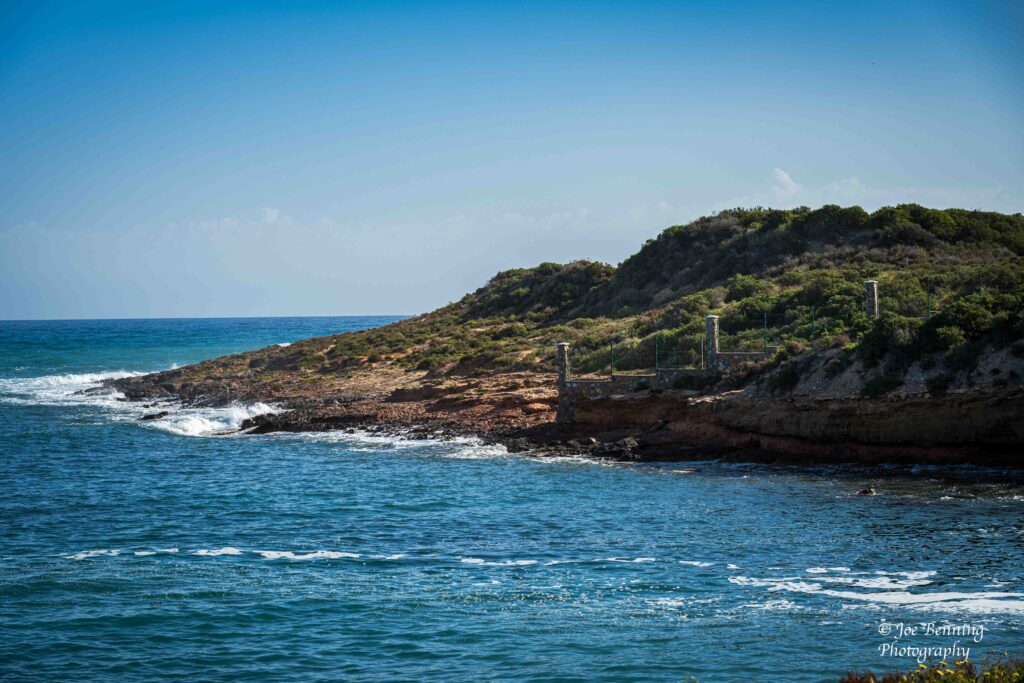
We also took a short drive to the coast, visiting a pretty beach town(La Manga) that happens to be home to Club Principe Felipe, rated as one of Europe’s best golf courses.
Beach in Cartagena
Valencia
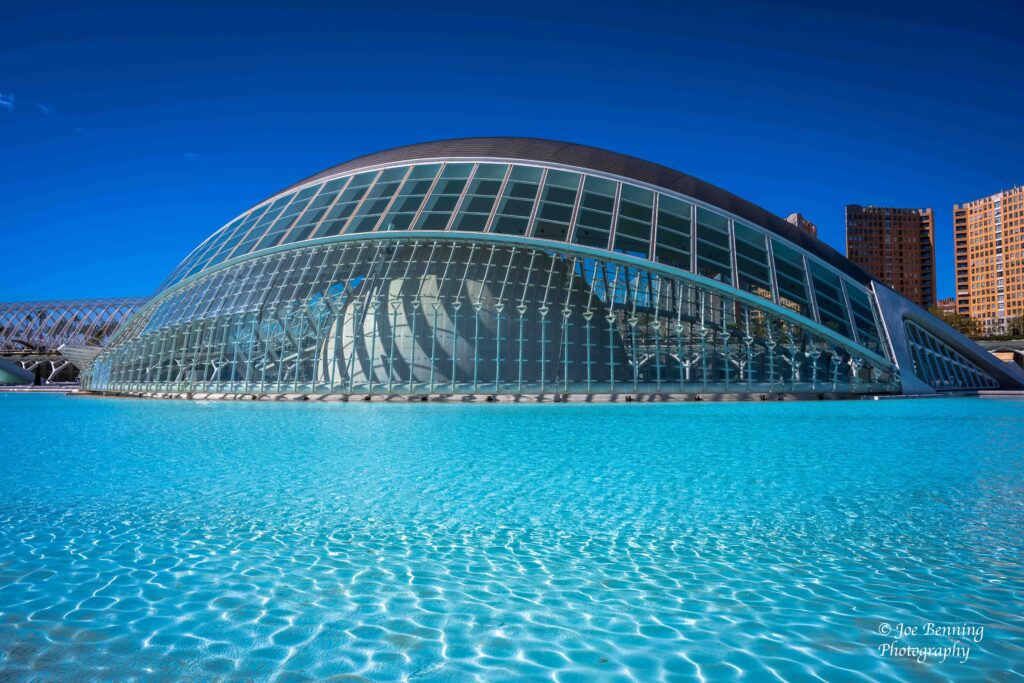
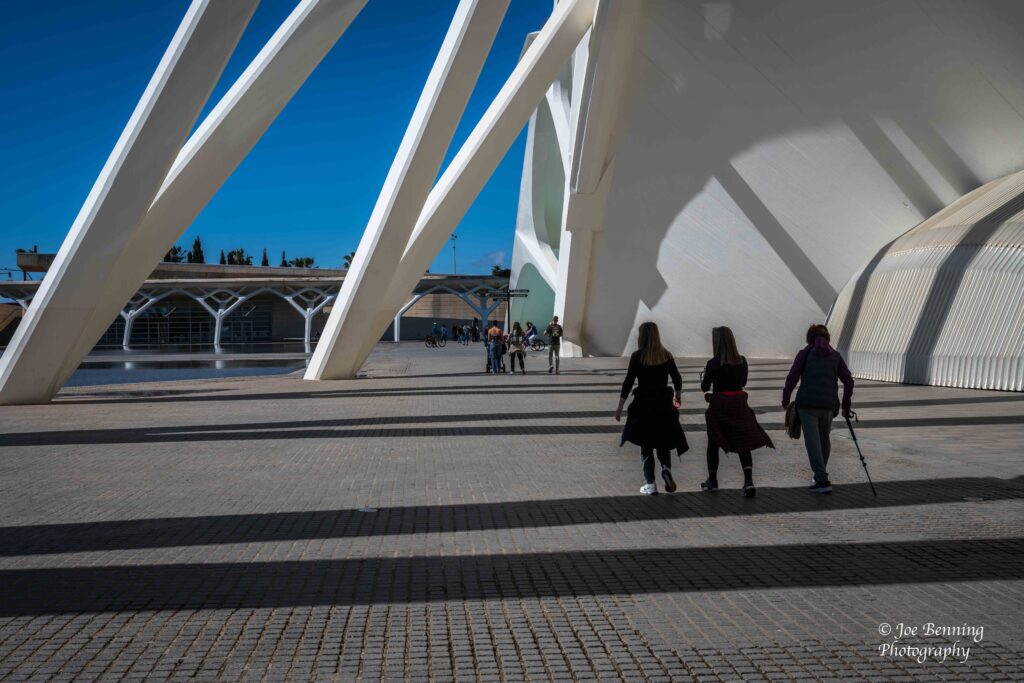
Our last stop in southern Spain was Valencia, where we focused on the City of Arts and Sciences, a modern complex designed by Santiago Calatrava (the architect of the “Oculus” at the World Trade Center Transportation Hub, and buildings and bridges in many cities). The complex houses a Museum of Science, an Opera House, a Planetarium, an Aquarium and an event space.
One Building in the City of Arts & Sciences Complex
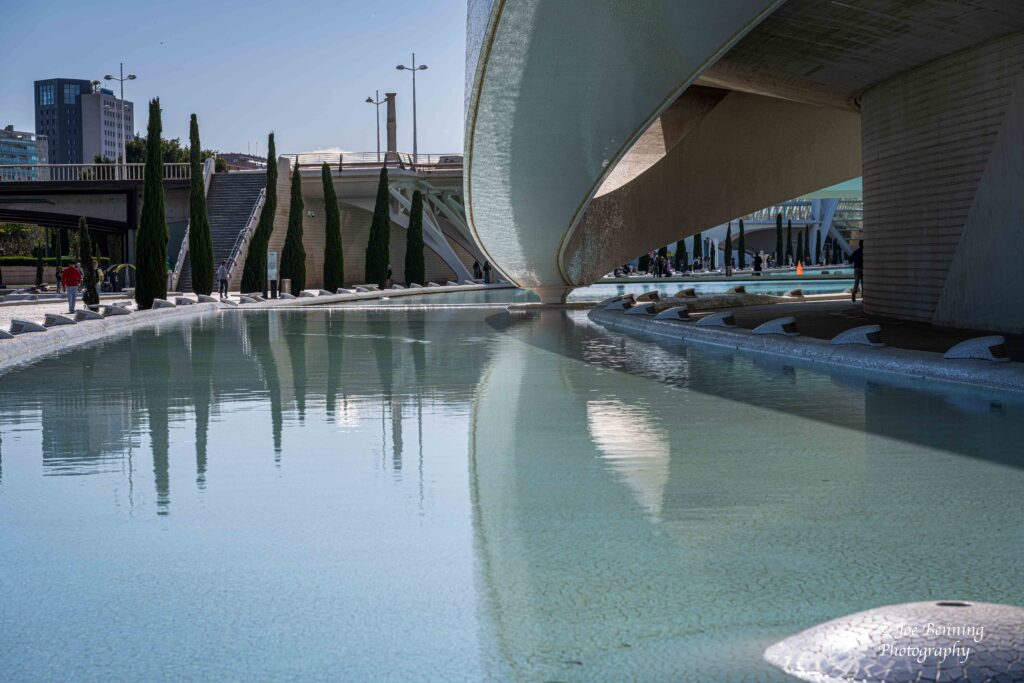
The buildings at the City of Arts and Sciences are unusual, and their architecture is intended to reflect the city’s history. Our tour was led by an architect, so we received a detailed explanation of the design, symbolism, construction and controversy associated with the complex.
Bridge
At the time it was conceived as a public project the citizens of Valencia did not see the need for it. The project ran wildly beyond its timeframe for completion, its scope and its budget. The various buildings continue to need regular, costly repairs and maintenance today, more than 20 years after construction was completed.
Shadows and Light
There have been many investigations relating to waste, mismanagement and corruption associated with the City of Arts and Sciences project. You can understand why with just one look at the unusual external staircase at the Museum of Science – as the building was not constructed in compliance with the fire and safety code of Valencia, the external fire exit was added on after completion.
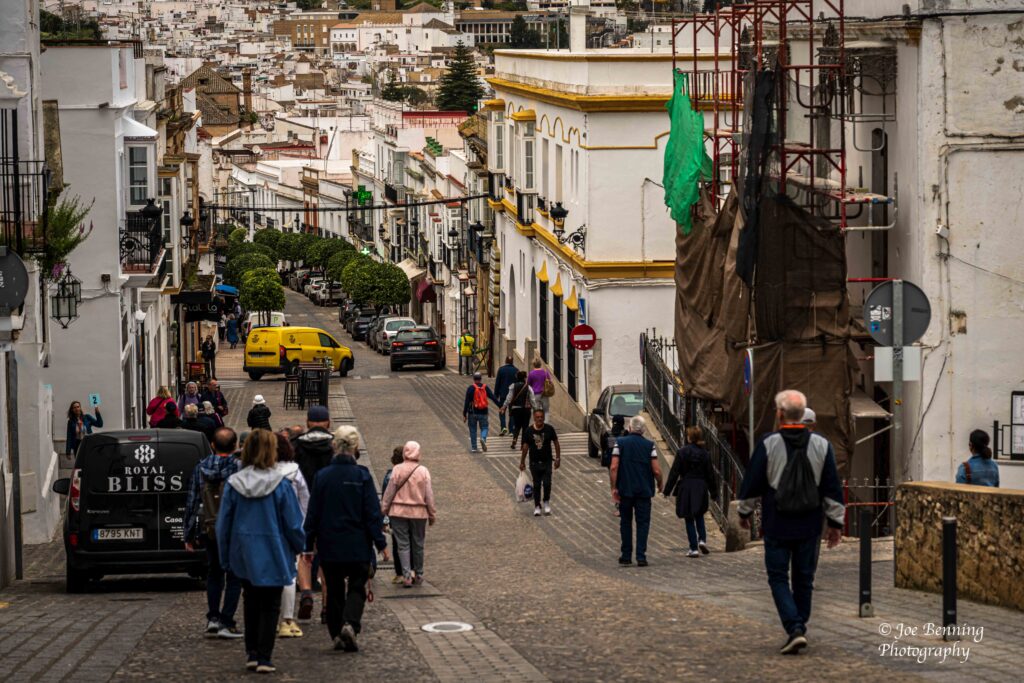
So here we are in Cádiz, Spain. It is the capital of the Province of Cádiz in autonomous Andalusia. It is one of the oldest continuously inhabited cities of Western Europe, but it is quite small. It has only about 115,000 resident citizens.
The Busy Streets of Cadiz, Spain
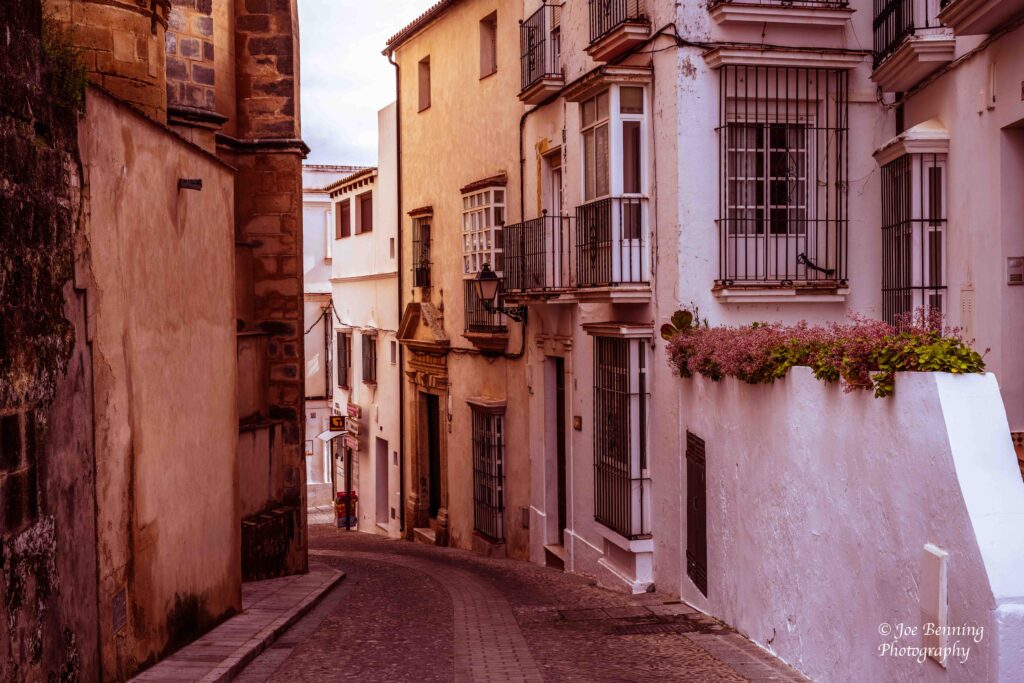
It is often described as a typical Andalusian city brimming with historical landmarks. The older part of the city, the “Old City” takes up the bulk of the city’s area. It has narrow winding streets and alleys that connect large plazas. By way of contrast, the newer parts of Cádiz have wide avenues and modern buildings.
Side Street in Cadiz
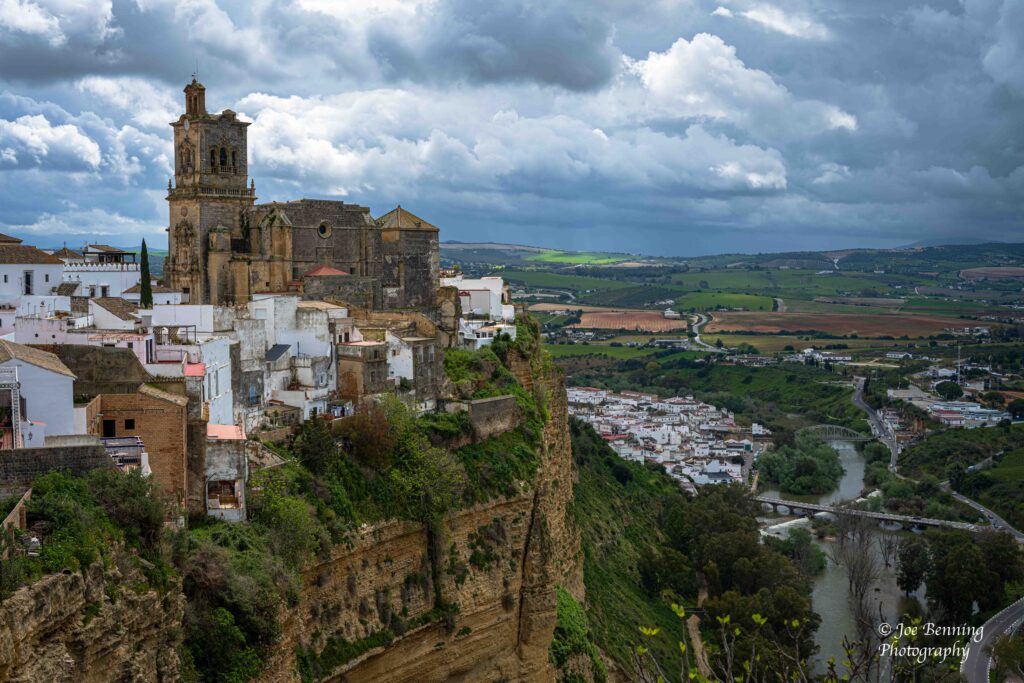
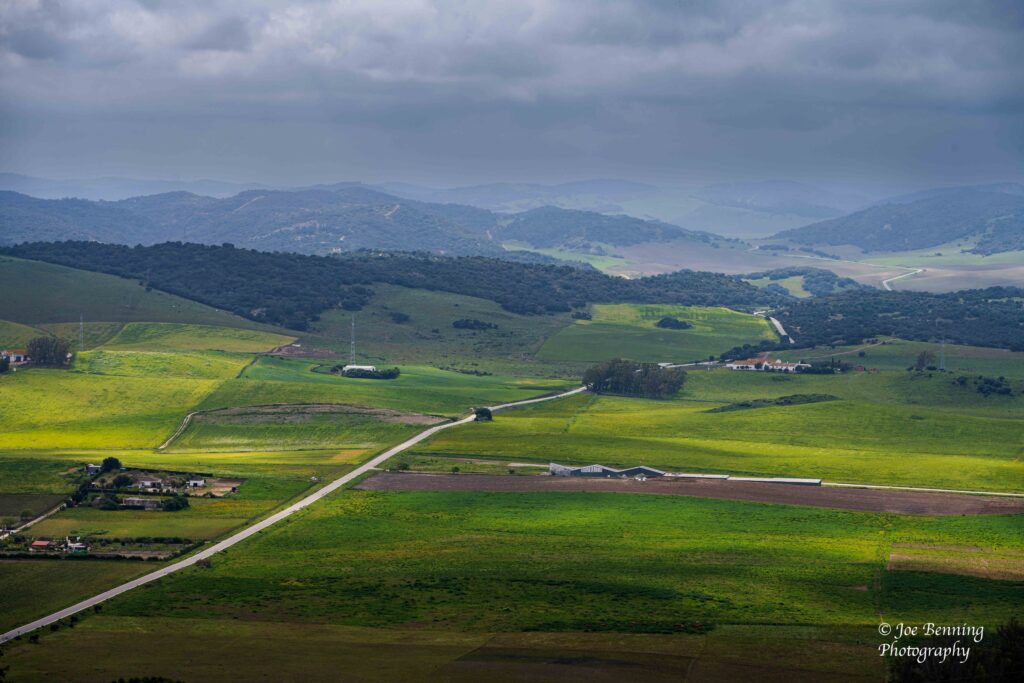
We went on a walking tour of the city and pretty much covered everything, from the narrow winding streets of Old Town, to the more modern bustling streets of the newer city. We saw some large plazas, cathedrals and high points that overlooked the city including farmland in the distance.
Castle on a Cliff in CadizFarmland in Cadiz
All in all Cádiz is a charming little city and worth a visit.