India -- Overall Impressions
India – there aren’t enough words to describe it. Some impressions.
In the course of 6 days in India, we saw only a small part of this country, and yet enough to fascinate us and make us want to see more. Since there are not enough words to adequately describe our experience, and we cannot possibly share all the pictures we have, here are some general reflections.
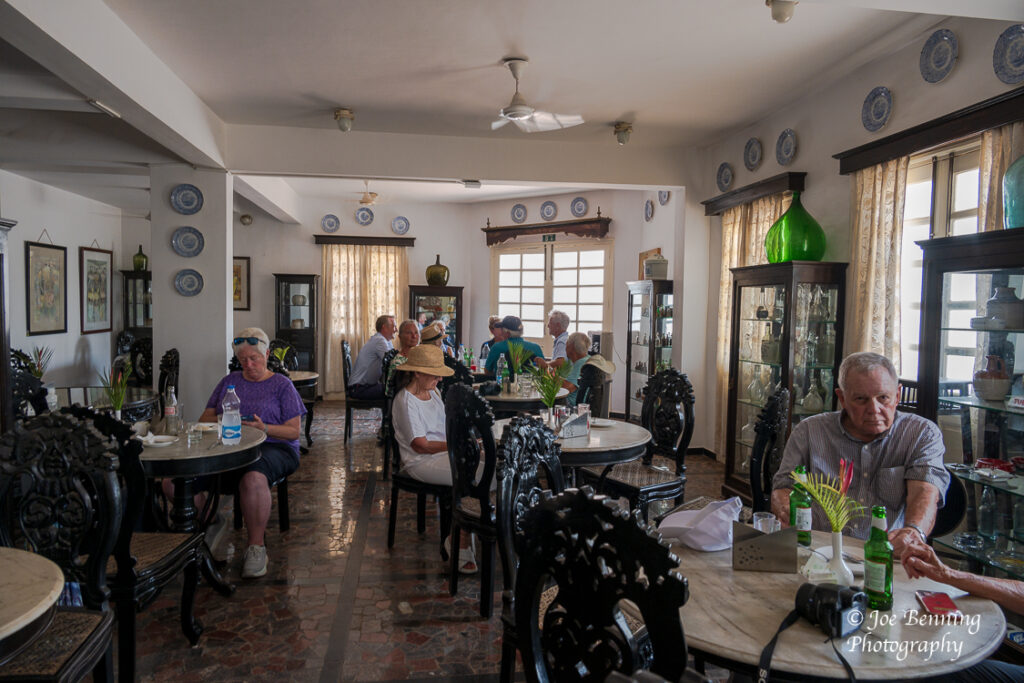
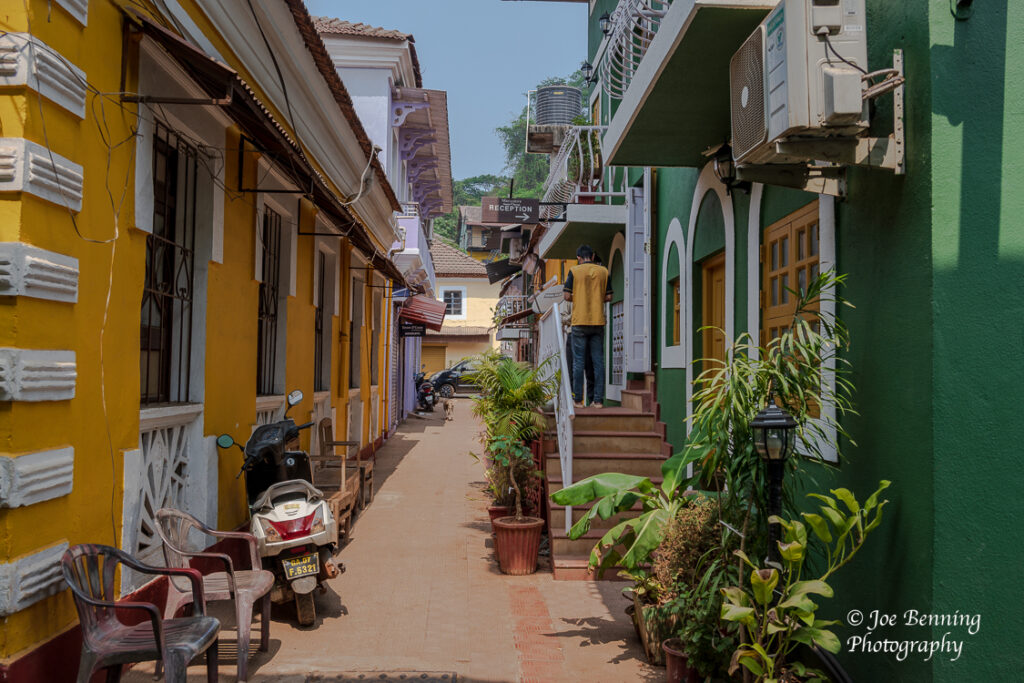
Before heading inland, we spent a few hours touring the Latin Quarter of Goa, India’s smallest state. It is a charming old area where the buildings have the colonial charm you might find in a Caribbean island vacation spot, with colorful small coffee and tea shops, bakeries, restaurants, art galleries, guesthouses and residences.
We headed from the Mumbai sea port to the airport, expecting crowds. Along the way we passed massive slums, in which there are markets, banks, school systems and residents who work, sorting recycling or working at other jobs. A guide told us that these slums do not carry the stigma that is generally associated with them elsewhere, they are just small places to live in an area where housing is not affordable for many people.
Mumbai has one of the cleanest airports we have ever seen, with lovely art displays throughout. Because the airport is so large, nothing seemed crowded, and we boarded our flight to Delhi. Similarly, the Delhi airport was large and spotless, and crowded.
Leaving the Delhi area and heading to Agra, we passed through greater Delhi, where traffic has to be seen to be believed.
Imagine you are in your car on a fairly busy 4 lane road. Add in very large trucks, bundled high and wide with produce or other goods, add in public buses, add in private tour buses, add in tractors that go slowly and trucks carrying live animals like chickens, add in motorcycles and scooters. Add in pedestrians (yes, on the roadway). Notice all the horn honking to signal when a vehicle is near, and the signs on almost every truck saying “please horn.” Now observe, every now and then, how the traffic opens up and flows around a herd of cattle, walking down the center of the road, in either direction (with traffic or against it). Sometimes it is just one cow, sometimes a herd with a person guiding them, sometimes goats or horses as well. Amazing.
As we left greater Delhi we passed miles and miles of fields, where mustard and other crops are grown, often by farmers and their families. There were many images of an individual person tending a large field without machines to assist. And as dusk fell, we saw more and more children helping out before night came. The scenery was beautiful.
Agra is a busy city, home to the Taj Mahal, a great fort, and other sights to see. Close to the tourist areas the streets are lines with shops and the atmosphere is congested and chaotic. Just a mile or so away, we stayed at a lovely hotel, very luxurious, which seemed to be from another world.
We moved on to Jaipur after Agra. Again we saw incredible luxury next to widespread poverty.
Jaipur is known for its block textiles, and there is no end to the shops selling materials. They line several streets, interspersed with markets for fruit and produce, as well as products of all kinds.
The city Palace in Jaipur sits amidst this mass of markets, elegant and serene. Similarly, the Royal Observatory provides a fairly quiet place to see the 19 astronomical instruments built by the founder of Jaipur in the early 1700s, an incredible way to see the placement of planets etc with the naked eye.
We attended a Hindu Aarti ceremony, which is a morning ritual. Again, a pleasure to participate in a crowded experience where people did not seem to be bothered by the throng, just took it in stride. As in other places, every smile from us was met with a return smile. For us, it felt very comfortable to be here.
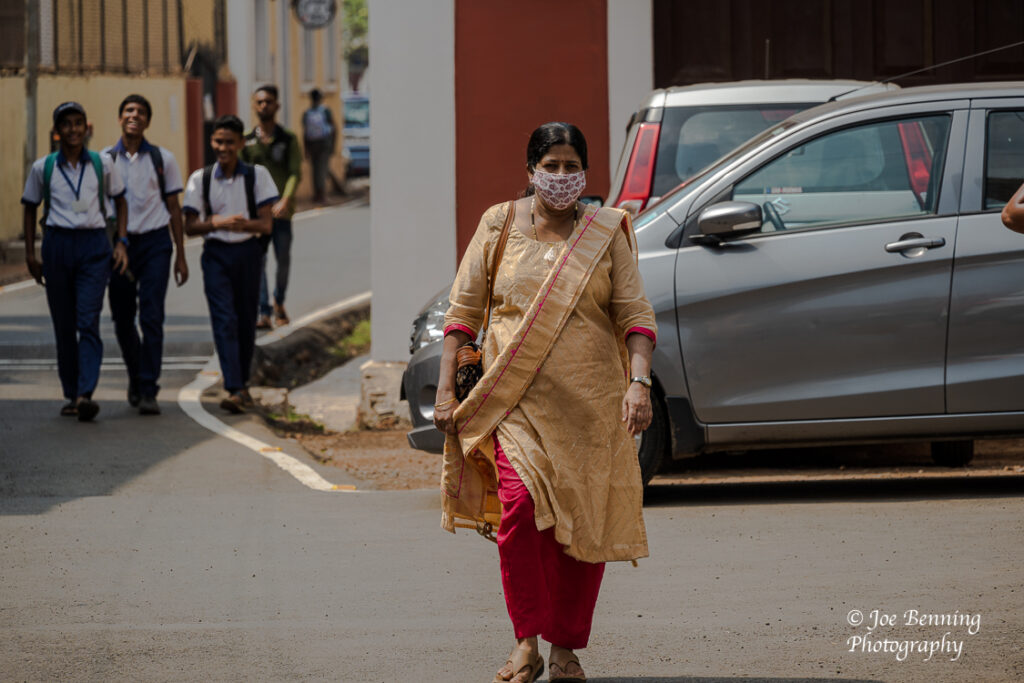
Overall, we experienced an assault on the senses, but a great one. Smells (spices, flowers and everything else), sounds ( horns, languages, birds), tastes and sights of every type, all at once, it seemed. We saw clothing of every type imaginable, which varies among the regions, and changes over time. For example, saris are now being supplemented in some places in the North by head and face coverings, influenced by Muslim dress.
So how do 1.4 billion people live together in this dynamic yet traditional country of haves and have-nots?
Is it the belief of the Hindu population that reincarnation will reward their kindness to all living things? We don’t know why things are the way they are, but we would like to return and learn more.
Some websites that might be of interest to you:
https://www.britannica.com/place/India
https://www.britannica.com/topic/Taj-Mahal
https://www.gadventures.com/blog/behind-hindu-aarti-ceremony/
Mary Anne McDonald