May 7, 2023 | Joe Benning

Visiting Mozambique

Maputo, Mozambique

May 7, 2023

We just finished—wait for it—a pirate drill. Apparently we are about to enter a high-risk area (HRA) for piracy. Not something you see every day. 

Anyway, we arrived in Maputo, Mozambique on Monday, May 1st. Now officially known as the Republic of Mozambique, it has a population of 30 million people. The country is well endowed with natural resources, particularly natural gas. But corruption is endemic and the country remains one of the poorest in the world. Its main industries are fishing and tourism and the spread between rich and poor is one of the widest in the world. 
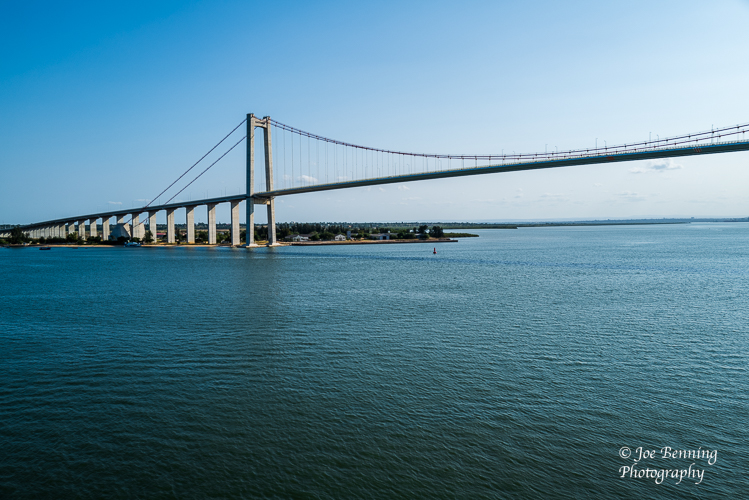
Bridge over Maputo Channel

The country gained its independence from Portugal in 1975 and immediately changed its name to the People’s Republic of Mozambique, then named streets after Mao Tse Tung, Ho Chi Minh and Karl Marx, which goes a long way toward explaining its economic condition. 
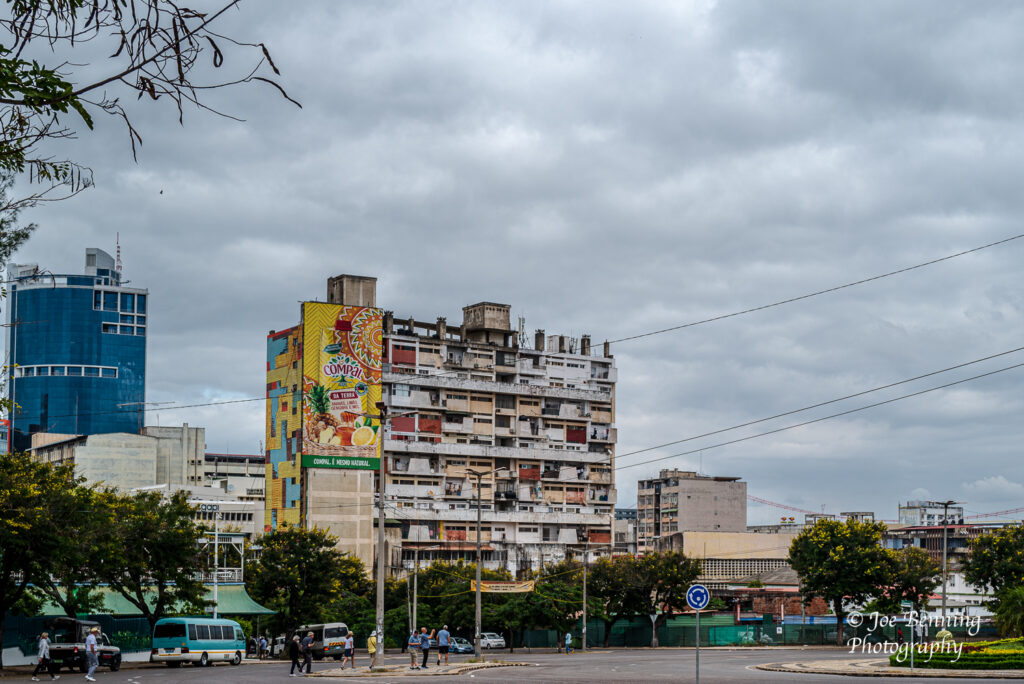
Maputo Building Complex

Within 2 years after gaining independence in 1975 a civil war broke out and lasted until 1992, at which time the ‘People’s” bit was dropped and the country’s name was changed to the Republic of Mozambique. Since then there has been some liberalization, economic growth has been a blistering 8% or so and thousands of state enterprises have been sold off. But the damage from experiments in Marxism-Leninism and years of civiil war have taken their toll and it will take a while for the country to become truly prosperous. 
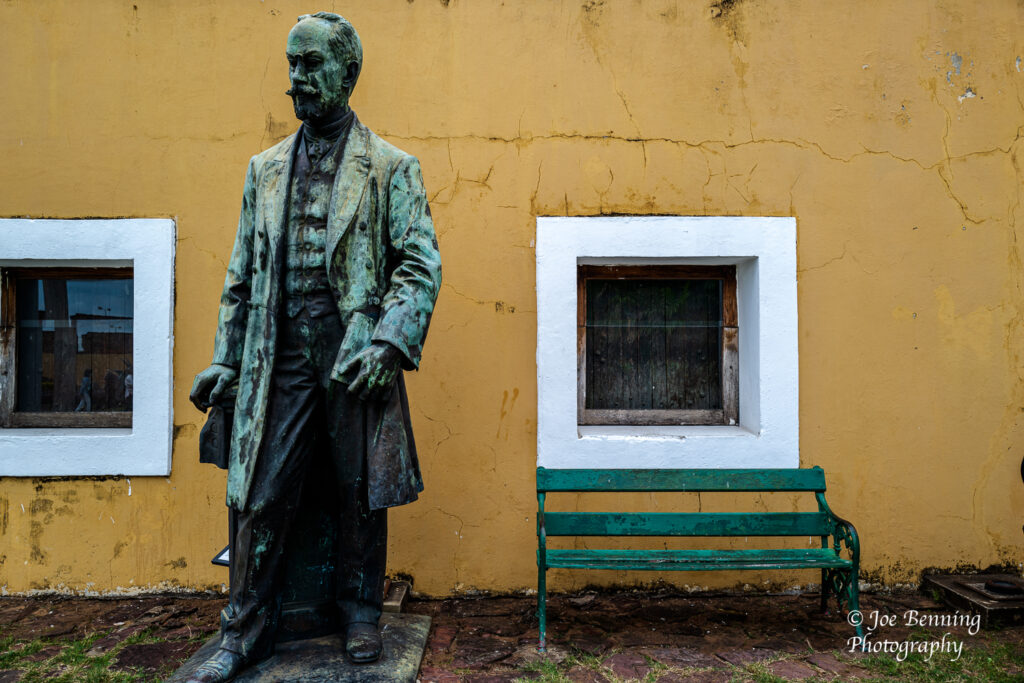
Wall in a Fort

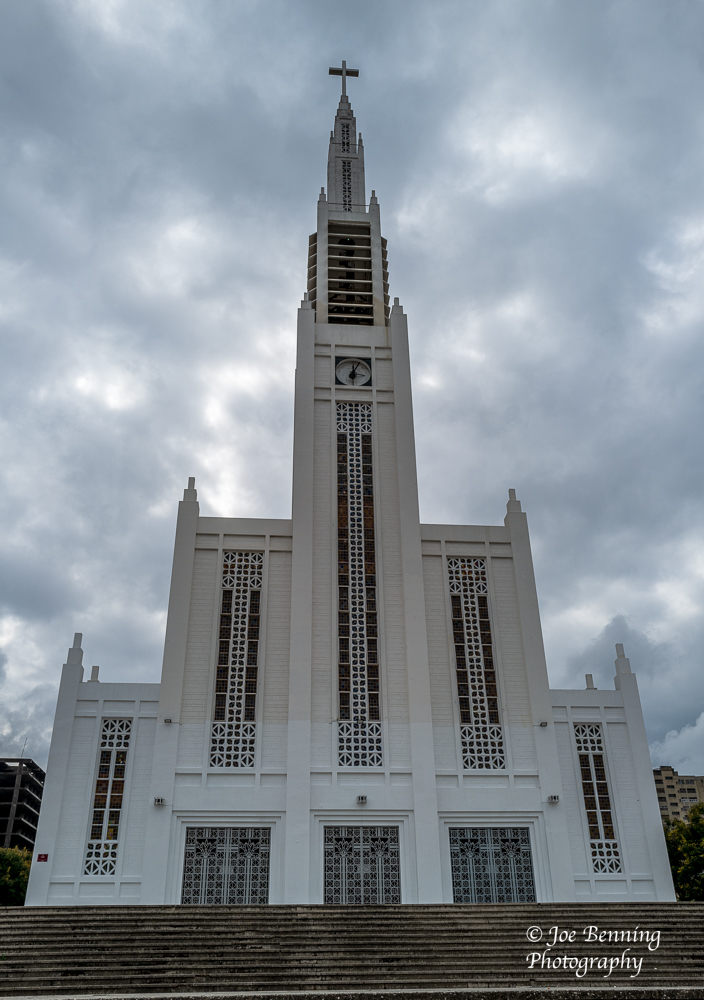
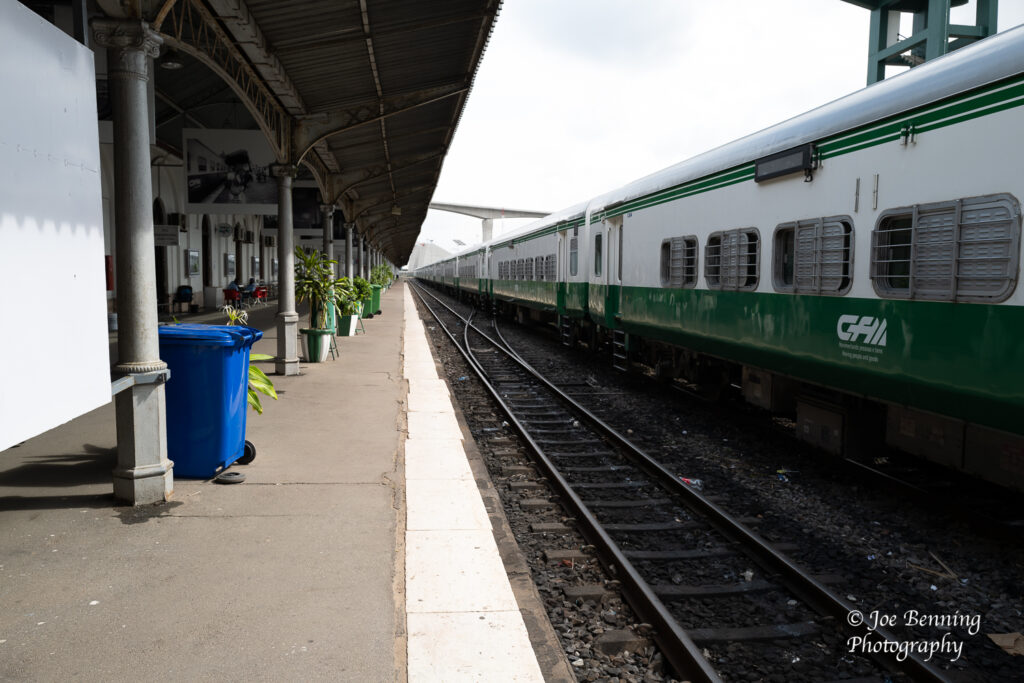
Mary Anne and I took a half-day tour around the capital, Maputo. As it turns out, it was a national holiday called Worker’s Day, I suppose in sympathy with May Day in Europe. We saw demonstrations of solidarity in the center of town where we visited the train station. We also saw the outside of the Cathedral of Our Lady of the Immaculate Conception. 
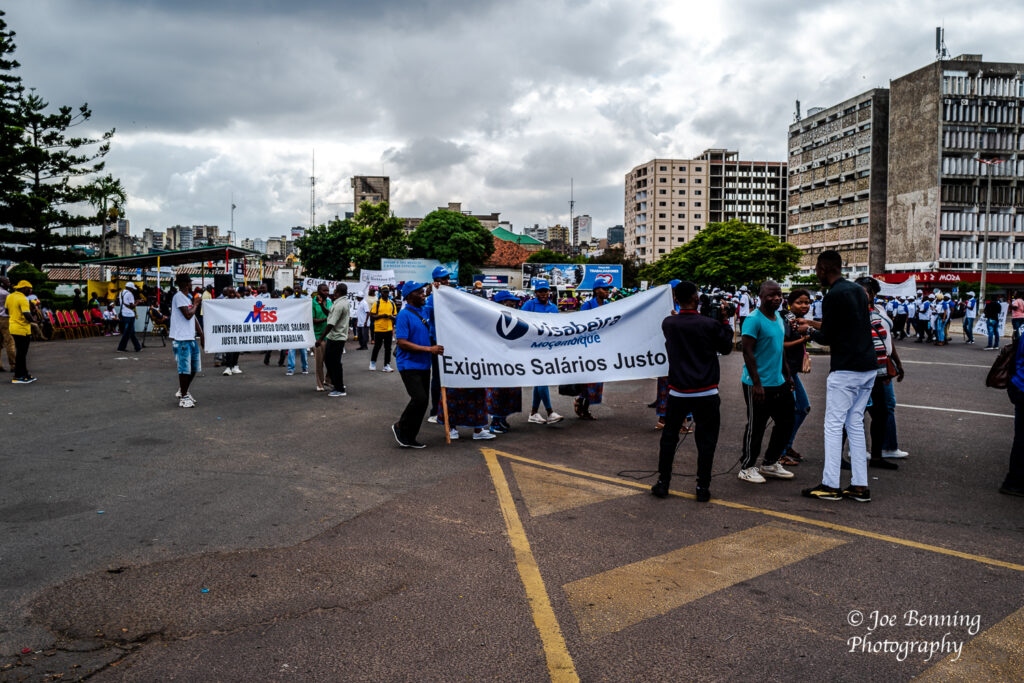
Workers Day
Cathedral Our Lady of the Immaculate Conception
Train Station

The city though, was dilapidated and the signs of its poverty were everywhere. One big problem is that the school system is an admitted disaster and the adult literacy rate is only around 60%—with 74% male literacy and only 45% female literacy. Mozambique has a lot of work to do if it is going to substantially improve its condition. 

Joe
April 28, 2023 | Joe Benning

A Revealing Day in Nosy Be, Madagascar

A Stop in Nosy Be, Madagascar

April 28, 2023

We arrived at Nosy Be, Madagascar on the 27th of April. (The island country is officially known as the Republic of Madagascar.) To put this visit in perspective, it is necessary to consider one overriding  fact, namely that Madagascar is  one of the poorest countries in the world. The appalling living conditions there testify to it. 

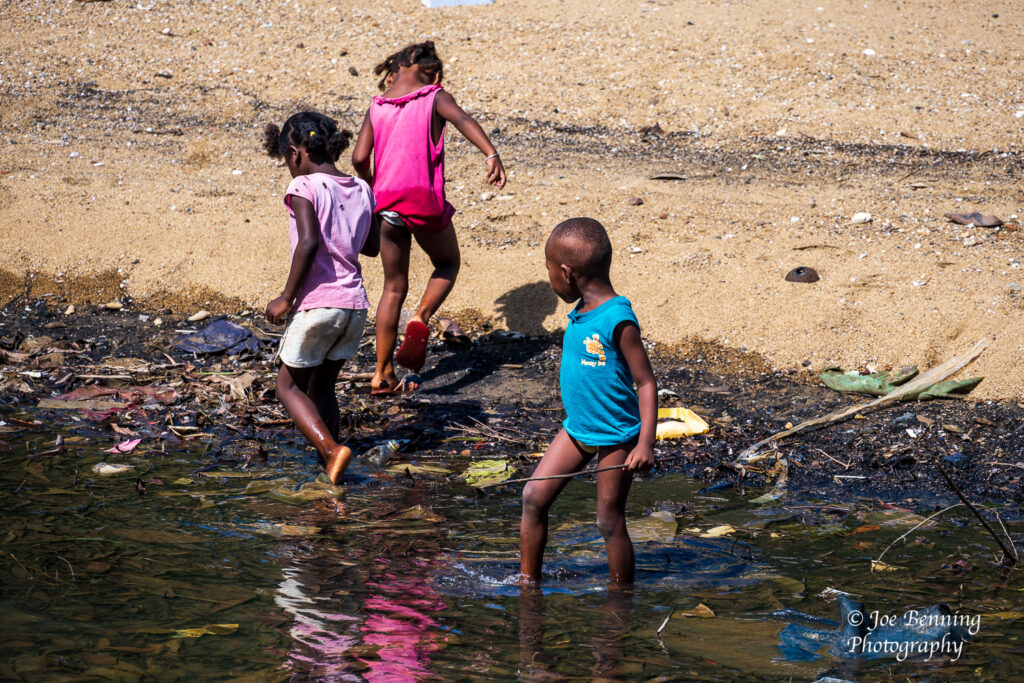
Children Playing in a Stream Full of Trash
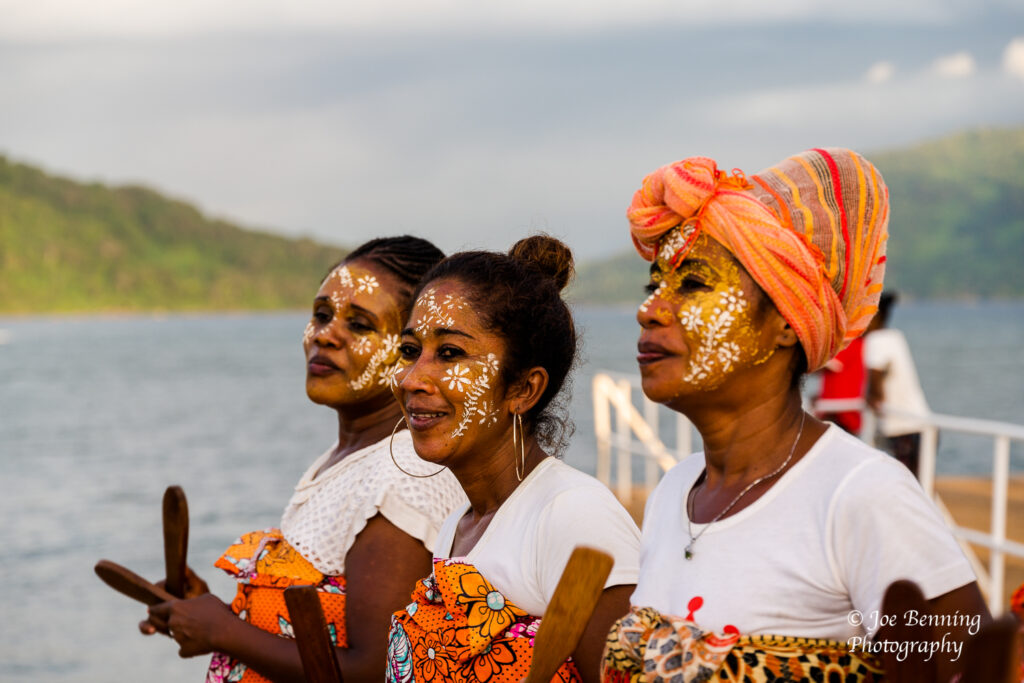
Dancers at the Port in Madagascar

Madagascar was governed as a Kingdom for a couple of hundred years before it was annexed by France in 1897. It was granted its independence in 1960. Since then it has gone through a number of political crises. It is now on its 4th republic which is structured as  a constitutional democracy, following a military coup in 2009. After a protracted transition it is now functioning, more or less, as a democracy with constitutional governance restored in 2014. The uncertainty accompanying its various political crises has undoubtedly played a part in the country’s poverty and lack of foreign investment.

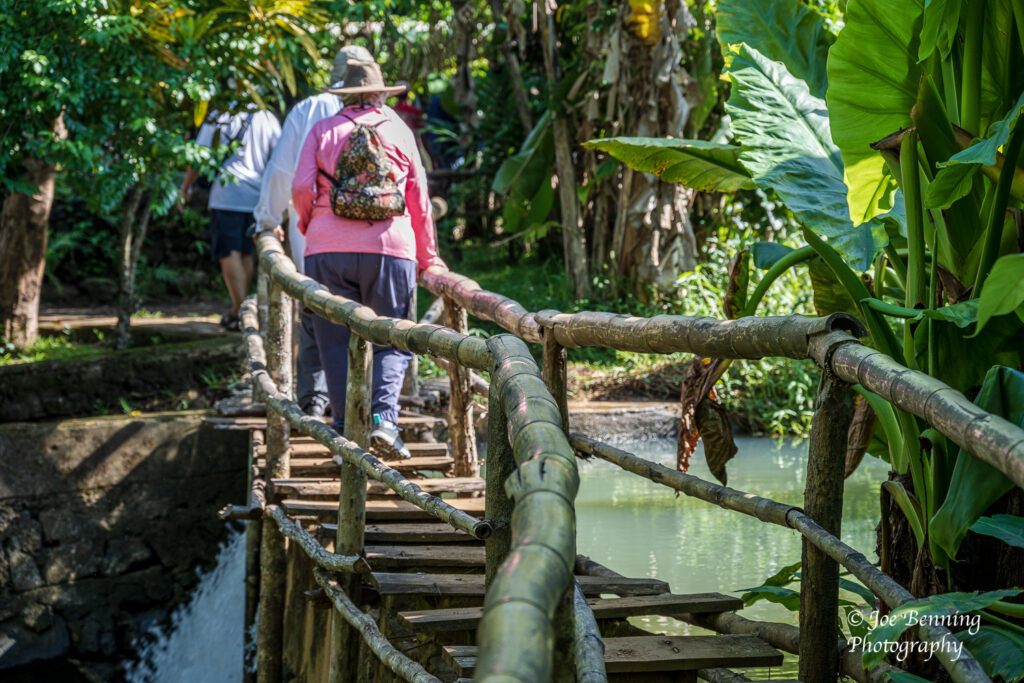
Mary Anne Crossing Wooden Bridge

Because of its long isolation from neighboring continents there are lots of plants that are endemic to Madagascar. In fact more than 80% of Madagascar’s plant species are found nowhere else. Moreover, the island has been classified as a biodiversity hotspot by Conservation International.

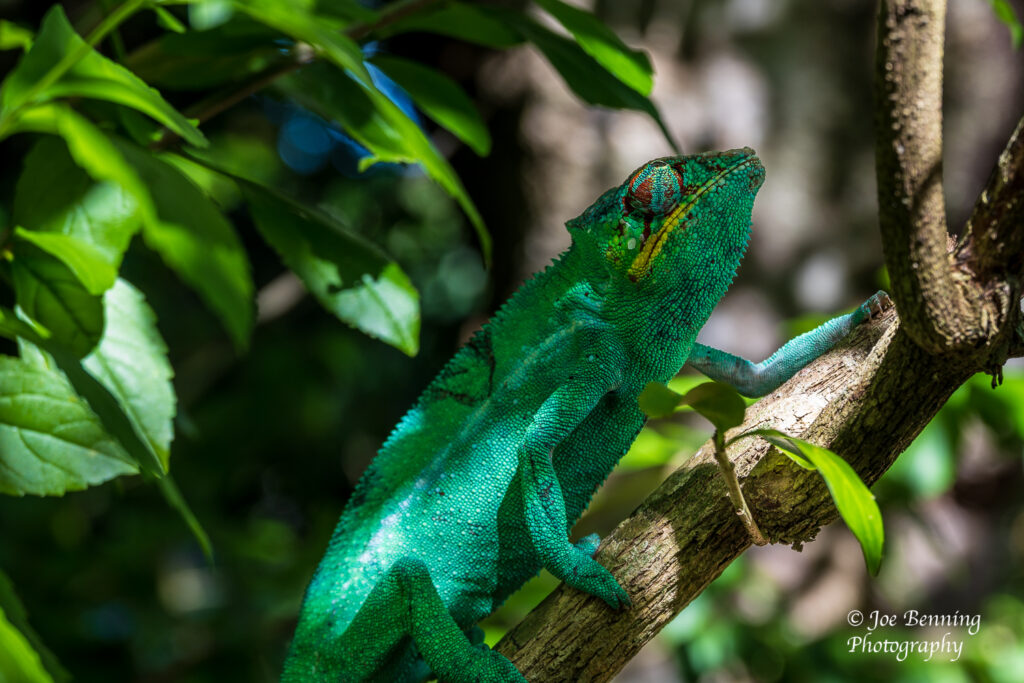
Chameleon
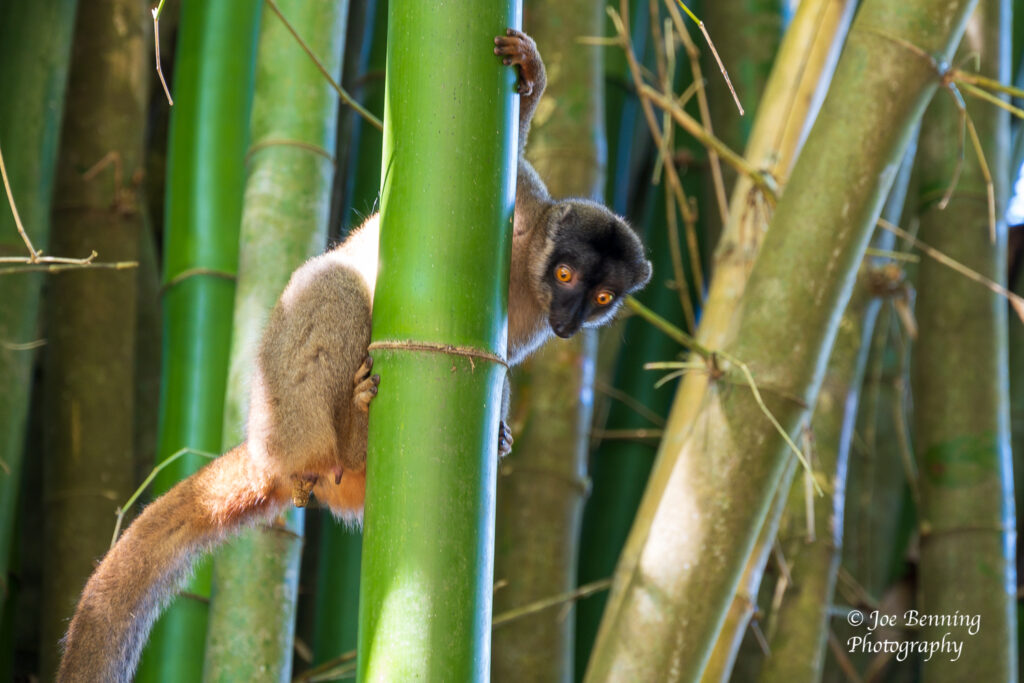
Lemur in a Forest
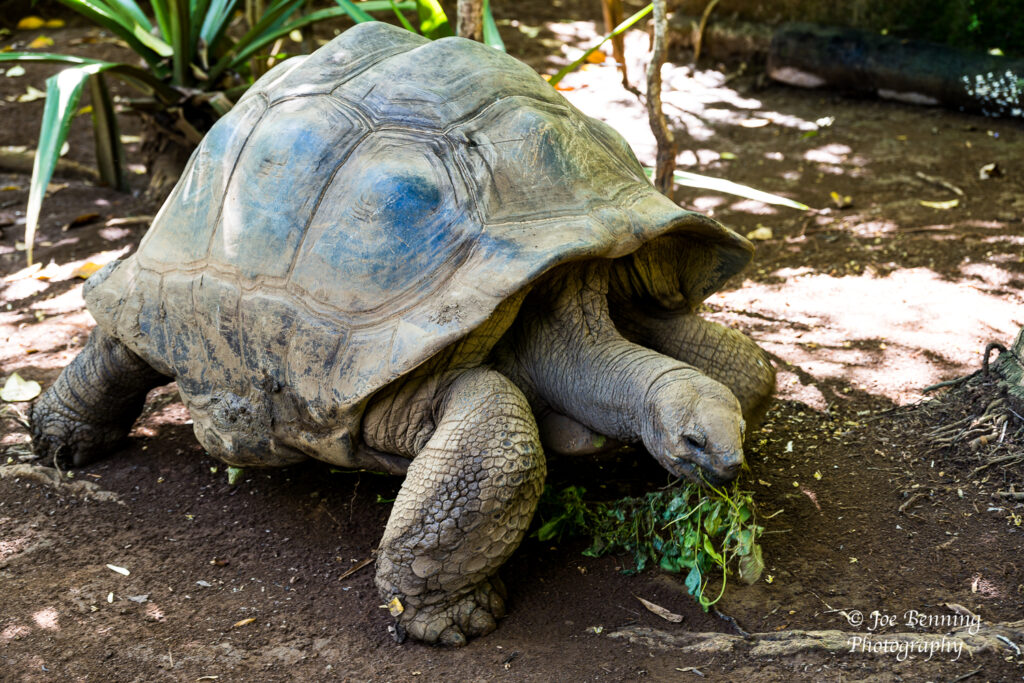
Giant Turtle–about 100 years old

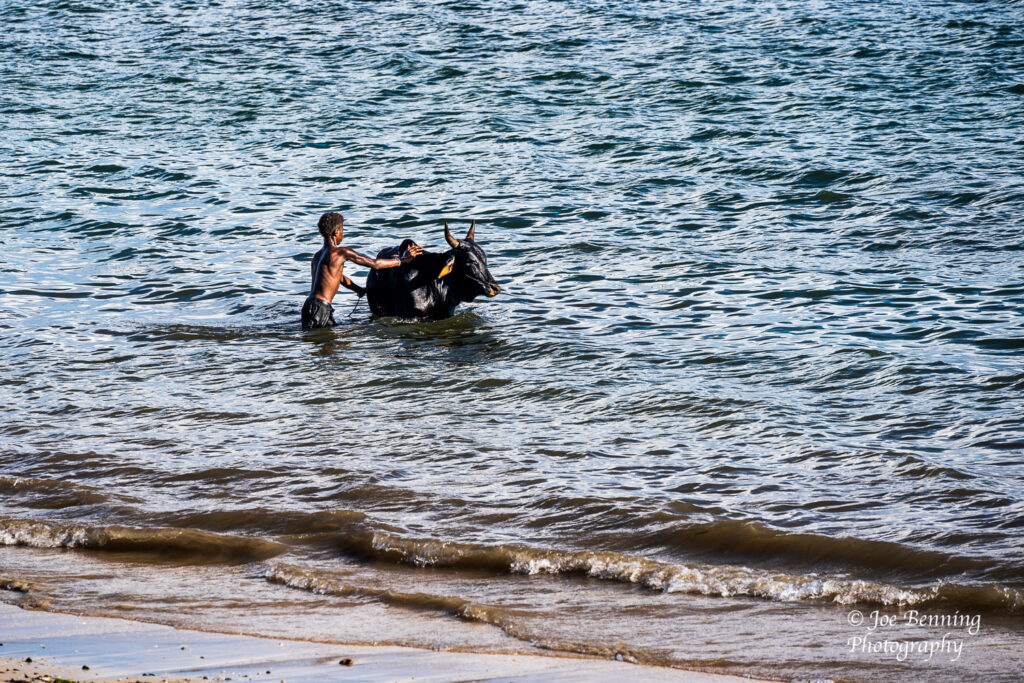
Mary Anne and I went on a tour in Madagascar and got a look at the biodiversity as well as the poverty that the people live under. Even at a “high end” hotel we stopped in, the conditions were less than ideal, to put it mildly. For example, the hotel was virtually surrounded by people desperately trying to sell souvenirs. Believe it or not, one young man brought his cow into the ocean at the resort beach. So, marketing messages aside, Madagascar with its biodiversity, surrounded by abject poverty, was both fascinating and a tragedy to see.  

Young Boy with Cow in the Ocean

Joe

April 26, 2023 | Joe Benning

The Seychelles

On to the Seychelles

April 26, 2023

The Republic of the Seychelles, as it is officially known, is an archipelago in the Indian Ocean consisting of 115 islands. Its capital and largest city is Victoria which also happens to be the smallest capital city in the world measured by population. In fact at just under 100,000 people Seychelles is the least populated sovereign African country. Its island neighbors include Comoros, Mauritius, Reunion and Madagascar (where we are headed next).

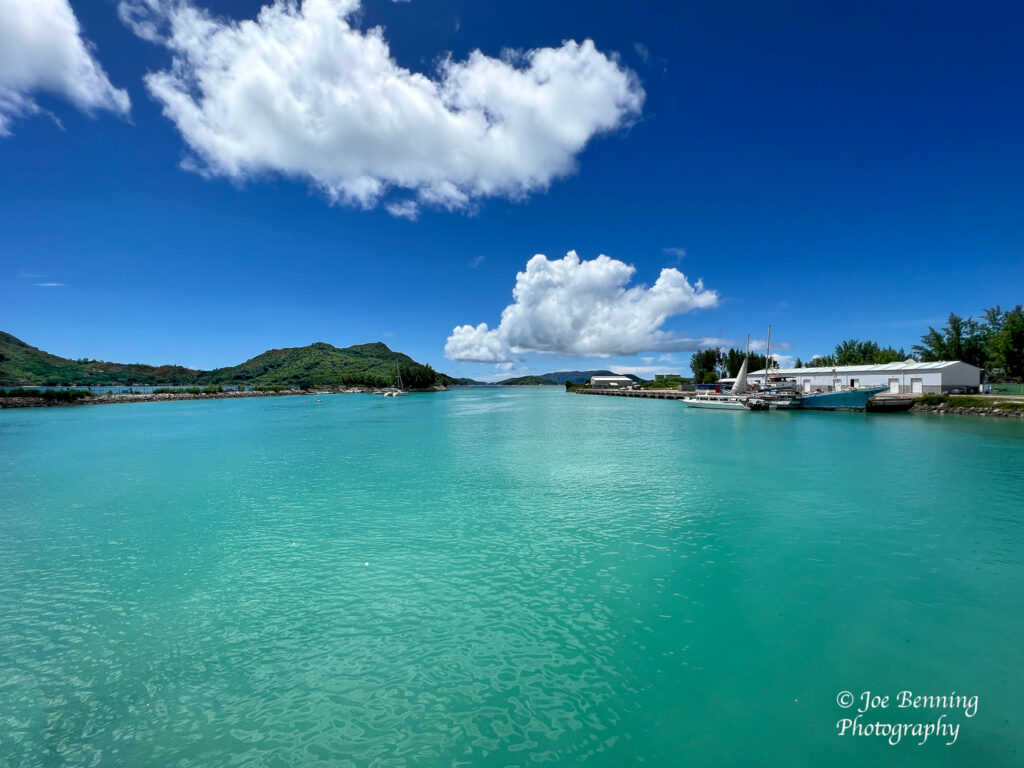
Aqua Waters Outside the Port

The most important industry for the Seychelles is tourism. But tourism, as important as it is, is not the whole story. The Seychelles has a market-based diversified economy. The government encourages foreign investment. Since the 1970s the country has experienced rapid growth—up to 1,600% expressed in Purchasing Power Parity. Seychelles has the highest nominal per capita GDP of any African country. In Africa it has the second highest Human Development Index ranking (after Mauritius). And it is the only African country ranked as high-income by the World Bank.

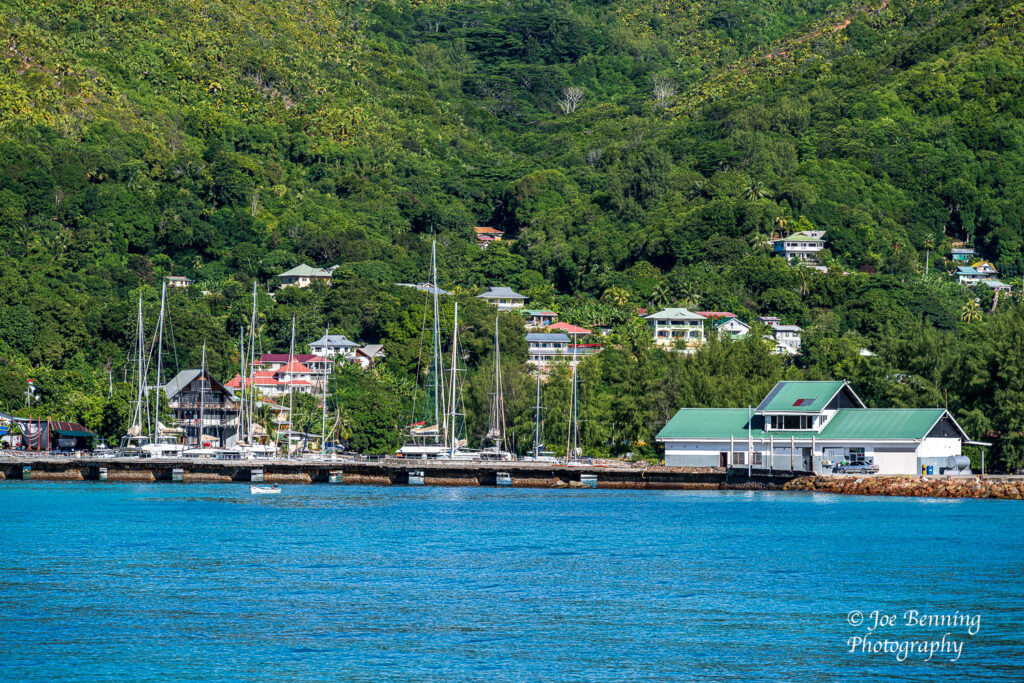
Tender Docking Station

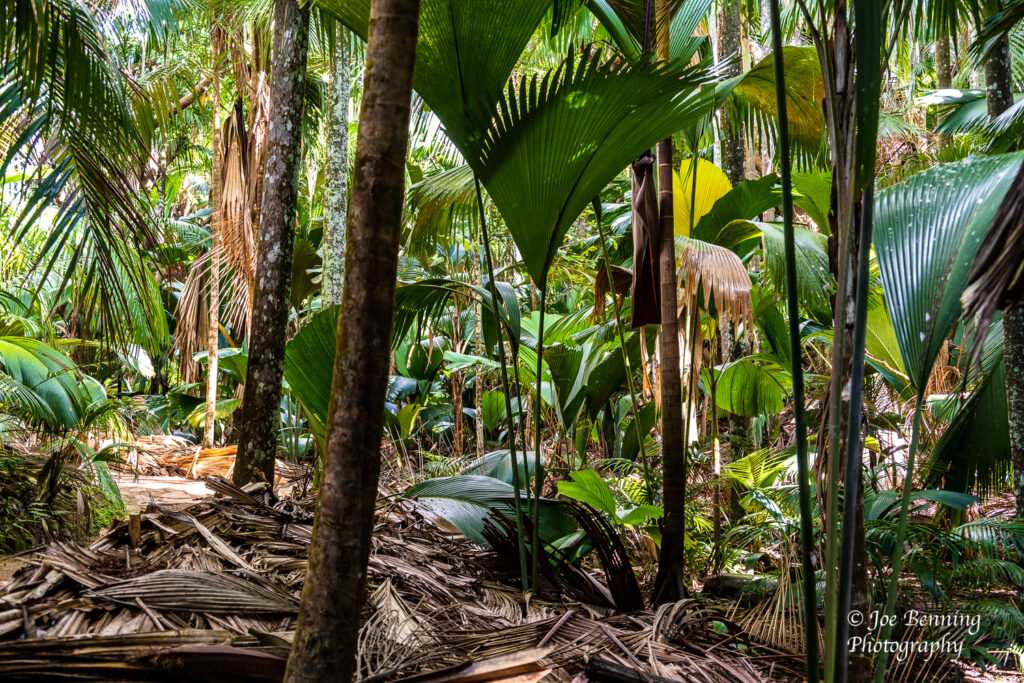
Mary Anne and I spent 2 days in the Seychelles. Among other things we hiked around the a palm tree forest in the  Vallee De Mai, a  botanical garden near Victoria, and viewed Coco de Mer trees. We saw large rock formations, giant tortoises and stunningly beautiful beaches. 

Coco de Mer plants in the Vallee De Mai
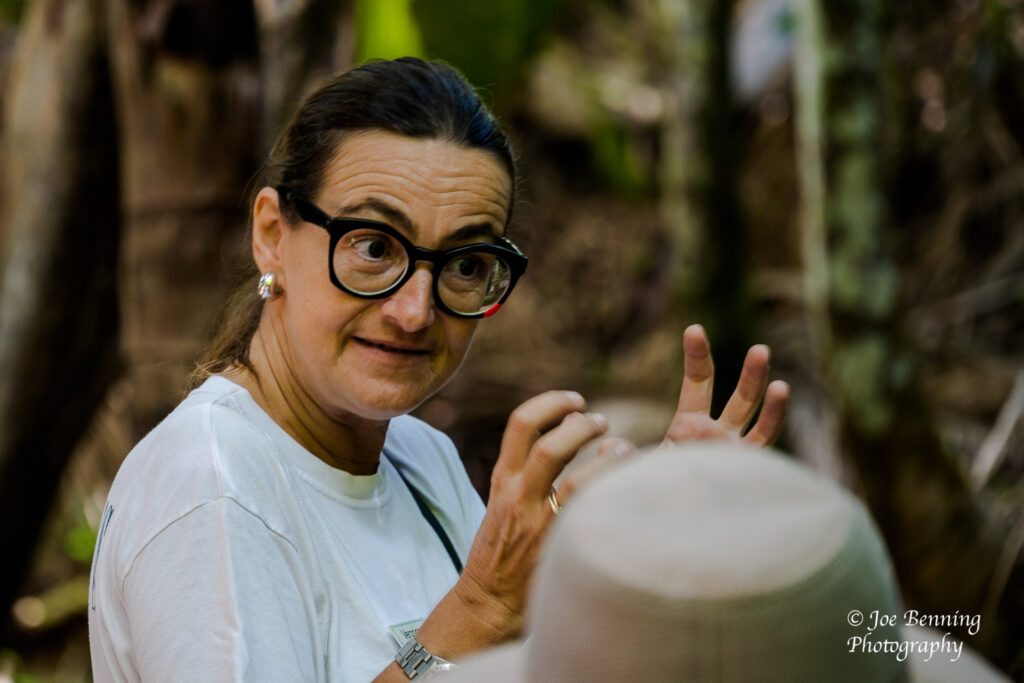
Tour Guide in Vallee de Mai
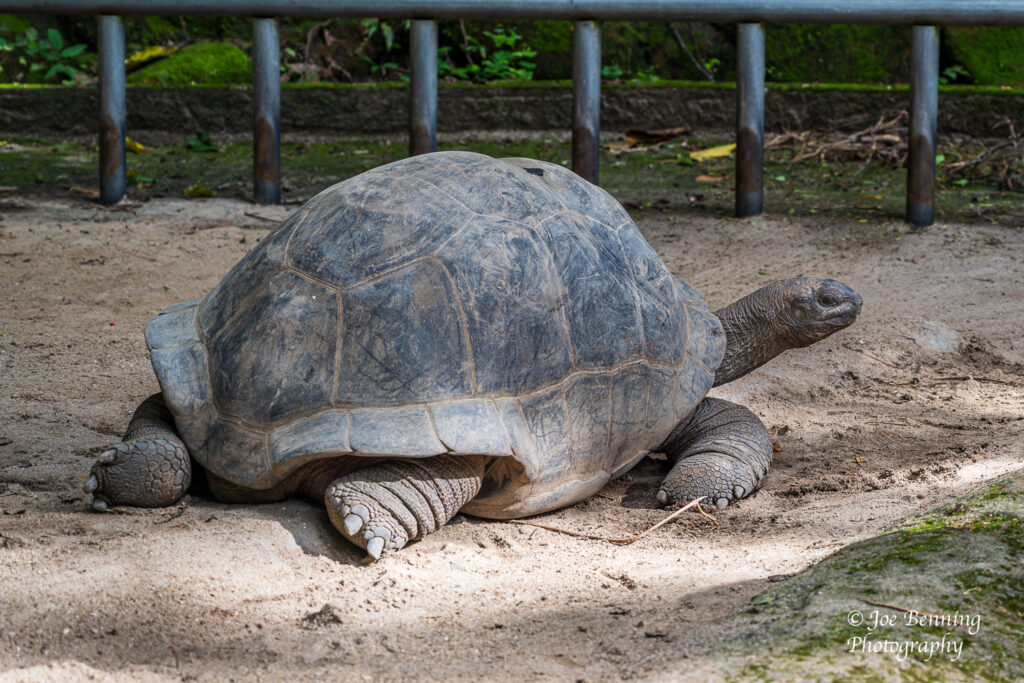
Giant Tortoise

All in all the Seychelles is a beautiful playground, in many ways not unlike St Bart’s. Definitely worth a visit—if you are in the neighborhood. Next stop Madagascar.

Photos from our visit are posted below.

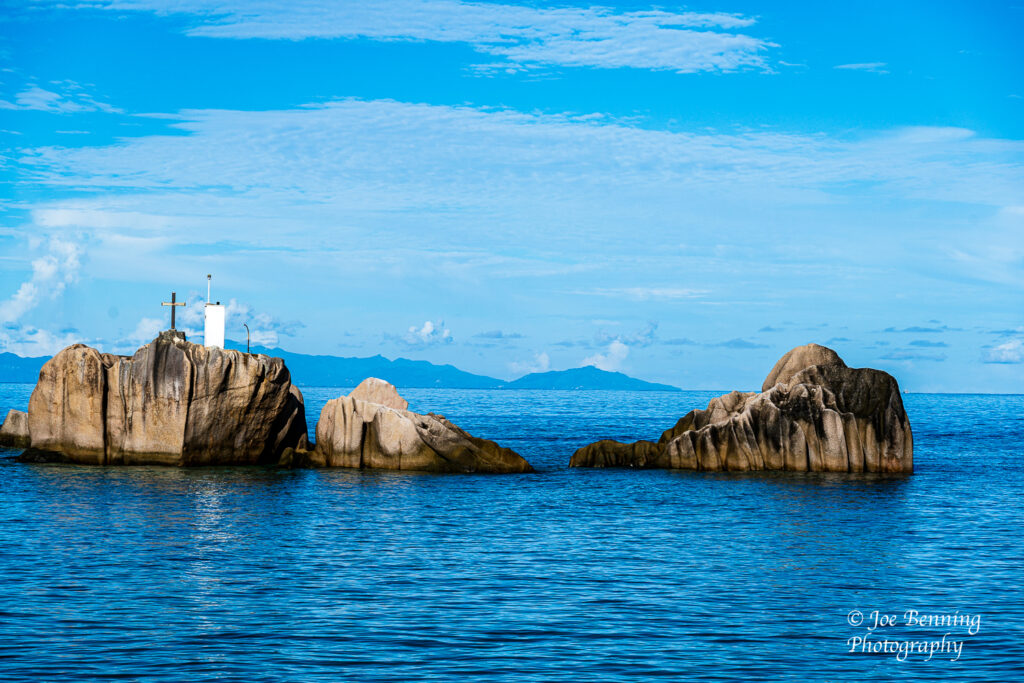
Rock Formation in the Seychelles
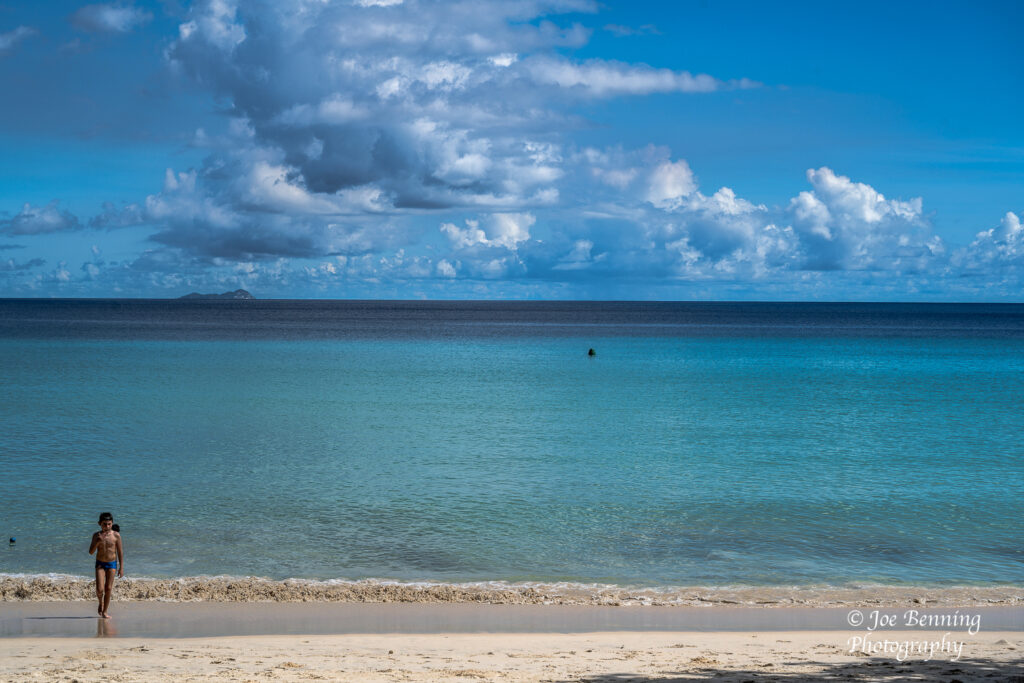
Seychelles Beach Resort

Joe

April 25, 2023 | Joe Benning

Last Stop in the Middle East: Oman

Salalah,  Oman

April 25, 2023

Our last stop in the Middle East was Salalah, Oman. Salalah is the 3rd largest city in Oman, which is officially known as the Sultanate of Oman. It is one of the only two Sultanates in the world, the other being Brunei.  Salalah (pop about 200,000) is the capital city of the province of Dhofar. 

Oman is located on the southeast coast of the Arabian Penninsula and spans the mouth of the Persian Gulf. It shares land borders with Saudi Arabia, the UAE and Yemen. It shares maritime borders with Iran and Pakistan. It has the Strait of Hormuz as a coastal border. So Oman, is in a pretty rough neighborhood.

But it, and Salalah, its 3rd largest city, are peaceful. Unlike the rest of Oman which is always hot and dry, Salalah has a monsoon season that lasts from June through September. Consequently, by regional standards there is a good deal of vegetation. There is also a good deal of tourism, especially during the monsoon season. 

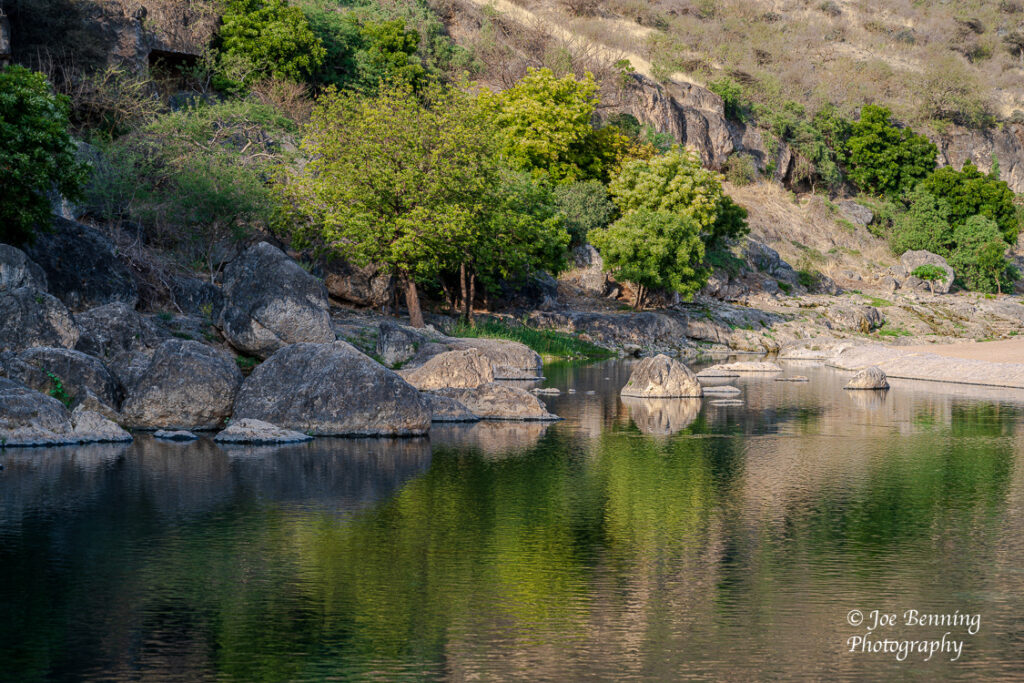
A photo of an Oasis in Oman

Governance in Oman is by absolute monarchy; the current sultan is Haitham bin Tariq Al Said who is said to be a benevolent monarch. The country runs on revenue generated by its mineral resources (Oil and Gas) and all menial work is performed by Asian migrants. The population is about 99% muslim.

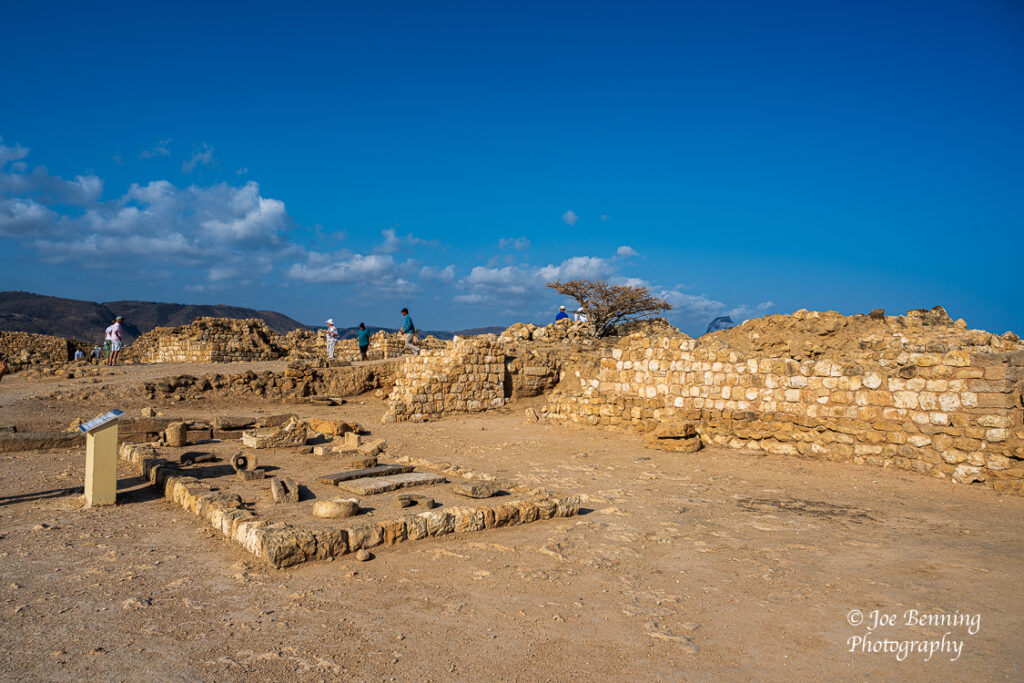
When Mary Anne and I visited there we went to see an archeological dig. 

Salalah, Oman — April 21, 2023. A wide angle photo at an archeological dig in Oman being visited by tourists.

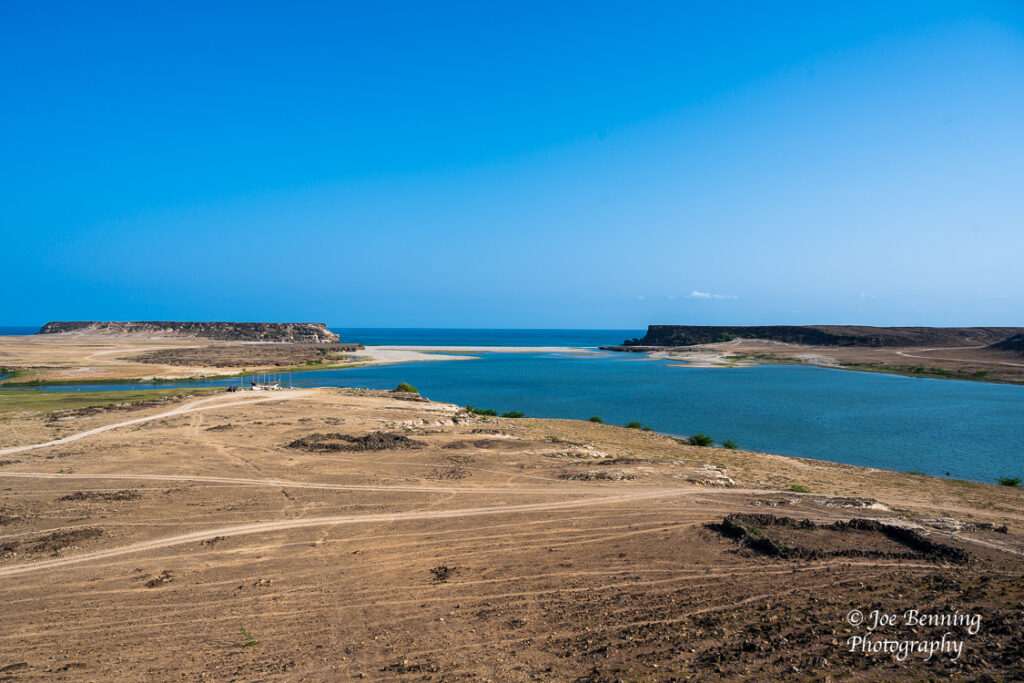
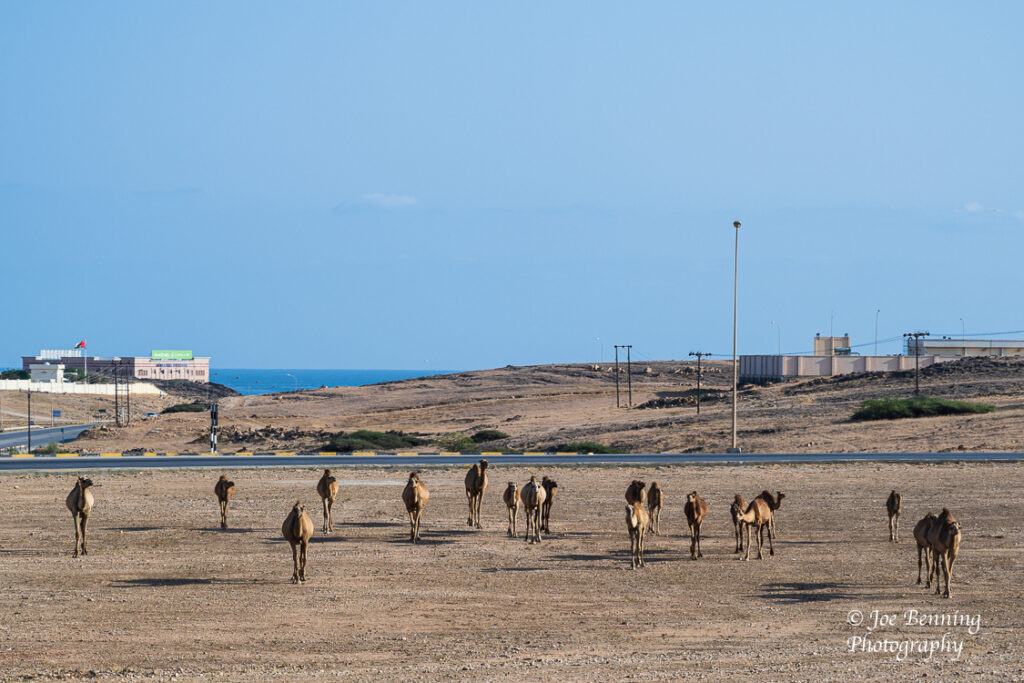
We also saw some spectacular landscapes and believe it or not, lots and lots of camels who pretty much roam about freely. 

Oman Landscape
Camels walk across a field

Salalah was an interesting place, very modern and well maintained. The sultan to all outward appearances is benevolent as monarchs go. But benevolent monarchs are benevolent until they aren’t and then things can get pretty ugly pretty quickly. We’ll see how things develop.

Joe

April 24, 2023 | Joe Benning

Visiting Abu Dhabi

More on the Middle East — Abu Dhabi

April 24, 2023

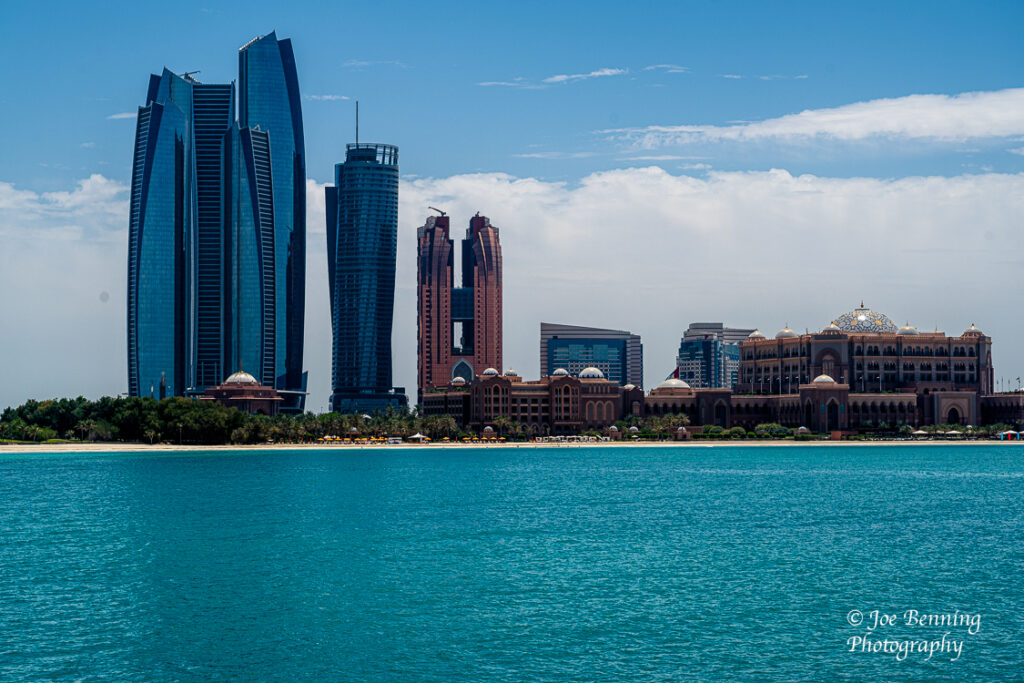
After visiting Dubai we sailed over to Abu Dhabi — the capital city of the United Arab Emirates (UAE). It is the second largest city of the UAE, after Dubai. As of 2018 the population of Abu Dhabi was about 1.8 million people. However, most of the population consists of ex-pats; less than 500,000 are UAE citizens. Citizenship is largely restricted to children of men who are UAE citizens.

Downtown Abu Dhabi

The majority of ex-pats are migrant workers from lots of different countries, including Pakistan, Nepal, India, Eritrea, Ethiopia, Somalia, Bangladesh, Sri Lanka and the Philippines. Not to mention China, France, the UK, Italy and Serbia. Largely owing to its vast oil and gas reserves, Abu Dhabi has one of the highest per capita GDPs in the world. The reserves are mostly owned (about 95%) by the government. The official state religion is Islam. 

Abu Dhabi emphasizes educating the population and welcomes foreign universities. For instance, INSEAD, NYU and the Sorbonne have campuses in Abu Dhabi.

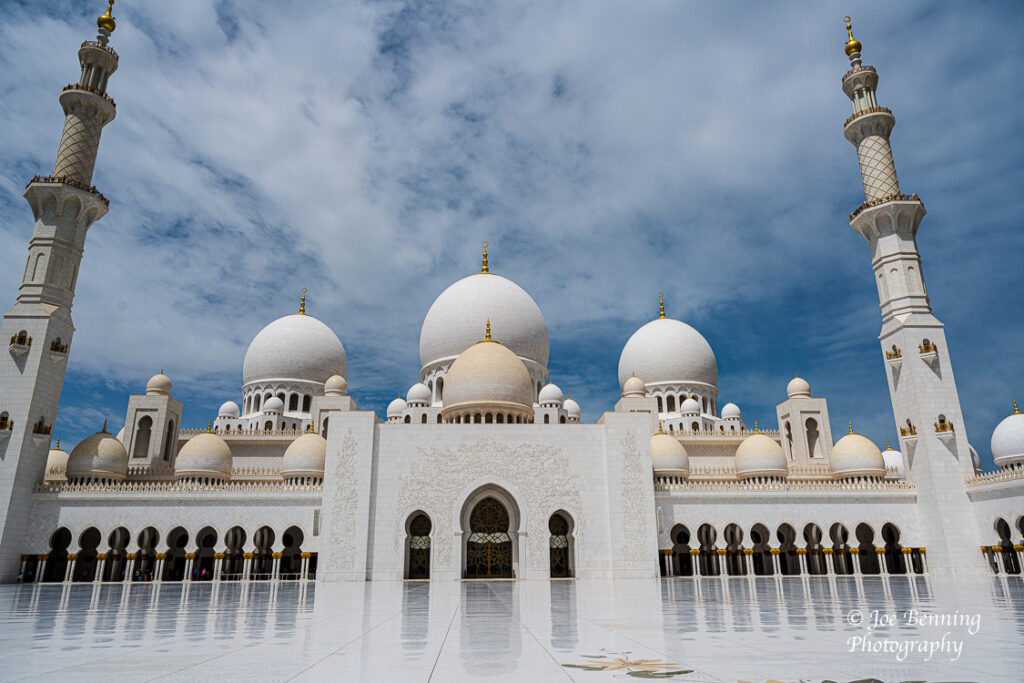
One of they key features of the city’s architectural history is the Sheikh Zayed Grand Mosque. It is an architectural masterpiece, recently built, and one of the largest mosques in the world. Mary Anne and I spent a good deal of time there. 

Grand Mosque in Abu Dhabi
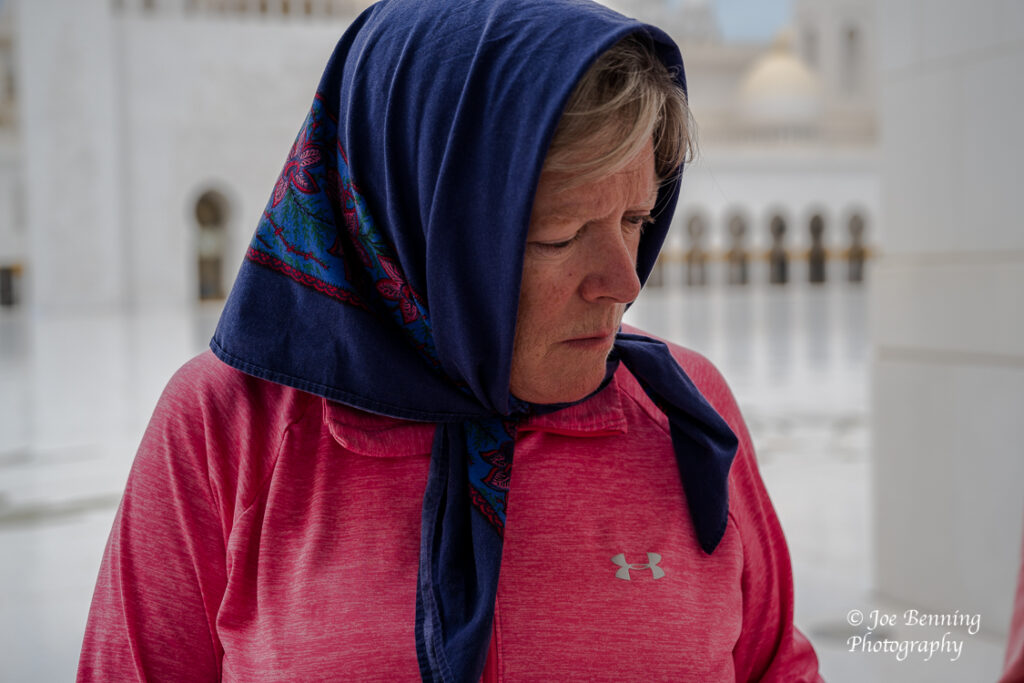
Mary Anne in the Mosque
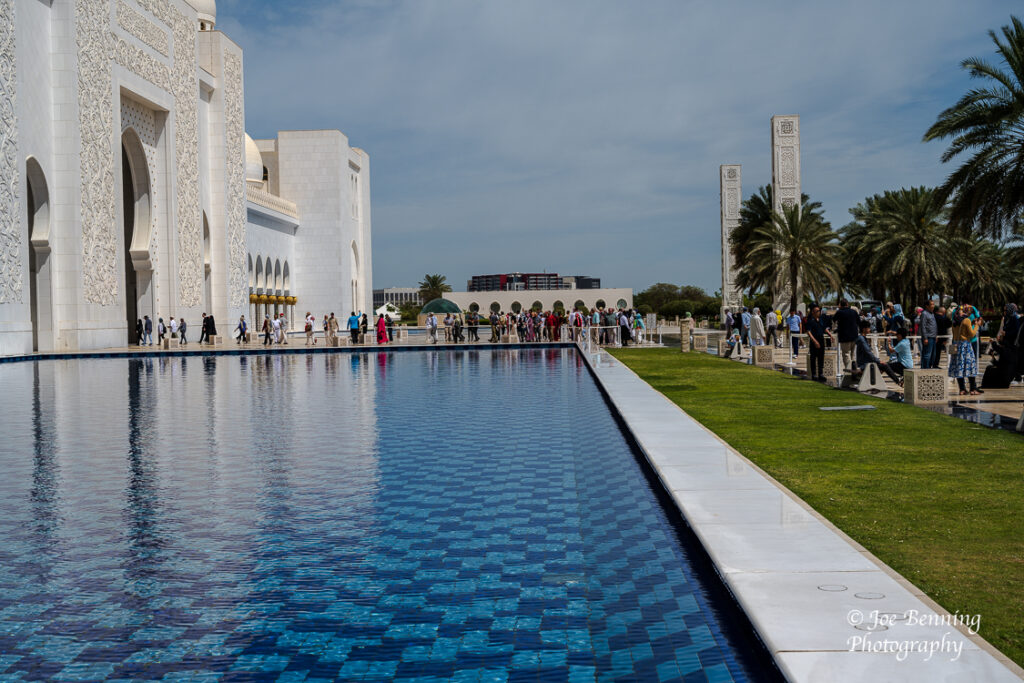
Outside the Mosque

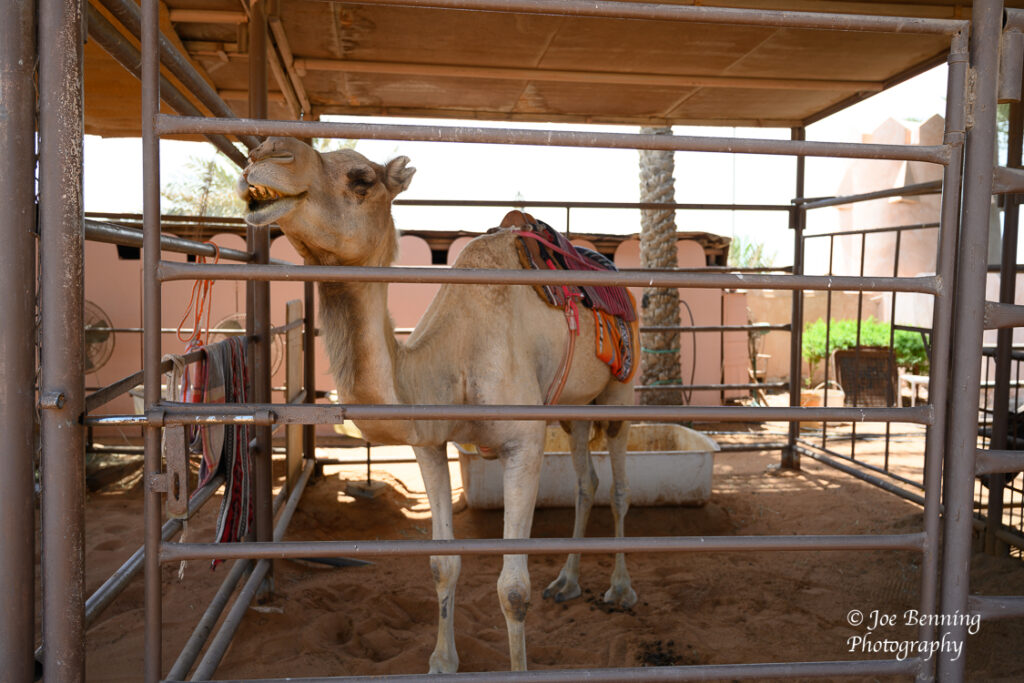
We also went to a heritage site where we could see the city skyline. And a camel. 

Camel in Heritage Village

It should also be noted that we were there during Ramadan. All told the city was vibrant, bustling, modern and clean. That said you really wouldn’t really depend on the powers that be to defend individual rights. Essentially, there aren’t any. What rights you have in practice pretty much depends on the attitude of the Emirs. The Western notion of rights bearing individuals who are protected by the separation of powers is alien. Unfortunately it seems as if that idea is alien to a lot of Western university students too. I like to think this too shall pass.

Anyway, the general travel rule—don’t lecture the locals and annoy them—seems to hold here.

Joe

April 23, 2023 | Joe Benning

Exploring the Middle East: Dubai

The Middle East: Exploring Dubai

April 23, 2023

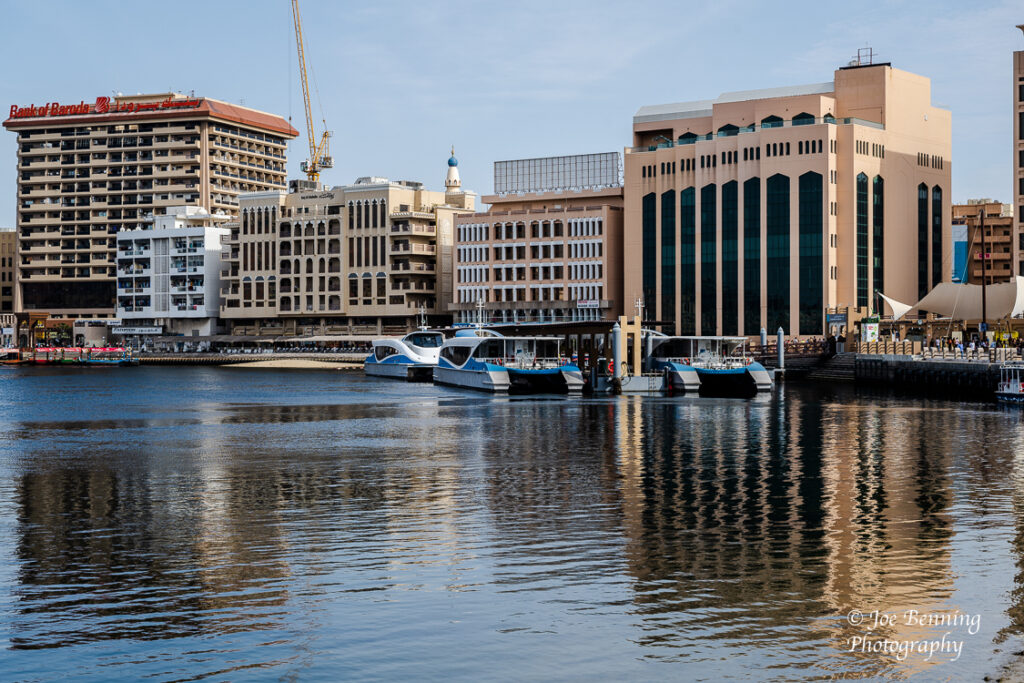
We flew from Delhi (where is was 102 degrees) on Saturday the 15th to  relatively hospitable Dubai where it was a refreshing 75 degrees. The next day we were on a walking tour of Old Dubai. 

The Waterfront Creek in Dubai

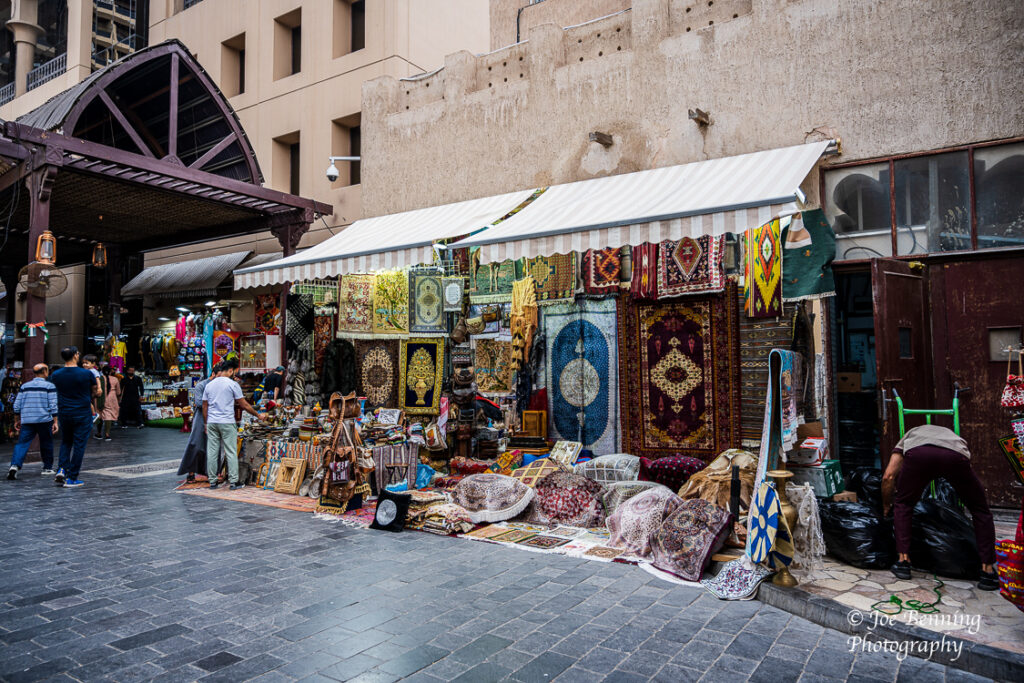
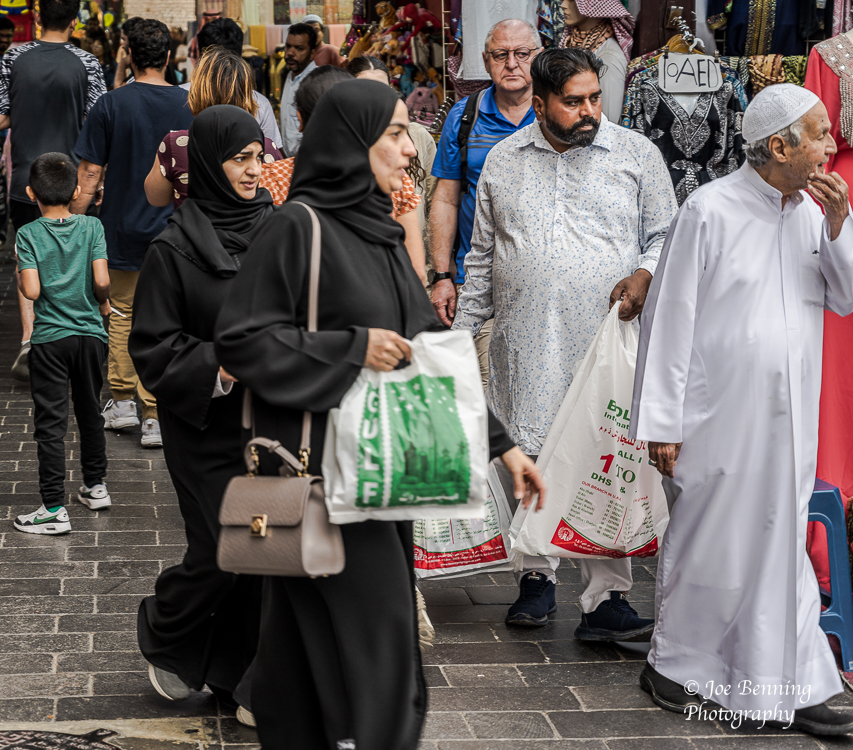
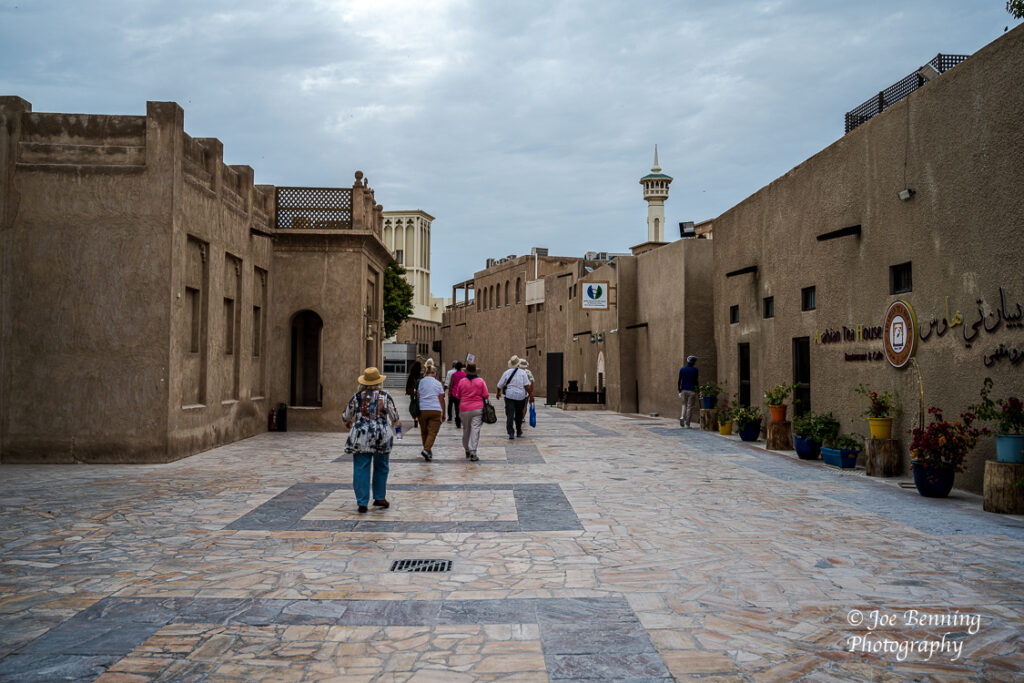
We first marched through the Bastakiya area that features the “Creek” waterfront that allowed Dubai to become a center for trade and commerce. After visiting several museums in the area, including a perfume museum, we headed out to a textile Souq. The Souq had people from all walks of life there, all looking for a deal.

Entrance to the textile Souq
Photo of people thronging to the Souq (Marketplace) in Dubai

After the Souq we headed out to Al Fahidi fort and did a walk through there. 

Tourists Walk Through Al Fahidi Fort

Dubai is an emirate and constitutional monarchy. It is run by the Al Maktoum family and has been since 1883. The Prime Minister and ruler of Dubai is Mohammed bin Rashid Al Maktoum. He is the head of government and an emir (head of state). All laws, rules, decrees and court rulings are in his name. 

The city very modern and very clean. Our guide was proud to point out that there were no citizen protests. How that should be interpreted is an interesting question.

Joe
April 22, 2023 | Joe Benning

On the Road to Jaipur, India

On the Road to Jaipur

April 22, 2023

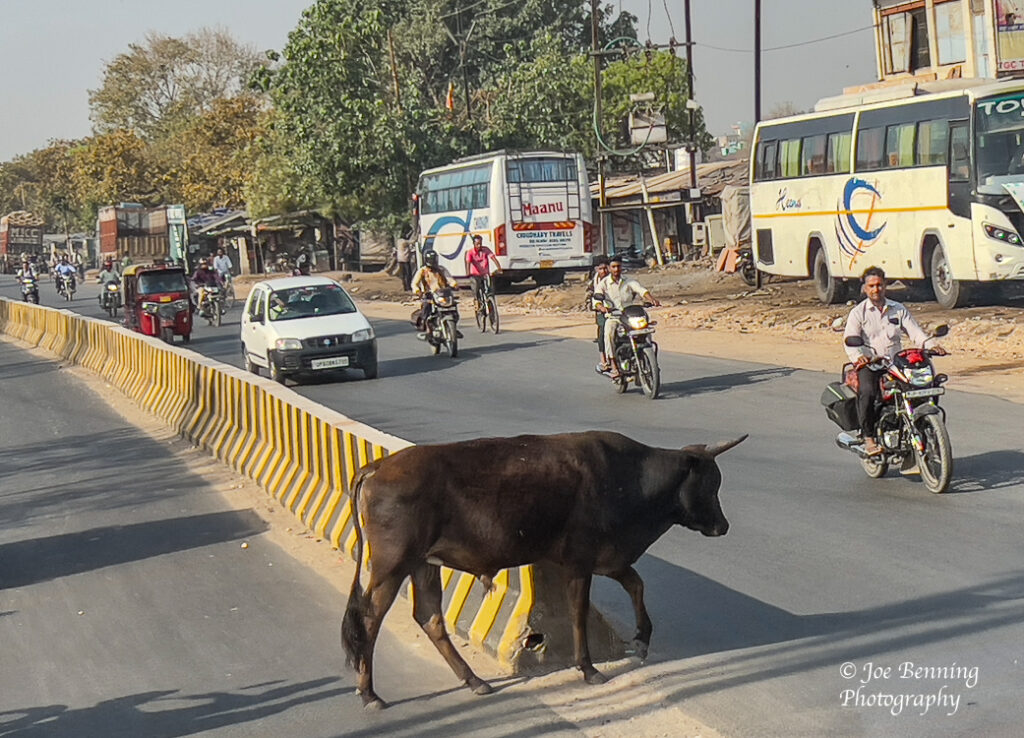
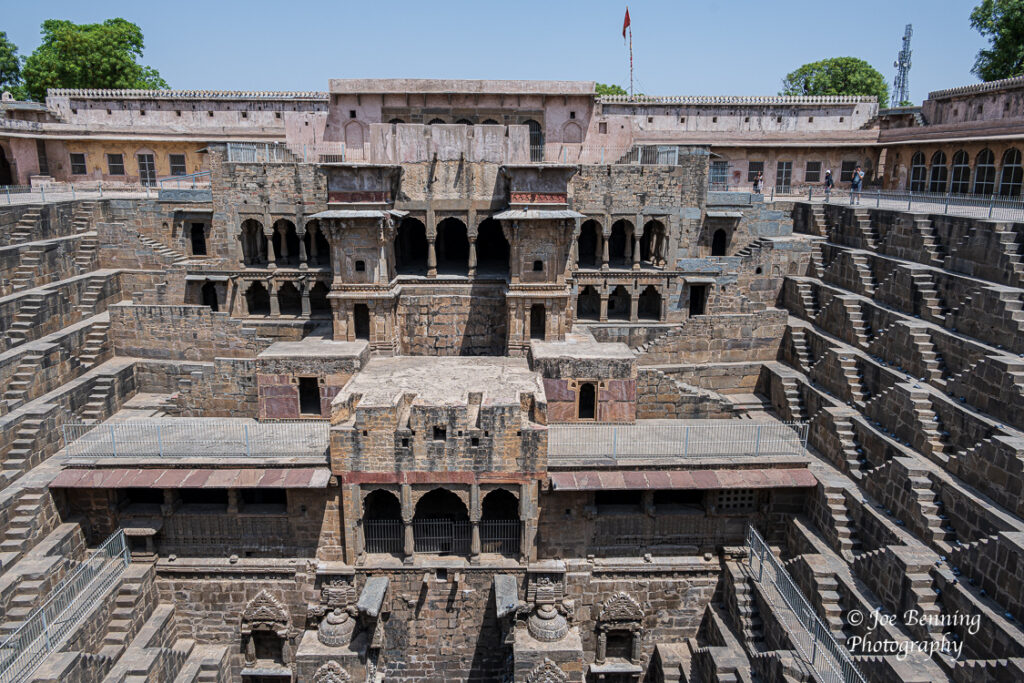
We got up and boarded the coach to Jaipur fairly early. There was no lack of cows on the main road, for which the other vehicles made way.  Along the way we stopped at a rural village named Abhaneri to see its historic step well. 

Cow in the Road

Stepwells were not just a source of water; they also served as sites for bathing, pryer and meditation. Chand Baori, the stepwell we visited, was constructed in the 10th century and is dedicated to Harshat Mata, the goddess of joy and happiness. It is also a designated UNESCO site.

An ancient engineering feat, stepwells are designed to catch water and allow people to ascend and descend the stairs to get to it.

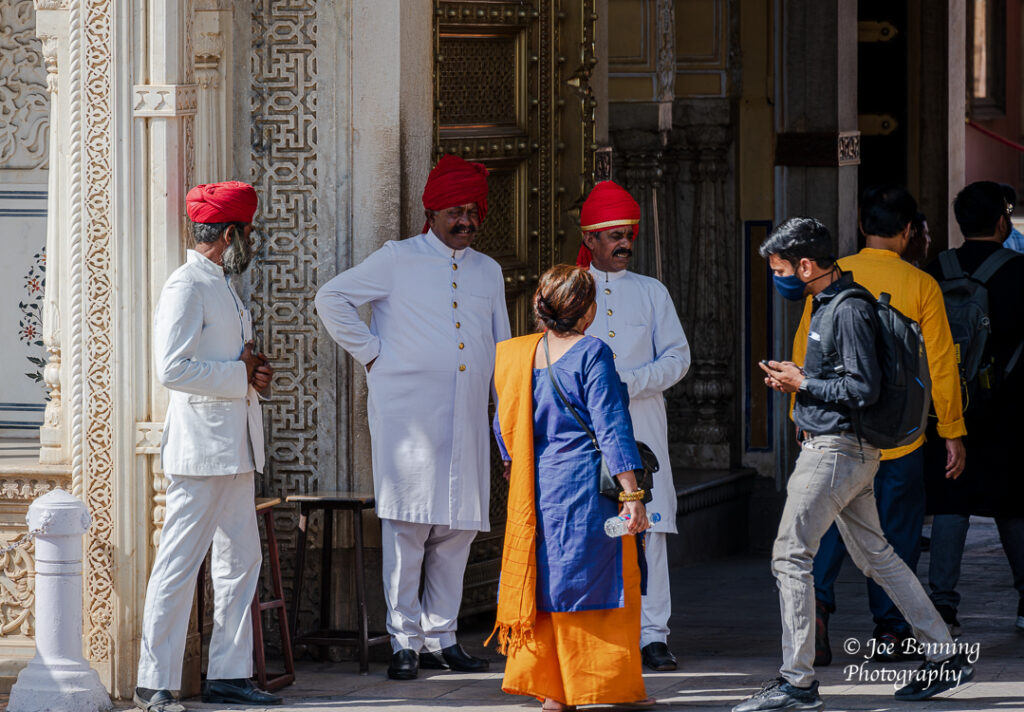
After the stop at Abhaneri we continued on to the city of Jaipur where we went to the City Palace which is at the center of Jaipur, covers one-seventh of the area and is surrounded by high walls. It also has an outdoor museum with elaborately constructed ancient instruments designed to follow the planets. There is for instance an amazingly accurate sundial on display. 

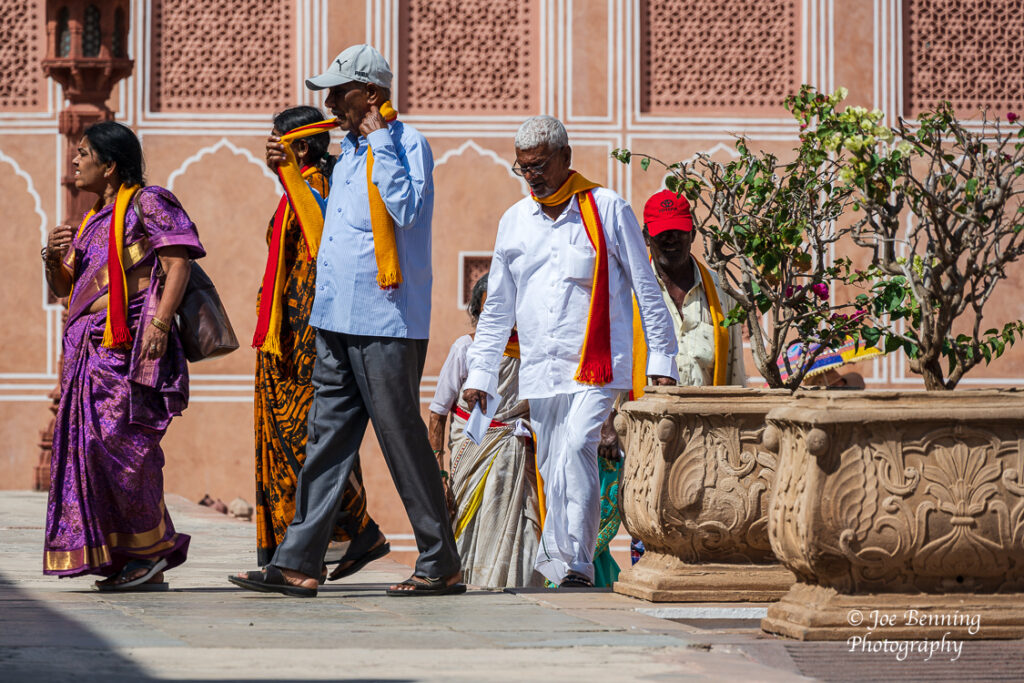
Tourists Enter the Pink City
Tourists Visiting Jaipur

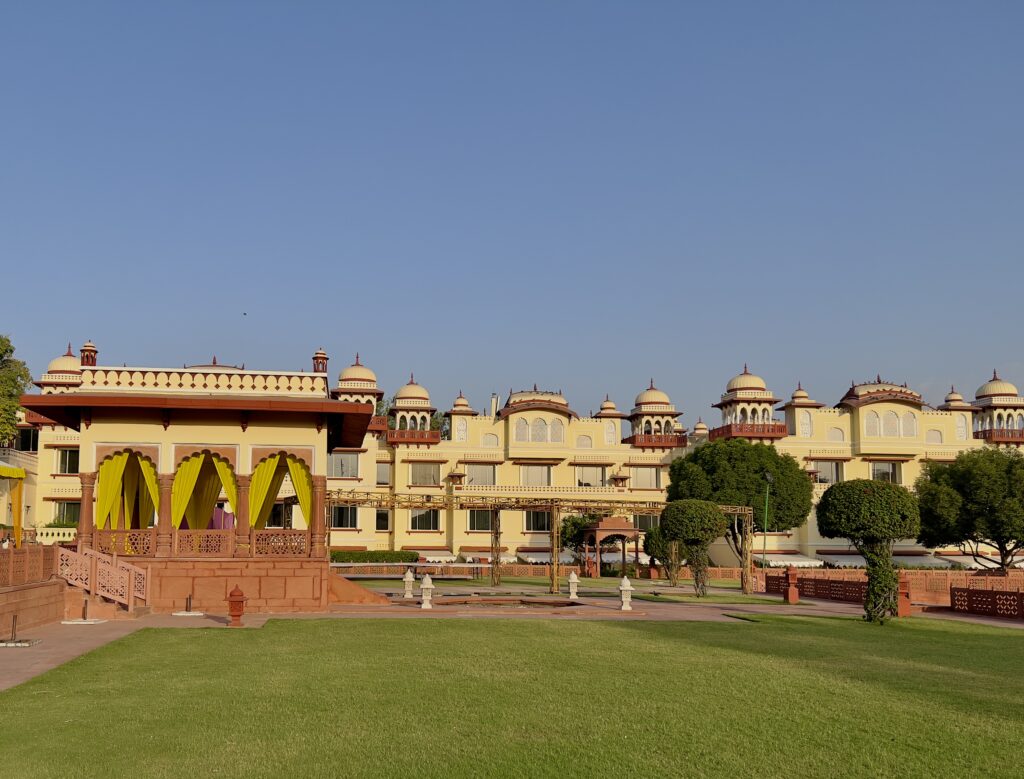
After visiting the City Palace we went back to our hotel—one of the most luxurious we have ever seen. The hotel is the Jai Mahal Palace, owned by the royal family and a former residence of the prime minister. It is still owned by the royal family but now serves as a luxury hotel. And as a special bonus attraction it has an Italian restaurant. Needless to say, after a stop at the bar, we had dinner there. 

Jai Mahal Palace

All in all, Jaipur and the road into the city was fascinating. Not to be missed. 

JFB  

April 21, 2023 | Joe Benning

Fort Agra — India

April 12, 2023

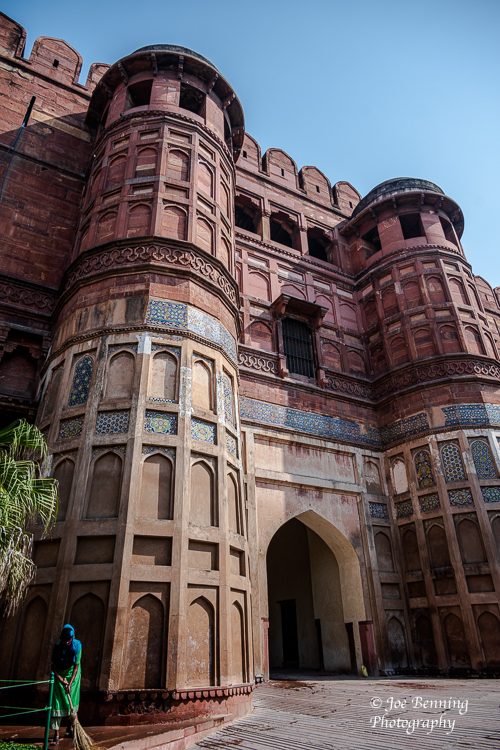
The Agra Fort

After visiting the Taj Mahal in the morning we made our way over to the Agra Fort, about 2.5 kilometers away. Also known as Agra’s Red Fort, it was built by Mughai Emperor Akbar. Construction commenced in 1565 and was completed in 1573. (They didn’t have the EPA to put up with.) 

Agra, India — April 12, 2023. A midday photo of the entrance to Agra Fort, a World Heritage Site.

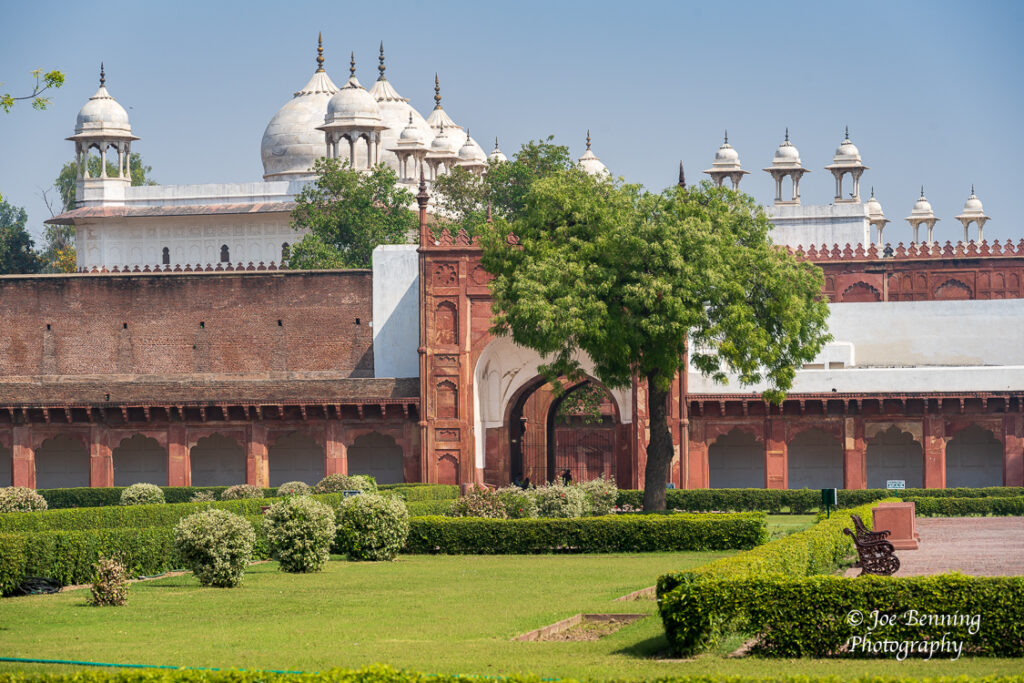
The fort, more accurately described as a walled city, was designated as a World Heritage Site in 1983. It served as the main residence of the rulers of the Mughai Dynasty until 1638 when the capital was moved to Delhi from Agra. It was eventually captured by the British before India won its independence.

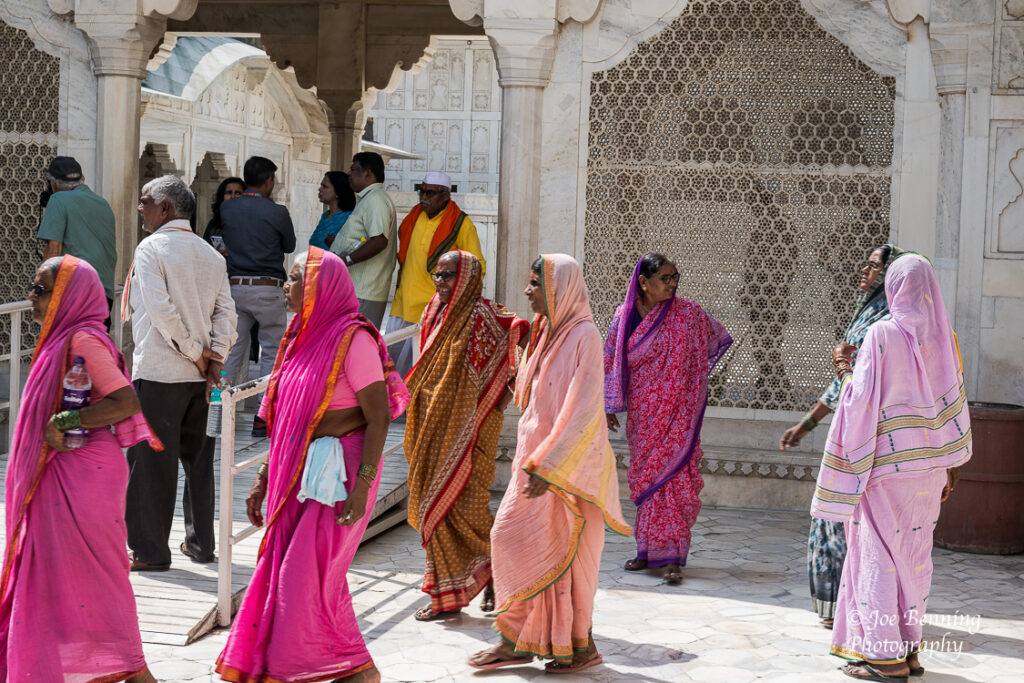
Photo taken inside the grounds of Agra Fort; Onion Domes of a mosque are visible
Tourists in Agra Fort

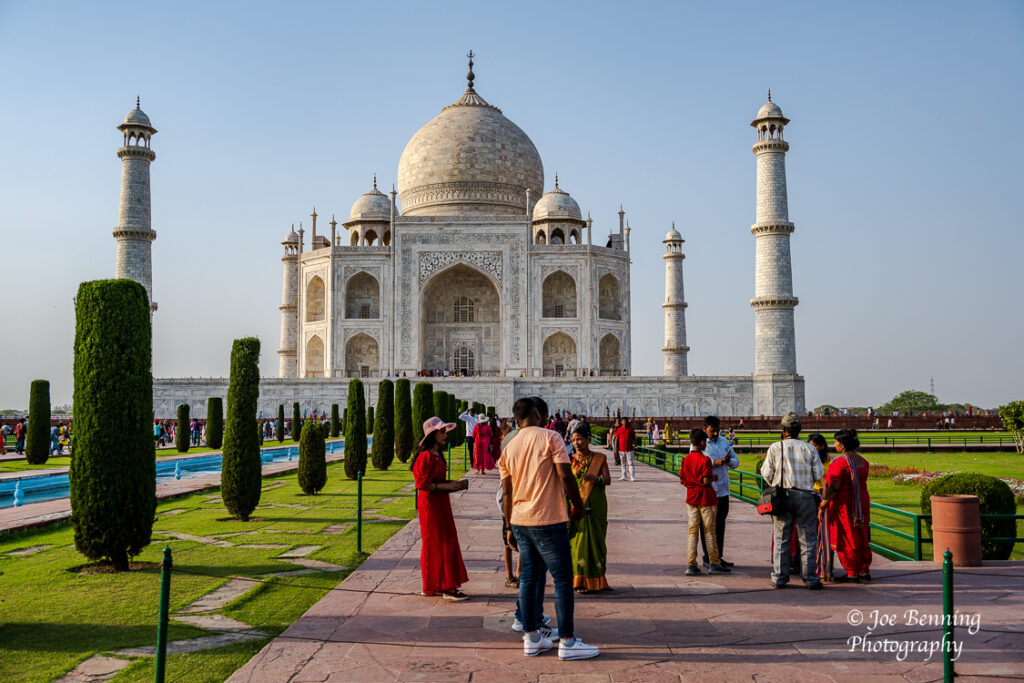
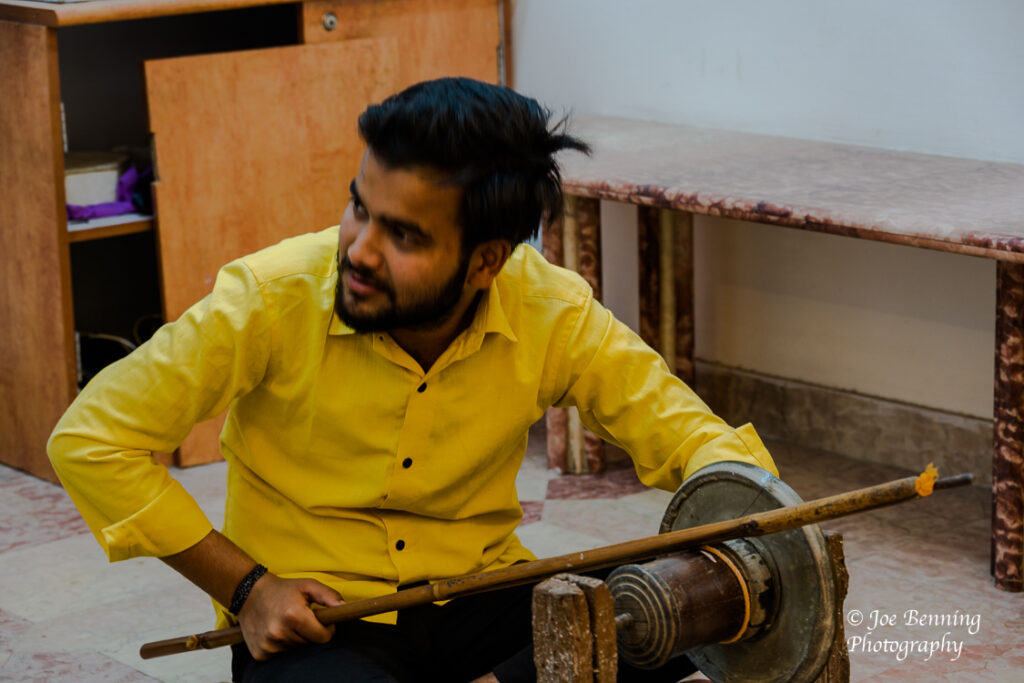
In addition to spending time in Fort Agra, we visited a Marble Inlay Factory where workers shape and polish stones for various sculptures and pieces of art using traditional techniques. Then we headed off for an afternoon visit to the Taj Mahal. By the way–it was 102 degrees Fahrenheit.

Worker at Marble Inlay Factory
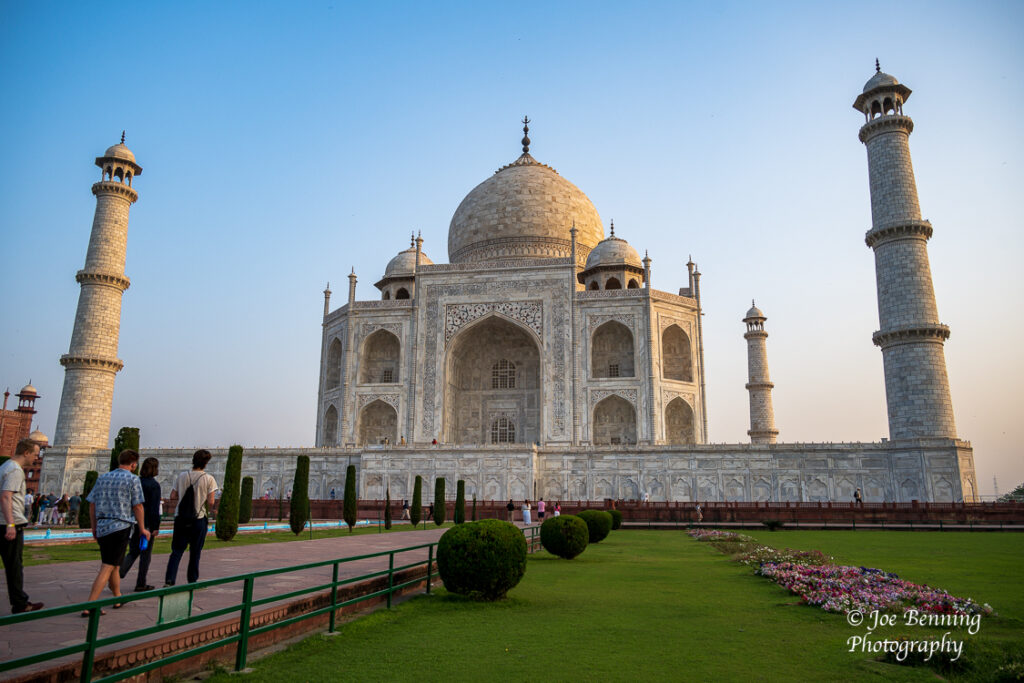
Taj Mahal in the Afternoon

Some photos  from these visits are included. 

Joe
April 20, 2023 | Joe Benning
The Taj Mahal

The Taj Mahal in Agra India, is widely thought to be one of the most beautiful buildings ever created. Made of marble, it was built by King Shah Jahan, who took control of the Mughal Empire in 1628. The mausoleum is dedicated to the King’s enduring love for his wife Mumtaz Mahal, who died in childbirth in 1631.

According to the legend, Mumtaz Mahal, while on her deathbed, persuaded the king to build for her the most beautiful mausoleum the world had ever seen. The king promised to do so and hired over 20,000 artisans to construct the Taj Mahal. To day it is a UNESCO World Heritage Site.

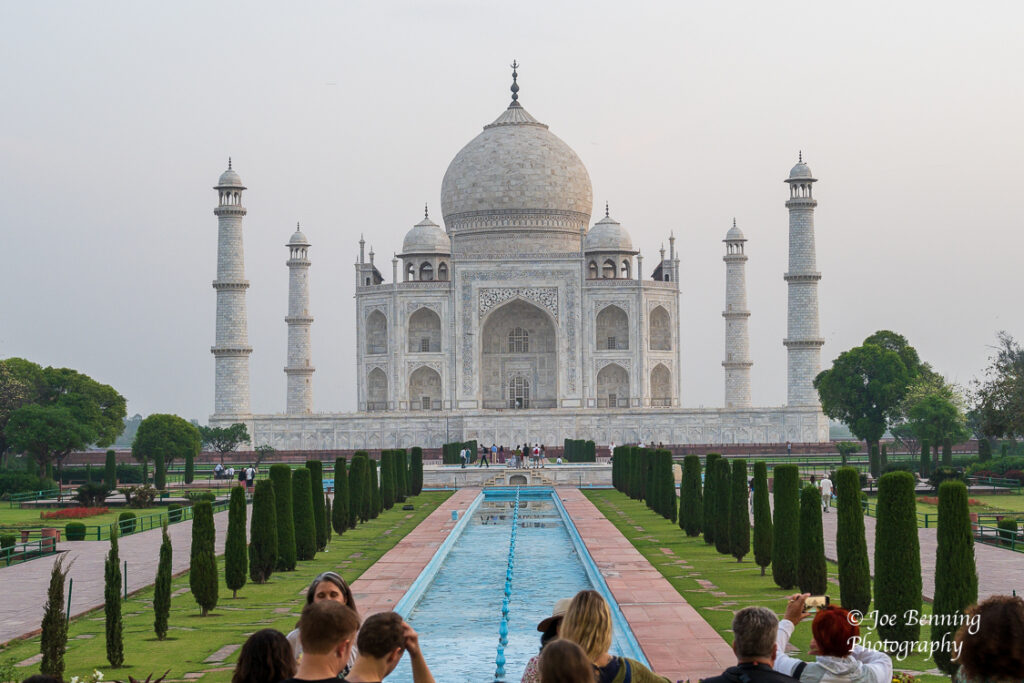
Taj Mahal in Early Morning

The Taj Mahal is truly a wonder to behold. The sheer scope of the site has to be seen to be believed. Photos simply do not do it justice. Any photos. 

We visited the site, which is a complex that contains two mosques as well as the mausoleum, both early in the morning and in late afternoon. We were lucky with the weather and the relative lack of crowds—probably due at least partially to the times we visited. 

Agra, India — April 16, 2023. A morning photo overlooking some of the grounds of the Taj Mahal complex
Morning at the Taj Mahal

A few photos from the visit are included, but to repeat, photos don’t do the site justice. It has to be seen in person. Luckily, we were able to do that.

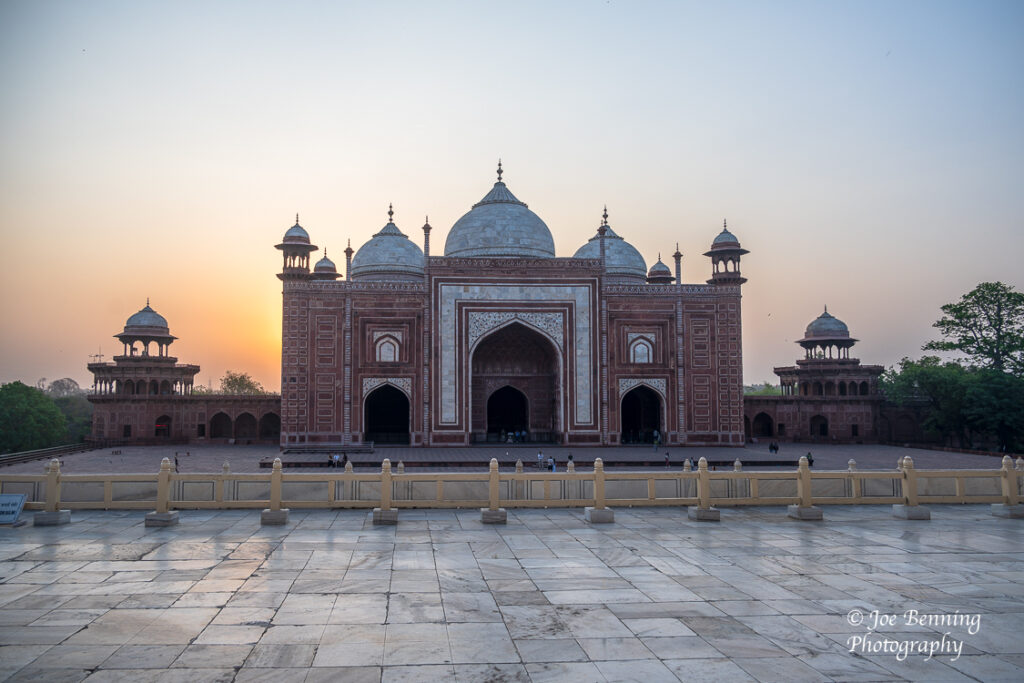
A Mosque in the Taj Mahal Complex

JFB