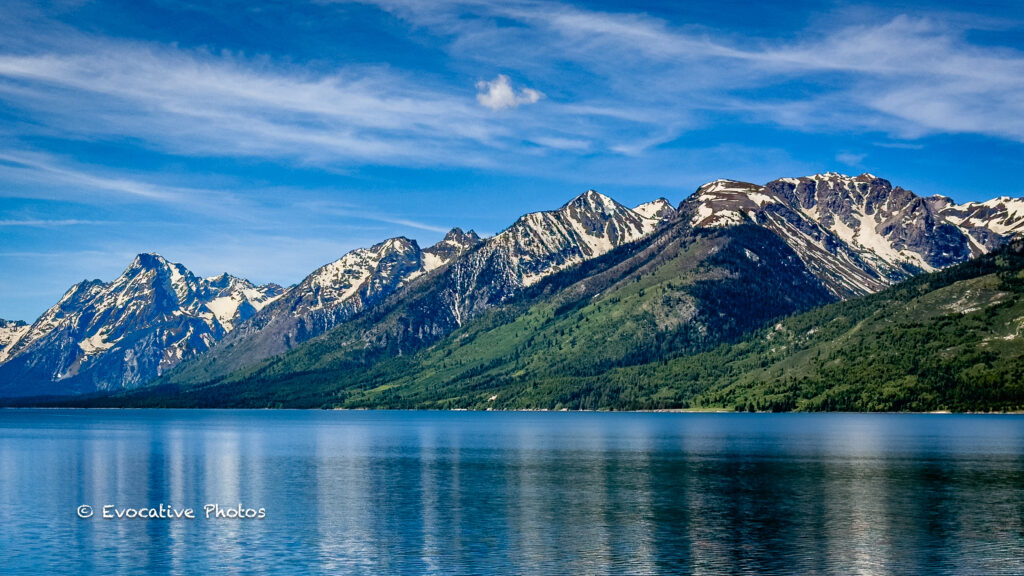
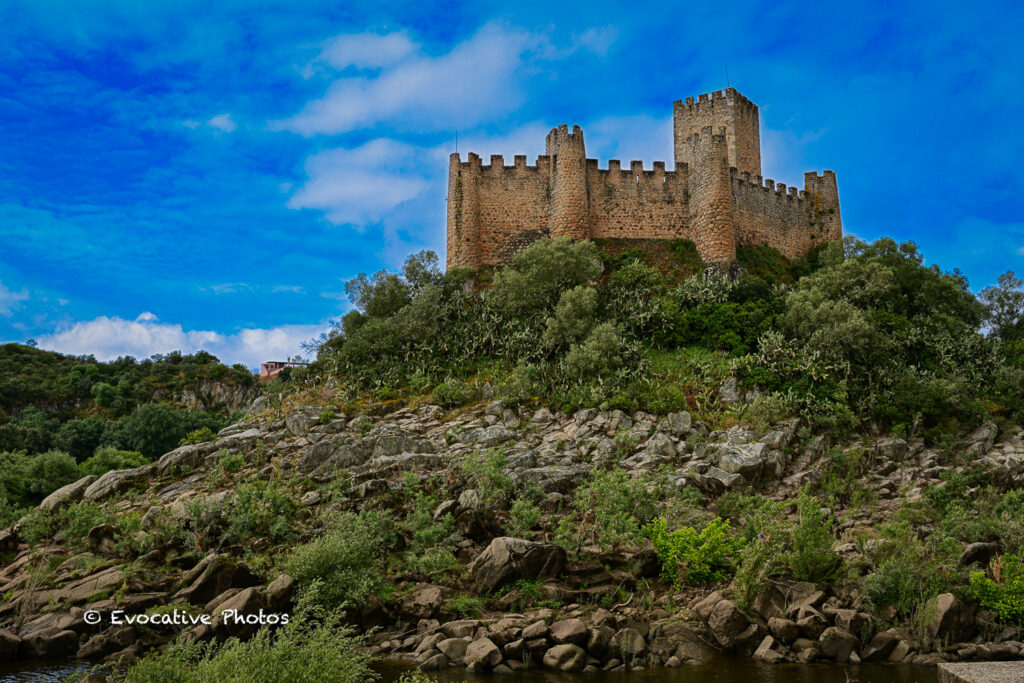
The American West is something to behold. For one thing, the scenery is just spectacular. It can really make a difference in how a person views nature, and natural surroundings.
Montana and Wyoming, which is where Yellowstone and the Grand Tetons are located, are very sparsely populated. Montana has a population of only about 1,450,000. It ranks 43rd among US states.
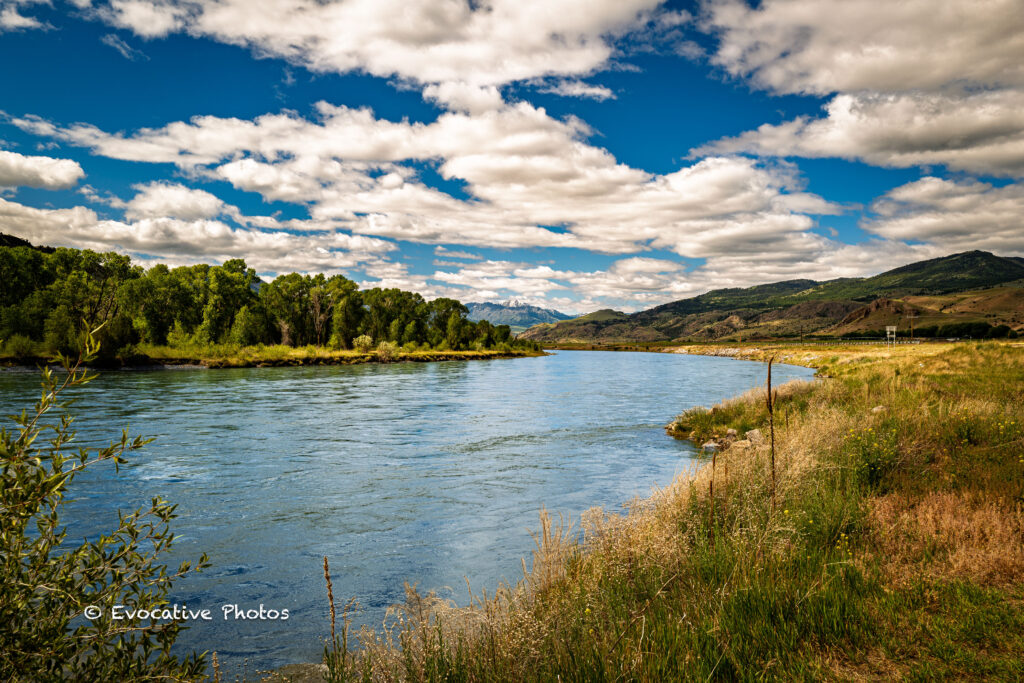
The Yellowstone River curves through open grassland beside a quiet road, framed by blue sky, summer clouds, and distant hills.
Wyoming comes in dead last at 50. Slightly less than 600,000 call Wyoming home. The combined population of both states is right around 2 million people. To put this in perspective, Manhattan’s population is about 1,630,000, which is slightly greater than the entire state of Montana and close to 3 times the population of Wyoming.
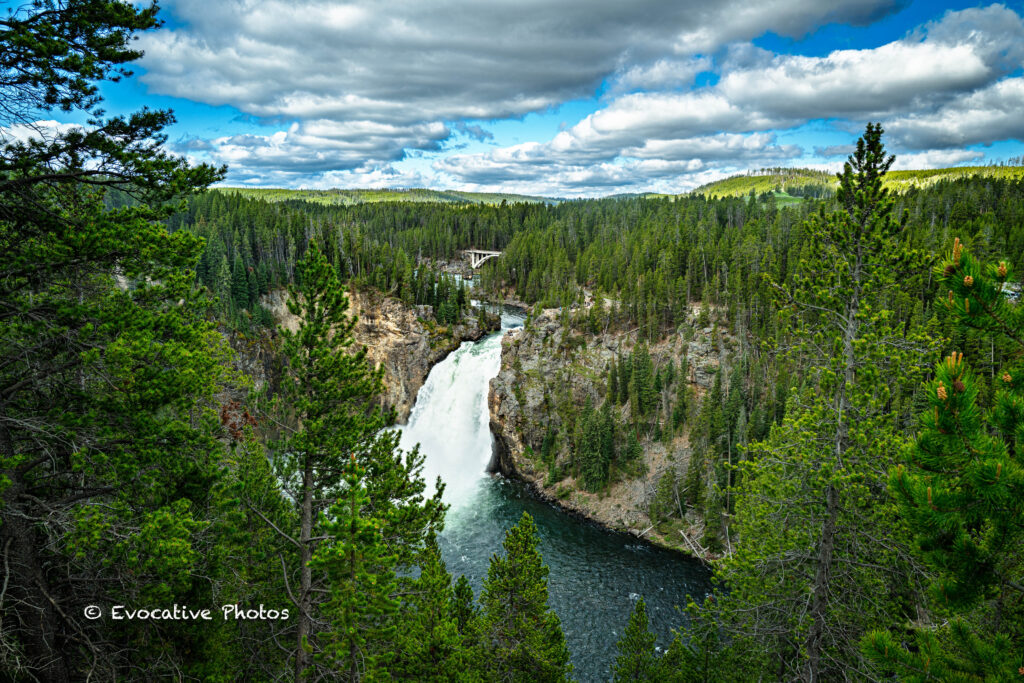
The Upper Falls of the Yellowstone River plunges into the Grand Canyon of the Yellowstone, with a historic bridge visible upstream and turquoise canyon water flowing below. Lodgepole pines frame the view from an elevated overlook under a dramatic partly cloudy sky. Grand Canyon of the Yellowstone, Yellowstone National Park, Wyoming, USA.
Upon seeing the physical beauty of the place, it makes you wonder why there are not more people living there. The winters can be brutal though. Then again, the fact that 4th of July baseball games can get called off because of snow might have something to do with it.
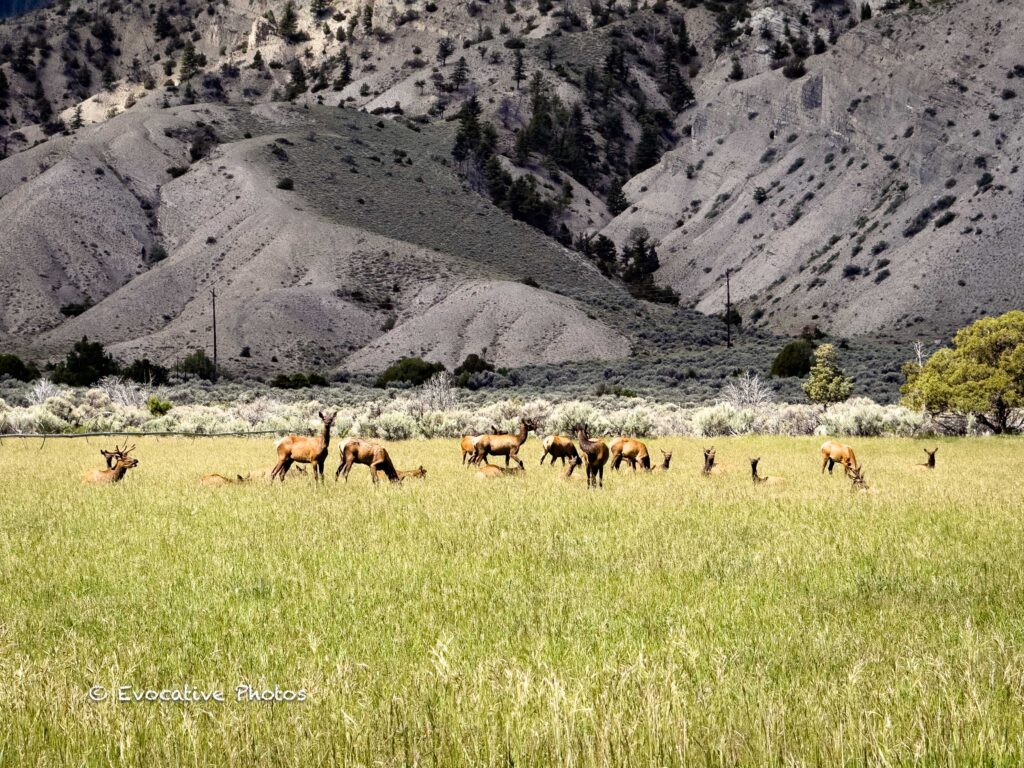
A large herd of elk grazes calmly in a lush green meadow at Mammoth Hot Springs, Yellowstone, with dramatic grey eroded mountain slopes rising in the background.
This is without doubt cowboy country–both the real ones and the make believe ones. The locals love telling stories about how the make believe cowboys like to strut around Jackson Hole wearing their newly purchased $2,000 cowboy clothes. Being a Rhinestone cowboy can get pretty expensive pretty fast. For instance, in Bozeman, Montana (pop 60,000), discounts of up to 20% can be had on cowboy boots–but only for the ones starting at $800 a pair.
The restaurants have lots of Elk burger, but they also have large selections of Martinis not to mention avocado toast and other stuff you would find in Manhattan. And they (the restaurants) are pretty good too.
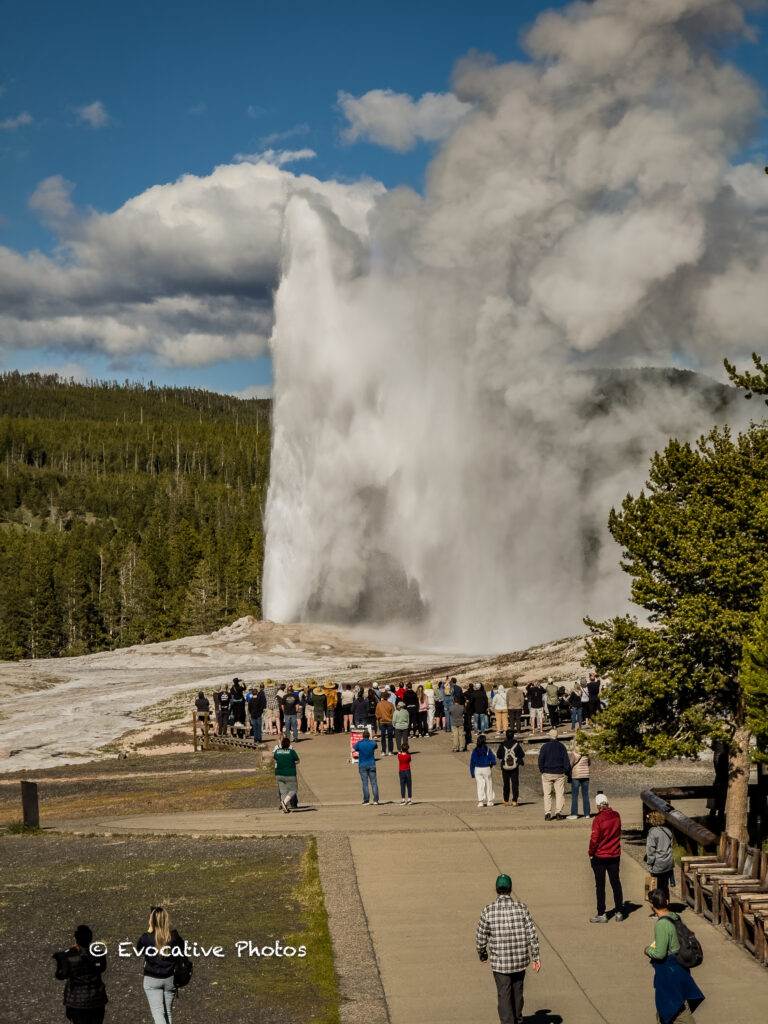
Old Faithful geyser sends a towering column of steam and boiling water into the sky as crowds of visitors line the boardwalk viewing area to watch the famous eruption. Conifer forest and rolling hills form the backdrop under a partly cloudy blue sky. Old Faithful, Yellowstone National Park, Wyoming, USA.
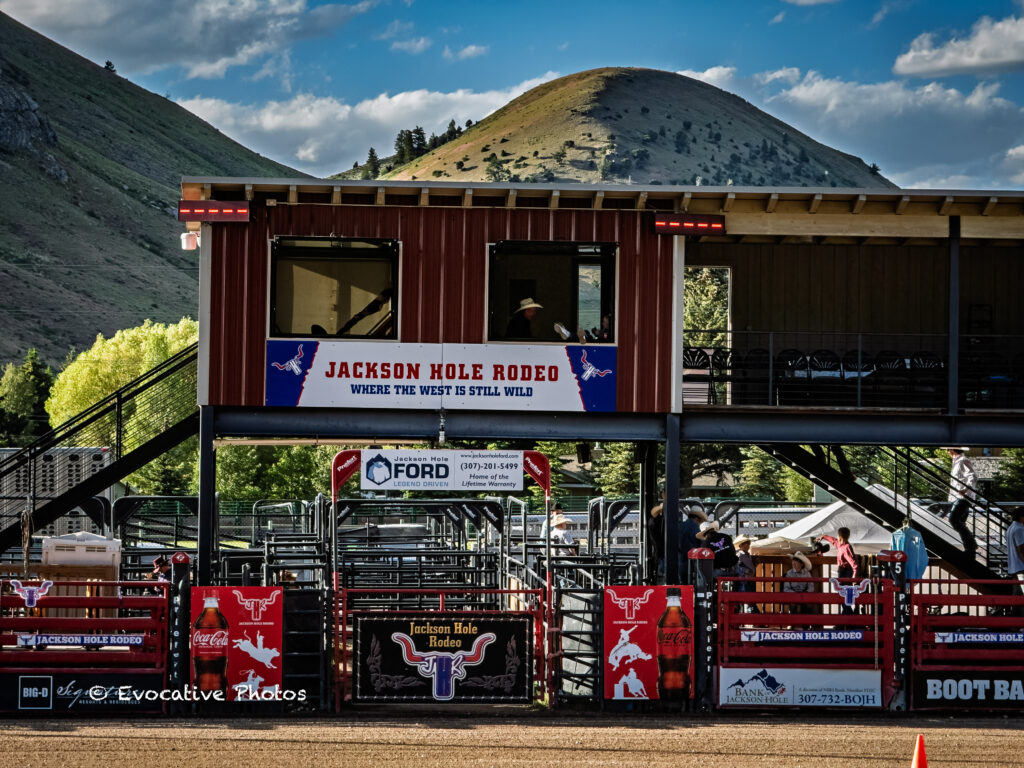
We did get a chance to see Old Faithful erupt. And we also went to a rodeo, complete with horses and bulls trying to throw their riders off. Which they did with some regularity. Apparently staying on a bucking bronco for 8 seconds is a big deal. Finally there was a ride on a raft down the snake river–with about a zero chance of even getting wet, much less getting tossed off the raft.
All in all Yellowstone should not be missed. We’d go back in a heartbeat.
We can now count ourselves among the over 4 million people who will visit Yellowstone and Grand Teton National Parks this year, enjoying their 2.5 million acres of incredible scenery, water features and geological places of interest.
Yellowstone NP is a caldera (the basin formed after a volcano erupts) within a caldera, with mountains all around, forests, wildlife, lakes and other bodies of water. Over the course of 4 days we toured Yellowstone NP from north to south, before heading to Grand Teton NP for 2 days. Over twenty native American tribes are affiliated with each of these national parks; among them are the Crow, Blackfeet, and various Sioux and Shoshone tribes.
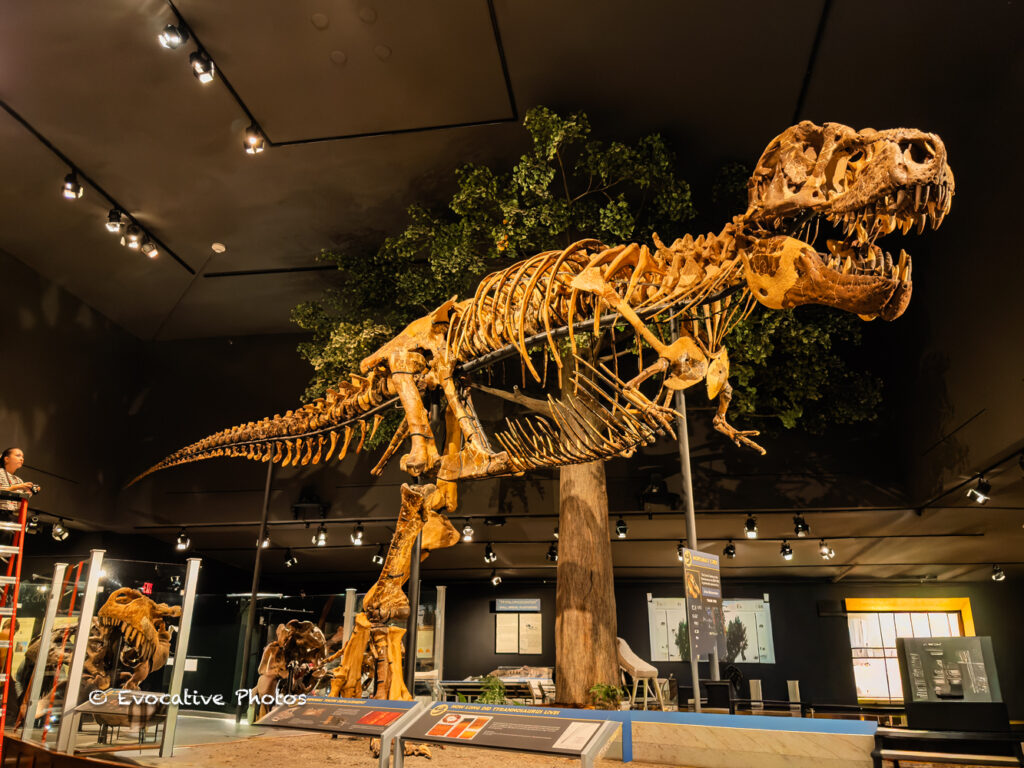
Our trip started in Bozeman, MT, an old cowboy town that is quite sophisticated (you can go to the local saloon with its rustic décor and get the same variety of cocktails and food as in any fine restaurant in Manhattan). Montana is home to many dinosaur fossils, and the Museum of the Rockies in Bozeman has incredible displays of the dinos and other prehistoric animals that lived in Montana about 100 million years ago. Bozeman also is home to the American Computer and Robotics Museum, filled with artifacts and explanations about the history and development of innovation and technology.
Tyrannosaurus Rex in the Museum of the Rockies
We were not surprised to see snow on the distant mountains during this June trip, but snow on the ground around us, and morning temperatures in the high 20s F and low 30s F were a little unexpected. The days warmed up quickly, and we were happy to have sunshine for the long days during the entire trip.
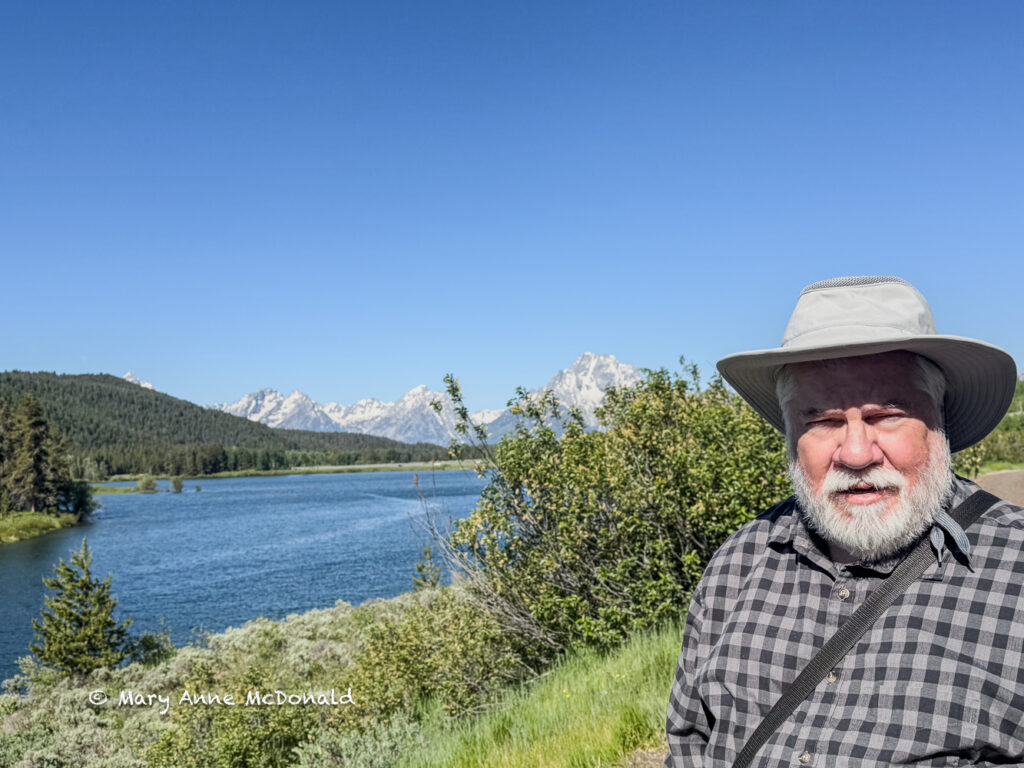
JFB in the state of Wyoming
The continental divide mountain ridge runs through Yellowstone, and the lakes in that ridge drain all the way to the Pacific and Atlantic oceans. Throughout the parks, water is ever-present in lakes, rivers, creeks, waterfalls, geysers (like Old Faithful in Yellowstone), hot springs, and other forms. The water’s effect on rock creates some incredible formations, like Minerva’s Terrace at Mammoth Springs in Yellowstone, and the Grand Canyon of Yellowstone.
Valleys between the mountains sustain a great variety of wildlife, and we saw lots of bison, elk, deer, pronghorn sheep, black bears and birds, as well as a few foxes and a moose, and some cattle and horses on ranches.
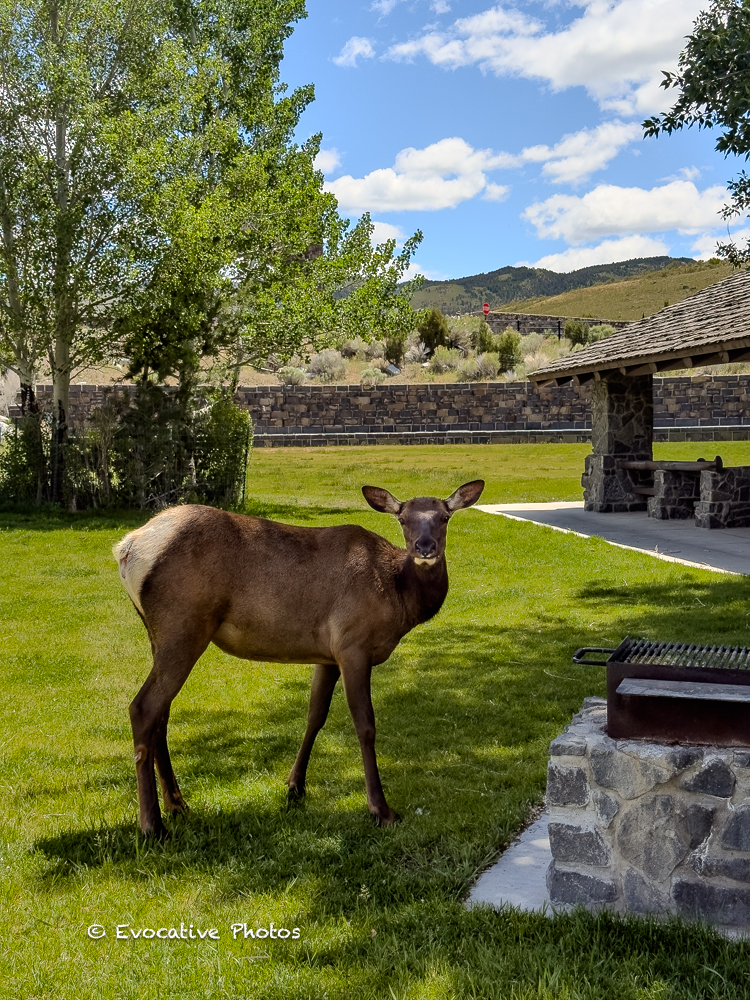
Deer at Rest Stop in Mammoth Hot Springs, WY
Several small towns are just outside the parks, with lots of lodging for hikers and fishers. Shops abound, selling bait and bear spray, beer and bison burgers, and works by local artists.
The Grand Teton mountains are magnificent, appearing to rise up almost suddenly from the earth (no foothills or incremental elevations), and reflected perfectly in the Snake River and other bodies of water. Glaciers are still present in the Grand Tetons, looking like frozen rivers on the mountains in the range.
The National Museum of Wildlife Art in Jackson houses an impressive collection of paintings, drawings, sculpture and other items commemorating wildlife and the traditions of the West. It sits on a hilltop across from the National Elk Refuge, a massive area where many species of animals and birds can come during the harsh winters to find food needed for survival.
Our trip ended in Jackson WY, another rustic yet sophisticated town, where outdoor life is celebrated yearlong. No matter the season, there are outdoor sports to play – hiking, fishing, hunting, skiing, etc.
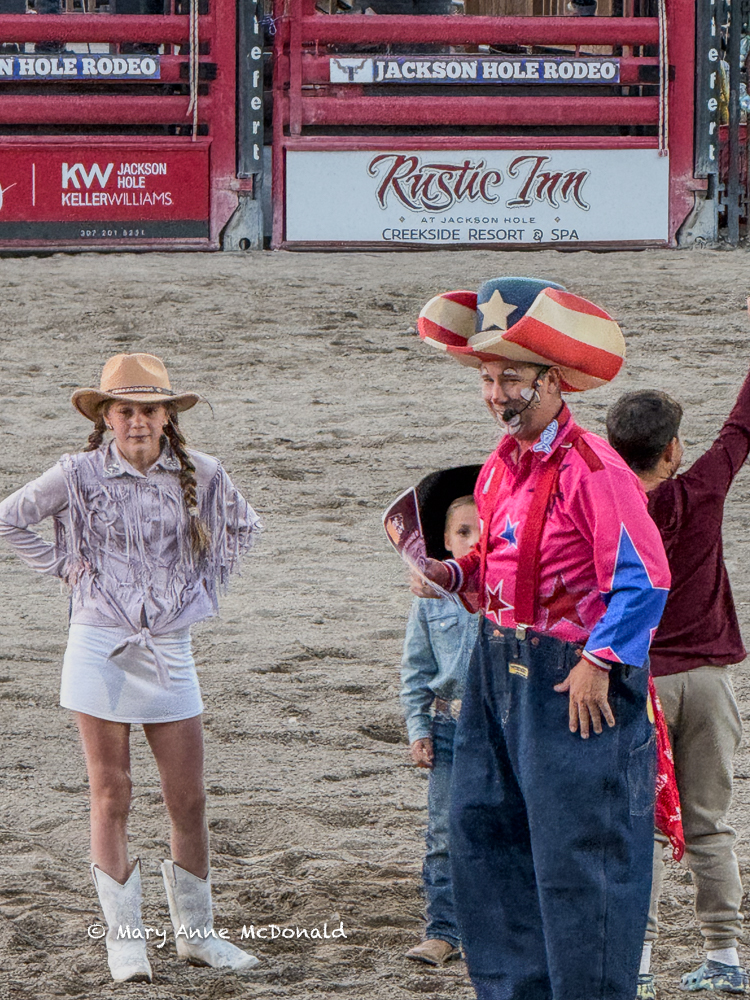
We went to the Jackson Hole Rodeo on our last night in town, and saw some incredible horsemanship by riders of bucking broncos (horses) and bulls, ropers of calves and steer, and people doing other risky things with big animals. The stands were filled with families, and virtually every kid had on boots and a cowboy hat, while the boots worn by the women in attendance ranged from plain brown leather boots to high-style ornamented versions in red and pink leather and suede, with lots of sparkles. It was a lot of fun, and interesting.
Kids at Jackson Hole Rodeo
We haven’t yet made it to all 63 of the US national parks, but we are working on it. Yellowstone and Grand Teton are two that we are very happy to have visited, and would visit again in a heartbeat.
While we were in Portugal, we took a few side trips, including Fatima, Coimbra and Tomar. Fatima is, of course, where Mary appeared to the three school children (Lucia dos Santos, Francisco Marto and Jacinta Marto) on May 13, 1917 while WW1 was raging.
Fatima is one of the most important pilgrimage sites in the world, comparable to that of Our Lady of Guadalupe. The Catholic Church has officially approved devotion to Our Lady of Fatima, meaning that Catholics may, but are not required to believe in Mary’s apparition. Millions of pilgrims visit the site annually, especially between May 13 and October 13, the dates associated with the first and last apparitions.
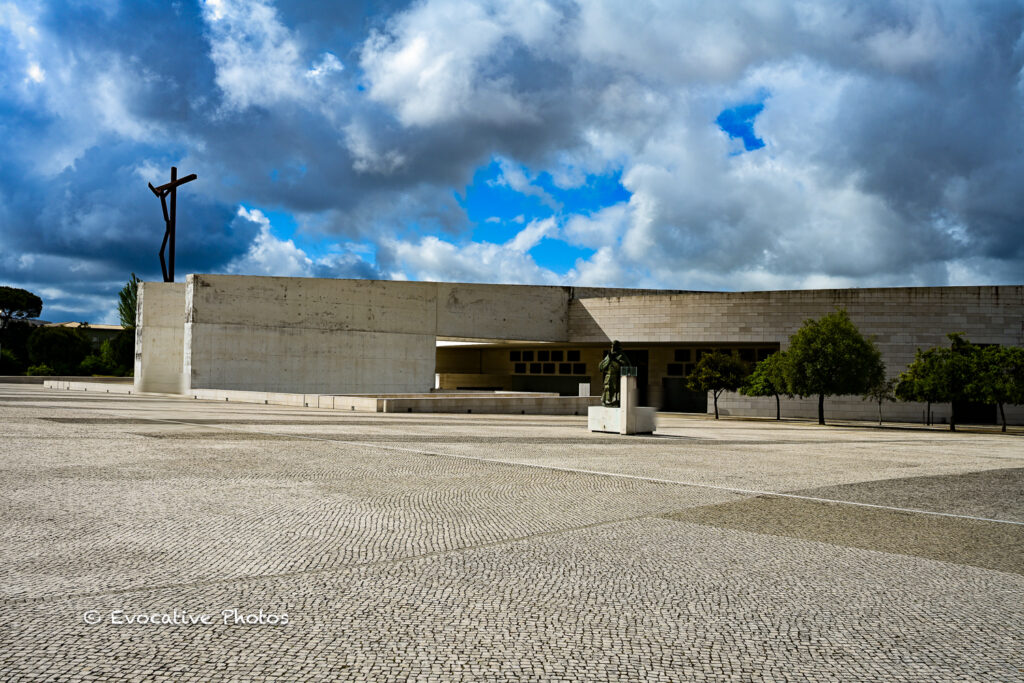
A striking modern cross rises above the expansive plaza of the Sanctuary of Our Lady of Fátima, creating a dramatic contrast against the cloud-filled Portuguese sky.
The University of Coimbra was founded in Lisbon in 1290 by King Denis. After moving between Lisbon and Coimbra several times in the early years, it finally settled in Coimbra in 1537. It is now the permanent home of the University of Coimbra, one of the oldest universities in continuous operation in the world, and Portugal’s most prestigious university. Its campus was designated a UNESCO World Heritage site in 2013.
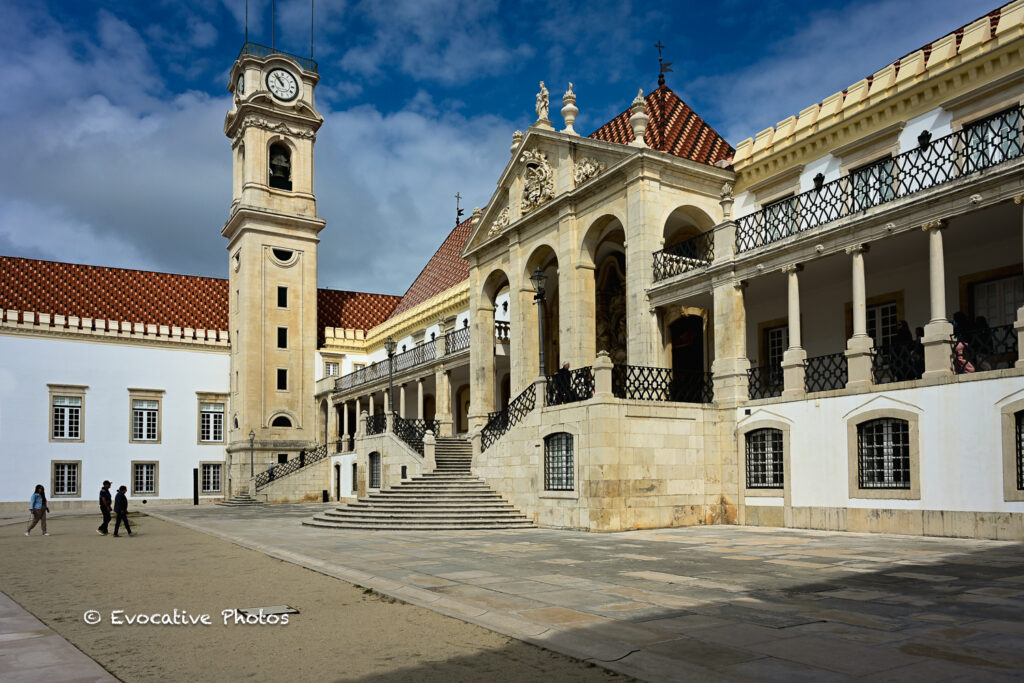
UNESCO World Heritage university courtyard featuring the iconic clock tower and historic academic architecture in Coimbra, Portugal.
Tomar is generally though to be one of the most important historical centers associated with the Knights Templar. This is probably because Portugal did not suppress the Knights Templar in the 1300s as they were suppressed throughout most of Europe. King Denis helped the Knights re-organize into the Order of Christ and so the Knights maintained their identity.
A rugged medieval castle rises dramatically above rocky terrain and calm river waters beneath vivid blue skies. The fortress walls and natural surroundings evoke centuries of Portuguese history and defense.
The order helped support many of Portugals early voyages of discovery. Henry the Navigator, one of the most important figures in Portuguese history, served as Grand Master of the Order of Christ.
Today a number of historians see Tomar as one of the best-preserved places for studying the transition of the Knights of Templar to the Order of Christ.
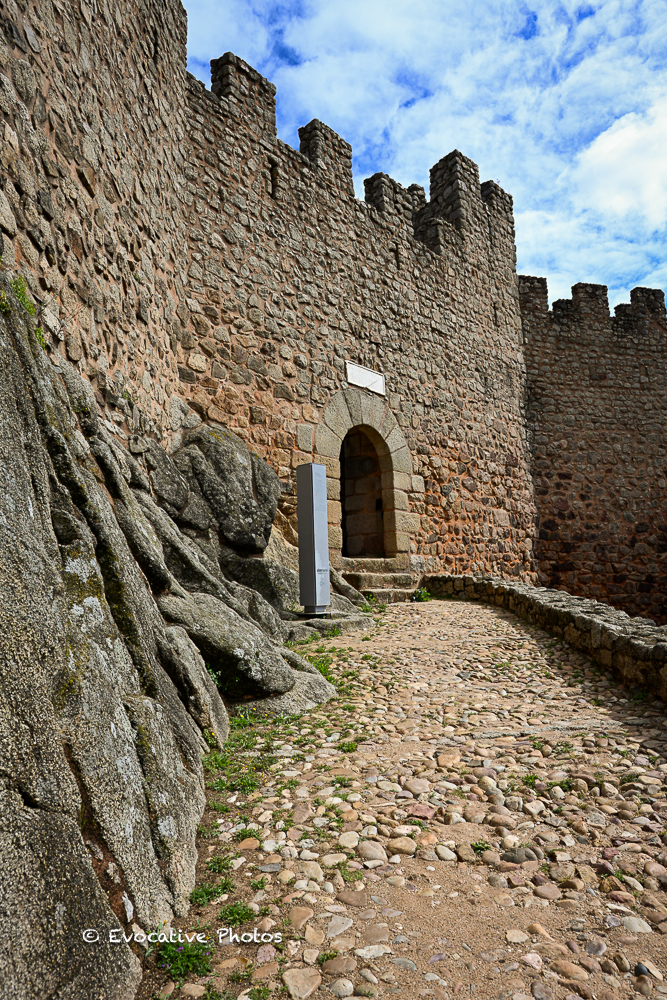
Ancient stone fortress walls and a cobblestone pathway lead through a historic medieval stronghold in Tomar, Portugal. The rugged masonry and weathered textures reflect centuries of Portuguese history and defense architecture.
And that was our trip to Portugal. Or at least as much as I can recount. Our travels have not ended though; soon we will be taking off for Yellowstone with National Geographic. We plan on seeing Old Faithful (obligatory) and we already have tickets to a Rodeo.
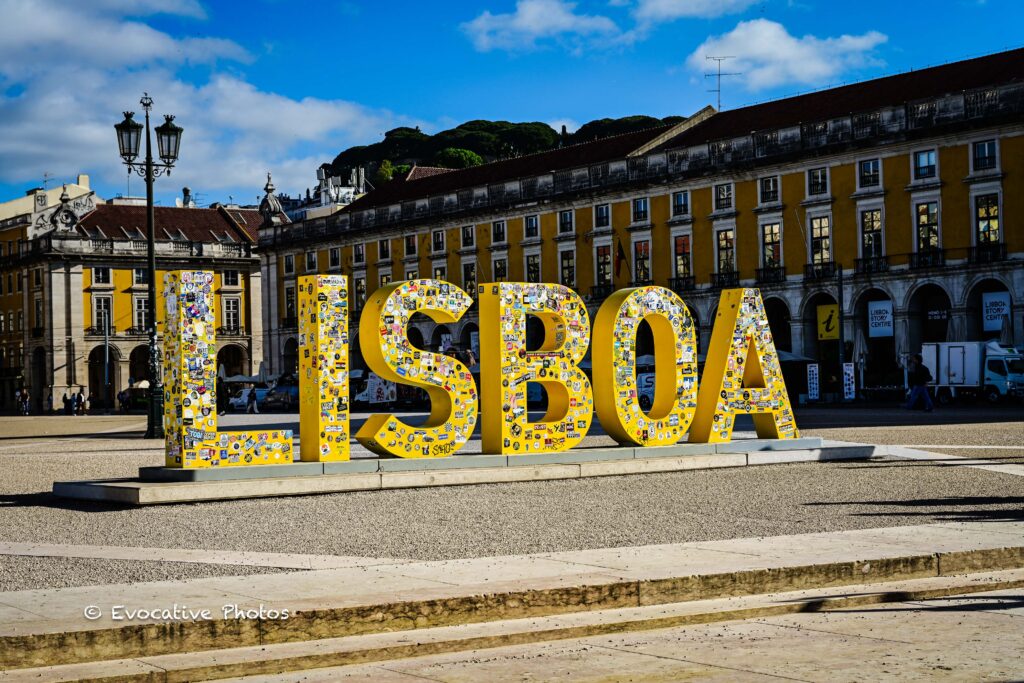
Lisbon, Portugal — April 22,2026. The iconic Lisboa sign stands in Praça do Comércio, welcoming visitors to Portugal’s capital city.
After we finished sailing along the Douro River in northern Portugal, we headed down to Lisbon. A little perspective would be useful here. Portugal is a small country. The population is estimated at somewhere between 10.5 and 11 million people. And last year the tourist industry estimated that 32 to 34 million people visited the country–about 3 times the population. Tourism now accounts for about 20% of GDP.
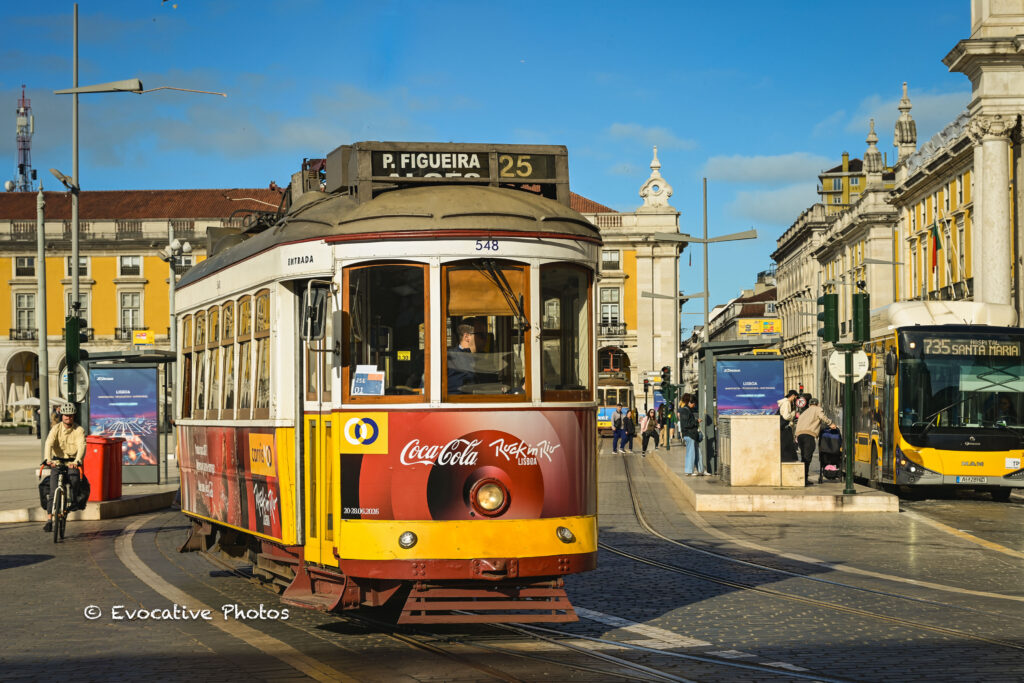
A classic yellow-and-red Lisbon tram travels through Praça do Comércio in the heart of Portugal’s capital city. Surrounded by the grand arcaded buildings of the waterfront square, the iconic streetcar represents one of Lisbon’s most recognizable symbols and a popular attraction for visitors exploring the historic Baixa district.
There is a big difference between Lisbon and Porto. But that’s not too unusual for a country. There are, for instance, big differences among the cities of New York, LA, Des Moines, Iowa and Birmingham, Alabama. Lisbon however attracts a younger crowd. The median age of Lisbon is maybe 41 or 42, while the median age of people in Porto is closer to 46 or 47. That said, Portugal has one of the older populations in Europe. London, that clocks in at 35 is one of the youngest.
Our stay in Lisbon was marked by very good accommodations, and well, Cod. You just can’t get away from the stuff.
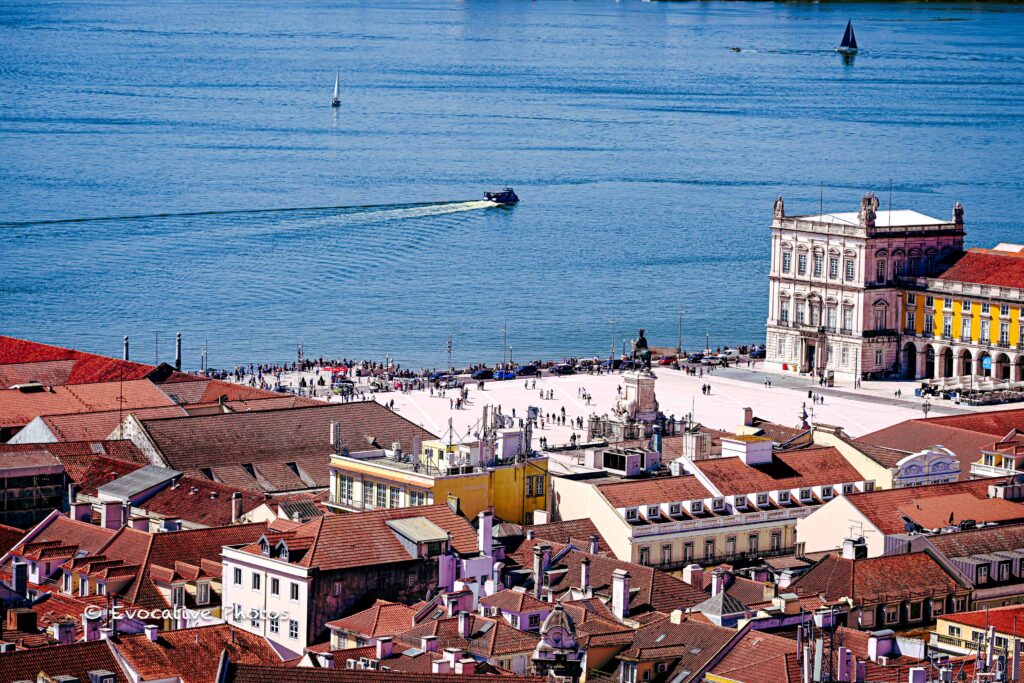
A panoramic view over Lisbon’s historic Baixa district featuring red-tiled rooftops, the grand Praça do Comércio, and the Tagus River.
Anyway, the first place we stayed in was the very charming Pousada De Lisboa Hotel. The Pousada was located in the center of the city, and discovered by Mary Anne. Basically, Pousadas are converted monasteries, landmark buildings, manor houses or castles that now serve as boutique hotels that emphasize Portuguese history.
After that we stayed 10 minutes away in an Altis Prime Hotel. The apartment /hotel was roomy and clean, with daily maid service, and located in another very nice section of town. Tough to beat.
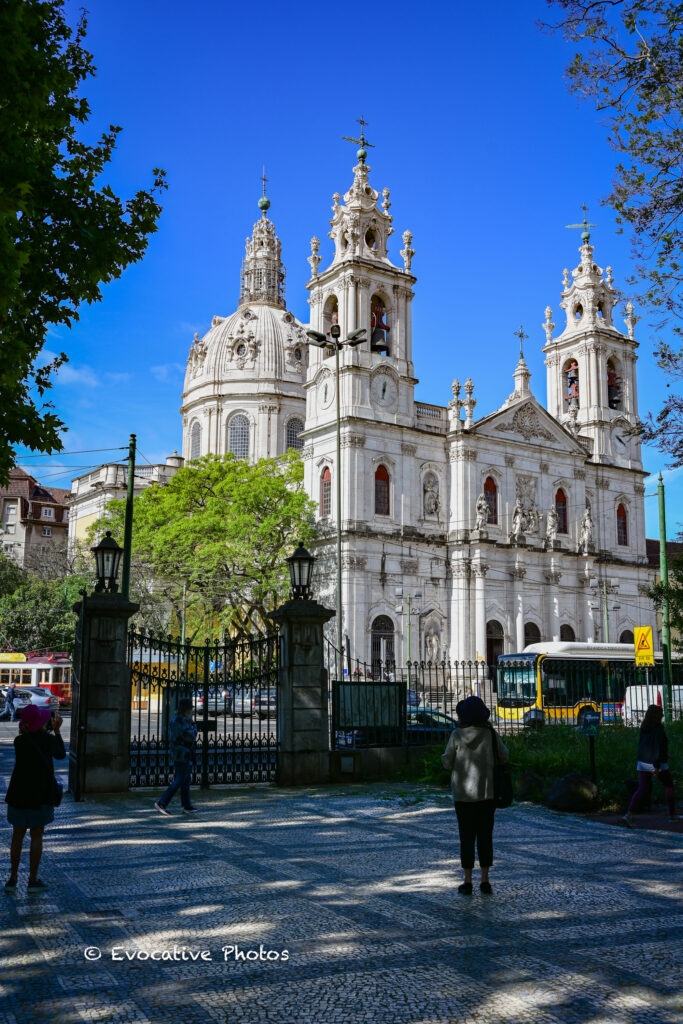
Lisbon, Portugal–May 5, 2026. Architectural photograph of the magnificent Basilica da Estrela in Lisbon, Portugal, showcasing ornate Baroque design, domes, and bright blue skies.
We did a lot of sightseeing in Lisbon proper as well as a number of side trips including Coimbra, Fatima and Tomar. More about those trips another time. We did get to visit a number of museums; a marketplace, a restaurant featuring Fado music and walks around the city led by an expert guide. And the wine was poured rather freely.
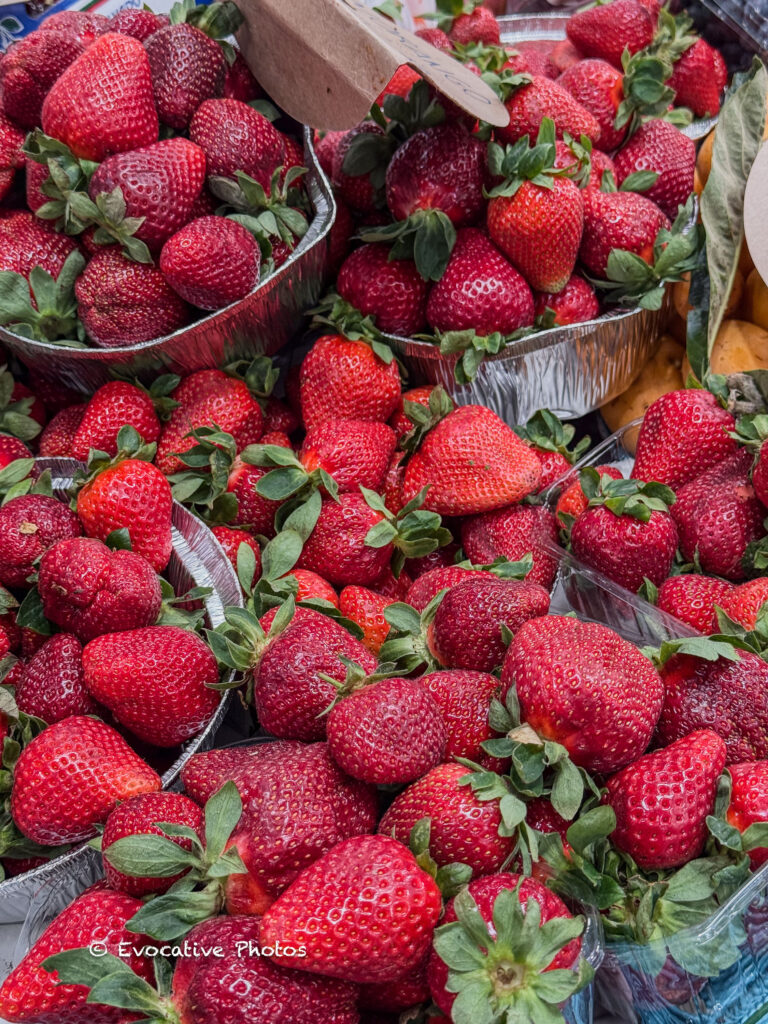
Bright red strawberries overflow from market containers in a vibrant close-up display.
Lisbon is kind of laid back–not as laid back as the Douro Valley–but life there does have a slower pace. The people we met were very gracious and polite. There wasn’t even a hint of crime to be found anywhere, unusual for a big city. And everyone, and I mean everyone, spoke English. The net of it was that we had a very nice time.
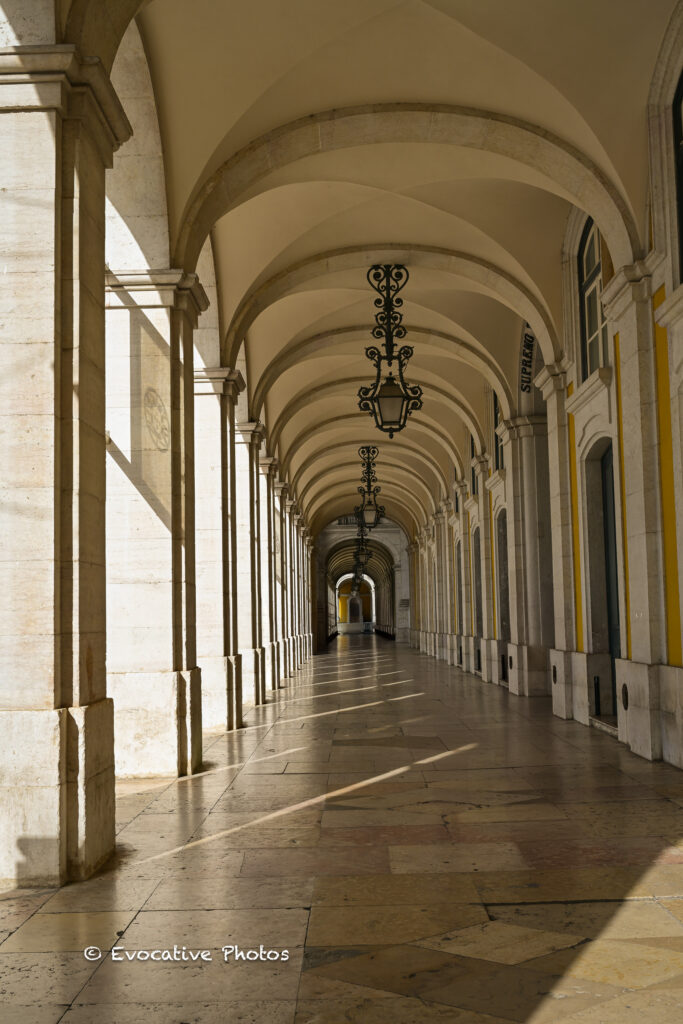
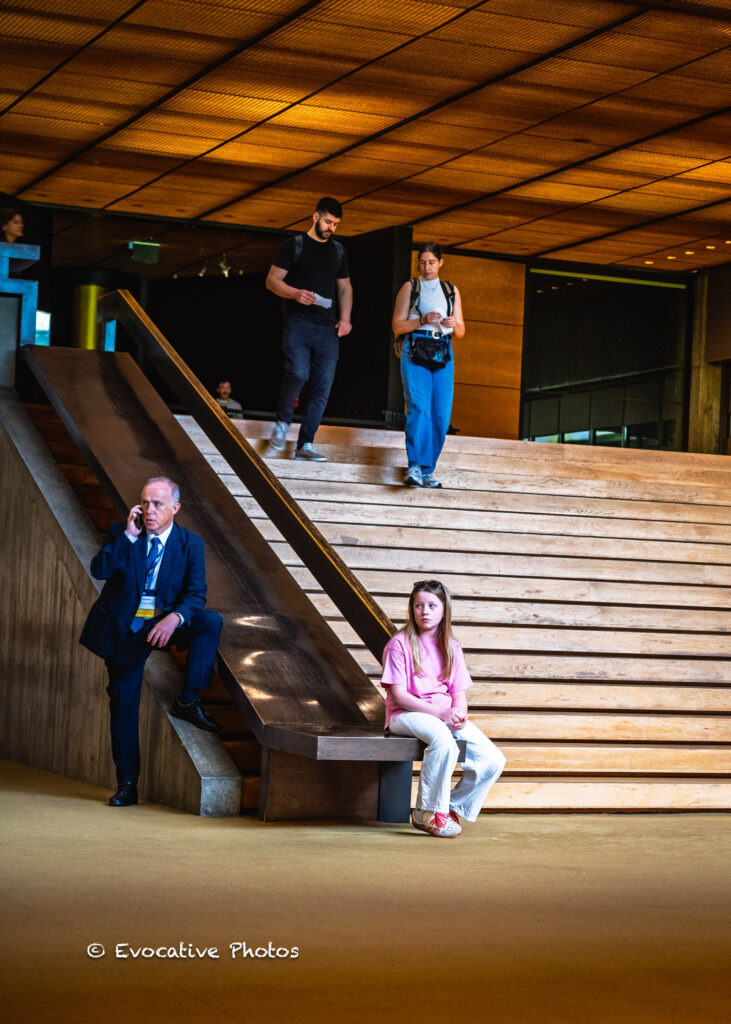
Elegant arches and hanging lanterns stretch into the distance along a grand historic corridor illuminated by warm sunlight. The repeating architectural lines create a timeless and sophisticated European atmosphere.People move through a contemporary interior space featuring dramatic wooden staircases and warm lighting.
Our ship anchored today in the Mediterranean and we came ashore at Villefranche, France.
We took a drive through Nice and neighboring towns, on our way to the village of Saint Paul de Vence. On our drive we passed the Hotel Negresco, where we stayed for vacation about 40 years ago.
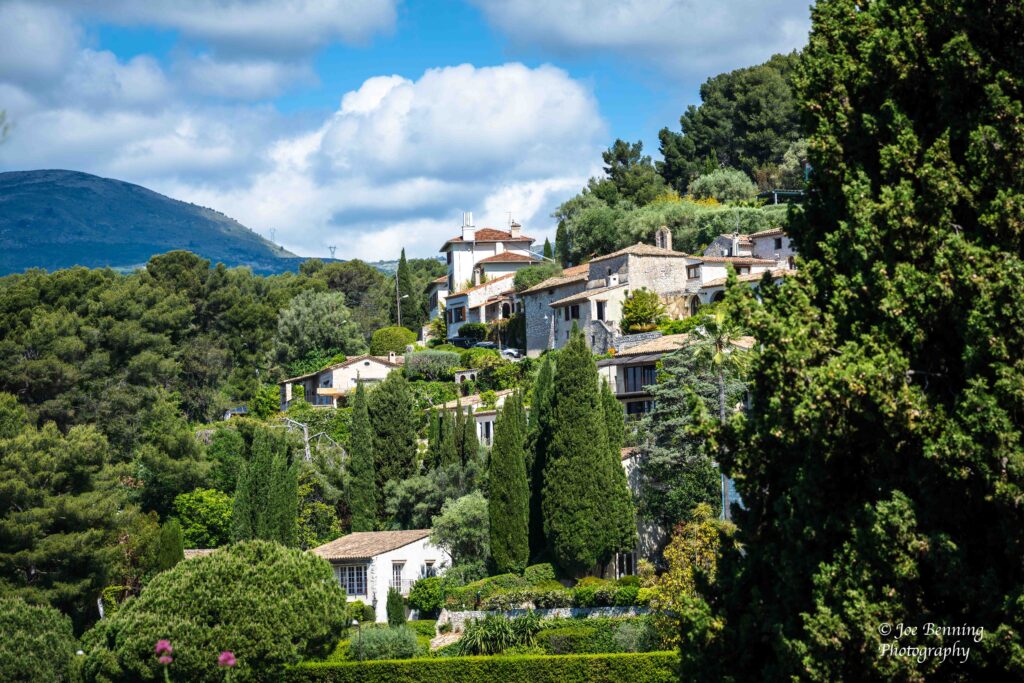
St Paul de Vence
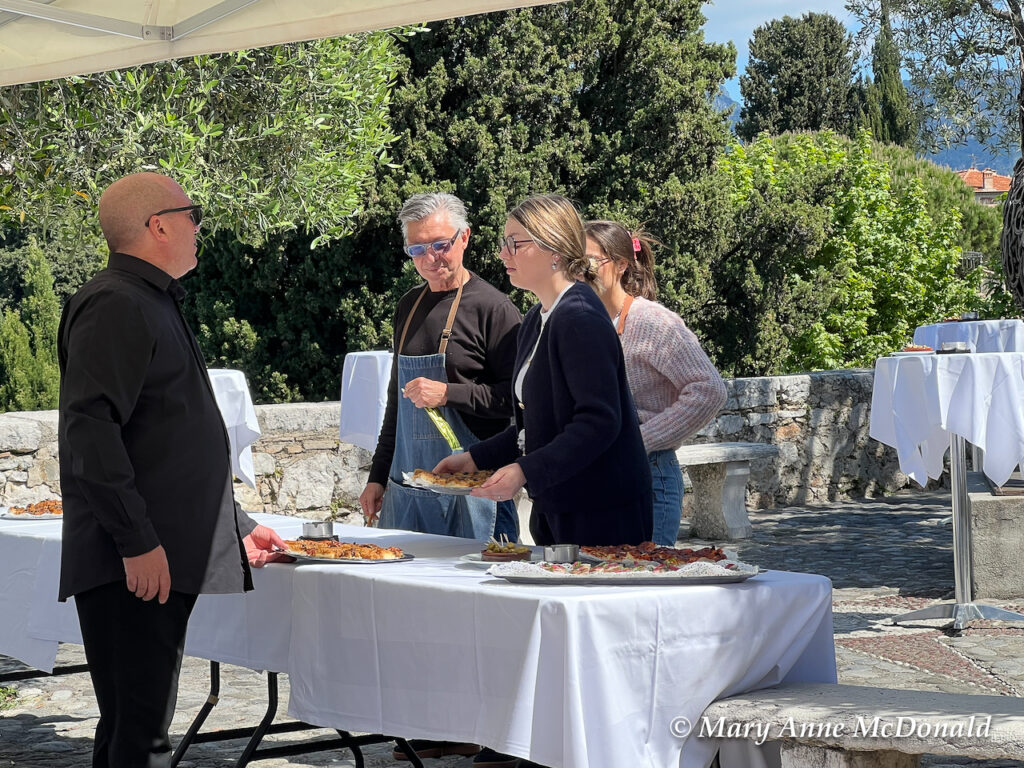
Today is the 80th anniversary of VE day, marking the end of World War II in Europe. As in so many other French towns, there were beautiful commemoration ceremonies going on in Saint Paul De Vence. One of the town squares was the location for a ceremony honoring veterans of World War II. We listened to the local brass band play patriotic songs, while caterers prepared an enormous spread of delicious food for residents attending the commemoration ceremony.
VE Day Celebration
We traveled through the town with an art historian as our guide, and saw numerous galleries where many artists display their work.
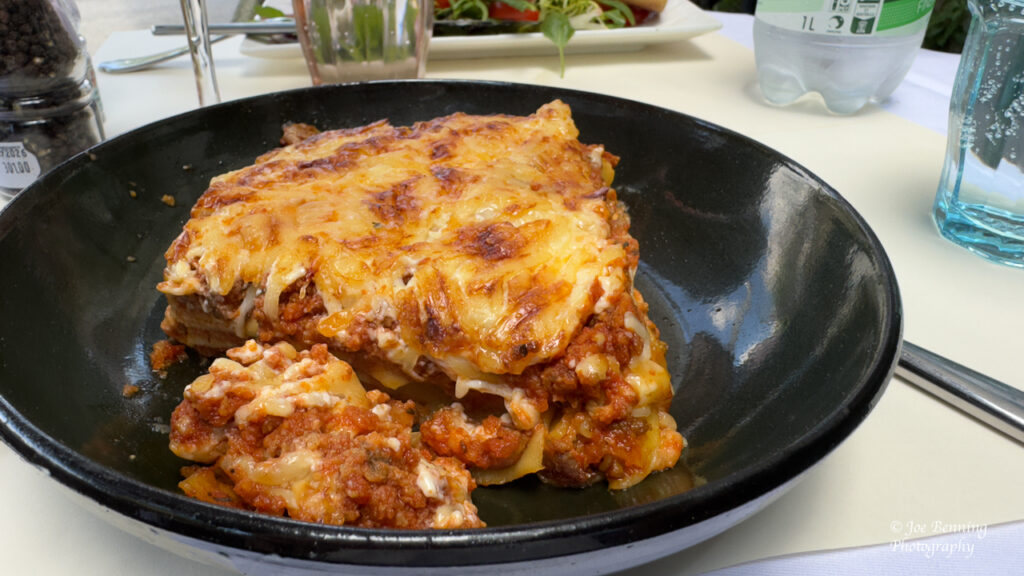
Next, we stopped at a local cafe / restaurant and had lunch, consisting of a Tomato and Burrata Mozzarella Salad and a Boeuf Lasagna Maison. Very generous helpings and very delicious.
Boef Lasagna Maison
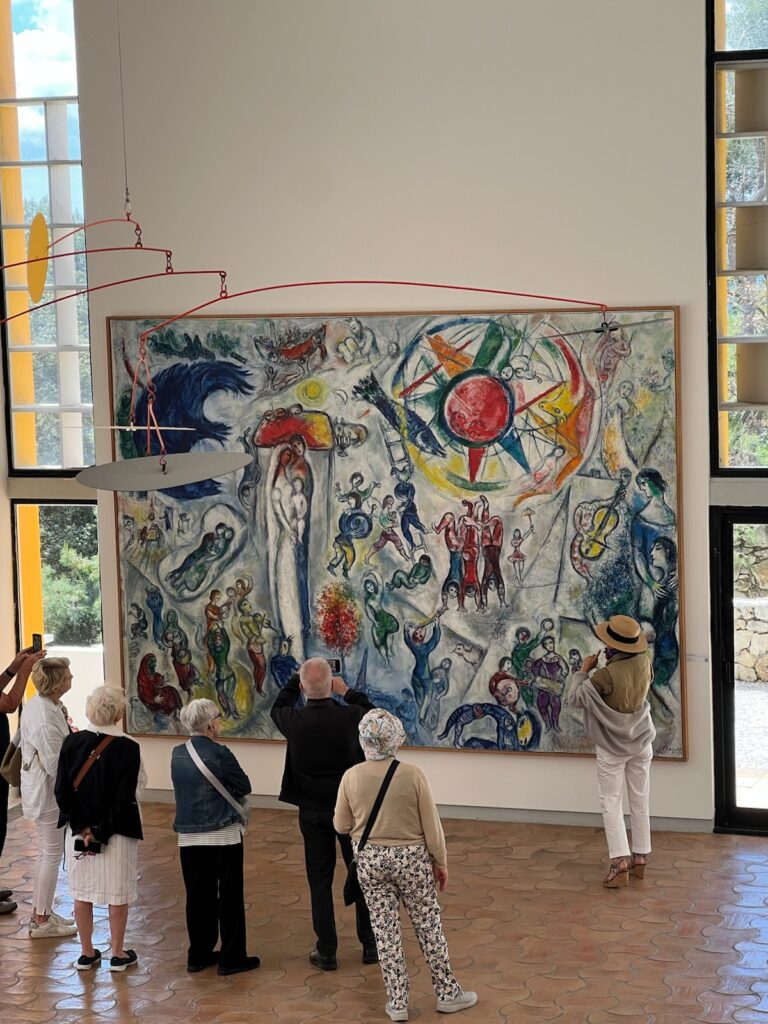
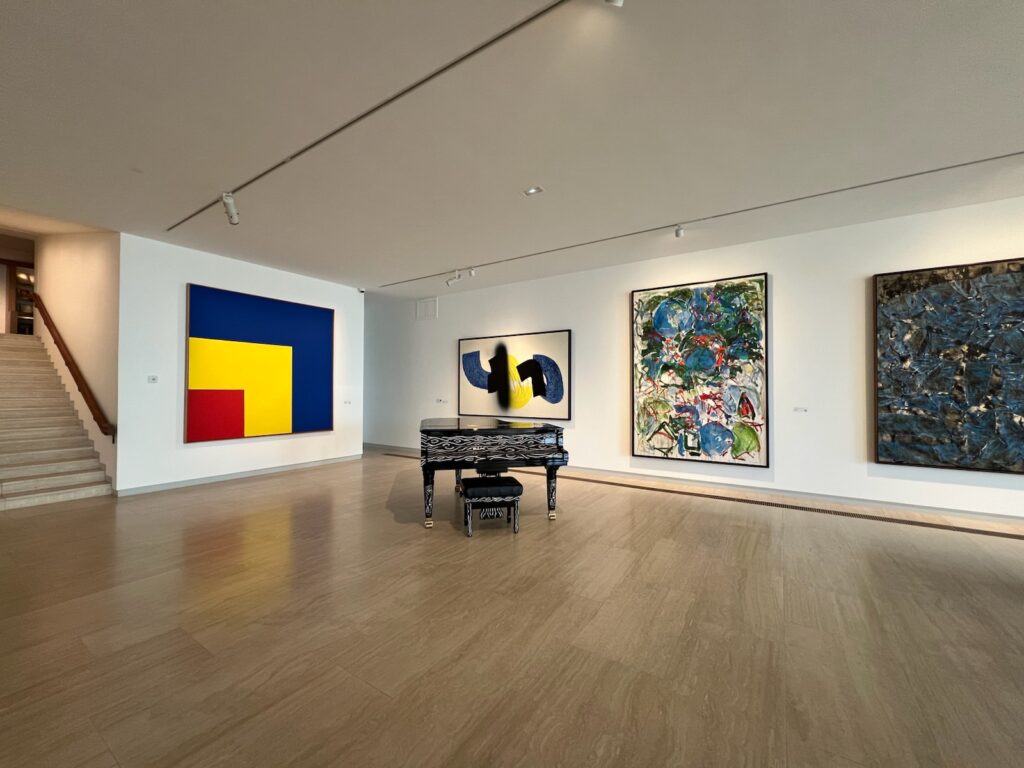
After lunch, we went to the Maeght Foundation, which houses an impressive number of works by Bonnard, Braque, Kandinsky, Chagall, Miró, Calder, Giacometti, Hepworth and others. The foundation has lovely interior rooms containing sculpture and paintings, as well as beautiful gardens and terraces where the art is showcased.
La Vie by Chagall; Calder Mobile Hanging from Ceiling Maeght Foundation Exhibit
Saint Paul De Vence is one of France’s most visited towns, and we were very pleased to have an opportunity to see it on a day that is a national holiday and a very meaningful one for the French, and all of Europe.
Our ship stopped in Livorno, Italy and many passengers opted to head into Florence or other areas of Tuscany—we decided to take a walking tour of Pisa.
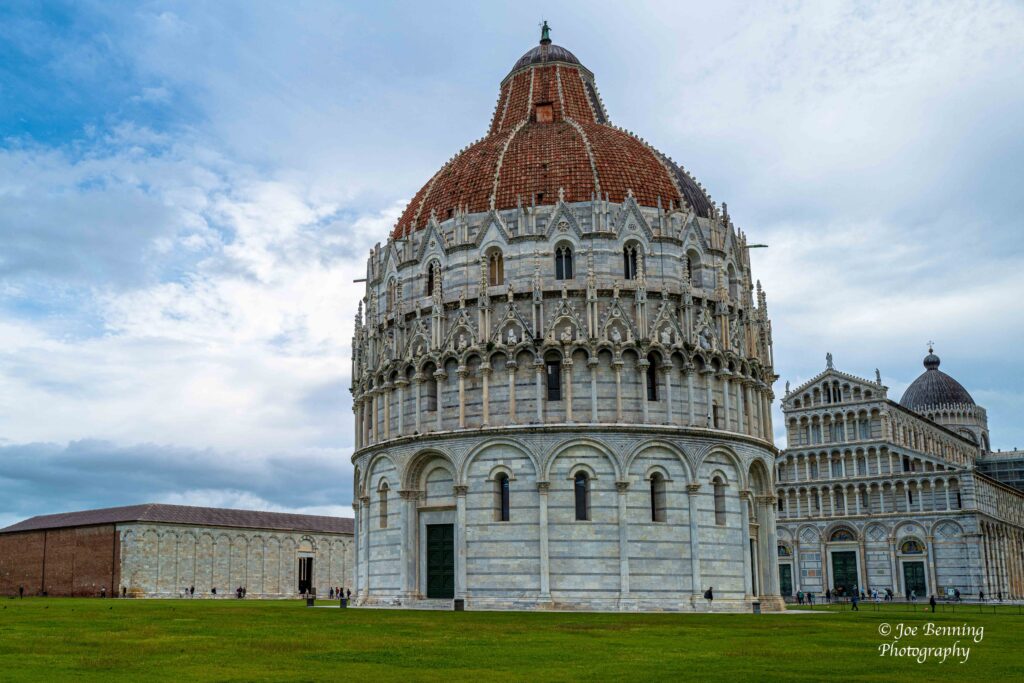
Baptistery Santa Maria Assunta
Pisa is another medieval walled town, which today houses approximately 90,000 residents, and an additional 50,000 students at the three universities in Pisa. The town has huge numbers of tourists (taking selfies at strange angles to show how they are propping up the leaning tower), and a youthful vibe, with bicyclists everywhere, and many cafes, bars and restaurants.
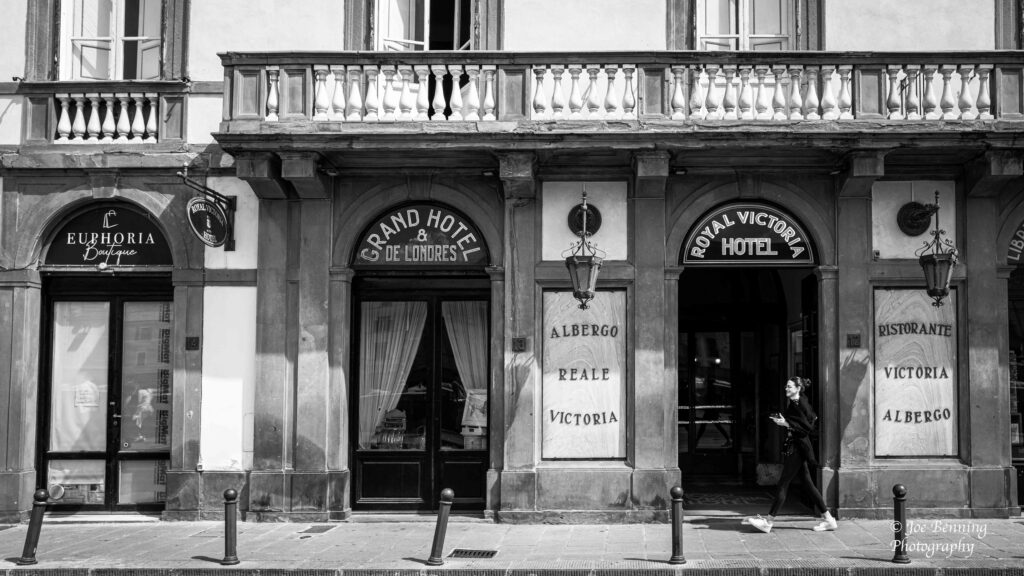
Royal Victoria Hotel in Pisa
The influence of the Medici family and other wealthy Florentines is evident in Pisa – beautiful palazzi line the Arno River, and the Medici crest appears on buildings throughout the town.
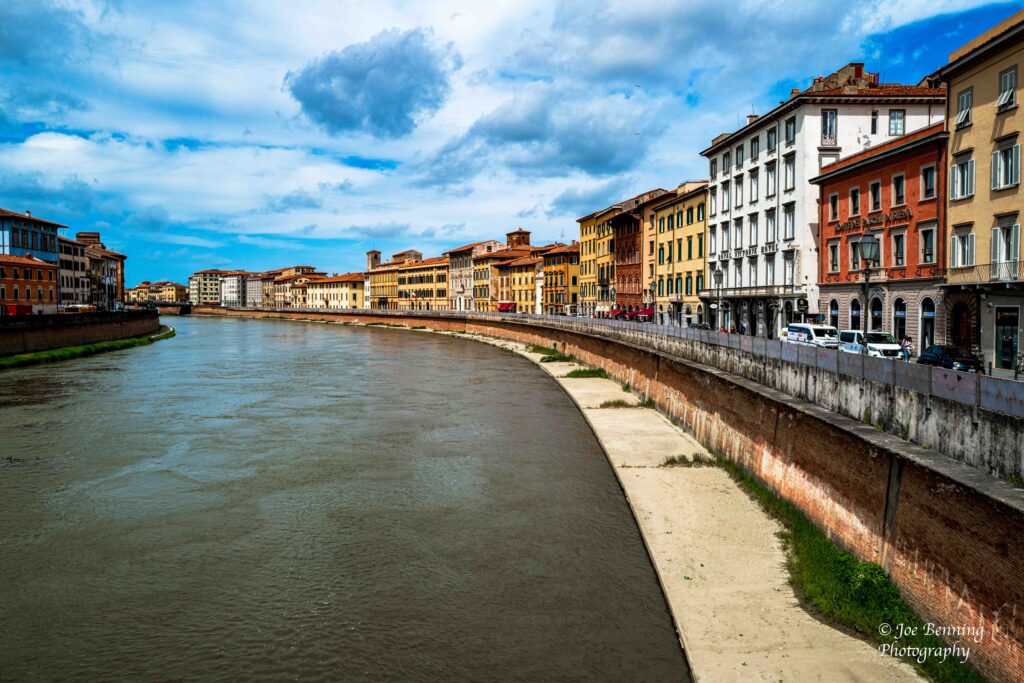
Along the Arno River
The Arno River flows through Pisa (and on to Florence, about 40 miles east) and water can be found not too far under the land in this part of Tuscany. Building large marble towers and other edifices carries risk that the land will not support the buildings over time (hence the leaning tower, and other buildings in the city that lean slightly).
Our visit in Pisa included the leaning tower, of course, as well as the neighboring Cathedral and Baptistry, which are beautiful. The Cathedral and Baptistry are slowly sinking, since they were built on the same plain as the tower, but their weight is distributed over a larger base than the tower, so they do not appear to be leaning.
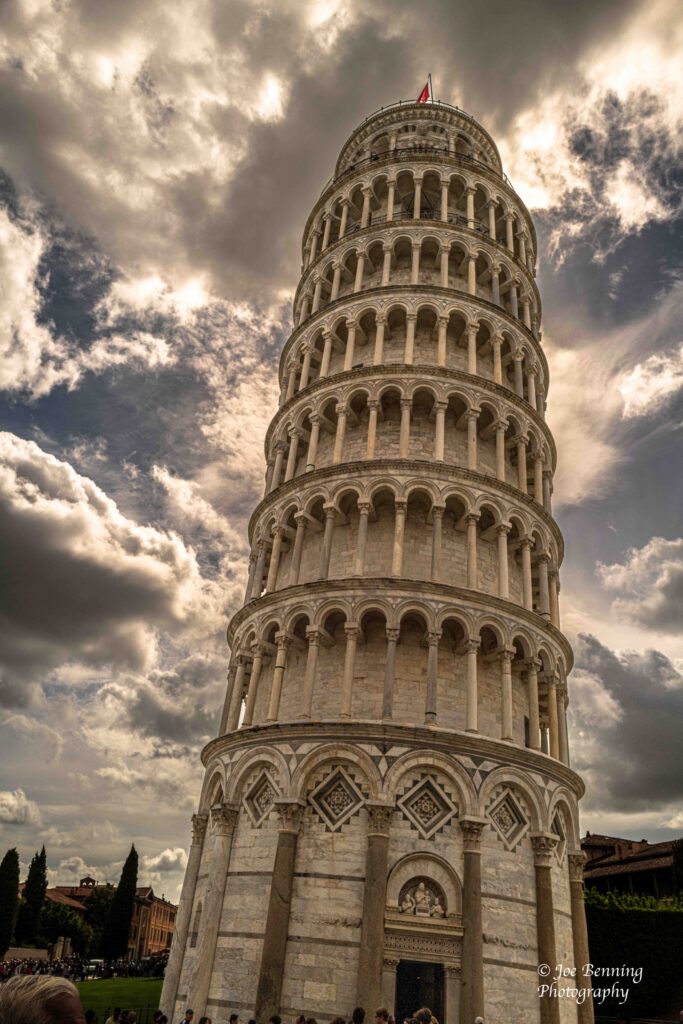
Leaning Tower of Pisa
In recent years, concrete has been injected into the ground to support the tower, and other safeguards have been adopted -the practice of allowing people to climb to the top of the tower has even resumed, after many years when it was not permitted for reasons of safety.
We spent some time in the neighborhood that makes up the campus of the Scuola Normale Superior, a prestigious school that has graduted Nobelists and other award winners such as Enrico Fermi. The curriculum is rigorous, but students who are accepted and earn high grades enjoy a completely free education.
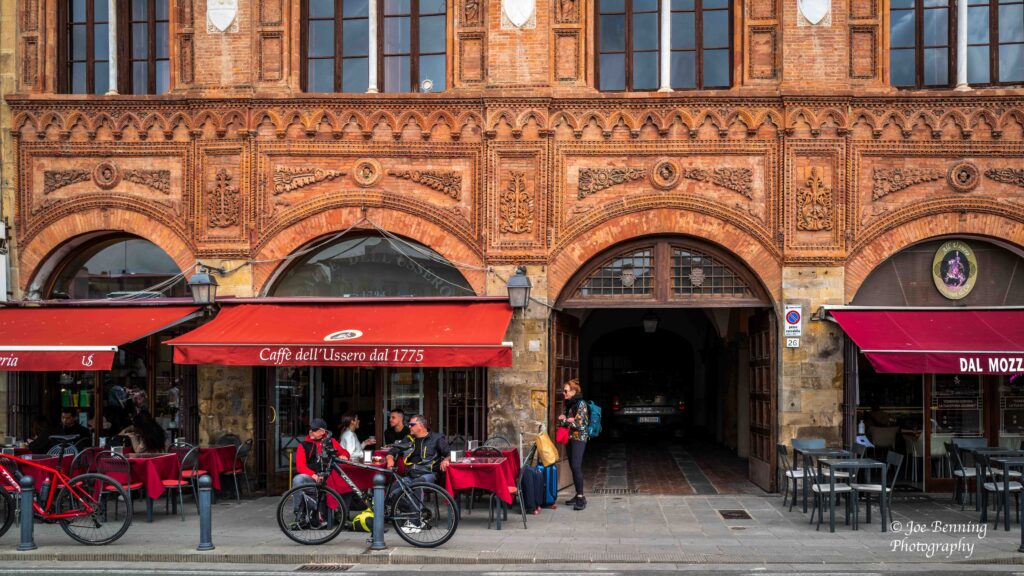
Library of the Scuola Normale Superiore in PisaStreet Scene by the Arno River
And once again we enjoyed a gelato in the course of our trek. Another excellent day in Italy!
Today was very special—we went to see the summer palace for Popes—Castelo Gandolfo. Opened to visitors in 2016, it has served as the summer palace for Popes since the Seventeenth Century. Castelo Gandolfo is about 28 kilometers outside of Rome. Pope Francis never spent a single night there, which is probably why it was opened to the public. We’ll have to wait and see what happens with a new Pope.
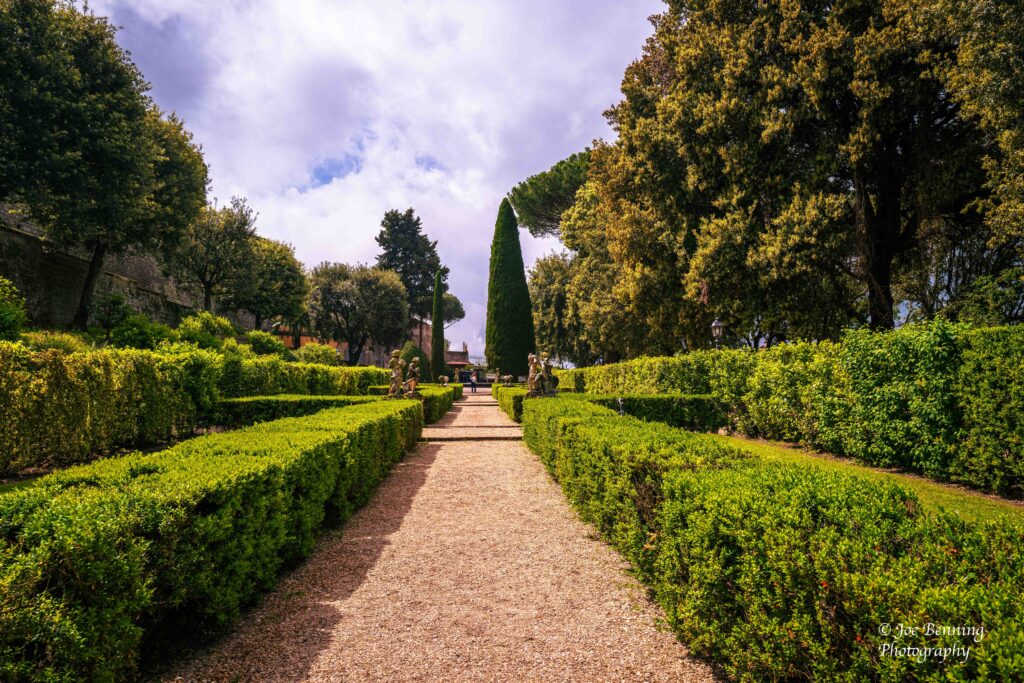
Papal Gardens
On the grounds there is a lovely, peaceful green park, overlooking Lake Albano. The palace has many rooms for formal receptions and visits, as well as many private rooms (such as the room where Pope Benedict used to watch soccer games on television).
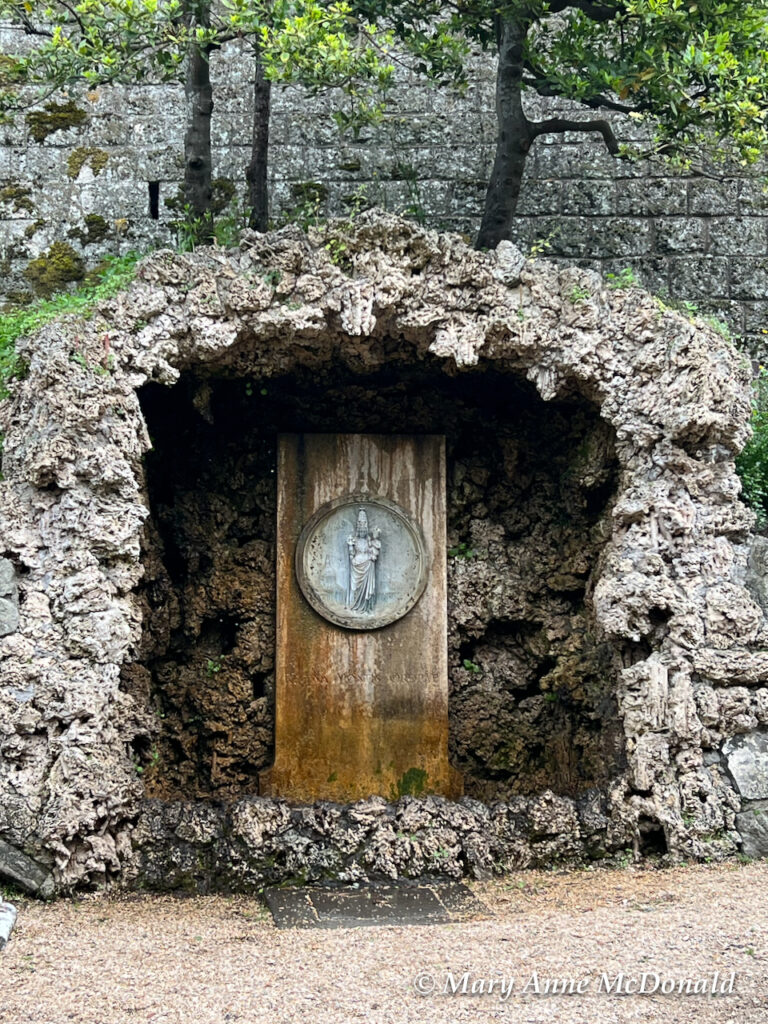
The palace itself has beautiful gardens, mostly green without many floral areas. We had the opportunity to visit the “secret garden” of the Pope. It contained pathways of crushed white stone where the pope could walk and contemplate. The garden housed many statues and a fountain designed to reflect a grotto honoring Mary. The garden is a very peaceful place.
Grotto Dedicated to BVM
While touring the palace we saw the pope’s bedroom, private chapel, office, and many other rooms.
The decoration of the castle is not very ornate by castle standards. The colors chosen to decorate the rooms reflect the seaside and nature.
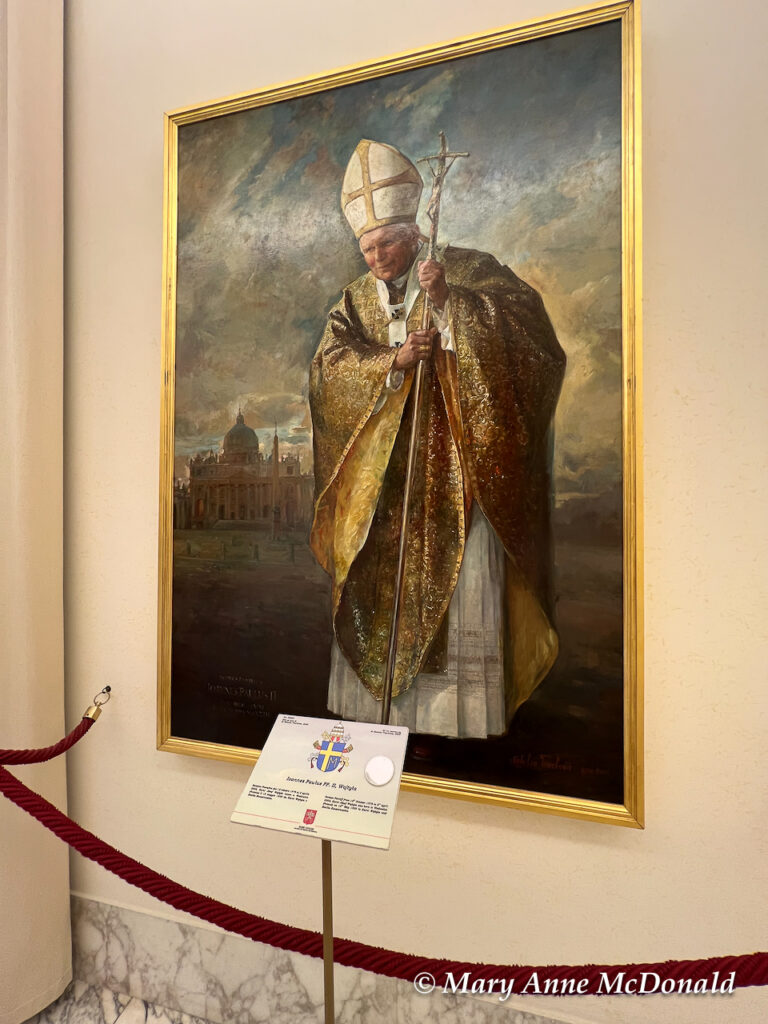
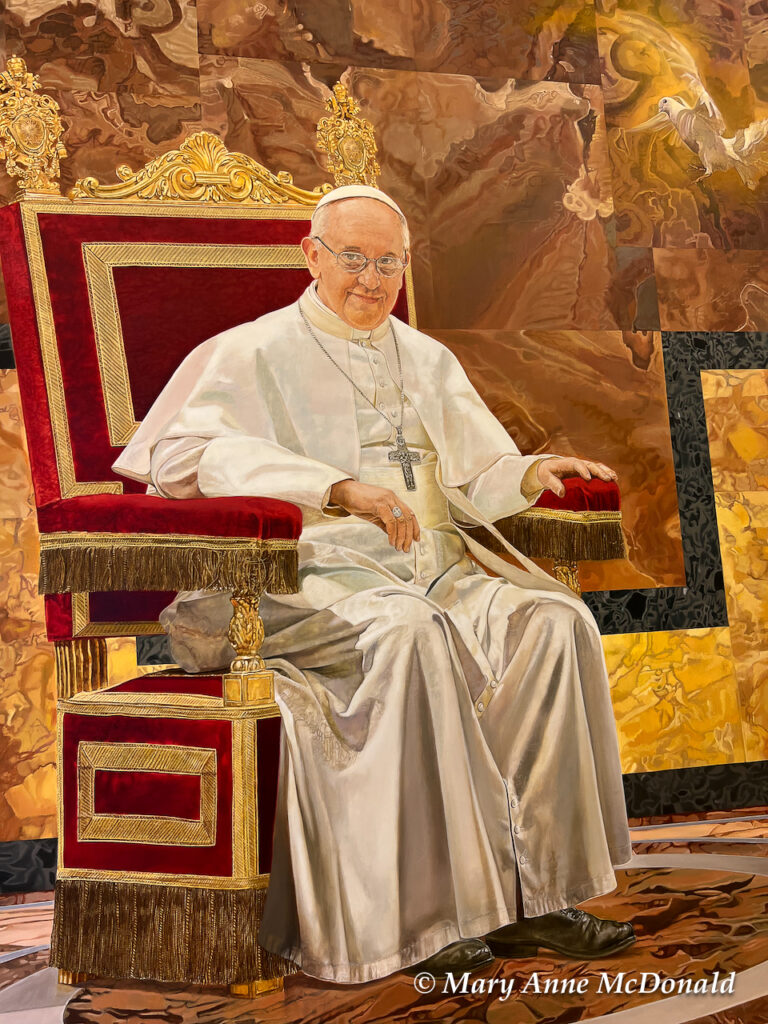
Notably the castle has many, many portraits of the popes. Several portraits of the most recent pontiffs are below.
John Paul II official portraitPortrait of Pope Francis
Among other items of note: Pope Benedict retired to Castle Gandolfo, and Pope John Paul II spent a lot of time in contemplation at Castel Gandolfo. Pope Francis visited the castle three times but never stayed overnight.
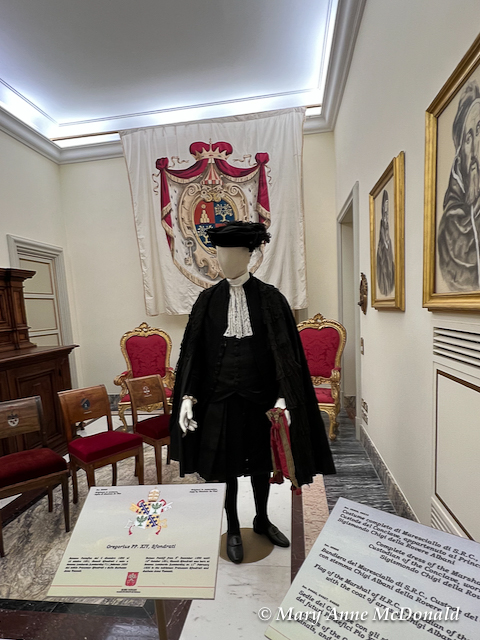
One of the exhibits at the castle involves the uniforms worn by the Swiss guard and various other uniformed personnel, including the Carmerlengo. (The Carmerlengo administers the temporal affairs of the Holy See during a papal vacancy.) There is a picture below of the uniform the Carmerlengo wore in prior centuries.
Uniform Worn by Carmerlengo in past centuries
Castel Gandolfo is a beautiful place, and it was very meaningful to spend some time in the very rooms where various pontiffs lived when they had a chance to get away from the summer heat in Vatican City.
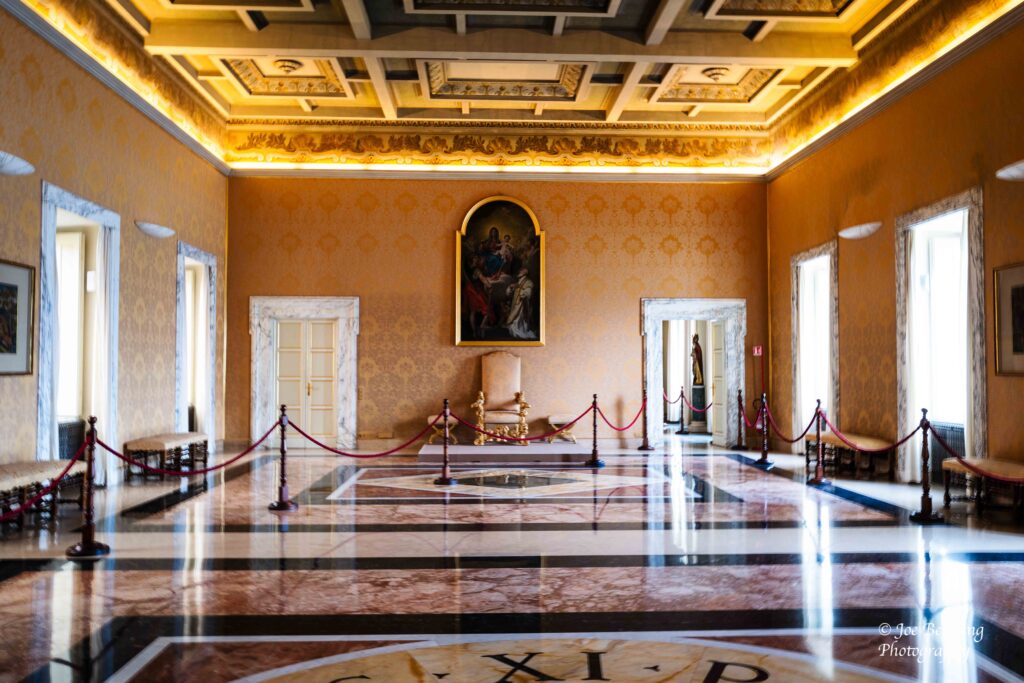
Room of Papal Museum at Gandolfo
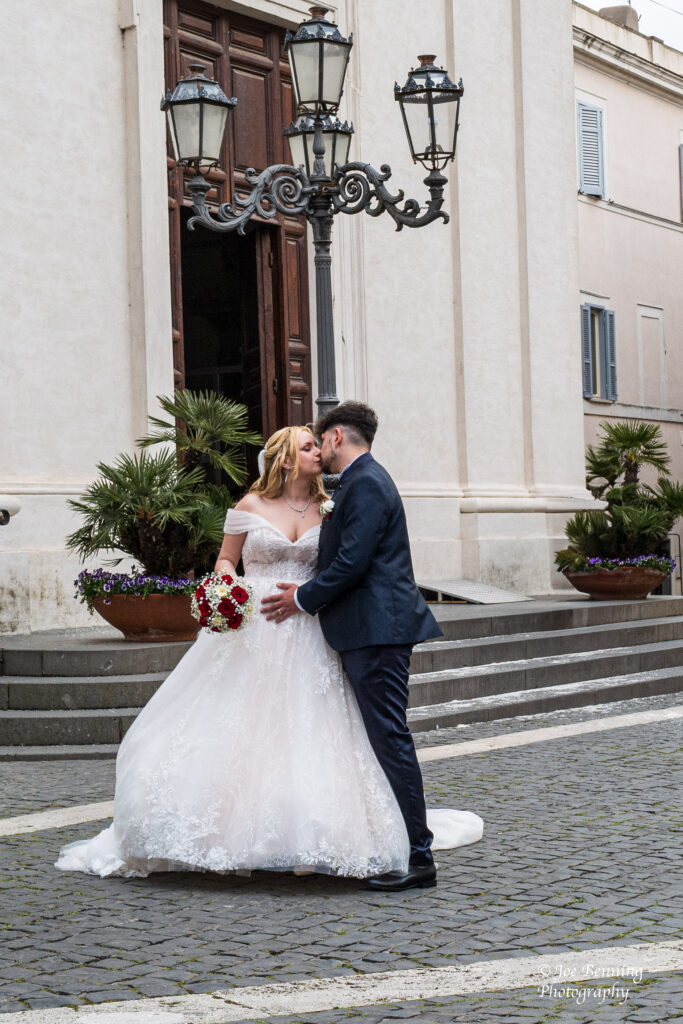
After we finished touring Castel Gandolfo we walked up through cobblestone streets in a very pretty town, and saw a church where a Monday morning wedding was taking place. There were lots of people in attendance with flowers and rice thrown to celebrate, and beautiful attire on all of the participants.
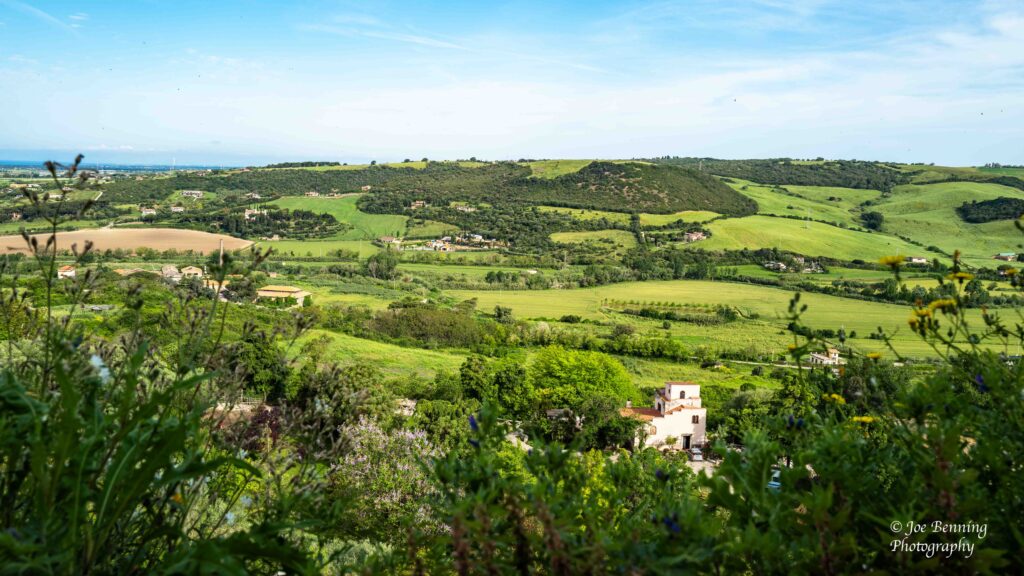
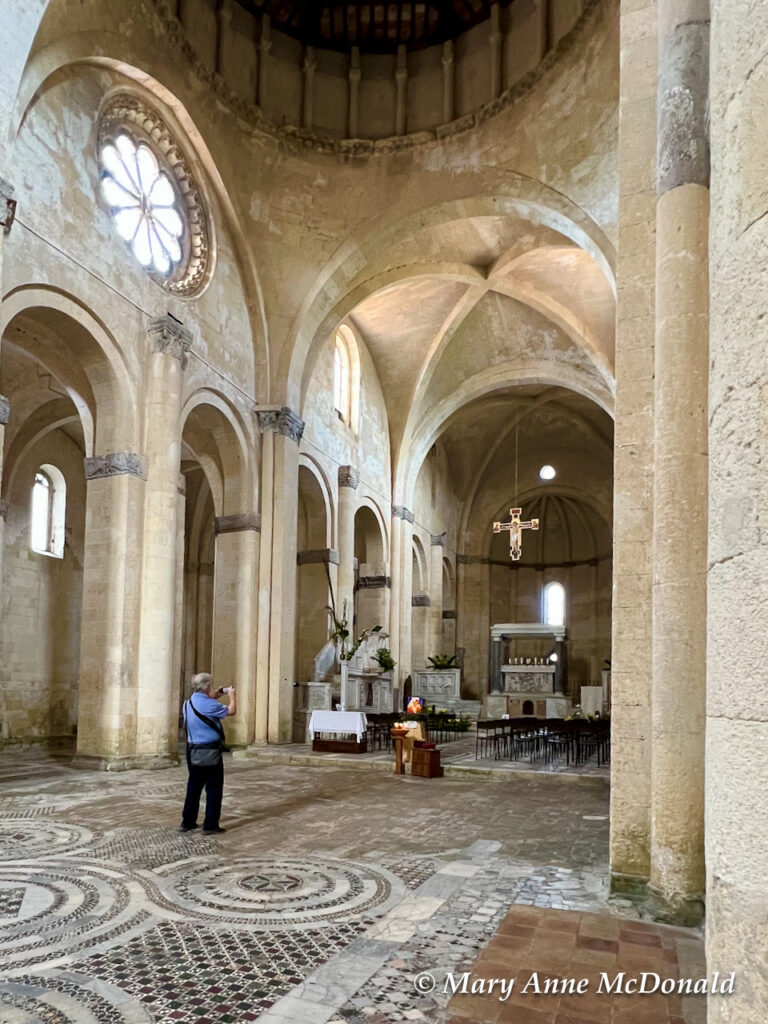
Rome is a bit busy these days, so when our ship docked at the port, we decided to go to a nearby medieval town, Tarquinia. The town dates back to the ninth century BC, and sits on top of a very steep hill overlooking the Tyrrhenian sea.
Overlooking Tarquinia
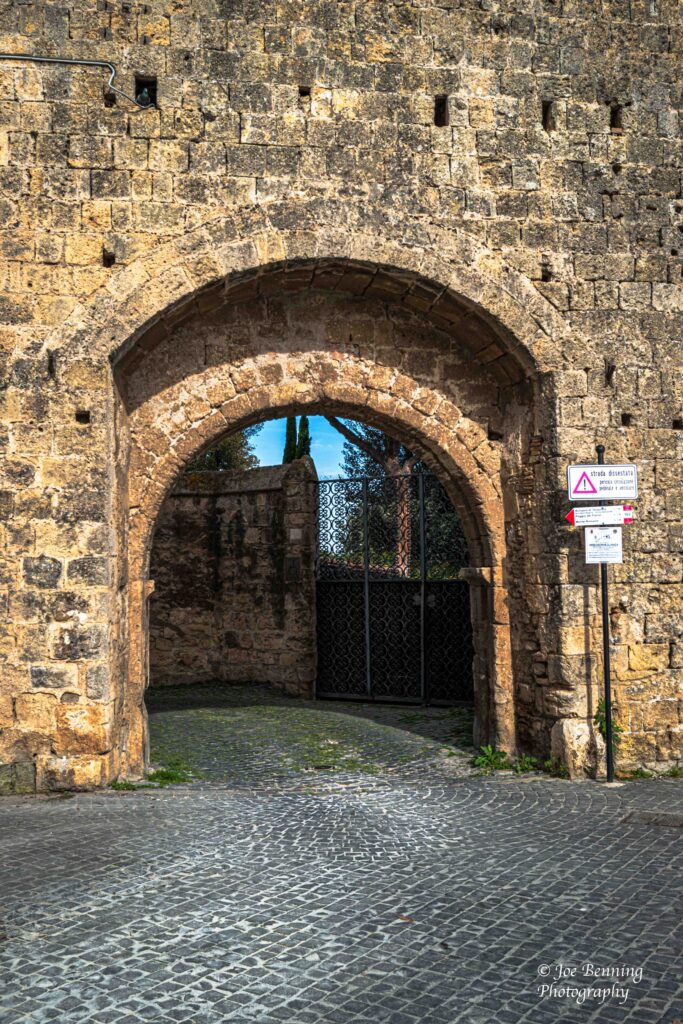
The town is enclosed by medieval walls and watch towers. There are numerous churches and bell towers within the town, giving it a lovely profile.
Gateway to the City
The old cobblestone streets of Tarquinia are incredibly steep, so we were fortunate to take a trolley train (with a guide to narrate the history) through most of the old town.
Fortunately it was Sunday when we visited Tarquinia, so one of the oldest churches (Santa Maria in Castello) was open for Mass. We were able to visit the interior of the church before Mass started. It was striking in its simplicity and age.
Santa Maria in Castello
Our tour finished with a delicious gelato, and we were back at the port in no time.
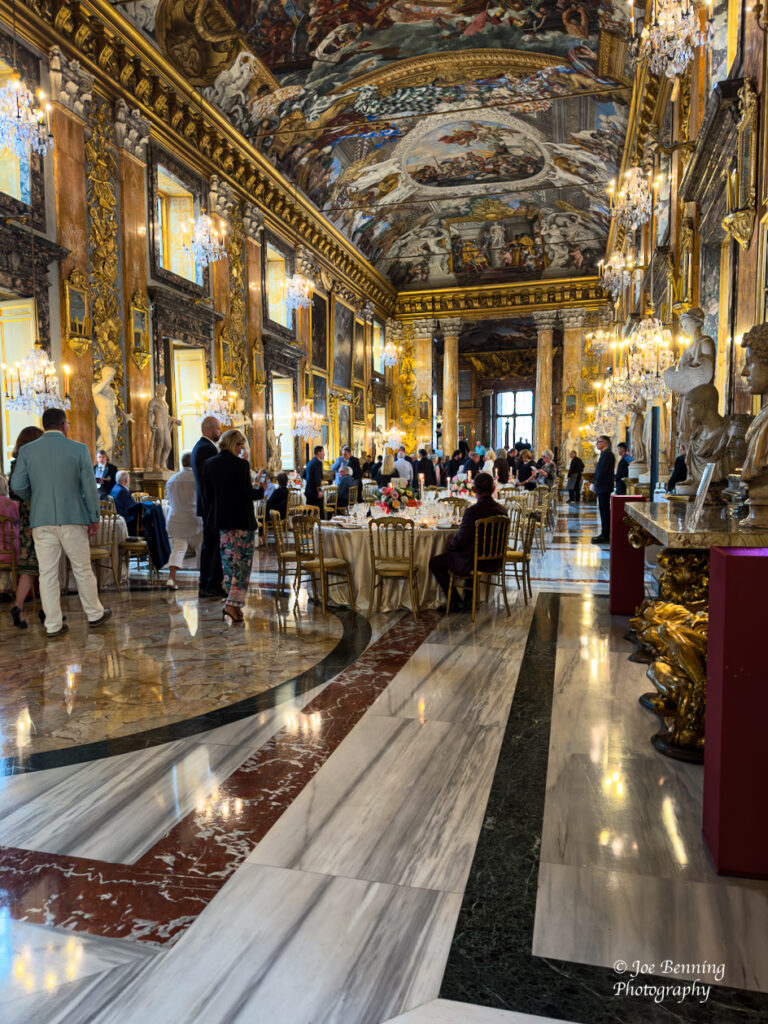
That evening we went into the city of Rome for an event sponsored by Crystal for its passengers on the world cruise.
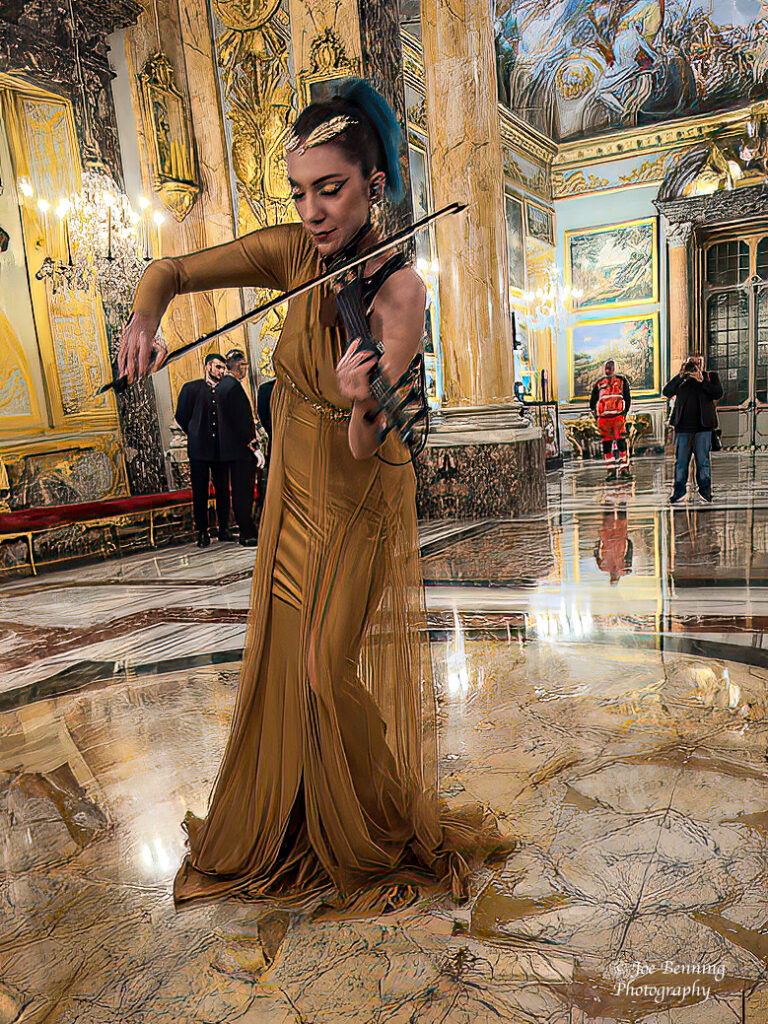
The Main Dining AreaViolinist
We were treated to a delightful evening of music and dinner at the Palazzo Colonna in Rome, a private museum. The chef who prepared the dinner will be responsible for the menu at one of Crystal’s specialty restaurants. One of his restaurants has 3 Michelin stars. The event was pretty amazing – and a great way to end the day.
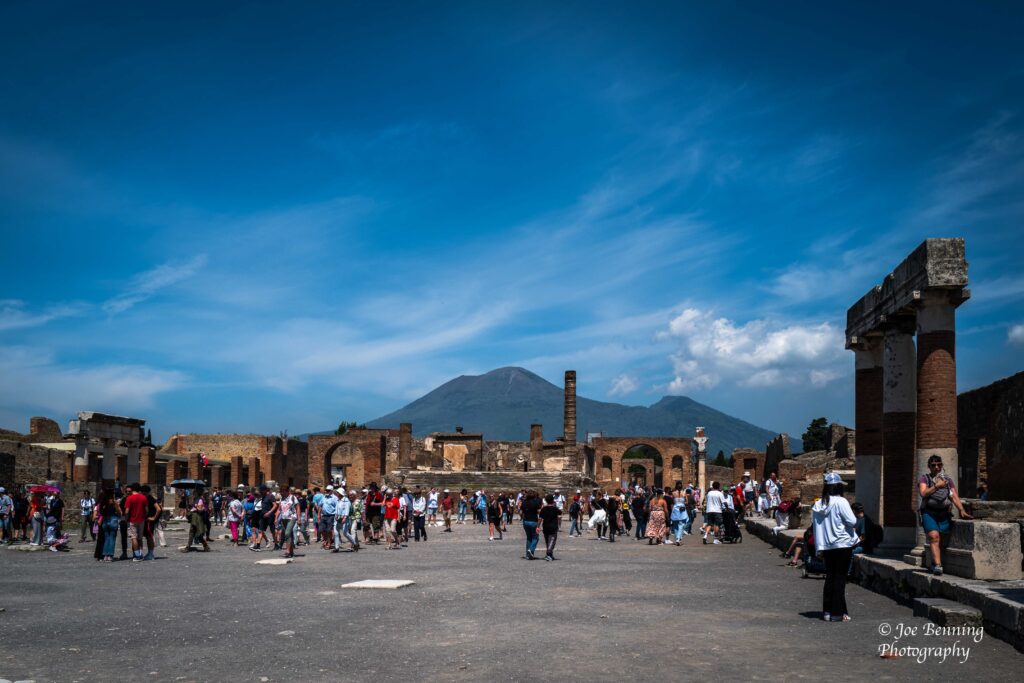
When our ship docked in Naples, we had the opportunity to visit the ruins of Pompeii and Herculaneum.
Pompeii was instantly buried beneath 30 feet of volcanic ash and cinder when Mount Vesuvius erupted in 79 A.D. People living in the city perished instantly when the volcanic ash poured down on the city.
Mount Vesuvius in the background of Pompeii
We had an interesting tour of the portion of the city that has been excavated. We saw streets, homes, and shops that were preserved intact as a result of the instantaneous cascade of volcanic ash that rained down on the city. Consequently it provided a glimpse of Roman life as it was 2000 years ago.
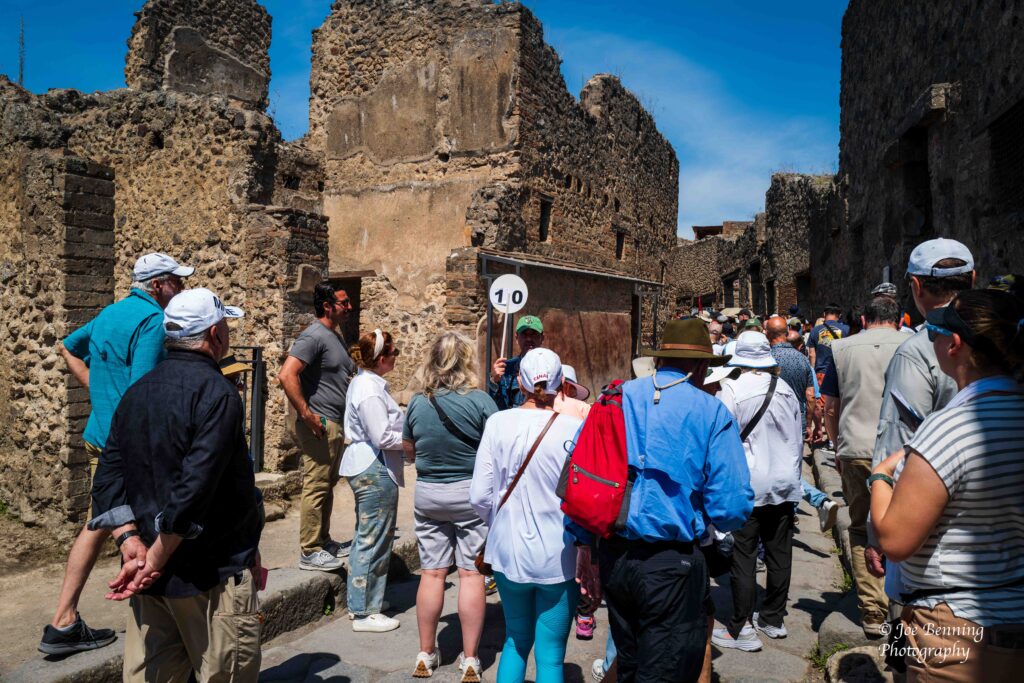
Crowds at Pompeii
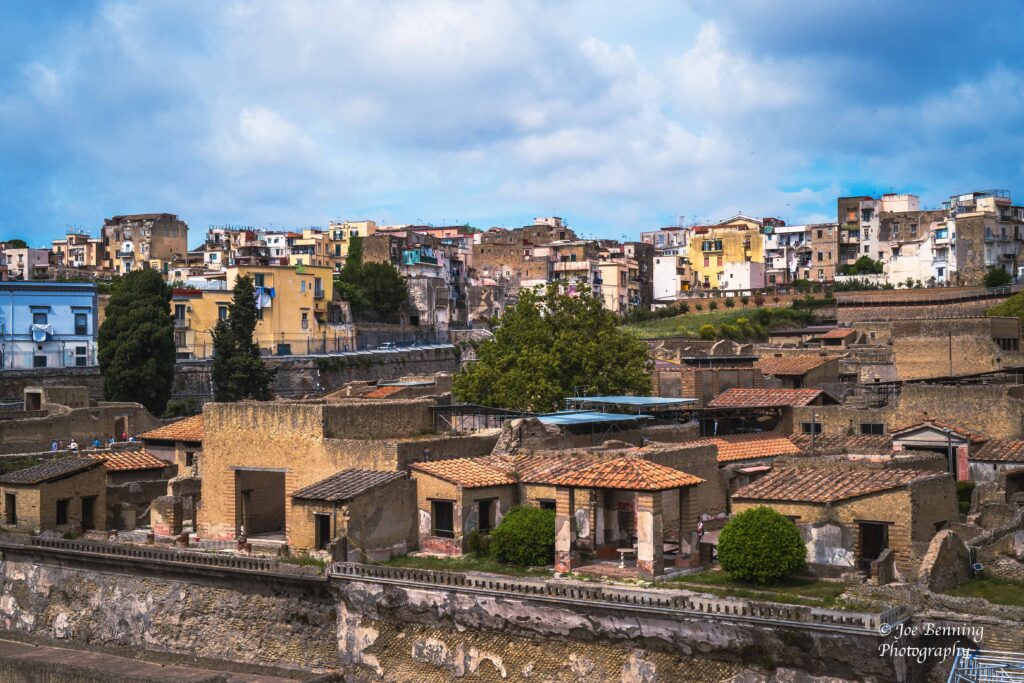
We then visited the nearby city of Herculaneum, which was a both wealthier and smaller than Pompeii.
Herculaneum in the Shadow of Mt Vesuvius
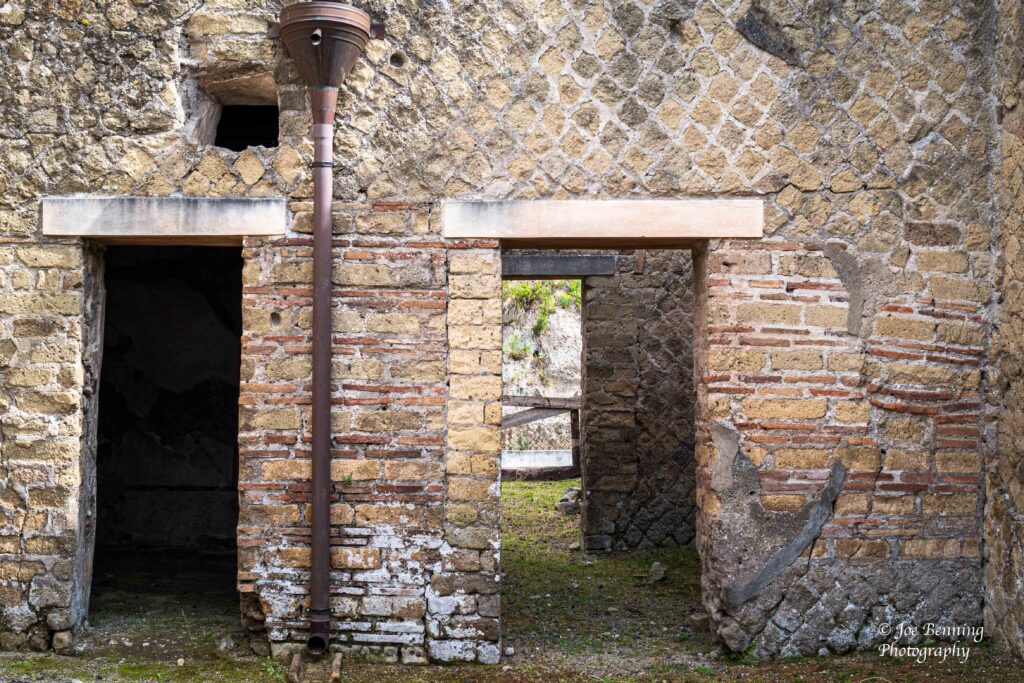
Nearby Herculaneum was destroyed by massive lava flows from the eruption of Mount Vesuvius. Before the volcano erupted, some of the wealthy inhabitants of the town were able to leave by ship. Others didn’t make it out. The homes that they left behind were buried in mud and are therefore well preserved. In fact, residents of the city knew how to construct walls in a way that would withstand some earthquakes, which made it even easier to see some of the structures in their original state.
Gladiators’ Quarters
It was interesting to imagine how life was in these towns 2000 years ago, and to see the contrast between the two cities in terms of the wealth of the inhabitants. Also very interesting to see the manners in which the cities were destroyed (or left intact) by natural disasters.
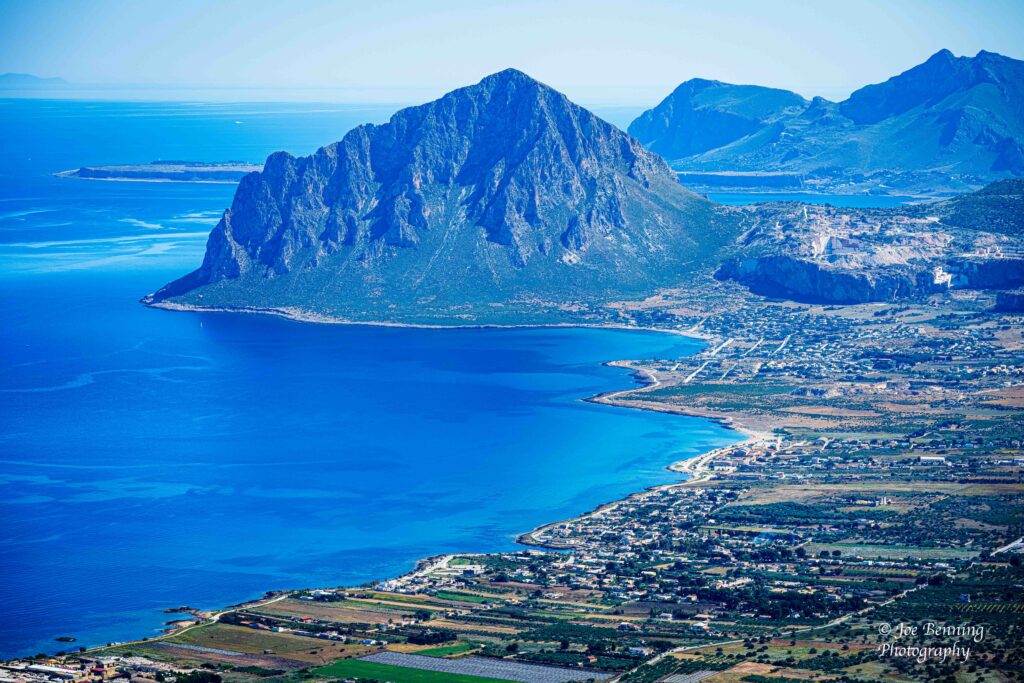
As we approach the final leg of our journey we will have several stops in Italy. The first stop, which we just had, was in Erice, Sicily. It is a small town (pop 27,000) located on the top of Mount Erice. It is about 2,500 feet above sea level and overlooks the town of Trapani.
Overlooking Sicily
Erice is a member of an organization named “Borghi più belli d’Italia” which translates as “The most beautiful villages of Italy.” It’s hard to argue with that characterization.
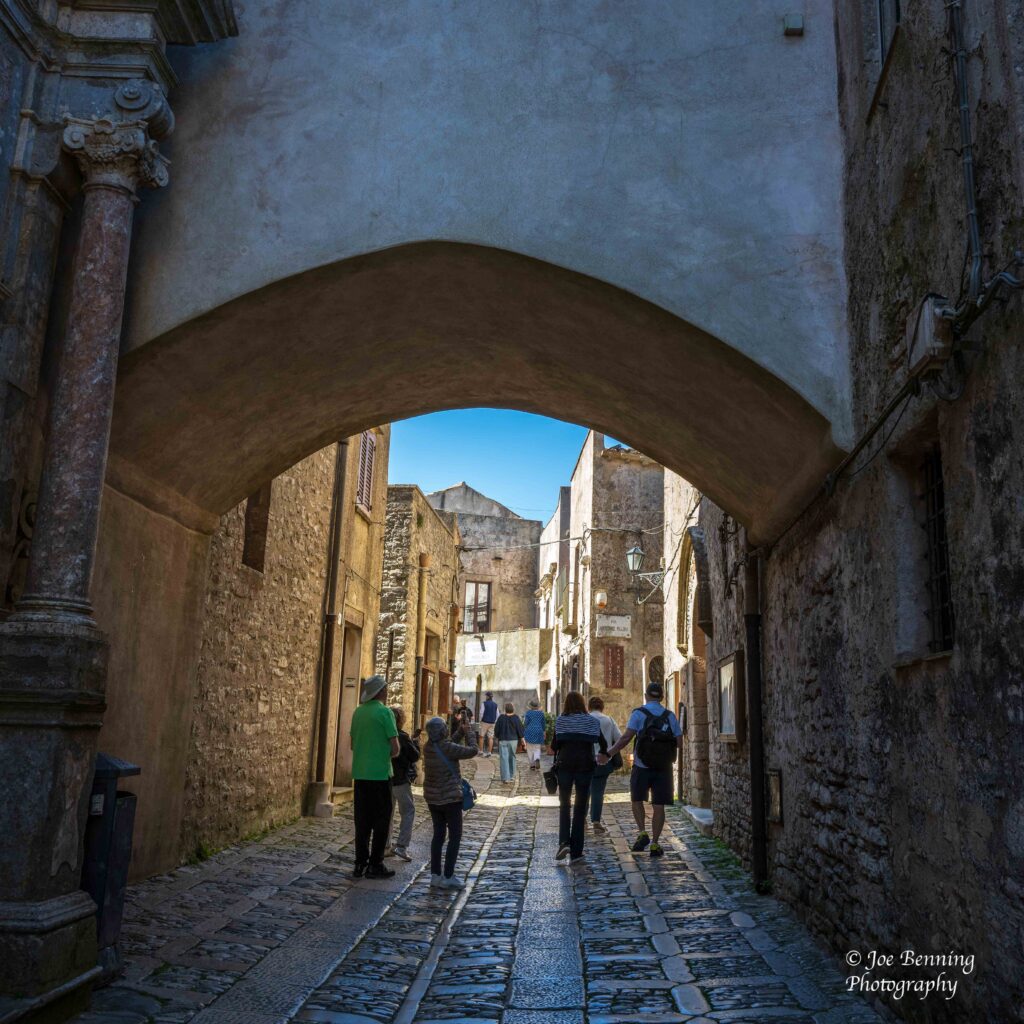
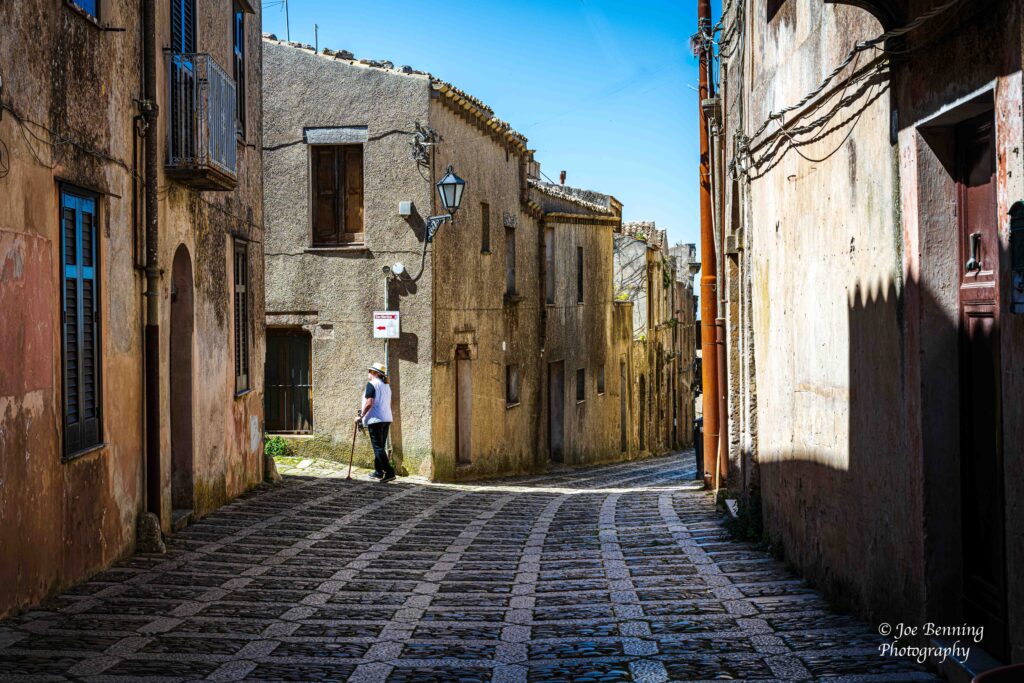
We went on a walking tour of the town. Typical of medieval towns, it is walled off; there are defendable gates that lead into the city; it is loaded with churches, and it has a few castles.
Tourists Explore Erice, Sicily
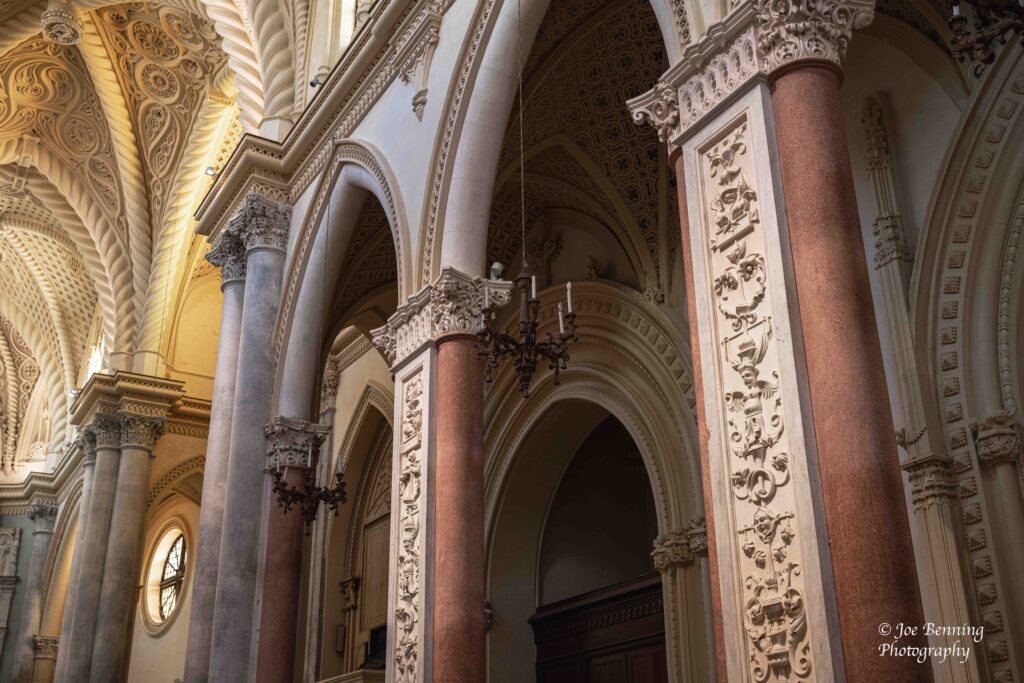
We visited Chiesa Madre di Erice in piazza Matrice. The church, which featured elaborate architecture inside, is dedicated to Santa Maria Assunta.
Inside Chiesa Madre Duomo
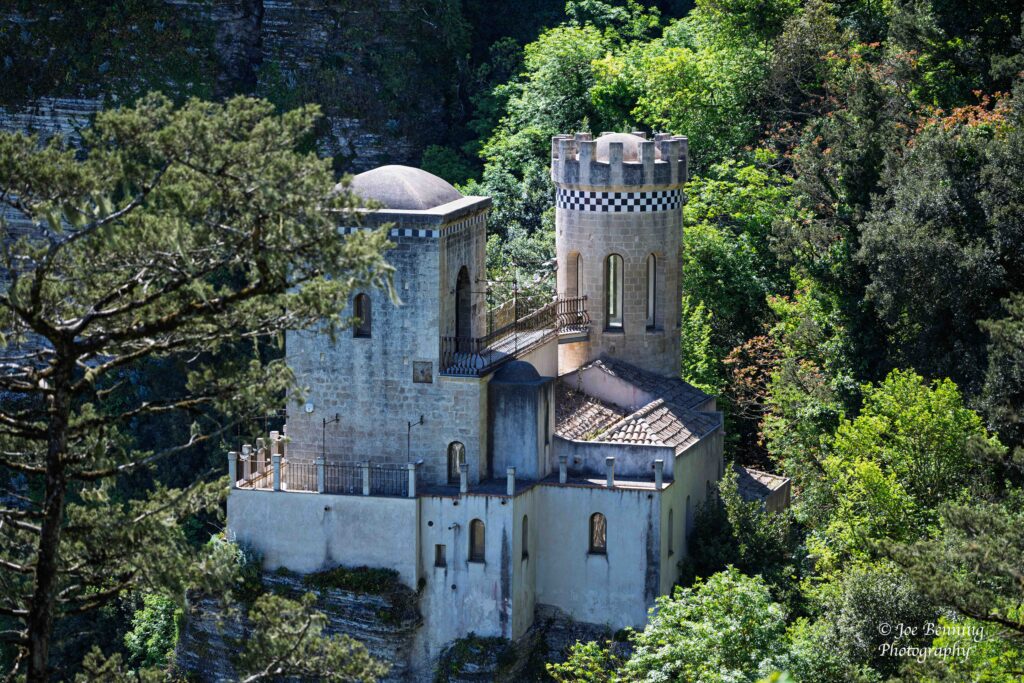
After exploring the inside of the church we headed toward the top of the town where the view of Trapani is breathtaking. Also, while taking in the view from the mountain, we spotted one of the many castles in the town.
Castle in Erice
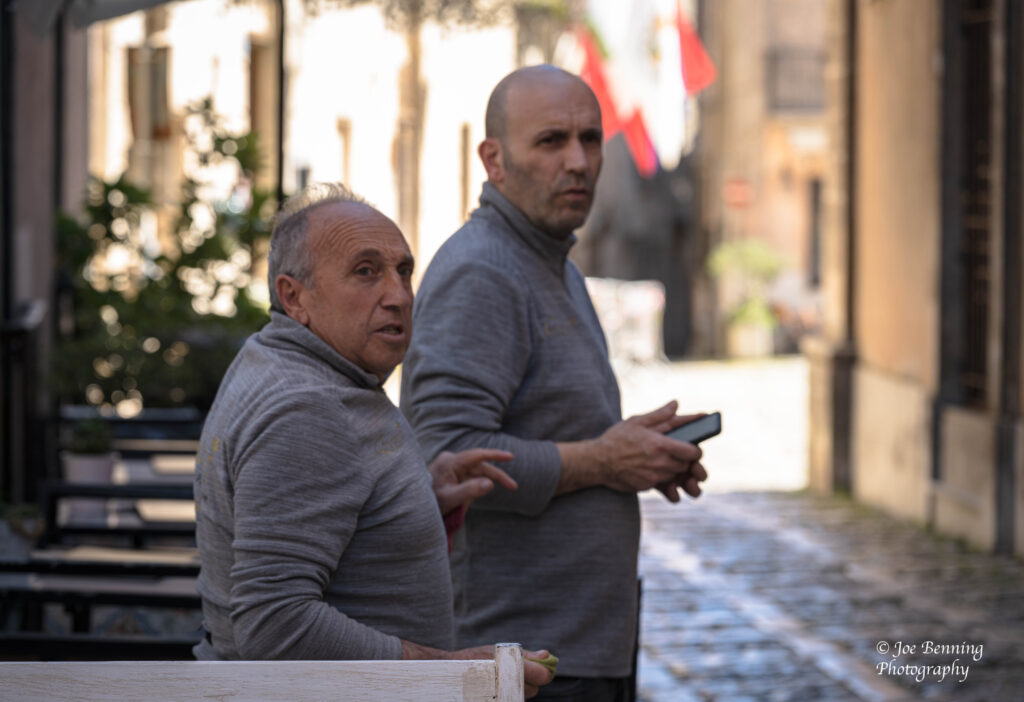
Of course, before long the place was packed with tourists. And you can really begin to understand why a city whose current business model is built on tourism is getting a bit ambivalent about it. The population is only about 27,000 and by the summer the visitors will come close to outnumbering the residents.
Locals Observe Tourists in Erica, SicilyWoman Tourist in Erice–Before the Deluge
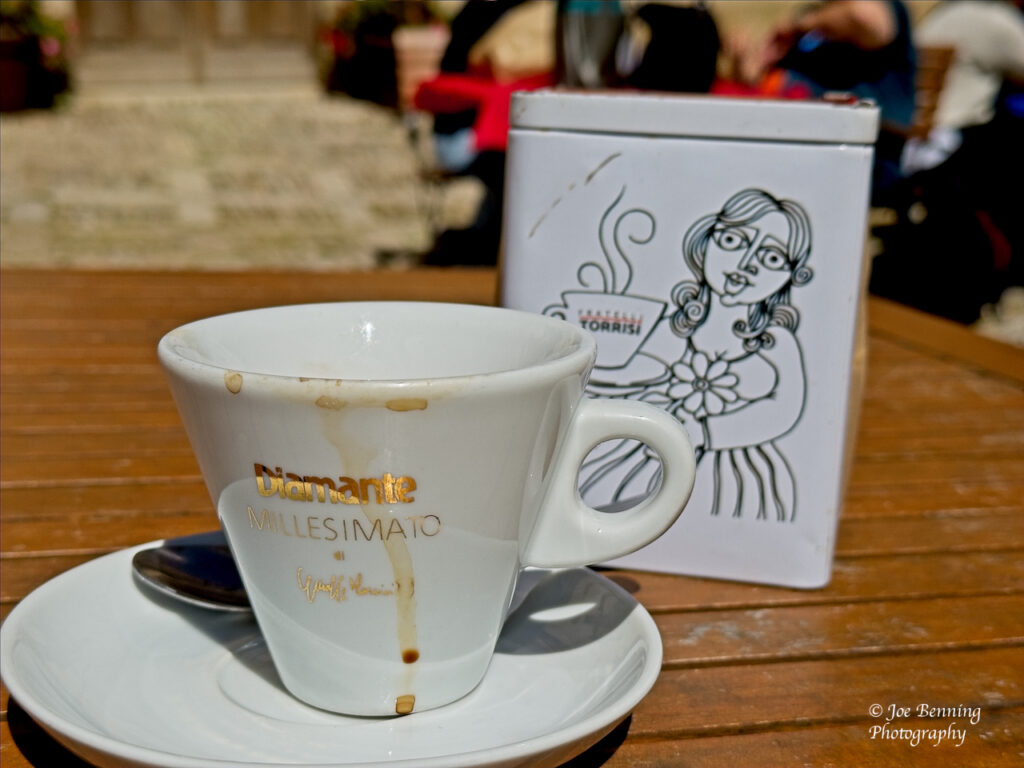
Having said that, when we had some free time, like typical tourists we relaxed, had some pastry and an expresso in a local cafe and then began the ride back to the port. That entailed going through narrow winding roads with lots of hairpin turns. The best course is probably to simply suspend disbelief that doom is imminent and enjoy the sights, which are truly breathtaking.
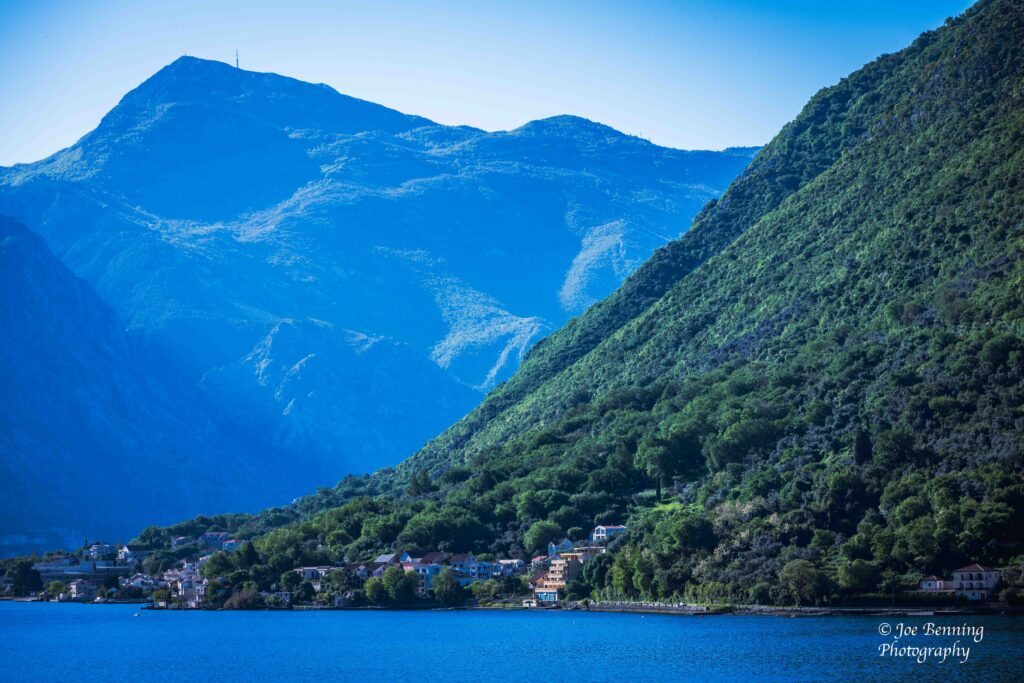
Kotor is a small city in a small country. The population of the entire country is only about 625,000; the population of Kotor only amounts to about 13,000 people. Nonetheless Kotor has one of the best preserved medieval old towns in the Adriatic. It is also a UNICEF World Heritage Sight, probably for that reason. The approach to Kotor involves navigating some spectacular fjords with views of majestic landscapes that have to be seen to be believed.
Approaching Kotor, Montenegro
After taking a tender ship in, we took a walking tour of the old city. We started the tour by entering through a city gate—all the medieval cities had high thick walls and gates to keep attackers like pirates away. The attackers this time were tourists.
A Gate to the City of Kotor
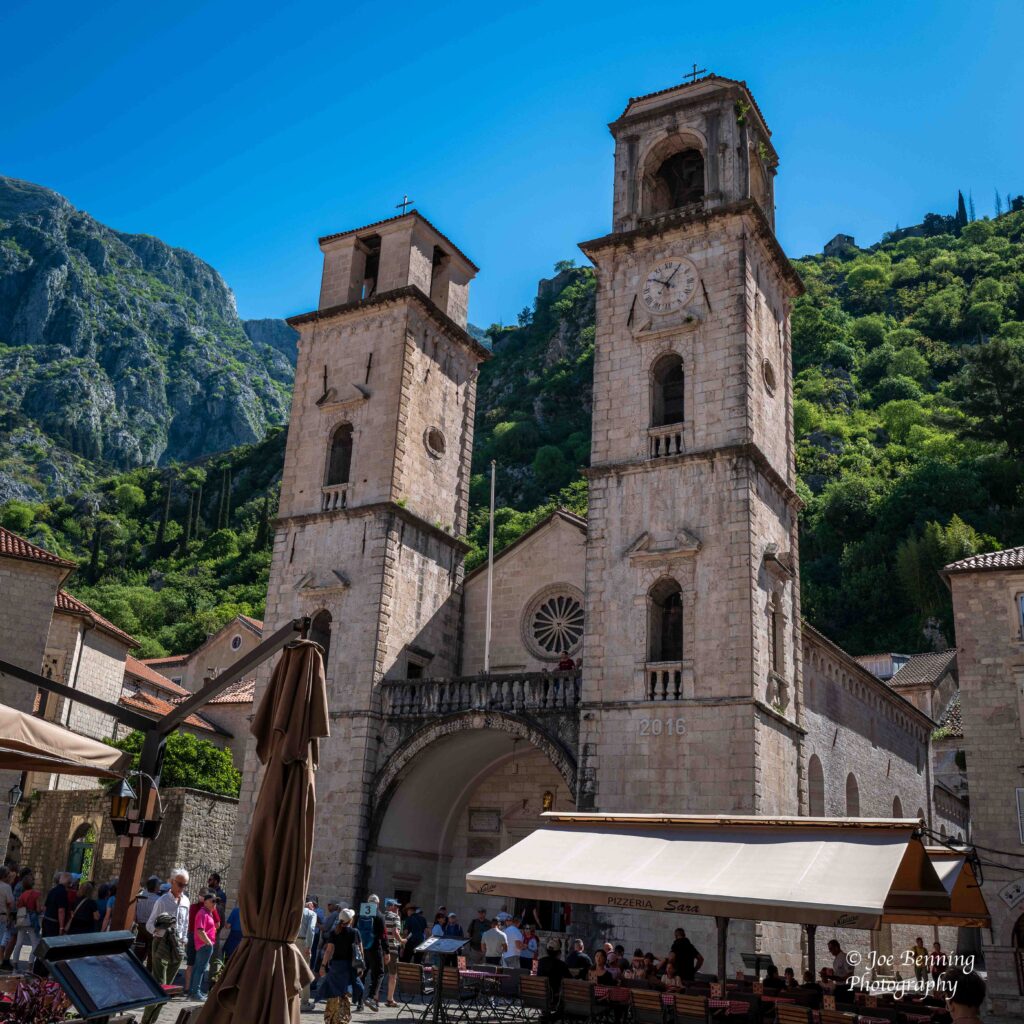
When we passed through the gate into the heart of the city we quickly came across the Cathedral of St Tryphon which was originally built in 1166. That’s worth thinking about when we Americans have developed the habit calling anything that’s been around for 100 years “old”.
The Cathedral of Saint Tryphon in Kotor, Montenegro
Anyway we went into the church with our tour guide and gave it a look. I would say the best description of the inside would be “elegant”.
Inside St Tryphon Church
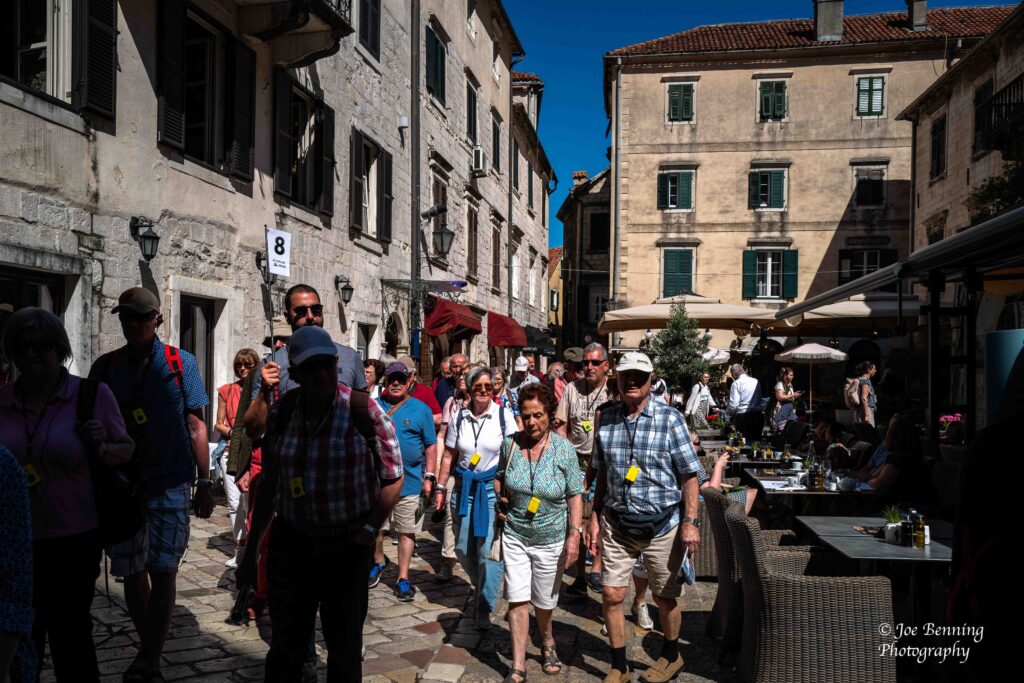
Which is more than I can say about the hordes of tourists that invaded the city. We started our tour around 9:30 or so and by 10:30 a full scale invasion seemed to be underway.
Tourists are Invading Montenegro
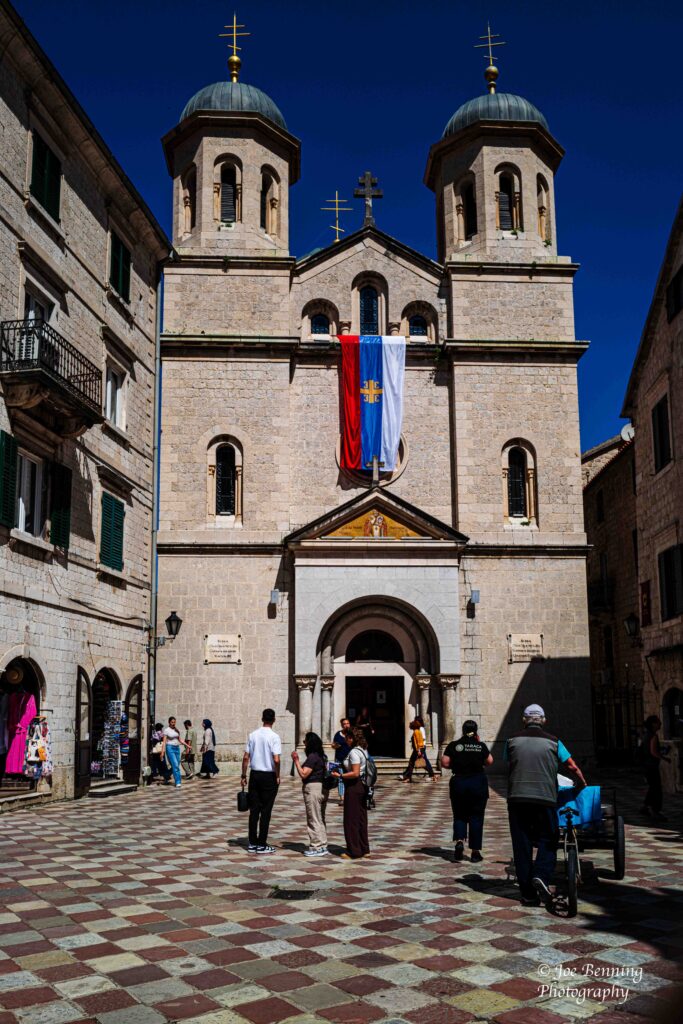
We knocked around the city for a bit more and saw the Serbian Orthodox Church of St Nicholas. The we went out for quite a nice lunch in a local place in town.
St Nicholas Church in Kotor
All in all, Kotor was a really nice place to visit. But it is easy to see why the townspeople have a love-hate relationship with the cruise ships that bring in so many visitors—and the headaches that come with them.
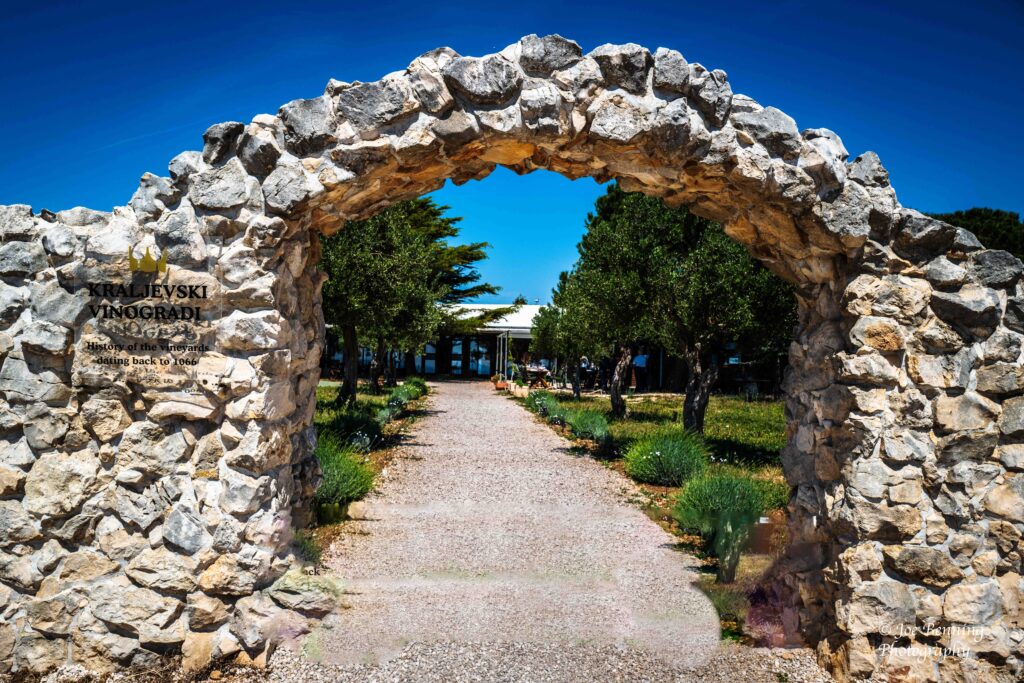
On Tuesday we headed to Zadar, Croatia to a vineyard named Kraljevski Vinogradi, which translates to Royal Vineyards. Needless to say we went there for a lunch and wine tasting. We thus fulfilled a cardinal rule of travel: Never miss a wine tasting.
Entrance to the Vineyard
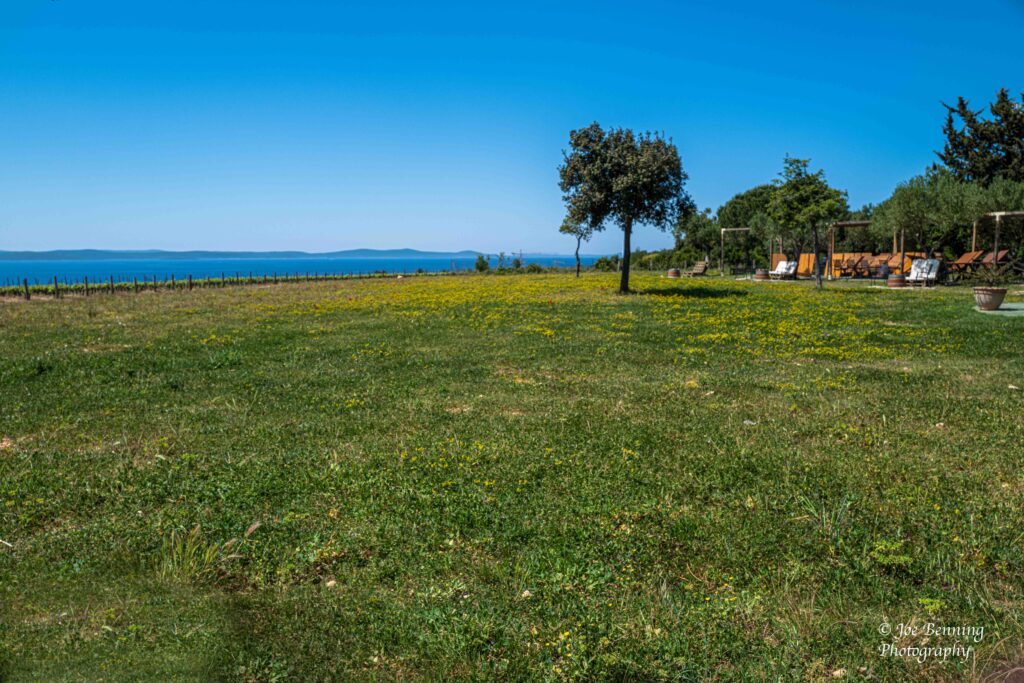
The vineyard is located way up in the hills with a breathtaking view of the acres of grapevines leading down to the Adriatic Sea, which is clearly visible as well. As it happens, a chunk of the equity in the vineyard is owned by the Zadar Benedictine nuns.
Grapes Growing at Kraljevski Vinogradi
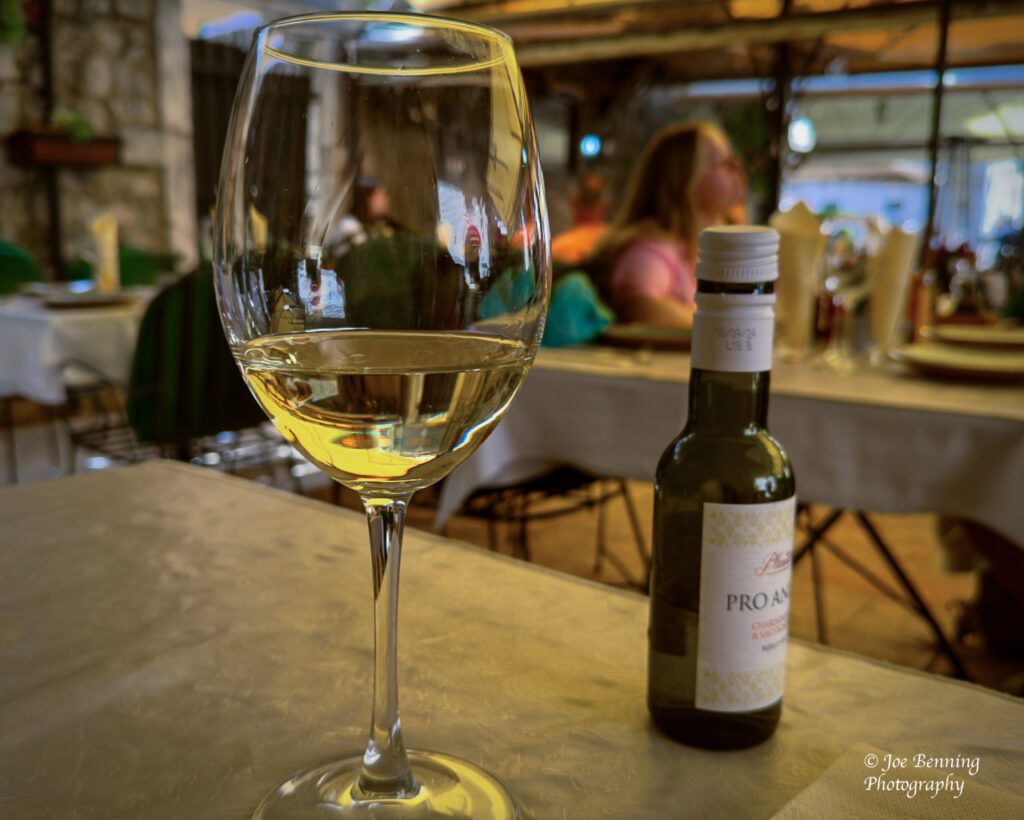
Lunch was very nice and so was the wine. We tried several glasses. First came the Rosé Scuro. Next was a white wine made with the Pošip grape that is primarily grown in the Dalmatian coast of Croatia. Finally there was a red wine made with a combination of ancestral Zinfandel and Dobričić grapes. Those grapes are primarily grown in the Dalmatian coast of Croatia as well.
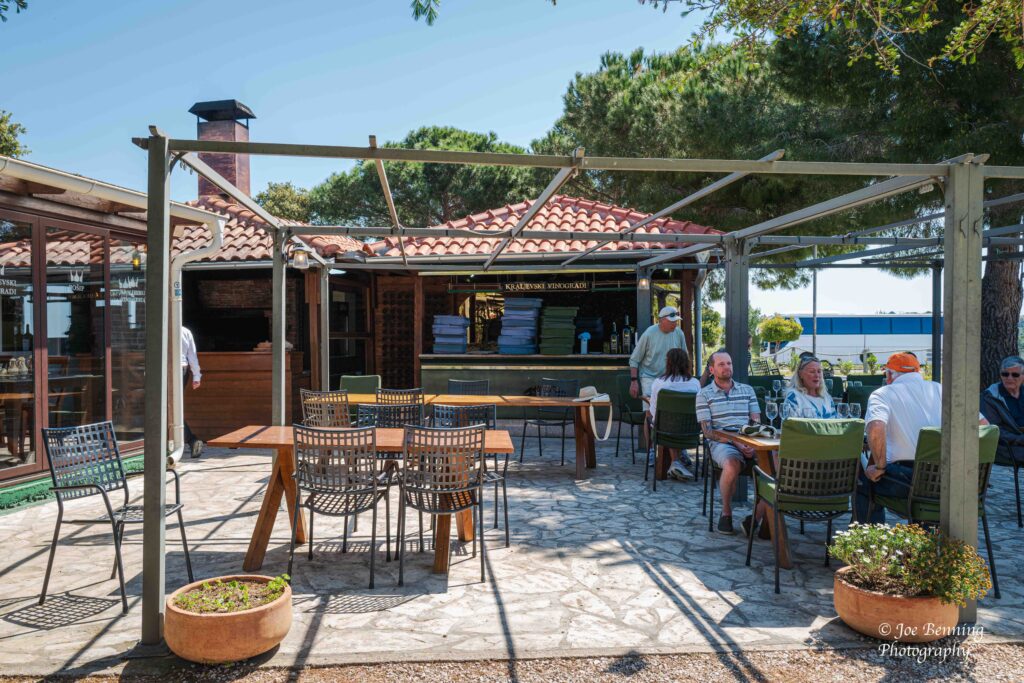
Outdoor Restaurant at Kraljevski Vinogradi
After lunch, which consisted of a tuna pâté, cheeses and figs, we wound up buying a bottle of the Punta Skala white. All in all it was very relaxing and a highly recommended way to spend an afternoon.