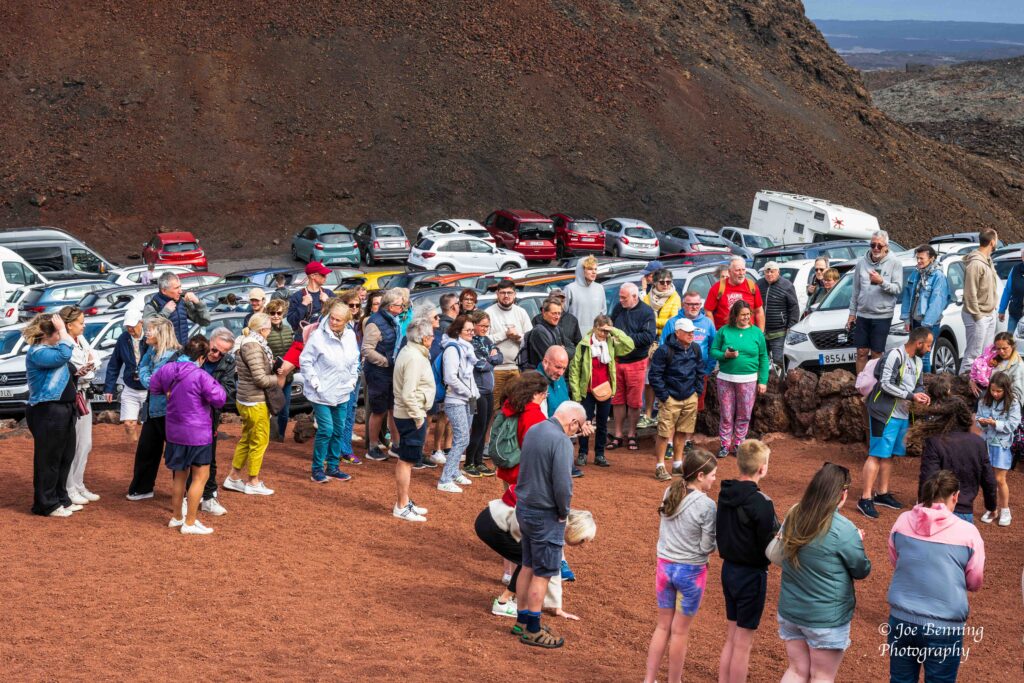
Not so fast on Morocco—I forgot that we stopped off at Arrecife first before heading over to Casablanca. The first destination on Arrecife was Lanzarote at the Timanfaya National Park. And was it ever crowded. Both locals and foreign tourists converged on the place.
National Park of Timanfaya in Arrecife
It’s easy to see why the park gets so crowded—there is a lot to see. And the crowd didn’t tail off as the day progressed. It got bigger.
Crowds at Timanfaya Park
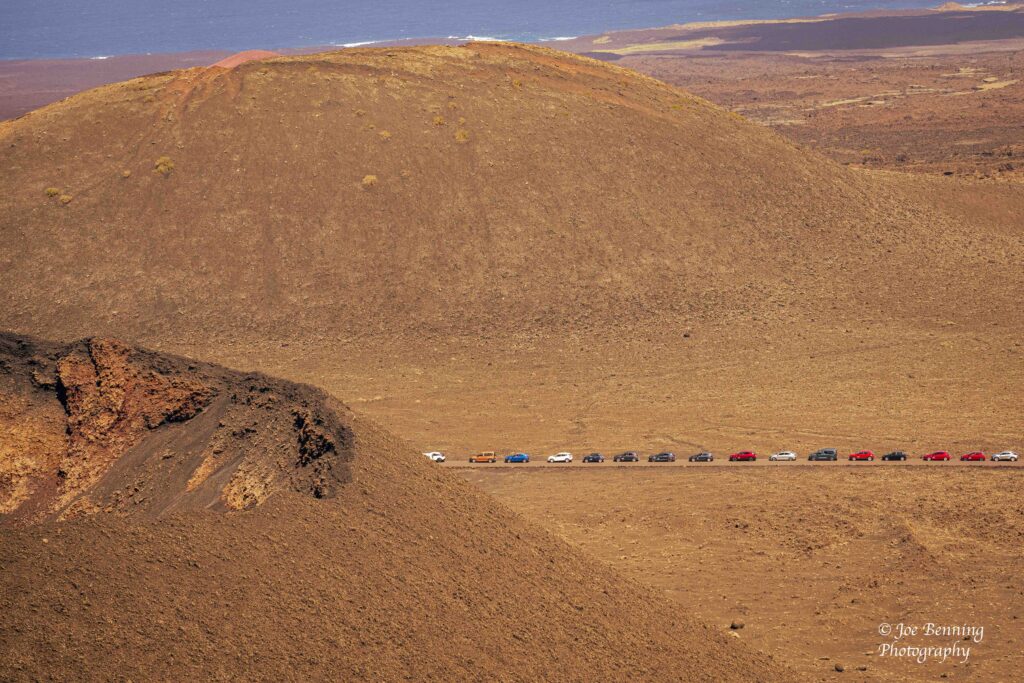
The landscape in the park is moon like. It was formed by volcanic eruptions, some of them as recent as the late 18th and mid 19th centuries. So, as a result the landscape looks a little like the surface of the moon. After looking at the landscape, we had coffee and snacks at a café in the park.
Lava Field in ArrecifeCars Line Up in National Park of Timanfaya
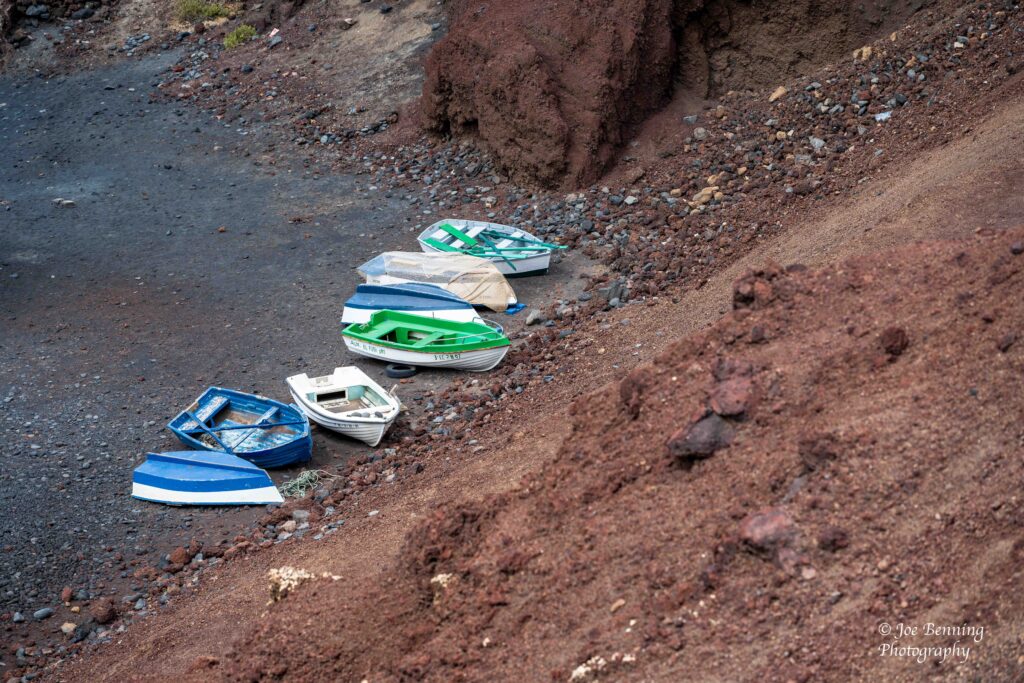
Then we headed off to El Golfo where we went up to a lookout point toward the top of a large hill. El Golfo is a small fishing village on the Western coast of Lazarote. It is best known for its dramatic volcanic landscape near Charco de los Clicos, which is an equally dramatic green lagoon. Not surprisingly it is also a popular spot with tourists and photographers.
Boats at the bottom of a Hill in El Golfo
After El Golfo we went to a wine tasting as well as a … salt tasting. The reason for the salt tasting? There are historic slat flats near El Golfo that used to supply a large amount of salt to the market. And so we tasted salt. Or had the opportunity to. In the end, we declined the offer although many of fellow tourists tried it out.
Salt Flats of Lanzarote
Anyway, it was a pretty interesting tour to go on. After leaving Arrecife we headed out to Morocco where we went to Casablanca and Tangiers.
So, when we hit Casablanca: “Here’s looking at you, kid”.
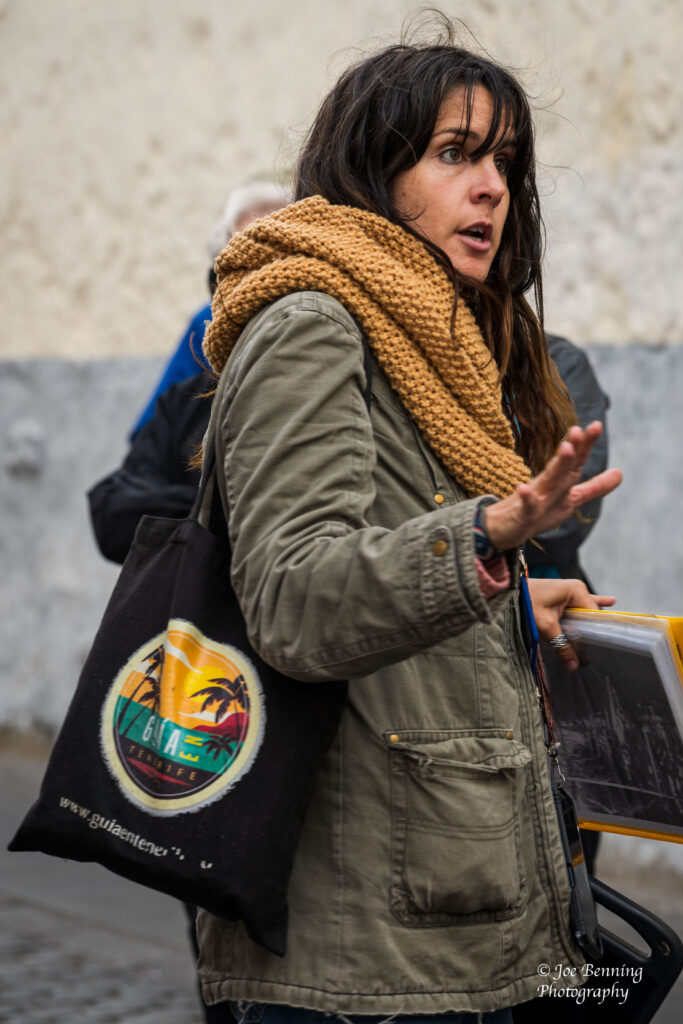
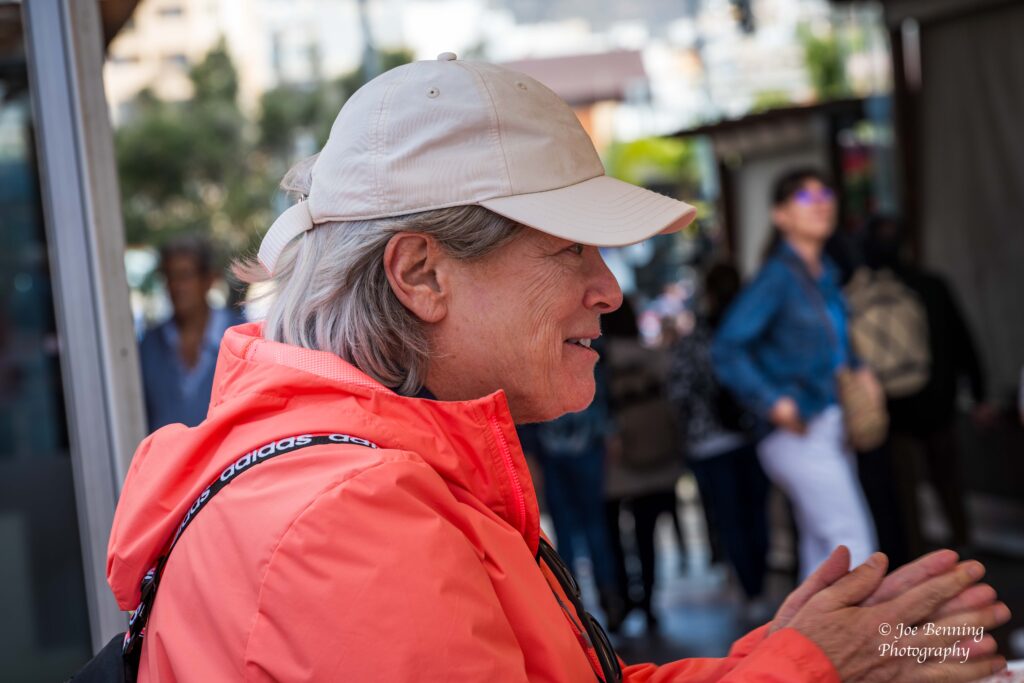
We spent a second say touring around Tenerife with a terrific guide. Not only was she an excellent English speaker, she was a great problem solver and had a wonderful sense of humor.
Santa Cruz / Tenerife Guide
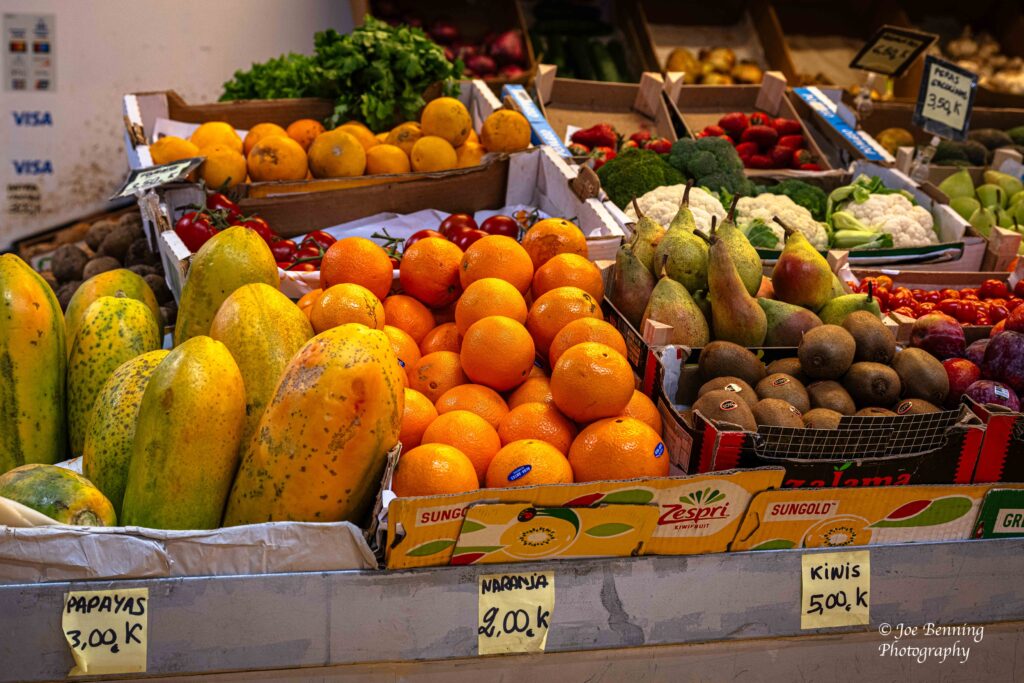
We visited a pretty crowded farmer’s market where there were plenty of fruits and vegetables for sale. This was a market where the locals shopped and was mostly located indoors.
A Farmers Market in Tenerife
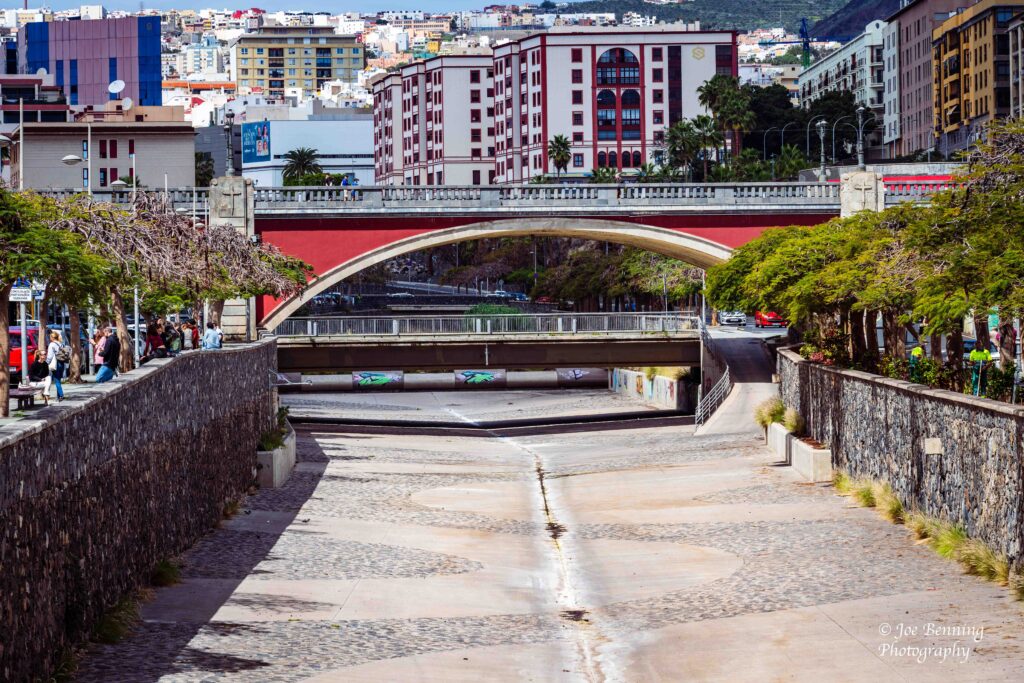
We also got a good look at some of Tenerife’s architecture, including some engineering feats like the bridge pictured below.
Bridges in Tenerife
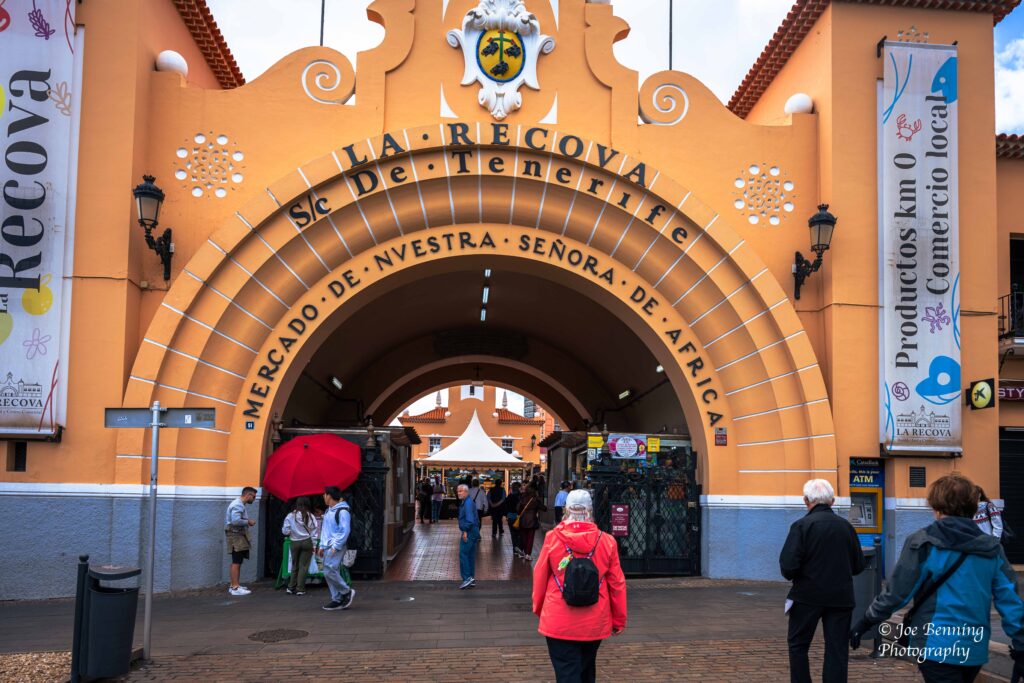
Finally we went to an outdoor market where all kinds of merchandise was on sale and on display. We bought some products made by local artisans and then headed back to the ship.
Outdoor Market in TenerifeMary Anne Shopping in Tenerife
Next stop, Morocco, on the North coast of the Mediterranean in Africa.
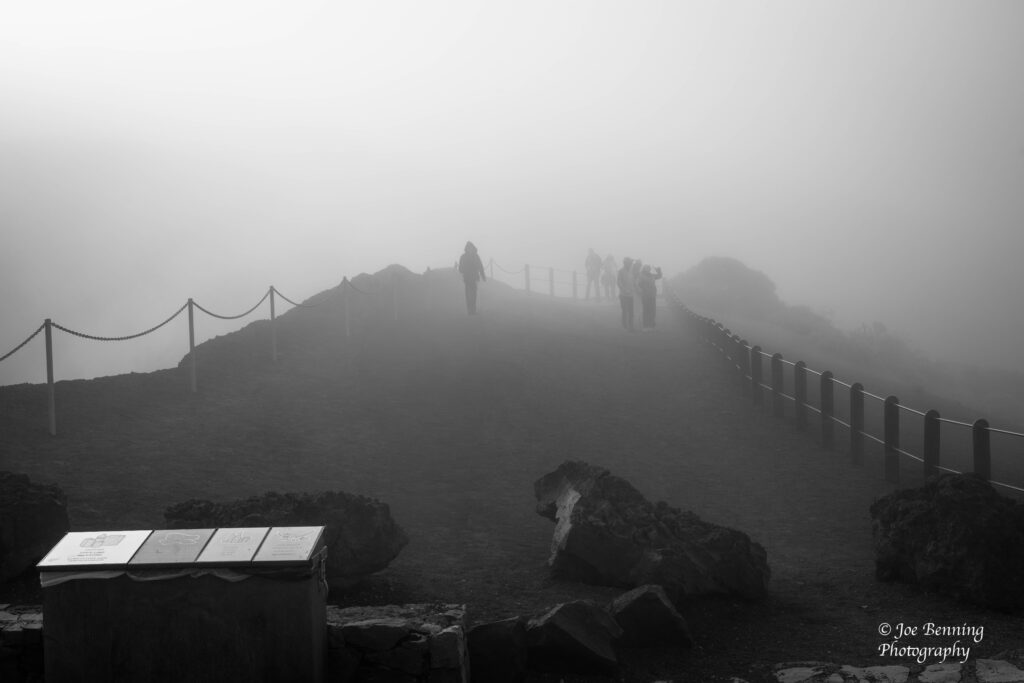
When we docked in Tenerife the plan was to go to see Mount Teide in the national park. But when we first got there the fog was so thick that it was virtually impossible to see anything.
Foggy Weather in Teide National Park
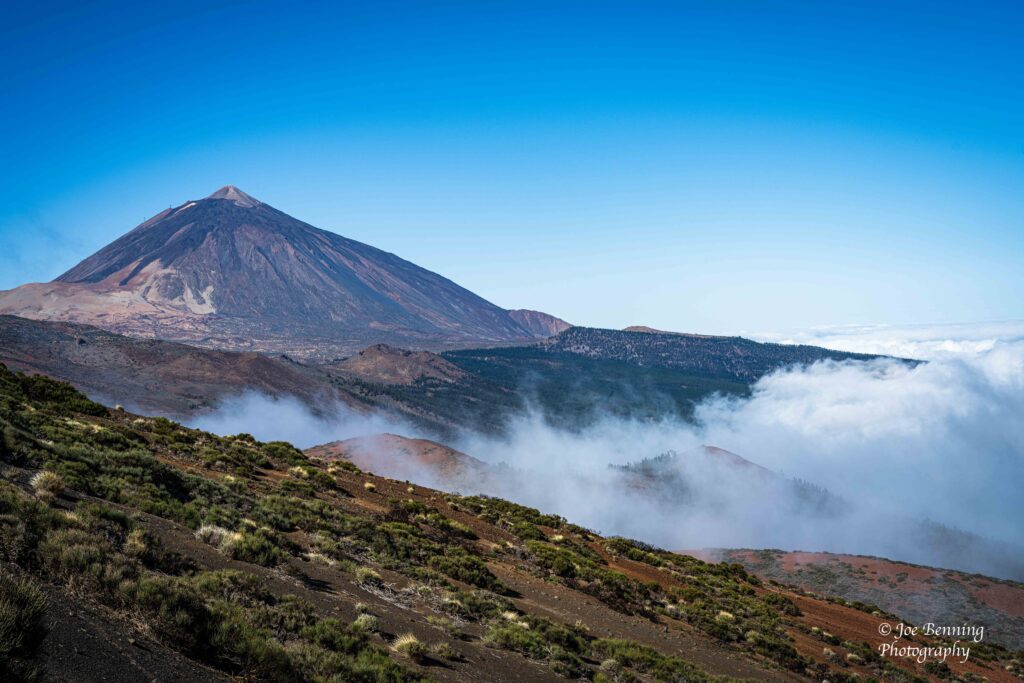
However the fog eventually burned off and we were treated to some spectacular scenery in Teide National Park.
Fog Burning Off on Mount Teide
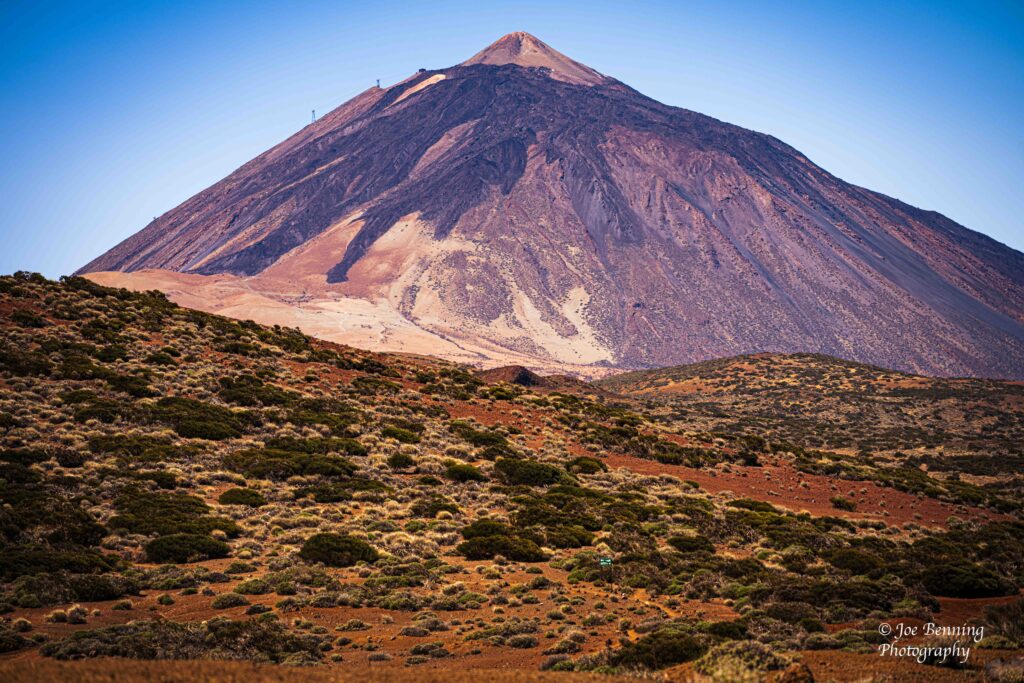
Not surprisingly, the park is centered around Mount Teide, the highest mountain in Spain. Standing at 3, 718 meters tall it is the third highest volcano in the world, measured from its base on the floor of the Atlantic Ocean.
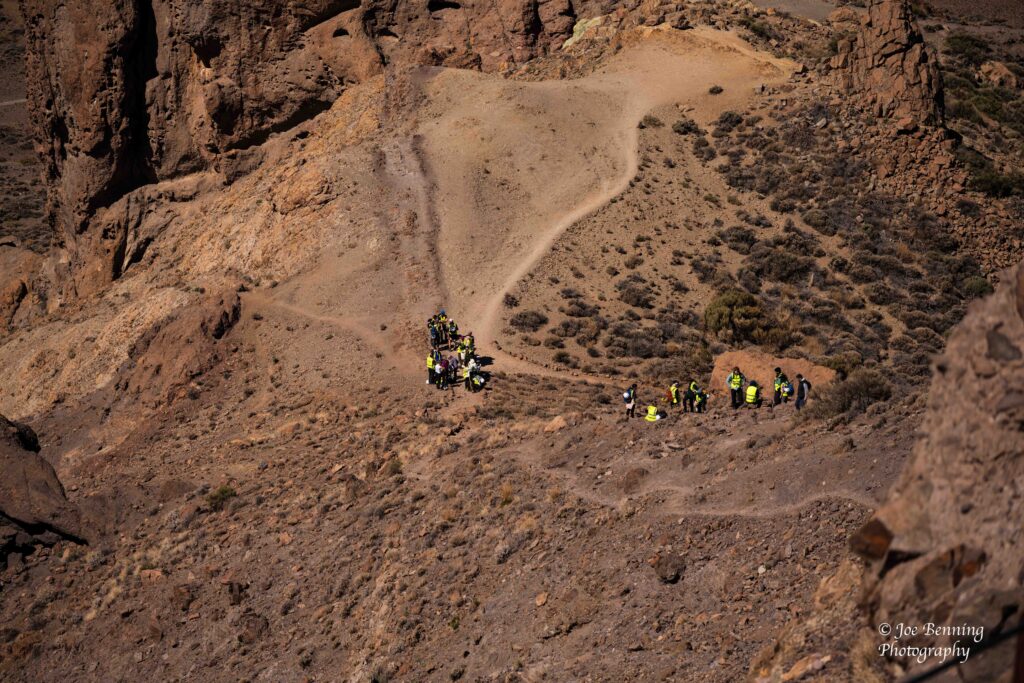
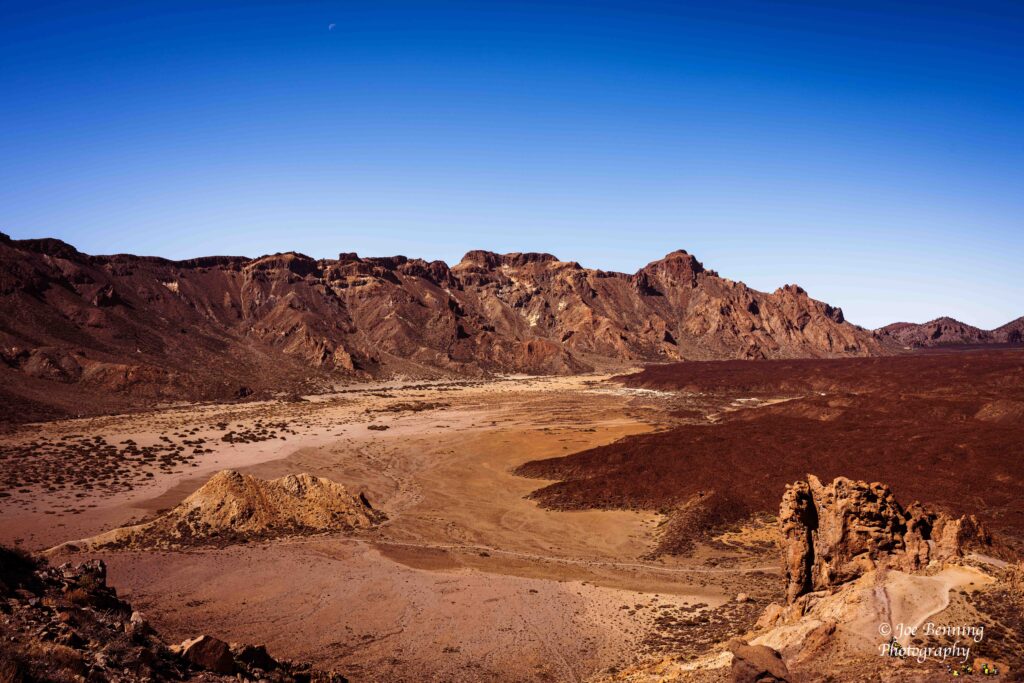
The landscape of the park, which resembles a moonscape is kind of eerie looking. Actually our tour guide told us that NASA used the park as an astronaut training site for, among other things, learning to drive the rover on the surface of the moon. In addition, scientists from a Spanish university are doing some geological experiments in the park. Not too surprising since the Canaries were formed by volcanic eruptions millions of years ago.
Scientists Woring in a Volcanic Crater
The terrain of the park is rugged, spectacular and full of visitors. In fact, it is the most visited national park in Spain with over 4 million visitors in 2022. It was named as a World Heritage Site by UNESCO in June of 2007.
A Volcanic Crater on Tenerife
All in all definitely worth a look next time you are in the Canaries.
Volcanic Mountain and Crater in Teide National Park
On March 22 we docked in Europe by way of Gran Canaria, one of the Canary Islands. The Canary Islands are part of Spain even though they are only a few hundred miles from the coast of West Africa. And it shows. The towns are clean and elegant and they definitely have a European vibe.
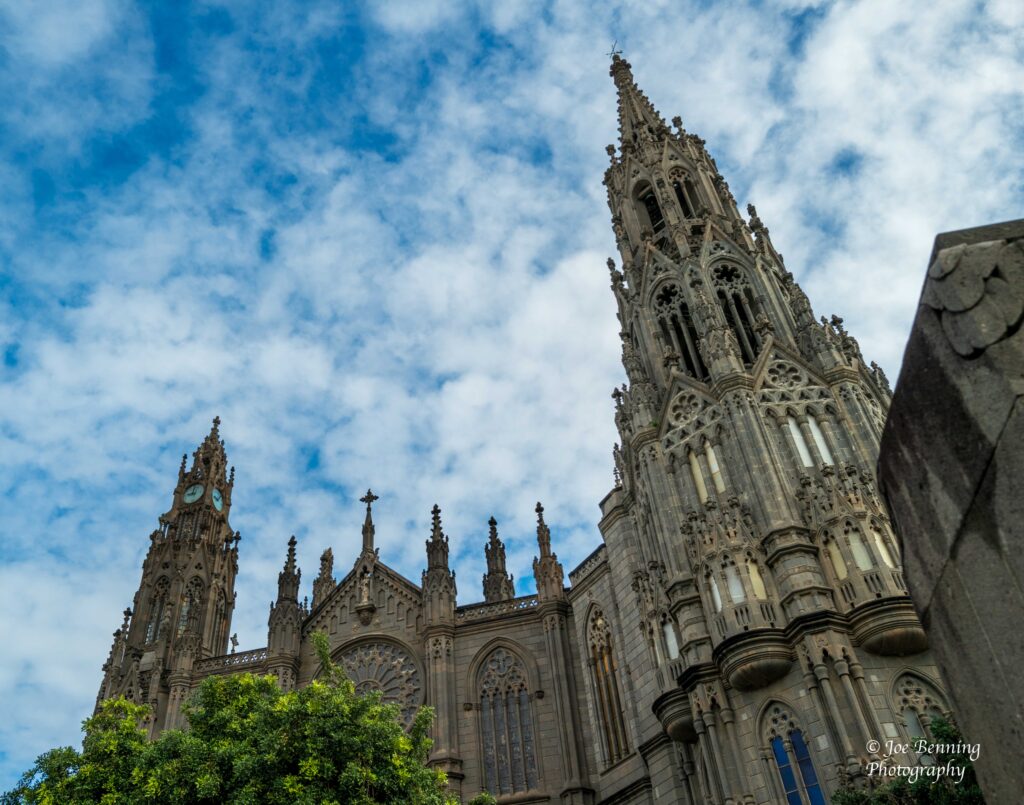
We went on a tour that brought us to the towns of Arucas and Teror. One of the first things we saw upon arriving in Arucas was the Church of St Jean the Baptiste (San Juan Bautista). Begun in 1909 it opened for worship in 1917 and was finally completed in 1977.
Church of St John the Baptiste in Arucas, Gran Canaria
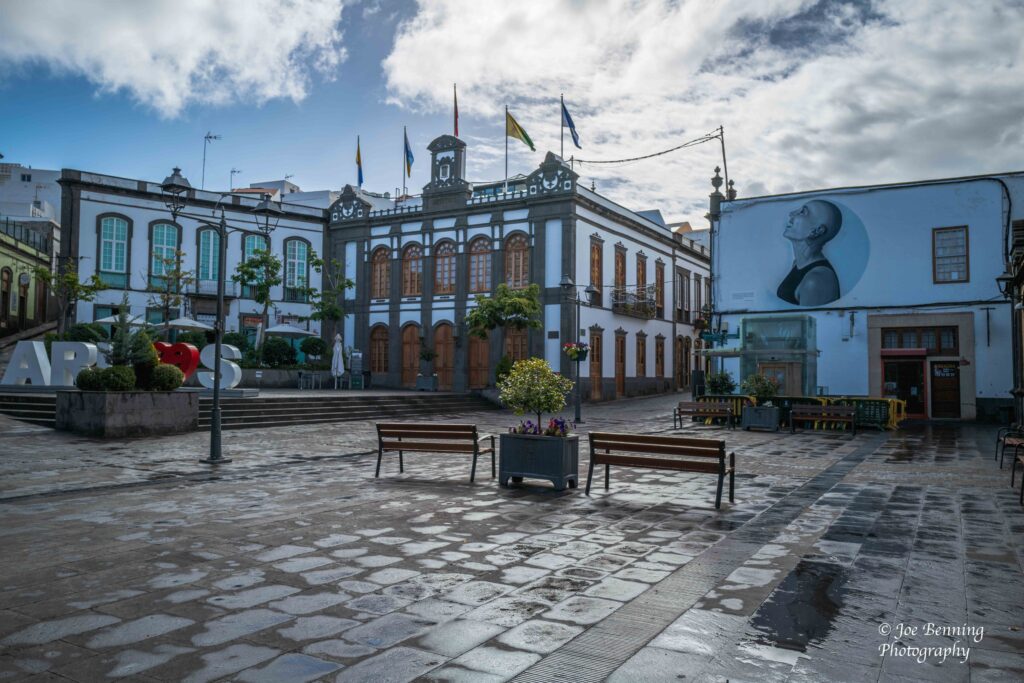
After that, we bumped into a town square in the Old Section with its beautiful traditional European architecture.
Arucas, Gran Canaria — March 22,2025. Town Square in Arucas
The next town we visited was Teror.
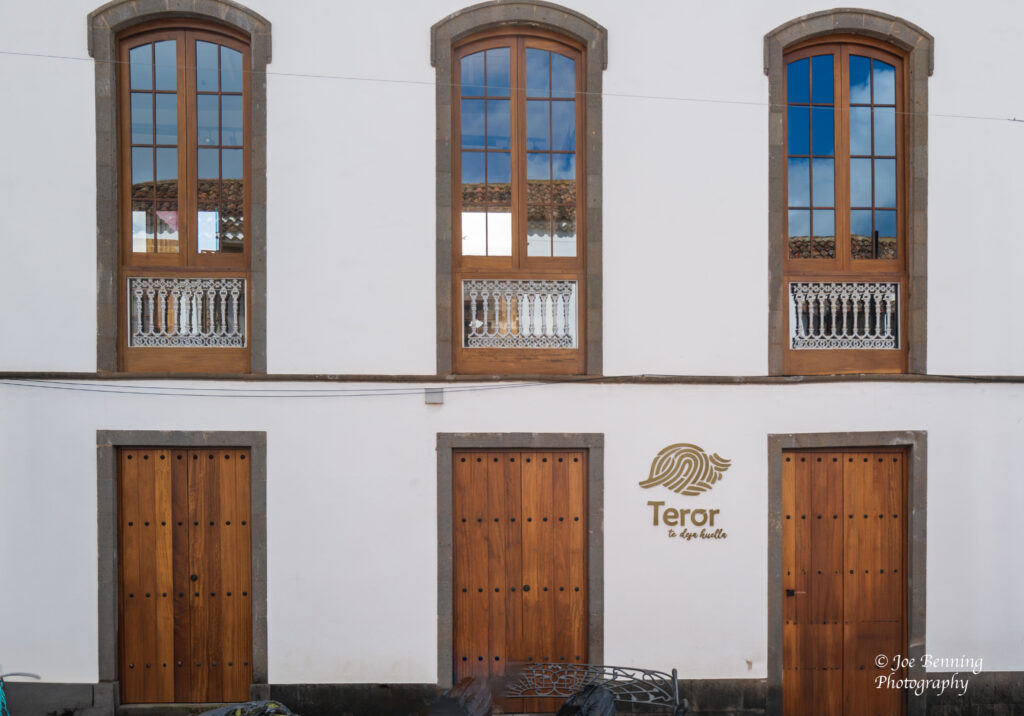
Doors & Windows in Teror, Gran Canarie
Among other things, the town looks like it was almost designed for tourism. Not for tourists dragging a crew of 8 year-olds around mind you, but for tourists who really want to see some old world elegance.
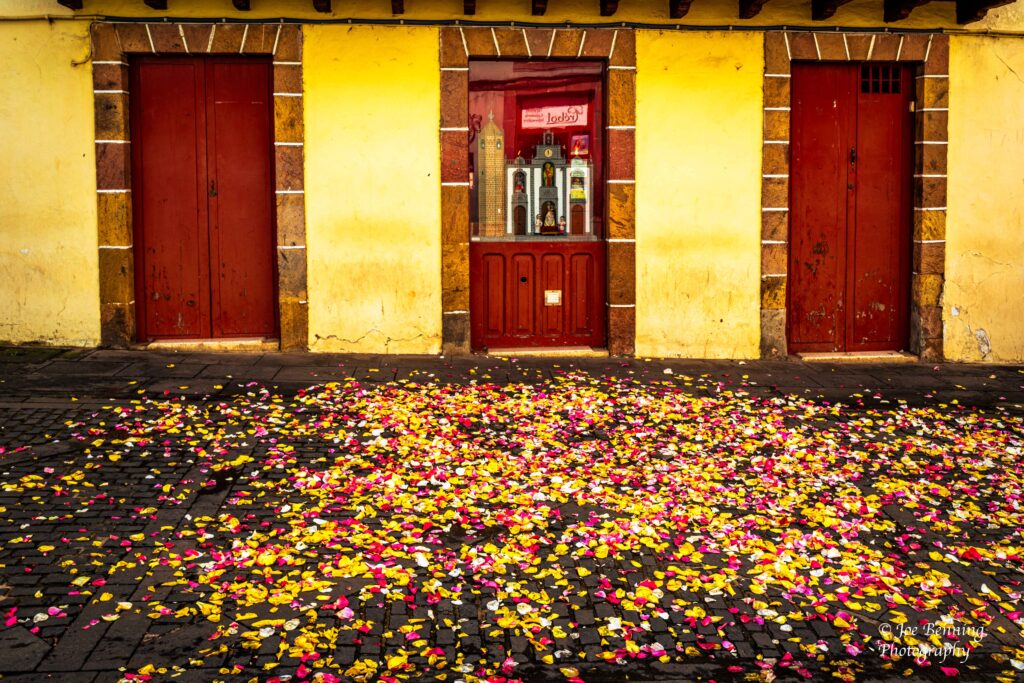
As if they wished to emphasize the point, a few of the shops had flower petals strewn about on the street in front of them.
Shop Doors and Flower Petals
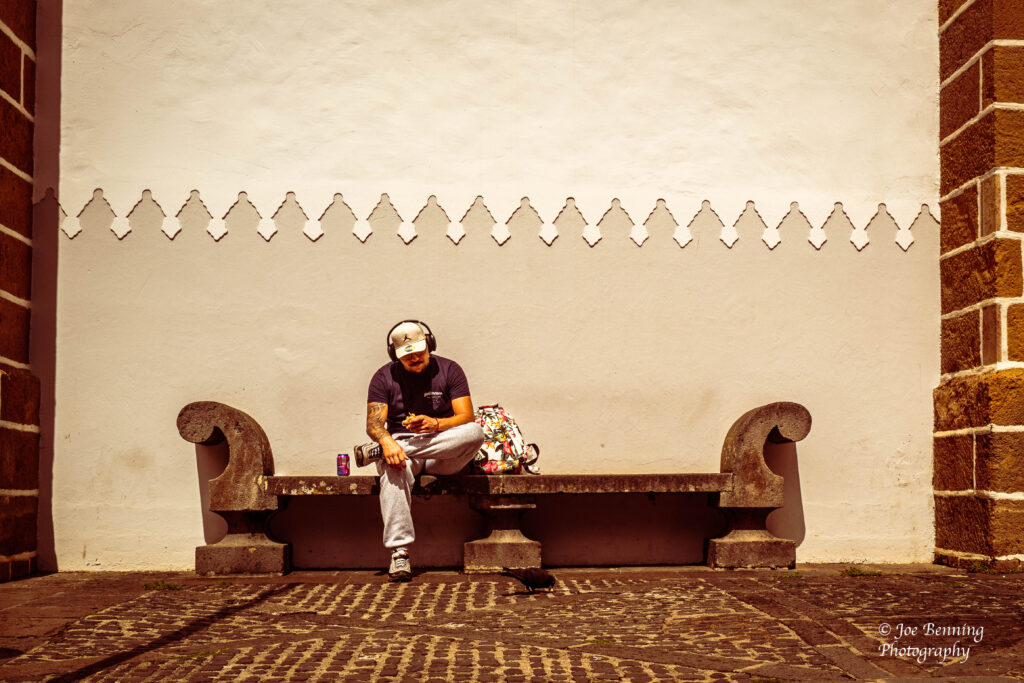
A bit of the modern world invaded though as the photo below shows a young man wearing headphones while he sits on a bench in town.
A man wearing headphones sits on a bench in the Canary Islands
That said, it was good to be back in Europe and Gran Canaria in the Canary Islands certainly fit the bill.
Officially Cape Verde, off the coast of West Africa, is named the Republic of Cabo Verde. But everyone calls it Cape Verde. It is a small country; an archipelago with a population of about 500,000. First colonized by Portugal, it won its independence in July of 1975.
All did not go well at first. After securing independence from Portugal, Cape Verde became a one-party state, dominated by Marxists. However in 1990 the one-party state was abolished and a multiparty democracy took its place. Since then, Cape Verde has had a stable functioning democracy and its economy has improved markedly.
There is a large diaspora of Cape Verde natives, many of whom live in the US and Portugal. Both the US and Portugal maintain strong ties to Cape Verde. The people who moved to the US did so way back when to work in the whaling industry. They had developed the necessary skills to succeed in that industry. And Portugal has welcomed Cape Verde natives.
Interestingly enough, even though it is a West African nation and a member of the African Union, the people of Cape Verde (if our guides are to be believed) consider themselves to be more like Europeans that Africans. They may have a point. The islands of Cape Verde seemed to be a lot more developed and much cleaner than the countries of the mainland.
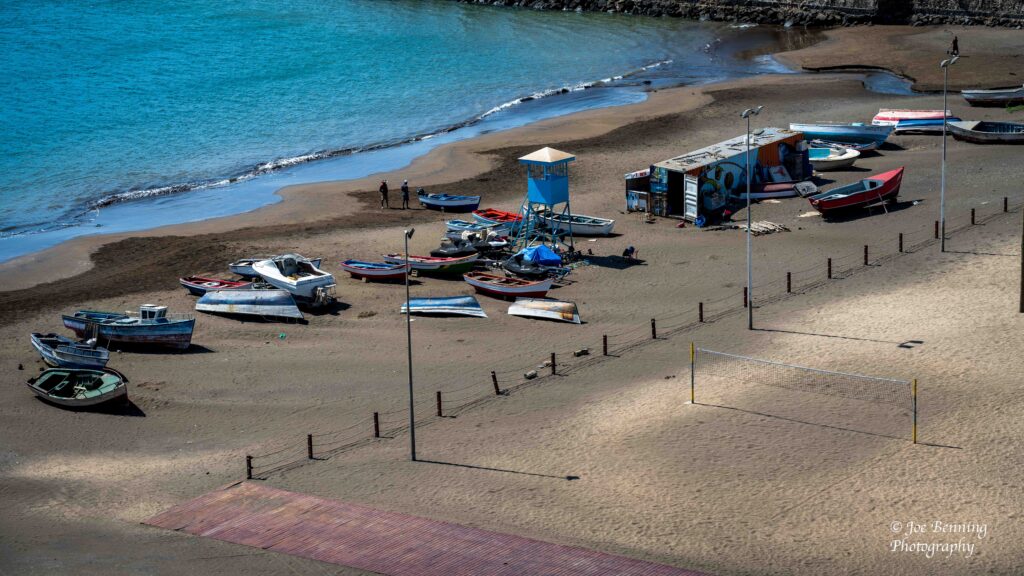
We visited 2 cities on 2 different islands in Cape Verde: Praia, on the island of Santiago, and Mindelo on the island of São Vincente. Praia, with its beaches is the largest city and capital of Cape Verde. Mindelo is a cultural hub, known for its architecture and traditional music.
Photo of a beach in Cape Verde
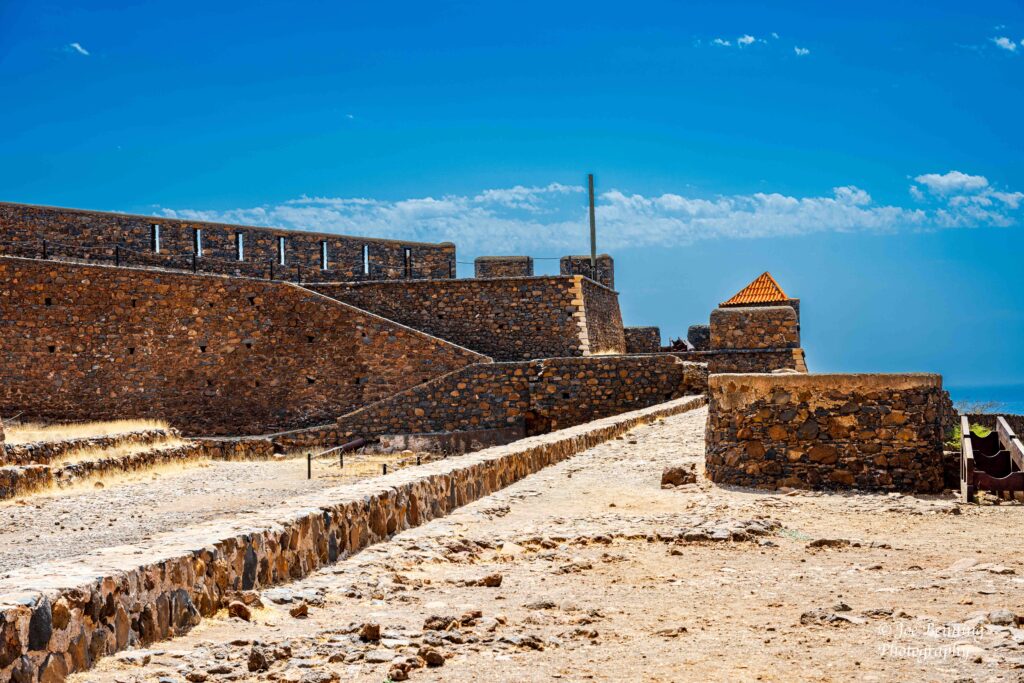
On our visit to Praia we went to a UNESCO World Heritage Site, the fort of St Phillip (Forte Real de São Filipe). The fort was originally built in order to thwart pirate attacks.
The fort was built as defence agianst pirate attacks
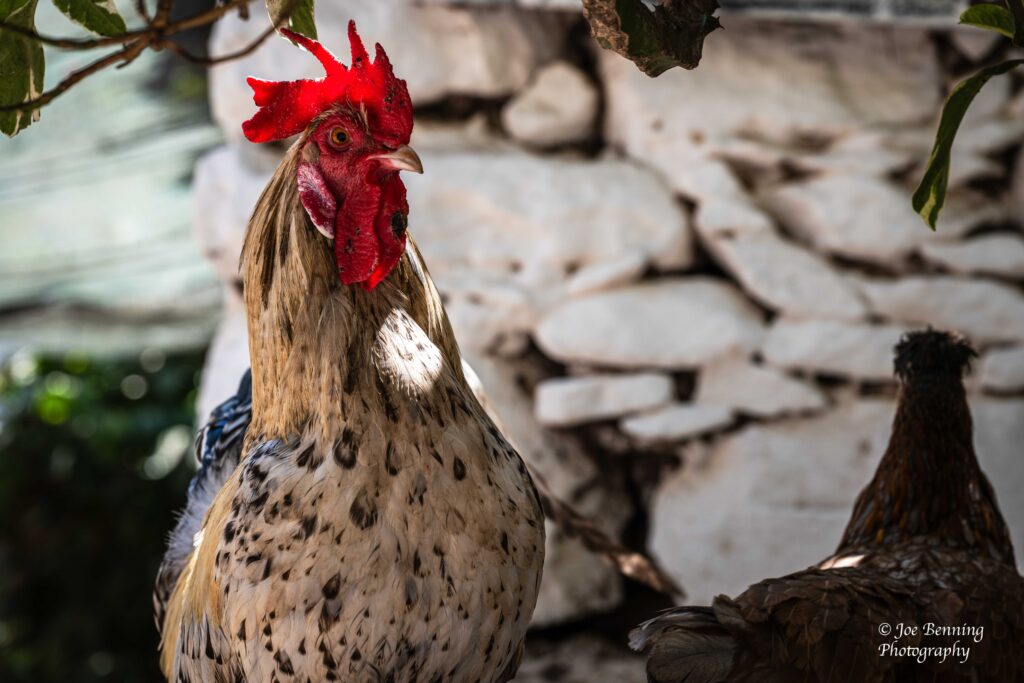
We also got to see a rooster up close and personal and we peered down at one of the cities beaches.
A rooster looks like he is posing
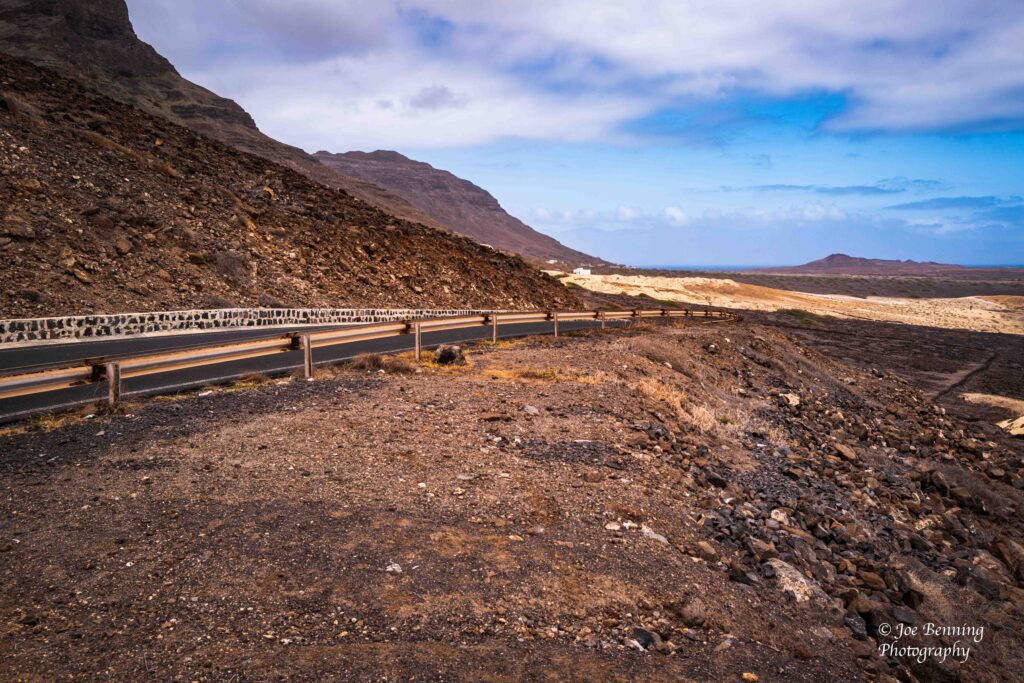
When we went to Mindelo, we drove up to the summit of one of their mountains, where it was extremely windy and chilly. The guides kept insisting that we shouldn’t stand too close to the edge of the road because of the high winds. A little less than comforting.
Not to mention that the roads were nothing to write home about.
Coming off the mountain in Sáo Vincente
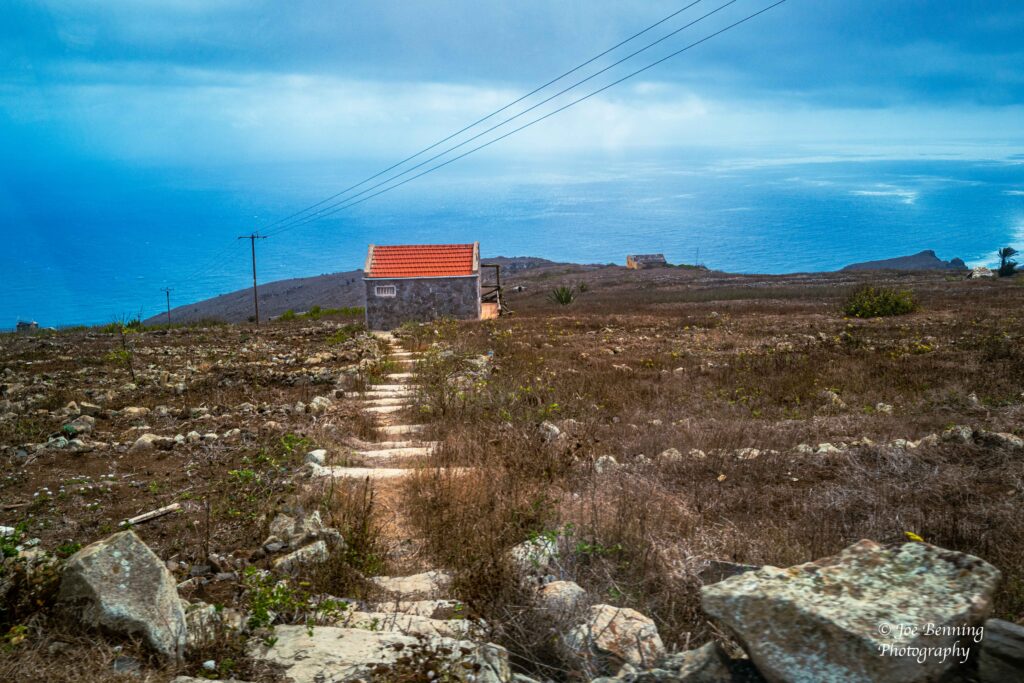
As we drove along, hoping the bus didn’t get too close to the edge and go over, we saw some isolated houses built alongside the mountains.
House on a Hill in Mindelo
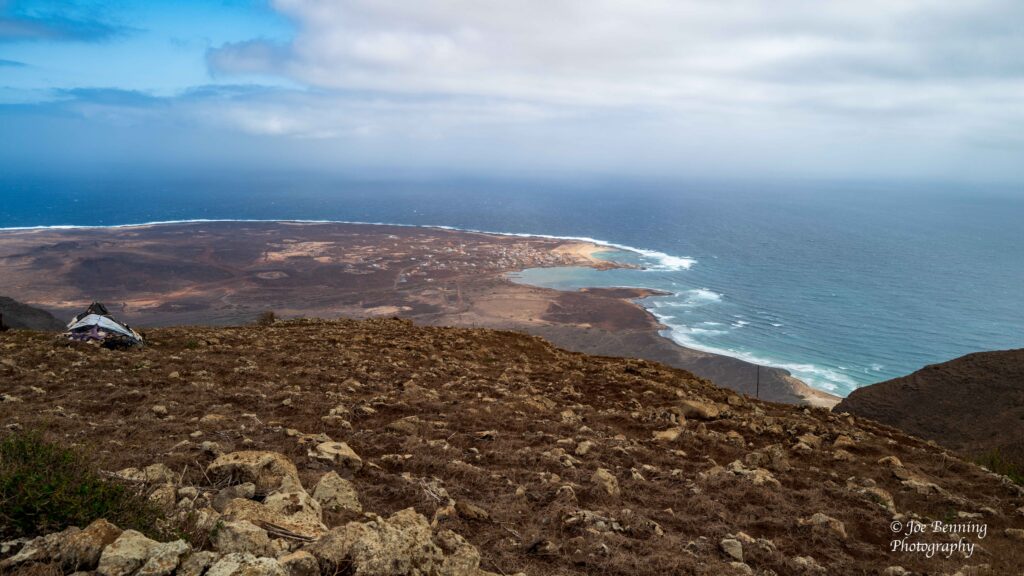
All it takes is looking at those (few) houses and the coastline below to realize how far away you are.
Looking down from a Mountain in Sáo Vincente
Anyway, we are off for the Canaries (Europe!) and will report in soon.
We have been on the Atlantic Ocean for the last few days slowly making our way to Europe via Cape Verde and the Canary Islands. The Canaries are off the coast of Africa and while they are not on the European mainland, administratively and politically they are part of Spain, and therefore Europe.
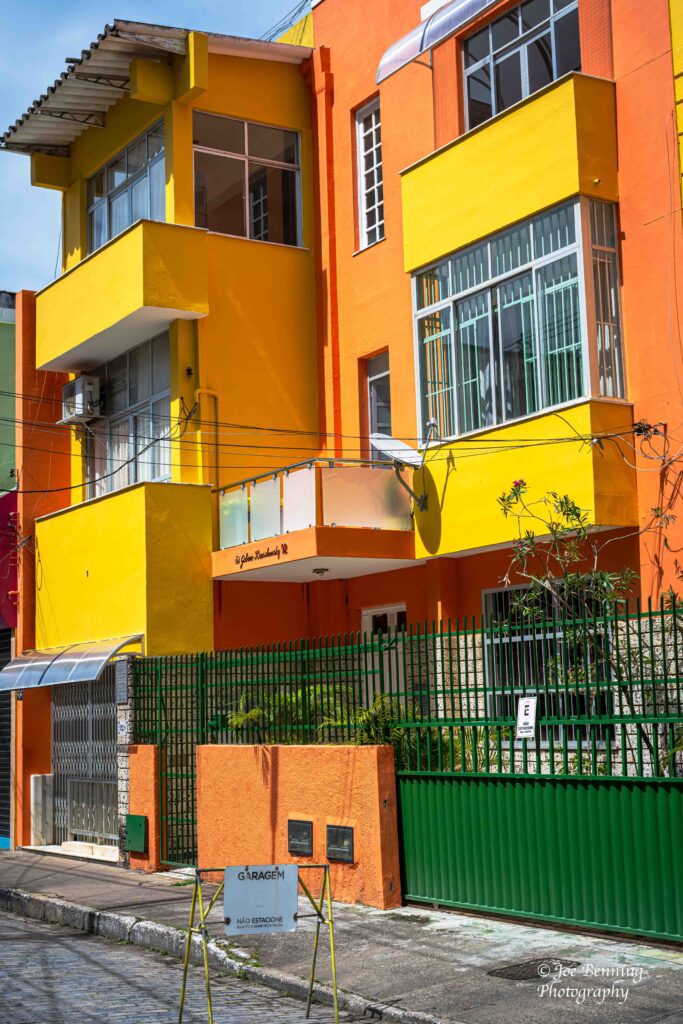
Now, after going to Carnaval we made several more stops in Brazil. Specifically, we visited the islands of Ilhéus, Salvador and Recife. As we were leaving the “new world” for the old, our first stop was in Ilhéus, which means “beautiful island”. And it certainly is beautiful. For instance, there were scores of colorful houses.
Colorful Houses in Ilhéus
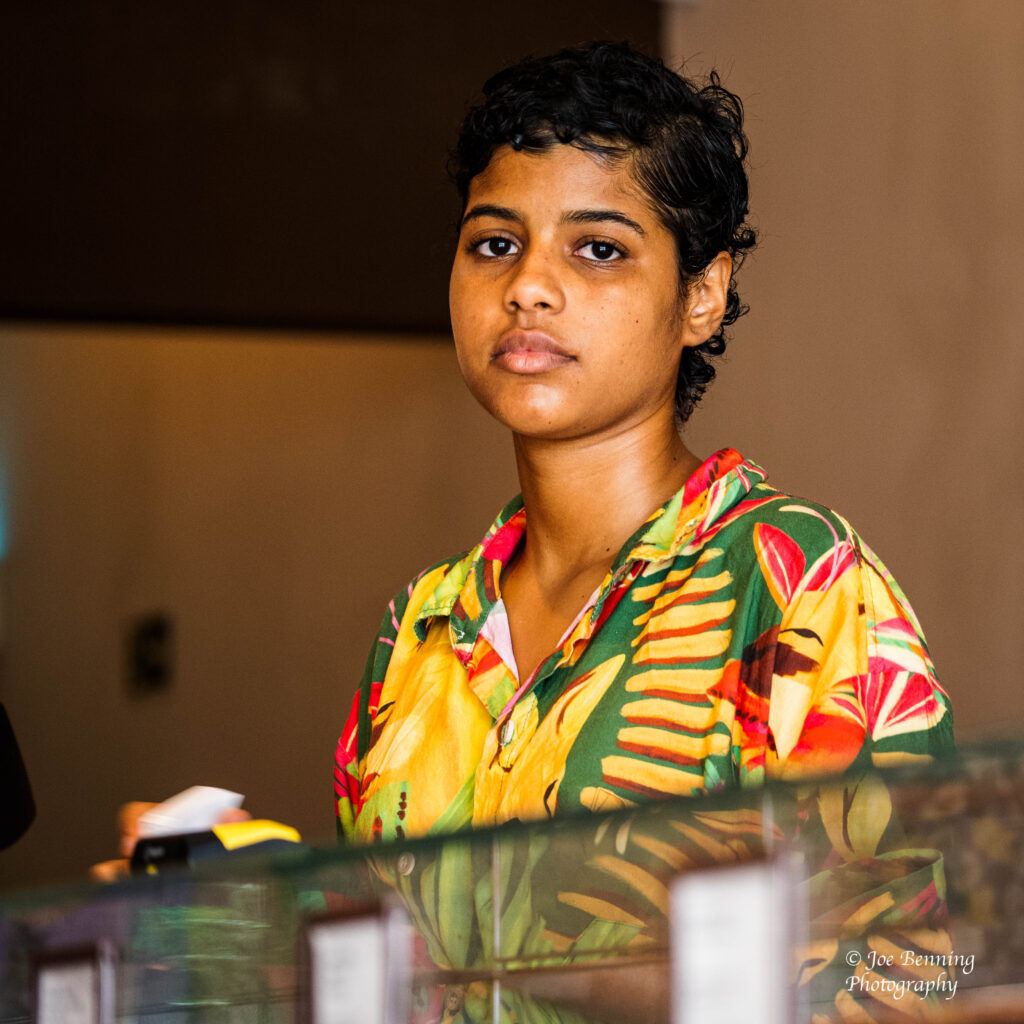
A chocolate store named “dengo” snared us; we bought some chocolate bars and other goodies. A photo of a sales lady from the store is below.
Portriat of a Woman in Ilhéus
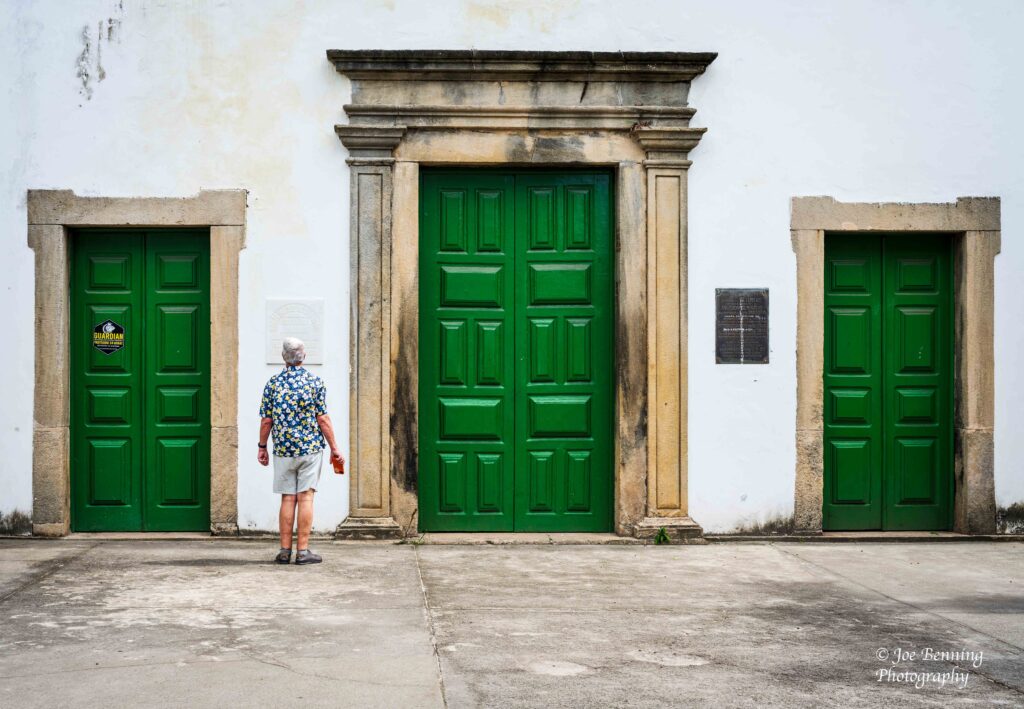
Another building featuring large green wooden doors of varying heights also caught our attention.
Green Doors in Ilhéus
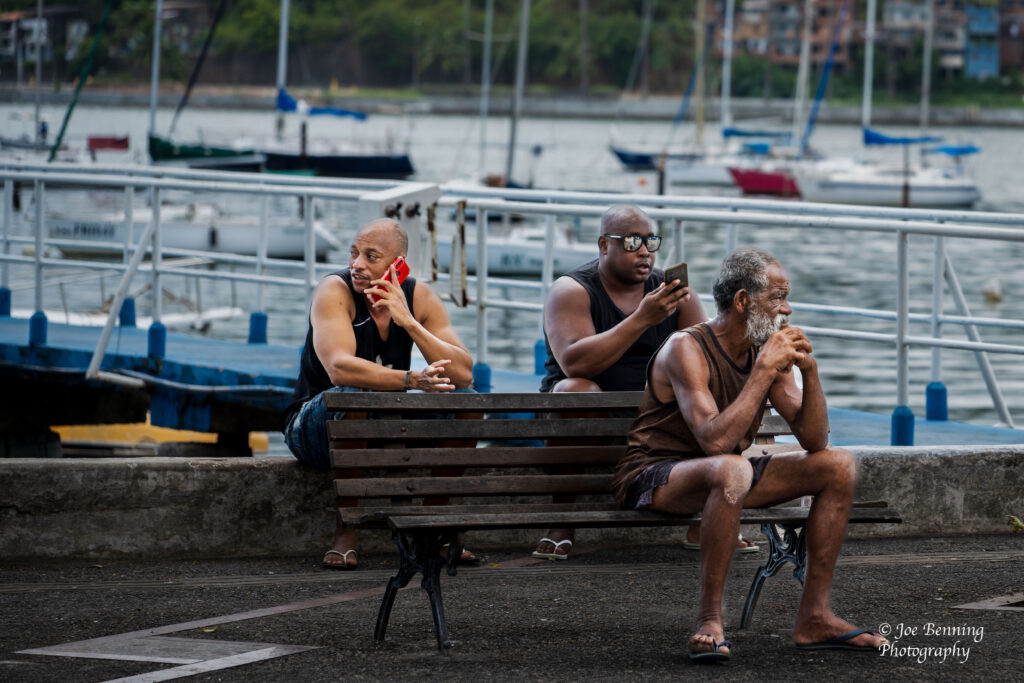
The next stop a day or two later, was Salvador. Not to be confused with El Salvador. Among other things, we stopped off at an ice cream store. The store was across the street from a bay full of boats where some of the locals were hanging out. Note the cell phones.
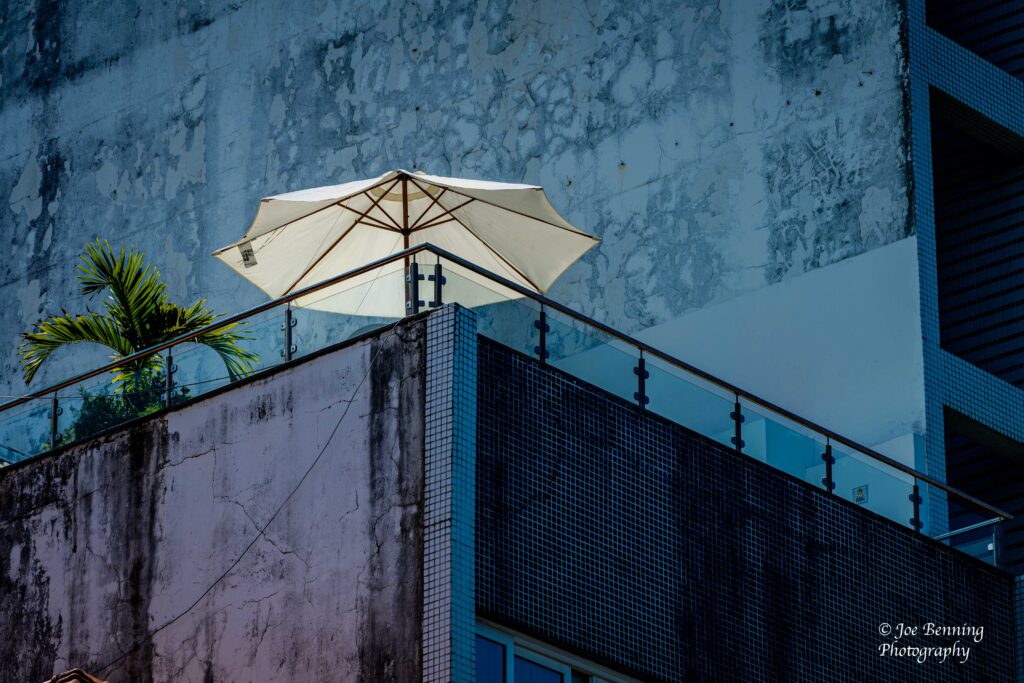
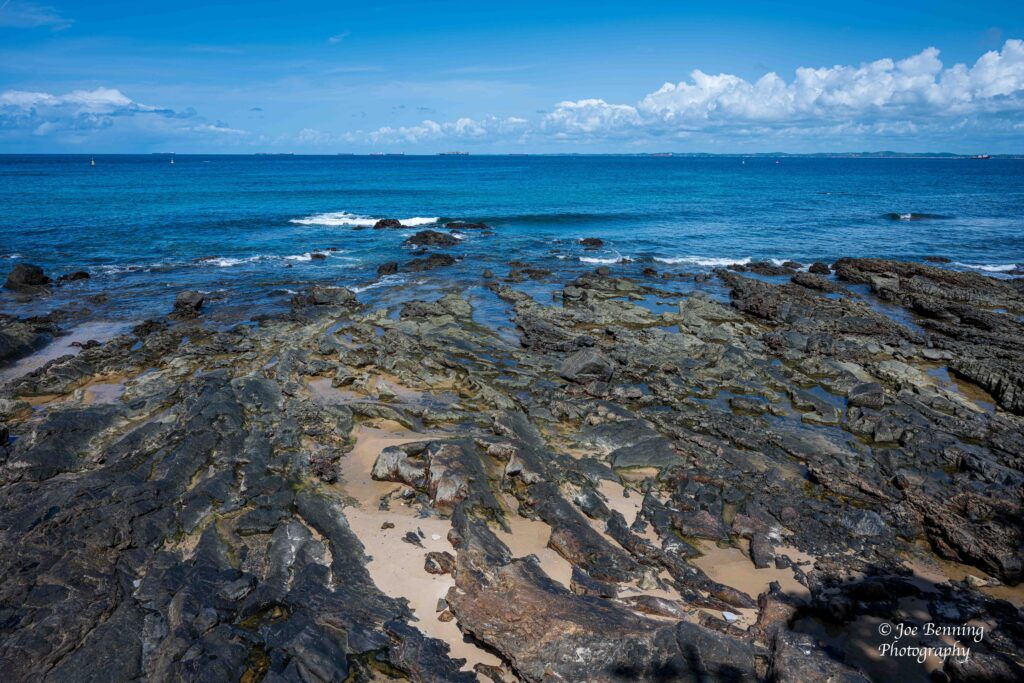
Three Men on the Dock of the BayUmbrella on a Rooftop in SalvadorRocky Beach in Salvador, Bahia
Finally we went to an island named Recife. When we got there they were busy dismantling a stage that they had erected for a celebration of –wait for it–Carnaval.
Preparing a Stage
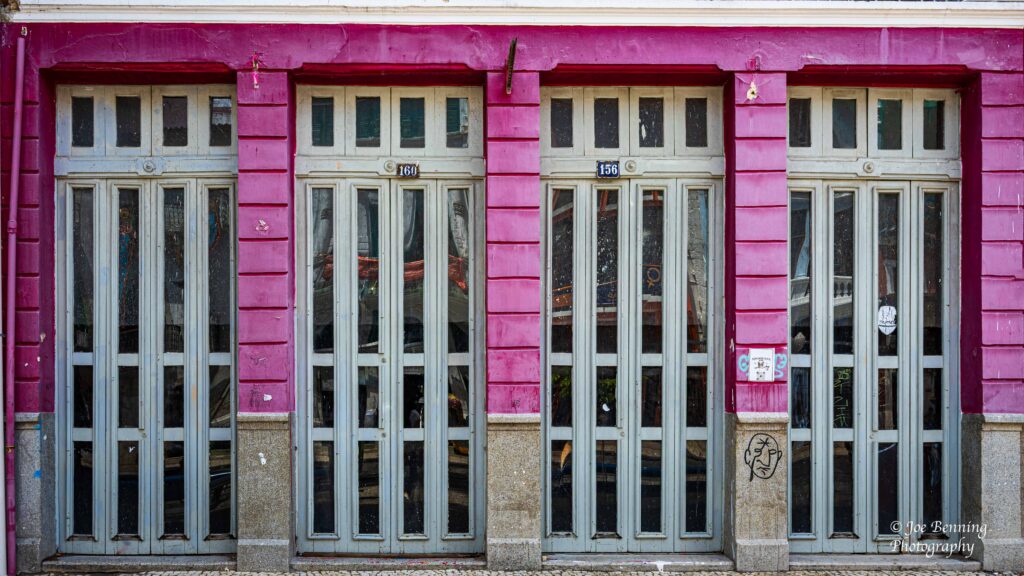
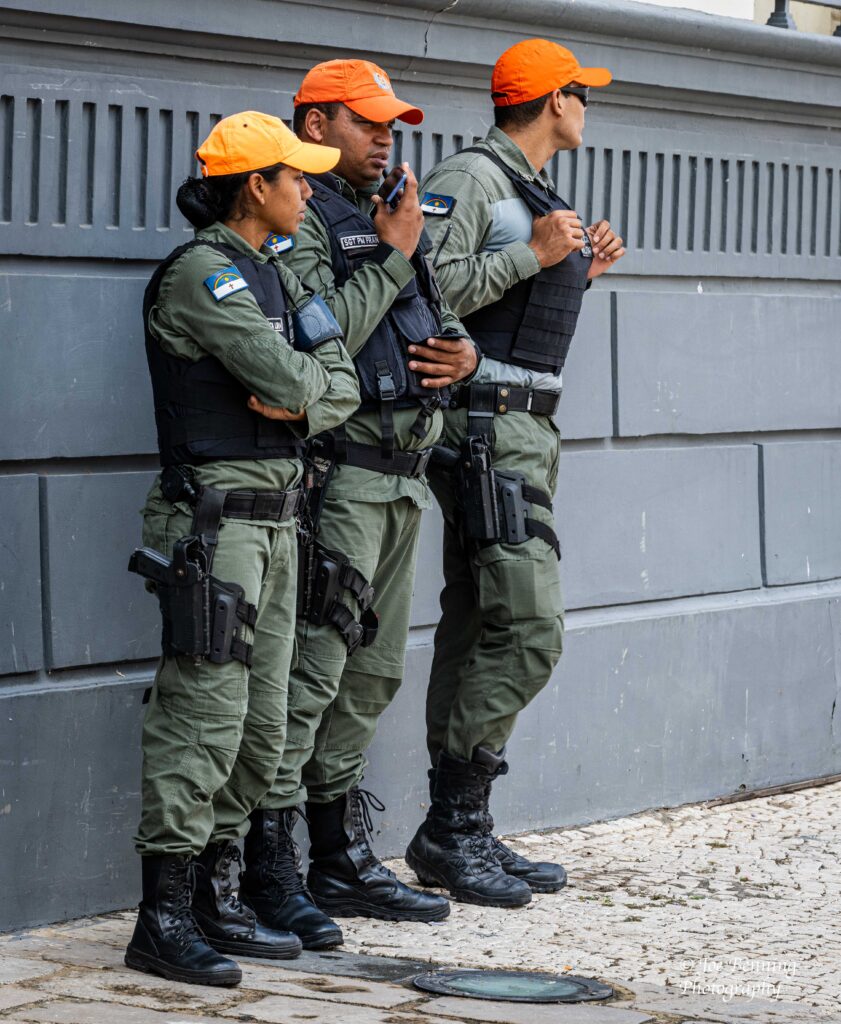
After we saw that we headed off for a tour of the Jewish section of town and a tour of a synagogue. It must be a major tourist area because it was loaded with visitors and buses that had “Tourismo” written all over them. There were also quite a number of Military Police as it turns out.
Wall in RecifeThree Soldiers in Recife
Anyway we have finished up with South America and now we are on our way to the coast of North Africa and then on to Europe. We’ll post from there soon.
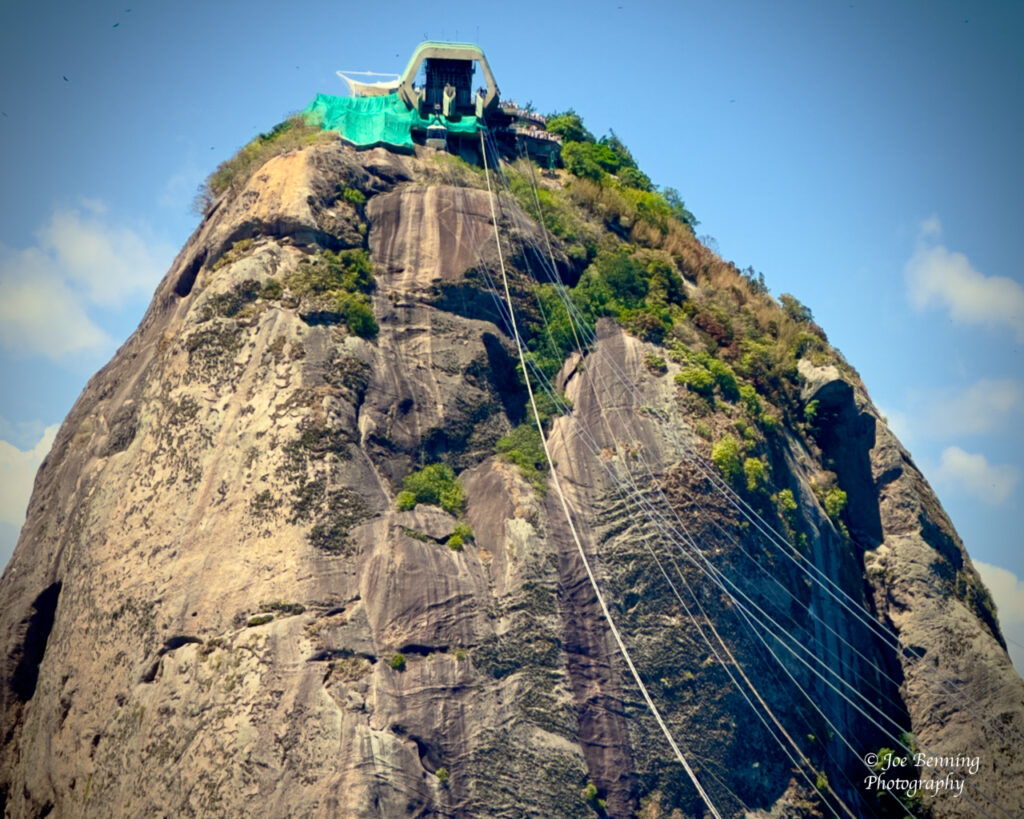
We are about to leave Rio de Janeiro—the home of Carnaval. Before we went to the Carnaval festivities though…we visited both Sugar Loaf mountain and Corcovado mountain. We got to Sugar Loaf by means of a cable car that went almost straight up the mountainside.
Cable for Sugar Loaf Mountain in Rio
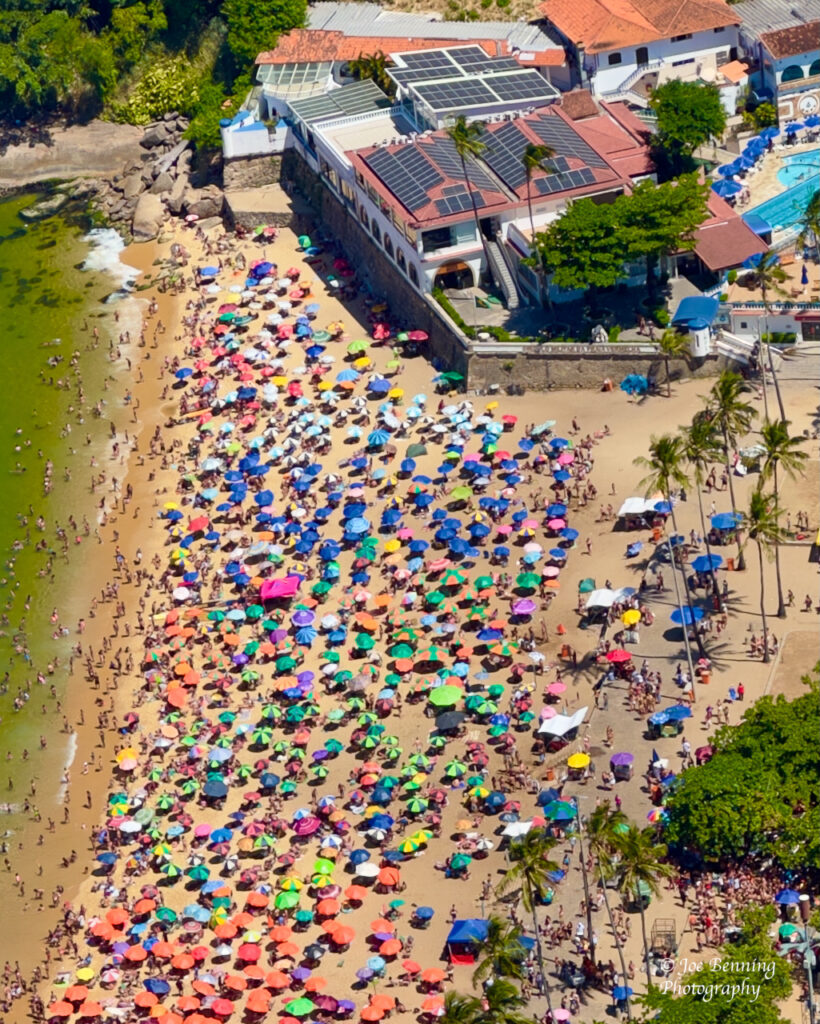
When we got to Sugar Loaf we could look over most of the city and its beaches. Some of the beaches were empty because the water was polluted by the oil of the boats anchored nearby. The other beaches were packed—including Copacabana beach.
Brazilian Beach is Crowded
To get to Corcovado mountain which is opposite Sugar Loaf, we took a 20 minute open air train ride up the side of the mountain. Corcovado mountain has the iconic Christ the Redeemer monument that overlooks the city.
We could make our way (kind of) around Sugar Loaf Mountain, and get some spectacular views of the city. But Corcovado mountain was teeming with people and it was impossible to get around. (After all, this is the height of the tourist season.) Not to mention that some not insignificant portion of the tourists / visitors acted like Instagram “influencers”. And it seemed like they all had selfie sticks.
Rio de Janeiro
Anyway, then it was on to the culmination of the Carnaval competition in the Sambadrome. The various Samba schools apparently spend all year making floats and practicing for this annual competition.
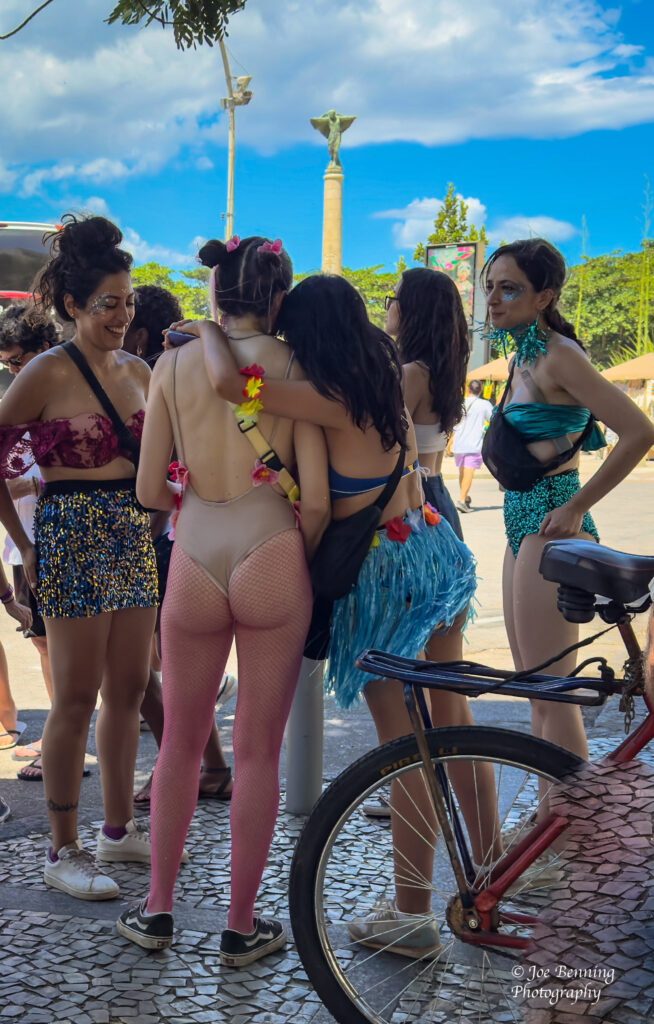
Carnaval lasts for about 4 days. The “unofficial” block parties start pretty much every night around 10:00 PM and lasted until 7:00 AM the following morning. And it seemed that everyone in the city got dressed up—or perhaps undressed—for the occasion.
Ready for Carnival !
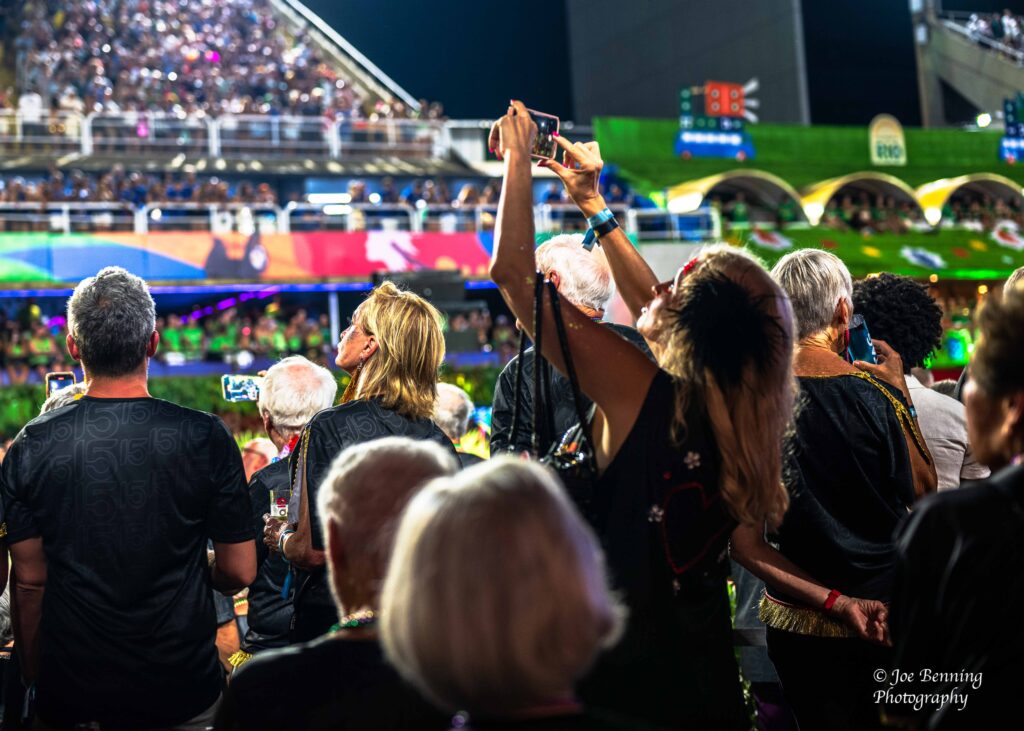
We left for the Sambadrome the final night and got there around 9:00 PM, where we had seats in a VIP section that was stocked with food and booze. It was like a sky box at a baseball game or the Super Bowl. And it had additional places at ground level, where most of the Crystal crowd stayed.
Carnaval Dancers in the SambadromeDancers at Carnaval
The competition began around 10:00 PM and the sound of the bass and drums was deafening. Each group of competitors (there were 3 that night) had 80 minutes to perform their routines. We, along with about a third of the Crystal crowd watched the first group and then left around midnight. But we know some people who stayed until 4:00 in the morning and didn’t get back to the ship until 5:00 AM.
Sambadrome Competition for CarnavalRio de Janeiro–March 4, 2025. Photo of the VIP box at Carnaval at the Sambadrome in Rio.
I couldn’t help but think that the Carnaval participants would be way better off spending more time taking geometry classes and less time building floats, but such is life. Anyway we will have a few more days in Brazil and then we will cross the Atlantic, headed for Europe.
We have already spent quite a bit of time in Brazil—and we are due to spend some more. We expect to arrive in Rio tomorrow, and then go on several tours over the next few days. The big event will be Carnival. We will be in attendance in the Sambadrome. It promises to be quite a spectacle. Stay tuned.
But before we get to Carnival…we visited São Paulo and Santos, as well as 2 Brazilian islands: Ilhabela and Paraty. São Paulo is one of the largest cities in South America and it is a cultural hub. But São Paulo is a mixed bag.
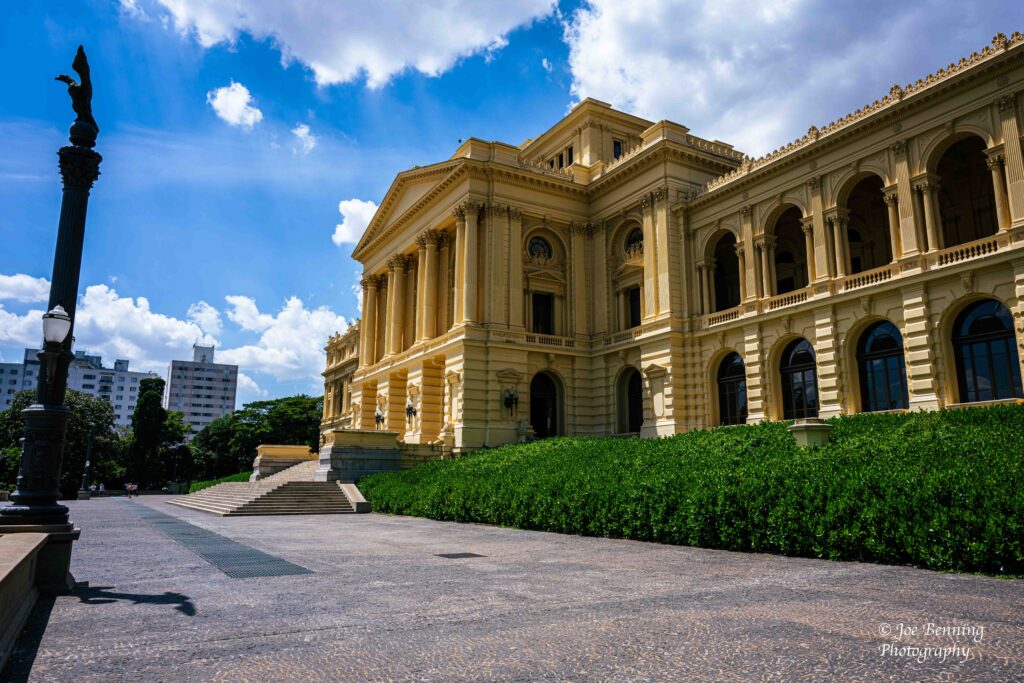
Museo Paulista of the University of São Paulo
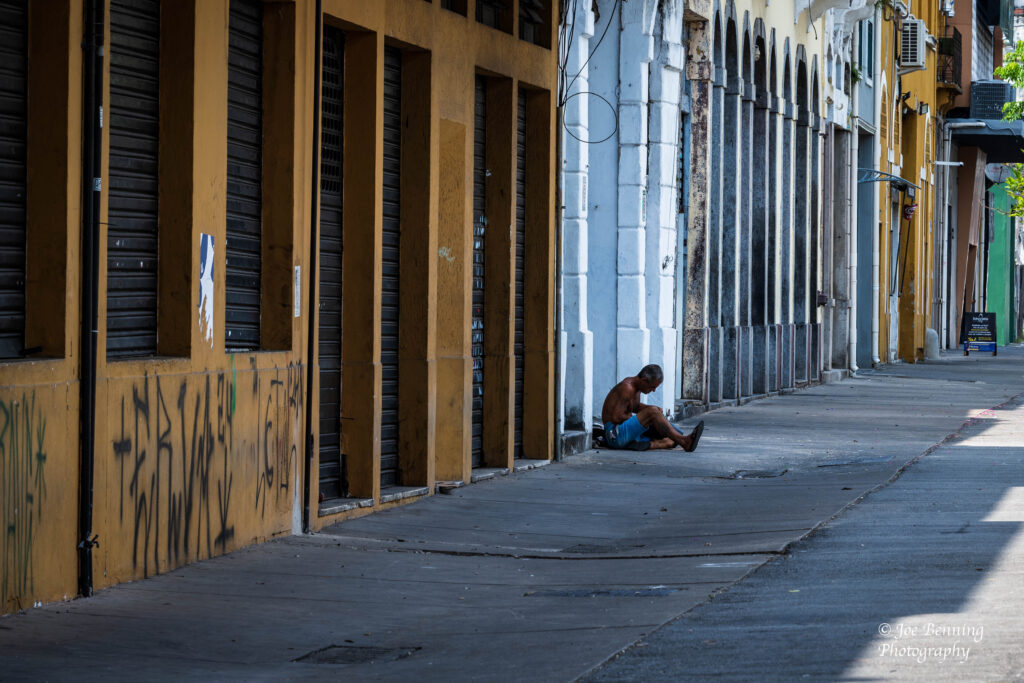
It has some very posh areas, like where we had lunch at Fogo de Chao. But it also has very poor areas; what appears to be a large homeless population, and (according to our guide) a significant problem with crack cocaine.
Man Sitting on the Street in Santos
Santos, a port city, appears to be more balanced, but it too has its rough spots. Santos has become a vacation area for locals and it encourages tourism. While there we visited a Museum dedicated to the football (soccer) great, Pele, who originally hailed from Santos; we visited the Coffee exchange and took a small train ride around the city.
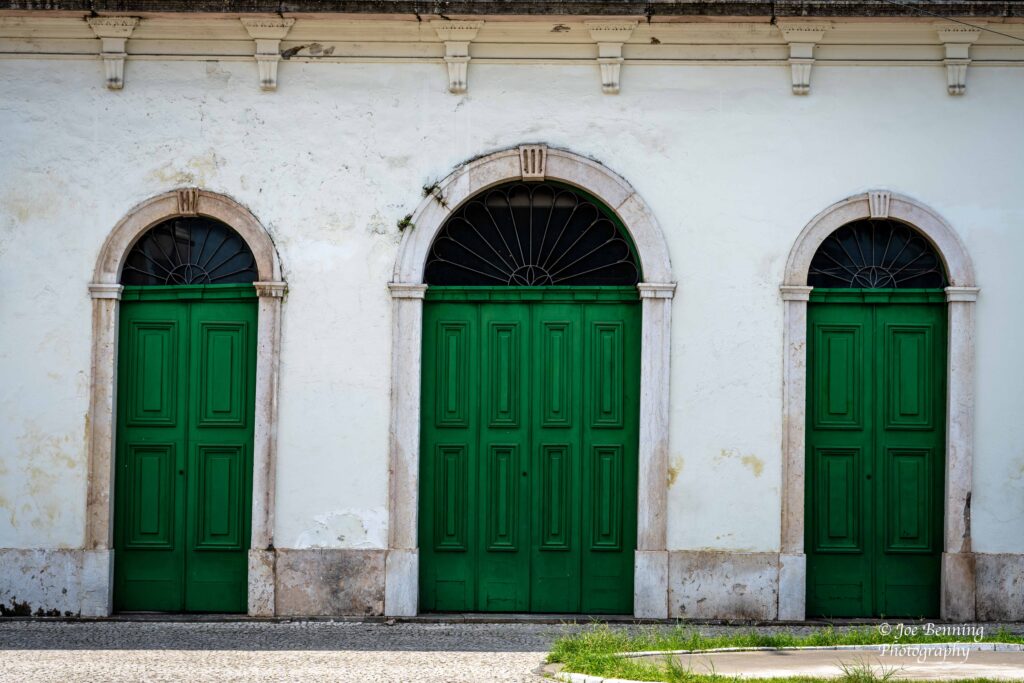
Green Doors by Pele MuseumThe Coffee Exchange
We also went to 2 notable islands: Ilhabela and Paraty. Ilhabela whose name means beautiful island in Portugese, is located 4 miles off the coast of São Paulo. While it used to be a place where sugar cane was grown on plantations by slaves, today it is known for its sandy beaches and tourism.
Beach in Ilhabela, Brazil
We anchored by Paraty Brazil, but didn’t venture out because, among other things, the Brazilian authorities changed our anchor position at the last minute. The change would have put us 4 nautical miles (and about an hour) away from the dock. So we declined going ashore. However we did get some photos of the sunrise over the island, shown below.
We have just been in the port in Santos, Brazil, and it reminds me that the ports we encounter are interesting in different ways.
Some ports are designed and used exclusively for passengers on cruise ships. The newest have ramps that connect to the cruise ships like jetways connect to planes, and the terminals are sparkling, with lots of tourism information, shops and dining places within – you barely have to leave the cruise ship to experience some of the local culture. If you look online for images of the Barcelona cruise ship passenger terminal you will see that it looks like a beautiful new shopping mall.
Other ports are primarily commercial shipping ports – big, noisy, gritty, and organized around mountains of containers that carry goods round the world. When a cruise ship docks there, the bright lights and noise of the port can be enjoyed all night by the passengers – not so great for sleep. As a cruise ship passenger, you are bundled off the ship and shuttled by bus around the edges of the port to a safe gateway into the host city.
Attached is a short video from the port in Valparaiso, Chile. There were huge numbers of trucks lined up to catch container after container being mechanically unloaded from enormous cargo ships. I took just about a minute or two for each container to be taken from the cargo ship and deposited onto the waiting truck.
And then there are ports like Santos, Brazil, which hosts both commercial cargo ships and cruise ships carrying passengers, without very clear separate areas for each. These mixed-use ports are fascinating to observe because you are close to the action of the cargo movement, but you are carefully shuttled by bus through the port so that you don’t get hurt by a big truck or container – no walking around is permitted. The passenger shuttle buses weave around the forklifts, the trucks, and the other vehicles – sometimes for miles- getting passengers to the safety of the port exit. You can see the workers and the details that go into the action. Again, a quick online search of Santos, Brazil shipping port will give you aerial shots and others that capture some of the scope of this incredible port.
Santos is the largest port in Latin America when it comes to cargo – it serves as the export gateway for massive amounts of dry goods and liquid goods from Brazil.
Soy beans are the biggest export by far (to China) but sugar, coffee, corn and citric juices are also big business here. Oranges were formerly one of the big exports, but local business owners discovered that they could process the oranges into juice (a value-add) and it was more profitable. This change in the nature of the product flowing through the port generated growth in the surrounding area, so now the city of Santos has more industry (and profit) than before. Most of the orange juice goes to Belgium but that doesn’t mean Belgians drink it all – from its entry there it is distributed throughout Europe.
While docked in Santos we have visited the city, and the large city of São Paulo (about 80 km/ 50 miles away). More about our excursions in Brazil later.
We will be spending a considerable amount of time in Brazil. That includes being shepherded into a special seating area, compliments of Crystal, to watch the parades at the Sambadrome, which is the main event.
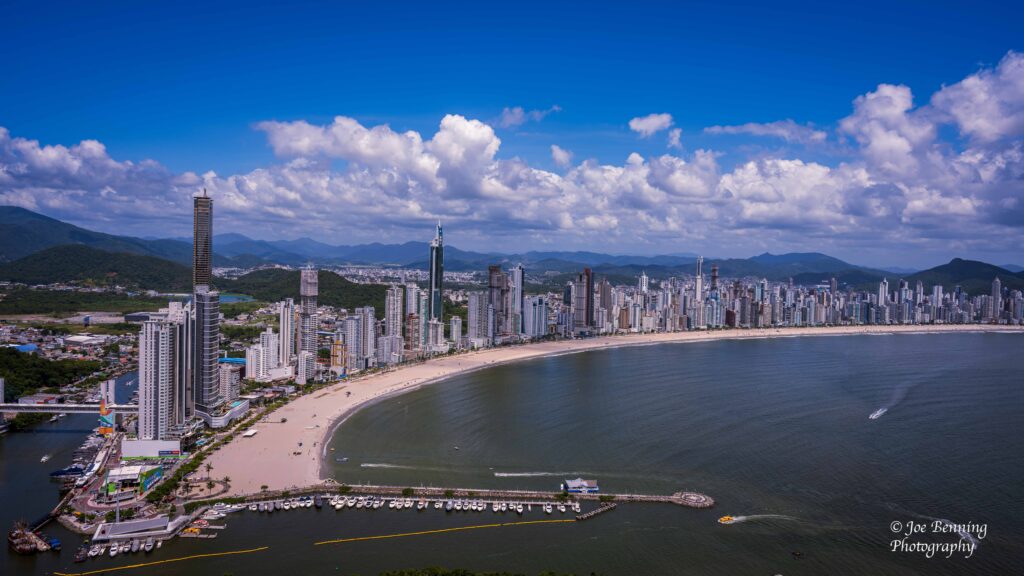
But before all of that, we made our first Brazillian stop in the port city of Balneário Camboriú. It is in the state of Santa Catarina. Located in southern Brazil, it is mostly a posh resort town whose population swells to over 1 million people in summer from 145,000 in winter. When you first see its skyline and white sandy beaches, you would think you were looking at Miami.
Looking Down on Balneario Camboriu, Brazil
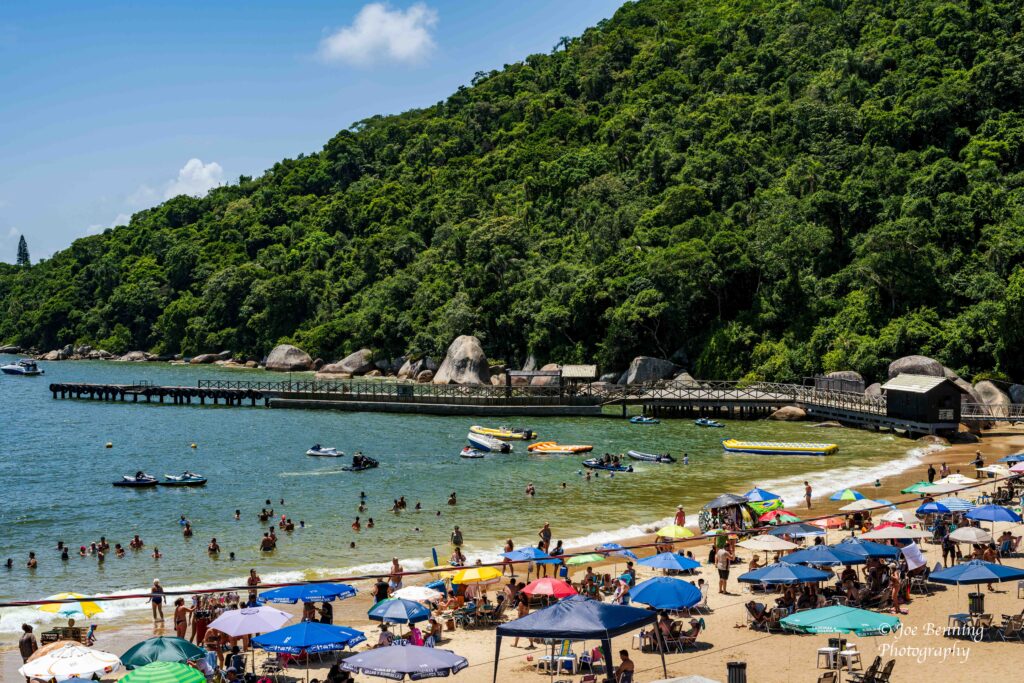
The city has 2 beaches—one that is “clean” and the other that is not. It contains all types of germs from untreated water the comes from the upstream river. The locals go to the beach, but avoid the water. They go to the clean beach instead. I should hasten to add that it is not exactly a mystery that the beach has untreated water. But the tourists are apparently not so cautious as the locals and dive right in.
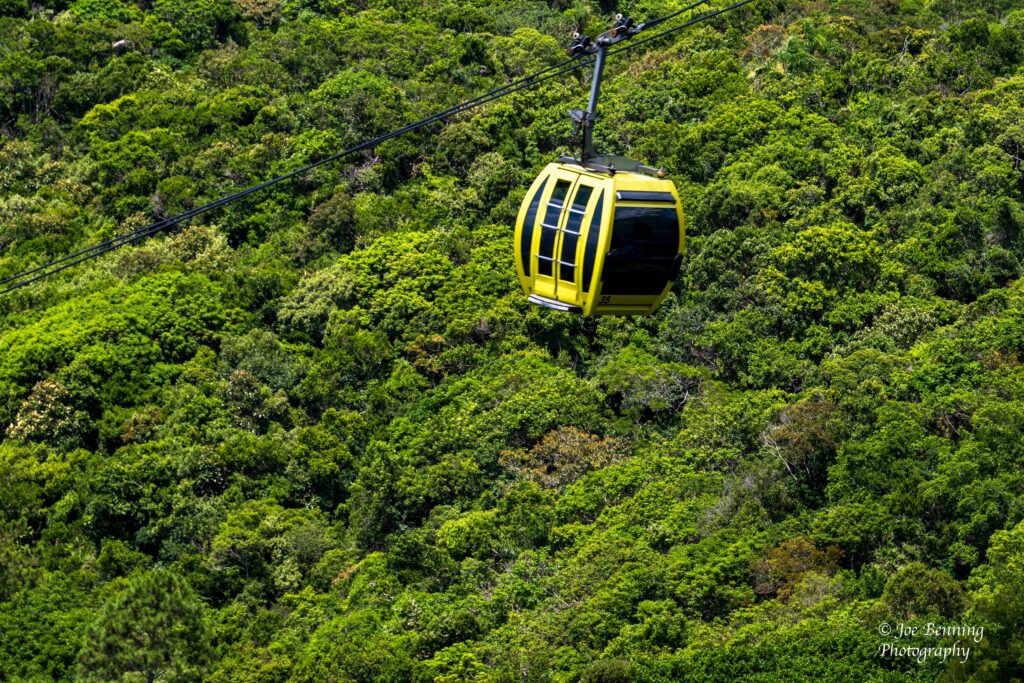
Cable Car in Balneario Camboru Brazil
There is a cable car that runs between the 2 beaches (after going up a steep mountain.) We took a ride in the cable car and then went for a walk in the Atlantic forest. After the walk we went to the clean beach.
Brazillian Beachgoers
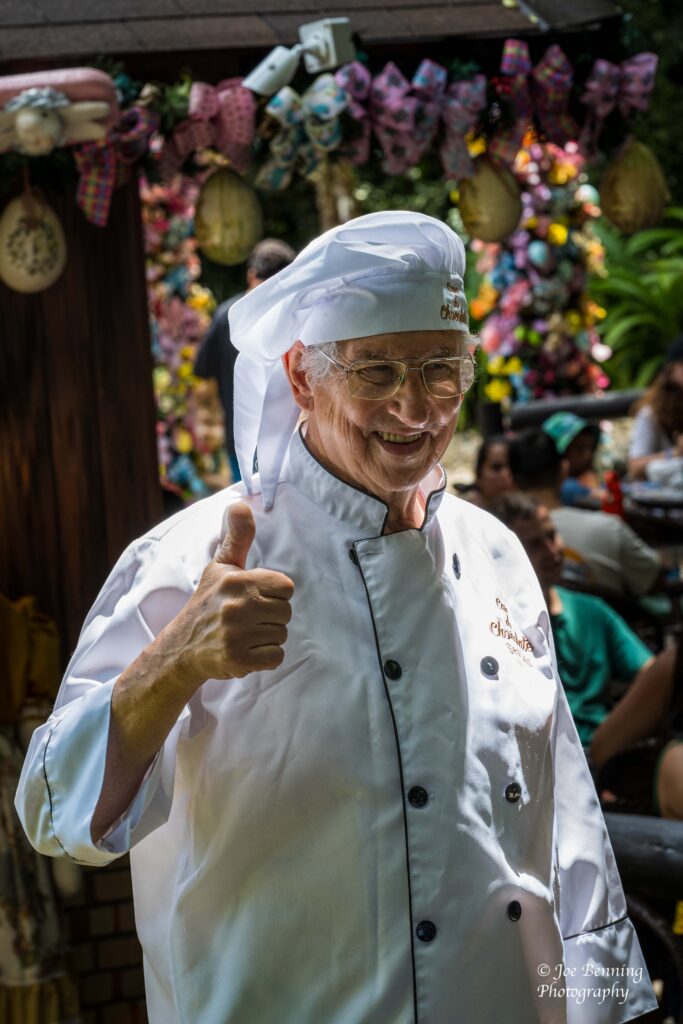
Along the way we ran into a friendly merchant who had a cafe / gift shop in the rain forest and who encouraged us with the “thumbs up” sign.
Merchant Gives Thumbs Up Sign
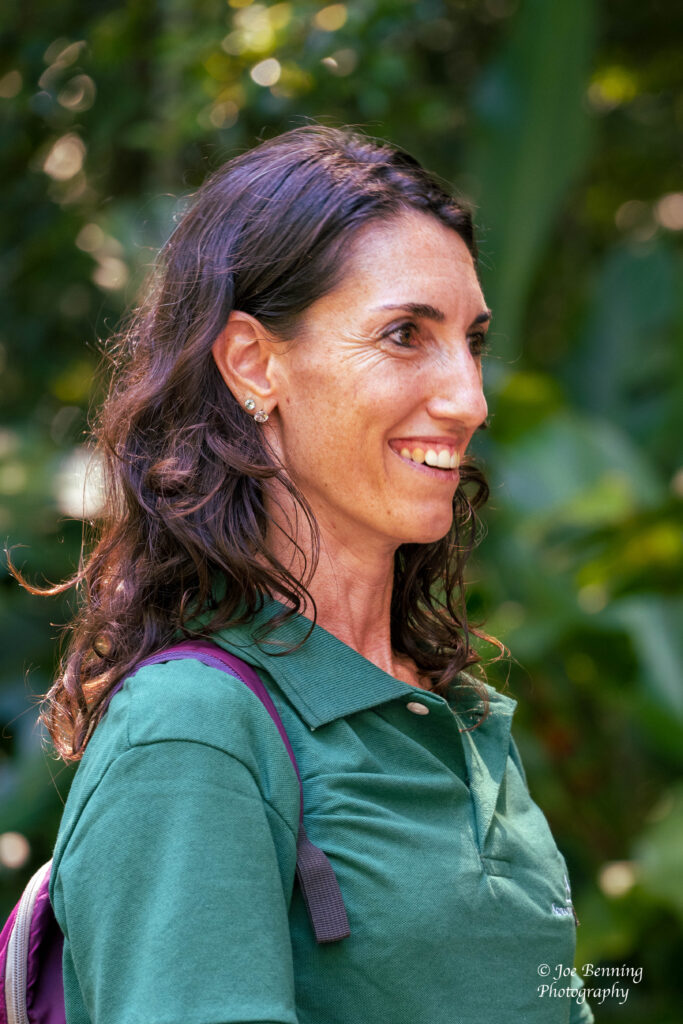
For some reason other, our (very good) guide refused to call the Atlantic forest a rain forest. I don’t remember why. However, a lecturer on Crystal who is also a professor at Santa Clara University characterized it as a rain forest, so that’s what I’m going with.
Our Tour Guide Named Gabby
Anyway, our next port of call will be a few days in Santos. We’ll see what that brings.
We have just spent 3 days in Buenos Aires. Located on the Rio de la Plata, it is the capital of Argentina and its largest city. The city proper has a population of only 3.1 million, but the greater urban metropolitan area has a population of 16.7 million, making it the 14th largest metropolitan area in the world.
The city has been nicknamed the Paris of South America and it is easy to see why. The architecture, sprawling parks, cafes and restaurants make for a lively bustling vibe that is similar to that of Paris (or New York for that matter.)
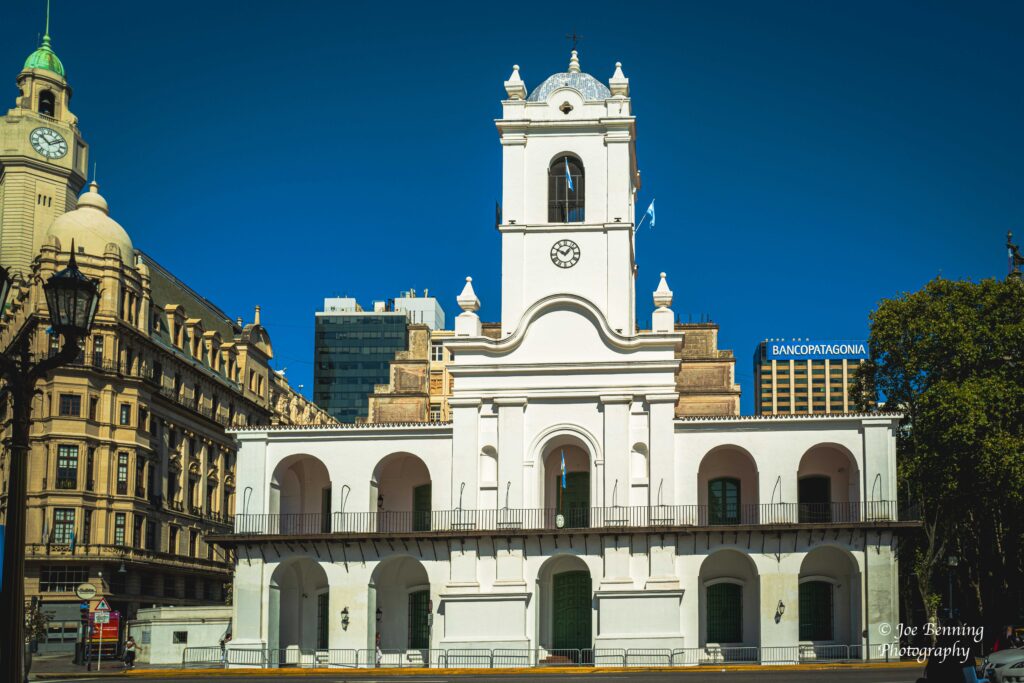
Government Building, Buenos Aires
And then there is the Tango. Argentinians are convinced that they invented it. Uruguayans are equally convinced that the dance is “theirs”. Since the dance developed on the banks of the River Plate and that is the border between the two countries, you can see why both claim the dance as their own.
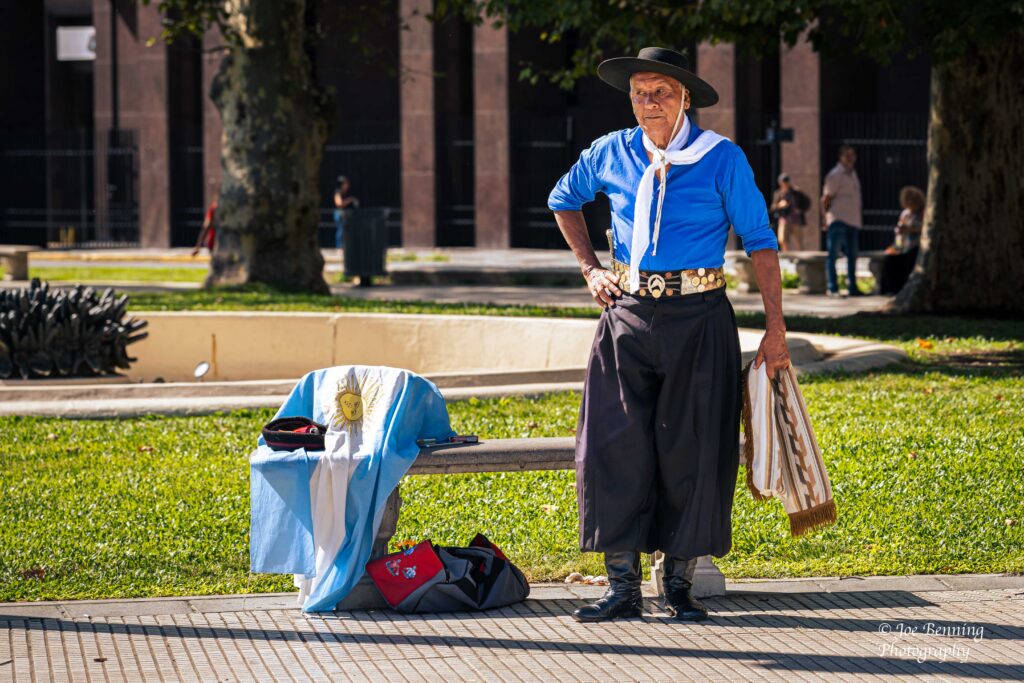
Gaucho in Buenos Aires
After we docked in Buenos Aires we headed off to the Plaza de Mayo, which is probably the most important square in the city. There we spotted a man dressed in the traditional garb of a gaucho (Argentinian cowboy). Later we saw the gleaming white government building.
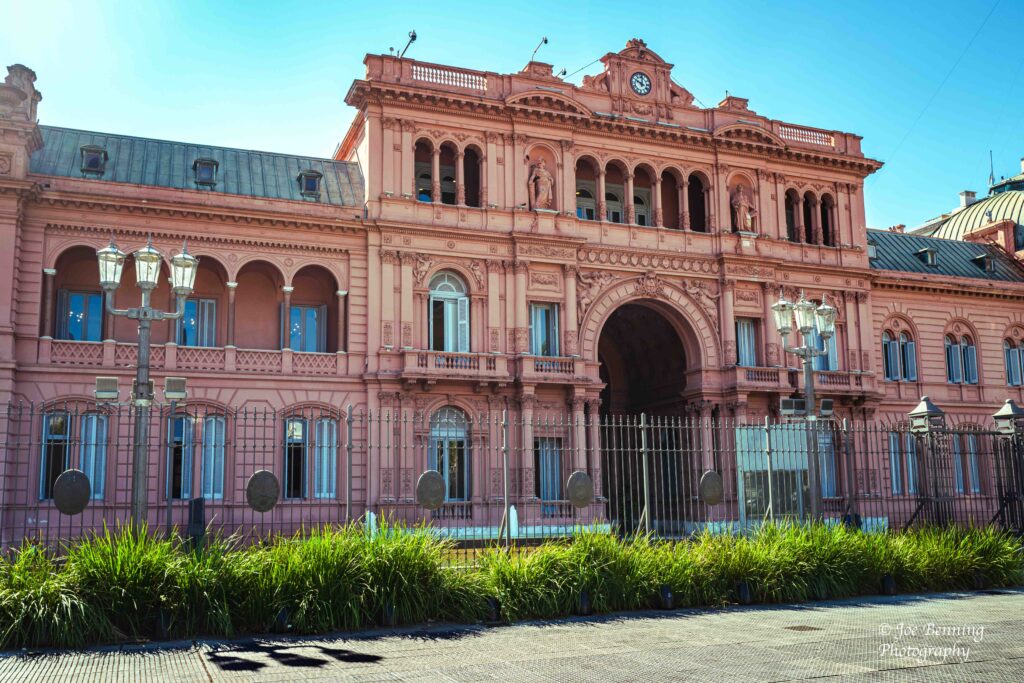
The Plaza de Mayo is also home to the Casa Rosa (Pink House) that serves as the seat of the Argentine government, dominates the square and houses the president’s office. It is here where Eva Perón, nee Eva Duarte, wife of Juan Perón, AKA “Evita” made many of her famous appearances.
The Pink Palace where Evita Peron used to make regular appearances
There are weekly protests in the Plaza de Mayo by the women in white, who still search for the many children who were abducted and adopted illegally, after their parents were “disappeared” for disagreeing with the military dictatorship (1976-83). It is a reminder that the history of this country has had its dark times.
Near the Plaza de Mayo is the Metropolitan Cathedral of the Most Holy Trinity where then bishop Jorge Mario Begoglio presided, before becoming Pope Francis.
Buenos Aires, Argentina — February 20, 2025. Metropolitan Cathedral of the Most Holy Trinity
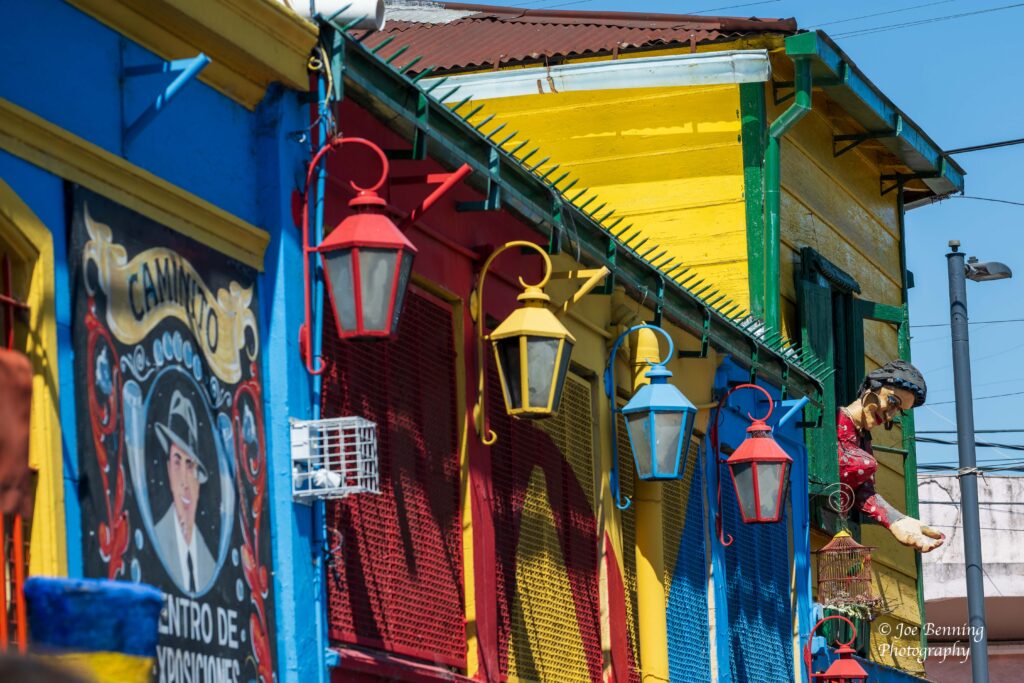
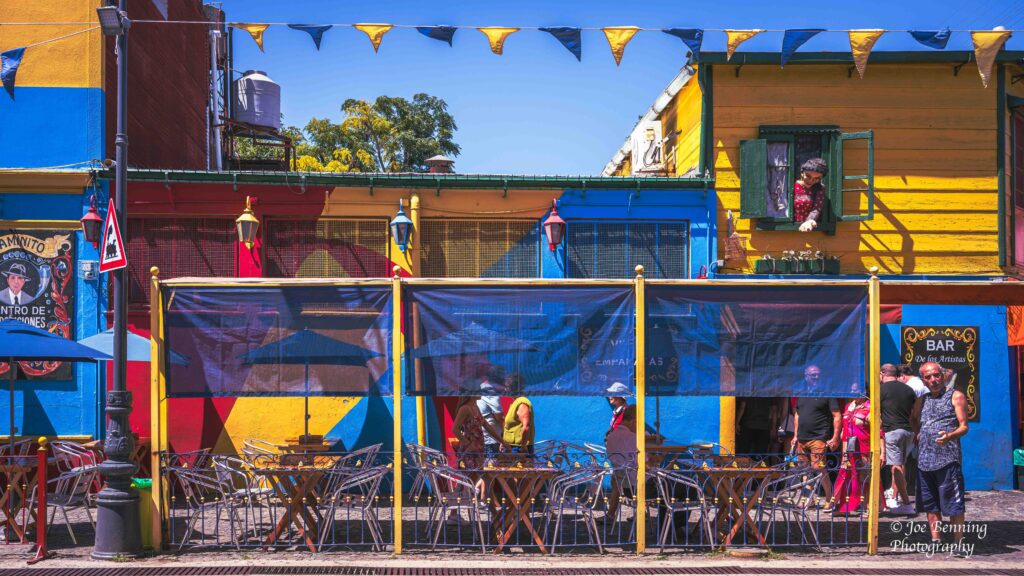
After visiting the Plaza de Mayo, we continued on to visit the La Boca neighborhood. It is known for its colorful houses that people in the area constructed out of whatever discarded material they could find from the nearby shipping port. Many of the buildings are made from the corrugated container material, brightly painted with the colors that were used at the port (reflecting the flags of ships from other countries).
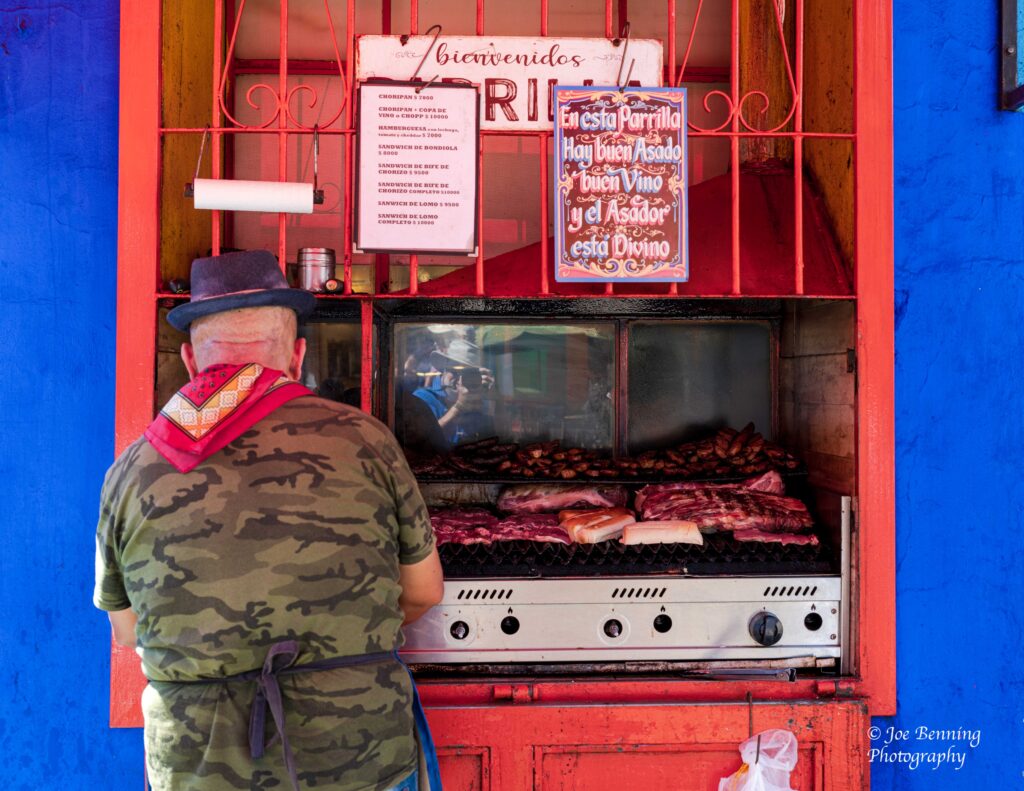
Among other things, we saw a small park in La Boca and a BBQ stand where a local man was grilling various meats.
Man Grilling Meat in La Boca Neighborhood
La Boca is also known for dancers who don traditional Tango garb and convince tourists to fork over $10 to have their photos taken with them. And speaking of tourists, there was no lack of them in La Boca.
Colorful La Boca Neighborhood in Buenos AriesColorful La Boca Neighborhood in Buenos Aries
While the Catholic religion is prominent in Argentina, the nation’s second religion also is huge – fútbol. In the Boca region of BA we visited an enormous complex that houses the arena, training areas, housing and other facilities for the Boca Jr club. The colors of the uniforms and buildings are bright blue and yellow – another reflection of the colors in the flag of Norway that flew on a cargo ship in the port. (It’s a long story that involves 2 rival local teams that shared other colors – there was a match to determine which town would stay in Boca, and the winner agreed to change colors to the flag on the first ship in port the next day.)
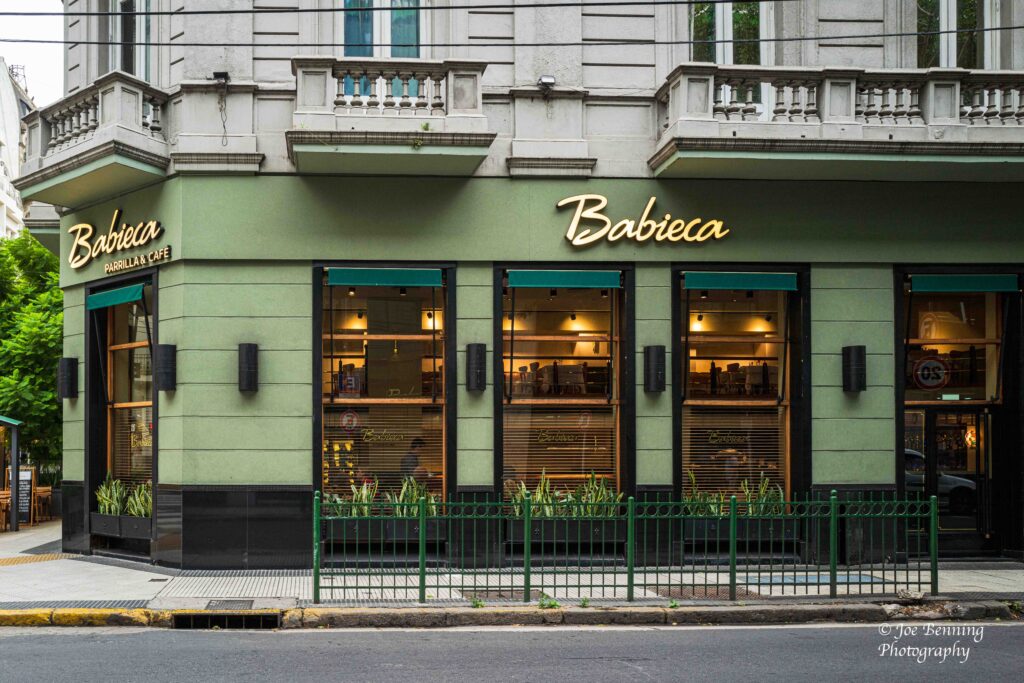
We also spent some time in La Recoleta, an upscale neighborhood with pricey Parisian style townhouses. We ducked into a local shop for some croissants and coffee. The Recoleta Cemetery, final resting place of many famous Argentinians (including Evita) is here in the neighborhood as well.
Family Mausoleums in Recoleta Cemeterys. Eva Peron is buried here.A neighborhood coffee shop La Babieca
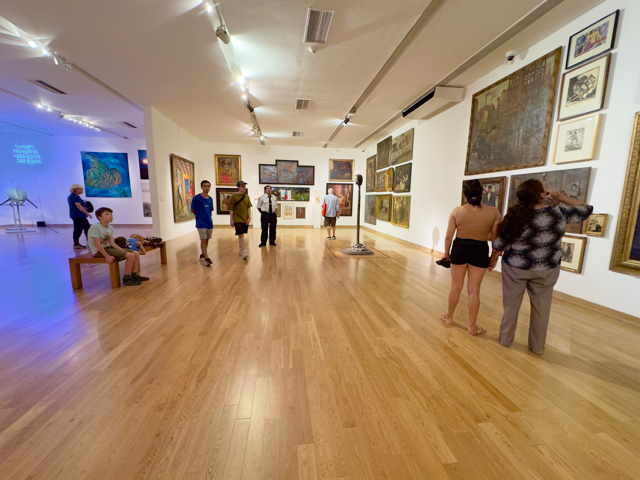
Another visit was to the Museo de Nacional de Belles Artes. It was not too large—but it had an impressive European collection. We saw paintings by Manet, Monet, Degas, Gaugin, Pissarro and Picasso, not to mention many sculptures by Rodin.
Museo de Nacional de Bellas Artes
Finally, we visited a famous bookstore “La Atenea” and later stopped for coffee and pan dulce (“sweet bread”). The pan dulce was just too much, and Mary Anne rather adroitly gave it to our Uber driver, who is a fan of it.
Bookstore La Atenea
This is just a small sample of what is available in Buenos Aires, a remarkable global city.
We have just spent a couple of days in Uruguay, that small country tucked in between Argentina and Brazil. The history is complex, as with so many South American countries. For example, there were both Spanish and Portuguese conquerors, and while Uruguay has a relatively small population of indigenous people (mostly Charrúa descendants) the vast majority were killed in the 19th century. But the modern result is different in some respects than other countries – Uruguay today is home to many immigrants from all over the place, and is fiercely protective of individual rights. The economy is strong (by South American standards) and the fútbol team is impressive.
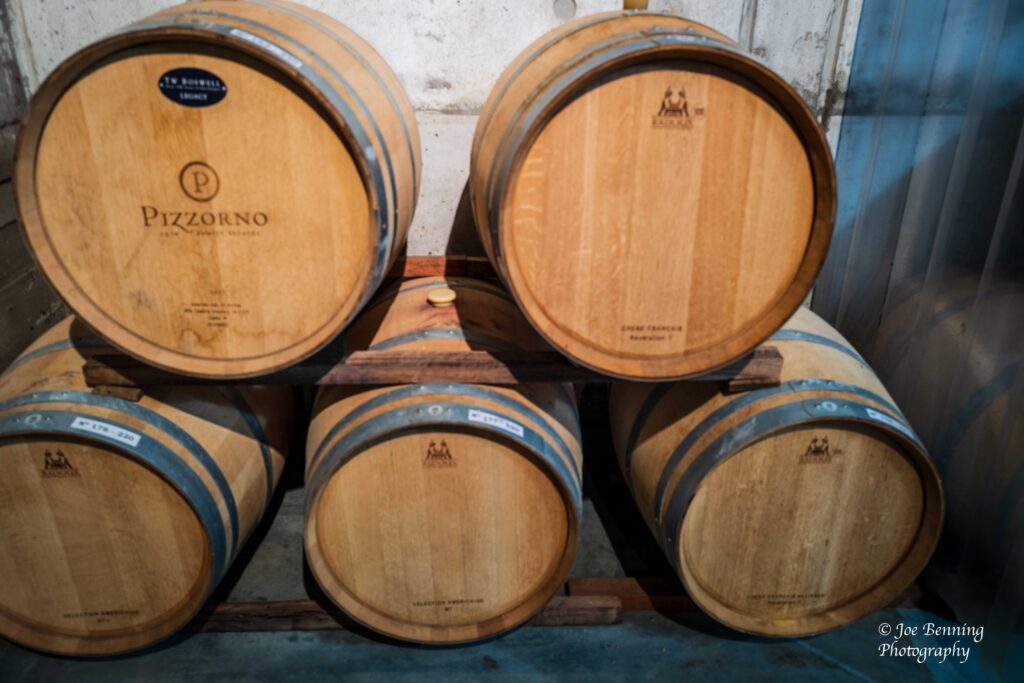
Barrles of Wine at the Pizzorno Winery
Blessed with mild weather, good rain and rolling hills of grass, Uruguay grows lots of cattle and sheep, to say nothing of wine. Cattle outnumber people by at least 3 to 1, and a lot of cattle are exported live, while others are slaughtered in-country and then exported. Big business.
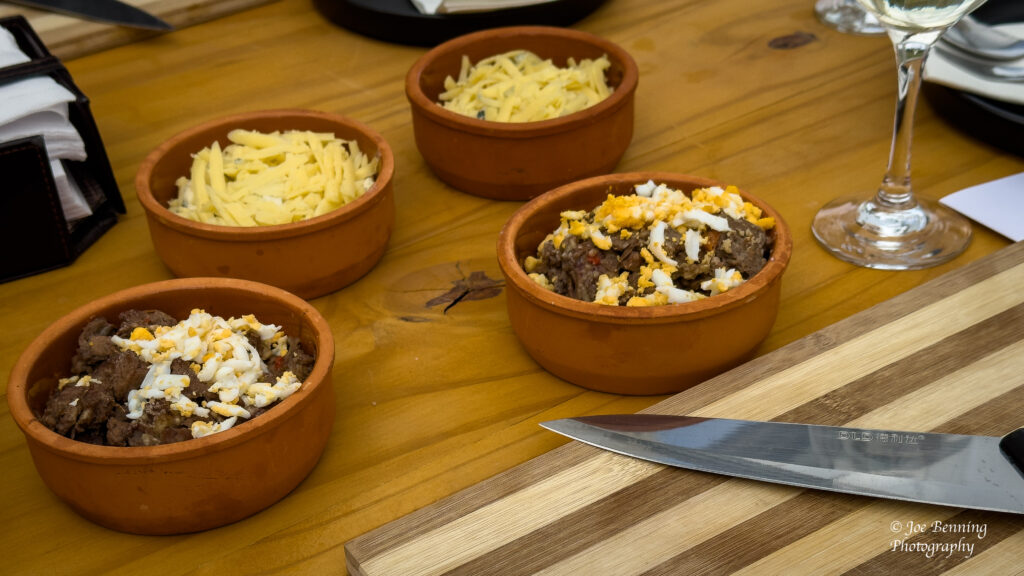
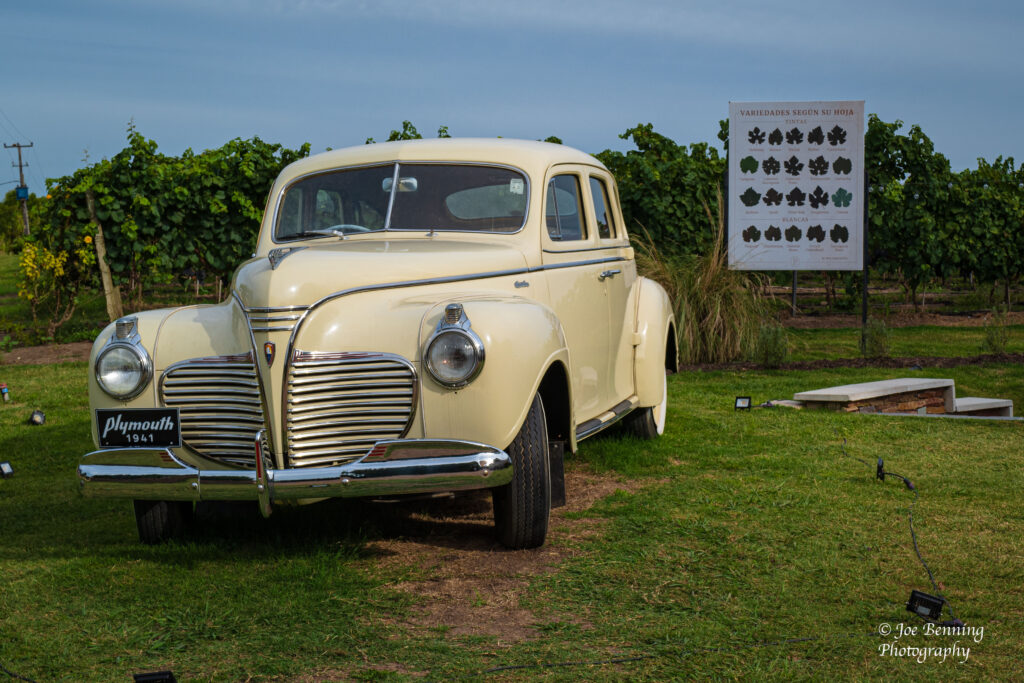
We visited the Pizzorno winery (which for some reason has a 1951 Plymouth parked outside), and participated in a cooking class. We made (empanadas those little pastries filled with virtually anything) and alfojadas (butter cookies stuffed with dulce de leche). Very delicious, especially the red wine from Tannat grapes.
Making EspanadasA 1951 Plymouth
We also spent some time exploring the city of Montevideo, which has a charming old town center, and several synagogues. There is a small but dedicated Jewish population in Uruguay, reflecting various sects of Jews who emigrated from many parts of the world.
Part of an Open Air Holocaust Museum
A very simple, symbolic wall has been constructed along the River Plate in Montevideo – the wall represents the Jewish people, with a break in the wall to commemorate the holocaust, 12 steps alongside to symbolize the 12 tribes, a ramp that expresses hope, large rocks that are symbols of difficulty to be overcome, and other symbols of faith.
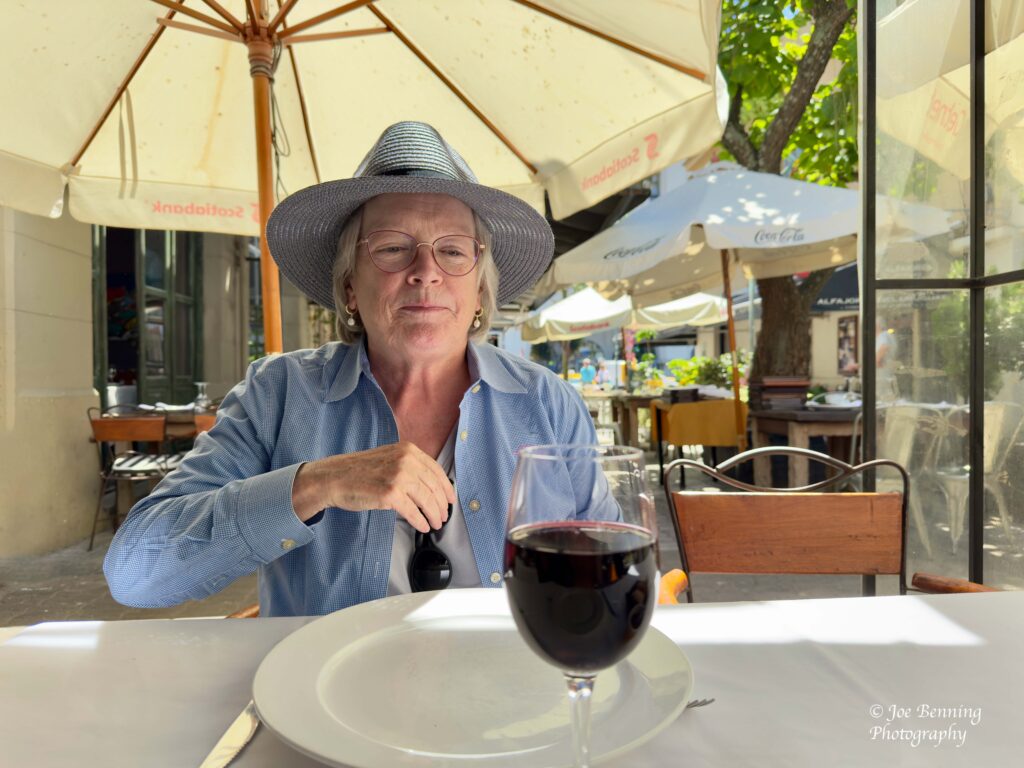
Uruguay (along with Argentina) has a reputation for great steaks, so we went to a restaurant named El Palanque for —what else—steaks and had a very nice time. Uruguay also seems to be a popular vacation spot for Argentines as well as others, and we can see why.
Mary Anne at El Palanque
Tomorrow we go to Buenos Aires for a few days. Looking forward to more interesting history and a beautiful city!