We will be spending a considerable amount of time in Brazil. That includes being shepherded into a special seating area, compliments of Crystal, to watch the parades at the Sambadrome, which is the main event.
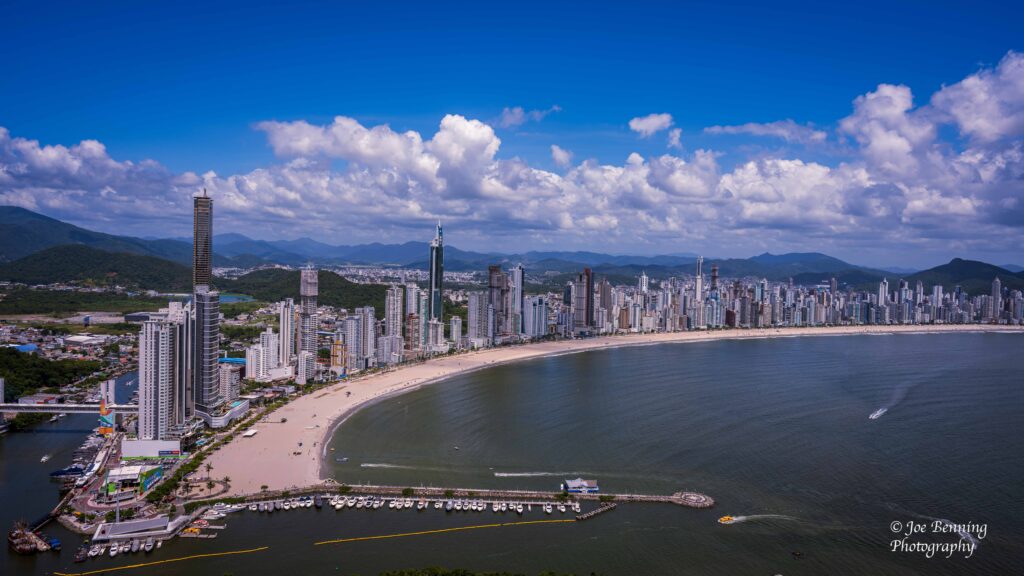
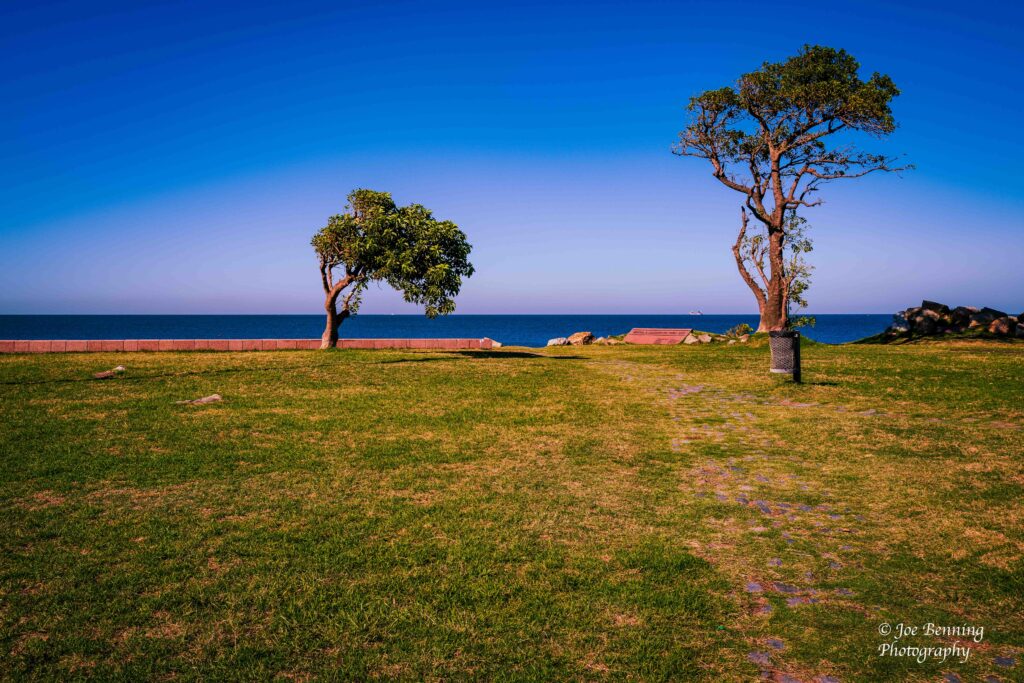
But before all of that, we made our first Brazillian stop in the port city of Balneário Camboriú. It is in the state of Santa Catarina. Located in southern Brazil, it is mostly a posh resort town whose population swells to over 1 million people in summer from 145,000 in winter. When you first see its skyline and white sandy beaches, you would think you were looking at Miami.
Looking Down on Balneario Camboriu, Brazil
The city has 2 beaches—one that is “clean” and the other that is not. It contains all types of germs from untreated water the comes from the upstream river. The locals go to the beach, but avoid the water. They go to the clean beach instead. I should hasten to add that it is not exactly a mystery that the beach has untreated water. But the tourists are apparently not so cautious as the locals and dive right in.
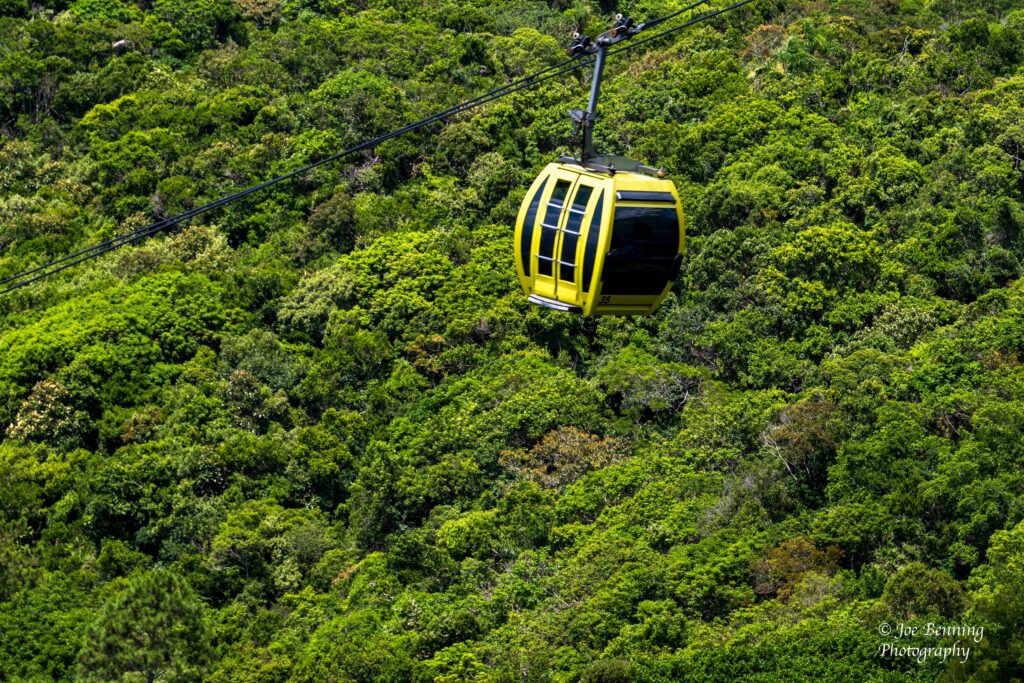
Cable Car in Balneario Camboru Brazil
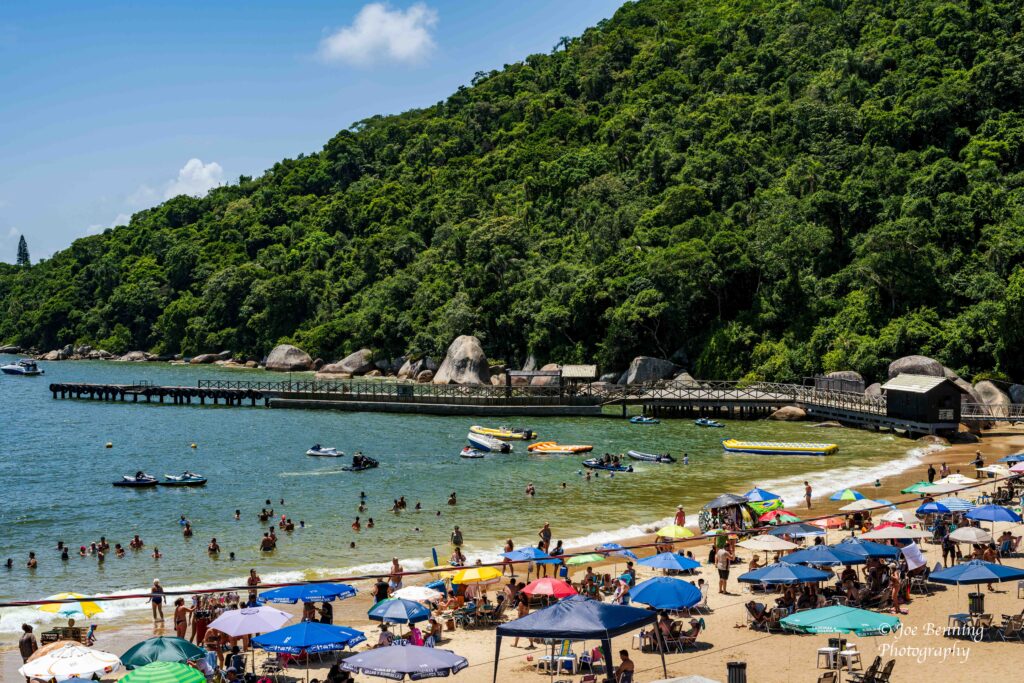
There is a cable car that runs between the 2 beaches (after going up a steep mountain.) We took a ride in the cable car and then went for a walk in the Atlantic forest. After the walk we went to the clean beach.
Brazillian Beachgoers
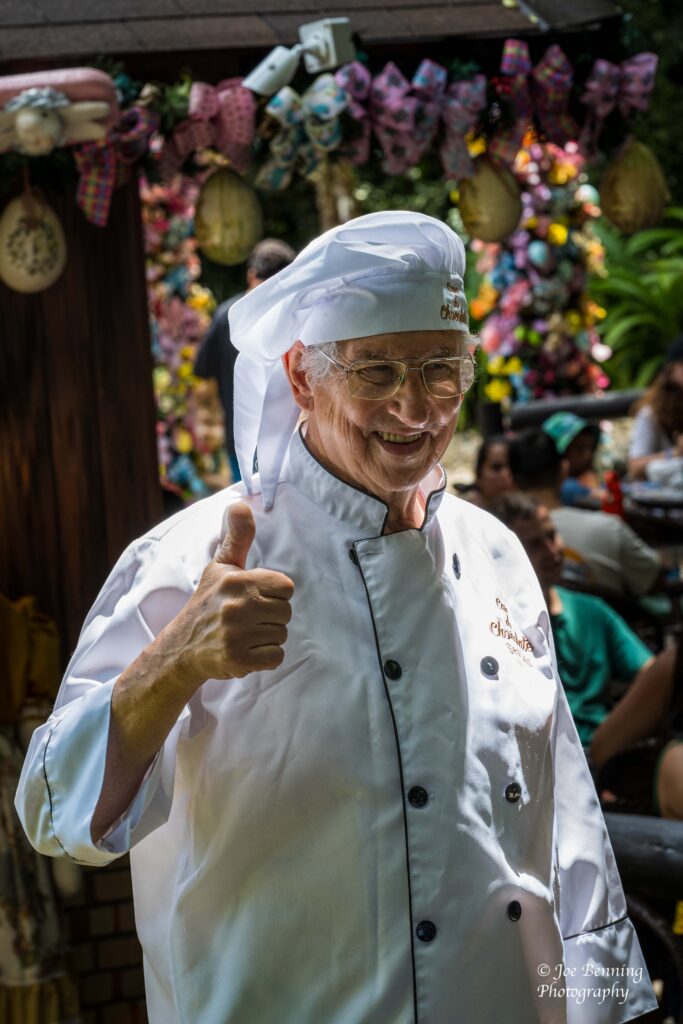
Along the way we ran into a friendly merchant who had a cafe / gift shop in the rain forest and who encouraged us with the “thumbs up” sign.
Merchant Gives Thumbs Up Sign
For some reason other, our (very good) guide refused to call the Atlantic forest a rain forest. I don’t remember why. However, a lecturer on Crystal who is also a professor at Santa Clara University characterized it as a rain forest, so that’s what I’m going with.
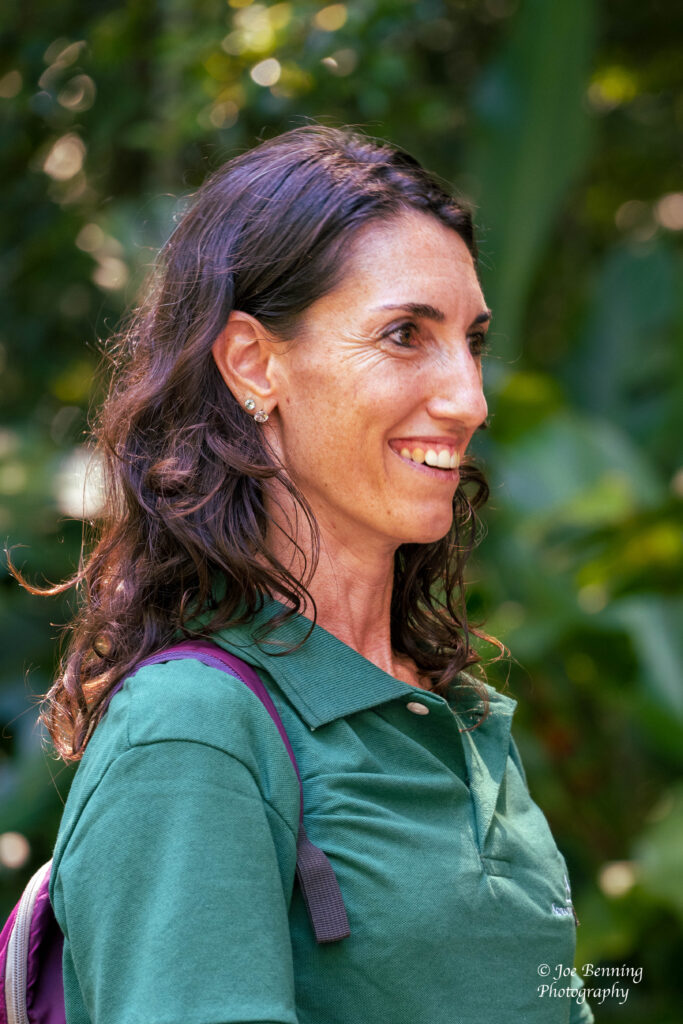
Our Tour Guide Named Gabby
Anyway, our next port of call will be a few days in Santos. We’ll see what that brings.
We have just spent 3 days in Buenos Aires. Located on the Rio de la Plata, it is the capital of Argentina and its largest city. The city proper has a population of only 3.1 million, but the greater urban metropolitan area has a population of 16.7 million, making it the 14th largest metropolitan area in the world.
The city has been nicknamed the Paris of South America and it is easy to see why. The architecture, sprawling parks, cafes and restaurants make for a lively bustling vibe that is similar to that of Paris (or New York for that matter.)
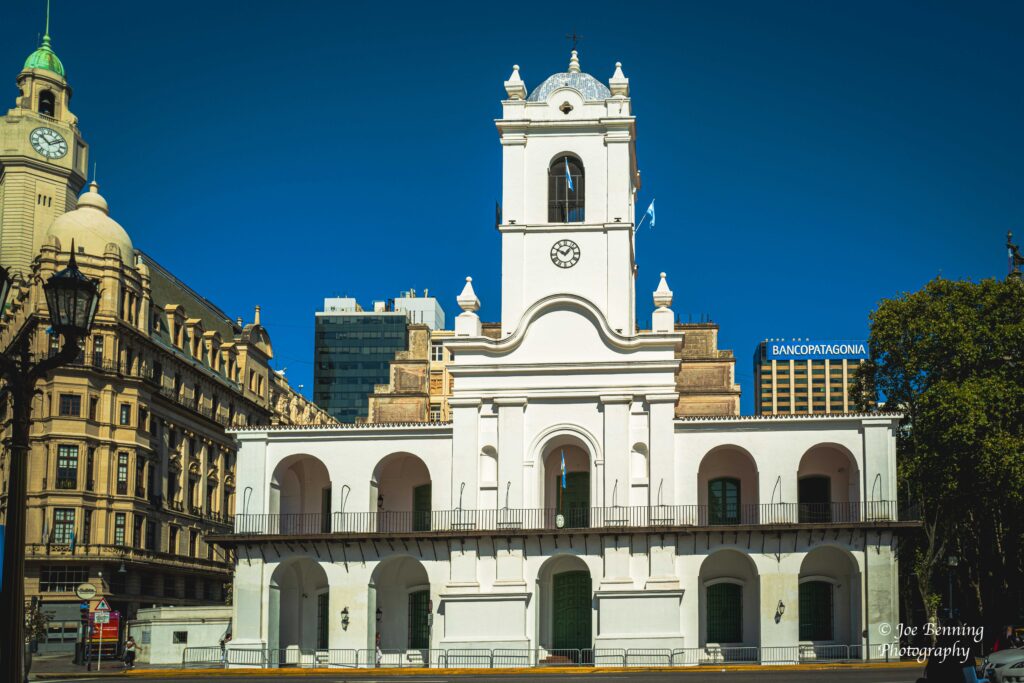
Government Building, Buenos Aires
And then there is the Tango. Argentinians are convinced that they invented it. Uruguayans are equally convinced that the dance is “theirs”. Since the dance developed on the banks of the River Plate and that is the border between the two countries, you can see why both claim the dance as their own.
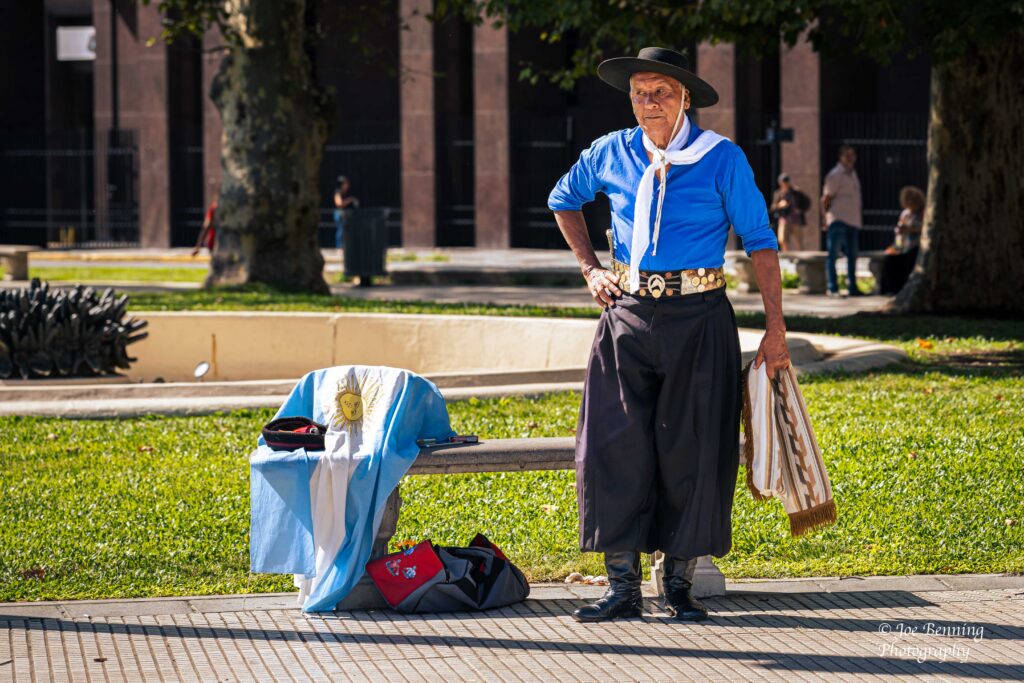
Gaucho in Buenos Aires
After we docked in Buenos Aires we headed off to the Plaza de Mayo, which is probably the most important square in the city. There we spotted a man dressed in the traditional garb of a gaucho (Argentinian cowboy). Later we saw the gleaming white government building.
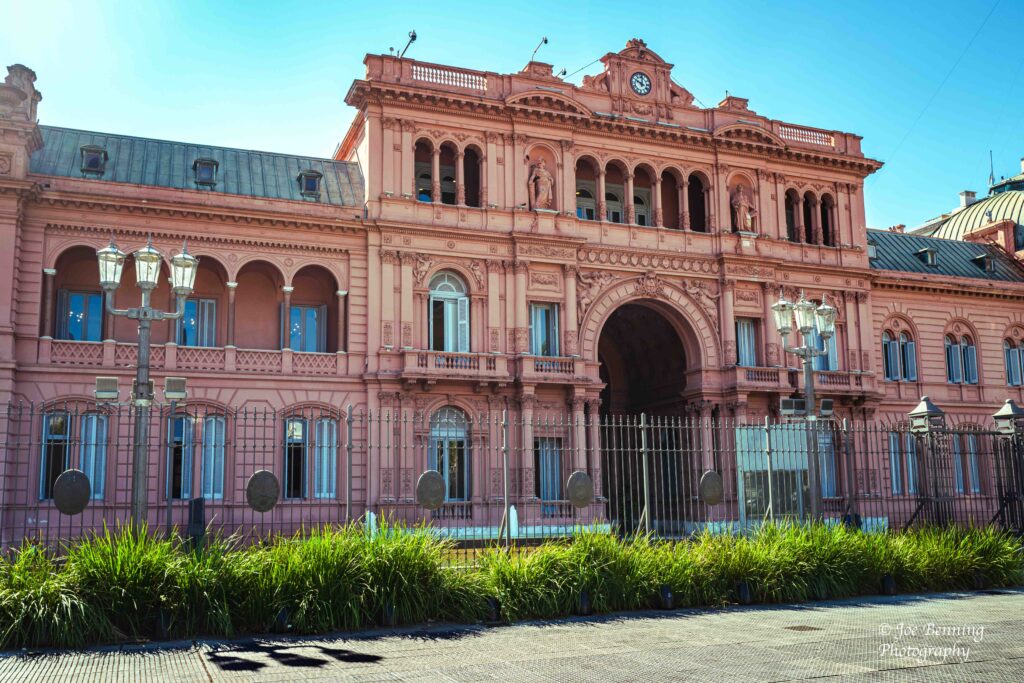
The Plaza de Mayo is also home to the Casa Rosa (Pink House) that serves as the seat of the Argentine government, dominates the square and houses the president’s office. It is here where Eva Perón, nee Eva Duarte, wife of Juan Perón, AKA “Evita” made many of her famous appearances.
The Pink Palace where Evita Peron used to make regular appearances
There are weekly protests in the Plaza de Mayo by the women in white, who still search for the many children who were abducted and adopted illegally, after their parents were “disappeared” for disagreeing with the military dictatorship (1976-83). It is a reminder that the history of this country has had its dark times.
Near the Plaza de Mayo is the Metropolitan Cathedral of the Most Holy Trinity where then bishop Jorge Mario Begoglio presided, before becoming Pope Francis.
Buenos Aires, Argentina — February 20, 2025. Metropolitan Cathedral of the Most Holy Trinity
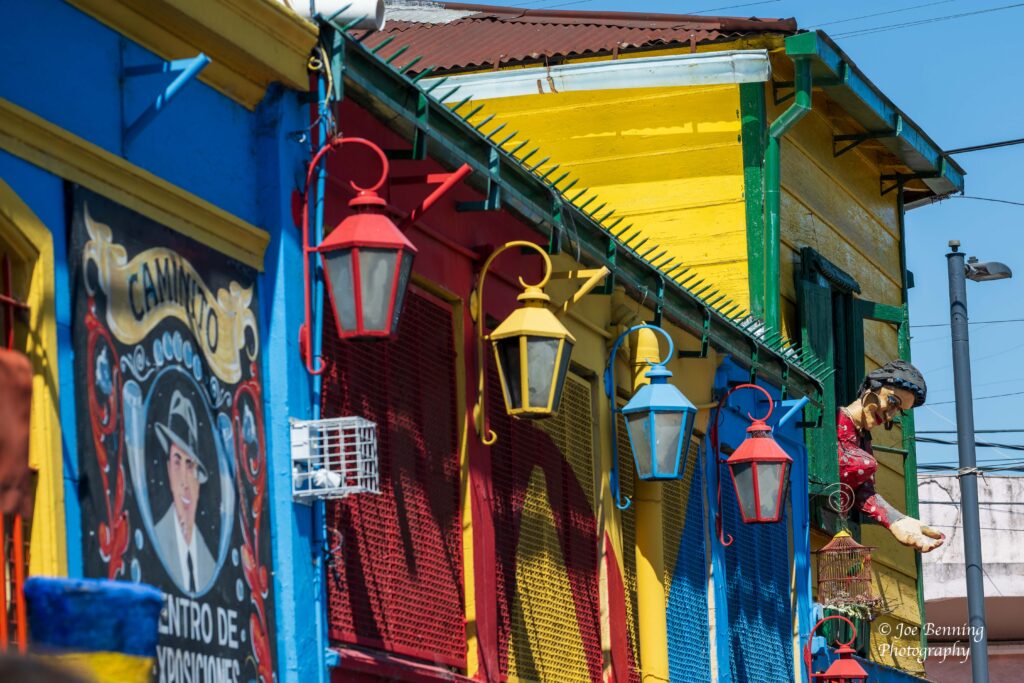
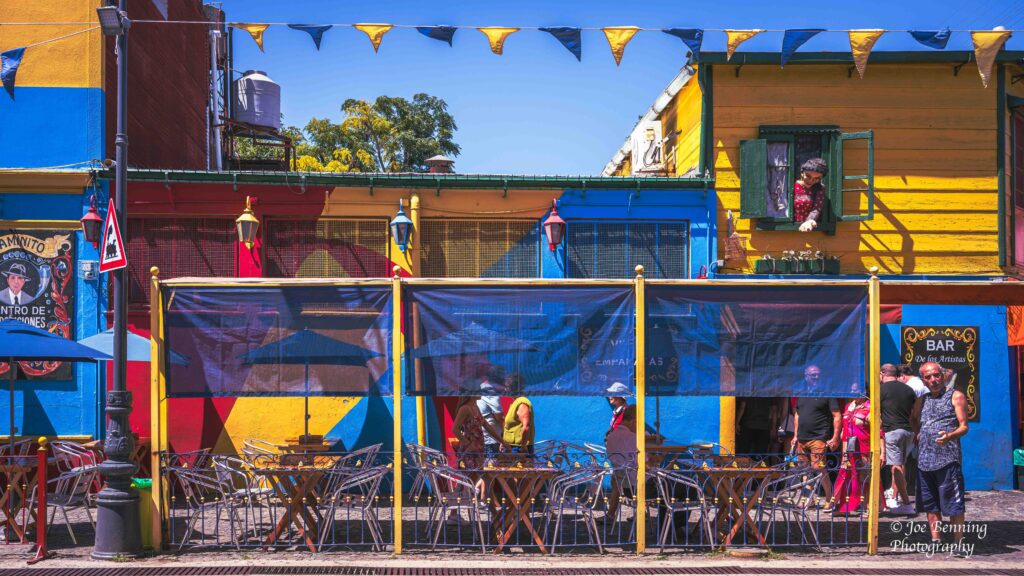
After visiting the Plaza de Mayo, we continued on to visit the La Boca neighborhood. It is known for its colorful houses that people in the area constructed out of whatever discarded material they could find from the nearby shipping port. Many of the buildings are made from the corrugated container material, brightly painted with the colors that were used at the port (reflecting the flags of ships from other countries).
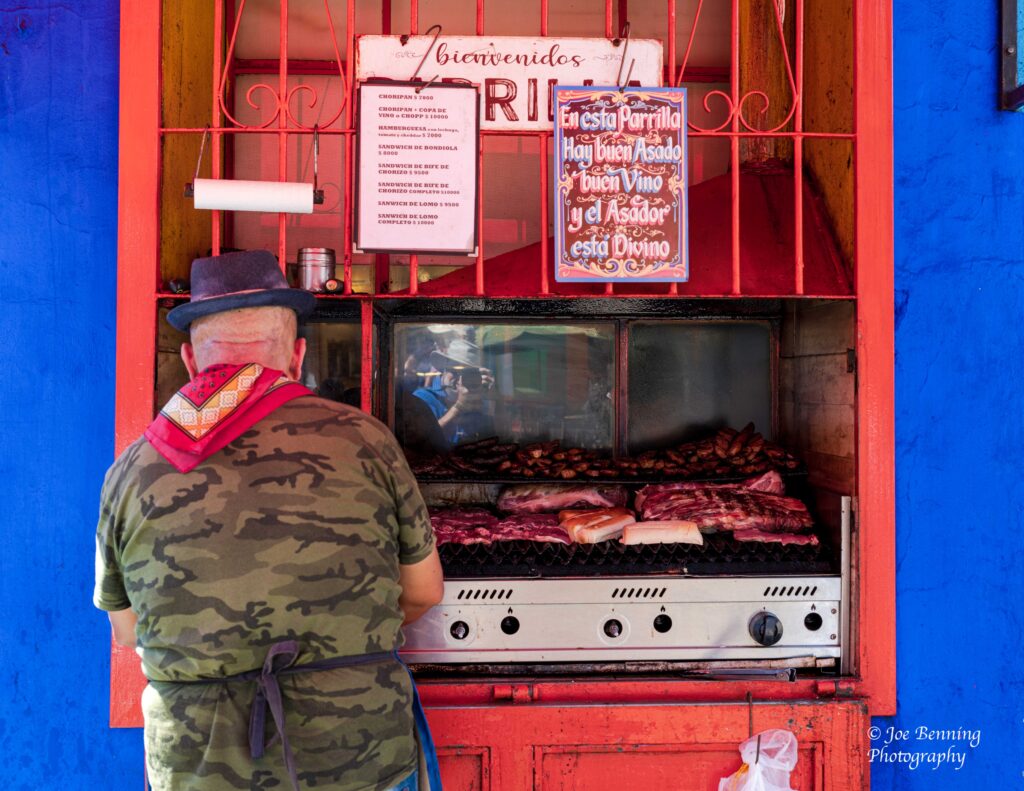
Among other things, we saw a small park in La Boca and a BBQ stand where a local man was grilling various meats.
Man Grilling Meat in La Boca Neighborhood
La Boca is also known for dancers who don traditional Tango garb and convince tourists to fork over $10 to have their photos taken with them. And speaking of tourists, there was no lack of them in La Boca.
Colorful La Boca Neighborhood in Buenos AriesColorful La Boca Neighborhood in Buenos Aries
While the Catholic religion is prominent in Argentina, the nation’s second religion also is huge – fútbol. In the Boca region of BA we visited an enormous complex that houses the arena, training areas, housing and other facilities for the Boca Jr club. The colors of the uniforms and buildings are bright blue and yellow – another reflection of the colors in the flag of Norway that flew on a cargo ship in the port. (It’s a long story that involves 2 rival local teams that shared other colors – there was a match to determine which town would stay in Boca, and the winner agreed to change colors to the flag on the first ship in port the next day.)
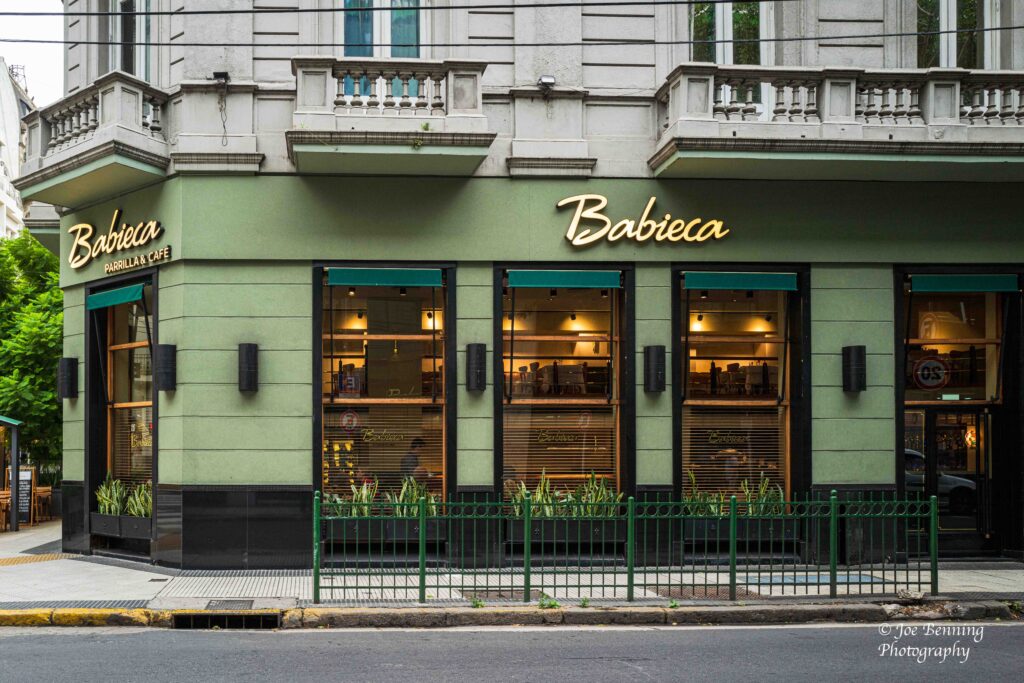
We also spent some time in La Recoleta, an upscale neighborhood with pricey Parisian style townhouses. We ducked into a local shop for some croissants and coffee. The Recoleta Cemetery, final resting place of many famous Argentinians (including Evita) is here in the neighborhood as well.
Family Mausoleums in Recoleta Cemeterys. Eva Peron is buried here.A neighborhood coffee shop La Babieca
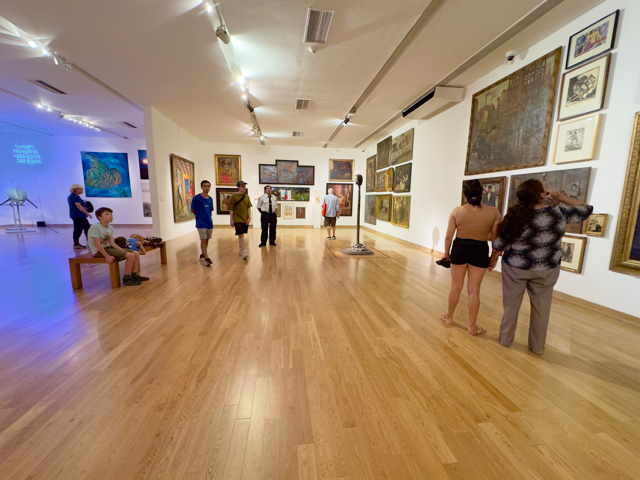
Another visit was to the Museo de Nacional de Belles Artes. It was not too large—but it had an impressive European collection. We saw paintings by Manet, Monet, Degas, Gaugin, Pissarro and Picasso, not to mention many sculptures by Rodin.
Museo de Nacional de Bellas Artes
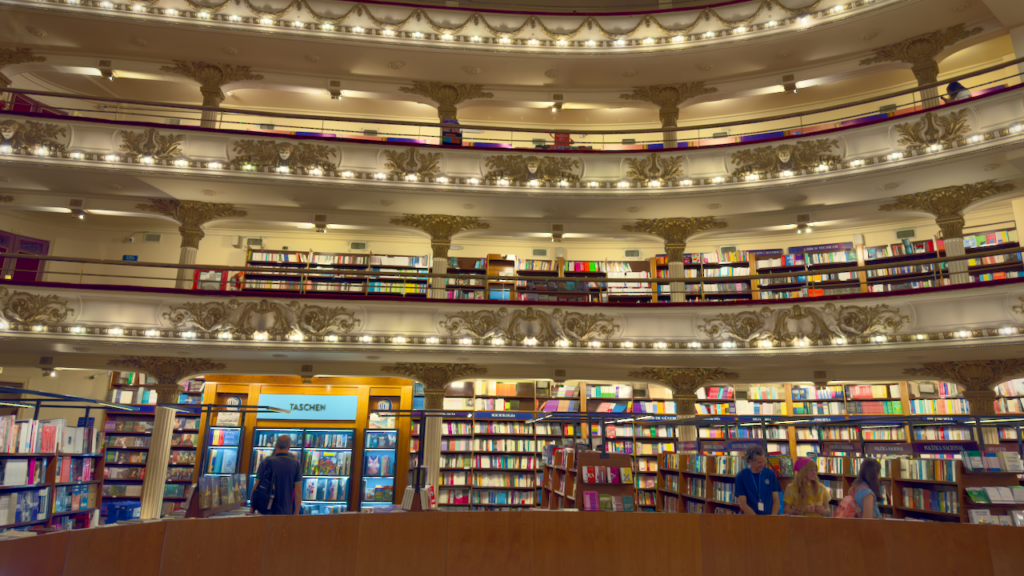
Finally, we visited a famous bookstore “La Atenea” and later stopped for coffee and pan dulce (“sweet bread”). The pan dulce was just too much, and Mary Anne rather adroitly gave it to our Uber driver, who is a fan of it.
Bookstore La Atenea
This is just a small sample of what is available in Buenos Aires, a remarkable global city.
We have just spent a couple of days in Uruguay, that small country tucked in between Argentina and Brazil. The history is complex, as with so many South American countries. For example, there were both Spanish and Portuguese conquerors, and while Uruguay has a relatively small population of indigenous people (mostly Charrúa descendants) the vast majority were killed in the 19th century. But the modern result is different in some respects than other countries – Uruguay today is home to many immigrants from all over the place, and is fiercely protective of individual rights. The economy is strong (by South American standards) and the fútbol team is impressive.
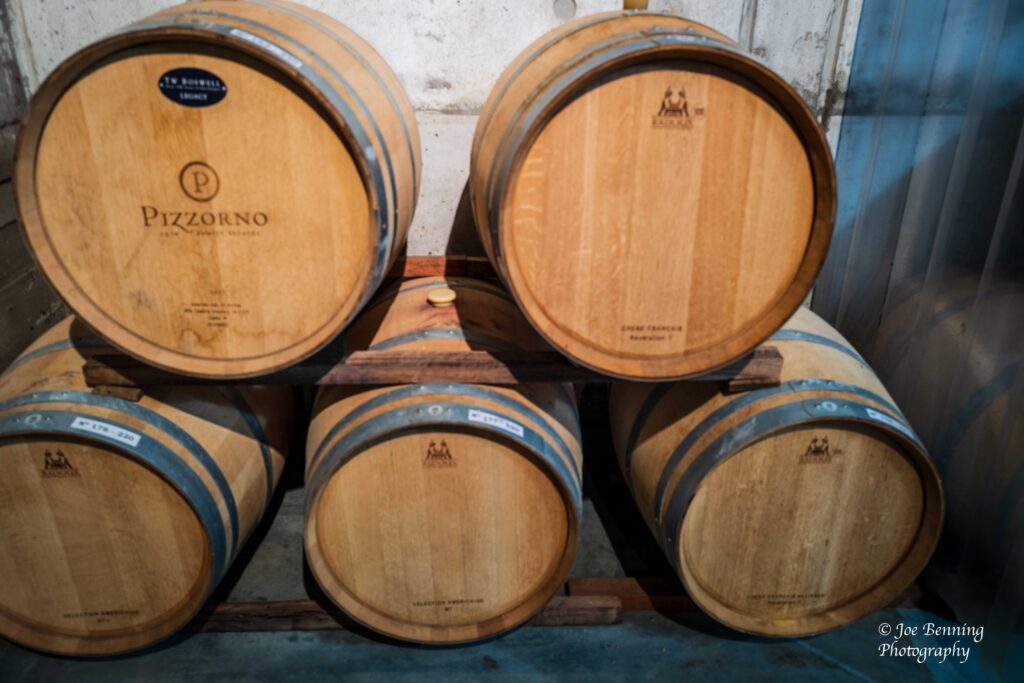
Barrles of Wine at the Pizzorno Winery
Blessed with mild weather, good rain and rolling hills of grass, Uruguay grows lots of cattle and sheep, to say nothing of wine. Cattle outnumber people by at least 3 to 1, and a lot of cattle are exported live, while others are slaughtered in-country and then exported. Big business.
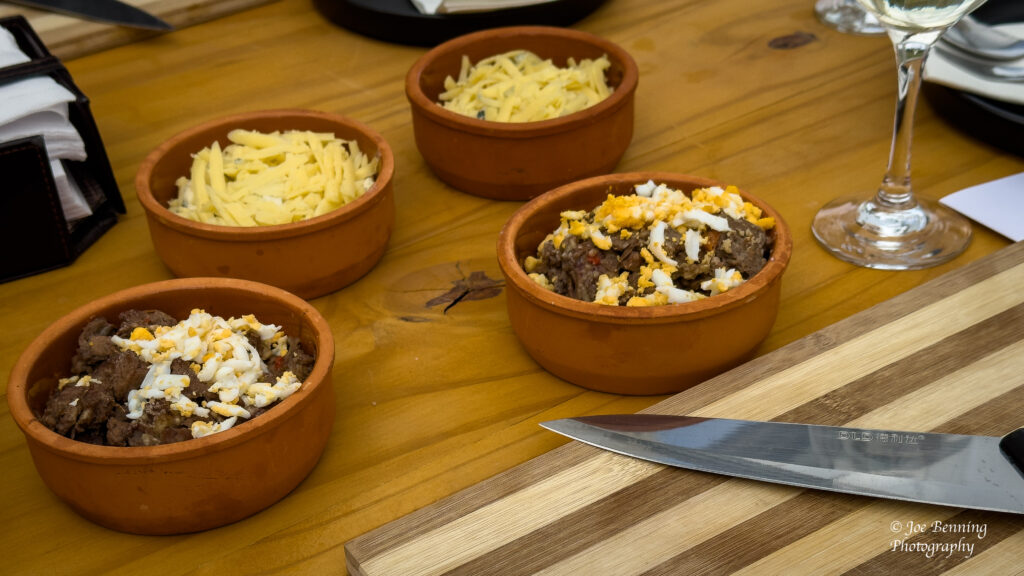
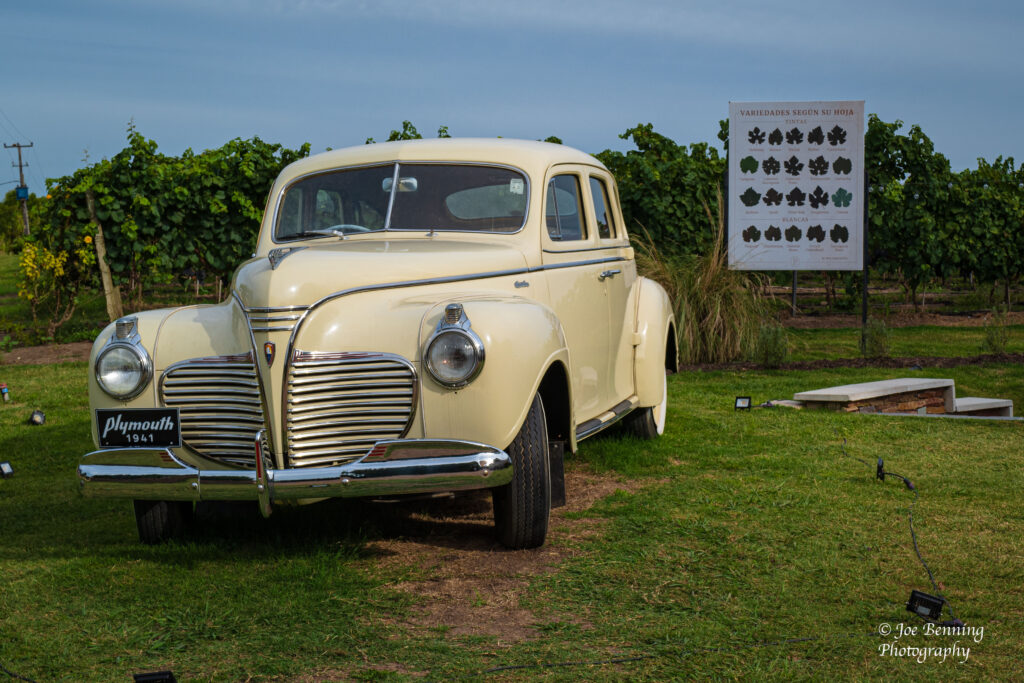
We visited the Pizzorno winery (which for some reason has a 1951 Plymouth parked outside), and participated in a cooking class. We made (empanadas those little pastries filled with virtually anything) and alfojadas (butter cookies stuffed with dulce de leche). Very delicious, especially the red wine from Tannat grapes.
Making EspanadasA 1951 Plymouth
We also spent some time exploring the city of Montevideo, which has a charming old town center, and several synagogues. There is a small but dedicated Jewish population in Uruguay, reflecting various sects of Jews who emigrated from many parts of the world.
Part of an Open Air Holocaust Museum
A very simple, symbolic wall has been constructed along the River Plate in Montevideo – the wall represents the Jewish people, with a break in the wall to commemorate the holocaust, 12 steps alongside to symbolize the 12 tribes, a ramp that expresses hope, large rocks that are symbols of difficulty to be overcome, and other symbols of faith.
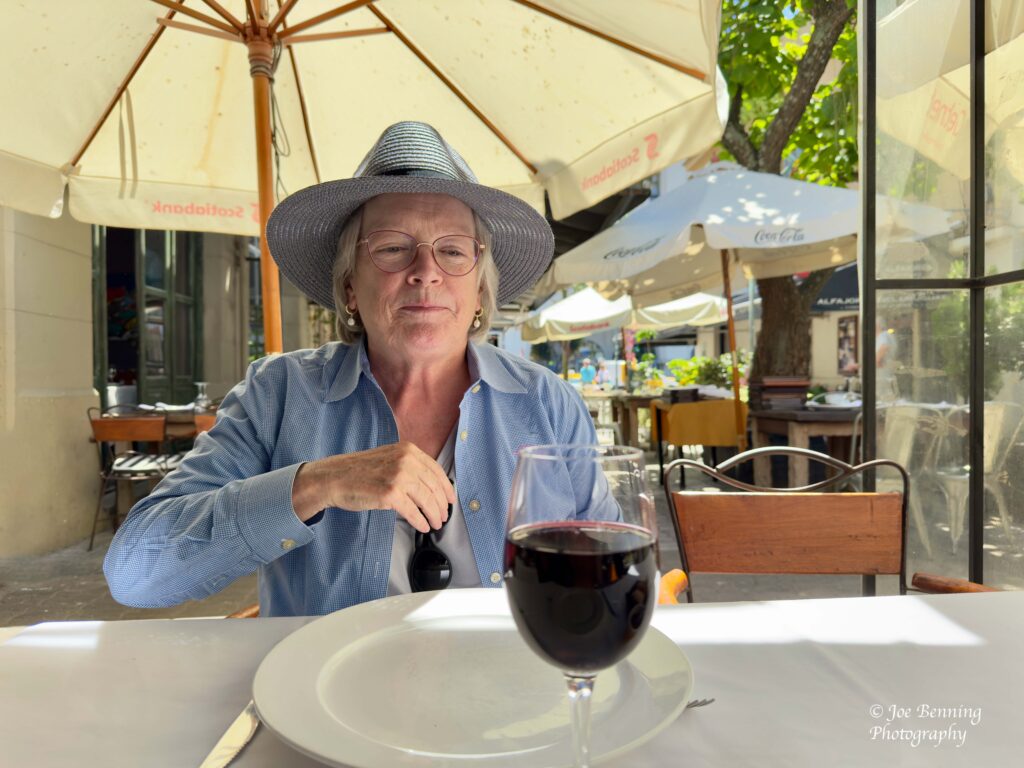
Uruguay (along with Argentina) has a reputation for great steaks, so we went to a restaurant named El Palanque for —what else—steaks and had a very nice time. Uruguay also seems to be a popular vacation spot for Argentines as well as others, and we can see why.
Mary Anne at El Palanque
Tomorrow we go to Buenos Aires for a few days. Looking forward to more interesting history and a beautiful city!
We have been pretty busy in the last several days; We made our first port of call stop in Argentina when we went to Ushuaia. Then we proceeded on to the Falkland Islands where Britain fought Argentina in a short war in 1982. Finally we stopped in Puerto Madryn.
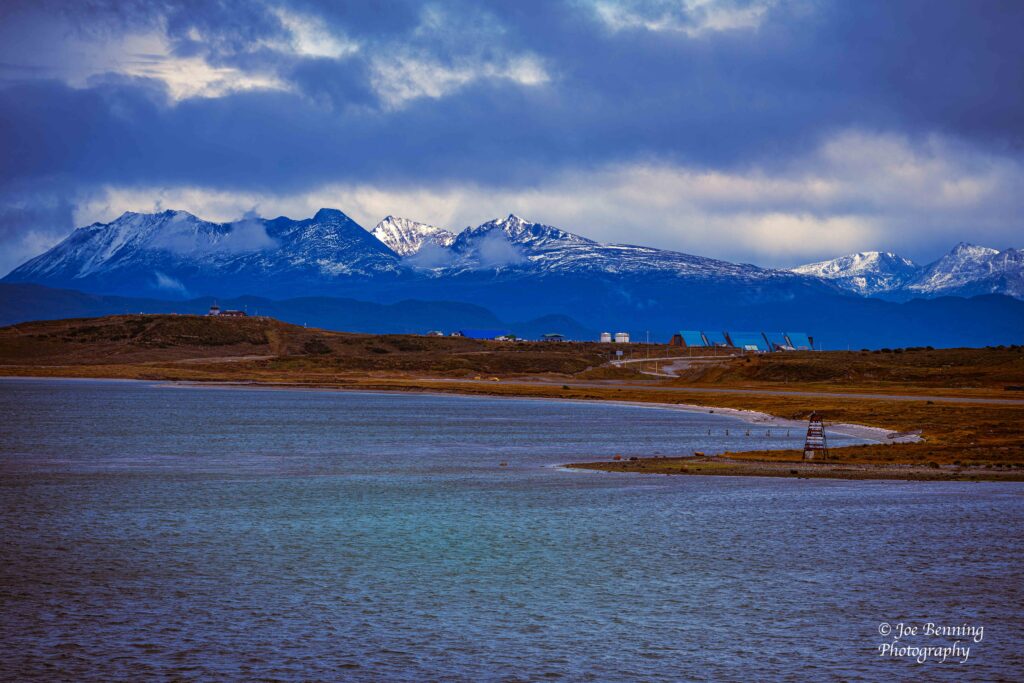
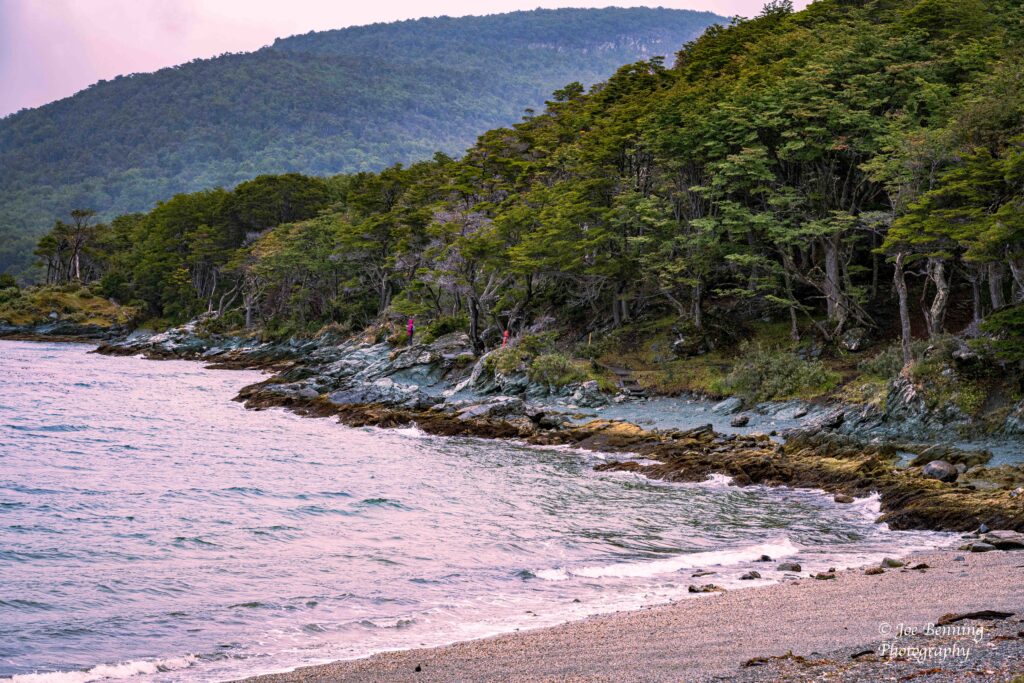
Ushuaia with Snow Capped Mountains in the background
Argentina and Chile have an ongoing disagreement over bragging rights to having the most southern city in the world. Chile claims it is Punta Arenas (pop 145,000). Argentina claims it is Ushuaia, which in fact is further to the South. However, Chile says, Ushuaia isn’t large enough to be considered a city, therefore.…However, the population of Ushuaia is over 80.000, which seems kind of substantial to me. Anyway, Argentina and Chile always seem to be fighting over something, so take your pick.
A stopping point in Ushuaia: Lago Fagnano
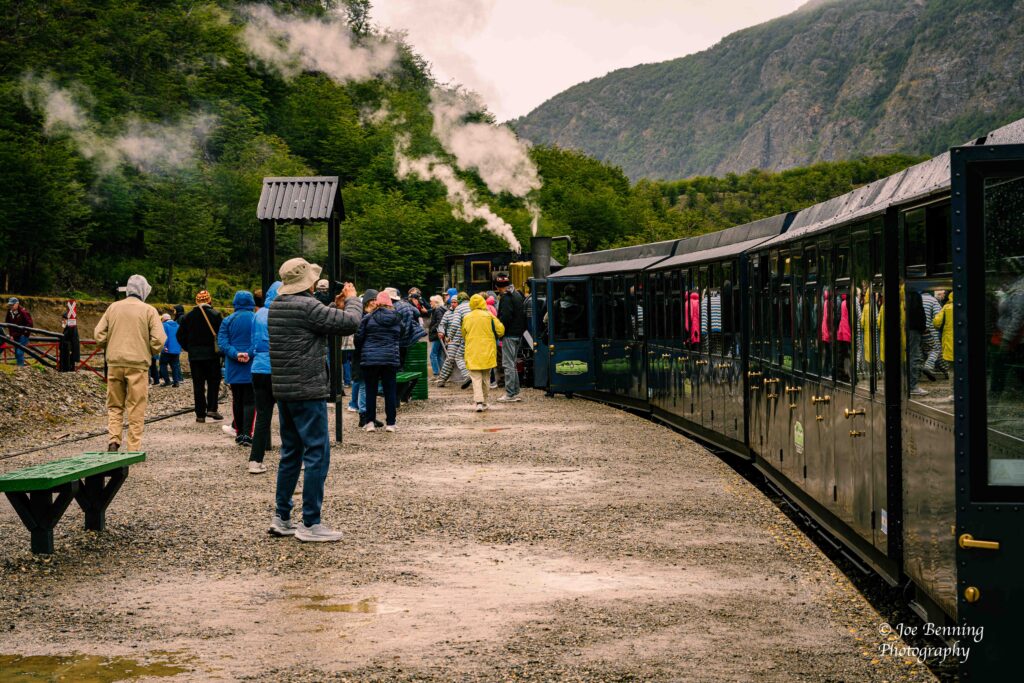
We also took a train trip named Train to the End of the World. Everything in Ushuaia is named …End of the World. Then again it travelled through beautiful countryside, if a little cramped.
Train to the End of the World
Then again there is the Falkland Islands. Argentina fought a war, albeit a short one, with Britain over the archipelago in 1982. It only takes a short trip to the Falklands to understand that the Falkland Islanders consider themselves to be British through and through.
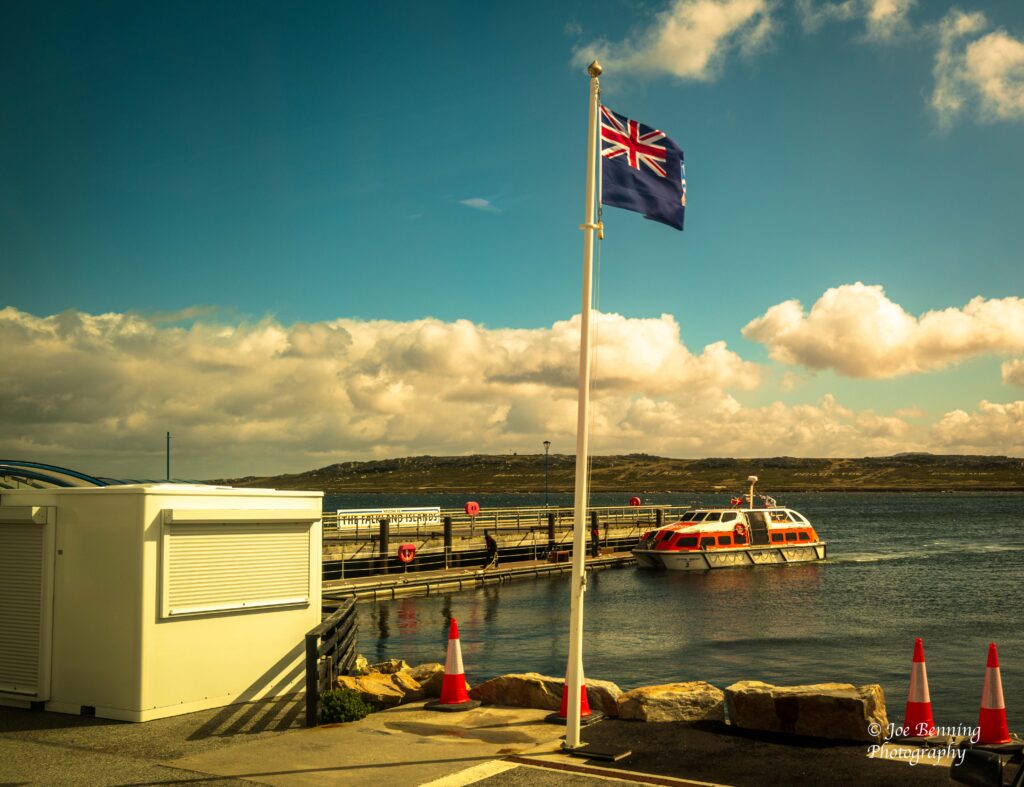
Union Jack Flying over Falklands Dock
The display of the Union Jack is routine and streets are named after Margaret Thatcher everywhere. The language, accents and customs of the people are undeniably British. In fact, a couple of years ago they had a referendum in which 98% of the people voted to remain a territory of Britain.
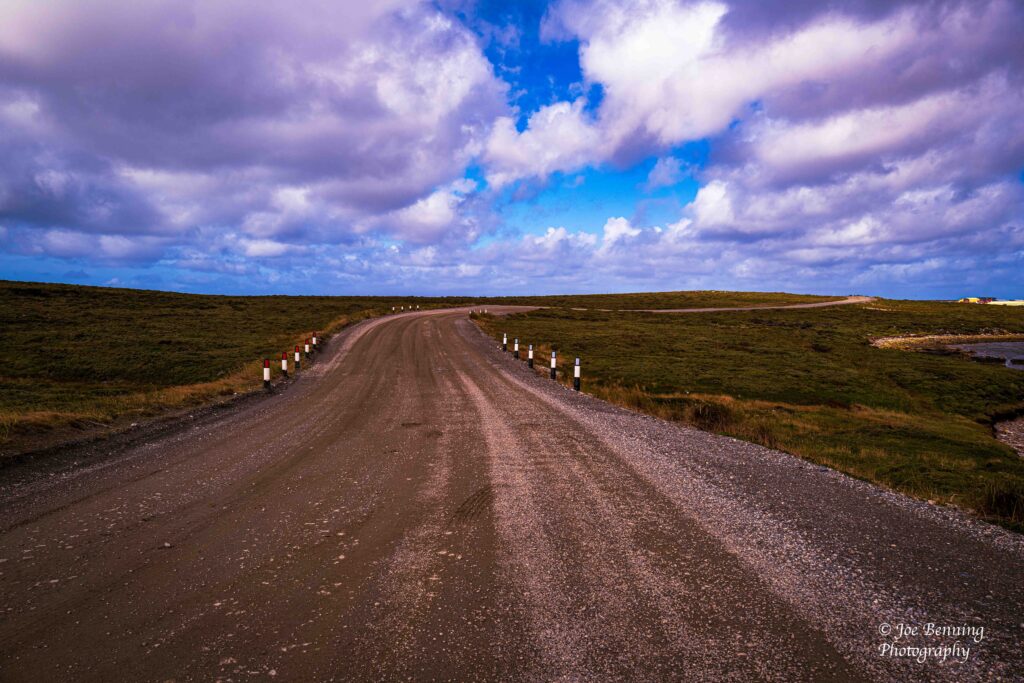
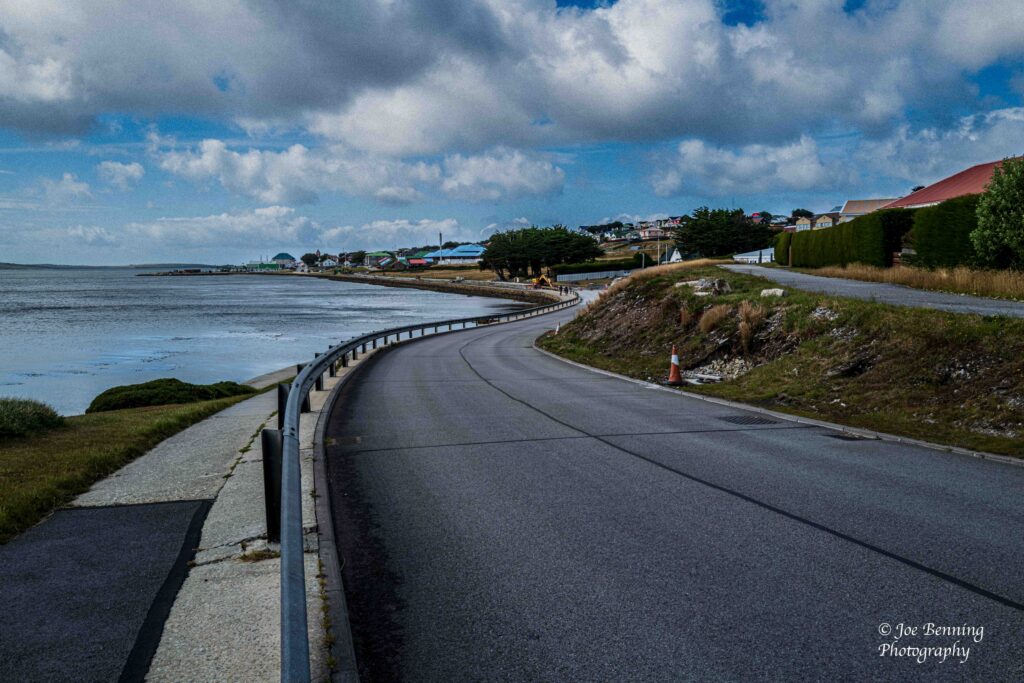
Falkland Islands LandscapeLeading line on the Coast by Stanley in the Falklands
For its part, Argentina still considers itself to be the rightful sovereign over the Falklands. Argentinians refer to them as Malvinas, I suppose as a way of asserting a continuing claim. Nobody appears interested in stirring up any serious trouble over the issue.
Argentina is in the early stages of a huge social experiment. Juan and Eva Peron have had a huge influence on the country ever since the 1940s. Their legacy is almost certainly the cause of Argentina’s disastrous public finances and semi routine trips in and out of bankruptcy. In the last election however, Argentinians voted for Javier Milei, a self-described anarcho-capitalist.
Milei has taken steps to fix Argentina’s public finances, deregulate industry, reduce inflation and dollarize the economy. In the event, the locals nicknamed him “El Loco”. It remains to be seen how much of his agenda he will be able to achieve and what the effects will be. Stay tuned.
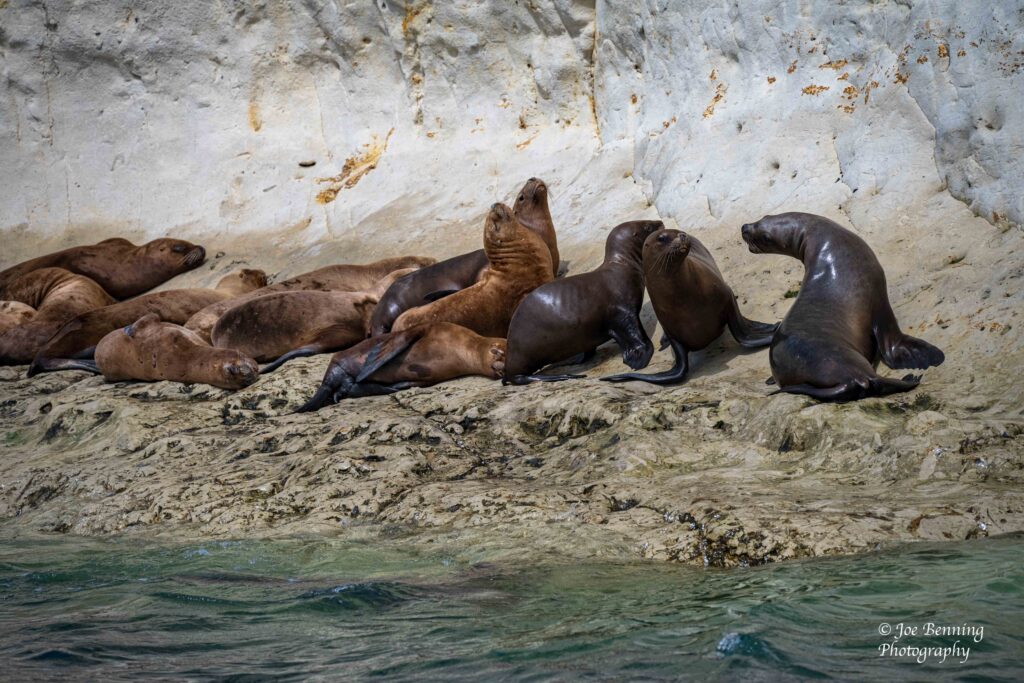
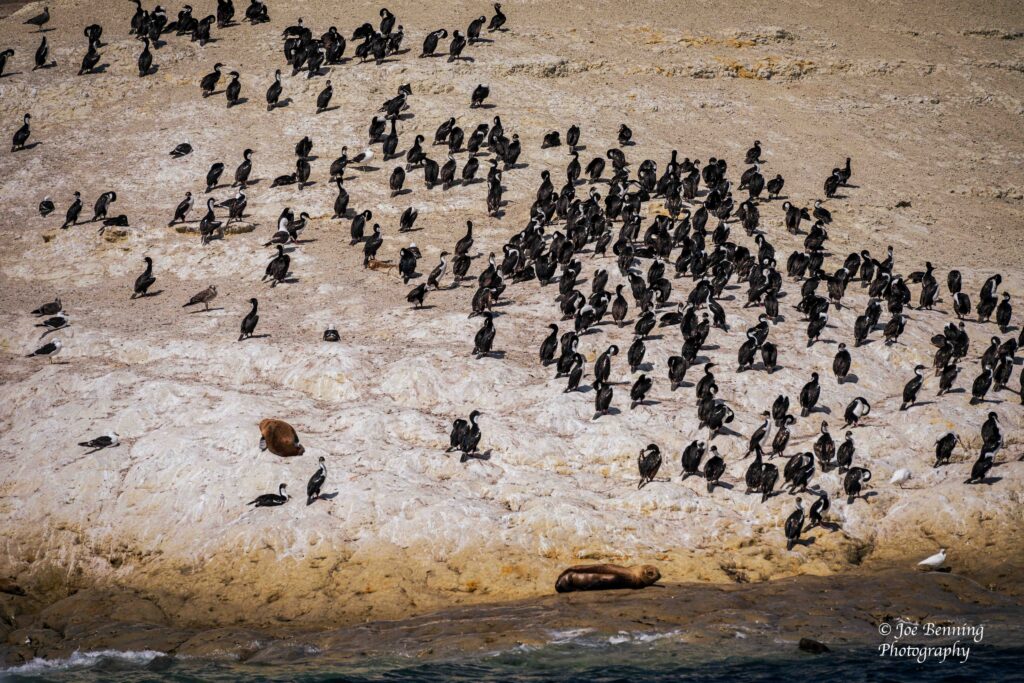
Next on the agenda was a short boat ride from the docks of Puerto Madryn to the Penninsula Valdes, a UNESCO World Heritage Site. There we did some for dolphin watching, although the dolphins were hard to capture on film. Nevertheless we did see quite a few sea lions and Cormorants.
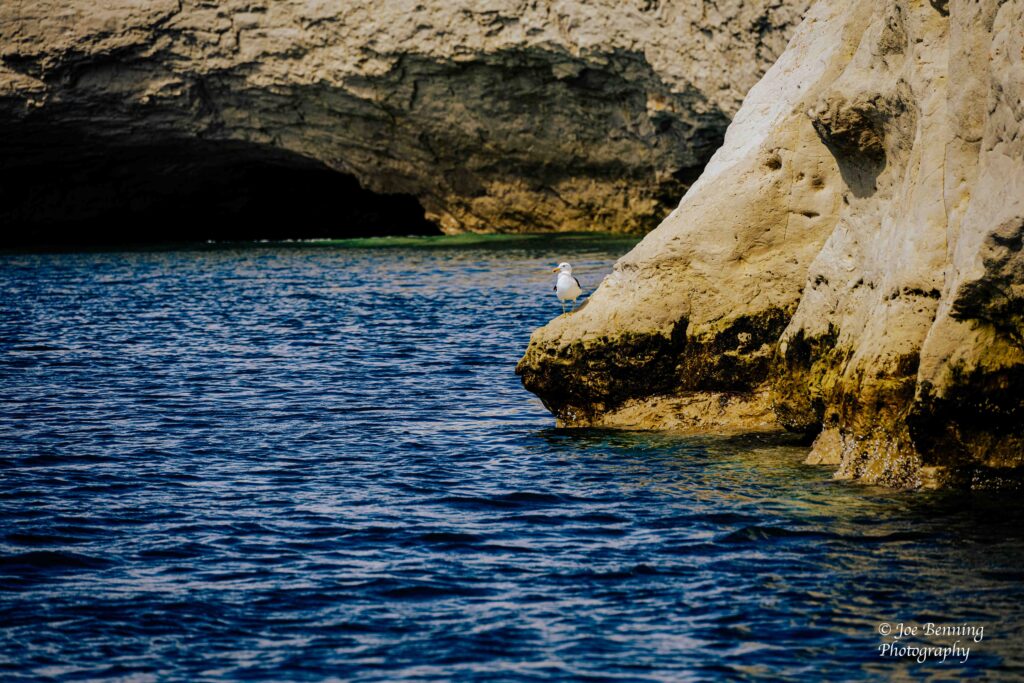
Sea Lions Sunning ThemselvesCormorantsBird by a Cave Entrance
One of the most interesting things about this trip has been the variation in atmosphere throughout all we have seen of South America. There have been so many immigrants from all parts of the globe that we constantly find (among the sheep ranches and the mining towns and the agricultural valleys and the glaciers) towns with distinctly European shops, architecture and vibes, and foods with Asian roots and influences. It makes for a feast for the senses.
Now it’s on to Montevideo Uruguay before heading back to Argentina and Buenas Aires.
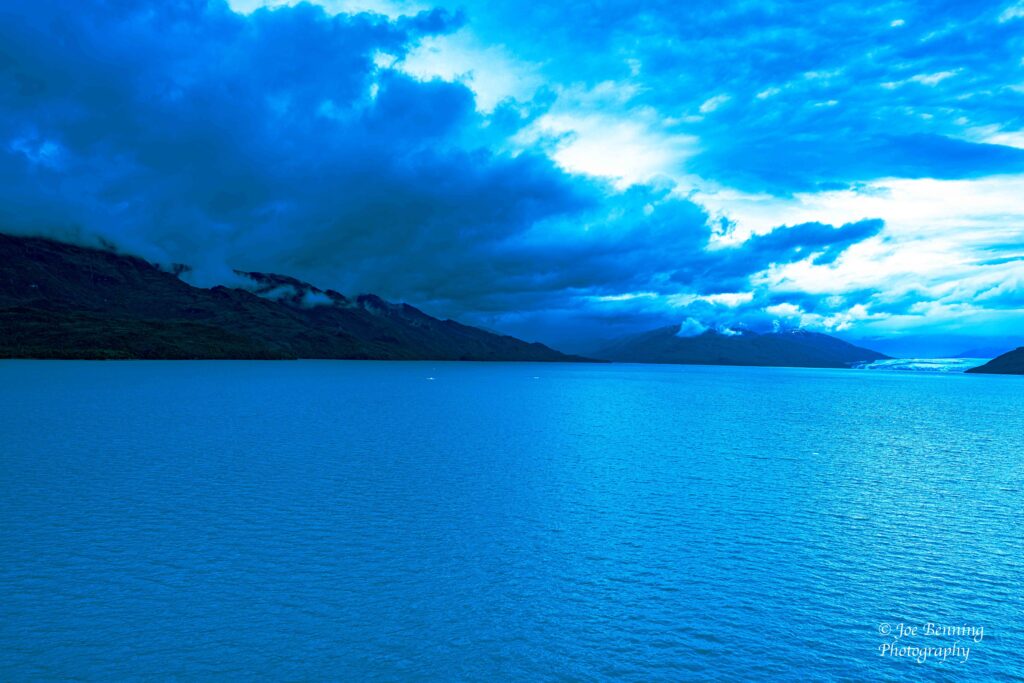
As we make our way out of Chile, we are going through the Beagle Strait (yes, that Beagle Channel named after the boat Charles Darwin used).
Leaving Chile by the Magellan Strait and Going through the Beagle Channel
First though, we paid a visit to Punta Arenas. Punta Arenas claims to be the southernmost city in the world. Argentina begs to differ and cites Ushuaia, where we are headed next. But, as Chile points out, Punta Arenas is a city—it has a population of about 150,000 while the population of Ushuaia is only a few thousand. Apparently Chile and Argentina will always find something to fight about.
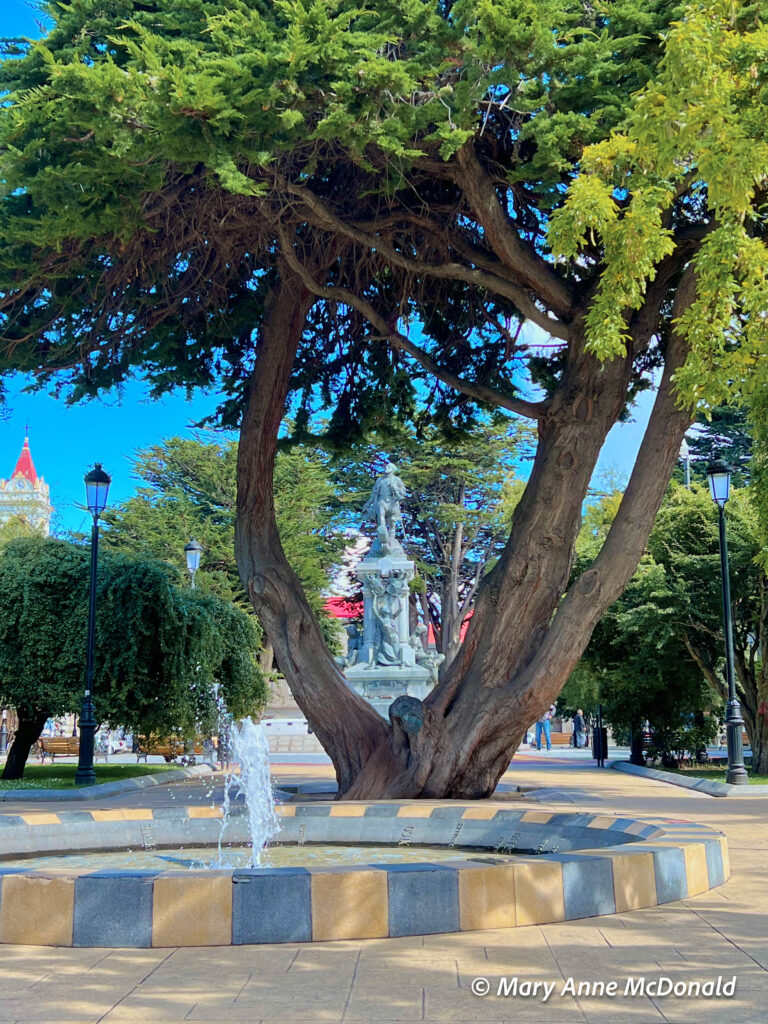
Main Square in Punta Arenas, Chile
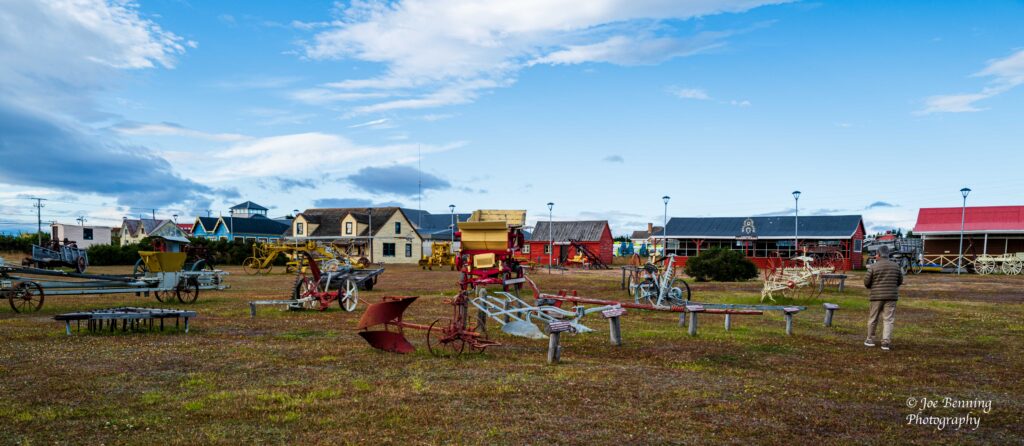
While we were in Punta Arenas we visited an outdoor museum of equipment from a sheep farm, which was big business back in the late 1800s and early 1900s. Sara Braun and the Menedez family helped put Punta Arenas on the (European) map with their business acumen with respect to sheep farming. Then there was the discovery of gold and a gold rush was on.
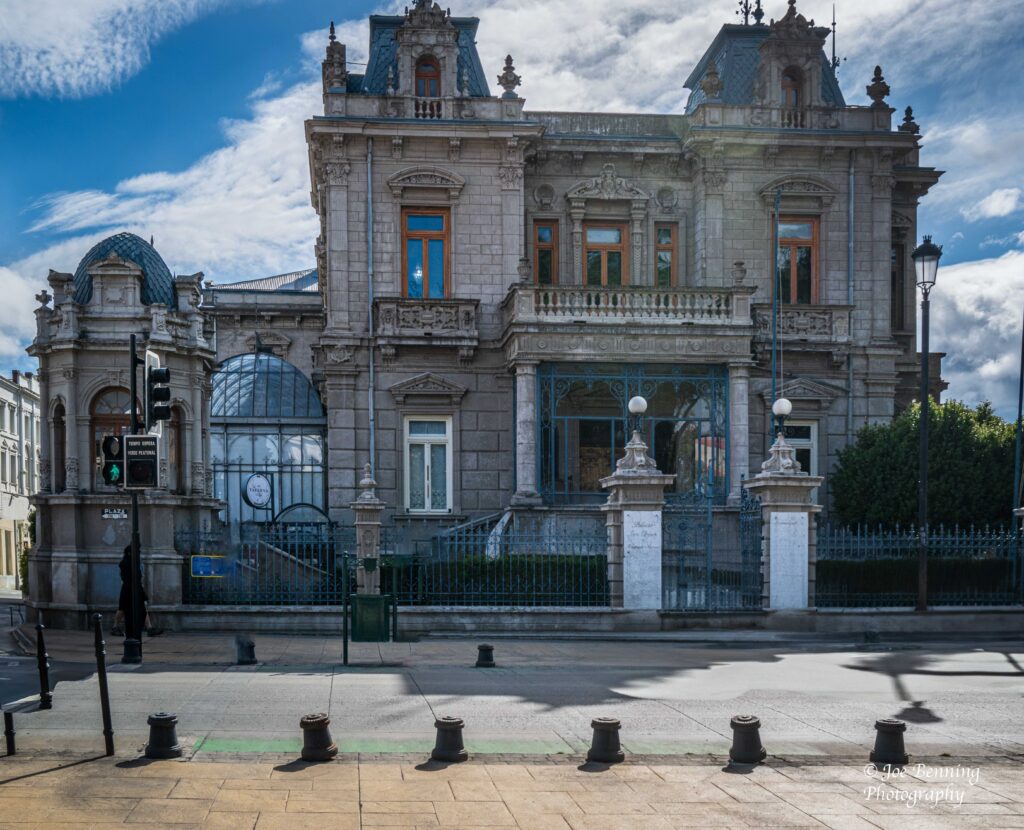
Outdoor Museum of Farm Equipment from the estates of the Menendez and Sara Braun familiesPalace of Sara Braun in Punta Arenas.
While Sara Braun & Co. were instrumental in the creation of Punta Arenas thriving economy, later scholarship uncovered their role in the genocide of the indigenous Selk’nam people.
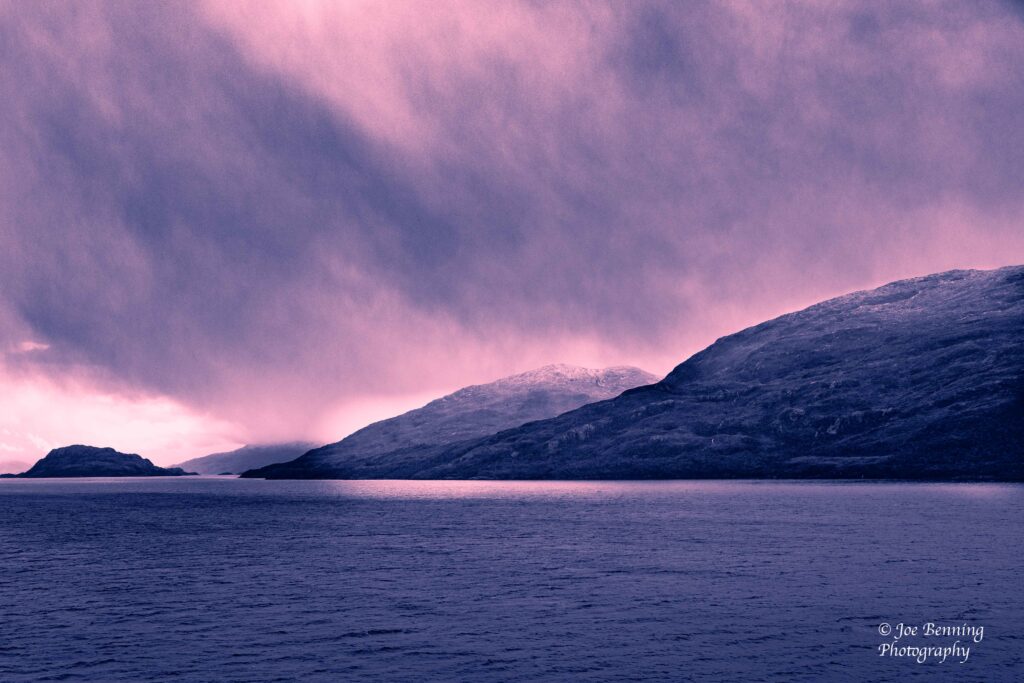
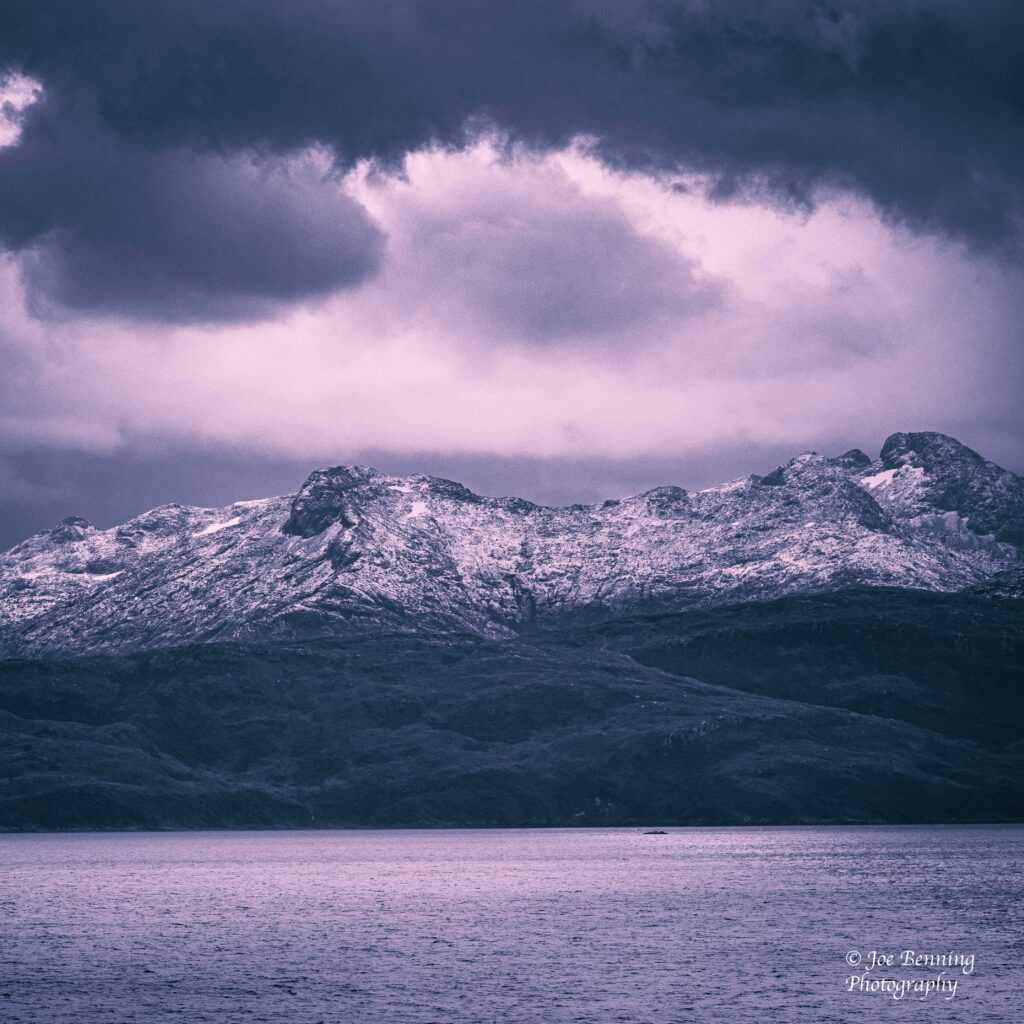
Snow Capped Mountains after leaving Punta Arenas
Anyway, we are on our way through various straits (including the Magellan strait) to Argentina where Ushuaia is the first stop. Shortly afterward we are scheduled to stop in the Falkland Islands, although that appears to be dependent on weather conditions.
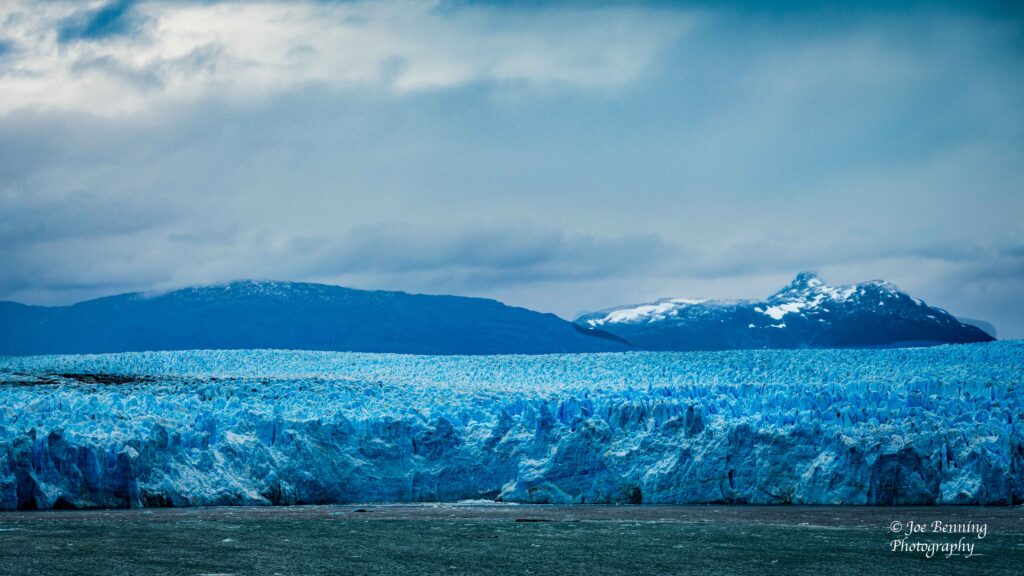
The Pio XI Glacier, also known as the Brüggen Glacier, excluding the Antarctic, is the largest but not the only glacier in South America. It spans over 60 kilometers (or 37 miles). An exact count of the number of glaciers is hard to come by–but they are concentrated around the border of Chile and Argentina. The estimated number of glaciers there is around 4,000.
The Pio XI Glacier
Depending on whom you ask, the Pio XI Glacier was named after the Pope by Spanish explorers shortly before WW1. Others insist it is the Brüggen Glacier, named after the German explorer. Either way, it’s the same glacier.
Pio Xi Glacier in the Distance
We sailed through some fjords in Patagonia so we could see it. Needless to say, Crystal being Crystal, there was a lecturer on board with a PhD in oceanography. The lecturer (Ed Sobey) explained how glaciers are formed, the different types of glaciers and interesting facts about the particular glacier we saw. Altogether a fascinating event.
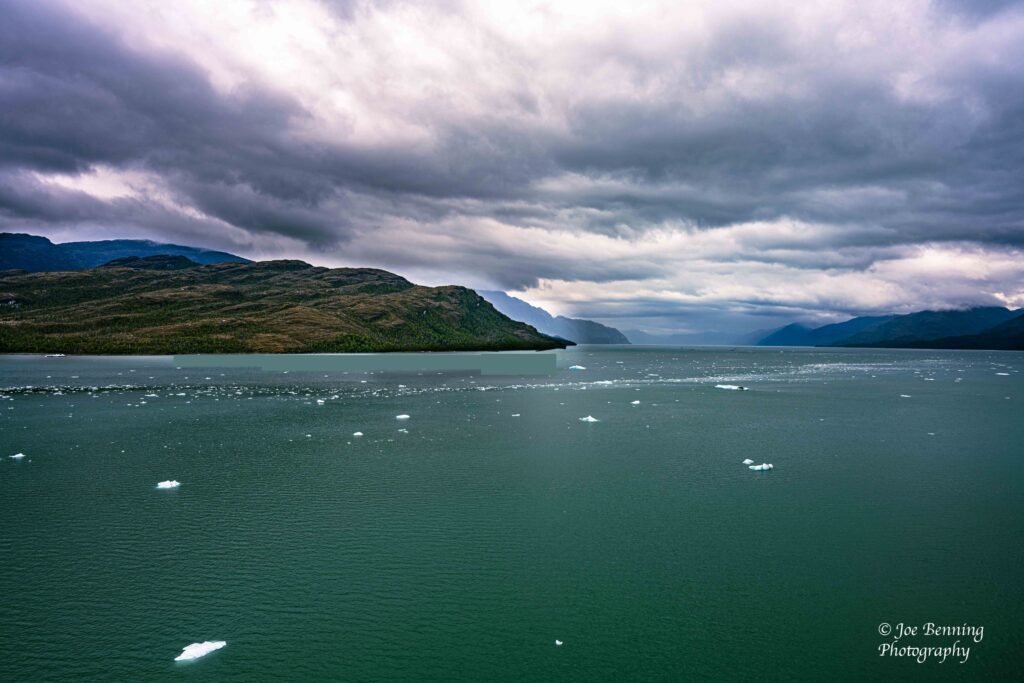
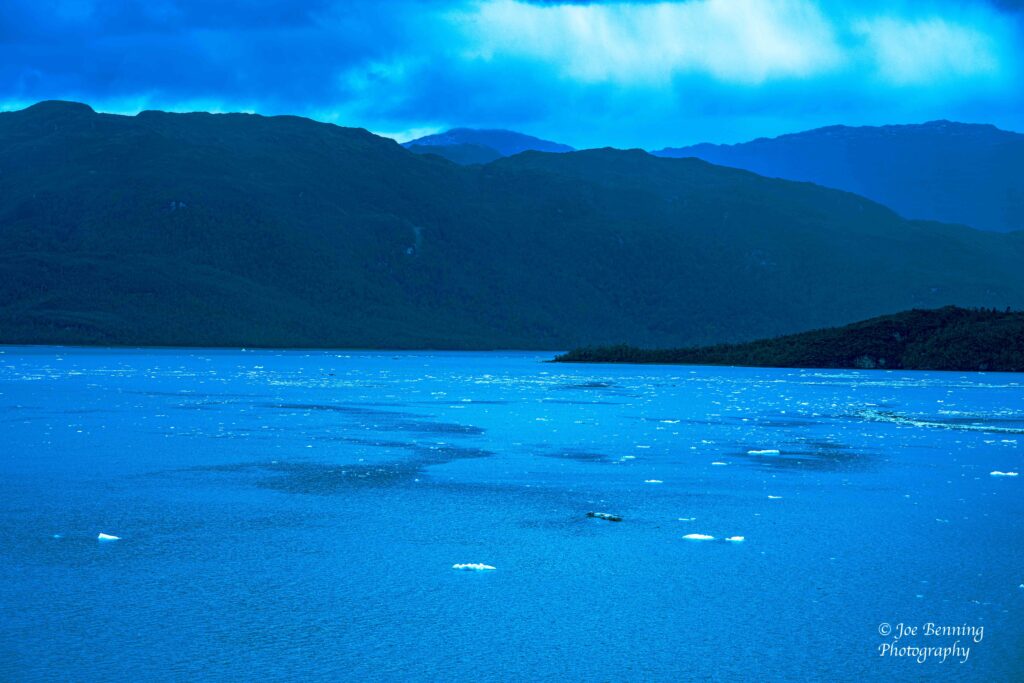
Fjord with Ice Chunks from the Pio XI GlacierFjord with Ice Chunks from the Glacier
We are due to dock in Punta Arenas tomorrow, which will be our last stop in Chile. Then it is on to Argentina.
It has been about a month since we embarked on the ship and the time is flying by. And soon we will be seeing the last of Chile. Over the last few days we visited both Puerto Montt, Chile and Castro, Chile. The last place we plan on visiting in Chile will be Punta Arenas and then it is on to Argentina.
Harbor at the island of Castro Chile
On the 5th of February we went to Puerto Montt which is a gateway to the Andes mountains and the Patagonian fjords. It turns out that substantial numbers of German immigrants settled there several hundred years ago. So among other things we got to visit a (relentlessly) cute Alpine village (named Frutillar) which the town maintained in the traditional style.
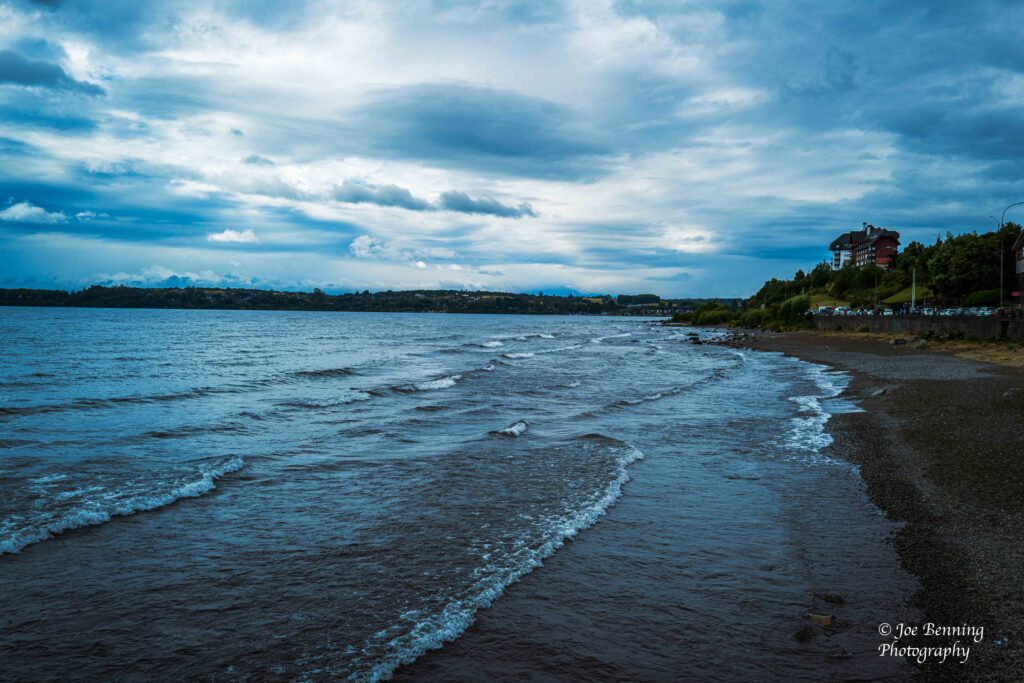
Coastline by Puerto Montt
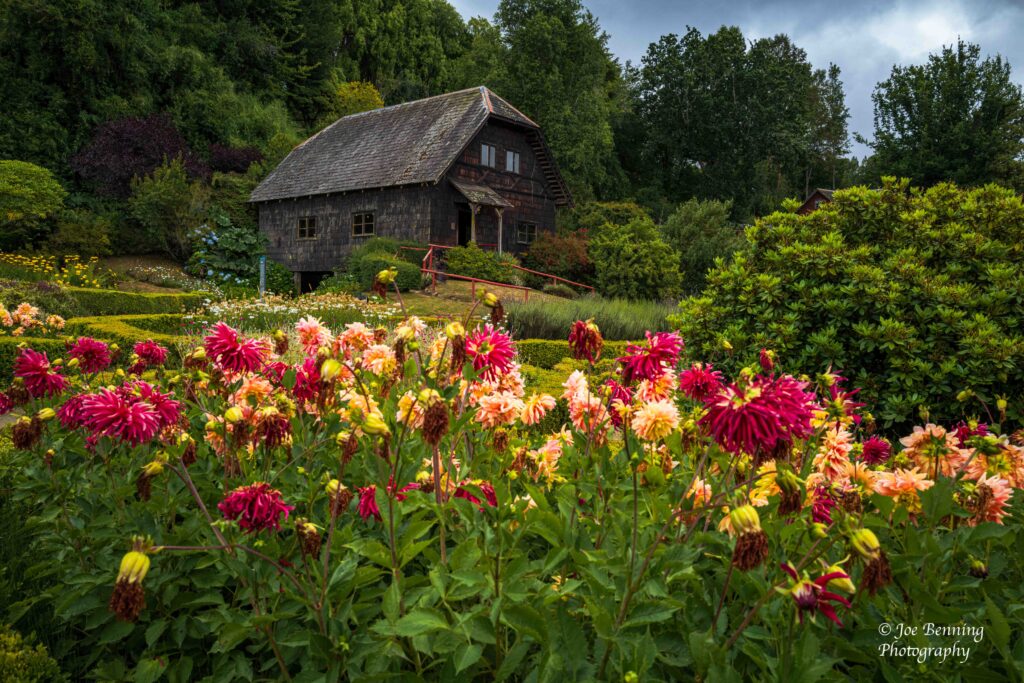
Among other things, it featured Germanic restaurants and a German museum complex with several buildings, exhibits and gardens.
German Museum Grounds in Puerto Montt
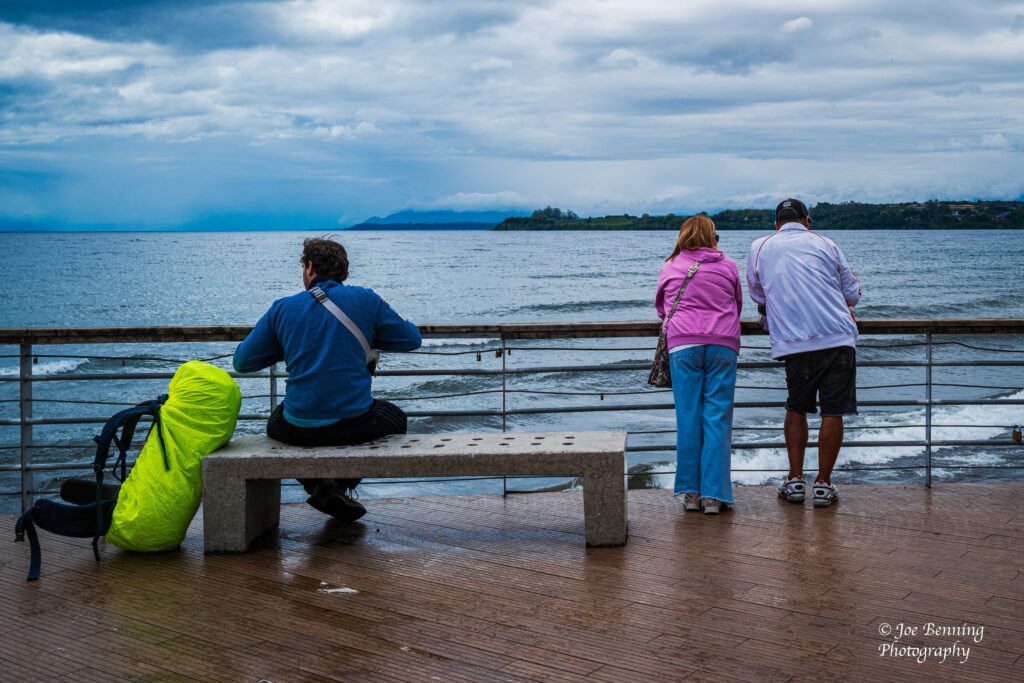
After spending some time in and around the museum grounds we then made our way to Puerto Varas, which as it turned out was a resort area that had rental cabins, big name hotels and beachfront properties. In other words it was a big vacation spot, in spite of the fact that it rains there—a lot. Nevertheless the lake district was definitely worth a look.
Coastline at Puerto Montt
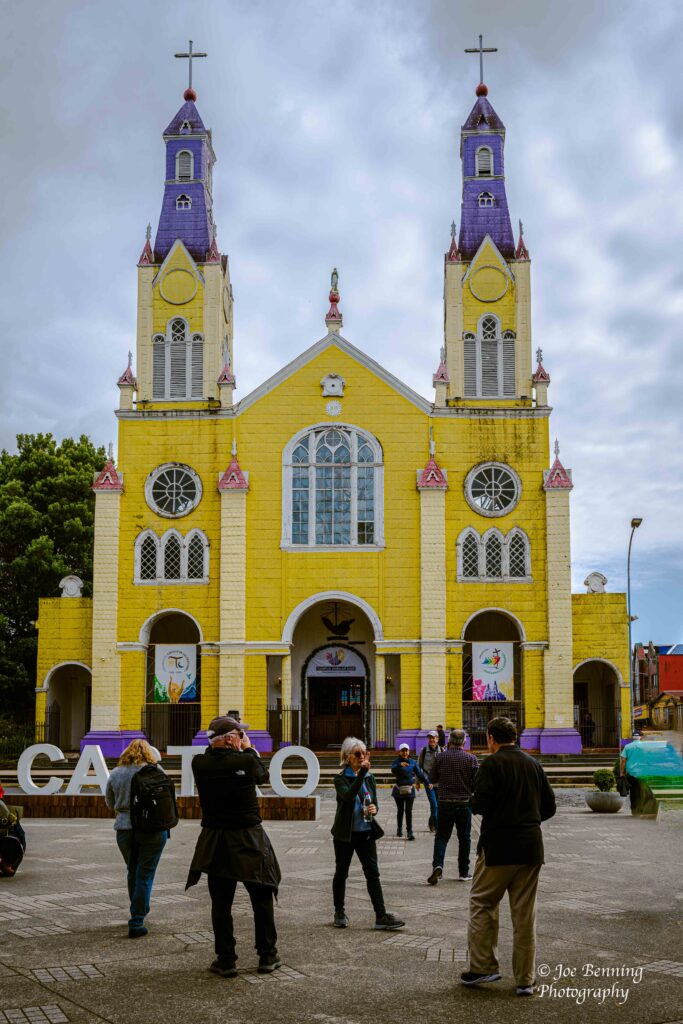
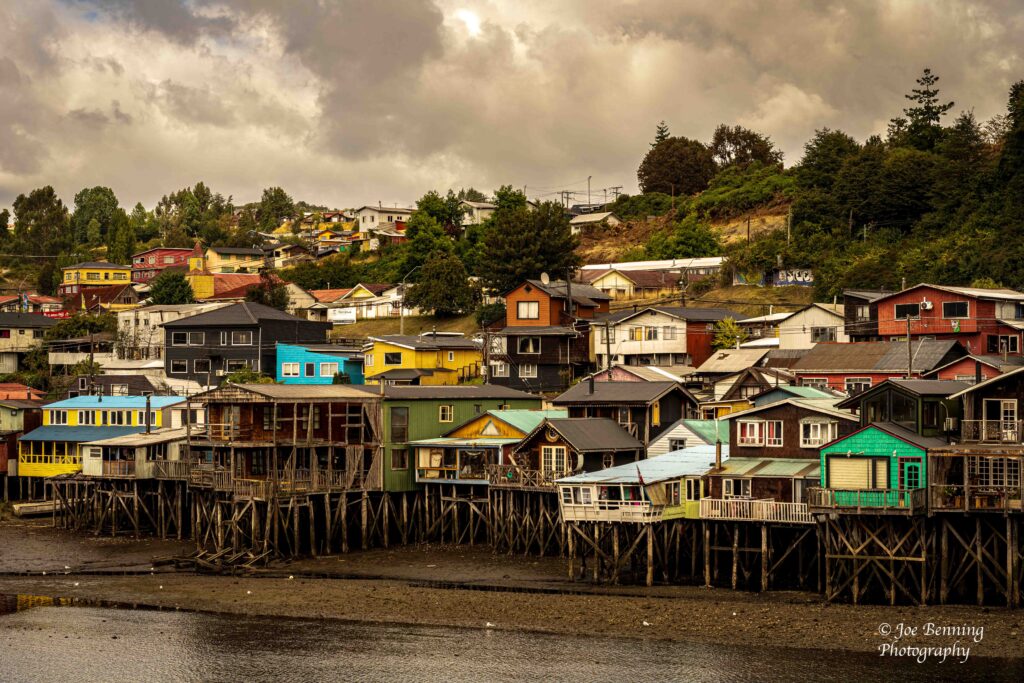
The next day it was off to do a walking tour of Castro Chile. The town is famous for it colorful houses and for its houses built on stilts—to shield the houses from high tide. It is also famous for its plethora of churches made with wood, of which Iglesia de San Francisco (which we visited) was one.
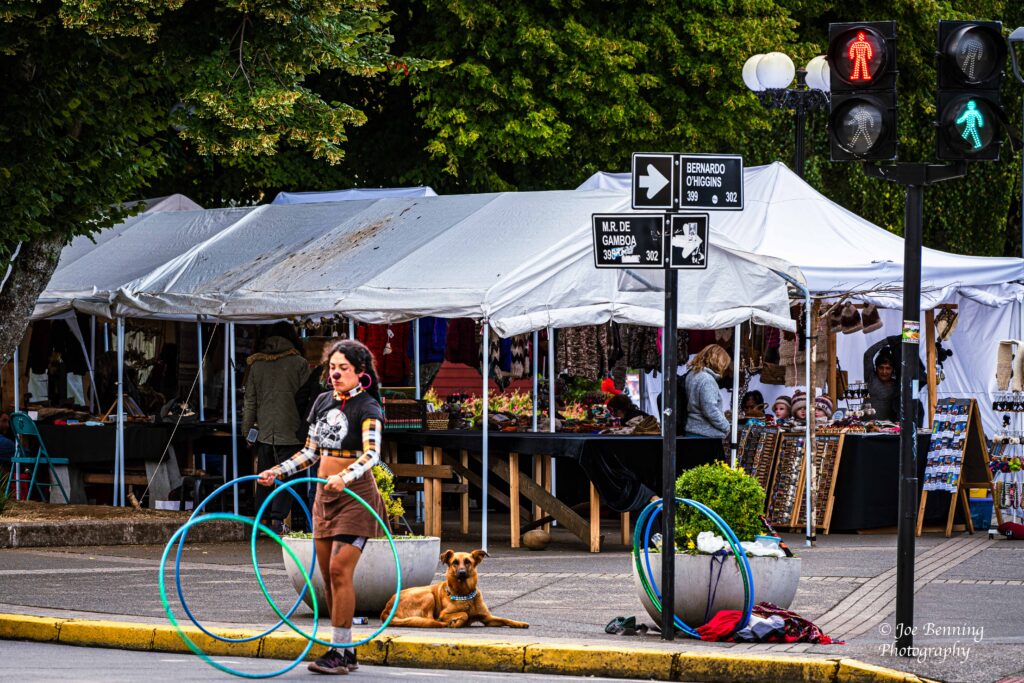
Iglesia de San Francisco, CastroStreet Performer in Castro Chile
I should also mention that the church was aptly named inasmuch as the city, like San Francisco California, was extremely hilly. So the walking tour turned out to be quite a hike.
Famous Houses on Stilts
That said we will wind up in Punta Arenas on Monday, and then we take off for Ushuaia, Argentina where we expect to land on Wednesday.
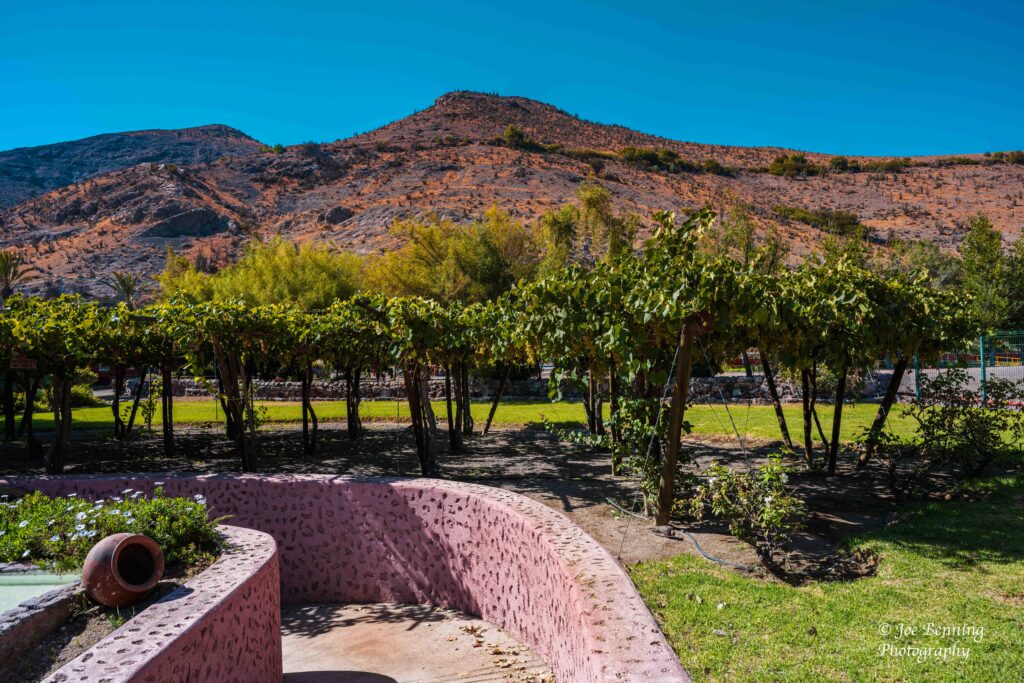
On Saturday we arrived in Coquimbo, Chile. We had a great tour to the Elqui Valley (pretty much due west from the coast). Chile is a very long, skinny country, and in about 90 minutes our drive brought us to the foothills of the Andes, very close to the border with Argentina.
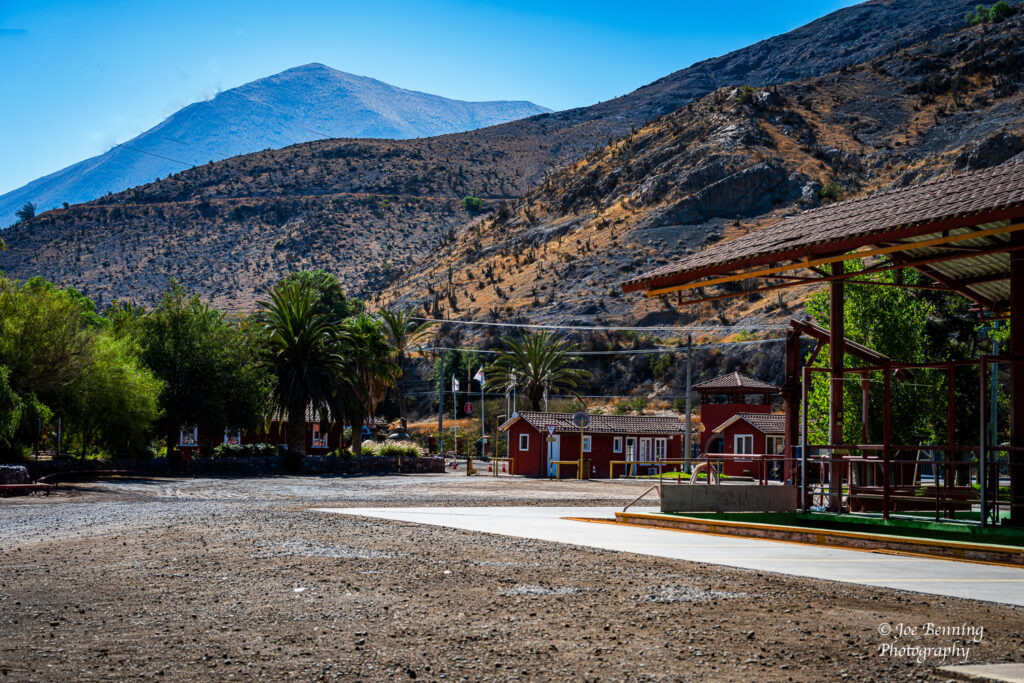
Photo of the Foothills of the Andes
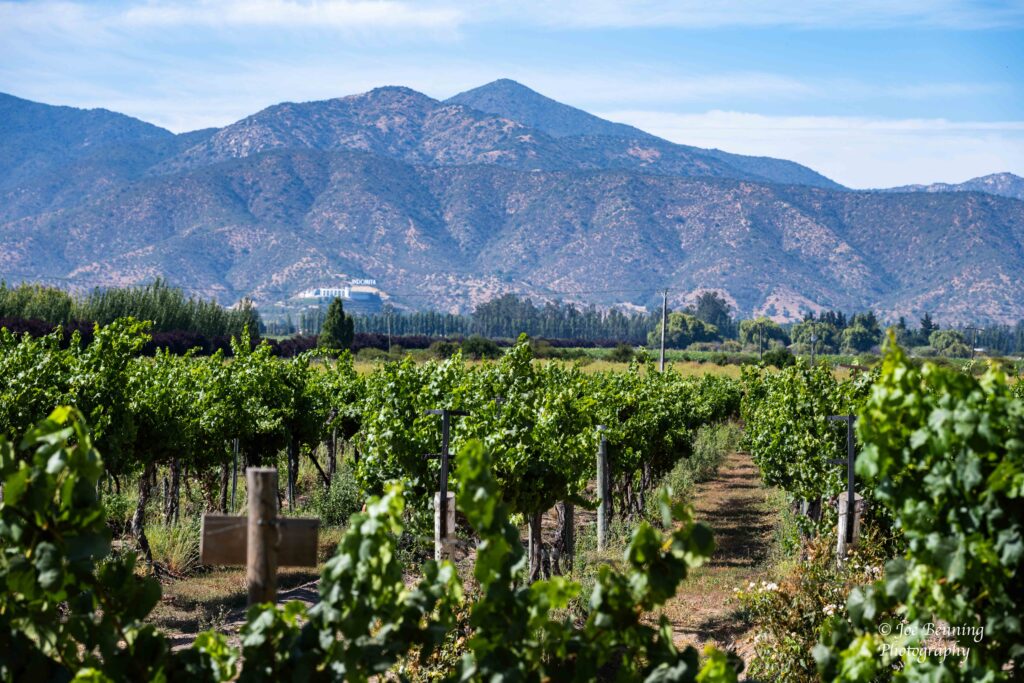
Grapes for pisco alcohol are grown in this area, and we toured a very pretty pisco vineyard and distillery (by the way, both Chile and Peru claim ownership of the famous Pisco Sour drink, which is a delicious, tart treat).
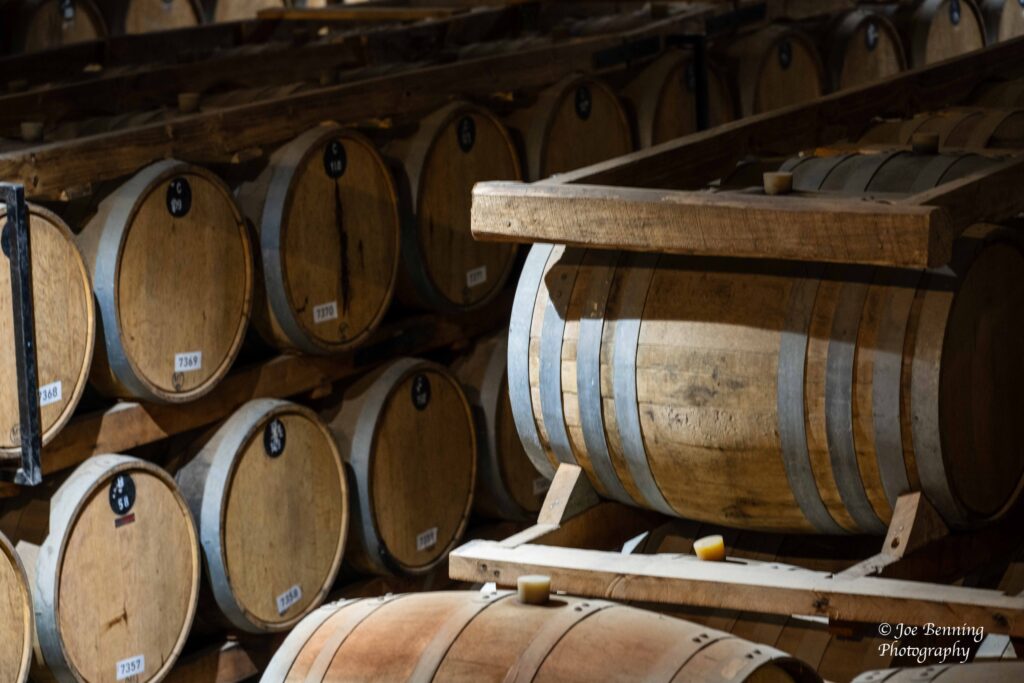
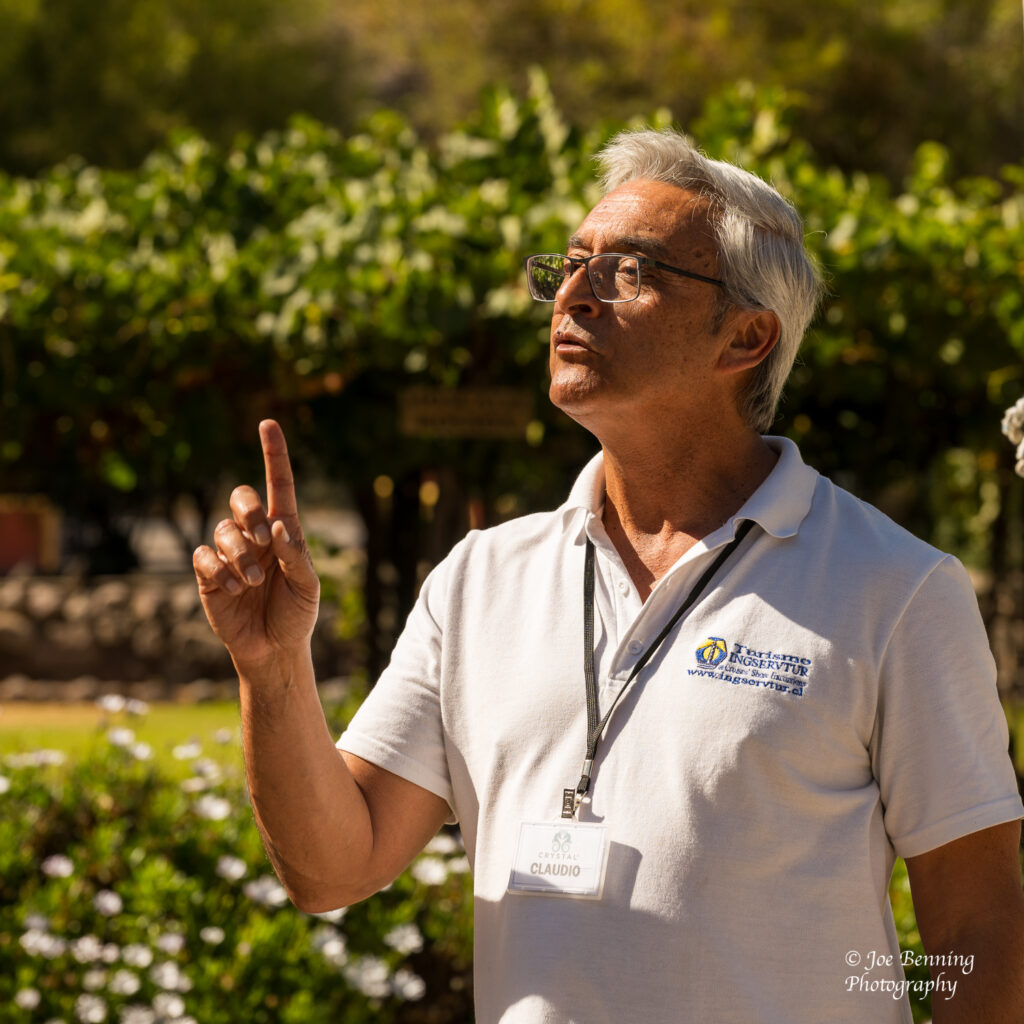
Barrels of PiscoA guide in the Elqui Valley addresses toruists
Along the way to the Elqui Valley we passed some pretty beach towns, and many parks and places named Mistral, for the beloved Chilean poet Gabriela Mistral, a school teacher who received the first Nobel Prize in Literature awarded to a Latin-American writer (not the first female winner, but the first winner of either gender).
Gabriela Mistral was an influence on Pablo Neruda, perhaps Chile’s greatest poet and one of MA’s favorites. (Having read a lot of Mistral’s and Neruda’s works while studying Spanish, MA was happy about this, and Joe’s ears almost fell off listening to her talk about Neruda’s odes and works, including Poema XX, one of the saddest poems ever written.)
We visited the Casablanca Valley in Chile on Sunday – this is a beautiful valley between the eastern and western ranges of the Andes. Although Chile has been producing great wines for many years, wine-making in this region is only about 25 years old. It was thought by many that the soil and growing conditions in this area were not suitable for wine production.
Photo taken at the foothills of the Andes mountains
Then along came William Cole, an American who reasoned that the Casablanca Valley and Temeculah Valley in California are approximately equidistant from the equator and share many characteristics. He started a vineyard in the Casablanca Valley, invested several years of work growing the grapes, and now there are about 25 vineyards in the area, many of which rely on Cole for bottling and other capital-intensive aspects of wine production.
A Casablanca Vineyard at the Foothills of the Andes Mountains
The drive from Valparaiso port to Casablanca Valley was not long (about 50 km) and brought us from the big, colorful, hilly city through lush green hills, with small towns along the way.
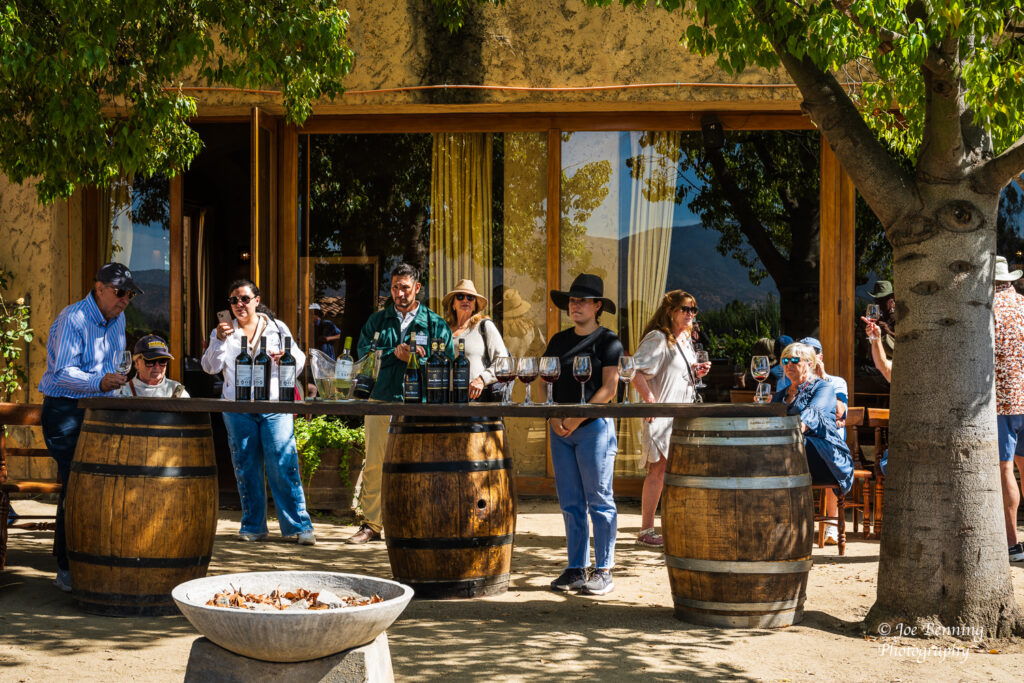
Photo of a wine tasting at the Casablanca vineyard
For a skinny country, a drive from the coast inland brings many changes in terrain and scenery. We are excited to continue southward for more experiences in Chile (and maybe another Pisco sour).
Also of note: The Chilean Navy is doing some training exercises in the Valparaiso harbor–right near our ship!