May 10, 2023 | Mary Anne McDonald

Piracy on the High Seas

Pirates!  

We recently have learned a few things about pirates in the Atlantic Ocean – yes that’s right, the Atlantic.  

Apparently, piracy is big business off the West coast of Africa, as cargo ships with refined petroleum pass through these waters.  Several African countries on the West coast are rich in oil, and ship it through the Gulf of Guinea.  

Highly organized pirates board these ships, which often have small crews (therefore easy to control).  The pirates use weapons to force the crew to stop the ship (or, if the ship is already anchored, to turn over control).  Then, the ship turns into an illegal bunkering stop  – other ships can obtain the fuel from the pirates for a price much lower than obtaining it legally at a port.   Once the fuel vessel is empty, the pirates move on to the next fuel vessel and repeat the process.  

In the past, when fuel prices on the legal market dropped, the pirates would ransom crew members instead of selling fuel, as it was more profitable to collect ransom. 

Government corruption appears to be heavily involved in this petro-piracy, either through government action/inaction in conjunction with the pirates, or through corruption in general.  In this latter instance, the pirates take matters into their own hands to grab “their share” of the wealth.  

An excellent article from March 2022 on this issue can be found at:

https://www.gisreportsonline.com/r/piracy-gulf-guinea/

As oil production around the world changes in the future, petro-piracy is an issue about which we may hear more.   

MA

Share: Facebook Twitter Linkedin
May 9, 2023 | Joe Benning

A Quick Tour of Cape Town, South Africa

Cape Town, South Africa

May 9, 2023

We flew into Cape Town from Durbin on May 5 at the conclusion of our Safari. Then we headed off the next day on a half-day tour of the city. Last time we were in Cape Town (back in 2018) we didn’t think much of the place. In fact we were amazed at the number of people who told us that Cape Town was their favorite city. 

Cape Town as Seen From Table Mountain

When we went on tour this time we were very pleasantly surprised. The city had its gleaming office towers and apartment buildings, elegant modern homes in the coastal areas, and bars and restaurants galore. We concluded that we just visited the wrong parts of the city the last go around. 

Section of Capetown Coast at the Foot of Table Mountain Range

A bit surprising because we had stayed in a first rate hotel. In fact, one of the best. We must have just made a wrong turn. Some sections we visited this time were just a few blocks away.

Not that the country South Africa, and the city Cape Town, don’t have their problems. They do. The South African rate of unemployment is estimated at anywhere from 30% to 40%. (Nobody really knows for sure what the real number is).

The population of South Africa is about 60 million people. It has the 39th largest economy in the world and is classified as a newly industrialized economy. It has the most technologically advanced economy on the African continent. But crime, poverty and inequality are widespread. 

Some of the problems most likely stem from apartheid, which came to an end in 1994. There are also governance problems. Even though it is now a democratic state, South African politics is essentially a one party state, dominated by the African National Congress.  One party states are typically fonts of corruption and poor governance. (Note: see Chicago, Illinois). But transitioning to a full fledged democracy from an authoritarian state to one that respects the rule of law, property rights and due process was never going to be easy. 

The hope for South Africa is that it can emulate the courage and vision of its modern founder, Nelson Mandela, and complete its transition to an advanced liberal democracy.  

Table Mountain, Capetown South Africa

When Mary Anne and I toured the city we spent most of the time on Table Mountain, so named because it looks like a table because the top of it is flat.

A wide angle photo of a hiking trail at the top of Table Mountain.
Photo of a section of Table Mountain recently damaged by a fire.

One thing we did was to take a cable car to the mountain top and hike around a bit. The view from the top was truly spectacular. We also visited some coastal areas as well as the center of the city. It is now no longer a mystery to us why so many people are so enamored of Cape Town. 

Para Gliding From Table Mountain

JFB

Share: Facebook Twitter Linkedin
May 8, 2023 | Mary Anne McDonald

Photo Safari at Phinda Forest Lodge

Zululand, South Africa

May 8, 2023

When we arrived in South Africa, we immediately went by van to Phinda Forest Lodge for a photo safari (we were part of a group of 8 passengers from the ship).   Phinda is one of the many lodges owned by a company called “&Beyond” which promotes sustainable travel in natural places that need to be conserved.  It is an interesting company founded by members of the Getty family and South African investors, and the business model includes alliances with local Zulu tribes, local landowners and others.  

A Tree in the African Bush at Sunset

Over the course of 3 days we went on 5 game drives.  Before we even snapped animal pictures, we learned a lot about the area and its history – it is partly a sand forest (rare), partly grasslands, partly woodland and partly wetland.   With this diverse ecosystem Phinda has trees, bushes, plants, spiders, birds, orchids, cacti and animals not found anywhere else on the planet.   The scenery was stunning. With the help of an extraordinary ranger and tracker team (Dan and Bheki) we explored it all.  

Coffee Break in the Bush with Mary Anne and Dan
Bheki–Our Tracker on Safari

The game drives were great, and each lasted a lot longer than expected, because we found so many animals – lions (and lionesses), elephants (alone and in a big herd) , giraffes (ditto), zebras, white rhino, hippos, leopards, a cheetah, Cape buffalo, antelope, nyalas, wildebeests, warthogs, suni (tiny deer), monkeys, lizards, turtles, spiders, birds, etc.    And we saw lots of babies (lion cubs, elephant and giraffe calves, etc.), too.  

Giraffes in the Bush
A Lionness and Her Cubs
A Herd of Elephants

Phinda Forest Lodge was great – 16 large glass-walled cabins, lovely staff members, beautiful outdoor dining areas where we enjoyed incredible candle-lit dinners near roaring fires (it was cool and dark by 6:30 pm), and guides to get you from dinner back to your cabin after dark, as animals roam freely throughout the area.  

Joe took a lot of pictures, and tried to capture the feeling of being in Africa, in the bush.   It was an incredible experience, and we would go on another safari in a heartbeat!  

In the African Bush

Now, off to check out the West coast of Africa, starting down in Namibia, with the world’s oldest dessert.   

Best wishes to all, 

Joe and MA

More Pics Below

A Pair of Zebras
Antelope Running in the Bush
Leopard in the Wild
Herd of African Buffalo
Running Impalas
Share: Facebook Twitter Linkedin
May 7, 2023 | Joe Benning

Visiting Mozambique

Maputo, Mozambique

May 7, 2023

We just finished—wait for it—a pirate drill. Apparently we are about to enter a high-risk area (HRA) for piracy. Not something you see every day. 

Anyway, we arrived in Maputo, Mozambique on Monday, May 1st. Now officially known as the Republic of Mozambique, it has a population of 30 million people. The country is well endowed with natural resources, particularly natural gas. But corruption is endemic and the country remains one of the poorest in the world. Its main industries are fishing and tourism and the spread between rich and poor is one of the widest in the world. 
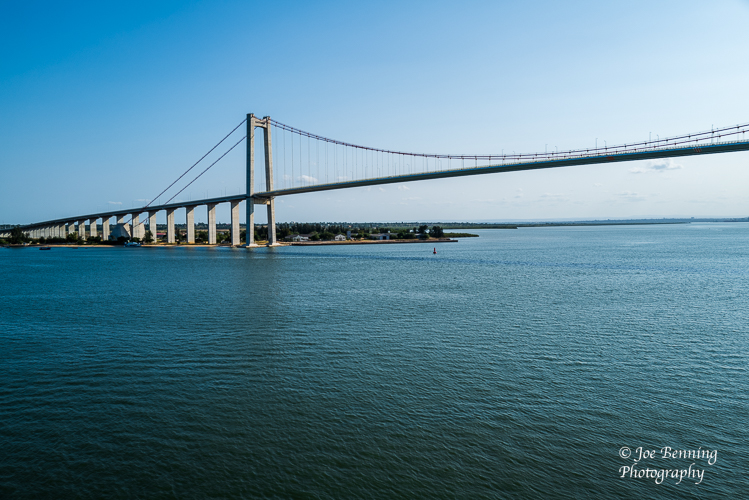
Bridge over Maputo Channel

The country gained its independence from Portugal in 1975 and immediately changed its name to the People’s Republic of Mozambique, then named streets after Mao Tse Tung, Ho Chi Minh and Karl Marx, which goes a long way toward explaining its economic condition. 
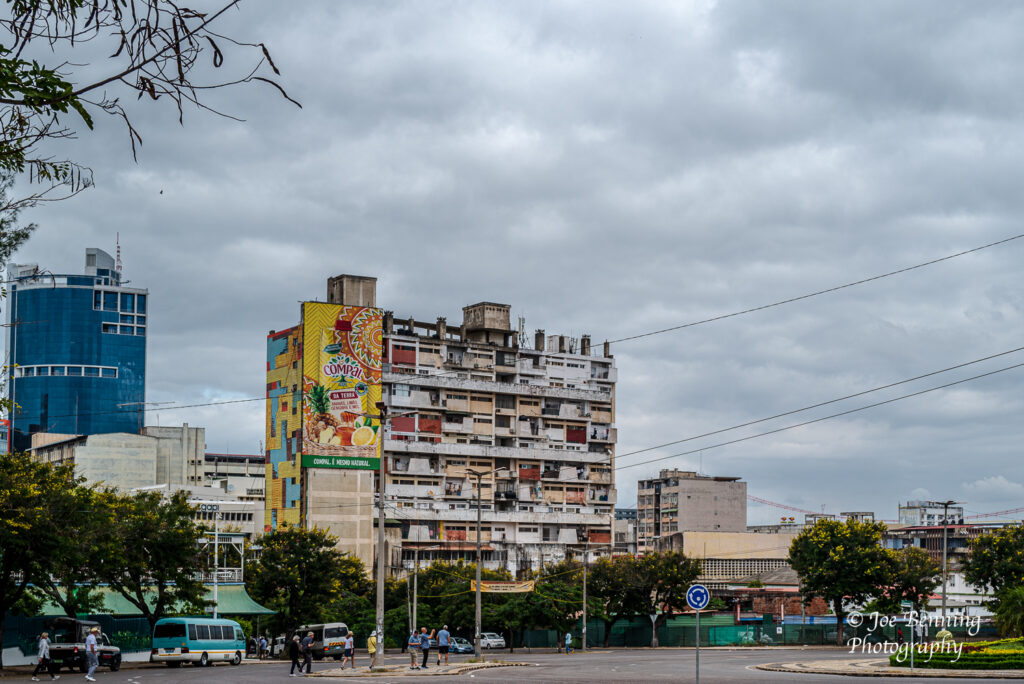
Maputo Building Complex

Within 2 years after gaining independence in 1975 a civil war broke out and lasted until 1992, at which time the ‘People’s” bit was dropped and the country’s name was changed to the Republic of Mozambique. Since then there has been some liberalization, economic growth has been a blistering 8% or so and thousands of state enterprises have been sold off. But the damage from experiments in Marxism-Leninism and years of civiil war have taken their toll and it will take a while for the country to become truly prosperous. 
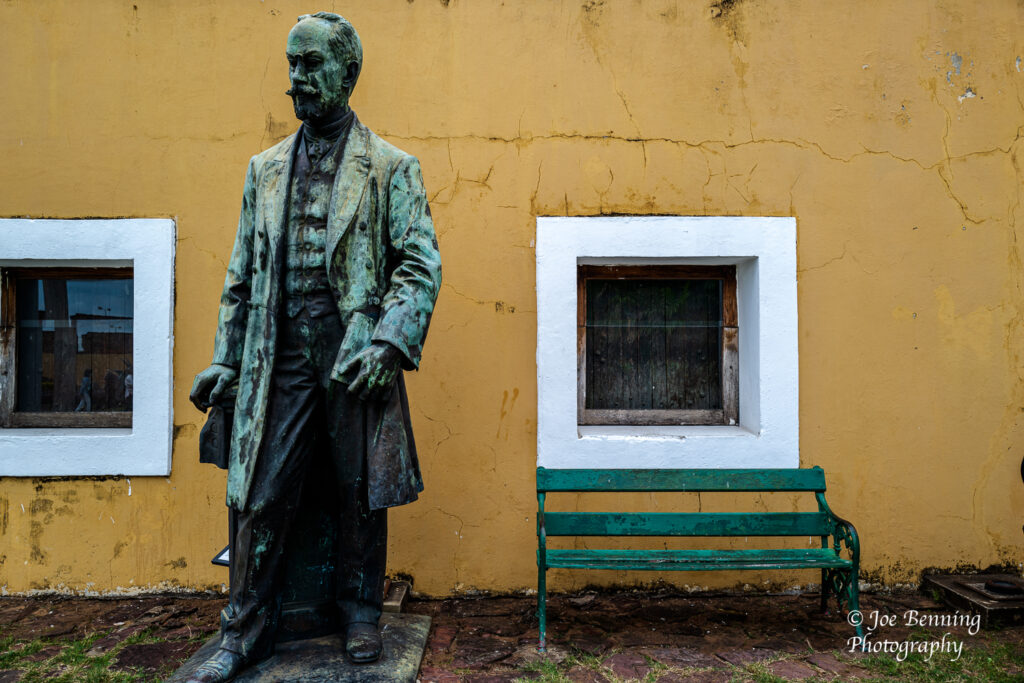
Wall in a Fort

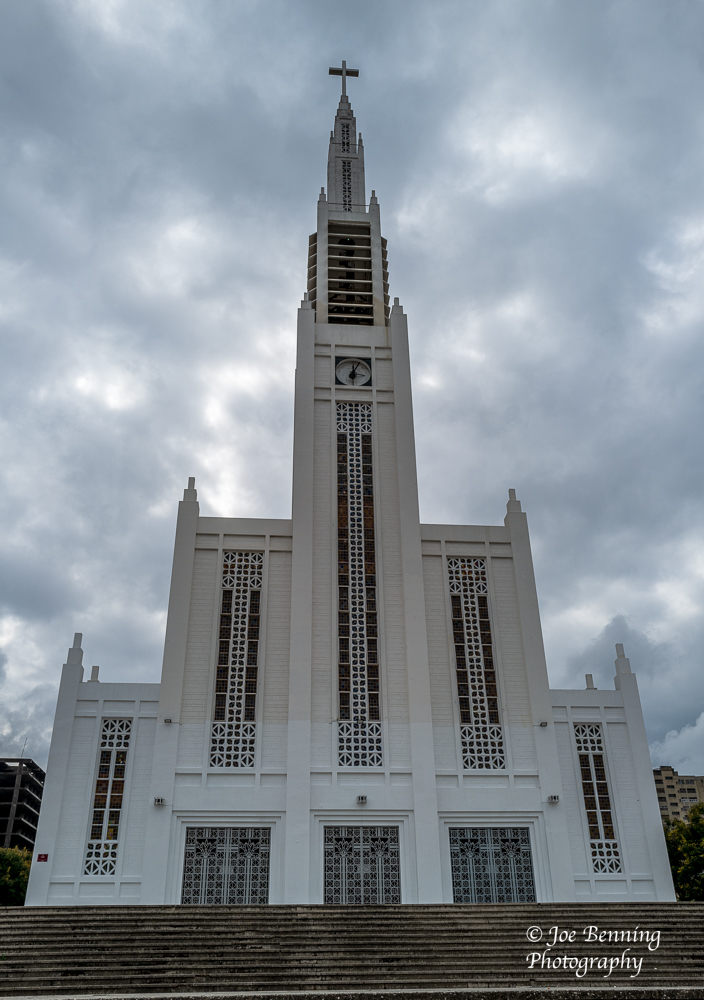
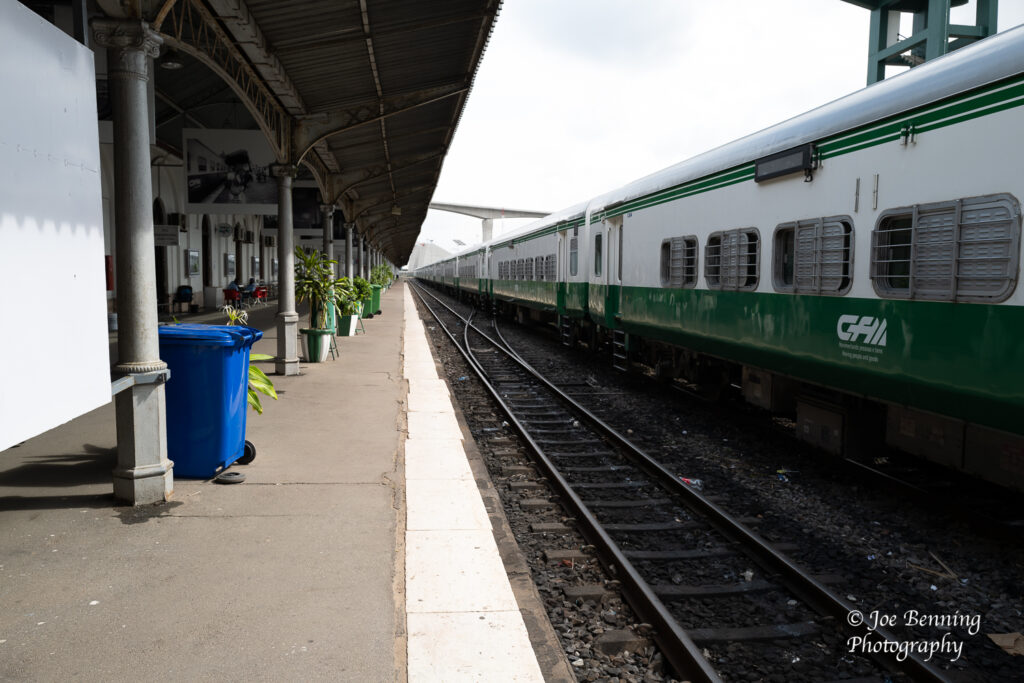
Mary Anne and I took a half-day tour around the capital, Maputo. As it turns out, it was a national holiday called Worker’s Day, I suppose in sympathy with May Day in Europe. We saw demonstrations of solidarity in the center of town where we visited the train station. We also saw the outside of the Cathedral of Our Lady of the Immaculate Conception. 
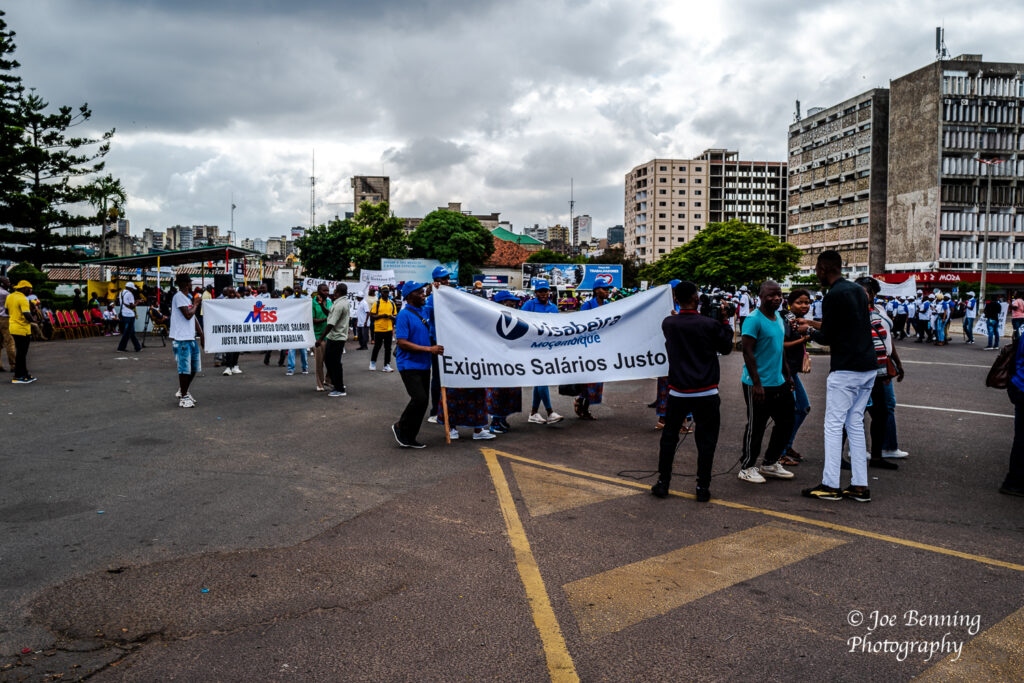
Workers Day
Cathedral Our Lady of the Immaculate Conception
Train Station

The city though, was dilapidated and the signs of its poverty were everywhere. One big problem is that the school system is an admitted disaster and the adult literacy rate is only around 60%—with 74% male literacy and only 45% female literacy. Mozambique has a lot of work to do if it is going to substantially improve its condition. 

Joe

Share: Facebook Twitter Linkedin