Joe Benning Photography

Month: February 2016

Mary Anne McDonald
Sydney, Australia (we like saying "Oz" as if we are locals

Sydney, Aus (“Oz”)                                         Tuesday Feb 16, 2016 6:30 pm

Well, we made it to Australia, the place we wanted to see so much, and the reason we are on this cruise. We arrived this morning in Sydney at about 5 am, and it was magical – the sun was not yet up, the sky was dark but getting rosy, and the shoreline of Sydney Harbour was aglow in lights from the beautiful buildings, bridges and boats that we could see from our room. Think of seeing your favorite city skyline just before dawn, and that’s the way our day
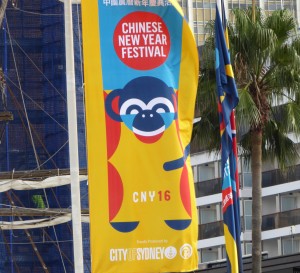
Lunar New Year Banner in Sydney Harbour

Lunar New Year Banner in Sydney Harbour

started. It was a bit dreamy, and those iconic Sydney images (the Harbour Bridge and the Opera House) are just as lovely as they appear when you see them on postcards.

So, after about 14 hours in Oz, we can officially say that we love it.   Sydney is like the best of all familiar western great cities – London, New York, Chicago, San Francisco – it has great old places and elegant new places; it makes the most of being on the water; it is well organized and very clean; there are people here from all over the earth; and of course the local accent is the best!

We spent the morning heading north and east through Sydney suburbs to the Featherdale Wildlife Park, which was terrific. We saw tons of gorgeous and colorful birds, and lots of animals endemic to Oz: kangaroos, billikins, wallabies, wombats, Tasmanian devils (who run around in circles as if they are possessed, and are very funny to watch), emus, platypuses, dingos, cassawaries, crocs and other reptiles and, of course, koalas. There was also a porcupine kind of animal that has a name I cannot recall. It was all very interesting and we learned a lot. But it was crowded, as the lunar new year is here, and many visitors from Asia are celebrating in Oz.

Mid-day we ambled about the Sydney Harbour and then took a tour of the Opera House – what an interesting and pretty building. Its history was new to us – there was an international competition for the design, and the lead judge was late to arrive for the selection of the winning design. The other judges showed him their short list of finalists and he asked to see the “rejects.” From that group of rejects the winning design was selected.

A Danish architect (Jorn Utzon, 38 years old at the time) created the design based on spherical concepts, though his father’s influence as a naval architect probably was felt. The architect could not confirm that his design was sound from an engineering point of view, but the committee selected the design nonetheless and put engineers on the project to make it happen. The construction was well over budget and greatly delayed, and the opera house eventually was opened in 1973. The considerable debt to build it was erased in 18 months by a state lottery game. Before his death, Mr. Utzon was one of only 2 living architects ever to learn that his creation was deemed a UNESCO world heritage site. In more recent years, the architect’s son has cooperated with the Oz government and has overseen renovations and changes (for example, making the Opera House accessible to people with disabilities).

The Opera House is a lovely structure inside and out, and it gets a workout – not only do Australian opera companies and ballet companies perform regularly, but it hosts performers from all over the world.  Today we saw signs for an upcoming show by Prince, and one by former Beach Boy Brian Wilson. We had the good luck today to hear part of a rehearsal by the strings for a Beethoven concert – the sound in the hall was tremendous.

On a different note: Joe’s had enough of my “suggestions” about good pictures for this blog, so last night he bought a little point and shoot camera for me. I didn’t bring a camera with me on this trip because I really wanted to absorb things without trying to create a record of it all, especially since Joe has all the expertise and good gear.  But enough was enough, and now I have my own camera. That means I’ll probably put up some pix on this blog, which will be amateurish, but maybe will add something of interest. We can only hope….

Tomorrow starts the second leg of our tour – one more day in Sydney and then a lot of stops around the east coast of Oz before we get to Indonesia (Komodo Island and Bali).

Hope you are all had a nice long weekend, and are doing well.

Best,

MA
 

Read More
Joe Benning
Birds of New Caledonia...and Cyclones too

The waters got a bit rough last night. But the saloons stayed open. Maybe it had something to do with the Captain’s announcement that by leaving Fiji when we did we beat a Cyclone, complete with 60-foot waves, by 2-days.

Anyway, here are some pictures of Birds we saw on Noumea, New Caledonia. (Sorry it’s slow getting the pictures posted, but they take a lot of bandwidth out here).

Noumean Parrot

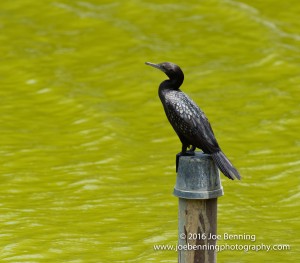
A Wedge-tailed shearwater sits on a pole seemingly like a lookout

A Wedge-tailed shearwater sits on a pole seemingly like a lookout

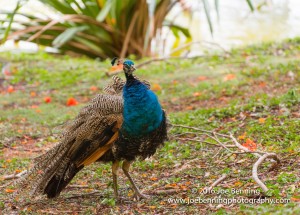
Strutting Peacock

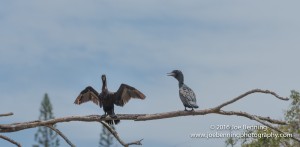
Birds on a Tree Limb

Birds on a Tree Limb

Read More
Joe Benning
Headed for Australia

We are at sea headed for Sydney Australia, having left Noumea, New Caledonia where it is now Valentine’s day. So here are some pictures from Noumea, including some “Love Birds” for Valentine’s Day.

Joe

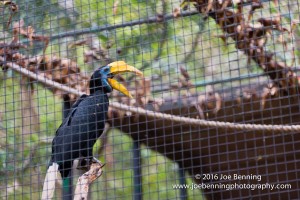
A Toucan with his beak wide open.

A Toucan with his beak wide open.

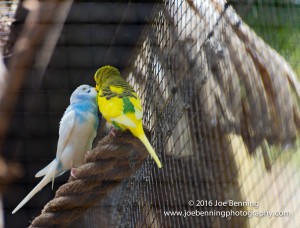
Noumean Birds Flirting

Noumean Birds Flirting

Read More
2 days in New Caledonia

New Caledonia                                                          Sat. Feb 13, 2016 4pm local time

Yesterday and today we visited 2 islands that are part of New Caledonia (NC has 4 large islands and many smaller ones). NC was discovered by the Brits but later became a French territory. (Caledonia was the old name for Scotland, hence the New Caledonia name.) France used the large island of Grande Terre as a penal colony in the mid-1800s, and convicts built much of the island’s infrastructure. Grande Terre was the South Pacific headquarters for the US military during WWII.

As with many other islands in the South Pacific, early migrations from Africa and then from China provided the forerunners of the indigenous peoples, but New Caledonia is slightly different because the African/Chinese background is melded with European influences and more recent and current French ties.

New Caledonia sits on a large portion of the world’s nickel reserves (nickel is used to make stainless steel, among other things), and the nickel is mined in a cooperative arrangement with several other countries. New Caledonia is still heavily forested (pine trees and coconut palms are everywhere). The locals are enjoying the benefits of mining nickel, but wary of the long-term environmental results.

New Caledonia is surrounded by a coral barrier reef, so the entire country is effectively one large lagoon of over 9000 square miles. The water colors run the gamut, and Joe will try to post some pictures that provide a sense of how vivid and clear the water is.

Yesterday we anchored off of the small island of Mare’ and enjoyed a nice visit to a lovely beach and small town. Mare’ is home to 7000 people (29 tribal villages, with chieftains), and is largely undeveloped (by that I mean that there are roads and elements of the modern world, but still a lot of trees and forests between the small settlements. The beach we visited had a few rustic beach bars, and there were a number of shuttle vans to collect people from the local dock and get them to the most popular beaches. I noticed a lot of satellite dishes at residences, and large bins for residential trash pickup that look like anything you’d see in NJ or elsewhere.

Today was different – we docked in Noumea on Grande Terre, a busy modern port, and it looked like we were back in Honolulu. The City has a population of 100,000 (there are about 270,000 on the entire island of Grande Terre), and is a sophisticated city where French influence is strong. The French government has an unusual power sharing arrangement with the locals in New Caledonia, and there are provisions to harmonize French and EU rules with local and tribal customs and practices. NC is considering a resolution to declare itself independent of France, but apparently this is a decision that the New Caledonians are finding difficult, as France supports the territory strongly.

We visited the Botanic Gardens in Noumea and saw a lot of beautiful plants, birds, peacocks, iguanas, etc. Hopefully Joe will post some pictures that he deems worthy of your view.

One last note – we had a chance to chat with the Hotel Director of the ship the other evening, and he was telling us about some of the logistics of taking care of 1000 guests over an extended period of time – definitely harder than planning a dinner party! He also told us that in many of these smaller port stops, the local chieftains have welcoming ceremonies and gifts are exchanged. In Mare’ Island, the captain of our ship received an enormous wooden spear – not exactly what we might think of bringing to a visitor….

Happy St. Valentine’s Day to you all!

Best,

MA

Read More
Joe Benning
Party Time

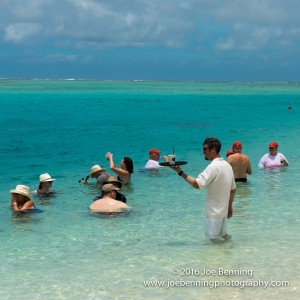
Talk about service. We made a quick side trip to Mystery Island, a very small island that is part of a chain of islands known as Vanuata. The cruise ship set up a bar on the beach for cruise guests and the staff waded into the Pacific to serve drinks. See the picture.

Joe

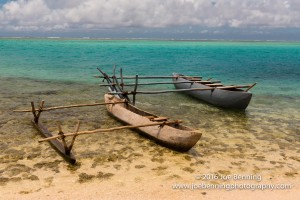
Canoes on shore in the South Pacific

Canoes on shore in the South Pacific

Wait staff brings drinks to partiers in the Pacific

Wait staff brings drinks to partiers in the Pacific

Read More
Joe Benning
Some Pictures from Lautoka, Fiji

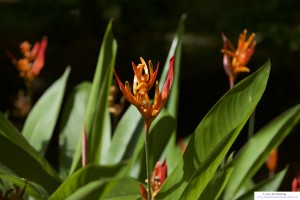
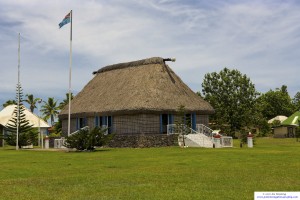
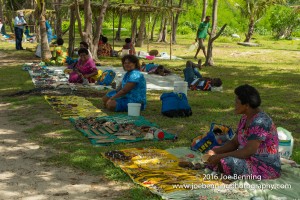
Some shots from Lautoka, Fiji, including: orchids from the Garden of the Sleeping Giant, created by Raymond Burr of Perry Mason fame; local traders showing their wares, and the house of a village Chief.

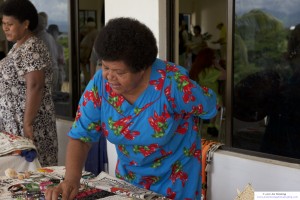
Lautoka traders showing their wares to tourists

Lautoka traders showing their wares to tourists

Orchids in the Garden of the Sleeping Giant

Orchids in the Garden of the Sleeping Giant

Picture of the house of a village chief on the island of Lautoka, Fiji

Picture of the house of a village chief on the island of Lautoka, Fiji

Read More
Cannibalism

Just a note about cannibalism, in case you are interested.  Our guide in Fiji told  us that the reason cannibalism was practiced in Fiji was because of the belief that if you did not consume the person you wanted to kill (your rival or enemy), that person’s spirit  would just be transferred to his sibling, child, other close living person.   So you had to consume to get rid of the bad spirit.

MA

Read More
Fiji - day 2

Lautoka, Fiji                                                                Feb 9, 2016 5pm local time

Today is a day that justifies a trip half way round the globe – it has been beautiful, informative and interesting, and eye-opening. We have seen how old and different parts of the world and cultures co-exist with new and familiar ones, all on one island.

Dawn at 6:01 local time was rosy-fingered and pretty; now that we are at the time zone closest east to the international date line, we saw Feb 9 start at the earliest time that it could be seen anywhere in the world.   A fine start to a full day.

We are in Lautoka today, which is the 2nd largest city in Fiji, and sits on the biggest of Fiji’s 300+ islands (Viti Levu, which is the home of golfer Vijay Singh). This island gets a lot of rain on one side and is drier on the other. On the rainy side, the jungle is often used by non-Fijian governments to train combat troops because there are no snakes, no poisonous spiders and no malaria-carrying mosquitoes.

Sugar cane grows on the island and is a major export; because of its purity, processing is simpler and less expensive than in other locations, so Lautoka is a major regional hub for sugar export. Over the years many Indian immigrants have come to Fiji to work in the sugar processing industry, and the population of Lautoka is a mix of many immigrant and native people. Railroad tracks run around the island to transport the sugar cane to the processing plant in Lautoka. Dense forests on the island produce another big export – wood pellets, which are exported to Japan and elsewhere to produce furniture and other products.

On the other hand, fuel for driving, cooking and other purposes, as well as wheat and other foodstuffs, must all be imported. Hence Lautoka has a major port, not only for tourist ships but also for necessities. Near to the port is the commercial center of Lautoka, which reminds us of a very large district similar to NYC Chinatown – lots of stores, restaurants, etc. crowded together (but well organized and clean). The islands use hydroelectric power, and you can see cell phones and satellite dishes everywhere. The type of government buildings and services you would see in developed areas (hospitals, schools, government offices) are all present and seem very modern. Government programs to ensure free education, health care and other services are in place. Fiji is largely a Christian country, with a large Hindu population and a smaller percentage of Muslims and those of other faiths.

We left the port and commercial center to make 2 visits today, and each was very interesting. First stop was Garden of the Sleeping Giant, which is a large tropical area showcasing orchids and other flowering plants, lily ponds that are just as beautiful as Giverny, palms, trees of all types and beautiful gardens. This is the garden created by Raymond Burr and then turned over to the public. Joe took a lot of pictures and he’ll post whatever he can upload (given the bandwidth restrictions with our WIFI connections on the ship).

After the visit to the Garden of the Sleeping Giant, we went to the largest village in Fiji, where about 900 people live. Fiji’s history is one of clans and tribes, and despite many years of British rule (Fiji is now independent), this clan/tribe culture still exists and governs local life. Each village has a chief and a council of elders who make decisions for the village. In the village we visited, as in most, the church is the central and largest structure, as Fiji natives credit the Christian missionaries with ending cannibalism and promoting the true love of neighbor that allows for peaceful coexistence in the nation. A village green is near the church, together with communal meeting buildings. Houses radiate out from this central church/green area, and the housing stock is a mix of wood structures with thatch roofs, tin houses, and more sturdy stone and cement structures. The village chief’s house has the highest foundation, and no one else’s house is permitted to have a higher foundation. Flowers and gardens abound, very neatly organized.

Most of the residents of the village we visited work in the local tourism industries (there are several hotels and guest houses on the island). Several of the clan/tribe leaders have made deals with hotel developers; the tribes sell the land for development and make arrangements to supply local labor to the developers. A strict record of tribal land ownership is maintained, and there is a system to settle ownership disputes.

Notably, Mutiny on the Bounty (the real occurrence with Captain Bligh) occurred near Fiji in the late 1700s.

I know – this is way more info than anyone needs. It was just so impressive to see old cultures and primitive land at the same time as modern and sophisticated practices and approaches.

A fascinating place, this Fiji.

Best,

MA

Read More
Joe Benning
Pictures from the Fijian Islands

Fiji is stunningly beautiful. Here are some pictures.

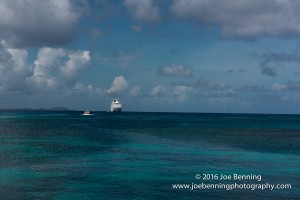
Anchored off Yasawa-i-Rara, Fiji with a small tender taking passengers to shore

Anchored off Yasawa-i-Rara, Fiji with a small tender taking passengers to shore

Local traders offering their goods to tourists on Yasawa-i-Rara, Fiji

Local traders offering their goods to tourists on Yasawa-i-Rara, Fiji

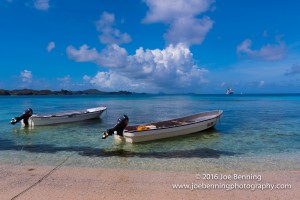
Boats anchored in the shallow water of the beach,Yasawa-i-Rara, Fiji

Boats anchored in the shallow water of the beach,Yasawa-i-Rara, Fiji

Read More
Postscript to Samoa "coastal walk"

Happy news after the big outing in Samoa –  the Crystal folks, within about 20 minutes after the first guests returned from the “coastal walk,” advised everyone on that trip that a partial refund was already processed, so no one would pay more than 50% for that trip.   Helped to establish that the early complaints prompted a quick response.

Read More
Fiji - day 1

Yasawa-I-Rara Island, Fiji                                  Monday, February 8, 2014*

*We are now a day ahead of USA

We landed today in Fiji on one of the northwest islands of Fiji, Yasawa-I-Rara. I’ll let Joe’s pictures do all the talking – words are not adequate to describe how beautiful this place is.

Fiji is comprised of a lot of islands, and Yasawa-I-Rara is one of the least developed. That is why the island is used by Hollywood, and you might know that the 1980s Brook Shields movie “The Blue Lagoon” was filmed on a tiny island off the cost of YIR (sorry but I can’t keep typing out the whole name). There are several villages on the island, and about 2000 people live on the island. There is only one resort on the island.

The weather is hot (over 90F), the water is very clear and very warm (high 80s), and there are people all over snorkeling among the coral. If you get into a shaded area (and there are many, since the island is full of palm trees and vegetation), the breeze is delightful and it’s easy to understand why you’d want to stay here.

The tender boat took a lot of the cruise visitors to the island on continuous shuttles, and we landed on a nice long wooden pier that leads to the beach. The village closest to where we landed has a population of approximately 600. The local residents set up a market along the beach, selling colorful fabric and sarongs, shell jewelry, fans, etc. I walked through this market and into the nearby “neighborhood” – about a dozen corrugated tin shacks, many thatched huts, chickens and goats in a few yards, a cemetery with a few graves (no names, dates, etc., just crosses on top of white markers), no vehicles in sight, and local folks bringing goods to the beach market for sale. The locals greet everyone with the Fijian welcome “bula bula” so I will have to ask Brandon if there is some Yale connection here that has gone unnoticed….

Tomorrow we go to the large island of Fiji (Viti Levu), and plan to visit the “Garden of the Sleeping Giant.” This is where Fiji’s largest orchid garden is located – it was founded by Raymond Burr (the actor known for Perry Mason and Ironside), to house his collection of orchids. So I’m thinking that if a guy like Raymond Burr can live in Fiji, maybe I could get used to this, too.

Hope you all have a Happy Chinese New Year (year of the Monkey)!

Best,

MA

Read More
Joe Benning
Some Pictures from Samoa

Pictures from Samoa…

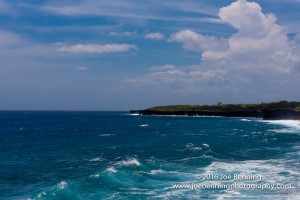
View of Bluffs in Samoa along the Coastal Walk

View of Bluffs in Samoa along the Coastal Walk

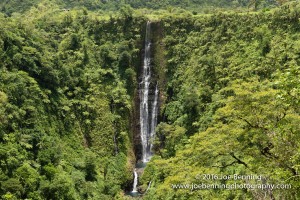
A view of Papapaitai Falls in the rain forest

A view of Papapaitai Falls in the rain forest

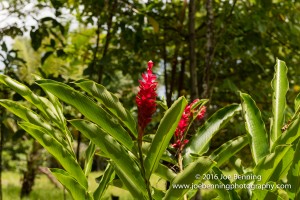
Flowers and Foliage in the Samoan rain forest

Flowers and Foliage in the Samoan rain forest

Mary Anne by the Serenity in the dock in Samoa

Mary Anne by the Serenity in the dock in Samoa

Read More
This website uses cookies to improve your experience. Cookie Policy